Florida Law About Changing Lanes Guide for Drivers
Learn Florida law about changing lanes and avoid citations with clear rules, penalties, enforcement examples, and defense strategies to protect your license.

You signal, check your mirror, and begin moving over on a busy Florida highway. A vehicle appears beside you, the officer behind you activates emergency lights, and a routine maneuver becomes a moving-violation problem. Under Florida law about changing lanes, the question isn't whether you used a turn signal. The question is whether you stayed in your lane as nearly as practicable, verified the move was safe, avoided interfering with traffic, and obeyed any traffic-control device.
A citation can affect your driving record, insurance position, and license. You need to understand the statute before deciding whether to pay, contest the allegation, or seek counsel. This overview of Florida traffic laws is a useful starting point, but an improper-lane-change citation turns on the exact facts, including traffic spacing, road markings, signs, officer observations, and available video.
Table of Contents
Introduction to Florida Lane Change Laws
Florida treats lane movement as a safety issue, not a courtesy issue. A driver may have signaled and still receive a citation if the movement forced another vehicle to brake, entered an occupied space, or ignored a posted restriction. Conversely, a driver may face an allegation even when there was no crash, because the statute focuses on whether the maneuver could be completed safely and without interference.
The core rule appears in Florida Statute 316.089. On a roadway divided into clearly marked lanes, you must remain “as nearly as practicable” within a single lane and must not leave that lane until you first ascertain that the movement can be made safely. The statute also permits official traffic-control devices to prohibit lane changes, and drivers must obey those devices. Florida Statute 316.089 classifies a violation as a noncriminal traffic infraction punishable as a moving violation under Chapter 318.
You should also separate an unsafe lane movement from improper lane positioning. Florida Statute 316.081 addresses use of the right-hand lanes to avoid impeding traffic, while Florida's lane-change rules address whether the actual movement was safe. Ticket Shield, PLLC approaches that distinction through direct attorney communication by phone or text, rather than routing you through an automated app or corporate answering service.
Core Statutory Requirements for Lane Changes
Florida Statute 316.089 creates a practical two-part test. First, you must keep your vehicle within one lane as nearly as practicable. Second, before moving, you must ascertain that the maneuver can be completed safely. The statute also prohibits moving when the change would interfere with traffic approaching from the same direction.
That language matters because an officer doesn't need to document a collision to issue a citation. The allegation may be that you moved toward a vehicle in the target lane, failed to recognize a vehicle approaching or passing, or entered a space without enough room to complete the maneuver. The Florida failure-to-maintain-lane guidance helps explain why the officer's description and the road layout deserve careful review.
What “As Nearly as Practicable” Means
The phrase isn't a command to remain perfectly centered under every condition. It requires disciplined lane control, subject to practical roadway circumstances. A drifting vehicle, abrupt lateral movement, or movement across a marked lane without a safety check can support a citation. Your defense should focus on what the vehicle did, what traffic was present, and whether the officer could accurately observe the full maneuver.
Traffic-Control Devices Change the Analysis
Florida law allows an official sign or other traffic-control device to prohibit lane changes. A driver who crosses into a restricted lane in a work zone or near stopped emergency or disabled vehicles may face a separate compliance issue, even if the driver believes there was physical room to move. Sign visibility, lane markings, construction layout, and the precise location of the vehicle all matter.

Signaling and Safety Rules Explained
Florida's signaling rule is separate from the safety rule. Under Florida Statute 316.155, a turn or lane-change signal must be given continuously for at least the last 100 feet traveled before turning. That creates a clear compliance benchmark. Turning on the signal moments before moving isn't equivalent to maintaining it for the required distance. Florida Statute 316.155 provides the statutory reference.
Signal First, Then Confirm the Opening
Use the signal early enough to satisfy the distance requirement, but don't treat the signal as permission to move. A signal communicates intent. It doesn't establish that the target lane is clear, give you priority over an approaching vehicle, or excuse interference with traffic.
Your sequence should be deliberate:
Activate the signal: Maintain it continuously for at least the last 100 feet before the lane movement.
Check the mirrors: Identify vehicles behind you and in the target lane.
Check the blind spot: Look directly where a mirror may not show a nearby vehicle.
Reassess traffic: A vehicle can approach quickly after your first mirror check.
Move smoothly: Enter the lane only when you can complete the movement without interference.
Florida permits hand and arm signals in appropriate circumstances. The law also recognizes an exception for bicyclists who need both hands to control the bicycle. For motorists, though, the bright-line issue remains the same. The signal must be continuous for the required distance, and the maneuver must still be safe.
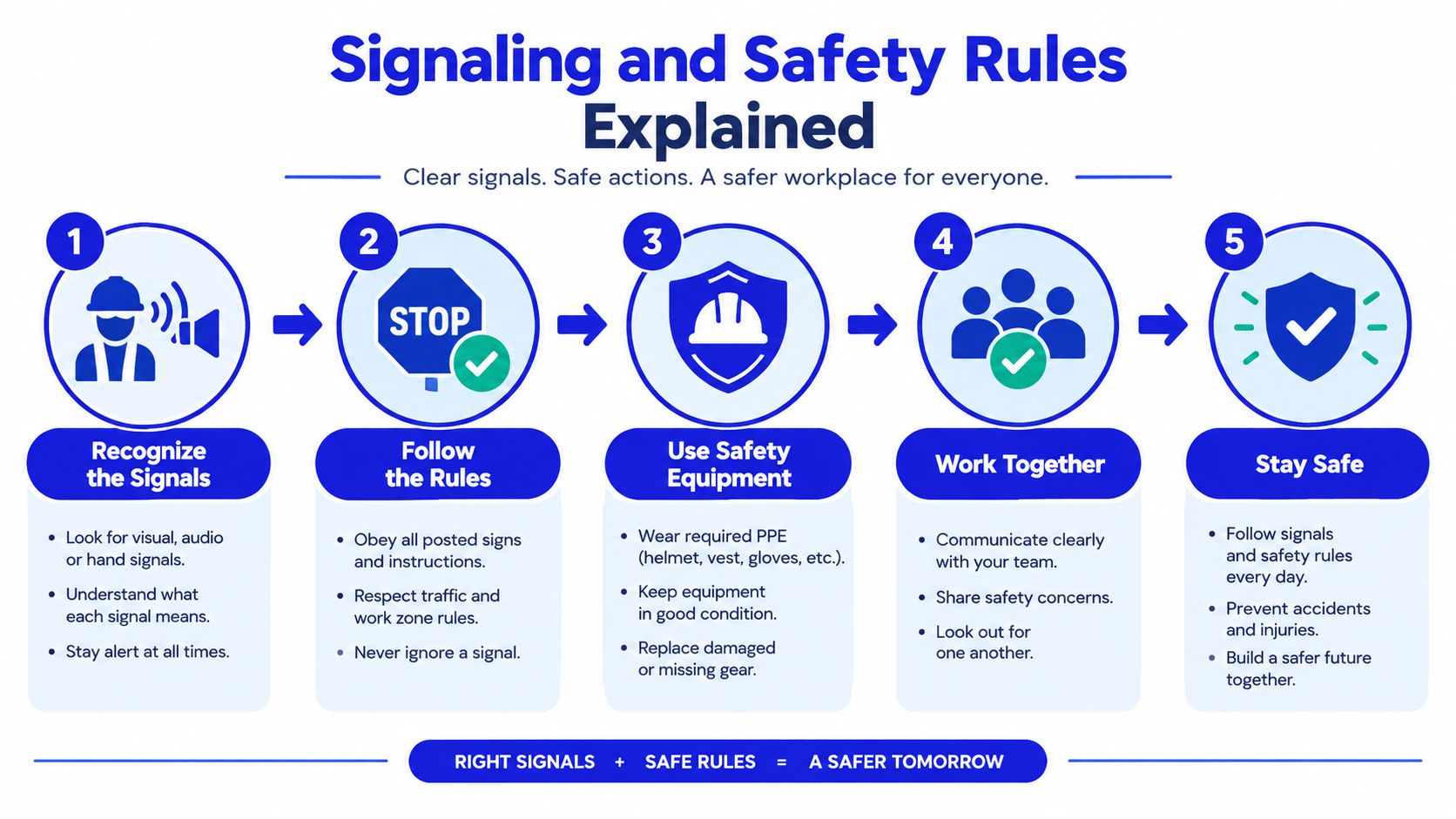
A signal violation and an unsafe movement can arise from different facts. If the officer claims you signaled too late, the defense may concern timing and observation. If the officer claims you entered an occupied lane, the defense may depend on traffic position, video, and whether the officer could see the entire event. Review Florida improper lane-change guidance before assuming the ticket is routine.
Examples of Illegal and Unsafe Lane Changes
A driver on a crowded Florida highway sees an upcoming exit and moves across traffic at the last moment. The driver uses a signal, but a vehicle is already approaching in the destination lane. The maneuver causes that vehicle to brake. Under Florida's technical lane-change rule, the issue isn't whether the driver intended to be courteous or whether contact occurred. The issue is whether the driver verified the move was safe and completed it without interfering with traffic.

Three Situations That Create Trouble
The hidden vehicle: You check the mirror but fail to check the blind spot. A motorcycle or compact vehicle occupies the space beside you. Even without a collision, an officer may describe the movement as unsafe if the vehicle's position shows that you entered its path.
The abrupt correction: You realize your lane is ending and move sharply into heavy traffic. The other driver may have to brake or swerve. Your explanation that you were trying to reach the correct lane won't overcome evidence that the move created interference.
The restricted area: You see an open lane near a work zone or stopped emergency vehicle and move over despite a sign or lane-control device prohibiting the change. Physical space doesn't defeat a posted restriction. Florida law requires obedience to official traffic-control devices, and recent enforcement attention has focused on high-speed corridors and Florida's Turnpike. Florida's lane-control statute supplies the authority.
An intersection presents another judgment problem. Florida doesn't impose a blanket ban on every lane change in an intersection, but turning vehicles, pedestrians, limited visibility, and changing traffic patterns make the safety analysis more demanding. If you received a citation, explain the sequence rather than saying only that “there was room.” The relevant facts include your speed, the other vehicle's position, the signal timing, lane markings, signs, and whether anyone had to react.
The accompanying video can help you visualize the mirror, blind-spot, and smooth-movement sequence. Use it as a driving-safety reference, not as a substitute for reviewing the facts of your citation.
If the ticket identifies a specific statute or uses terms such as improper, unsafe, or failure to maintain lane, compare the wording with the actual allegation. Ticket Shield's improper lane-change resource can help you identify the issue before you speak with counsel.
Enforcement and Typical Citations
Officers commonly distinguish between the movement itself and the driver's lane position. A citation under the general lane rule may allege that you left your lane without first confirming safety. A lane-positioning allegation may instead focus on occupying a lane in a way that impedes traffic, including the separate obligations addressed by Florida Statute 316.081. A posted no-change restriction creates another fact pattern.
Florida's Turnpike also treats failure to move from the far-left lane to let faster traffic pass as a moving violation. That rule isn't identical to an unsafe lane-change allegation. You may have been cited for where you remained, how you moved, or whether you ignored a traffic-control device. Read how to read a Florida traffic citation before choosing a response.
Lane Change Violations and Penalties
Offense | Statute | Penalty | Points |
|---|---|---|---|
Unsafe or improper lane movement | Section 316.089 | Noncriminal traffic infraction, punishable as a moving violation under Chapter 318 | Not specified in the verified statute information |
Unsafe movement from a direct course | Companion lane-change rule | Noncriminal traffic infraction, punishable as a moving violation under Chapter 318 | Not specified in the verified statute information |
Improper lane positioning or impeding traffic | Section 316.081 | Moving-violation treatment may apply to the specific allegation | Not specified in the verified statute information |
Lane change prohibited by an official traffic-control device | Section 316.089 | Noncriminal traffic infraction, with the applicable moving-violation consequences | Not specified in the verified statute information |
The table reflects the verified statutory classifications, not a guaranteed fine or point result. The citation's statute, county, hearing disposition, and driving history can affect the practical consequences. Don't assume paying ends the matter without a record impact, and don't assume every lane ticket carries the same defense.
Practical Defenses and After-Ticket Steps
A lane-change defense starts with the evidence, not with an argument that the officer was wrong. The officer must describe a legally unsafe movement, but the description may omit the timing, traffic spacing, lane markings, or signs that determine whether the statute applies. Your job, with counsel, is to test the observation against the physical scene.
Separate the Allegation Before Building the Defense
Florida Statute 316.085 distinguishes unsafe lane movements from lane-positioning obligations. That distinction can decide the defense. If the citation concerns moving from a lane, focus on the target lane, nearby vehicles, speed, signal timing, and interference. If it concerns remaining in a lane, examine whether the allegation is really about impeding traffic or choosing the wrong lane.
Defense focus: A signal doesn't cure an unsafe move, but an officer's conclusion that a move was unsafe still needs to match the traffic conditions and road configuration.
Gather the following immediately:
The citation: Preserve every word, including the statute number, location, direction of travel, and officer's description.
Dashcam footage: Save the original file before automatic overwrite. Keep footage showing the approach, signal activation, mirrors, lane markings, and the officer's position.
Photographs and video: Capture signs, lane lines, construction barriers, lighting, sight distance, and the roadway configuration.
Witness information: Record names and contact details while memories remain fresh.
Vehicle evidence: Preserve photographs of any damage and avoid repairs that could erase useful information when a crash is involved.
Your timeline: Write down where you were, which lane you occupied, when you signaled, what traffic was nearby, and what happened next.

Test the Officer's Observation
Ask whether the officer saw the full movement or only the final position of your vehicle. A blocked view, traffic obstruction, curve, raised roadway, darkness, or distance can affect what the officer could reliably observe. The defense may also examine whether the officer identified the correct lane, saw an approaching vehicle, or documented any actual interference.
Signs and lane-control devices deserve close attention. Was the restriction visible from your approach? Did construction shift the travel lanes? Did the sign apply to your lane and direction? Florida permits official devices to prohibit lane changes, but the proof still depends on what was displayed and where your vehicle was when the movement occurred.
Take Action Before You Respond
Don't send a casual explanation to the court, post about the incident, or assume a payment is the safest option. Photograph the ticket, preserve evidence, confirm the response deadline, and speak with a Florida traffic defense lawyer promptly. A lawyer can evaluate whether the allegation matches Section 316.089, Section 316.085, Section 316.081, or a traffic-control-device restriction, then identify the proper procedural and evidentiary response.
Ticket Shield, PLLC offers a lawyer-led defense with direct attorney communication by phone or text. That matters when you need a person to assess dashcam footage, explain the distinction between an unsafe movement and lane blocking, and pursue a resolution designed to protect your record. Automated apps, middlemen, and corporate answering services can't provide the same direct fact review.
Conclusion and Next Steps
Florida law about changing lanes demands more than a turn signal. You must control your lane, confirm the movement is safe, avoid interfering with traffic, and follow official restrictions. The decisive defense may come from a dashcam clip, a missing sign, an unclear lane marking, or the difference between an unsafe movement and a lane-positioning allegation.
Treat the citation seriously. Ticket Shield, PLLC gives Florida drivers a direct, lawyer-led option, with attorney communication by phone or text instead of a ticket mill workflow built around middlemen and automated chatbots. The objective is clear: protect your license and pursue a resolution that keeps No Points on your license.
Visit Ticket Shield, PLLC for a free consultation about your Florida lane-change citation. Their lawyer-led team can review the allegation, examine the evidence, and work toward the ultimate goal of No Points on your license.