What Is a Speed Trap in Florida and How to Fight It
Learn what is a speed trap in Florida, how police enforce them, the real costs of a ticket, and how Ticket Shield helps you avoid points on your license.

You're driving home in Florida, the road opens up, and the patrol car lights hit your mirrors. You know that stretch. The limit drops fast, traffic around you is moving the same way, and now the officer is walking up with a ticket. That's the moment most drivers ask, what is a speed trap, and the wrong answer is to treat the paper in your hand like a harmless annoyance. It is not harmless. It is the start of a record problem, an insurance problem, and a wallet problem.
If you pay it without a fight, you usually make the case harder for yourself. You're not just covering a fine, you're often accepting the violation as a conviction on your driving history. That can follow you into renewal season, job-related driving, and every interaction you have with your insurer. A speed trap is annoying on the road, but the primary trap is giving up before you force the state to prove its case.
Table of Contents
The Real Danger of a Florida Speed Trap
You see the cruiser tucked out of sight, you get the ticket, and the officer says the usual words. The danger starts after the stop ends. The fine is only the first bill. The conviction is what keeps taking money from your pocket later.
A lot of drivers make the same mistake. They pay because it feels easier, faster, and less stressful. That choice can turn a single stop into a record entry that tells your insurer you were willing to admit the violation. It also makes it harder to challenge the citation later, because you've already treated it like a done deal.
Practical rule: if the ticket is worth fighting, fight it before you pay it.
The broader problem is the way people misunderstand a speed trap. They think the trap is the hidden deputy or the sudden drop in limit. The actual trap is the legal and financial fallout that follows a guilty plea by payment. Once that happens, the state and your insurer can treat the stop as proof that you were the problem, even if the road design or enforcement setup was questionable.
The ticket also starts a paper trail that can affect future stops. If you drive for work, commute long distances, or depend on a clean record, you should treat the citation like a legal threat, not a parking notice. That is why drivers should look at enforcement strategy immediately, not after the deadline passes.
Read more about the myth of officer quotas and traffic stops
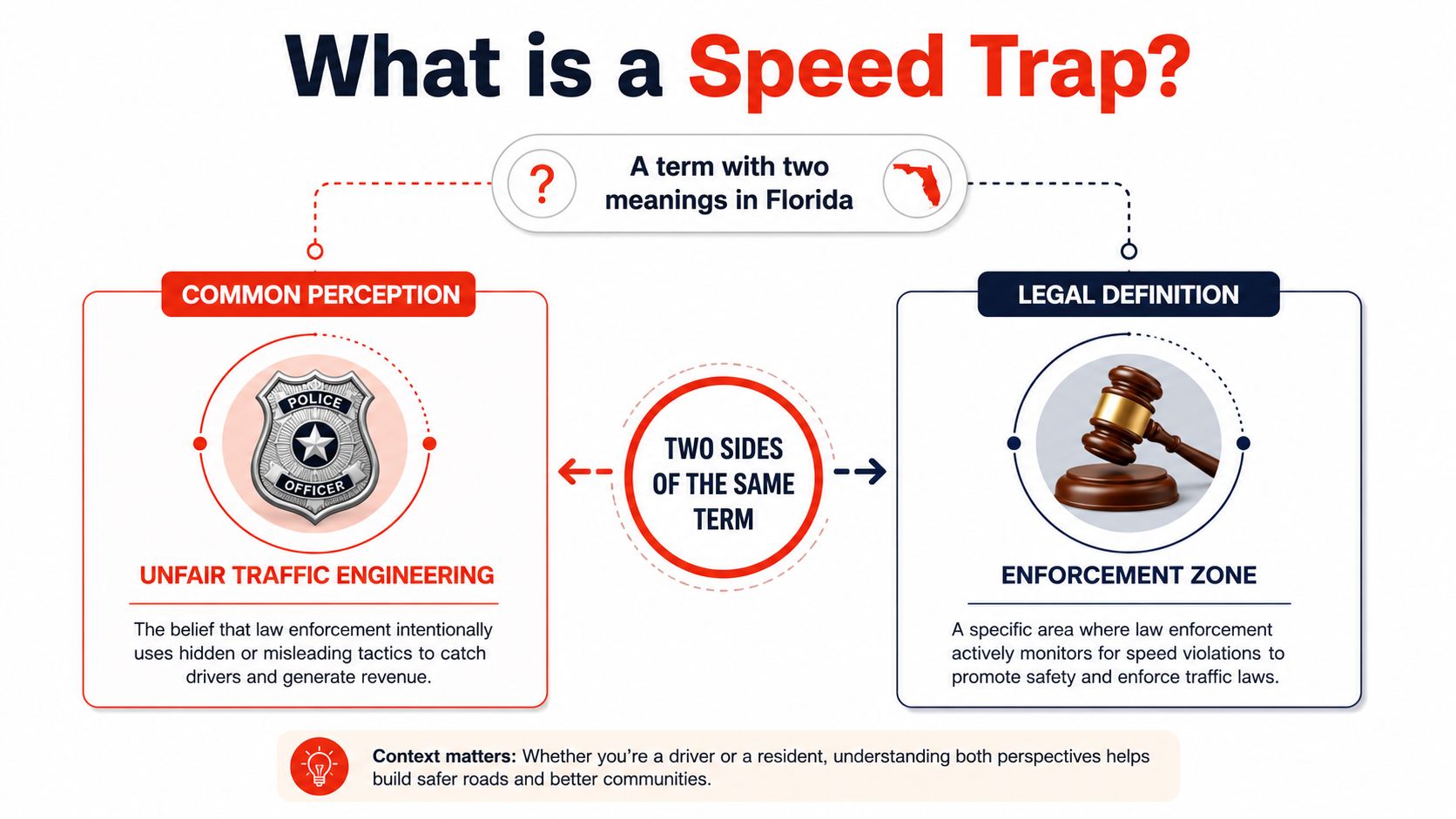
Defining a Speed Trap in Florida
You get pulled over, stare at the officer at your window, and hear the word speed trap thrown around like it explains everything. It does not. What matters is whether the stop turns into a ticket that hits your license, your insurance, and your wallet long after the roadside conversation ends. If you pay without fighting, you usually hand the state exactly what it wants.
The legal meaning is narrower
Florida drivers need the legal version, not the street version. In Florida, the fight is not about whether a road feels unfair, it is about whether the posted limit, the enforcement method, and the proof line up with the statute and the conditions on the road. In California, which is a useful comparison point for the engineering side of the issue, a speed trap can mean a measured road segment used to calculate speed by time and distance, or a posted zone unsupported by a recent engineering and traffic survey when radar or another electronic device is used. That kind of technical setup shows why these cases turn on evidence, not frustration. You need a defense that attacks the ticket, not just the feeling that the officer was hiding.
Why the road layout matters
Roadway design changes everything about how a stop is made and how the citation is challenged. Sensor placement, sight lines, and the length of a measured segment all affect whether the reading is trustworthy or easy to attack. Modern enforcement can rely on radar, laser/LIDAR, or timing devices, and radar cameras use the Doppler effect to infer speed from frequency shift. Historical pacing still matters too, because officers can compare vehicle travel over a known distance.
A short, accurately measured road section can work like an average-speed detector, which is why the setup matters as much as the sign.
Florida drivers also need to understand how a prima facie speed limit changes the analysis. See how prima facie speed limits fit into Florida speeding cases because the posted number is not always the whole story. If the road conditions, the legal setup, or the enforcement method give you room to challenge the stop, that is where a defense attorney earns their fee.
If you want the plain-language answer, a speed trap is not just a hidden cruiser. It is a place where the setup may make a ticket more likely, and where the legal fight may hinge on how the road was measured and enforced. If you want the technical Florida conversation, start with the posted limit, the enforcement method, and the evidence needed to justify both. For drivers trying to find Florida insurance impacts, that distinction matters because the ticket itself can cost far more than the fine.
Florida Statutes Governing Speed Enforcement
Florida does not treat speeding like a casual accusation. Florida Statute §316.183 says drivers must operate at a speed that is reasonable and prudent under the existing conditions, even if the sign seems to give them more room. That means the posted number is only part of the story. Weather, traffic, visibility, and road conditions still matter.
Florida Statute §316.187 gives the Department of Transportation authority to establish maximum speed limits on state roads. That statute matters because it shows speed limits are not random guesses, they are part of a legal framework tied to how Florida manages roadway safety. If the state is going to punish you, it should be able to show the limit and the enforcement fit that framework.
What that means for your ticket
You should stop thinking in slogans and start thinking in proof. The officer has to show more than irritation with your driving. The state has to connect your actual speed, the conditions on the road, and the legal limit that was in effect.
Here's the simple approach:
Check the statute basis: the citation should line up with Chapter 316, not just the officer's opinion.
Look at the conditions: if the road, traffic, or visibility were part of the situation, those facts matter under §316.183.
Question the limit setup: if the posted speed was not properly supported, that is a defense issue, not a roadside argument.
If you need a broader reference point for the Chapter 316 structure, use Florida state traffic laws as a starting point, then compare your citation to the actual statute language.
For insurance fallout, you should also find Florida insurance impacts before you decide the ticket is “not a big deal.” That's where a lot of drivers get burned. The legal charge on paper is one thing. The premium hit can be worse.
The point is simple. In Florida, the question is not just whether you were over the number on the sign. The key question is whether the state can prove the speed allegation under the statute that applies to your stop.
The Hidden Costs of a Speeding Ticket
The fine gets your attention because it is immediate. The damage that follows is slower and usually larger. A speeding conviction can trigger points, and points can lead to more trouble with your license if they keep stacking up. That is why paying quickly is often the most expensive move you can make.
The real bill shows up later
Florida drivers who treat a ticket like a one-time payment miss the long tail of the case. Insurance companies care about moving violations. They read them as risk. That means a ticket can keep costing you long after the courtroom clock has stopped.
If you carry a high-risk profile already, the fallout can be even harder to absorb. A practical guide for high risk auto insurance in Florida can help you understand why one conviction can make renewal a fight instead of a routine task. You do not want to hand your insurer extra influence by admitting the citation.
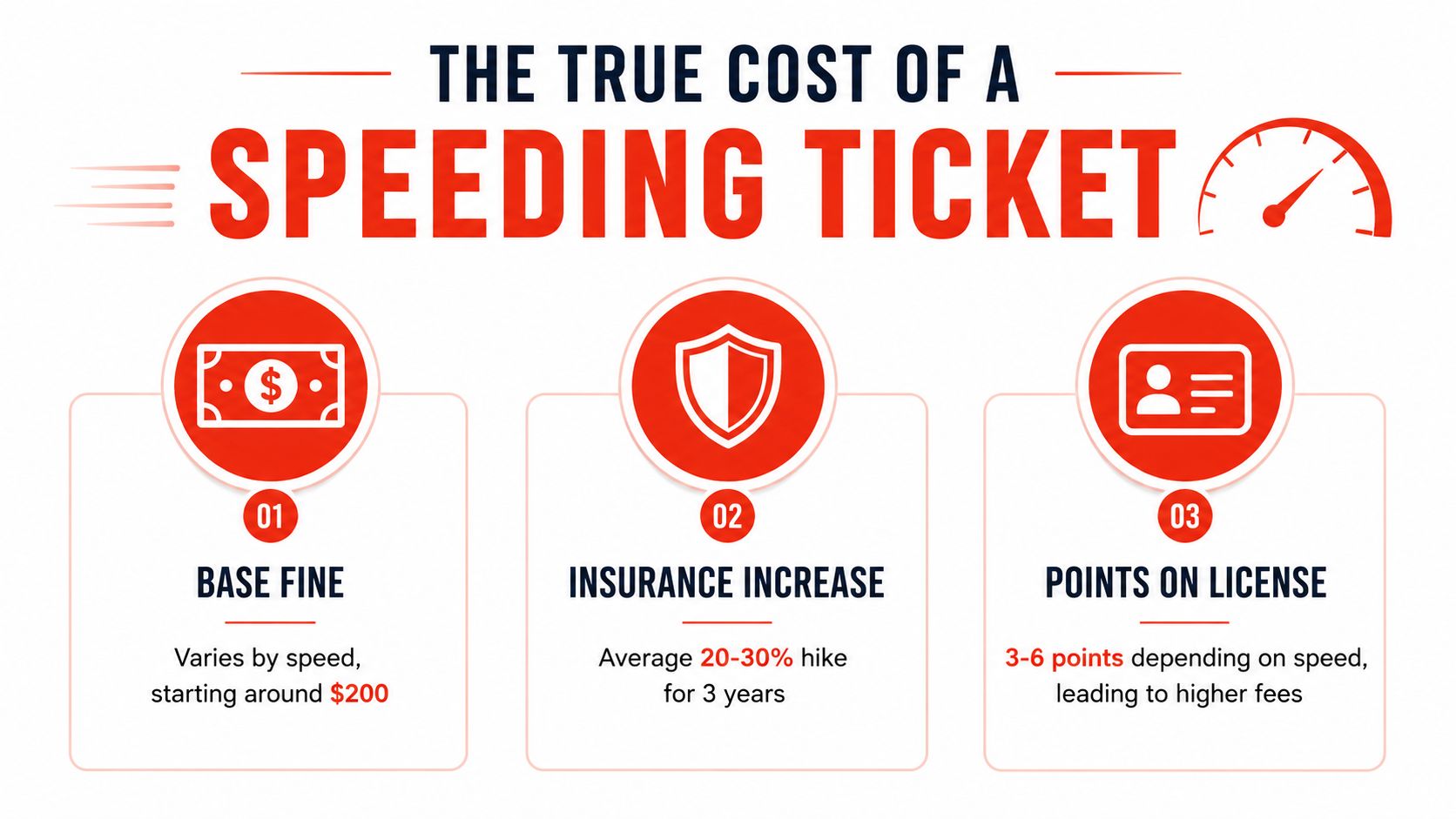
Key takeaway: the ticket is not the penalty. The record effect is the penalty.
Why the cheapest choice is often the costliest
Drivers often think a quick payment saves time. It saves time today and costs money later. A conviction can increase administrative headaches, create a stronger renewal problem, and make every future traffic stop more dangerous for your record. That is why a defense strategy should focus on avoiding the conviction itself, not just shaving a few dollars off the fine.
For a deeper breakdown of how insurance and a ticket connect, review the cost of insurance increase after a Florida speeding ticket. That is the part many overlook until the renewal notice arrives.
If you drive for work, commute daily, or just want your record clean, you need to treat the citation like a financial event. The legal fight is often worth it because the hidden costs are what hurt most.
How to Spot and Handle a Speed Trap
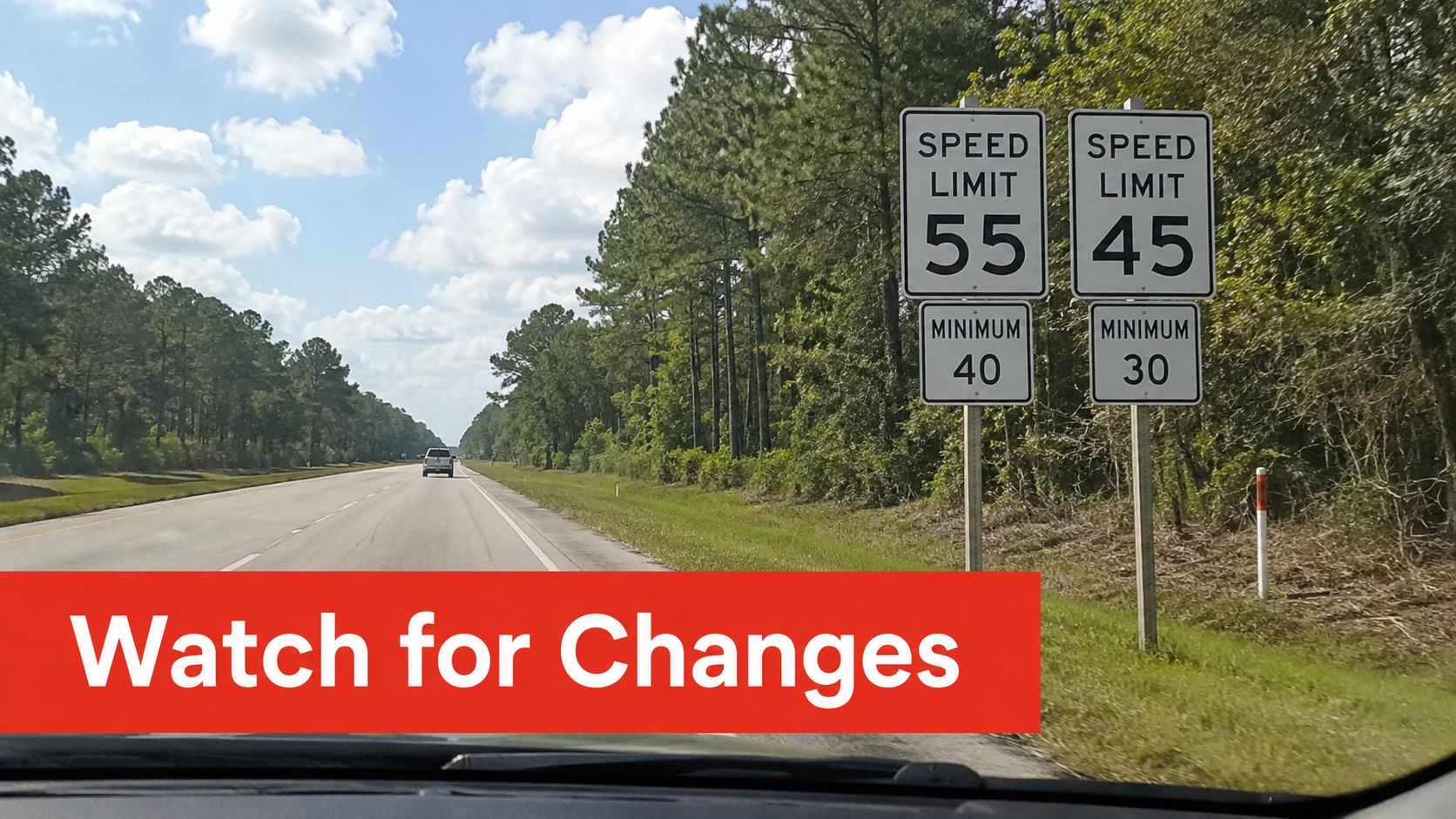
A speed trap is easier to miss when you are rushing or following traffic blindly. Watch for places where the speed limit drops abruptly, stretches with heavy enforcement visibility, and road segments that feel designed to catch speed transitions rather than calm traffic. Florida roads can create that feeling at border areas, transition zones, and places where the posted limit changes fast.
What officers may use
Law enforcement can rely on radar, LIDAR, or pacing. Each method raises different questions about accuracy and observation. If you want to understand how timing and sensor placement change the result, think about whether the officer had a clean line of sight, whether the zone was clearly marked, and whether the speed reading matched the road conditions.
Stay polite. Do not argue roadside. Do not volunteer excuses that sound like admissions.
When the stop ends, document what you can. Note the location, the posted limit, the road markings, nearby signs, and whether anything blocked visibility. If you have a passenger, ask them to remember details too. Those facts can matter later if your lawyer challenges the citation.
If you manage a fleet or drive for work, planning matters before the stop ever happens. A resource like Routelink's fleet weather strategy is useful because weather and visibility affect how you should read a road before you commit to speed. That same logic applies to a traffic stop. Conditions matter.
The biggest mistake is trying to talk your way out of a citation on the shoulder. You are not building your defense there. You are building the officer's report. Keep your words tight, your tone calm, and your notes accurate.
Strategic Defenses Against Speed Trap Tickets
A strong defense starts with the evidence, not the excuse. Radar and LIDAR devices can be challenged on calibration and maintenance records. An officer's visual estimate can also be tested, especially if the stop depended on a quick judgment rather than a measured, documented reading. If the limit itself was not properly posted or supported, that becomes another lane of attack.
What a real defense looks at
Speed cases are technical. That is good for you if the facts are weak.
Device records: calibration, maintenance, and whether the equipment was current.
Officer training: whether the officer was qualified to use the tool and interpret the reading.
Signage and surveys: whether the posted limit was properly justified and visible.
Road context: whether the conditions made the reading or the stop questionable.
A lawyer-led defense matters because these arguments live in documents, not slogans. If you try to explain the whole situation in court without knowing what the state can and cannot prove, you usually hand them the clean version of your own conviction. That is exactly what you do not want.
For a more detailed breakdown of defense options, see how to fight a speeding ticket in Florida. The right approach often depends on the enforcement method, the roadway, and the record you are trying to protect.
Ticket Shield, PLLC is one option for drivers who want direct attorney communication by phone or text instead of an app that funnels you through middlemen. That matters when your license and insurance are on the line. A real defense is built by a lawyer who knows where the case breaks, not by a chatbot that sends you a checklist.
Protect Your Record with Ticket Shield
You need a defense that treats the ticket like the threat it is. Ticket Shield, PLLC is a Florida lawyer-led firm with 25+ years of experience, serving drivers in all 67 Florida counties with direct attorney contact by phone or text. That is a different level of service than automated apps or ticket mills that hide the lawyer and hand you a script.
If you want the goal to be No Points on your license, do not wait for the deadline to force your hand. Visit TicketShield.com for a free consultation and protect your record now.
Visit Ticket Shield, PLLC for a free consultation today. If you want to fight the ticket, protect your insurance, and push for No Points on your license, get a lawyer-led defense in motion now.