Hit and Run Defense: Florida Legal Guide 2026
Learn Florida hit and run defense strategies, Chapter 316 duties, penalties, and how Ticket Shield protects your license.

You're driving home, tired, maybe irritated, and then you feel it. A thud. A scrape. A flash in the mirror. Maybe it was a bumper. Maybe it was a mirror. Maybe it was a pedestrian stepping off the curb in the dark. Your pulse jumps, and for a second you're not thinking like a driver. You're thinking like someone trying to understand whether the next move is a mistake that will follow you into court.
That's the moment Florida hit and run defense starts. Not later. Right then. The state will later look at your choices in those seconds and turn them into a story about knowledge, identity, and causation. If you're accused, your job is simple. Protect yourself fast, stop guessing, and make the evidence work for you instead of against you. Florida law is unforgiving here, especially under Florida Statutes § 316.062 and § 316.027, which create the duties prosecutors use when they build these cases. If you want a plain-English breakdown of the immediate legal obligations after a crash, start with this Florida accident obligations guide.
Table of Contents
The Moment Everything Changes on a Florida Road
One small impact can put you in the crosshairs. A light tap in a parking lot. A scrape on a narrow street. A quick look in the mirror and a car behind you that seems wrong. Those moments get replayed later through body-damage photos, witness statements, and officer reports. What felt uncertain in the car can read as deliberate on paper.
Why those seconds matter
Florida prosecutors and insurers do not treat this like a routine traffic matter. The AAA Foundation estimated 737,100 hit-and-run crashes in 2015, about one every 43 seconds nationwide, and by 2016 fatal hit-and-run crashes had reached 1,980 incidents and 2,049 fatalities, the highest fatality count recorded at that time, with deaths up more than 60% since 2009 AAA Foundation research. Recent AAA material also reports roughly 240,000 to 300,000 injuries each year and an estimated 2,932 U.S. hit-and-run fatalities in 2022, about 6.8% of all fatal crashes that year, while 83% of hit-and-run crashes involved only property damage AAA newsroom brief.
That scale is why these cases get treated like public-safety events, not just insurance disputes. It also explains why the defense has to be sharp from the start. A small impact can become a felony allegation if the state says you knew what happened and left anyway.
The defense lens you need immediately
Practical rule: the scene itself is evidence. Your movement, your words, your lights, your phone use, and your delay all become part of the record.
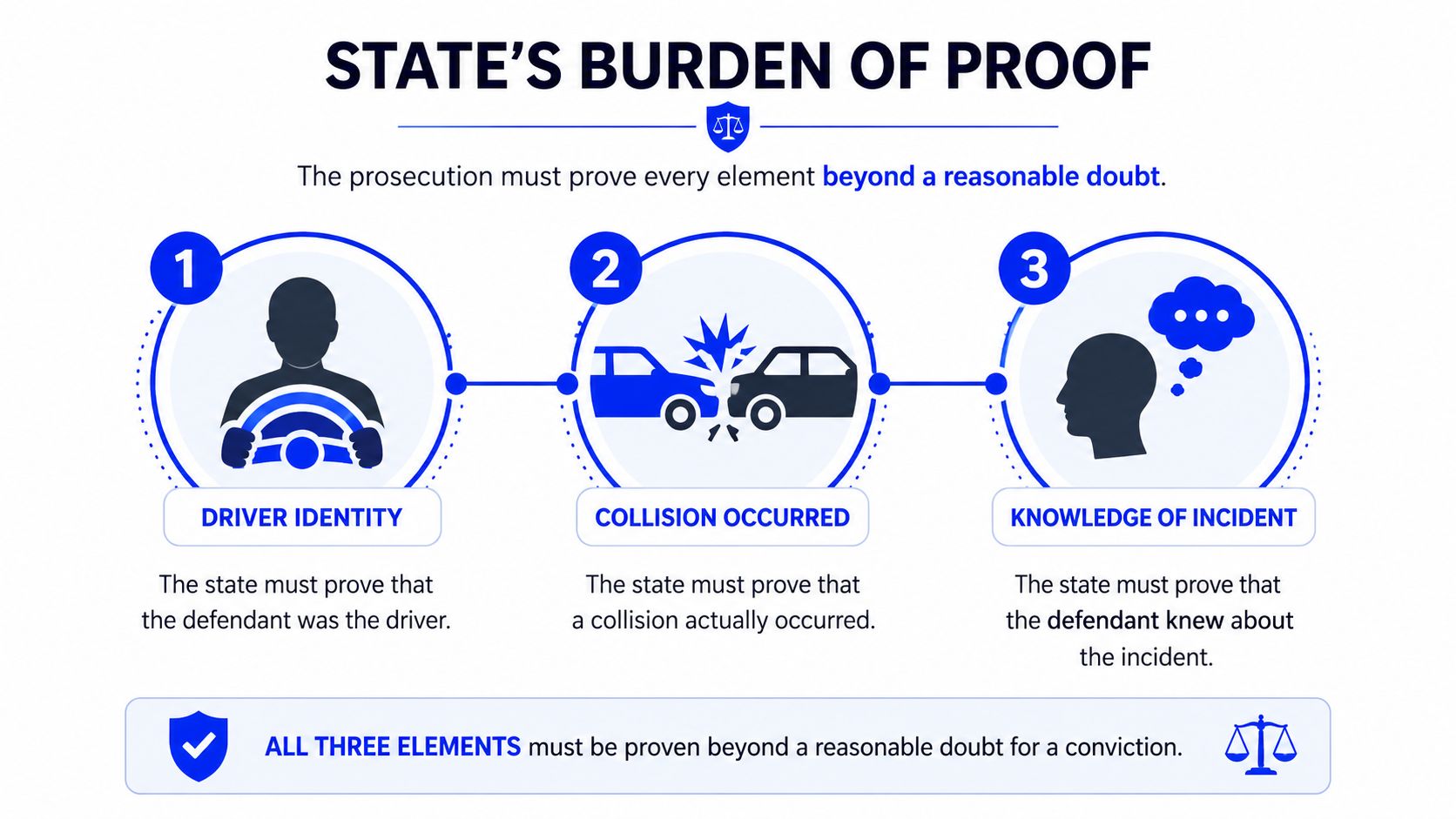
Under Florida practice, the fight later turns on whether the state can prove you were the driver, that a collision occurred, and that you knew or reasonably should have known about it. That is the frame. Proof comes first. If you are already looking for legal help, Florida hit-and-run defense guidance is the place to start reading, not social media.
What Florida Law Actually Requires After a Crash
Florida's crash statutes are direct. If you're involved in a crash, you stop. You remain there. You identify yourself. You identify the vehicle. That's the baseline under Florida Statutes § 316.062, which requires a driver involved in a crash to stop at or as close to the scene as possible, remain there, and provide identifying and vehicle information. If the crash involves injury or death, the duty grows. The statute requires reasonable assistance and, when needed, transport or arrangements for medical care.
The legal duty is bigger when someone is hurt
That distinction matters. Property damage cases and bodily-injury cases do not carry the same weight in the courtroom, and prosecutors know it. If someone is injured, leaving becomes much harder to explain, because the law expects immediate assistance and continued presence. Florida Statutes § 316.027 separately addresses crashes involving death and requires the driver not to leave until statutory duties are met.
The practical meaning is brutal. If you drive away first and explain later, the state will frame your departure as willful flight. Even if you thought you were doing the right thing, the prosecutor will argue the law required you to stop and stay. That's why early legal advice matters before you give a written statement or a recorded call to an insurer.
What prosecutors use as a roadmap
The statutes aren't just rules for drivers. They're a prosecution blueprint. Officers look for who was driving, where the vehicle was struck, whether the damage is consistent with the crash story, and whether the driver had enough awareness to know a collision occurred. That's why the case often turns less on the existence of contact and more on what happened in the driver's head and in the physical evidence.
If the state can't prove you knew, can't reliably place you in the driver's seat, or can't match the damage to the claimed collision, the case gets weaker fast.
For a deeper statutory overview tied to Florida practice, this Florida hit-and-run summary is the right reference point. The point is simple. The duty to stop is immediate, and the defense has to be built around the exact duties the state says you violated.

The Three Elements the State Must Prove
Every serious hit and run defense in Florida comes back to three things. Identity. Collision. Knowledge. If the state stumbles on even one, the case weakens. That's not theory. That's how the case gets built, and how it gets broken.
Identity
The prosecutor has to show you were the driver. Not the owner. Not a person who borrowed the car earlier. Not someone loosely connected to the vehicle. The state often leans on circumstantial identification, witness descriptions, plate numbers, body damage, or statements made after the crash. That's vulnerable if the vehicle was shared, if the lighting was poor, or if the witness only saw a partial view.
Collision
The state also has to prove a collision happened the way it claims. In many cases, that means more than a police report saying so. The damage has to match. The scene has to make sense. The contact has to line up with the alleged direction of travel, the paint transfer, the vehicle height, or the pedestrian's version of events. If the damage could have come from another source, the causation theory gets shaky.
Knowledge
This is the most litigated issue in many cases. The law requires proof that you knew, or reasonably should have known, that a crash occurred and still chose not to stop. That's where impact severity, witness timing, post-crash conduct, and the condition of the vehicle matter. If the contact was minor, if the noise was ambiguous, or if the facts point to confusion instead of awareness, the defense has room.
Common defense work in these cases focuses on knowledge, causation, and identification defects. Counsel often attacks whether the damage could have come from something else, whether the state can reliably place the client behind the wheel, and whether the evidence really supports the claim of knowing flight defense analysis on knowledge and identification.
Bottom line: if the state proves a car moved and something got damaged, that still doesn't finish the case. It still has to prove who was driving, what happened, and what the driver knew.
How an Attorney Attacks the State's Case
A real defense starts with the physical evidence. Not with excuses. Not with guesses. Scene reconstruction tells you whether the alleged contact was even plausible. Vehicle-damage consistency analysis shows whether the marks on your car line up with the state's story or whether they point to a different impact, a prior scrape, or a false attribution.
The evidence that usually matters most
A strong lawyer will pressure-test every piece of identification evidence:
Camera footage: dashcams, business cameras, residential CCTV, and any recording that shows timing, impact, or vehicle movement.
Telematics and phone location data: useful when the state says you were somewhere you weren't, or when movement patterns contradict its timeline.
Witness reliability: who saw the driver, from what distance, in what light, and for how long.
Chain of custody: if the state can't explain how the vehicle photos, video, or physical samples were handled, the reliability drops.
That's where a motion to suppress can matter if law enforcement overreached or used evidence the wrong way. If the collection of evidence was flawed, this suppression overview gives you a sense of why early legal moves matter.
The necessity defense has limits
There are cases where a driver leaves because of a real medical emergency or immediate safety concern. That defense can matter, but it only works when the facts support urgency, not convenience. A prompt effort to get help, contact authorities, and later identify yourself helps. A vague story with no record trail hurts.
GPS data, phone logs, ride-hail records, and nearby camera footage can cut both ways. If they support an emergency, they help. If they show you had time to call someone else, drive around, or avoid contact, they damage the defense. That's why a lawyer has to collect the record fast, before it disappears.
A Florida defense attorney should also cross-examine the lead officer on assumptions. Did the officer see the driver? Did the officer verify the damage source? Did anyone confirm the defendant's awareness, or did the case begin with a guess and grow from there? Those questions matter because the state has to prove facts, not suspicion.
Immediate Actions to Protect Yourself After an Incident
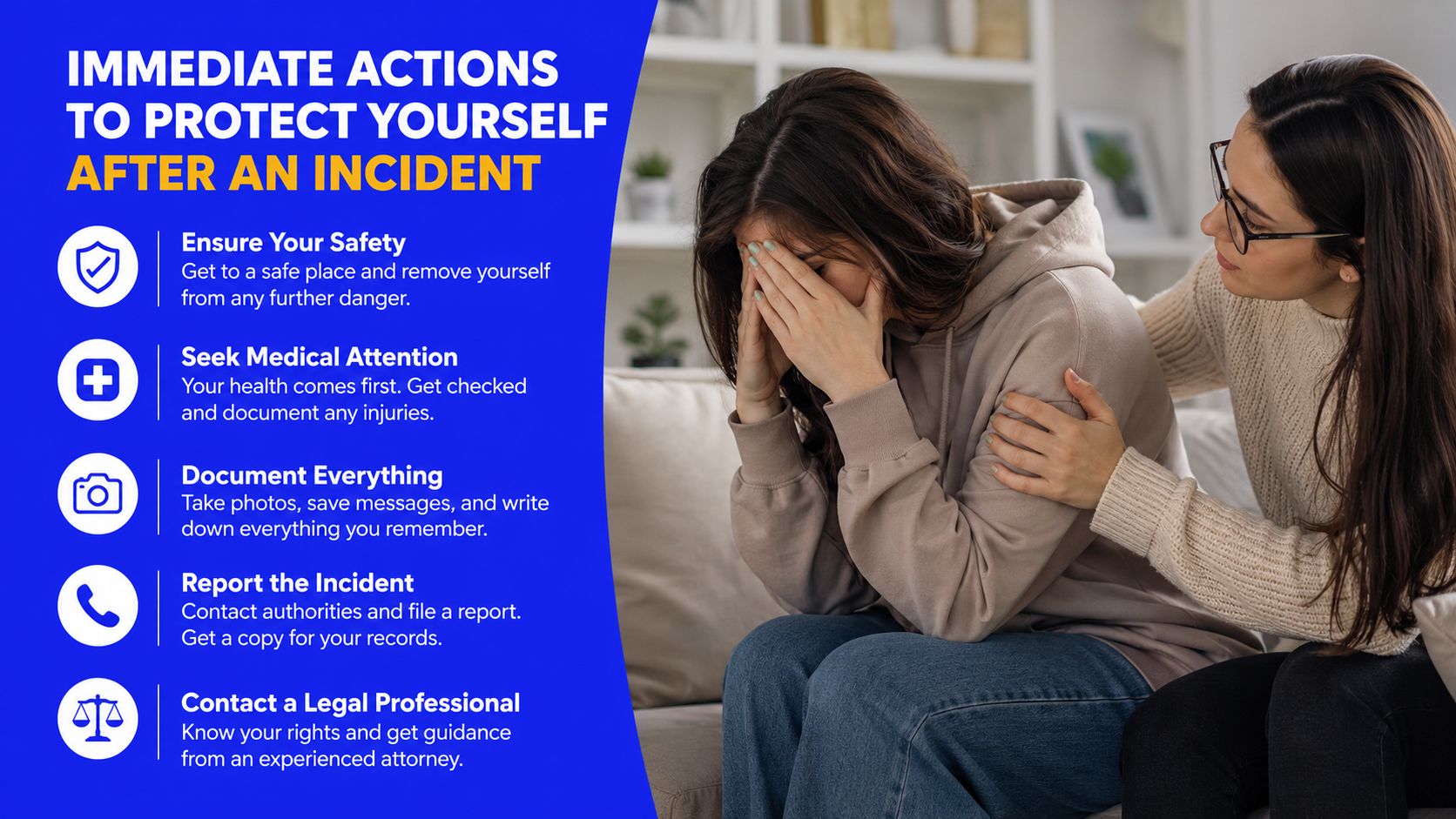
The first hour matters. So do the first three days. If you're still at the scene and it's safe, pull over, call 911, and exchange information if another driver or pedestrian is involved. Take photos. Get video. Capture the damage, the road, the lighting, the signs, and the position of the vehicles before anything changes.
What to preserve right away
Do this fast:
Save dashcam files: many devices overwrite quickly, so pull the footage immediately.
Keep your phone data intact: call logs, location history, photos, and texts can become part of the defense.
Gather witness names: a witness who disappears tomorrow is a witness you may never recover.
Write down your recollection: short, factual notes beat a fuzzy memory weeks later.
If you need to send documents or photos quickly, online faxing can still be useful. A practical guide like send a fax online shows how to move paperwork without waiting on a machine or a front desk.
What not to do
Don't give a long statement to an adjuster. Don't sit for a voluntary interview with law enforcement without counsel. Don't guess at what happened. And don't try to explain your way out with a story that isn't backed by evidence. Silence is not guilt. It's protection.
If you're unsure how Florida prosecutors handle these cases, this Florida hit-and-run resource can help you understand the stakes before you make a recorded statement. The first 72 hours are about preservation, not persuasion. Preserve the record, then let a lawyer speak for you.
Likely Penalties and the Stakes You Are Facing
The penalty picture in a Florida hit and run case turns on what the state can prove. Property damage cases sit in one lane. Injury and death cases sit in another. The fight is over the three contested elements, knowledge, identity, and causation, because those points drive the charge, the sentence, and the fallout on your license and record.
Why prosecutors push these cases hard
Prosecutors treat these cases as flight from the scene, and they push hard because juries and judges react badly to that conduct. The concern is not limited to one crash file. As noted earlier, national AAA materials show how common hit-and-run crashes are and why they draw attention from law enforcement and courts. That pressure shows up fast once the state argues the driver knew about the crash, was the person behind the wheel, and caused the contact that triggered the duty to stop.
Penalty ranges by severity
Florida Hit-and-Run Penalty Ranges at a Glance | Typical Offense Level | Driver License Impact | Criminal Exposure |
|---|---|---|---|
Property damage case | Misdemeanor-style exposure under Chapter 316 | Suspension risk, record impact possible | Fines, court costs, and a criminal case if charged |
Injury case | More serious criminal exposure | Revocation or suspension concerns rise fast | Jail or prison becomes part of the discussion |
Death case | Felony-level exposure | Mandatory revocation can enter the case | Prison exposure and long-term collateral damage |
Florida's crash statutes make the license issue immediate. Once the state says the driver knew of the crash and left anyway, the case can spill into insurance, employment, and commercial driving status. If you drive for work, that problem starts now, not later.
Don't ignore the collateral damage
A conviction can follow you into future insurance quotes. It can trigger a professional license review. It can make a clean driving record harder to rebuild. And if you hold an out-of-state license, the Florida case can still reach beyond the county where the crash happened. The criminal charge is only part of the damage. The rest hits your driving privilege, your job, and your ability to keep life moving without another problem on your record.
Why a Lawyer-Led Defense Beats an App
An automated app can collect forms. It can't think. It can't cross-examine an officer. It can't spot a weak identification witness or notice that the damage photos don't match the alleged contact. In a hit and run defense, that difference matters.
Direct attorney access changes the case
Ticket Shield, PLLC is built around lawyer-led service, with clients able to speak directly with their attorney by phone or text instead of waiting on middlemen or chatbot scripts. That's not cosmetic. It means the person evaluating your case is the person answering your questions and shaping the defense.
The firm also works statewide across all 67 Florida counties, and it uses a value-driven flat-fee model starting at $39.99, with over 99% of clients never appearing in court while the team works to reduce fines, avoid points, and pursue dismissals through strategic litigation. That matters if you want a defense that focuses on the record, not a rushed plea why choose a local lawyer over apps.
What you should expect from real representation
You need a lawyer who knows where the state's case is weak, not a service that just forwards your documents and hopes for the best.
A strategic defense looks at the three contested elements first. Who was driving. What happened. What the driver knew. Everything else supports or attacks those points. If a firm can't talk you through that analysis clearly, keep looking.
For Florida drivers, the practical advantage is simple. Faster access. Better evidence review. Less guesswork. And a defense built around your license, not just a quick resolution.
Take Action Now and Protect Your Driving Privilege
If you're facing a hit and run allegation, stop trying to narrate your way out of it. The state has to prove identity, collision, and knowledge. Your job is to preserve evidence, stay quiet with investigators, and get counsel involved before the record hardens against you. Don't trust an app with a criminal-grade allegation, and don't pay or plead without seeing the case first.
Ticket Shield, PLLC handles Florida hit and run defense with a lawyer-led approach built to protect your license, your record, and your insurance future. If you want a real defense focused on No Points, visit Ticket Shield, PLLC for a free consultation and get the attorney review you need before you say another word.