Florida Hit and Run Laws Explained: Penalties and Defenses
Clear guide to Florida hit and run laws, penalties, defenses, and what to do next. Learn how to protect your license and record today.

You just got that call, the letter, or the knock on the door. Maybe you scraped a parked car in a lot. Maybe you heard a bump and kept driving because you thought there was no damage. Now you're staring at a Florida hit and run charge, and you need to move fast.
Do not treat this like a parking citation. In Florida, leaving a crash scene can turn a bad five seconds into a criminal case with license consequences, insurance problems, and a record that follows you. The state keeps seeing this problem at a massive scale, with 104,273 hit-and-run crashes in 2023, 271 fatalities, and 871 serious bodily injuries reported by the Florida Highway Safety and Motor Vehicles agency, and the issue barely moved down from the year before, by less than 1% FLHSMV hit-and-run data.
Table of Contents
Why a Florida Hit and Run Charge Can Snowball Overnight
A lot of drivers think the case ends when the bumper scuffs are minor. It doesn't. You tap a parked car outside a strip mall, look around, panic, and drive home. The next morning, law enforcement has your plate, a witness statement, maybe a camera angle, and a voicemail waiting for you. Now the matter is no longer a fender-bender. It's a criminal accusation.
That's the danger with a Florida hit and run. The leaving-the-scene offense stands on its own. Prosecutors do not need a dramatic crash to charge you. They need proof that you were involved in the collision and left without doing what Florida law requires. That is why a low-speed contact can still spiral into a case with real jail exposure and a mandatory license consequence if someone was injured or killed.
The scale of the problem makes that aggressive posture predictable. Florida recorded 515,957 hit-and-run crashes over the prior five years, along with 1,251 fatalities, averaging about 103,191 crashes and 250 deaths per year FLHSMV hit-and-run data. This is not a one-off enforcement fad. It's a persistent criminal-traffic issue that hits property owners, injured victims, insurers, and drivers all at once.
Practical rule: if you left the scene, assume the case is bigger than the damage to your car. Investigators look at the scene, the report, witnesses, and your statements. They rarely stop at the bumper.
The fallout shows up later. Your insurance carrier may treat the event as a serious risk. Employers who care about driving history may care too. For drivers who depend on a clean record to work, the charge can become a job problem before the court date even arrives. If you want a deeper breakdown of how leaving the scene gets charged in Florida, review the detailed guide on leaving the scene of an accident in Florida.
What Florida Law Actually Requires After a Crash
A crash puts you on the clock. Florida law expects you to stop, stay, and deal with the scene before you do anything else. The statute behind a florida hit and run charge focuses on the driver's legal duties after impact, and prosecutors use that duty list to build the case Florida Statute 316.027.
The three duties you cannot ignore
Start with the basics. You must stop immediately, or as close as safety allows. You must remain and provide identifying and insurance information to the other driver. You must render reasonable aid if anyone is injured. Fail one step, and the state will argue you left the scene the way the law forbids.
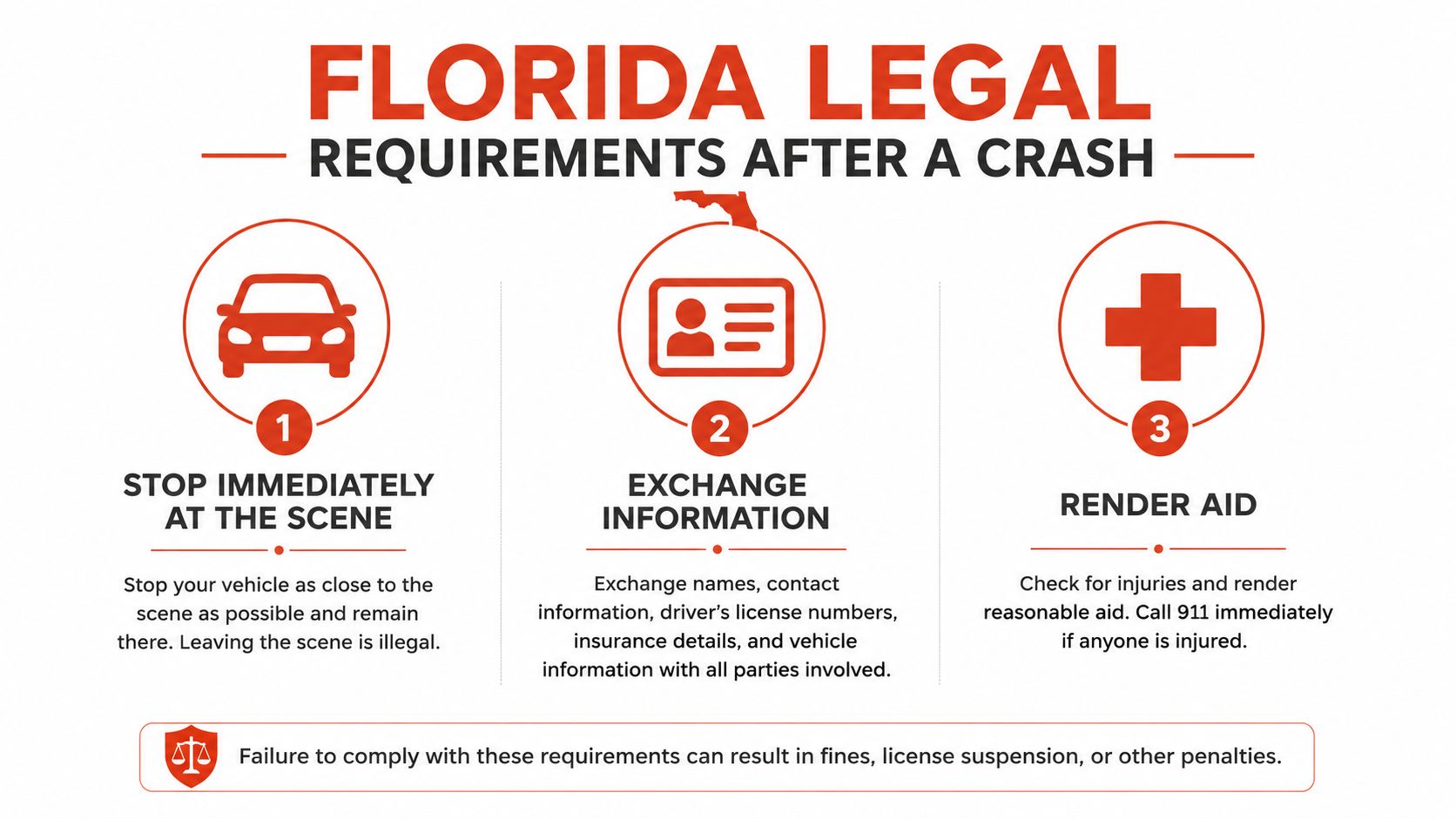
That is why a small parking lot scrape can still turn into a criminal case. The size of the dent does not control the charge. Your conduct after the crash does. If you left without exchanging information or giving prompt aid, the state can treat that as a violation even when the property damage looked minor. Florida also tells witnesses to report fleeing drivers to *FHP (347) or **Crime Stoppers (8477), which shows how quickly these cases can move once someone sees a car leave the scene Florida hit-and-run FAQ.
Insurance comes into play right away too. If you want to understand the baseline coverage that often gets discussed after these claims, check Florida insurance minimums. That gives you the starting point before the civil side of the case starts pushing on your policy, your exposure, and what the other driver may claim.
If the other driver is gone, report the crash fast and preserve every piece of evidence you can. Waiting helps the other side, not you.
For a Florida-focused explanation of how officers and prosecutors treat the offense, read more on how leaving the scene is treated in Florida traffic cases.
How the Charge Changes With the Level of Harm
The harm level drives the charge. Florida treats a parking lot scrape and a crash that leaves someone injured as different problems, because they are different crimes. Leaving the scene is the core violation, but the state grades it by what happened to the other person.
Florida Hit and Run Charge Tiers and Maximum Penalties | |||
|---|---|---|---|
Harm Level | Charge Classification | Maximum Prison Time | License Consequence |
Property damage only | Second-degree misdemeanor | 60 days | Civil and administrative fallout, case-specific |
Bodily injury | Third-degree felony | 5 years | License revocation rules can apply |
Serious bodily injury | Second-degree felony | 15 years | At least 3 years license revocation |
Death | First-degree felony | 30 years | At least 3 years license revocation |
The statute is direct on the license hit. A driver who violates the injury or fatality provisions “shall have his or her driver license revoked for at least 3 years” Florida Statute 316.027. That language leaves no room for a casual read or wishful thinking.
Prosecutors also look at the full event, not just the headline charge. If there are multiple injured people, the filing posture can get heavier fast. If alcohol or drugs are part of the crash, the exposure can grow again. Read your citation, arrest paperwork, or summons with care. A property-damage-only case sits in a very different lane from a case involving injury or death.
If the crash already sent someone into treatment, the medical file can shape the criminal and civil sides together. A guide to post-accident recovery helps show why documentation matters from the start. If you want the charge levels broken down in plain language, use the Florida hit-and-run ticket penalty guide.
The First 60 Minutes After a Crash in Florida
The first hour decides a lot. If you are still at the scene, stay calm and do the simple things right. If you already left, stop making the situation worse. Do not call friends before you understand the risk. Do not post online. Do not try to “explain it away” by text.
What to do right away
Stop and move to safety. Pull over if you can do so safely. Turn on your hazard lights and keep the situation controlled.
Check for injuries. If anyone is hurt, call 911 immediately. Don't assume pain will go away in ten minutes.
Exchange information. Give the other driver your name, insurance, and vehicle details, and get the same from them.
Photograph everything. Capture the vehicles, the road, any debris, license plates, and the surrounding area.
Say very little. Do not admit fault at the roadside. Do not guess. Do not apologize in a way that turns into an admission.
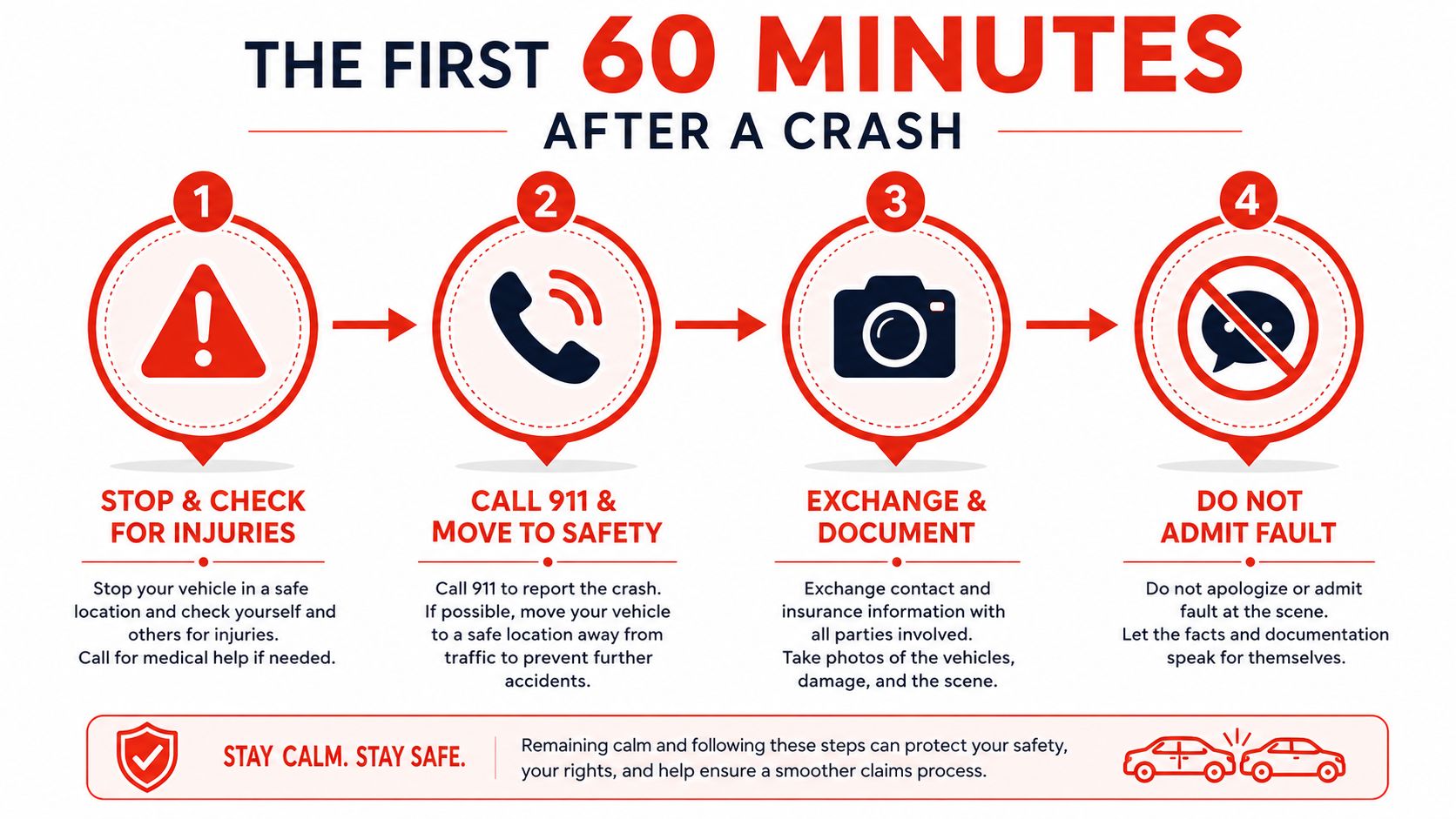
The words you say at the scene often become the first draft of the police report. Officers, witnesses, and insurance adjusters will all lean on those words later. That's why you should keep your answers short and factual. If you're the witness, use the Florida hotlines above. If you're the driver, do not chase a fleeing vehicle. That creates risk, confusion, and more evidence against you.
If you want a practical checklist tied to real Florida crash handling, the firm's car accident resource is worth a look. It helps drivers understand what should happen before the scene gets cold.
Bottom line: stay, document, and call the right people. Panic helps no one, and it can turn a survivable mistake into a charge that sticks.
Defenses and Mitigation Strategies That Actually Work
A credible defense starts with evidence, not excuses. The strongest Florida hit-and-run defenses usually focus on what the state can prove. Did you know a crash happened? Are they sure you were the driver? Did you satisfy the reporting duty by calling law enforcement promptly? Those are the pressure points.
Defenses with real traction
One common defense is lack of knowledge. If the contact was minor and the state cannot prove you knew a crash occurred, that matters. Another is misidentification of the driver. Witnesses can be wrong, especially at night, under stress, or with a partial plate. A third is prompt reporting, where the driver did not abandon the scene in the legal sense because they went directly to law enforcement or took immediate action that the statute recognizes.
There are also constitutional issues. If police stopped the car unlawfully, expanded the stop without a legal basis, or handled identification evidence sloppily, that can weaken the case. Social media can cut both ways here. So can dashcam video. So can a prior crash history that makes the state argue the “I didn't notice” story sounds convenient instead of credible.
Do not confuse a claim with proof. Saying you didn't know is not enough by itself. You need facts that support it.
Mitigation that judges and prosecutors notice
Mitigation is different from a full defense. Voluntarily returning to the scene can help. So can a clean record, cooperation with officers, completion of a driver improvement course, and a civil resolution with the other party. Those facts do not erase a charge, but they can help reduce the damage.
If you want a tactical overview of defense themes, review the firm's guide on how to defend against a leaving the scene of an accident charge. That's the right mindset here. Build a defense around what can be proven, not around what sounds good in the moment.
Where the Criminal Case Meets the Civil Lawsuit
A Florida hit and run usually creates two separate tracks. One is criminal. The other is civil. They move on different rules, and you cannot assume one controls the other. A criminal conviction is not required for a civil plaintiff to recover money. Civil court uses a lower burden of proof, which means a victim can pursue damages even if the state does not secure a conviction.
That matters because insurers may deny coverage when the driver leaves the scene, or they may reserve rights and fight the claim. When that happens, the driver can end up personally exposed. Property damage, medical bills, and other losses can become a direct civil problem, not just an insurance file.
Why timing matters more now
For personal-injury lawsuits arising from Florida car accidents on or after March 24, 2023, the amended limitation period generally gives victims 2 years to file Florida civil timing update. That makes early evidence work more important, not less. The longer a victim waits, the harder it gets to preserve video, locate witnesses, and document injuries.
Civil plaintiffs can also subpoena records the driver may have hoped would stay buried in the criminal file. Crash reports, body-cam footage, and cell phone records can all surface in litigation. That is why the smartest move is to treat both clocks as active from day one.
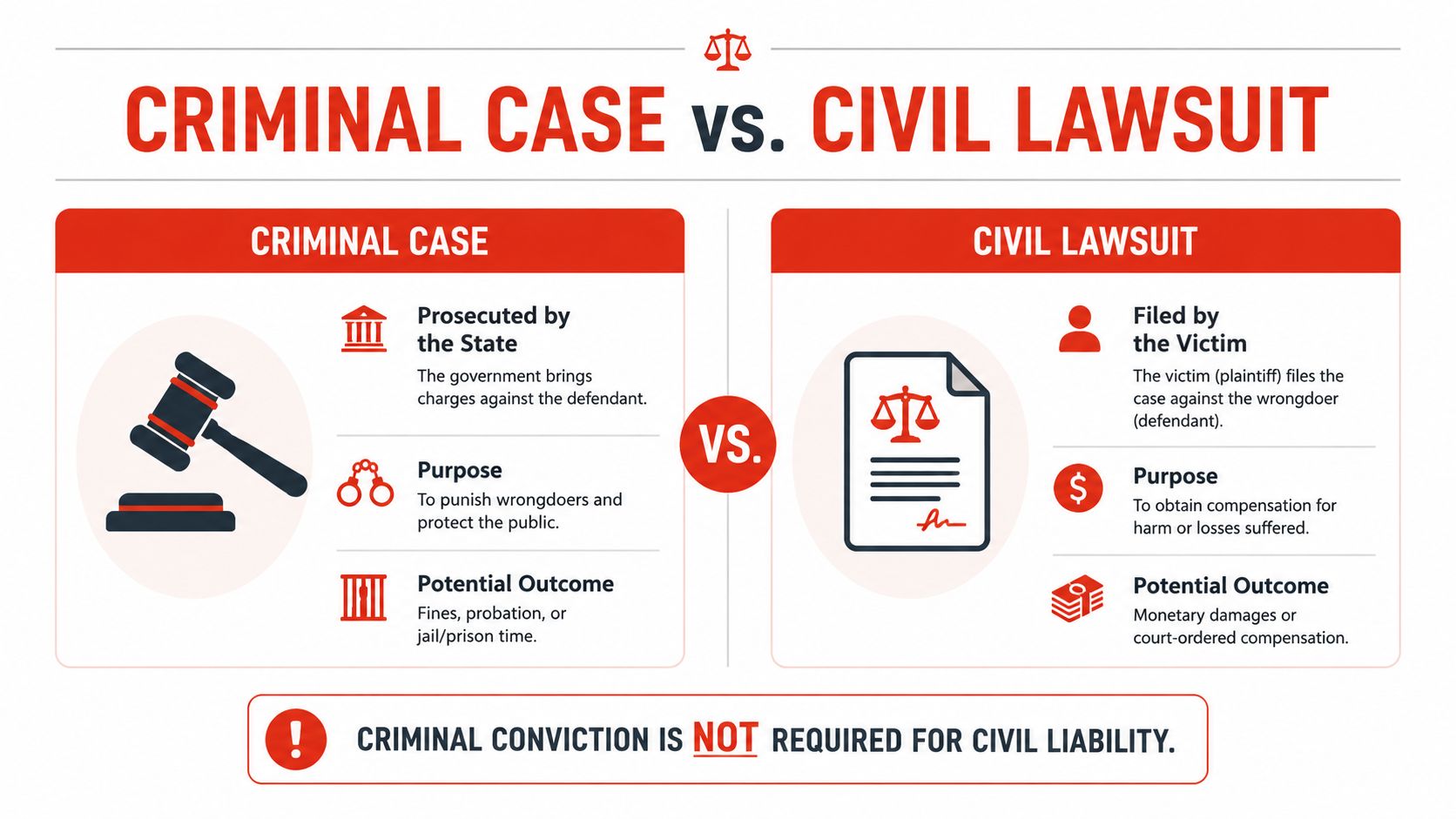
If you're trying to understand how a private claim fits around a traffic case, the civil side is often where the money risk grows. The criminal side threatens your freedom and license. The civil side threatens your assets and insurance position. Handle both early, or both can get worse.
Why a Lawyer-Led Defense Beats an App and What to Do Now
You do not need an app to tell you to fill out forms and wait. You need a lawyer who can read the charge, attack the state's proof, and keep your license protected. That's the difference between a lawyer-led defense and a ticket mill. One gives you direct legal judgment. The other gives you a queue.
Ticket Shield, PLLC is a Florida-based firm where clients speak directly with their attorney by phone or text, not through a corporate answering script. That matters when your case involves a criminal traffic charge, a license issue, and a deadline that can't be missed. If you want a broader comparison of that model, see the firm's explanation of why a local lawyer beats apps. The screenshot below shows the firm's Florida traffic practice in plain view.
You need the case handled with one goal in mind, No Points on your license if that outcome can be reached. That protects more than your driving record. It protects your insurance, your gig-work accounts, your professional licenses, and the jobs that depend on a clean driving history.
Visit Ticket Shield, PLLC today for a free consultation. Put an experienced Florida traffic defense attorney between you and the State, and focus on the outcome that matters most, No Points on your license.