Florida Traffic Ticket Number: Find It and Use It
Learn where to find your Florida traffic ticket number, how to use it to pay or contest a citation, and why Ticket Shield needs it to fight for you.

You're sitting in your car with a Florida traffic citation on the passenger seat, trying to decide whether to pay it, contest it, or call someone. The first thing you need is the Florida traffic ticket number. That alphanumeric code is more than a reference printed on a form. It routes the citation through the clerk's system, payment process, hearing records, point assessment, and potential license-suspension review.
Florida issued more than 3 million traffic citations in 2024, according to the Florida Highway Safety and Motor Vehicles citation statistics archive. With that volume, clerks and courts depend on precise identifiers. A single incorrect character can send you to the wrong search result, or make your case appear missing.
Table of Contents
The Moment You Hold a Florida Traffic Ticket and Realize You Need the Number
Using the Number to Pay a Florida Traffic Ticket Online or In Person
Why the Citation Number Connects to Points, Insurance, and Suspension
Protect Your License With a Free Florida Ticket Consultation
The Moment You Hold a Florida Traffic Ticket and Realize You Need the Number
You've just been stopped on I-4 or A1A. The officer hands you a yellow carbon-copy Uniform Traffic Citation, explains that you'll need to deal with it, and walks away. You remain in the parking lot, looking at boxes, abbreviations, and legal language while wondering what to do first.
Start with the citation number. Florida's traffic-citation system gives you several possible paths: pay the citation, contest it, or elect an available driver-improvement option. The Florida Department of Highway Safety and Motor Vehicles describes those choices for a Uniform Traffic Citation on its traffic citation guidance page. Your number identifies the exact ticket involved in whichever path you choose.
The clock starts before you feel ready
Miami-Dade states that civil traffic citations must be satisfied within 30 days of issuance on its traffic services page. Other counties use their own clerk portals and procedures, so don't assume that waiting for a mailed reminder protects you. The deadline is a legal problem, not an administrative suggestion.
Your citation number appears in the county clerk's search tool, payment screen, hearing paperwork, and attorney intake process. If the number is wrong, the clerk may not locate the record. You may then lose time while the response window continues running.
Practical rule: Photograph the entire ticket immediately, then copy the citation number exactly as printed. Keep the original where you can find it.
The number also helps a lawyer retrieve the official case record, confirm the charge and jurisdiction, and check whether a filing or hearing record exists. By the end of this guide, you'll know where to find the number, how to use it, why it matters beyond payment, and how a lawyer can use it to pursue No Points on your license.
Where to Find the Citation Number on Your Florida Ticket
Look at the upper-right or center block of the Uniform Traffic Citation. The field is commonly labeled “Citation #,” “Ticket #,” or a similar identifier. Don't confuse it with the statute number, officer badge number, court date, driver's license number, or a later case number assigned by the clerk.
Florida DHSMV training materials state that citation numbers contain 7 alphanumeric characters and are tracked through the state's inventory system, as described in the Uniform Traffic Citation workshop materials. Miami-Dade also describes its traffic citations as using a combination of seven letters and numbers. Enter every character exactly.
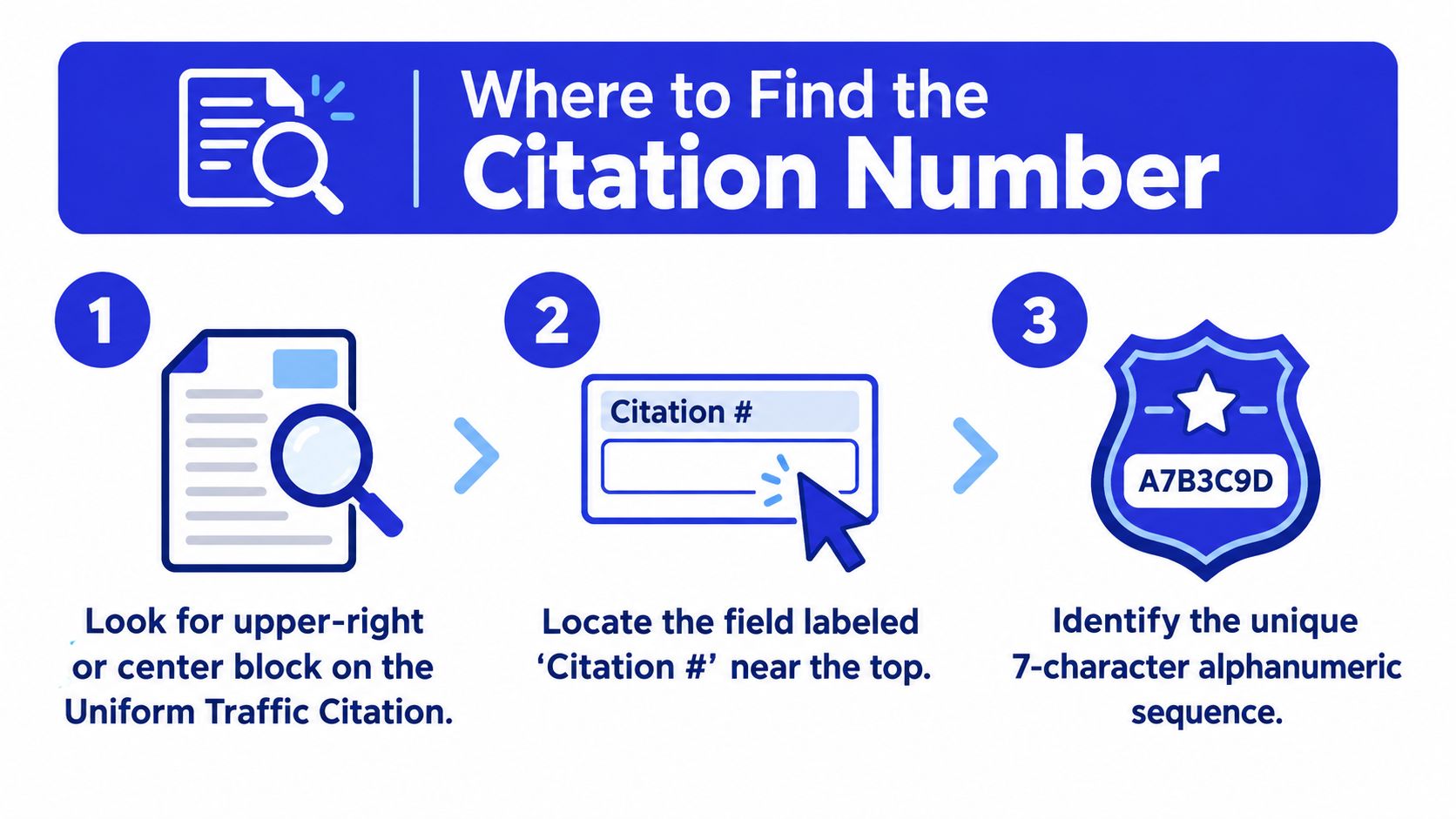
Use the printed number, not your best guess
Check these details before searching:
Read letters carefully: A printed letter can resemble a number, especially when you're typing from a poor photograph.
Preserve leading characters: Mobile autofill can remove or alter characters at the beginning of the sequence.
Leave out extra formatting when instructed: Polk County warns that a four-number-three-letter format may include an extra number after the citation. Follow that county's entry instructions rather than adding every nearby character.
Separate identifiers: The original citation number may differ from the longer court case number created after filing.
A failed search doesn't automatically mean the ticket disappeared. Palm Beach County notes that a citation may not yet appear if law enforcement hasn't filed it. Broward County also explains that an unavailable online case may require a later search or a purged-record inquiry. Use the county clerk's instructions and contact the clerk if the record remains unavailable.
For a more detailed walkthrough, use Florida citation number lookup guidance. Notices involving automated enforcement or toll-by-plate systems can use different reference codes, so don't assume every notice uses the same Uniform Traffic Citation format.
Using the Number to Pay a Florida Traffic Ticket Online or In Person
Payment is usually the fastest administrative route, but it isn't automatically the safest legal choice. Your citation number is the search key that connects the paper ticket to the clerk's electronic record.
For online payment, identify the county clerk handling the citation and open that court's official payment portal. Enter the citation number exactly, along with any other requested identifying information. If the system can't find the ticket, check the characters and filing status before assuming the portal is broken. County systems differ, and a citation may not be searchable until the issuing agency files it.
In person, go to the appropriate county clerk of court office with the physical ticket and identification. The clerk can compare the printed citation number with the record and tell you whether the case is eligible for payment, contest, or another available resolution. Payment methods vary by county, so verify accepted methods before traveling.
Compare the two payment paths
Factor | Online Payment | In-Person Payment |
|---|---|---|
Starting point | Search the county clerk's portal using the citation number | Present the ticket to the county clerk |
Main advantage | Convenient and available through the county's online system | Direct assistance when the record or number creates confusion |
Main risk | A typing error or unfiled citation can block the search | Travel time and county office availability |
Record check | Review the confirmation carefully after payment | Ask the clerk to confirm the case and payment details |
Legal effect | Payment resolves the payment transaction but may affect your driving record | Same legal effect as online payment |
Before paying, understand the trade-off. A payment may close the clerk's collection process, but a conviction can lead to points under Florida's driver-record system. Section 322.27 is the governing framework for points and suspension thresholds, and Florida law directs the department to enter the proper points when it receives a report of an infraction, as reflected in Florida's traffic-related statutory provisions.
Read how to pay a Florida traffic ticket before submitting payment. If preserving your license and insurance position matters, review the contest option first.
Using the Number to Contest a Florida Traffic Ticket
Contesting begins with a timely election, not with an argument at the clerk's window. Mark the appropriate contest option on the citation or follow the county clerk's procedure for requesting a hearing. The citation number belongs on the request, the hearing notice, the docket, and any written materials filed in the case.
Florida law creates hearing procedures for certain notice-of-violation matters. Under section 316.1896, a person may request a hearing within 30 days after the notice of violation, and the statute says payment or a fee can't be required before the requested hearing occurs, as shown in the Florida Legislature's text of section 316.1896. The procedure for your particular citation depends on its classification and the county process.
Organize the contest around the identifier
Keep these materials together:
The original citation: Confirm the number, alleged violation, court, and response information.
Your election or hearing request: Use the exact citation number printed on the ticket.
Your evidence: Gather photographs, documents, witness information, and any relevant timeline.
Court correspondence: Preserve hearing notices and clerk messages that reference the case.
Attorney information: Give counsel the citation number, county, stop date, and a clear account of what happened.
Florida traffic cases can involve informal or formal hearing procedures, depending on the citation and legal issue. Don't choose a procedure based on a generic online form. Ask the clerk or a Florida traffic attorney what applies to your record.
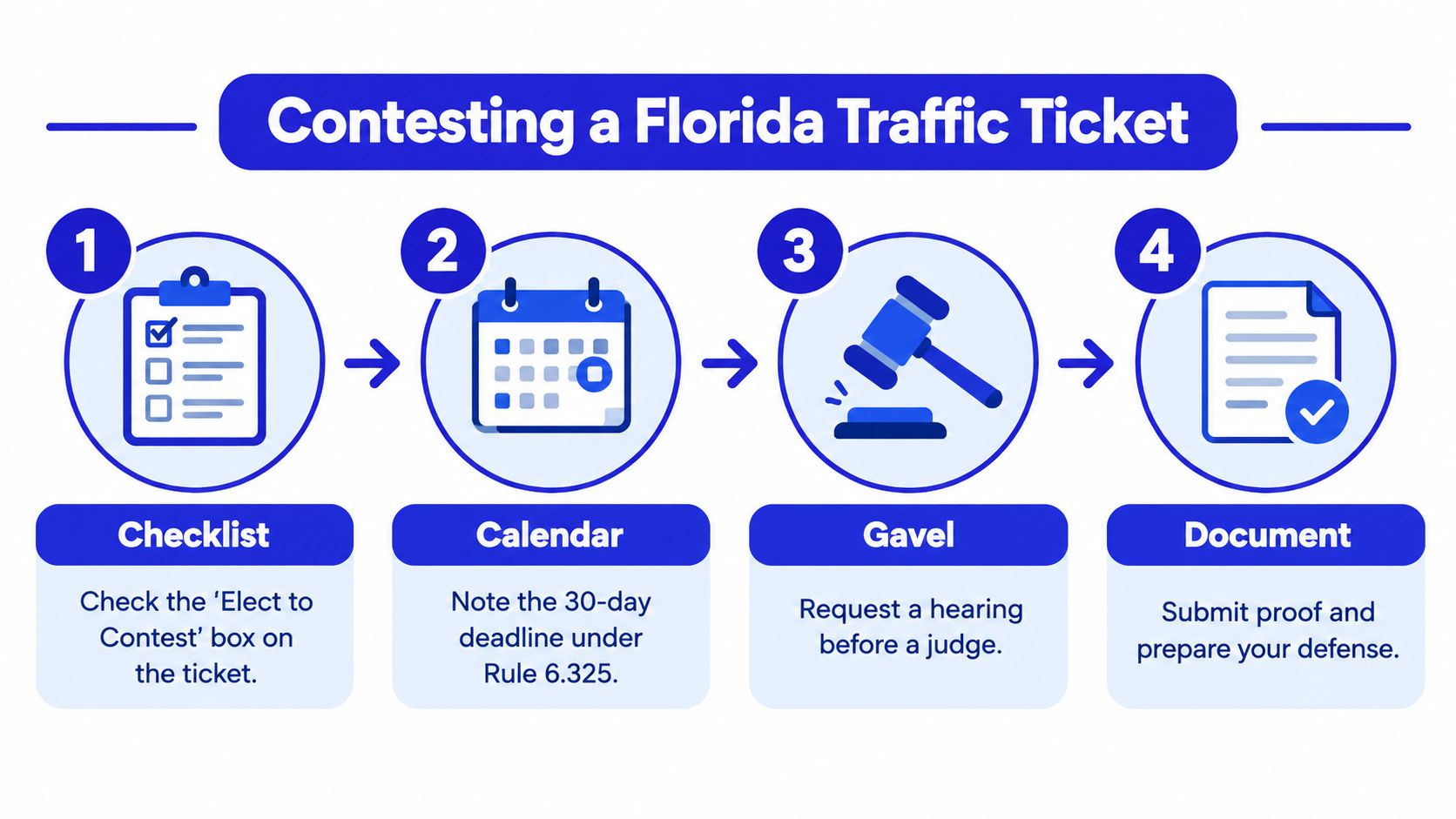
A lawyer may be able to appear for you, depending on the charge and court requirements. That can spare you a missed workday, but only if the attorney receives accurate case information early enough to act. Learn more about challenging a Florida speeding ticket.
Don't treat the citation number as an afterthought. If the clerk can't match your request to the correct case, your contest can stall while the deadline approaches.
Why the Citation Number Connects to Points, Insurance, and Suspension
The citation number follows the case beyond the payment page. It helps courts, clerks, and driver-record systems match the alleged violation to the disposition reported to Florida DHSMV. Once a conviction is reported, the department applies the points required under Florida law.
Section 322.27 sets Florida's point and suspension framework. DHSMV states that points remain on the driving record for at least five years, and suspension thresholds include 12 points in 12 months, 18 points in 18 months, or 24 points in 36 months, as explained on its points and point suspensions page. The same page explains that reinstatement may involve ADI school enrollment, fees, and additional requirements.
A citation can become a record problem
Florida's Chapter 316 also authorizes specific penalties. For a qualifying first violation described in the statute, section 316 provides a $500 fine or 25 hours of community service and 6 driver-license points. A second or subsequent violation carries a $1,000 fine and another 6 points, according to Florida Statutes Chapter 316. Those consequences depend on the specific violation and facts, so identify the statute printed on your citation before deciding what to do.
Violation Type | Points Assessed | Typical Insurance Surcharge | Suspension Trigger |
|---|---|---|---|
Specific qualifying Chapter 316 violation | 6 points under the cited statutory provision | Depends on the insurer and record | Depends on the driver's accumulated points |
Other traffic conviction | Depends on the violation | Depends on the insurer and record | Florida's point thresholds may apply |
Citation not yet resolved | No final conviction-based assessment until disposition | Review the status with your insurer | Unresolved obligations can create separate compliance problems |
Don't assume payment is the end of the matter. Use the citation number to confirm the disposition, review your driver status, and address any suspension notice. If your license is already suspended, resources explaining how to find bail for suspended license may help with general next-step research, but a Florida traffic attorney should handle the underlying citation and reinstatement analysis.
For a focused explanation of Florida point consequences, see Florida driver's license points guidance.
Why Ticket Shield Starts Every Case With That Same Number
A lawyer-led review starts with the official record, not a scripted answer. Ticket Shield, PLLC uses the citation number to identify the county, retrieve the case information, confirm the charge and hearing date, and examine the available defense path. Clients can communicate directly with their attorney by phone or text rather than being routed through a corporate answering service or automated chatbot.
The same identifier appears in other service models, but the work behind it differs:
Service model | What happens after you provide the number |
|---|---|
Florida traffic law firm | A licensed attorney reviews the record and can evaluate dismissal, amended disposition, adjudication options, or trial strategy |
Automated ticket app | The system may provide scripted guidance or process a limited, non-contest request |
Referral service | The lead may be transferred to another provider, leaving you to confirm who handles the case |
The citation number is the routing key in every model. It doesn't, by itself, create a defense. A lawyer must examine the charge, evidence, officer information, procedural history, and available resolution.
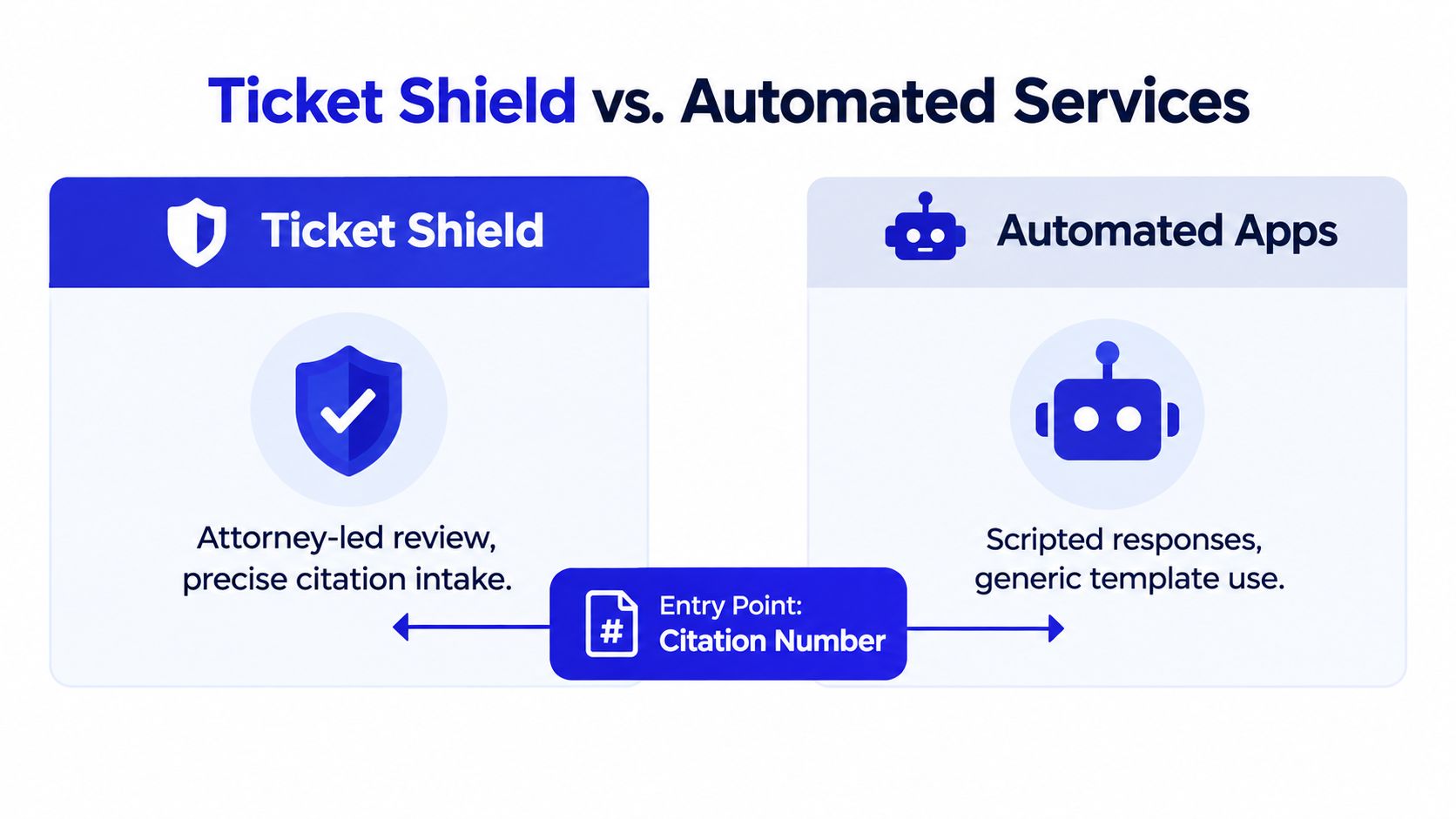
Ticket Shield's direct-attorney model matters when your real objective is broader than paying a balance. The firm uses the citation number to address the ticket as a case with downstream effects, including the pursuit of No Points where the facts and law allow.
Protect Your License With a Free Florida Ticket Consultation
Waiting is the wrong strategy when a Florida citation is unresolved. The clerk's response window continues, and a missed deadline can remove options that were available when you first received the ticket. A payment may be easy to submit, but it can leave you dealing with points, insurance consequences, or a suspension issue afterward.
Pull out the citation and photograph every page. Make sure the image shows the citation number, alleged violation, county, issue date, and court instructions. Then send the information for review through Ticket Shield's Florida traffic ticket lawyer consultation.
Give the attorney usable information
Include:
The complete citation: Don't crop out the number or charge.
The issuing county: Florida clerks use county-specific systems and procedures.
Your deadline: Include any date printed on the citation or clerk notice.
Your concern: State whether your priority is avoiding points, protecting your license, contesting the allegation, or resolving a suspension.
Your contact details: Direct phone or text communication lets the attorney clarify facts quickly.
Ticket Shield, PLLC offers flat-fee case pricing, so you can understand the cost before signing. The firm's Florida traffic attorneys review the citation and identify a practical route, which may involve contesting the charge, seeking a different disposition, or pursuing No Points when legally available. No attorney can promise a particular result, but you can make a better decision when counsel reviews the actual ticket instead of a vague description.

Don't pay first and investigate later if your driving record matters. Visit TicketShield.com now, upload the citation, and get a Florida attorney's assessment while the response window remains open.
Visit Ticket Shield, PLLC for a free consultation about your Florida traffic ticket number and the legal options connected to it. A lawyer-led team can review the citation, communicate with you directly by phone or text, and pursue the strongest available path toward No Points on your license.