What to Bring to Traffic Court: 2026 Florida Checklist
Wondering what to bring to traffic court in Florida? This 2026 checklist covers 7 critical documents to protect your license and fight for no points.

Facing Florida traffic court unprepared is a mistake you only make once. If you were handed a citation, your next move is not panic, it's preparation. The ticket, the paperwork, the photos, the video, the records, and your own written account all matter because Florida traffic court is evidence-driven, not sympathy-driven. The court is going to look at what you can prove, not how stressed you feel.
If you want a real shot at keeping points off your license, you need to walk in with the right file and the right lawyer. Ticket Shield, PLLC is built for that fight. You deal directly with your attorney by phone or text, not a chatbot, not a middleman, and not an answering service that sends you in circles. If you're serious about protecting your record, start here. a trial checklist for attorneys
Table of Contents
3. Calibration and Maintenance Records for Officer's Speed Detection Equipment
3. Calibration and Maintenance Records for Officer's Speed Detection Equipment
4. Medical Records Prescriptions and Witness Contact Information for DUI and Serious Charges
5. Photographs and Documentation of Road Traffic Light and Weather Conditions
7. Written Statement of Your Account and Attorney-Client Consultation Notes
1. Your Original Traffic Citation or Notice to Appear
Start with the paper the officer gave you. The original citation is the core document because it carries the violation code, the date, the location, and the court information you need to build the defense file. Under Florida Statute 316.640, law enforcement uses a uniform traffic citation with required information, and that citation is often where procedural problems first show up.
Bring the original, not a screenshot, not a printout, and not a copy you dug out of your email later. A lawyer and the court need to see the exact document you received, including any handwritten notes, officer initials, or notations that may matter. If you are trying to avoid points, you want every defect and every inconsistency visible on the page.
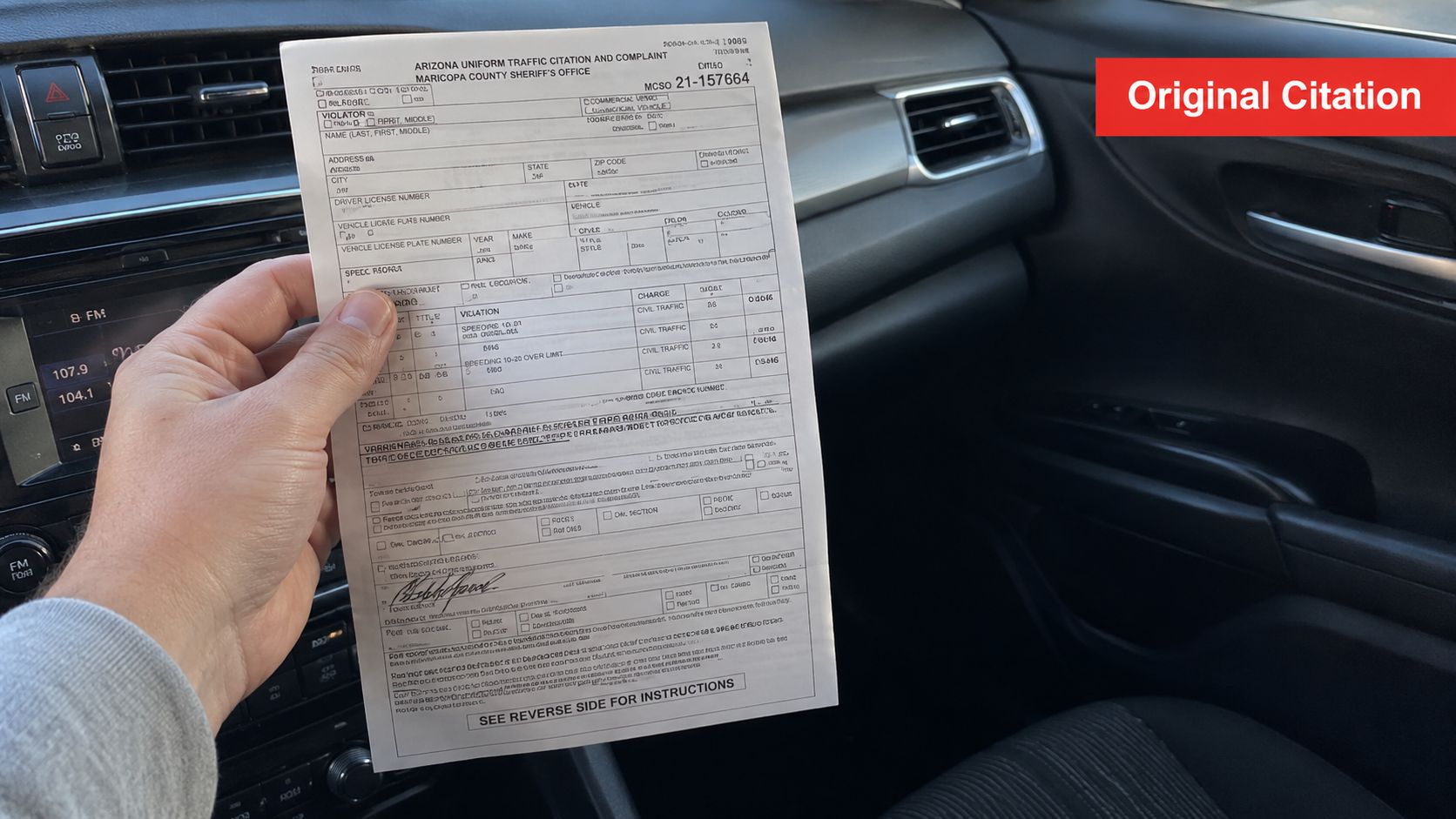
Protect the citation the day you get it
Do not write on the citation. Do not fold it into a glove box with old receipts. Keep it flat, dry, and easy to find.
Practical rule: If the citation goes missing, your leverage goes with it.
Take clear photos of both sides as a backup, but do not confuse a photo with the actual ticket. A photo helps your lawyer review the document early, while the original is what you should carry into the consultation and into court. If you need help reading the ticket and spotting the weak points, use this Florida traffic citation guide from Ticket Shield before you do anything else.
3. Calibration and Maintenance Records for Officer's Speed Detection Equipment
If the ticket is based on speed, the device matters as much as the officer's version of events. Radar, LIDAR, pacing, and camera-based enforcement all depend on equipment that has to function correctly. Calibration and maintenance records belong in your file because they are a direct attack on the accuracy of the allegation.
Speed cases often turn on paper. If the records are missing, stale, or incomplete, the reading becomes harder to trust. If the device was not maintained properly, the number on the citation is much easier to challenge.
You need the exact model and serial number from the citation or discovery response. A generic objection does nothing. Your attorney can use that information to request calibration logs, maintenance history, and any related agency records. If the officer relied on a device and the paper trail is thin, that weakness belongs in the defense packet.
Ask for the records before court day
Do not walk into court hoping the judge will question the device for you. Request the records in writing through discovery, and give your lawyer enough time to press the issue. If the device was central to the stop, those records can shape negotiations before the hearing ever starts.
Direct rule: If the speed device is undocumented, challenge the number.
Bring any technical specifications you already have for the model, and use them to compare the officer's claim against the actual equipment. That matters even more in laser cases, where setup and documentation can decide whether the reading holds up. For a direct example of how defense strategy changes when the state depends on speed enforcement tools, review this Ticket Shield speeding defense guide.
3. Calibration and Maintenance Records for Officer's Speed Detection Equipment
If the ticket involves speed, the device matters as much as the officer's story. Radar, LIDAR, pacing, and camera-based enforcement all depend on equipment that has to work properly. That is why calibration and maintenance records belong in your case file, not as an afterthought, but as a core challenge to the accuracy of the allegation.
Speed cases often turn on documents. If the records are missing, stale, or incomplete, the reading gets harder to trust. If the device was not maintained correctly, the number on the citation is not as solid as it looks.
You need the specific model and serial number from the citation or discovery response, because a generic challenge does not help you. Your attorney can use that information to request the calibration logs, maintenance history, and any related records from the agency. If the officer used a device and the paper trail is weak, that weakness belongs in the defense packet.
Ask for the records before court day
Do not walk into court hoping the judge will magically question the device for you. Request the records in writing through discovery, and give your lawyer enough time to press the issue. If the device was central to the stop, those records can drive negotiations before you ever get to the hearing.
Direct rule: If the speed device is undocumented, challenge the number.
Bring any technical specifications you already have for the model, and be ready to compare the agency's paperwork against the device's own requirements. This Florida laser speeding defense resource is relevant because speed-device issues are often won or lost on the records, not the roadside argument. A Florida traffic lawyer who knows how to press discovery can turn that paperwork into an advantage.
4. Medical Records Prescriptions and Witness Contact Information for DUI and Serious Charges
When the charge is serious, the story behind the stop matters more than ever. Medical records, prescriptions, and physician notes can explain symptoms an officer may have mistaken for impairment. Tremors, slurred speech, balance issues, and confusion can come from a medical condition or medication, not intoxication.
Bring the documents that explain your actual condition. Keep prescription bottles with current labels. Bring physician notes if they exist. If a medical issue affected the roadside interaction, your lawyer needs those records before court, not after the state has already framed you as impaired.
Witnesses matter too. Passengers, coworkers, or anyone else who saw you driving before the stop can help contradict the officer's account. Their contact information should be in your file, and if they are willing to testify, that needs to be handled early.
Build the witness list now
Do not wait until the week of court. People get busy, forget details, and stop answering the phone. Contact them quickly, confirm they remember what they saw, and let your attorney decide how to use that testimony.
Medical records and physician notes: Bring anything that explains symptoms the officer may have misread.
Prescription bottles: Keep the current labels visible and accurate.
Witness names and phone numbers: Make sure your lawyer can reach them fast.
Passenger statements: If someone was in the car, that account can matter immediately.
This Florida DUI defense guide from Ticket Shield shows why medical context and witness support can change the direction of a case. If the facts support it, your attorney can use those records to push back on the state's narrative before it hardens.
5. Photographs and Documentation of Road Traffic Light and Weather Conditions
Take the scene seriously. If the road layout, sign placement, signal timing, visibility, or weather conditions mattered, you need photos that prove it. A citation can look routine on paper and still fall apart once the actual location is documented.
Go back to the site as soon as you can. Capture the officer's viewpoint, then capture your viewpoint. Get the traffic light, the posted signs, the lane markings, the shoulder, the curve, the vegetation, and anything that blocks sight lines. If the weather or lighting played a role, document that too.
The strongest photos are time-stamped and tied to the location. That matters because conditions change quickly. A sign that was blocked by vegetation in one season may be visible later. A yellow light that seemed too short from the driver's seat may make more sense, or less sense, when photographed from the intersection itself.
Match the conditions as closely as possible
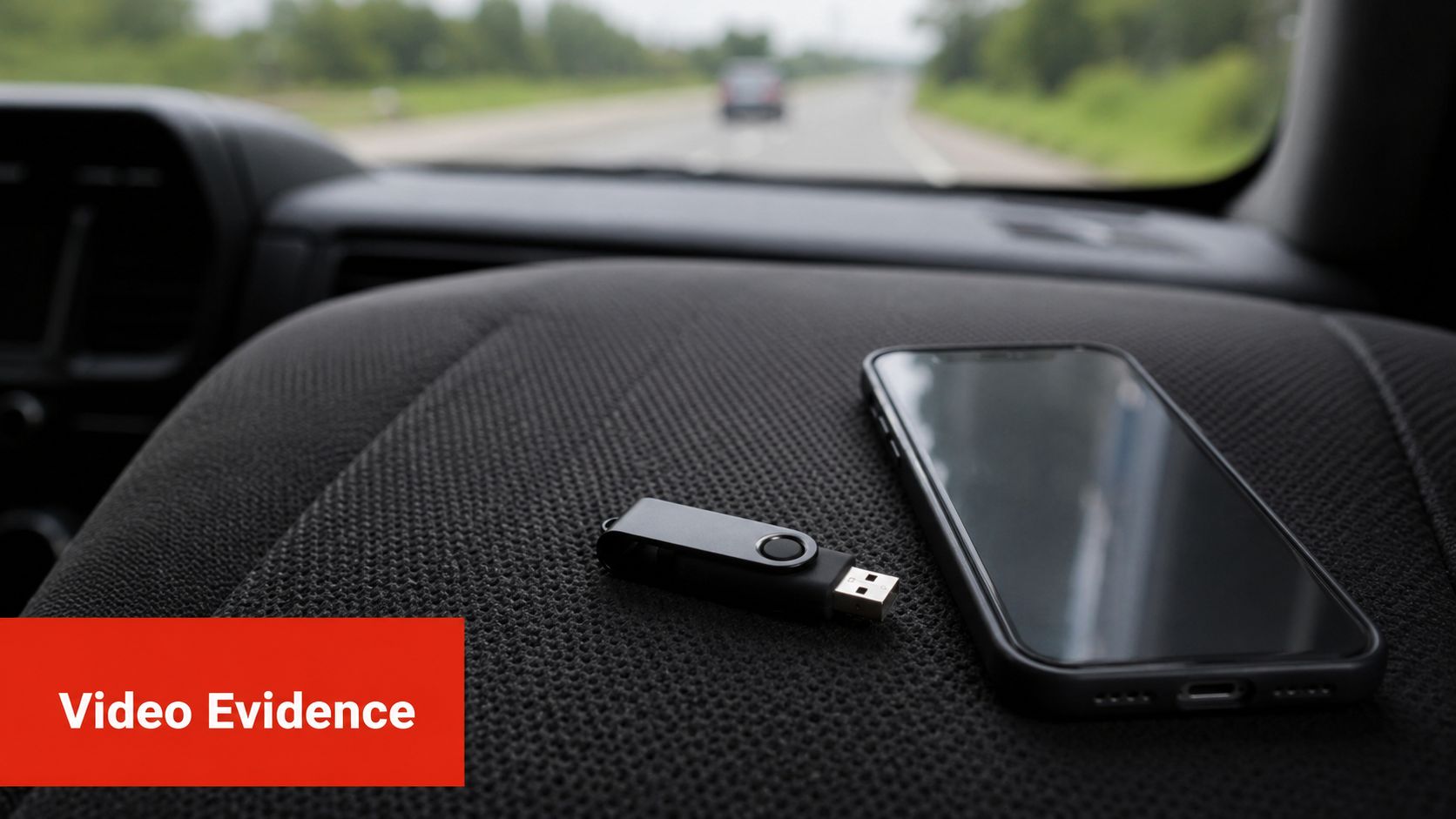
Take the photos at the same time of day as the stop if you can. Bring a printed photo set or a USB drive to court so the judge can see the scene clearly. For red-light camera cases, compare the actual photo from the ticket with your current photos of the intersection.

Photographs are strongest when they show what the officer saw and what you saw.
If you are arguing road conditions, don't show up with vague memories. Show the scene. A clean driving record still matters, and you should know exactly what yours looks like before court. This Ticket Shield article on checking your driving record explains how to confirm it, which helps your lawyer decide whether the court is likely to treat your case as a one-off mistake or part of a bigger pattern.
6. Your Complete Driving Record and Insurance Documentation
Your driving history changes the way a traffic case is handled. A clean record helps your lawyer argue for leniency, reduction, or dismissal. A messy record can make the state push harder. Either way, you need the official documents in your hand.
Bring your Florida driving record, your current insurance card, and a printed copy of your policy declarations if you have them. If you took a defensive driving course after the citation, bring that certificate too. If you drive for work, the stakes are even higher, because one ticket can spill over into employment problems, platform issues, or CDL concerns.
A missing insurance card or outdated registration can slow down the hearing and make a bad day worse. In major Florida traffic courts, basic paperwork is not optional. It is the baseline.
Show the court the full picture
Your record helps tell the story. If you have years without violations, your lawyer should know that. If you have prior dismissals, that matters too. If you have completed a traffic course, do not leave the certificate in your glove box.
Florida driving record: Bring the official version, not a memory of it.
Insurance documentation: Make sure it was valid on the citation date.
Defensive driving certificate: Include it if you finished a course.
Employment-related documentation: If the ticket threatens your job, tell your lawyer immediately.
This Ticket Shield guide to checking your Florida driving record is useful because the court looks at patterns, not just the single citation in front of it. When your lawyer sees the full history, the defense can be built around the right goal, which is often keeping points off the license.
7. Written Statement of Your Account and Attorney-Client Consultation Notes
Write your version of events while the facts are still fresh. Keep it simple, honest, and detailed. State who was there, what happened, when it happened, where it happened, and what you personally saw or heard.
This is not the place for legal conclusions. Do not argue the statute in your first draft. Do not guess. If you do not know something, leave it out. The strongest statement is the one that stays inside the facts you observed.
Bring that statement to your consultation and talk through it with your attorney. If you are working with Ticket Shield, you can do that by phone or text, which keeps the process direct and fast. That matters because you should not be trying to build your defense alone while also guessing what the court will care about.
Write it like a witness, not like a lawyer
Put the weather, time of day, traffic volume, and any distractions in the statement. Include anything the officer said that conflicts with the citation. If a passenger saw the same thing, note that person's name and contact information. Keep a copy for court, but do not read from it word for word while testifying. Use it to refresh your memory.
This Ticket Shield consultation resource is a good reminder that the first conversation with counsel should shape the defense, not just collect facts. A seasoned Florida traffic attorney will know which details help and which details create problems. That is exactly why you should not wing it.
7-Item Traffic Court Evidence Comparison
Item | 🔄 Implementation Complexity | ⚡ Resource Requirements | 📊 Expected Outcomes | 💡 Ideal Use Cases | ⭐ Key Advantages |
|---|---|---|---|---|---|
Your Original Traffic Citation or Notice to Appear | Low 🔄, simple to keep and review | Low ⚡, original paper; safe storage | High 📊, reveals procedural defects; aids negotiation ⭐⭐⭐ | All traffic cases; procedural/technical defenses 💡 | Official record; verifies details; essential for attorney review ⭐⭐⭐ |
Dashboard Camera (Dashcam) Footage or Mobile Phone Video Evidence | Medium 🔄, preserve metadata and chain of custody | Moderate ⚡, device, storage, backup, USB | Very High 📊, can exonerate or force dismissal ⭐⭐⭐⭐ | Speeding, red‑light, credibility disputes 💡 | Objective, time‑stamped visual proof; highly persuasive ⭐⭐⭐⭐ |
Calibration and Maintenance Records for Speed Equipment | High 🔄, discovery/subpoena and technical review | Moderate ⚡, attorney effort; possible expert analysis | Very High for speed cases 📊, can lead to dismissal/reduction ⭐⭐⭐⭐ | Speeding/LIDAR/radar challenges 💡 | Attacks measurement reliability; strong legal leverage ⭐⭐⭐⭐ |
Medical Records, Prescriptions, and Witness Contacts (DUI/Serious) | Medium 🔄, obtain releases; coordinate witnesses | Moderate ⚡, medical requests, witness outreach | Variable 📊, can rebut impairment or create reasonable doubt ⭐⭐⭐ | DUI, impairment, contested field tests 💡 | Provides alternative explanations; witness corroboration weakens officer claims ⭐⭐⭐ |
Photographs & Documentation of Road, Signal, Weather Conditions | Low–Medium 🔄, timely site visits and matching conditions | Low ⚡, smartphone photos, timestamping, USB | Moderate 📊, circumstantial evidence that supports defense ⭐⭐⭐ | Red‑light, visibility, signage, road‑condition defenses 💡 | Demonstrates environmental factors; visual context for court ⭐⭐⭐ |
Complete Driving Record and Insurance Documentation | Low 🔄, request DHSMV record; gather insurance proof | Low ⚡, small fees/time to obtain records | Moderate 📊, influences plea offers and penalties ⭐⭐⭐ | Plea negotiations; assessing penalties; CDL matters 💡 | Shows history (clean or prior); affects prosecutor leniency ⭐⭐⭐ |
Written Statement of Your Account & Attorney Consultation Notes | Medium 🔄, drafting, attorney coordination; discoverable risk | Low–Moderate ⚡, time with attorney, documentation | Moderate–High 📊, organizes testimony; shapes strategy ⭐⭐⭐ | All cases; preparing testimony and cross‑examination 💡 | Ensures consistent testimony; provides strategic roadmap (but may be discoverable) ⭐⭐⭐ |
Don't Go to Court Alone: Get Your Professional Legal Shield
Having the right documents is only the starting point. Traffic court in Florida is a procedural fight, and the officer's testimony, the citation, the device records, the scene photos, and your own statement all have to line up in your favor. If you walk in missing key evidence, you give up an advantage before the hearing even starts.
Florida drivers also need to understand the statute side of this. Florida Statute 316.187 governs speeding, and Florida Statute 316.640 requires the kind of uniform citation information that can become important in court. Those details matter because the court is not there to coach you through the process. It expects you to come prepared, organized, and ready to prove what needs proving.
That is where a lawyer-led firm makes a real difference. Ticket Shield, PLLC gives you direct access to an attorney by phone or text, so you are not trapped in a system of automated replies and middlemen. You get strategic help from people who know how to read the citation, attack weak evidence, and push for the result you want, which is No Points on your license.
If your job, your insurance, or your driving record is on the line, do not treat the hearing like a formality. Bring the documents, bring the evidence, and bring a lawyer who knows how Florida traffic court really works. For a free consultation focused on achieving “No Points” on your Florida license, visit TicketShield.com now. An experienced traffic defense attorney from our firm will review your case and build a strategy to protect your record.
Visit Ticket Shield, PLLC for a free consultation if you want direct attorney help with your Florida traffic case. If you want a real shot at No Points, let Ticket Shield review your citation, your evidence, and your court strategy before you go in.