How to Check Your Florida Driving Record: A Complete Guide
Need how to check driving record details in Florida? Use FLHSMV online, mail, or in person to see points, status, and report types fast.
This is an attorney advertisement. Office in Broward.
A Florida driving record matters long before a court date. It affects insurance pricing, job screenings, license eligibility, and what happens after a new ticket. In Florida, that stakes level is not theoretical: the state reported more than 3 million traffic citations in 2024 in its FLHSMV by-the-numbers report. The practical takeaway is simple: most drivers should start with FLHSMV, not a third-party lookup site, because the official record is what insurers, courts, and employers rely on.
If you only need the short version, here it is:
Use the FLHSMV/MyDMV portal for the fastest personal check.
Order the right history length: 3-year, 7-year, or complete.
Check the fields that cause the most trouble first: license status, suspensions, convictions, and points.
If something looks wrong, act quickly before it affects insurance, employment, or your ability to drive.
How Your Driving History Shapes Your Real Life
Your Florida driving record carries a surprising amount of weight. It’s a key document for everything from background checks for a new delivery gig to getting those coveted lower car insurance rates. Insurance companies use it to figure out how much of a risk you are, which is why even one little ticket can make your premiums creep up.
And it’s not just insurers. Employers, especially in fields like transportation and logistics, pull these records to make sure they're hiring safe, responsible drivers. It’s become such a standard part of the screening process that you should just assume it's going to be checked.
Being proactive about your record is one of the smartest things you can do. It's not just about paying fines and moving on; it's about understanding the practical consequences of every entry. Think about it:
Insurance Costs: Points on your license almost always mean you'll be paying more for insurance, sometimes for years to come.
Job Opportunities: A clean record can be the deciding factor for any job that involves getting behind the wheel of a company car.
Your License Status: Rack up too many points, and you could be looking at a suspended or even revoked license.
Your driving record is the official story of your time on the road. Ignoring it can lead to some nasty surprises, like a denied job application or a sudden spike in your insurance bill. Knowing what's on it lets you fix problems before they get out of hand.
Knowing how to get a copy of your record and understand what it says is essential. Every entry, from a minor speeding ticket to something more serious, builds your driver profile. A big part of this is understanding how Florida's points system works and how each ticket can affect your license and your wallet.
How We Reviewed Florida Driving Record Check Options
We evaluated Florida record-check methods using six criteria: official-source priority, turnaround time, certified-copy availability, cost, ease of identity verification, and whether the method works better for checking points or for obtaining a full record.
That framework matters because not every request has the same purpose. If I only wanted to confirm whether a recent ticket posted and whether points were added, I would use the online FLHSMV route first. If I needed a document for court, an employer, or a legal dispute, I would not rely on a consumer-facing third-party report.
We also weighed convenience against reliability. Third-party services can be fine for casual monitoring, but they are not the best starting point when you need the exact Florida motor vehicle record on file with the state. For most readers, the decision is straightforward:
Method | Speed | Typical Cost | Certified Copy? | Best Use |
|---|---|---|---|---|
FLHSMV online | Minutes | About $8-$10 | Usually no | Personal review, checking status and recent activity |
Mail request | Days to weeks | About $8-$10 plus mailing costs | Yes, when requested through official process | Court, formal documentation, non-urgent requests |
In person | Same day in many cases | About $8-$10 | Often yes, depending on location/services | Drivers who want help or need official paperwork quickly |
Third-party vendor | Minutes | Often $20-$40+ | No official certification | Convenience only |
One confusion we kept seeing is that drivers use a full record request when they really just want to know whether points were added. Florida does not have a separate public "points portal"; points are typically reviewed through your driving record itself. That is why the online FLHSMV check is the most efficient first stop.
Getting Your Record Straight from the FLHSMV
Florida gives you three official ways to get your driving record: online, by mail, or in person. The state’s record-history guidance is laid out on the FLHSMV driving record page and through its forms and locations resources. If accuracy matters, start there.
Option 1: Check Your Record Online Through MyDMV
For most drivers, this is the fastest route.
Go to the FLHSMV MyDMV portal.
Select the service for obtaining your driver record.
Verify your identity using the information the system requests, which commonly includes your Florida driver license number, date of birth, and the last four digits of your Social Security number.
Choose the record type offered for your purpose.
Pay the fee and download or view the record.
For a basic personal review, online access is usually the best choice because turnaround is immediate once identity verification works. In our review, this was the clearest advantage over mail requests: if your question is "Did that citation post?" or "Is my license valid right now?" waiting several days makes little sense.
Option 2: Request a Record by Mail
Mail is slower, but it still has a place.
Download the official Florida driver record request form.
Complete the identifying information exactly as requested.
Include payment in the form required by the state instructions, typically a check or money order.
Mail the request to the address listed on the form.
Wait for processing and return delivery.
Use mail when you are not in a rush, when online identity verification is failing, or when you want a more formal paper trail. Processing time is usually measured in days to weeks, not minutes.
Option 3: Get a Copy In Person
You can also visit a service location listed on the FLHSMV locations page. Many drivers choose this route when they want same-day help, have questions about what to order, or need an official copy without dealing with mail delays.
Bring your identification and be ready to confirm basic personal details. In-person service is often the best fit when a deadline is close or when you have already hit a snag online.
Which Record Should You Order?
Florida generally offers three levels of motor vehicle record history:
3-year record: Best for a quick recent-history check, many insurance questions, and routine personal review.
7-year record: Common when a more detailed work history is needed.
Complete record: The full Florida history on file; often the safest choice for legal review or when you are trying to spot an older suspension, revocation, or unresolved issue.
If I were helping a driver after a surprise insurance increase, I would start with the 3-year version. If the issue involved an old suspension, employment screening, or a court matter, I would move straight to the complete history.
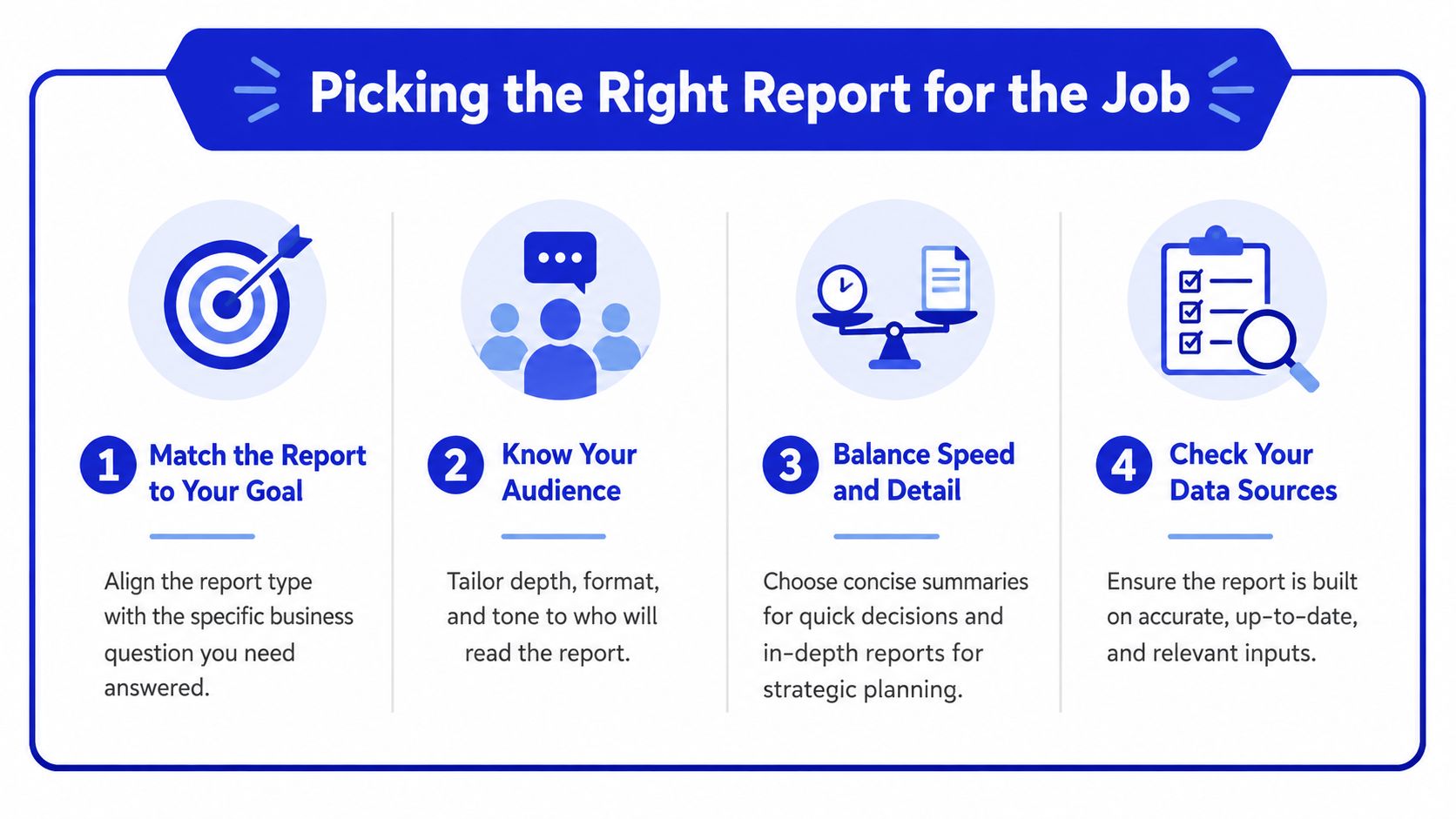
Unofficial Personal Check vs. Certified Copy
This distinction matters more than many drivers realize.
An unofficial personal check is usually enough when you want to see what is on your Florida record, confirm your status, or check whether points were added after a ticket. The online MyDMV option is typically used for that purpose.
A certified copy is the better choice when the record will be presented to a court, employer, government agency, or attorney and the recipient needs assurance that the document is an official state-certified record. If you need that level of formality, choose mail or in-person options that provide certification rather than relying on a quick consumer download.
Online vs. Mail vs. In Person: When Each One Makes Sense
Choose online when speed matters and you only need your own current record.
Choose mail when you need a formal request trail or cannot complete online verification.
Choose in person when you need help, same-day service, or a certified record on a short deadline.
One more reality check: a damaged record in Florida is not always about dangerous driving. A major Florida-focused report from the Fines and Fees Justice Center found that unpaid fines and fees drive a large share of license suspensions. That is one reason I would verify license status first, even before reading the violation list.
How to Check Points on Your Florida License
If your real question is whether you have points, the answer is simple: check your Florida driving record. Florida does not offer a separate public scorecard that is easier or more authoritative than the record itself.
Here is the quickest way to confirm points:
Sign in through the FLHSMV MyDMV portal.
Obtain your Florida driver record.
Review the entries for moving violations, convictions, and point assessments.
Compare the total against Florida’s suspension thresholds.
Under Florida rules, a driver can face suspension for accumulating too many points over time. The official thresholds are summarized by the state and explained in Florida's points system works, and the underlying point schedule and suspension framework are reflected in FLHSMV materials and Florida law. In practice, the numbers drivers usually need to know are:
12 points in 12 months
18 points in 18 months
24 points in 36 months
Those totals can trigger a suspension, so the issue is not just how many points a single ticket adds. It is whether several entries are stacking up faster than you realized. When I review a record for point risk, I do not stop at the point total; I also check whether the court disposition shows a conviction, because that often explains why points appeared in the first place.
Common examples include speeding, red-light violations, reckless driving, and crash-related offenses. If you are not sure how long an older ticket can keep affecting you, our guide on how long traffic tickets stay on your record explains the difference between point duration and violation history.
How to Read Your Florida Driving Record
Once you have the record, the next question is what matters on it. Start with the fields that affect your legal ability to drive and that outside reviewers care about most: license status, suspensions, convictions, crashes, and points. In my view, that order is more useful than reading the document top to bottom, because a valid-looking license can still have old suspensions, unpaid issues, or convictions that create real consequences.
The Main Fields You Will Usually See
Most Florida motor vehicle records include some combination of these sections:
License status: Whether your privilege is valid, suspended, revoked, canceled, or otherwise restricted.
License class: The type of license you hold, such as a standard non-commercial class or a commercial class.
Restrictions or endorsements: Corrective lenses requirements, business-purpose limitations, motorcycle endorsements, CDL-related designations, and similar notations.
Suspensions or revocations: The effective dates, reason codes, and sometimes reinstatement-related information.
Traffic convictions: Violations that resulted in a conviction and typically carry the biggest long-term impact.
Court dispositions: Whether the ticket was paid, dismissed, withheld, reduced, or otherwise resolved.
Points: The assessed point value attached to eligible moving violations.
What the Report Length Changes
The 3-year, 7-year, and complete-history versions do not just change the date range. They change what you are likely to notice first.
A 3-year report is usually the best snapshot for recent insurance or employment concerns.
A 7-year report gives a broader pattern of driving behavior and can surface older but still relevant convictions.
A complete history is the right choice when you need the entire timeline, including older suspensions, revocations, or recurring problems.
If a driver tells me, "I only had one ticket," I would still want to know which report they pulled. Older issues often disappear from a shorter report but still matter for legal analysis or for understanding why the state took a prior action.
How to Interpret the Entries That Matter Most
License status comes first because it answers the immediate question: can you legally drive right now? If the status is not valid, do not assume the reason is a dangerous-driving offense. In Florida, suspensions often stem from unpaid fines, missed court obligations, or administrative issues.
Convictions vs. withheld adjudication is the next major distinction. A conviction usually means the violation counts against you in a more direct way. A withheld adjudication can reduce damage in some situations, although the event may still appear on the record.
Suspension entries deserve close attention to dates and reason codes. A suspension that has technically ended may still leave reinstatement steps unresolved. That is why a record can show history that still affects you today.
Points matter because they can trigger an automatic suspension if enough accumulate within the state’s lookback periods. Florida explains point consequences and suspension thresholds through its driver-license system, and the practical summary is that repeated ordinary tickets can become a license problem much faster than drivers expect.
What Insurers, Employers, and Drivers Usually Focus On
Insurers often care most about recent moving violations, crash-related entries, and patterns that suggest ongoing risk.
Employers tend to focus on license validity, major violations, repeated offenses, and whether the record matches the job’s driving demands.
Drivers trying to avoid suspension should focus on point totals, unresolved court outcomes, and any active or prior suspension entries.
For a broader explanation of why even a modest record issue can affect underwriting, the data summary on QuoteFii, LLC's page is a useful companion to the official record itself.
Florida’s roads also produce enough crash activity that record review is never just administrative. A recent summary of statewide crash figures noted hundreds of thousands of crashes annually, underscoring why insurers and employers treat driving history seriously, as outlined in these Florida crash statistics.
Common Violations and Florida Point System
Violation | Points Assessed | Potential Consequences |
|---|---|---|
Speeding (15 mph or less over limit) | 3 points | Fines, potential insurance increase. |
Speeding (16 mph or more over limit) | 4 points | Higher fines, mandatory court appearance in some cases. |
Speeding causing a crash | 6 points | Fines, potential civil liability, likely insurance spike. |
Leaving the scene of a crash (damage > $50) | 6 points | Criminal charges, license revocation. |
Running a red light | 3 points | Fines, mandatory traffic school election to avoid points. |
Reckless Driving | 4 points | Can be a criminal offense, major insurance impact. |
Knowing how these points add up is crucial. Too many points in a short period triggers an automatic suspension, so keeping your record clean is the best defense.
What to Do About Errors or Violations
Finding an unexpected issue when you check your driving record can be a shock, but it’s definitely not a dead end. Whether it’s a simple clerical mistake or a more serious traffic conviction you weren't aware of, you have clear options. The key is to act quickly and take the right steps.
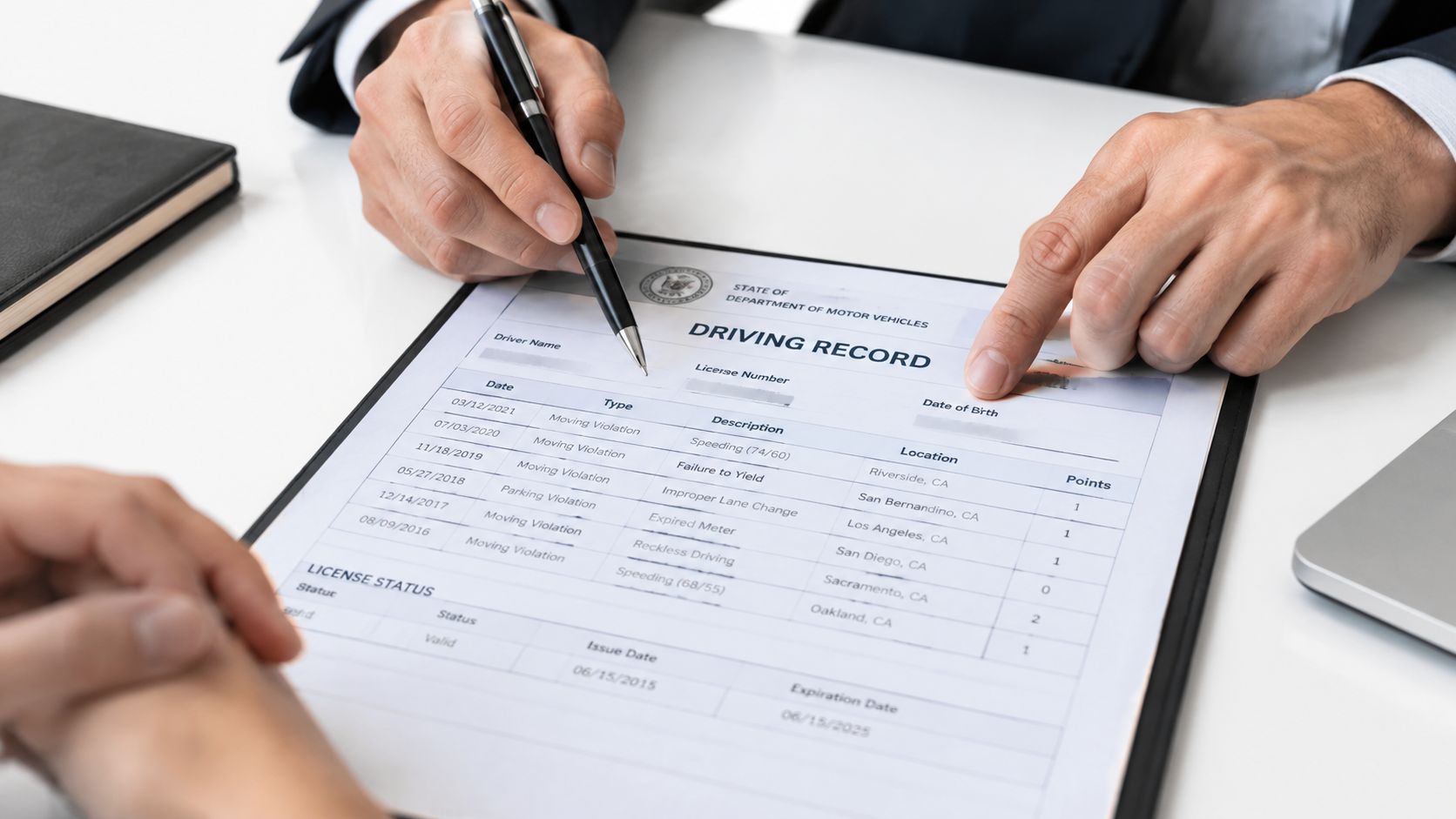
First thing's first: figure out what kind of problem you're dealing with. Is it a simple data-entry error, or is it a conviction from a past traffic ticket? Your game plan will be completely different for each.
Correcting Clerical Errors
Sometimes, the problem is just a typo. A misspelled name, an incorrect date of birth, or a wrong address can usually be fixed without a major headache. These are almost always simple clerical errors that happened when your info was first entered into the system.
To get these fixed, you'll need to contact the Florida Highway Safety and Motor Vehicles (FLHSMV) directly. Be prepared to provide proof, like your driver's license and birth certificate, to show them what the correct information should be.
Addressing Traffic Violations and Convictions
Finding a violation you didn’t know about—or one you thought was handled—is a much bigger deal. This is especially true if the conviction slapped points on your license, which can jack up your insurance rates or even lead to a suspension.
For certain tickets, the best way to keep points off your record is to elect to attend a driver improvement school. But this option comes with strict deadlines and you have to be eligible. If you just went ahead and paid the ticket, you’ve legally admitted guilt, and that means a conviction is now sitting on your record.
A common misconception is that paying a fine makes the problem disappear. In reality, it guarantees a conviction and points. Our goal is to protect your license and record by exploring all available options to avoid this outcome.
If a violation has already caused your license to be suspended, you need to take immediate action. The process can get complicated, but you can learn the exact steps in our guide on how to reinstate your suspended driver's license in Florida.
Navigating the aftermath of a traffic conviction requires a solid understanding of Florida traffic law. If you’ve found a violation on your record that's worrying you, talking it over with an attorney from a practice that focuses on traffic and DUI defense is a smart next step.
This post is for informational purposes only and is an attorney advertisement. Past results do not guarantee future outcomes. Office in Broward.
How a Traffic Attorney Can Protect Your Record
While you might be able to get a minor clerical error fixed on your own, a traffic conviction is a whole different ballgame. When your license, insurance rates, and even your job are on the line, trying to go it alone is a huge risk. An attorney whose practice focuses on traffic and DUI defense can be your best ally in navigating Florida's legal maze.
Our practice focuses on traffic and DUI defense, and we handle criminal traffic matters across Florida. An attorney with this focus knows how to spot weaknesses in the state's case, negotiate with prosecutors, and represent you in court—often without you ever having to take a day off work to be there. This is especially true when you're facing violations that rack up serious points or could get your license suspended.
Past results do not guarantee future outcomes. Our goal is to protect your license and record. We work to minimize the damage from a ticket by seeking outcomes like getting charges reduced or dismissed entirely, which can make a world of difference for your driving history.
Think about it this way: just paying that speeding ticket is an admission of guilt. It’s a guaranteed conviction and points on your license. An attorney, on the other hand, works to find a path that avoids that outcome. Before you decide, it’s worth understanding what’s possible—you can learn more about the chances of getting a speeding ticket dismissed in our detailed guide.
This is an attorney advertisement. Office in Broward.
Frequently Asked Questions
Can I view my Florida license record online?
Yes. Florida allows drivers to access their own record through the FLHSMV MyDMV portal. Using the portal is often the fastest way to check license status, recent violations, and whether points appear on the record. It is best for personal review, while a certified copy may still be better for court or formal employment needs.
Can you look up someone else's driver's license in Florida?
Not freely. Florida driver information is restricted, and access to another person’s record is limited by privacy rules and permitted-use requirements. In plain terms, you should assume you can access your own record, but not another adult’s driver information unless a lawful basis applies.
Is there a way to clean your driving record in Florida?
Not in the sense of erasing valid history on demand. Florida records are state records, and convictions do not just disappear because time passed. What drivers often mean by “cleaning” a record is reducing future damage: contesting a citation, pursuing a dismissal or reduction, using traffic school when eligible, or obtaining withheld adjudication instead of a conviction.
How long do points stay on my Florida driving record?
Points generally count for 36 months from the date of the conviction for suspension purposes. The violation itself can remain on your overall driving history longer. That is why a driver may no longer be near suspension but still see insurance effects from an older conviction.
Do out-of-state tickets show up on a Florida driving record?
Often, yes. Florida can receive and apply out-of-state information, and a ticket from another state may still affect your Florida record and insurance profile once reported back.
Should I use a third-party service or FLHSMV?
For anything important, use FLHSMV first. Third-party services may be convenient, but they are not the source document courts, employers, or the state rely on. If accuracy, certification, or current Florida status matters, the official state record is the safer choice.
Found a surprise on your driving record? Or just got a new ticket and don't want to deal with the fallout? Don't just pay it and take the points.
Contact Ticket Shield, PLLC for a free consultation. Let's figure out your options together. Our goal is to protect your driving record. Submit your ticket online to get started.
Disclaimer: Submitting information through our website's forms does not create an attorney-client relationship. Please do not send any confidential information until such a time as an attorney-client relationship has been established.
Method | Where to Go | Typical Cost | Best For |
|---|---|---|---|
Online Portal | $8 - $10 | Quick, instant access for personal review | |
Mail Request | $8 - $10 | When you need a certified copy and aren't in a rush | |
In-Person Visit | $8 - $10 | Getting a copy immediately with in-person assistance | |
Third-Party Service | Online Vendors | Varies ($20 - $40+) | Convenience and getting records from multiple states |