What Is an Ignition Interlock Device? A Florida Guide
What is an ignition interlock device - Charged with a Florida DUI? Learn what an ignition interlock device is, the strict state laws, costs, and how our
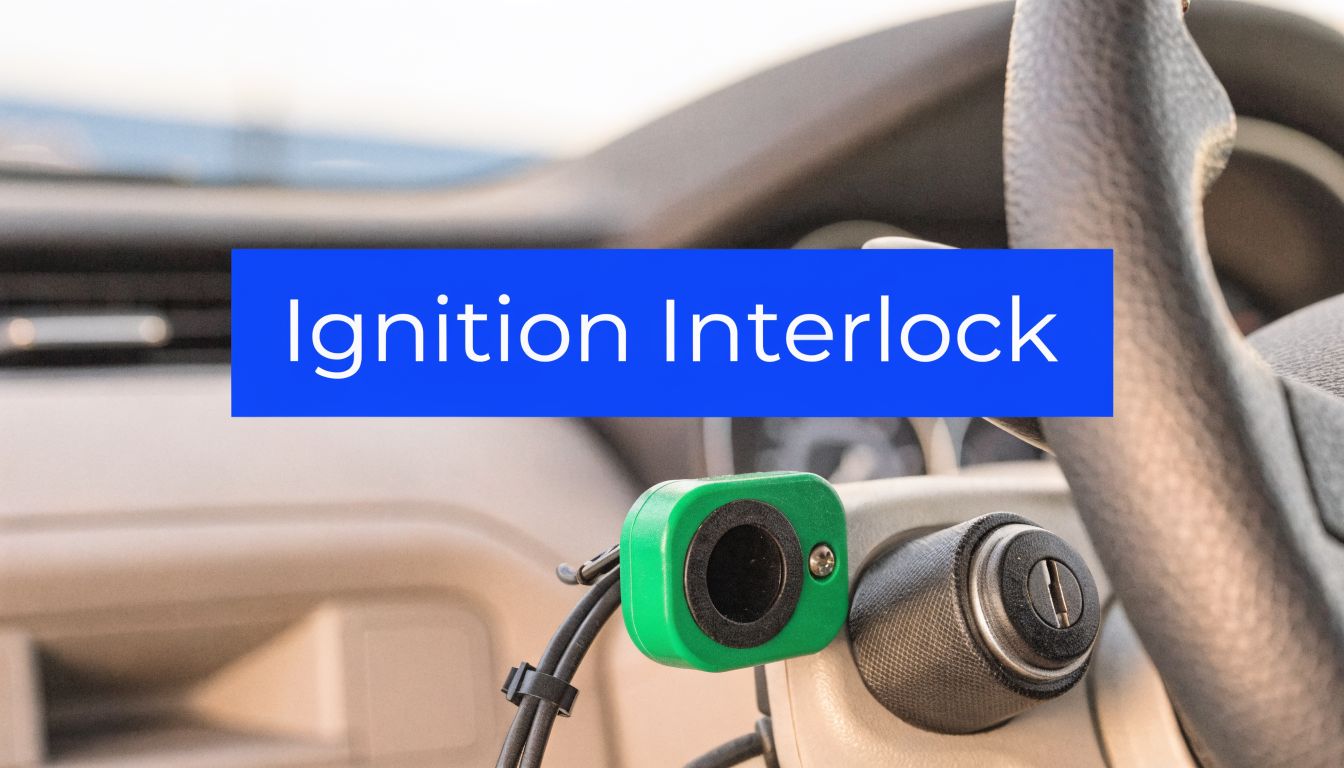
You were likely released, got your paperwork, and now you’re staring at a new problem you didn’t expect. A machine in your car. More costs. More rules. More ways to get trapped if you make one bad move.
That’s what a Florida DUI case does. It doesn’t just threaten a conviction. It starts taking control of your license, your routine, your job, and your record fast. If you’ve been charged under Florida Statute 316.193, you need to understand what this device is, why the state uses it, and why the fight over it starts long before it’s installed.
Table of Contents
What Is an Ignition Interlock Device and Why Is It on Your Car?
What Are the Real Costs and Installation Process for an IID?
What Common Problems and Violations Will Extend Your Sentence?
What Is an Ignition Interlock Device and Why Is It on Your Car?
An ignition interlock device is a breath-test machine wired to your car’s ignition. You must blow into it and register below a set alcohol limit before the car starts. In DUI cases, it’s not just equipment. It’s a state-controlled checkpoint attached to your daily life.
An ignition interlock device, or IID, is installed in your vehicle and connected to the starting system. You blow into it before starting the engine. If your breath sample is under the required threshold, the car starts. If it isn’t, it won’t.
Florida drivers usually learn about it at the worst time. You’ve already been arrested. You’re trying to protect your license. You’re worried about work, family pickups, or whether you’ll have to stand in a courtroom. Then the IID enters the picture and turns a criminal case into a daily supervision problem.
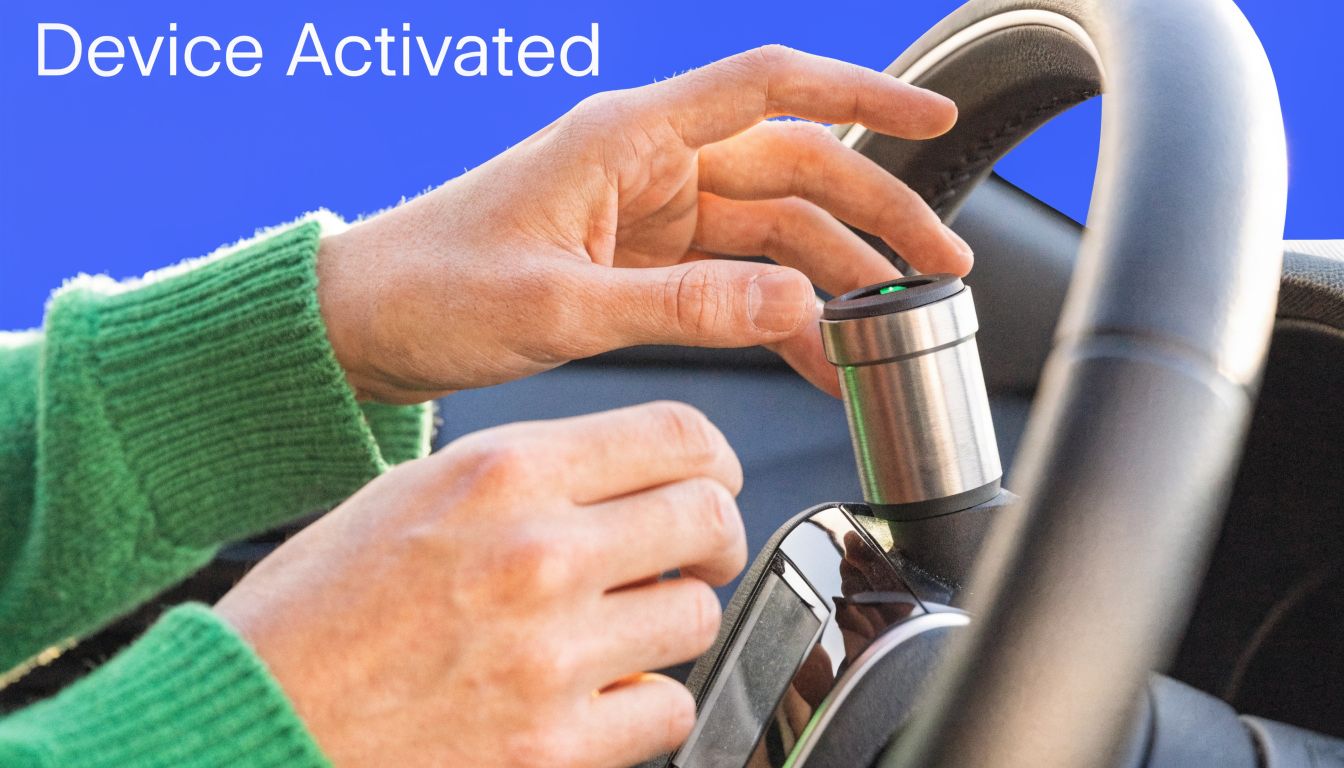
Nationally, these devices are widely used because they stop impaired driving attempts in real time. From 2006 to 2020, IIDs prevented over 3.78 million drunk driving attempts at BAC 0.08 or above, according to ignition interlock device statistics compiled by Intoxalock.
That doesn’t make the device harmless to you.
It means the state and the court system treat it as a serious compliance tool, and every use of it creates a record. If you’re charged with DUI in Florida, you shouldn’t think of the IID as just a car gadget. Think of it as evidence collection tied to your freedom to drive.
Practical rule: The battle over an IID is really a battle over the DUI charge, your license status, and the conditions attached to getting back on the road.
If you want a quick comparison of how other states handle this issue, this overview of MN DWI ignition interlock device requirements is useful for context. Florida is its own system, and that’s exactly why local defense strategy matters.
How Does an Ignition Interlock Device Actually Work?
An IID works like a digital gatekeeper for your ignition. It won’t let your car start until it gets a valid breath sample that meets the programmed alcohol limit. The limit is typically 0.02 g/dL or lower, based on the verified description of how these devices operate in the United States.
What happens when you try to start the car
You turn the key or press the start button. The device prompts you for a breath sample. You blow into the handset, and the sensor analyzes the sample for alcohol.
If the sample is acceptable, the engine starts.
If the sample fails, the engine stays off. The failed attempt is recorded. That record matters because the device is built to document what happened, not to give you the benefit of the doubt.
Why the technology matters
These devices use alcohol fuel cell sensor technology, which is designed to be highly specific to ethanol and to avoid false positives from substances such as acetone. The performance standards are strict. Under NHTSA model specifications, the device should allow zero ignition locks at 0.000 g/dL, no more than one ignition lock in 20 trials at 0.008 g/dL, and no more than one permitted ignition in 20 trials at 0.032 g/dL, as explained in this review of fuel cell accuracy in ignition interlock devices.
That same source explains another detail drivers often miss. The breath sample must be standardized. The current industry standard requires a 1.2 liter breath sample with a flow rate of 0.3 liters per second.
What is a rolling retest
Starting the car isn’t the end of it. The IID can demand another breath sample while you’re already driving. This is called a rolling retest.
You don’t get to ignore it because you’re in traffic or because the timing is inconvenient. If you miss it or fail it, that event is logged. In regulated systems, those missed or failed retests can trigger alerts and create problems with your compliance record.
The IID doesn’t care whether you were distracted, late for work, or on the freeway. It records the event anyway.
What you should take from this
It’s mechanical, not conversational. The device doesn’t weigh excuses.
It creates a record every time you interact with it. Good events and bad events.
Your routine changes immediately. Starting the car now includes compliance.
A “small mistake” can become legal trouble. That’s why drivers need to treat every use seriously.
What Are Florida's Specific IID Laws and Requirements?
Florida doesn’t treat this as optional. Under Florida Statute 316.193, IID requirements attach to DUI convictions, and the consequences can keep unfolding after the courtroom hearing ends.
What does Florida law require after a DUI conviction
In Florida, all DUI offenders must install an IID for at least 6 months on a first conviction, and repeat offenders face a mandatory 2-year period, according to this Florida-specific explanation of what an ignition interlock device means after a DUI.
That’s the baseline problem. The second problem is enforcement.
Florida’s program logs the device data and sends it to the HSMV for compliance review. Violations can trigger license suspension extensions or jail time, as noted in the same Florida-specific source above. So when people ask what is an ignition interlock device, the Florida answer is this: it’s a court-ordered and agency-monitored condition that keeps reporting on you after sentencing.
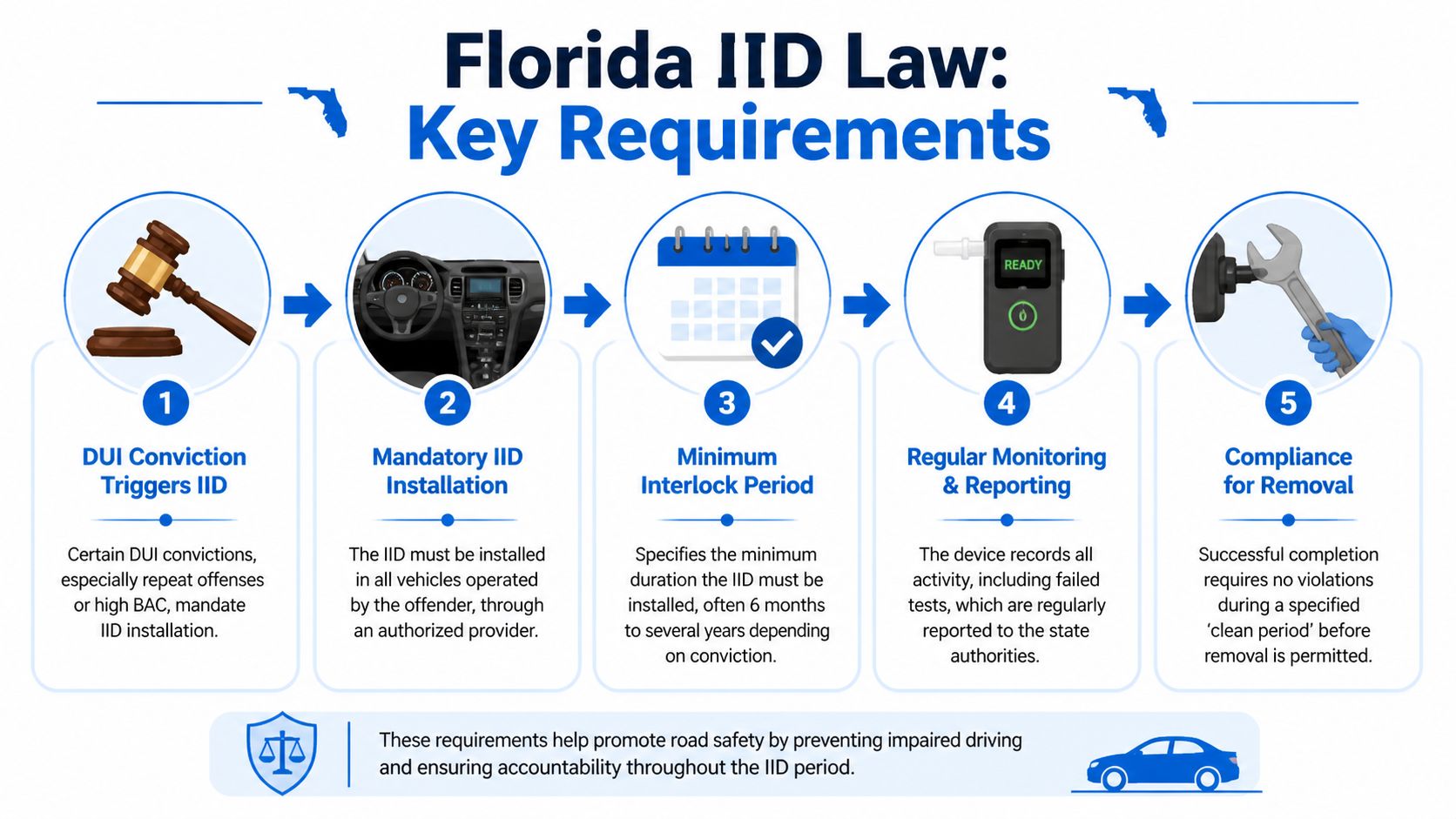
If you’re reading the statute yourself, start with Chapter 316, especially 316.193, and then review a practical breakdown of Florida DUI statutes and penalties. The statute gives the state the authority. The paperwork and compliance process do the rest.
Why the courthouse matters
This issue gets decided in real places, with real judges, real prosecutors, and real deadlines. In Tampa, that means the Edgecomb Courthouse. By the time your case is moving there, the state already has a narrative about you. If you let that narrative harden into a conviction, the IID often becomes part of the price.
Here’s the part many drivers miss. There are often two tracks moving at once:
Track | What it affects | Why it matters |
|---|---|---|
Criminal case | Conviction, sentencing, probation terms | A conviction can trigger IID consequences under Florida law |
License and compliance issues | Driving privileges, HSMV review, reinstatement conditions | The IID can become part of what you must do to drive legally again |
That split creates risk. A driver may focus only on the court date and ignore the licensing side until it’s already a crisis.
A DUI case in Florida isn’t over when you walk out of court. For many drivers, that’s when the monitoring starts.
What you should do if you’re facing this in Florida
Read the charge carefully. The exact allegation under Chapter 316 matters.
Don’t assume the IID is automatic in every posture of the case. It often depends on where the case lands and what the final outcome is.
Treat HSMV compliance as seriously as the courtroom. They are connected, but they are not the same thing.
Push your defense early. Once a DUI conviction is in place, your bargaining power usually gets worse.
What Are the Real Costs and Installation Process for an IID?
The IID isn’t just a legal penalty. It’s a recurring expense and a scheduling burden. Drivers often focus on fines and forget that the device creates a second stream of costs that follows them month after month.
What you’ll pay for outside the courtroom
Florida drivers typically deal with service visits and recurring monthly charges through a state-approved provider. The verified Florida-specific guidance says the device requires service every 30 to 90 days, with visits costing $70 to $150 and monthly fees of $30 to $50.
Those charges are separate from court fines, probation terms, reinstatement fees, towing, missed work, and legal representation. That’s why the device matters strategically. Even if the criminal sentence looks manageable on paper, the day-to-day burden can be brutal.
A practical guide to Florida ignition interlock device rules and obligations can help you understand the compliance side before the provider appointment catches you off guard.
How installation usually works in Florida
The process is usually straightforward on paper and frustrating in real life.
You identify an approved vendor. Florida expects installation through an authorized provider.
You schedule the appointment. Missing or delaying this can create more trouble if installation is a condition of reinstatement or sentencing.
The device is installed in the vehicle you operate. The system is wired into the ignition.
You receive instructions on testing and retesting. Pay attention. This isn’t the time to zone out.
You return for service and data review. The provider handles maintenance and reporting obligations tied to the program.
If the IID is coming, plan for it like a standing legal appointment that sits inside your car.
What drivers underestimate most
Time loss: Service appointments, retests, and scheduling problems affect workdays.
Embarrassment: Coworkers, passengers, and clients may see or hear the device.
Risk concentration: One failed or missed event can create fresh problems on top of the original DUI case.
Vehicle limits: If you regularly use more than one vehicle, compliance gets more complicated fast.
The practical lesson is simple. The cheapest IID is the one you never have to install. If that isn’t possible, you need a clean plan for managing it from day one.
What Common Problems and Violations Will Extend Your Sentence?
Many drivers then make the second mistake. The first mistake was the DUI arrest. The second is treating the IID like a minor inconvenience.
It isn’t. It’s a reporting system designed to catch noncompliance.

Which mistakes cause the most damage
A failed startup test is obvious. But drivers also get into trouble through routine, careless behavior.
Some of the most dangerous problems include:
Alcohol-related fails: Residual alcohol from mouthwash, certain foods, or recent drinking can trigger trouble.
Missed rolling retests: If the device asks for a sample while you’re driving and you don’t respond correctly, the event is logged.
Tampering or bypass attempts: Trying to beat the machine usually creates worse evidence, not better outcomes.
Sloppy habits: Letting someone else use the vehicle without strict caution, ignoring device prompts, or delaying service can all snowball.
Virginia’s technical standards for interlock systems show how aggressive these devices are built to be. Devices must detect and record actual or attempted tampering, alteration, bypass, or circumvention, and must store a large volume of event data, as set out in these interlock data recording and anti-tampering requirements. That’s not a Florida statute, but it accurately shows the compliance logic behind modern IID systems.
Why trying to outsmart the device backfires
Since May 2025, IID upgrades have included in-car cameras for facial recognition to prevent circumvention. At the same time, fuel cell sensors can still produce 5 to 10% false positives from mouth alcohol, including mouthwash and keto-related conditions, according to the cited 2025 claim tied to this NHTSA-linked interlock discussion.
That combination is dangerous. The system is getting better at identifying who provided the sample, but it can still generate disputed results in some situations. If you drive for Uber, Lyft, DoorDash, or any other platform, one flagged issue can trigger employment fallout long before you get a fair chance to explain it.
If you’re already on probation or under DUI conditions, review how Florida DUI probation violations can escalate consequences. A violation tied to the IID can become more than a device issue.
This short video is worth watching because it shows how quickly an interlock issue can become a practical crisis inside the car.
If something goes wrong with the IID, assume the event will be reviewed later by someone who wasn’t in the car with you.
How Can a Lawyer Help You Avoid or Manage IID Requirements?
The smartest IID strategy usually starts before installation. Once the DUI case hardens into a conviction and the compliance machinery starts moving, your options narrow.
When the right defense can stop the IID before it starts
An IID requirement can disappear if the underlying DUI case is beaten, reduced in the right way, or resolved without the trigger that leads to installation. That means the legal fight often centers on issues such as:
The traffic stop itself: If law enforcement lacked valid grounds to stop you, the case may weaken fast.
The investigation: Field sobriety issues, officer observations, and arrest procedure matter.
The breath evidence: If the state’s testing process was flawed, that can change the advantage.
The final disposition: What you plead to, and how the court structures the outcome, can affect whether the IID becomes part of your life.
That’s why drivers shouldn’t sleepwalk into the first plea offer. A rushed plea can turn a defensible arrest into a long compliance sentence.
A practical review of Florida DUI defense strategies can help you see where the pressure points usually are.
Why direct access to your lawyer matters
DUI defense is not a traffic ticket you hand to a middleman and forget. It’s not something you should dump into an automated app and hope a chatbot points you the right way. If your license, job, military clearance, commercial reputation, or immigration situation is at risk, you need real legal judgment fast.

The right lawyer helps in two lanes at once:
Legal need | Why it matters |
|---|---|
Avoid the IID if possible | The best result is often preventing the requirement from attaching at all |
Manage the IID if unavoidable | Clear advice reduces the risk of violations, extensions, and new penalties |
Good DUI defense doesn’t just answer charges. It protects your ability to keep driving, keep working, and avoid compounding mistakes.
If the device is already part of the case, legal help still matters. Counsel can identify whether a recorded event looks like true noncompliance, a device issue, or something that needs to be explained before it does more damage.
Your Top Questions About Florida Ignition Interlock Devices
Can someone else drive your car
Maybe, but drivers can create avoidable disasters. If the vehicle has an IID installed because of your case, every use of that vehicle can create records. If another person drives it carelessly, misses a prompt, or triggers a problem, you may still be the one explaining it later.
The safe approach is simple. Don’t casually let people use that car.
What should you do after a failed test
Act fast and stay calm.
Stop adding risk: Don’t keep experimenting with repeated blows in frustration.
Rinse and wait: If you suspect mouthwash, food, or another contaminant, give yourself time before retesting if the circumstances allow.
Document what happened: Write down the time, what you consumed, and anything unusual about the event.
Call your lawyer quickly: A logged event can become evidence. Treat it that way.
If your work record or future employment is a concern, it’s smart to understand whether a DUI shows up on a background check. IID trouble often matters because the underlying case matters.
Can you get the device removed early
Sometimes drivers ask this after a stretch of clean compliance. The answer depends on the legal posture of the case, the administrative rules in play, and whether the state sees your record as violation-free. You should never assume early removal is available just because you’ve “been doing well.”
Ask a lawyer to review the exact basis for your IID requirement, your compliance history, and what Florida will require before removal is even considered.
The state won’t reward assumptions. It responds to records, deadlines, and formal requests.
If you’ve been charged with DUI in Florida, treat the IID as a strategic battleground, not a side issue. The device affects your license, your schedule, your finances, and your risk of more penalties. The right move is to attack the DUI case early and manage every compliance detail carefully if the IID becomes unavoidable.
If you want a lawyer-led defense that protects your license, your record, and your No Points goal, visit Ticket Shield, PLLC for a free consultation. You’ll speak directly with your attorney by phone or text, not a middleman, not a chatbot, and not a ticket mill.