Ticket for Expired Tags in Florida? Here's What to Do
Received a ticket for expired tags in Florida? Our guide details immediate steps, defenses, and how a lawyer can protect your record from fines and points.

Got a ticket for expired tags in Florida? Renew your registration immediately, but don't pay the ticket. Paying is usually a guilty plea. The right legal response can protect your record, your insurance, and, if you're past six months, keep a traffic case from turning criminal.
You got stopped. The officer walked up, asked for your license, then pointed at the sticker you forgot to renew. Maybe you were on your way to work. Maybe you drive for Uber, Lyft, or DoorDash and can't afford a mark on your record. Maybe you thought this would be a simple fine.
It isn't.
A ticket for expired tags in Florida is a legal problem, not an admin problem. At the beginning of 2025, about 692,000 Florida drivers were operating with expired tags, and drivers were delaying renewal by about four months on average, according to WFTV's report on expired tags in Florida. You're not alone. But that doesn't make your case harmless.
What matters now is what you do next. The wrong move is fast and common. People go online, pay the citation, and move on. That can lock in a conviction. Then they find out later that the court outcome affected their record, their insurance, or their job.
Practical rule: Renew first. Preserve proof. Don't admit guilt by paying before a lawyer reviews the ticket.
Florida drivers also get pulled over for small equipment issues that lead to bigger discoveries. If an officer first noticed your vehicle because of something else, fix that too. If you need a practical repair reference, this guide on how to diagnose and fix tail lights is useful.
Table of Contents
Introduction Protecting Your Record from an Expired Tag Ticket
An expired tag citation feels like a timing mistake. Florida law treats it like more than that.
If you've been handed a ticket for expired tags, you need to think like a defendant, not like a customer paying a bill. The citation puts your driving record in play. If the timing is bad enough, it can put your criminal record in play too. That's why I tell drivers the same thing every day. Renew your registration immediately. Don't pay the ticket until someone who knows this area has reviewed it.
Florida's expired registration law is Statute 320.07. It is not in Chapter 316, and that's important because this is a registration offense with its own structure and consequences. Still, your case moves through the same county traffic court system Florida drivers deal with every day, whether that's in Orlando, Miami, Tampa, or Fort Lauderdale.
The next month matters. The paperwork matters. The exact expiration date matters. The issue isn't whether you made a mistake. The issue is whether you can still control the damage.
A simple way to look at it:
You can make the case better fast by renewing and keeping proof.
You can make the case worse fast by paying it online without strategy.
You can still fight it even if you know the tag had expired.
A ticket isn't just about what happened on the roadside. It's about what gets entered into the court record after that.
Drivers often wait because they feel embarrassed, busy, or hopeful that the problem will disappear. It won't. If your case is sitting on a court calendar tied to a place like the Orange County Courthouse, the system keeps moving whether you're ready or not.
What Are My Immediate Steps After Getting the Ticket
You get stopped on the way home, glance at the citation, and realize the tag expired longer ago than you thought. Now the clock matters. In Florida, the exact gap between the expiration date and the stop can change how the case should be handled, especially if you are anywhere near the six-month line.

Your first job is to clean up the registration issue fast. Renew the tag immediately if you have not already done it. Save the confirmation page, payment receipt, email, and any screen showing the date and time. If you need the practical steps, use this guide to handling a Florida expired registration ticket.
Then slow down and read the citation carefully. Do not just look at the amount due. Check the officer's issue date, the registration expiration date, the statute listed, and any notes written on the ticket. One wrong assumption here can cost you the chance to protect your record.
Put every document in one place today. Keep the ticket, your old registration, the renewal receipt, your insurance card, and any DMV paperwork. Take clear photos of the plate, decal, and tag. If you renewed before the stop but the system had not updated yet, that proof can matter.
Do not pay the ticket online just to get rid of it.
That is the mistake I see all the time. A quick payment can close off defenses before anyone examines the dates, the classification, or whether the court can be pushed toward dismissal or another result that does less damage. If your expiration date is close to six months, you need a lawyer's review before you make that decision.
Use a short checklist and do it in order:
Renew the registration immediately and save proof.
Calendar every deadline from the ticket, including the court date.
Write down the facts of the stop while they are still fresh, including what the officer said and whether you mentioned renewal.
Fix any related issue noted during the stop, such as plate visibility or equipment problems, and keep receipts or photos.
Get legal advice early, not after you have already answered the ticket. An expired tag case is not just paperwork. It is a timing case. A lawyer looks first at whether the dates keep this in traffic court territory or expose you to something more serious under Florida law, then builds the response around protecting your record and avoiding insurance fallout.
An automated service will not spot every legal pressure point. A lawyer will. That difference matters most when the six-month threshold is in play.
What Penalties Am I Facing for Expired Tags in Florida
One date can decide whether this stays a traffic matter or turns into a criminal case. In Florida, that date is the six-month mark.
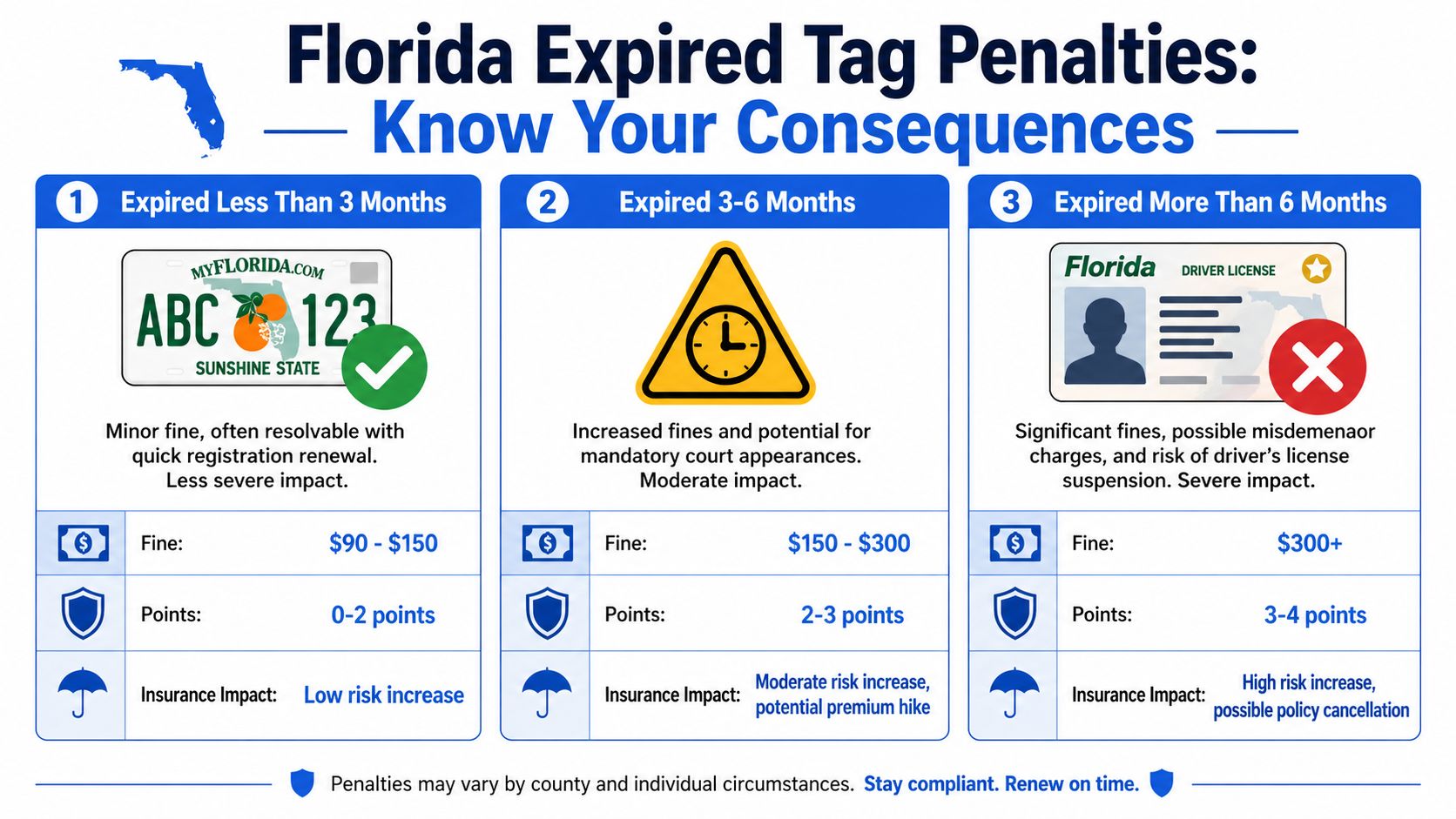
Florida Statute 320.07 draws a hard line at six months. Good lawyers start there because that threshold changes the entire case. If your tags were expired for less than six months, you are usually dealing with a non-criminal traffic infraction. At six months or more, the charge can become a second-degree misdemeanor.
That difference matters more than the fine.
If your case lands in Orlando, the Orange County Courthouse will look at the expiration date, the citation date, and your proof. Excuses do not carry the case. Documents and timing do.
You can see a fuller breakdown of Florida expired registration penalties if you want the statute and penalty structure in one place.
What happens before six months
If your registration was expired for less than six months, the case is generally a non-criminal infraction under section 320.07(3)(c). That usually means a fine, court costs, and a problem that may still be fixable without lasting damage if it is handled correctly.
Here is the practical split:
Status | Legal level | What you should worry about first |
|---|---|---|
Less than six months expired | Non-criminal infraction | Closing the case cleanly and protecting your driving record |
Six months or more expired | Second-degree misdemeanor | Avoiding a criminal outcome and limiting insurance fallout |
Some sub-six-month cases can be resolved by showing proof that you renewed and paying a dismissal fee. Drivers get tripped up here all the time. They miss the deadline, bring the wrong paperwork, or assume the clerk can fix a case that needs a lawyer's push.
What happens at six months or more
Once the registration is expired for six months or longer, the exposure changes fast. The charge can be filed as a second-degree misdemeanor. That opens the door to criminal penalties, including a fine, probation, and even jail exposure under Florida law.
That is the point many automated services miss.
A lawyer does not treat a six-month case like routine ticket cleanup. A lawyer checks the exact expiration date, the exact date of the stop, whether the officer classified it correctly, and whether there is a path to reduce or defeat the charge before it stains your record. That kind of date analysis protects more than the court result. It helps protect your insurance and keeps a simple registration issue from becoming a much bigger problem.
If your ticket is anywhere near the six-month threshold, get the dates reviewed immediately. A few days can decide whether you are paying a traffic fine or defending a criminal case.
Florida drivers hear "expired tag" and assume minor violation. That assumption gets people into trouble.
What Are the Hidden Consequences of This Ticket
The printed fine is only the visible part of the problem.

The fine isn't the real danger
One overlooked issue is what happens after a breakdown, a tow request, or an insurance claim. According to CBS Colorado's reporting on expired plates and coverage issues, some insurance policies may not cover claims if your plates are expired, and some companies may refuse to tow your vehicle.
That should get your attention.
Even if your Florida court case seems manageable, an expired registration can create a separate practical mess. You can end up stranded on the roadside, arguing with a service provider, or fighting over coverage when you thought you were paying for protection.
If you want a more practical cost breakdown from the driver's side, this look at the cost of a ticket for expired tags helps frame what can stack up.
Who gets hit hardest
Some drivers absorb this kind of disruption better than others. Some can't.
Gig drivers: If you drive for Uber, Lyft, or DoorDash, downtime costs income. A bad court result or registration problem can also threaten account eligibility.
Military personnel: A preventable record issue can create avoidable stress around background reviews and command expectations.
Busy professionals: You miss work, lose time, and end up paying for a problem that could have been contained early.
Families with one vehicle: If the car is sidelined, the legal issue becomes a transportation issue immediately.
You don't fight this ticket because the fine offends you. You fight it because the side effects can last longer than the case.
A conviction can also send the wrong signal to insurers and employers. The court may close the file, but your record and your costs may not move on so easily.
Can I Fight an Expired Tag Ticket in Court
Yes. In many cases, you should.

An expired tag case isn't about making excuses. It's about forcing the court to deal with the actual facts, the correct classification, and the right remedy. Many defenses are real. Very few are simple enough to trust to a do-it-yourself filing.
Defenses that can matter
Here are several defense angles lawyers review in these cases.
Clerical or timing errors
Sometimes the paperwork is wrong. The citation may list the wrong date, the wrong tag information, or the wrong classification. If your case sits close to the six-month threshold, a date error matters even more.
What you need:
the citation
your registration history
renewal records
any state confirmation showing processing timing
Renewal was completed or attempted
A driver may have completed renewal, paid for it, or been waiting on processing or delivery. That doesn't automatically win the case, but it can change how the court views it.
What helps:
email confirmations
payment receipts
portal screenshots
proof showing when the renewal process was initiated
Proof correction and dismissal handling
For some non-criminal cases, prompt renewal and proper filing with the clerk can support dismissal handling. But procedure matters. If the wrong proof goes to the wrong office at the wrong time, you lose the benefit.
Practical courtroom guidance matters more than general internet advice. If you want to understand the process drivers use to challenge citations without personally going to court, this overview of fighting a Florida traffic ticket without going to court is a useful starting point.
Why presentation matters in court
The defense isn't just what happened. It is how it gets presented.
A lawyer organizes the timeline, identifies the legal issue, and asks for the right outcome in the right format. That's very different from walking into court and telling the judge you forgot. Courts hear that all day.
Here is a quick explainer on how legal defense changes the result:
Courts respond to documentation, timing, statutory arguments, and procedure. They do not reward panic. They do not fix avoidable mistakes for you.
Why You Need a Lawyer and Not an Automated App
Here, drivers make another expensive mistake. They confuse intake with representation.
An automated app can collect your information. It can send reminders. It can route your case. What it can't do is think like a courtroom lawyer when the dates are close, the classification is dangerous, or the outcome needs strategy.
The six month issue is not a chatbot problem
Florida expired tag law turns on a precise legal threshold. If your case is under six months, the defense may focus on cleanup and dismissal mechanics. If it is over six months, you are dealing with criminal exposure. That difference requires a lawyer who reads the citation, tests the timeline, and gives direct advice.
This is one reason I tell drivers to avoid ticket mills and middleman platforms. Too many people assume every citation follows the same script. It doesn't.
For a direct comparison of lawyer-led representation versus app-based routing, read this guide on choosing a local lawyer over apps for a Florida traffic ticket.
Direct lawyer access changes the outcome
In Florida, a strategic defense results in adjudication withheld in 37% of contested tickets, which keeps points off the driving record, according to Florida traffic ticket outcome data discussed in this report. That matters if you drive for work, hold a security-sensitive position, or want to avoid avoidable insurance consequences.
That result doesn't come from automation. It comes from judgment.
If you hire Ticket Shield, PLLC, you speak directly with your attorney by phone or text. Not a chatbot. Not a call center. Not a case manager trying to sound like legal counsel. That direct contact matters when a judge, clerk, or prosecutor issue turns on one document, one date, or one decision.
A real defense requires someone who can spot nuance, explain risk, and adjust strategy before the court locks in the outcome.
An app can't do that. A middleman won't do that. A lawyer will.
Conclusion Take Control of Your Case Today
A ticket for expired tags can still be fixed. But only if you treat it seriously now.
Renew the registration. Save proof. Stop yourself from paying the citation just to get it off your plate. That shortcut often creates the exact record problem you were trying to avoid.
If you're already dealing with financial cleanup from past mistakes, credit fallout can become part of the stress too. This professional's guide to credit collections is a useful resource for understanding how to dispute damaging collection items if legal costs or old accounts have started affecting your credit.
You don't need an impersonal process. You need a precise one. A Florida traffic case should be handled by someone who knows the statute, knows the courthouses, and knows how to pursue the outcome that matters most. No points.
If you got a ticket for expired tags in Florida, talk to a lawyer before you pay anything. Visit Ticket Shield, PLLC for a free consultation and a direct plan aimed at the No Points goal.