Missed court date for traffic ticket? Here's what to do
Missed court date for traffic ticket in Florida? Learn the 5 steps to check for an FTA, license suspension, rescheduling options, and next moves.
That sinking feeling when you realize you missed a court date for a traffic ticket is stressful, but it is usually a problem you can still address if you move quickly.
In Florida, however, this is not treated as a minor scheduling mistake. A missed appearance can lead to a Failure to Appear (FTA) entry, a D-6 license suspension request, extra costs, and in some cases a warrant. The exact outcome depends heavily on whether your case is a civil traffic infraction or a criminal traffic charge.
How We Evaluated the Steps in This Guide
We built this guide around Florida-specific process, not generic court advice. In our review of Florida traffic-court procedures, the most important variables were: what the clerk records after a missed hearing, when the court reports a failure to appear to the state, how a D-6 suspension affects your ability to drive, and which parts of the process change by county or by judge.
We also focused on the steps that reduce escalation fastest. That means checking the county docket before guessing, confirming whether your license has been suspended through the state, finding out whether a warrant exists, and identifying whether the court will require a motion, a payment, or an attorney appearance to reopen the case. Florida's court system is county-based, so local clerk instructions matter. The state licensing consequence matters too: the FLHSMV explains failure-to-comply suspensions and related reinstatement requirements.
In our experience, the first issue to verify is not the fine amount. It is whether your driving privilege is still valid. That one detail changes what you should do next and whether it is safe to keep driving while you sort the case out.
Understanding the Immediate Consequences
In Florida, the court response usually follows a sequence. First, the clerk records that you did not appear for a required hearing. If the absence is not immediately excused, the case may be marked as a Failure to Appear. From there, the court can notify the state for a D-6 suspension, assess additional costs, and decide whether a warrant is appropriate.
That sequence matters because not every missed hearing produces the same result on the same day. In a routine civil traffic infraction, the most common early problems are an FTA, a license suspension, and more money owed. In a criminal traffic case, the risk rises sharply because the judge is more likely to issue a bench warrant. A suspended license is not just an inconvenience; driving before you fix it can create a separate offense.
What Happens Right Away
For most Florida traffic matters, the clerk's first action is administrative: the missed hearing is entered on the docket. After that, the court may treat the absence as an FTA and report noncompliance to the state, which is what leads to the D-6 suspension process. The FLHSMV traffic citations page explains that failure to comply can lead to suspension and added fees. If you want a non-Florida comparison of how missed court dates can escalate elsewhere, see One Call Bail Bonds for a Georgia-focused example.
Florida's move toward online county dockets has made it easier to verify what happened without an initial courthouse visit. In practice, that means your first answer often comes from the county clerk portal rather than from waiting for a letter to arrive. A broader explainer on missed court consequences in other states is also discussed in this Avvo overview, although Florida procedure still depends on your county court and the FLHSMV reporting process.
Florida's Response to a Missed Court Date
This table breaks down what an FTA notice really means for you, both right away and down the road.
Consequence | What It Means | Potential Impact |
|---|---|---|
D-6 License Suspension | The court notifies the FLHSMV to suspend your driving privileges indefinitely. | Driving on a suspended license is a new criminal offense. You won't be able to get it back until the ticket is resolved. |
Added Fines & Fees | On top of the original ticket amount, the court adds late fees and administrative costs for the FTA. | The total amount owed can increase, making the case harder to close out. |
Bench Warrant | A judge can issue a warrant for your arrest. This is more common with criminal traffic violations. | You could be arrested during any routine traffic stop, turning a simple ticket into a trip to jail. |
Points on Your License | An unresolved ticket can lead to a conviction and points being added to your driving record. | Accumulating too many points leads to longer suspensions and increased insurance rates. |
What is immediate here is the missed-hearing entry and, often, the FTA process itself. The D-6 suspension can follow quickly once the court reports the noncompliance. Added costs are common, but the amount varies by county and case posture. A bench warrant is usually discretionary and much more likely in criminal traffic matters than in standard civil citations. In our review, that civil-versus-criminal distinction explains why two drivers can miss court and face very different consequences.
A suspended license can be a major issue. It can lead to more charges if you get pulled over again, and it makes resolving the original ticket that much more complicated. These issues also impact your driving record. You can learn more about how the state tracks these violations in our article on how the Florida points system works. Our goal is to protect your license and your record.
Attorney Advertisement. Office in Broward. Submitting information via forms on this site does not create an attorney-client relationship.
Your First Actions After Missing a Court Date
If you missed traffic court, treat the first day as a fact-finding sprint. Do not start by guessing, paying blindly, or assuming the court will mail you everything you need. Start by confirming the current status of your license and case.
Same-Day Checklist
Verify your license status first. Check whether your Florida license is valid before you drive anywhere. The FLHSMV traffic citations page explains that failure to comply with a citation can lead to suspension and additional fees. In our experience, this is the first issue to confirm because driving on a suspended license can turn one traffic problem into a new criminal one.
Check the county clerk docket. Look up the case in the county where the ticket was issued. Search by citation number or by your name and date of birth if needed. Confirm whether the court entered an FTA, assessed new costs, or set a new status hearing.
Find out whether a warrant exists. Do not assume no news means no warrant. If the online docket is unclear, call the clerk and ask whether the judge issued any pickup order, capias, or bench warrant connected to the missed appearance.
Gather the core documents. Have the citation, hearing notice, any mailed court papers, your driver's license, and proof supporting why you missed court. If your reason involved a hospital visit, travel disruption, or wrong address, pull that proof now.
Call the clerk or your lawyer with exact case details. Be ready with your full name, date of birth, citation number, county, hearing date, and the courtroom or division if listed. Vague calls waste time.
What to Write Down During the Clerk Call
When you speak with the clerk, do not end the call with a general impression. Write down the exact answers you were given: the case number, whether an FTA was entered, whether the court already requested a D-6 suspension, whether any warrant exists, the current balance due, and whether the county requires a motion to set aside, a walk-in calendar appearance, or another specific procedure to reopen the case. Also note the next available hearing date, the division handling the case, and the full name of the person or office you spoke with.
Do Not Keep Driving Until You Confirm Status
This warning is worth stating plainly: if you have not confirmed that your license is still valid, avoid driving. A missed court date often feels like a paperwork problem, but once a suspension is active, a traffic stop can expose you to a separate charge. If you are unsure how to verify the state record, start with our guide on how to check your Florida driving record.
Can You Reschedule a Court Date if You Miss It?
Often, yes, but not automatically.
In Florida, courts frequently allow a missed traffic hearing to be reopened or reset, especially when the case is a civil traffic infraction and you act quickly. The usual catch is that the court wants a formal step before it gives you a new date. That may be a motion to set aside the failure to appear, a local clerk procedure, or an attorney appearance. The answer also changes by county. Some clerks will tell you exactly how to request a new hearing; others will direct you to file a written motion and wait for judicial review.
The practical point is this: rescheduling is common, but the court does not owe it to you just because you asked. The judge will usually want to know why you missed the first date, whether your absence was willful, and whether reopening the case will prejudice the court or the state. In our experience, drivers do best when they ask for a reset promptly and provide documentation instead of a bare explanation.
Getting the "Failure to Appear" Cleared
Once you confirm that an FTA was entered, the next step is to remove or set it aside so the case can move forward again. In many Florida traffic cases, that means filing a Motion to Set Aside or a similar request asking the court to vacate the failure to appear and place the matter back on the calendar.
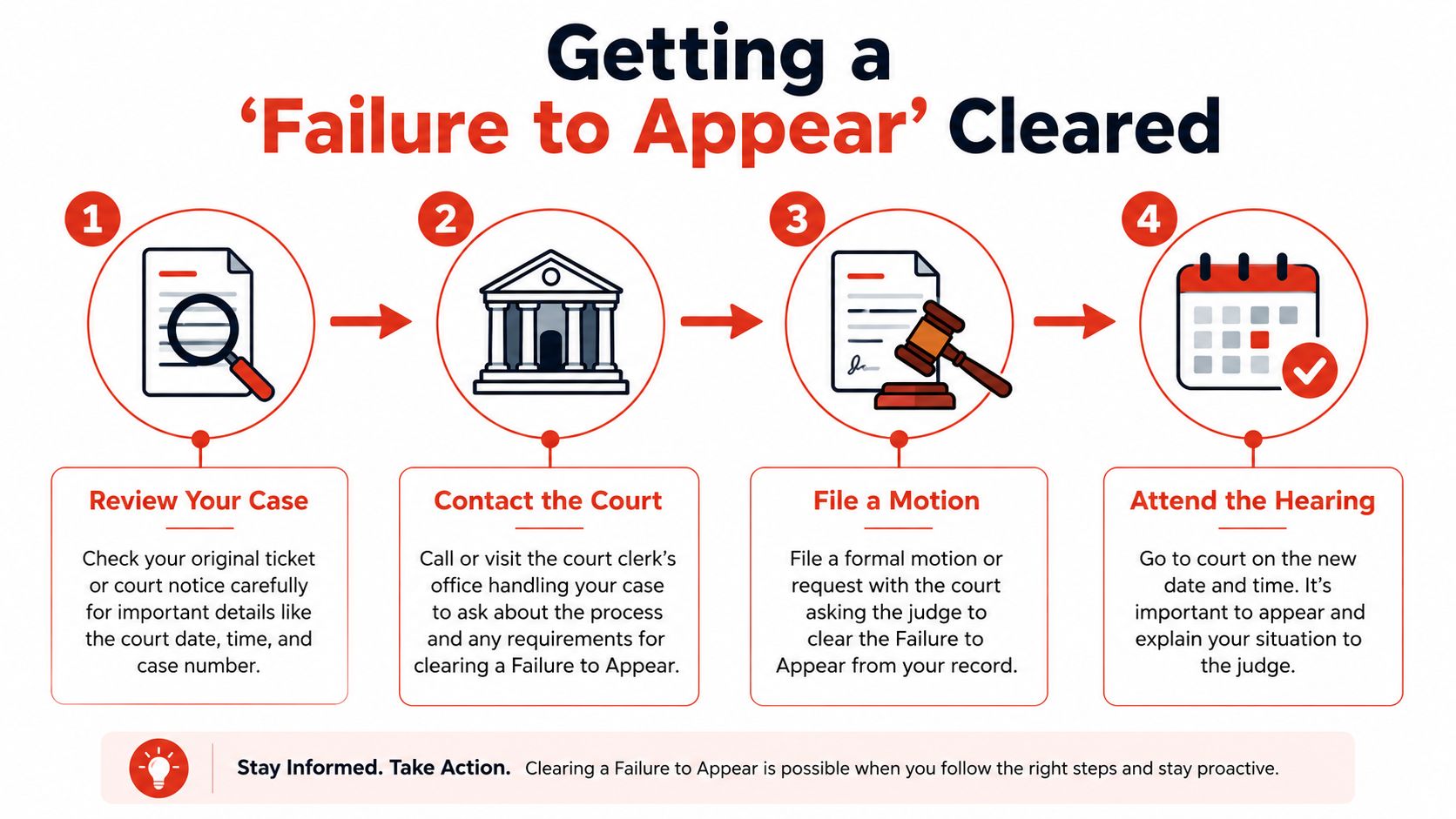
That motion is the practical answer to the rescheduling question in many counties. If granted, it can reopen the case, clear the missed-hearing default, and allow the court to assign a new date or let counsel appear on your behalf. General background on how missed dates can trigger added penalties in other states appears in this Avvo discussion, but in Florida the exact fix is usually driven by county procedure and the court's willingness to set aside the FTA.
Practical Ways to Clear an FTA
File a motion to set aside or reopen the case. This is often the cleanest route when a hearing was missed and the case cannot be paid out.
Contact the clerk for the county's local procedure. Some counties have traffic divisions that give specific instructions on scheduling a motion calendar, submitting a written request, or appearing in a designated courtroom.
Pay only if payment resolves the case. In some situations, a payable infraction may be closed by payment, but that does not automatically mean the FTA, D-6 issue, or suspension problem disappears.
Have an attorney appear where allowed. For many traffic matters, counsel can handle the reopening process, seek to set aside the FTA, and obtain a new hearing date without requiring you to appear personally.
Documents That Can Strengthen a Request to Reopen
Courts usually respond better to proof than to apologies. Helpful supporting materials can include:
hospital or urgent-care records
proof of a sudden medical emergency
airline cancellation or travel disruption records
documents showing you never received notice because of an address or mailing problem
proof of clerical error, such as a notice with the wrong date or courtroom
work records showing an unavoidable conflict, if they are detailed and credible
Filing a Motion vs. Just Paying the Fine
At this point, you might be tempted to just go online and pay the ticket along with any late fees. It seems like the quickest way out, right? Not so fast.
Paying the fine is legally considered an admission of guilt. That means points will likely be added to your driving record, which can cause your insurance rates to increase.
Worse, just paying the fine doesn't automatically fix a D-6 license suspension. You’ll often find you still have to deal with the court and the FLHSMV to get your driving privileges restored. It's a frustrating extra step you weren't expecting. We get into the details of that process in our guide on how to reinstate your suspended driver's license.
A Motion to Set Aside is often a smarter approach. It doesn’t just aim to get you a new court date; it directly attacks the FTA, which is the very thing that caused the license suspension and all those extra fees in the first place.
Success is never guaranteed, and procedure varies by county and judge. But as a practical matter, reopening or resetting a missed traffic hearing is often possible when you act quickly, use the right local procedure, and support the request with real documentation.
As you can see, figuring out your license and case status is the critical first step. Everything that comes after is based on that information.
How a Traffic Ticket Attorney Can Assist
Trying to find your way through the court system on your own after missing a court date can be difficult. Once you have a "Failure to Appear" on your record, the stakes are suddenly much higher, and the process becomes more complicated. In that situation, having a professional in your corner can make a significant difference.
An attorney whose practice focuses on traffic defense knows the procedures of your specific county court. They can assist with the process, starting with drafting and filing the all-important "Motion to Set Aside."
Managing the Legal Process for You
This is about much more than just paperwork. A traffic lawyer can handle communications with the clerk's office and the judge's staff. They make sure deadlines are met and documents are filed correctly. Our goal is to protect your license and your record by presenting a valid reason for why you missed your court date.
In many cases, an attorney can appear in court for you. This can save you:
Time away from work.
The hassle of traveling to the courthouse.
The stress of having to speak in front of a judge.
This allows you to continue with your daily life while a professional handles the legal matter.
Our primary goal is to address the "Failure to Appear," work to resolve any license suspension issues, and then handle the original ticket with the aim of keeping points off your driving record. Past results do not guarantee future outcomes.
A consultation can provide a clear, straightforward strategy built for your exact situation. Understanding when you might need a lawyer for a traffic ticket can shed light on your options and help you decide what to do next. An attorney can give you an honest assessment of your case and map out the steps they would take to resolve it, giving you some much-needed peace of mind.
Attorney Advertisement. Office in Broward. Submitting information via forms on this site does not create an attorney-client relationship.
Staying Organized to Prevent Future Issues
Alright, you've dealt with the issue of a missed court date. The last thing you want is for it to happen again. Let's make sure this does not become a recurring problem.
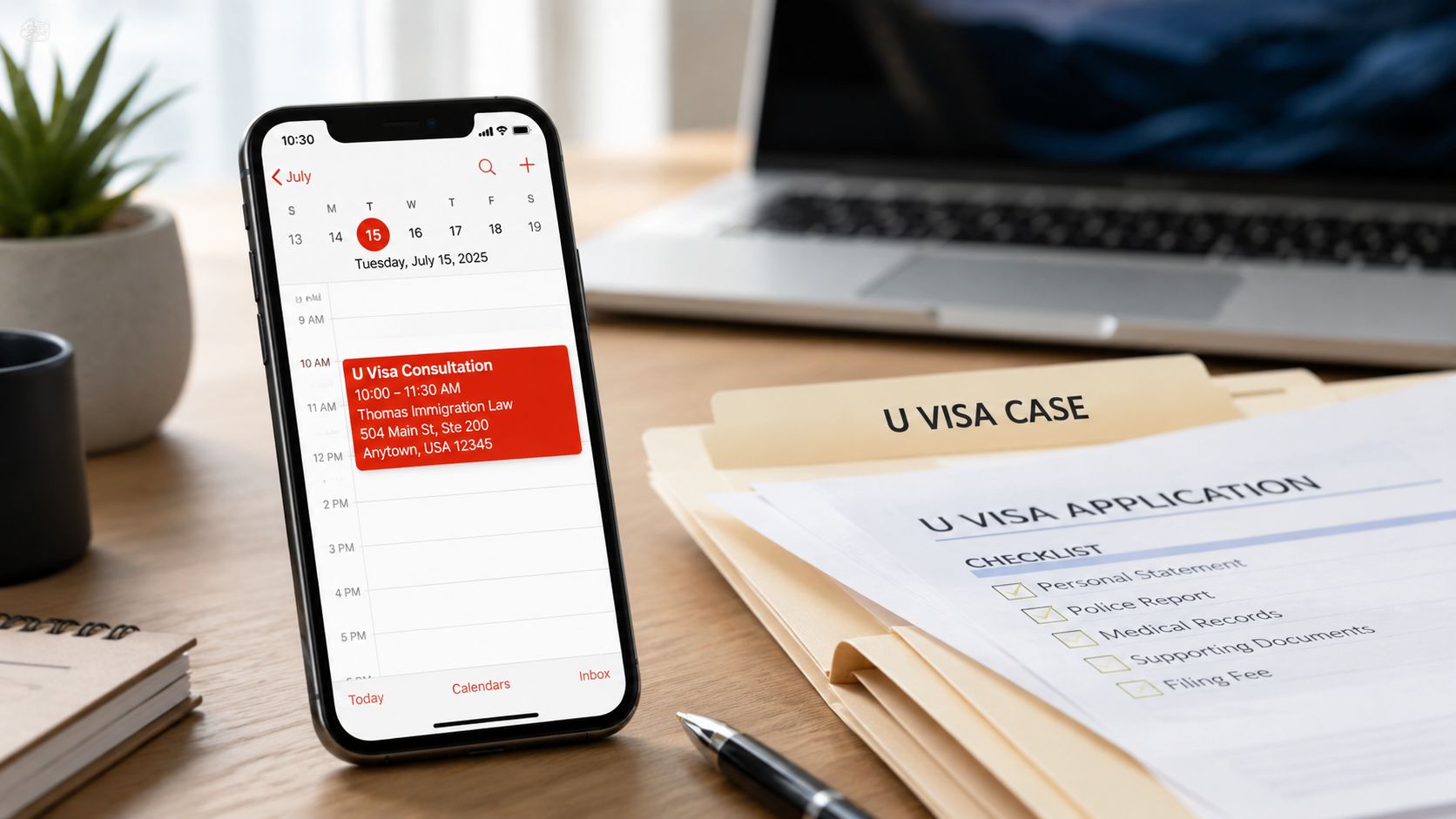
It all starts with a few simple habits that can save you from legal trouble down the road. The single most important thing you can do? Keep your mailing address up to date with the Florida Highway Safety and Motor Vehicles (FLHSMV). This ensures you get the official notices they send out.
The moment you get a citation, pull out your phone and put that court date on the calendar. But don’t stop there. Set multiple reminders—one for the week of, another for the day before, and a final one on the morning of your hearing. It sounds basic, but this one action can be the difference between showing up and facing serious consequences.
Creating a System That Works
Get a dedicated folder—either a physical one or a digital one on your computer—for anything traffic-related. Tickets, court notices, receipts for payments, everything. Having it all in one spot means no more frantic searching for a document you desperately need.
These small, proactive steps add up. Online court access and digital lookup tools have made it easier than before to check status and respond quickly after a missed date. A general rights explainer on ticket processes and court access appears in this ACLU of Texas guide, but Florida drivers should still rely on their county clerk and the FLHSMV for case-specific instructions.
The key takeaway is this: taking control of your deadlines and documents is the most effective way to protect your driving privileges and avoid the consequences of a missed court date for a traffic ticket.
Common Questions About a Missed Traffic Court Date
I often receive calls from people concerned after missing a court date. It happens. But knowing what to do next is critical. Here are some of the most common questions I hear, along with straightforward answers based on our experience handling these situations.
(Disclaimer: This content is for educational purposes and is not a substitute for legal advice from a licensed attorney about your specific case.)
How Quickly Should I Act After Missing a Court Date?
You need to act immediately.
The second the clerk marks you as a "no-show," the clock starts ticking. A judge has the authority to suspend your driver's license or even issue a bench warrant at any point after you've missed that date. Waiting only makes the situation more complex and potentially more expensive to resolve.
What Reasons Do Courts Usually Treat as Legitimate, and Which Excuses Are Weak?
The strongest reasons are the ones you can document. Courts are more likely to seriously consider hospitalization, a sudden medical emergency, lack of notice, a clerical mistake, or a significant travel disruption when you can back it up with records. A discharge summary, notice mailed to the wrong address, or airline cancellation proof carries more weight than a general statement that you were dealing with a problem.
Weak excuses are usually the ones that sound avoidable or unsupported: forgetting the date, being busy at work without records, oversleeping, or assuming the case would be continued. In our experience, the phrase that helps least is "I meant to handle it later." The court wants a concrete reason and, ideally, paperwork.
Can You Postpone or Reset a Traffic Court Date After Missing It?
Sometimes, yes. But once the date has already passed, this is usually no longer a simple postponement request. It becomes a request to reopen the case or set aside the failure to appear.
What affects that decision most is the type of case, how quickly you acted, whether an FTA or warrant has already been entered, and whether you have a documented reason for missing court. Civil traffic cases are often easier to reset than criminal traffic cases. Some counties allow a straightforward motion process; others may require a hearing before the judge decides whether to give you a new date.
Can't I Just Pay the Ticket Online and Make This Go Away?
This is a common misconception, and it usually creates a bigger issue.
First off, paying the ticket is the same as pleading guilty. You're accepting the points, the conviction, and the potential insurance hikes. We cover this in detail in our guide on what happens when you plead guilty.
More importantly, just paying the fine rarely fixes the "Failure to Appear." The court still sees you as someone who ignored a legal summons. In most counties, you must file a specific motion to clear up the missed court date before you can even deal with the original ticket.
What if I Was Out of State When I Missed My Court Date?
From the court's perspective, it doesn't matter if you were in another state or another country. You were still responsible for appearing or making arrangements.
The good news is that you may not have to travel back to Florida to handle it. A traffic attorney can often appear in court on your behalf, file the necessary paperwork to address the suspension, and resolve the underlying ticket. This can save you the expense and hassle of a trip back just for a court date.
At Ticket Shield, PLLC, our practice focuses on traffic defense. We handle traffic matters across Florida. Our goal is to protect your license and your record. Get a free consultation today at https://www.ticketshield.com.