What Happens If You Plead Guilty in Florida
What happens if you plead guilty in Florida? Usually you admit the charge, give up defenses, and risk points, fines, and record damage.

Pleading guilty to a traffic ticket or a criminal charge can feel like the simplest way to move on. But here's the reality: what happens if you plead guilty is you're making a formal admission of fault. That decision results in a conviction, fines, and points on your driver's license, kicking off consequences that can follow you for years.
How We Evaluated the Consequences of Pleading Guilty in Florida
This article is based on Florida court guidance, Florida Statutes, Florida Highway Safety and Motor Vehicles rules, and the practical consequences that flow from a traffic conviction, including points, suspensions, and insurance exposure. We relied on sources such as the Florida Courts traffic self-help pages, the FLHSMV points system overview, the civil penalty schedule in section 318.18, and the CDL disqualification rules in section 322.61.
In our review of Florida traffic cases, the biggest mistake drivers make is treating a ticket like a bill instead of a legal choice. Paying may end the case quickly, but it can also lock in points, make a withhold unavailable, or create problems for a commercial license. We also compared basic plea principles against broader criminal-justice research showing how common guilty pleas are in practice: historical Bureau of Justice Statistics data found that guilty pleas far outnumbered trials even decades ago, with 45 out of every 100 felony arrests ending in guilty pleas in 1979 while only 5 ended in trials, according to the BJS plea study.
The Real Cost of Pleading Guilty in Florida
In plain English, pleading guilty means you are admitting the allegation and giving up the chance to fight it. In a Florida traffic case, that usually means you are no longer contesting the officer's version of events, no longer requiring the state to prove the violation, and no longer preserving defenses that might have led to a dismissal, reduction, or withhold. Depending on the type of case, the result is usually either a conviction or another formal adjudication outcome entered by the court. The Florida Courts traffic guidance explains that drivers generally must choose whether to pay, elect school if eligible, or contest the citation.
Florida also draws an important line between civil traffic infractions and criminal traffic offenses. Many ordinary tickets are civil matters handled under chapter 318, while offenses such as DUI, reckless driving in some settings, or driving while license suspended can be criminal. That distinction matters because the procedure, penalties, and record consequences are not the same. For many civil infractions, paying the citation is treated as an admission and waiver of hearing rights under Florida's traffic framework, while criminal cases require a formal plea in court and carry broader constitutional consequences. In our experience, drivers often miss this distinction and assume every ticket works the same way.
Established Penalties vs. Potential Outcomes
The practical difference is not subtle. A guilty plea gives you certainty, but it is certainty in the state's favor. You are accepting the listed penalty structure, any applicable points, and whatever record consequences follow from the offense. Contesting the case preserves uncertainty, which is exactly what can create an opening for dismissal, amendment, school eligibility, or a withhold where the law and the court allow it.
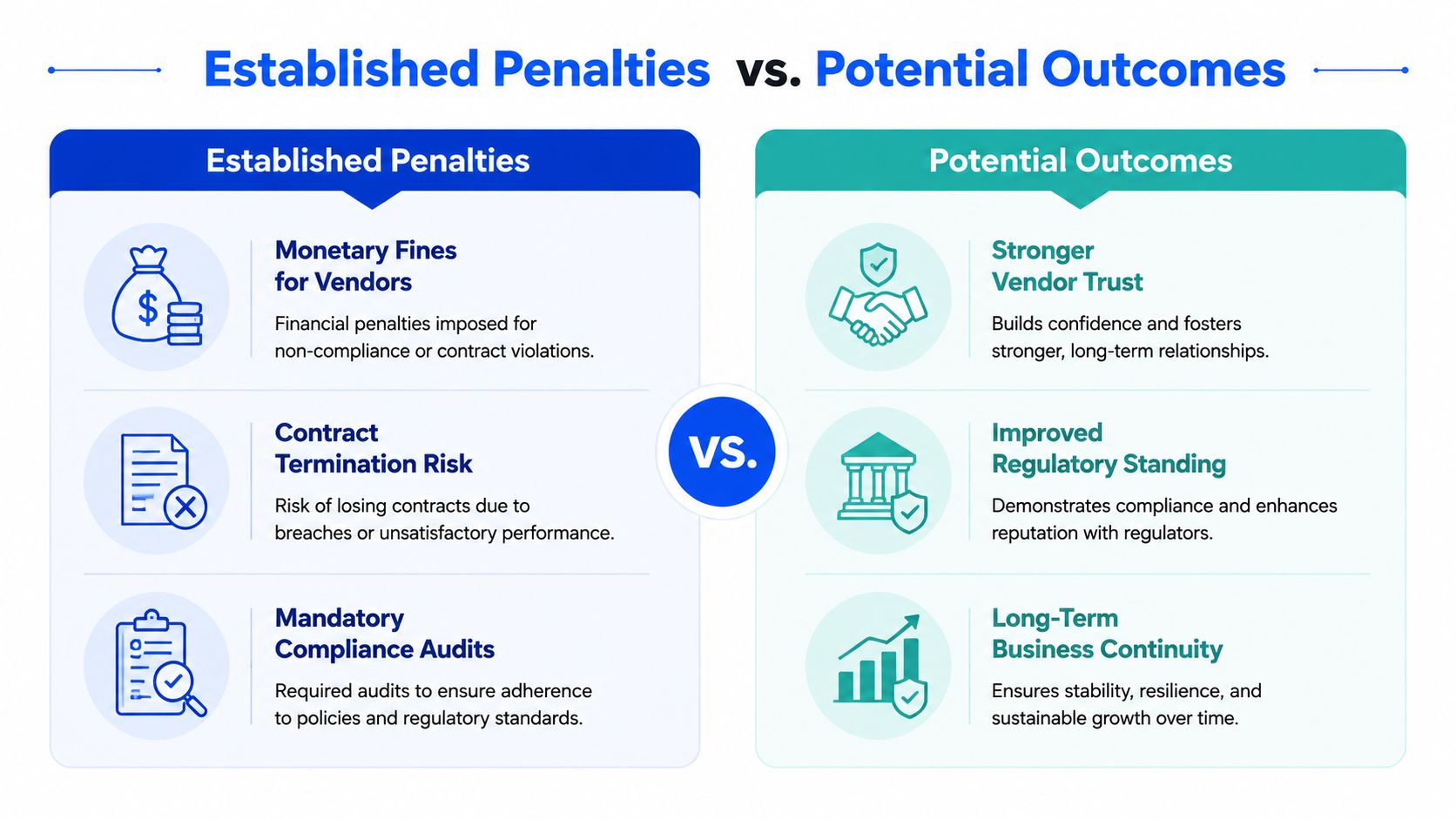
That matters because a plea also means surrendering rights. Vera's review of plea bargaining notes that guilty pleas are commonly paired with waivers of major trial protections, including the right to jury trial, the right to confront witnesses, and the right to require the government to prove guilt beyond a reasonable doubt, as summarized in Vera's plea-bargaining review. Even though most traffic infractions are not jury-trial cases, the underlying point is the same: a guilty plea trades away the chance to challenge the case.
This infographic lays out the two very different paths your case can take.
Pleading Guilty vs. Contesting Your Ticket: A Quick Comparison
Outcome Area | Consequence of Pleading Guilty | Potential Outcome of Contesting |
|---|---|---|
Conviction | In many traffic cases, you are accepting a finding against you; for civil moving violations, that ordinarily leads to a reportable disposition that can affect your record. | A dismissal, amendment, school election, or negotiated outcome may avoid the same record damage. |
Points on License | Points are assessed when the offense carries points under the FLHSMV schedule. | A successful defense or eligible alternative can avoid points. |
Fines & Fees | You usually owe the standard civil penalty or court-imposed amount under the applicable statute or offense level, including amounts listed in section 318.18. | The amount may be reduced, reclassified, or eliminated if the case is dismissed. |
Insurance Impact | A reportable violation can increase premiums when your insurer reviews your driving history. | Avoiding a reportable conviction can reduce or prevent a rate increase. |
Control | You are accepting the charge as written with little room to improve the outcome afterward. | You keep the ability to negotiate, request evidence review, and test the state's proof. |
Rights You Give Up | You generally give up the right to contest the allegation and, in criminal cases, waive trial-related rights recognized in plea practice. | You preserve the right to challenge the charge and require the state to prove it. |
When It Becomes Part of Your Record | Once the court processes the disposition or the payment is treated as an admission, the outcome can be reported to FLHSMV or entered in the criminal record depending on the case type. | A dismissal or favorable negotiated result may keep the same violation from appearing in the same way. |
Outcome Area | Consequence of Pleading Guilty | Potential Outcome of Contesting |
|---|---|---|
Conviction | Results in a conviction. The charge goes on your permanent driving record. | Avoidable. The case could be dismissed or charges reduced. |
Points on License | Points are added. Points are automatically added per the violation. | Avoidable. A successful defense can prevent any points. |
Fines & Fees | You pay the full, standard amount set for the violation. | Fines may be reduced or waived as part of a plea deal. |
Insurance Impact | Highly likely. Insurers often raise premiums after a conviction. | Can be prevented. No conviction or points means no rate hike. |
Control | None. You accept the standard penalties without negotiation. | You gain an opportunity to negotiate a more favorable result. |
Why Do So Many People Plead Guilty?
Convenience is a powerful motivator. Nationally, guilty pleas are the norm, not the exception. The American criminal system resolves the overwhelming majority of convictions by plea, and older Justice Department data show that this pattern is entrenched, as reflected in the BJS historical analysis. But the fact that pleas are common does not mean they are harmless.
In our review, Florida drivers often plead guilty for reasons that have nothing to do with the strength of the case: they do not want to miss work, they assume the officer will automatically be believed, or they think a small fine ends the matter. With traffic cases, that shortcut can become expensive once points, insurance, and suspension risk are added in. To see how quickly those penalties stack, review the Florida traffic ticket point system. Pleading guilty means accepting those downstream consequences before you know whether a better path was available.
How a Guilty Plea Impacts Your Driving Record and Insurance
Beyond the check you write for the fine, a guilty plea kicks off a chain reaction with consequences that can follow you for years. The two biggest hits are to your Florida driving record and your auto insurance premiums. It’s a domino effect—one negative event directly triggers another, turning a single ticket into a long-term financial headache.
When you plead guilty, you’re not just paying a ticket; you're accepting a legal conviction for the violation. That conviction gets reported straight to the Florida Department of Highway Safety and Motor Vehicles (FLHSMV) and becomes a permanent part of your driving history. The Florida Points System then comes into play.
The Florida Points System Explained
Think of the Florida Points System as a demerit program for drivers. Every time you're convicted of a moving violation, a set number of points gets tacked onto your license. For example, a conviction for speeding more than 15 mph over the limit adds 4 points. Pleading guilty is a direct way to get those points added to your record.
These aren't just imaginary numbers; they have very real consequences. The FLHSMV keeps a close watch on how many points you rack up over time.
Get 12 points within a 12-month period, and you're looking at a 30-day suspension.
Rack up 18 points within an 18-month period, and that becomes a 3-month suspension.
Hit 24 points within a 36-month period, and you'll face a 1-year suspension.
A guilty plea just pushes you closer to those cliff edges. What seems like a minor ticket today could be the very one that tips you over the limit and leads to a license suspension tomorrow, messing with your ability to get to work, run errands, and live your life.
Pleading guilty isn't just about paying a fine; it's about accepting a conviction that actively works against your driving privileges. Each point is a step closer to losing your license, and admitting guilt results in those points being added.
This pile-up of points and the conviction itself have a direct—and often immediate—impact on what you pay for car insurance.
The Domino Effect on Your Insurance Premiums
Insurance companies are all about managing risk. When you plead guilty to a traffic violation, a conviction pops up on your driving record. To an insurer, that conviction is a big red flag signaling that you are a "higher-risk" driver, making it more likely you'll be in an accident they have to pay for.
The result? Your premiums will almost certainly shoot up at your next renewal. The exact amount can vary, but even a single conviction for a minor speeding ticket can cause rates to jump by 20% or more. For more serious violations, the increase can be much, much higher, sometimes even doubling what you pay.
And this isn't a one-and-done penalty. That rate hike can stick with you for three to five years, depending on your insurance company's rules.
Let’s break down a simple example:
Your current annual premium: $2,000
Ticket fine: $160
Plea: Guilty
Insurance increase: A conservative 20%
New annual premium: $2,400
Over three years, that "simple" $160 ticket has cost you an extra $1,200 in insurance premiums alone, and that’s on top of the original fine. This is the hidden financial trap of pleading guilty. The conviction keeps costing you money long after you’ve paid the ticket and forgotten about it. Understanding how long traffic tickets stay on your record is absolutely critical to seeing these long-term financial impacts. The consequences of what happens if you plead guilty reach far beyond the courthouse steps, and our goal is to protect your license and record from these cascading effects.
The Serious Consequences of Pleading Guilty to a DUI
A standard traffic ticket is a headache, but a criminal traffic offense like a DUI is a whole different ballgame. In Florida, the line between a civil infraction and a criminal charge is sharp and unforgiving. Pleading guilty to a DUI isn't like just paying a speeding ticket and moving on—it's a life-altering decision with consequences that are both immediate and, in some cases, permanent.
When you plead guilty in a DUI case, you're admitting to a serious crime. That plea automatically becomes a conviction, which kicks off a series of mandatory penalties required by Florida law. These aren't just possibilities; they are the outcomes of admitting guilt.
Mandatory Penalties for a DUI Conviction
When you plead guilty to a DUI in Florida, you’re agreeing to a whole slate of harsh penalties. These are not up for negotiation.
Significant Fines: For a first offense, you’re looking at fines between $500 to $1,000. And that’s before court costs, which can easily pile on hundreds more.
Probation: You will almost certainly be put on probation for up to a year. This means regular check-ins, more fees, and a long list of strict rules you have to follow.
License Revocation: A DUI conviction means a mandatory driver's license revocation. For a first offense, that’s typically 180 days to one year without your license.
Potential Jail Time: A first-time DUI can land you in jail for up to six months.
Community Service and DUI School: The court will order you to complete mandatory community service hours and attend a substance abuse course, commonly known as DUI School.
These immediate penalties are bad enough, but they're just the beginning. The most damaging part of a DUI guilty plea is the consequence that never goes away. For specifics, see first-time DUI penalties in Florida.
The Permanent Shadow of a Criminal Record
This is the most critical point to understand: in Florida, a DUI conviction can never be sealed or expunged from your record. It becomes a permanent part of your public history, accessible to anyone who runs a background check. This single decision creates a lasting barrier that can follow you everywhere.
A guilty plea to a DUI charge creates an irreversible criminal record. Unlike many other offenses, Florida law provides no path to remove a DUI conviction, meaning it will follow you for the rest of your life.
This permanent mark on your record has far-reaching consequences that many do not consider until it is far too late.
Lifelong Obstacles After a Guilty Plea
A criminal record for a DUI can slam doors you never even knew were there. It can severely limit your opportunities in ways that go far beyond the courtroom.
Employment: Most employers run background checks. A DUI conviction can instantly disqualify you from jobs, especially any that involve driving, professional licenses (like nursing or law), or positions of trust.
Professional Licensing: If you have a professional license or plan to get one, a DUI conviction can lead to denial, suspension, or even revocation by state licensing boards.
Housing: Landlords often run background checks on potential tenants. A criminal record might be all it takes for your rental application to be denied.
Educational Opportunities: Some colleges and universities ask about your criminal history, which could impact your admission or your ability to get a scholarship.
Pleading guilty might seem like the quickest way to put the case behind you. But in reality, that choice can set off a chain reaction of negative consequences that will limit your personal and professional life for decades. The system often pushes for guilty pleas; it’s true that defendants who take a plea deal often get shorter sentences. But for a DUI in Florida, even the "leniency" of a plea deal still lands you with a permanent criminal record. Our goal is to protect your record from this lifelong stain.
Why Pleading Guilty Is a Career Risk for CDL Holders
If you drive a commercial vehicle for a living, a traffic ticket isn't just a nuisance—it's a direct threat to your entire career. The consequences of pleading guilty with a Commercial Driver's License (CDL) are worlds apart from what a regular driver faces. The standards are higher, the penalties are harsher, and there's virtually no room for error.
Under both Florida and federal law, CDL holders are held to a much stricter rulebook. A violation that might just be a few points and a fine for a passenger car driver can trigger a mandatory CDL disqualification for a professional. And it doesn't matter if you got the ticket in your personal pickup truck on a Sunday afternoon—it still counts against your commercial license.
Heightened Standards and Serious Offenses
The Federal Motor Carrier Safety Administration (FMCSA) and Florida law have a list of "serious traffic violations" that can put your job in immediate danger. If you plead guilty to just two of these within a three-year period, you’re looking at a mandatory 60-day CDL disqualification. A third violation in that same window? That's a 120-day disqualification.
These aren't obscure violations, either. They include common tickets like:
Excessive speeding (15 mph or more over the limit)
Reckless driving or careless driving
Improper lane changes
Following too closely
Driving a commercial vehicle without the proper endorsements
Pleading guilty to any of these isn't just about paying a fine. It’s actively taking a step toward the unemployment line. The system is designed to get drivers with multiple convictions off the road, and a guilty plea is the fastest way to get there.
For a CDL holder, a guilty plea is a business decision with potentially catastrophic consequences. It surrenders the opportunity to defend your livelihood against a system that offers very little leniency.
Lower BAC Limits and Major Offenses
The rules get even tighter when alcohol is involved. While the standard DUI limit in Florida is a .08 Blood Alcohol Concentration (BAC), it's a different story for a CDL holder behind the wheel of a commercial vehicle. The limit is cut in half to just .04. Pleading guilty to a DUI at this much lower threshold—or even just refusing a breathalyzer—means an automatic one-year CDL disqualification for a first offense. If you were hauling hazardous materials, that jumps to three years.
Then there are the "major offenses" that can lead to a lifetime disqualification, though some drivers might be eligible for reinstatement after 10 years. These career-ending violations include:
Getting a second DUI offense.
Using a commercial vehicle to commit a felony.
Leaving the scene of an accident in your commercial vehicle.
The simple act of pleading guilty is a huge factor in conviction statistics around the world. Different legal systems see very different outcomes. For instance, Japan's conviction rate is over 99%, while India's was around 64.3% in 2022. These numbers show just how much the legal framework can influence what happens when someone decides to enter a plea. You can learn more about how conviction rates vary internationally and what causes those differences.
Because the stakes are so high, you need a defense strategy built specifically for CDL holders. It's not a luxury; it's a necessity. Our goal is to protect your license and your career. While past results don't guarantee future outcomes, fighting the charge is the only path toward a result that keeps you on the road and earning a living.
Attorney Advertisement. Office in Broward. Prospective clients may not obtain the same or similar results.
Understanding Your Alternatives to a Guilty Plea
After a citation, the question is not whether pleading guilty is “good” or “bad” in the abstract. The right question is which option best protects your license, record, finances, and work situation. Often the best decision turns on a short list of concrete factors rather than emotion or convenience.

A Practical Decision Framework
Before you choose a plea, look at these factors:
Severity of the charge. A civil speeding ticket is not the same as reckless driving, DUI, or driving while license suspended. Criminal traffic offenses can trigger probation, jail exposure, and permanent record consequences.
Whether points are likely. Florida assigns points for many moving violations under the FLHSMV points system. If the ticket carries points and you are already close to a suspension threshold, a guilty plea may be far more damaging than the fine suggests.
Your prior driving history. A driver with a clean record has more room to absorb a mistake than someone already carrying points or prior suspensions. Many drivers miscalculate, focusing on the current ticket and ignoring the cumulative effect.
CDL status or employment exposure. Commercial drivers face separate federal and state consequences, including disqualification rules under the FMCSA disqualification standards and Florida's section 322.61.
Insurance and long-tail cost. A ticket that looks cheap at the clerk's window may become expensive if it causes a premium increase for several policy periods.
Availability of traffic school or a withhold. For some eligible noncriminal traffic citations, drivers can elect a basic driver improvement course and receive a withhold of adjudication under section 318.14. That can keep points off the record in a way a straight guilty disposition will not.
For a broader primer on plea terminology, readers sometimes find the topic collections on Express Bail Bonds' page useful before they compare Florida-specific options.
Plead Guilty, Plead Not Guilty, or Seek a Negotiated Resolution?
Pleading Guilty
This may be considered when the offense is minor, the driver understands the point impact, no better statutory option is available, and the collateral consequences are limited. Even then, it should be a conscious choice, not an autopilot payment.
Pleading Not Guilty
This is often worth considering when the charge carries meaningful points, when the facts are disputable, when you need to protect a CDL or clean record, or when the case could turn on officer proof, equipment accuracy, or procedural defects. A not-guilty plea preserves your right to challenge the citation through the court process described by the Florida Courts traffic resources.
Seeking a Negotiated Resolution
Not every strong outcome comes from trial. Many cases are resolved through amendment, school election, or an agreement that avoids points or reduces the offense. This may be considered when the evidence is mixed, the driver has something to lose from a conviction, and the court or prosecutor has room to resolve the matter short of a full guilty finding. We often see this path matter most for drivers trying to protect insurance rates or avoid a suspension trigger.
Traffic School and Withhold Options
For some minor civil traffic citations, electing traffic school can be better than either a straight guilty plea or a fully contested hearing. Florida law allows eligible drivers to elect a basic driver improvement course in certain situations, subject to frequency limits and court procedures under section 318.14. When available, this route can lead to withheld adjudication instead of a standard conviction outcome. You can read more about that result in our guide on what is adjudication withheld.
No One-Size-Fits-All Answer
The same ticket can justify different decisions for different people. A driver with no prior history and no commercial license may reasonably weigh options differently than an out-of-state driver, a rideshare driver, or someone already at 10 points. In our experience, the costliest mistakes happen when people assume “just pay it” is neutral. It is not. It is a legal decision with permanent effects in some cases.
How a Traffic Defense Attorney Can Help Your Case
A traffic defense lawyer will not advise you to fight every ticket. The value is case screening: identifying whether there is a meaningful defense, a workable negotiated outcome, or a statutory alternative that protects your record better than a guilty plea would.
Before advising any plea, counsel should review the citation itself for defects, including whether the offense is charged correctly, whether the location and statute match the allegation, and whether the filing creates notice or proof problems. In contested speed cases, counsel may also examine whether the measuring device was approved and maintained under Florida's speed-measuring device rules in section 316.1906 and whether the officer's documentation supports the reading.
What Counsel Actually Looks For
Citation defects and charging errors: A mischarged statute, incomplete citation, or weak factual description can matter more than most drivers realize.
Officer appearance and proof issues: If the state cannot present the necessary witness or evidence, the case may resolve differently than a driver expects when reading the ticket.
Calibration and maintenance records: In cases involving radar, laser, or breath-testing issues, the reliability of the equipment can be central.
Prior-record implications: A lawyer should check how one more reportable offense affects suspension thresholds, probation status, or pending cases.
Court-specific negotiation patterns: Different counties and courtrooms handle traffic resolutions differently. In our experience, knowing local practice can materially affect whether a reduction, school option, or withhold is realistic.
Collateral consequences: The visible penalty on the citation is not the whole story. Insurance, employer discipline, fleet policies, and licensing consequences may be more severe than the fine itself.
When a Lawyer Is Especially Valuable
Legal help becomes much more important when the case involves a CDL, DUI exposure, a high-point ticket, prior suspensions, or an out-of-state driver trying to avoid interstate reporting problems. Florida's courts also allow, in many traffic matters, procedures that can be handled without the driver personally managing every appearance, but the exact process depends on the offense and county. The Florida Courts self-help traffic pages are a good starting point for procedure, and CDL holders should understand both federal consequences under the FMCSA rules and Florida consequences under section 322.61.
The lawyer's job is not magic. It is to identify avoidable damage before you lock in a plea that cannot easily be undone.
The point of representation is informed decision-making. Sometimes the best move is to contest the ticket. Sometimes it is to negotiate. Sometimes it is to use an eligible school or withhold option. What matters is understanding the consequences before the plea is entered.
Attorney Advertisement. Office in Broward.
Is It Plead Guilty or Pled Guilty?
Both forms exist, but plead guilty is the standard phrase in modern legal writing. Pled guilty is also widely used in news coverage and everyday English, especially in American usage, but court forms, statutes, and lawyer-written materials more often use plead as the present tense and pleaded guilty as the past tense.
A simple way to remember it:
Present tense: “I plan to plead guilty.”
Past tense, formal/legal: “He pleaded guilty in court.”
Past tense, common but less formal: “He pled guilty.”
You may also hear people say “plea guilty,” but that is not the standard verb form. The usual phrasing is plead guilty or enter a guilty plea.
Frequently Asked Questions About Pleading Guilty
What Does It Mean to Plead Guilty?
It means you are formally admitting the allegation instead of contesting it. In a Florida traffic case, that usually means you are accepting the charge, giving up the chance to challenge the evidence, and allowing the court or clerk process to enter the corresponding outcome. In a criminal case, it also means waiving important trial rights associated with forcing the state to prove the charge.
What Is the Difference Between Guilty and Not Guilty in a Traffic Case?
A guilty plea accepts the violation and usually triggers the normal penalty structure. A not-guilty plea does not mean you are claiming innocence in a dramatic sense; it means you want the state to prove the case and you want to preserve defenses, negotiation options, or statutory alternatives. In traffic court, that difference can determine whether points are automatically assessed or whether you still have a path to avoid them.
Is It Ever a Good Idea to Just Pay the Ticket and Plead Guilty?
Sometimes, but only after you understand the consequences. Paying a Florida citation is often treated as an admission in traffic cases, and the Florida Courts traffic guidance makes clear that payment and contesting are different elections. For a driver with no prior history, no CDL, and no insurance sensitivity, that may be an acceptable choice. For someone near a suspension threshold or dependent on a clean record for work, it may be the worst option.
What Happens if I Plead Guilty but Cannot Afford the Fine Immediately?
Once the plea is accepted and the financial obligation is imposed, the unpaid amount becomes a court problem rather than just a ticket problem. Some counties offer payment arrangements, but practices vary. If you ignore the due date, you can face additional collection problems and possible license consequences depending on the court's enforcement process. The safer move is to ask about payment procedures before the deadline passes.
I Already Pleaded Guilty—Is There Anything I Can Do?
Possibly, but speed matters. In some situations, a person may ask the court to withdraw a plea or seek other post-judgment relief, but the deadline, standard, and proper motion depend on the court and whether the matter is civil traffic or criminal. Florida's self-help and court resources do not promise an easy do-over, and courts generally expect a legal basis, not just regret. If the plea was recent, get advice immediately and check the procedural guidance available through the Florida Courts resources. In our experience, waiting is what usually closes whatever narrow window may have existed.
If you're staring down a traffic ticket or a DUI charge in Florida, don't just roll over and accept a guilty plea. Let Ticket Shield, PLLC take a look at your case and build a defense to protect your record. Contact us for a free, no-strings-attached consultation to learn about your real options. Submitting information via our forms does not create an attorney-client relationship. Submit your ticket online or give us a call today.