How Do Radar Speed Guns Work? A Florida Defense Guide
Learn how do radar speed guns work from a Florida defense firm. We explain Doppler radar, LIDAR, and the errors that can get your speeding ticket dismissed.

Radar speed guns use Doppler radio waves. LIDAR uses infrared laser pulses. Both can produce evidence in a Florida speeding case, but neither is beyond challenge when operation, targeting, maintenance, or documentation breaks down.
Flashing lights hit your rearview mirror. The officer says a device clocked you. You look at the ticket and see a number that feels final.
It isn't final.
A reading from a radar gun or laser gun is only as strong as the machine, the officer using it, and the records behind it. In Florida, that matters because speeding allegations under Florida Statute 316.187 still have to stand up in court. If the state can't prove the device was used properly and working properly, the reading stops looking automatic and starts looking vulnerable.
That matters in real courtrooms, including places like the Broward County Judicial Complex, where traffic cases often turn on details drivers never see at the roadside. If you want a practical starting point for your defense, review this guide on how to beat a speeding ticket in Florida.
Table of Contents
Your Guide to Challenging Speeding Ticket Evidence
The state wants you to think the machine settles everything. It doesn't.
Radar speed guns use the Doppler effect, measuring the frequency change of radio waves bouncing off your car to calculate speed. LIDAR guns use laser pulses to measure your vehicle's changing distance over time. Both are fallible, and both can be challenged.
That distinction matters the moment an officer claims you violated Florida Statute 316.187. The charge may look simple on paper, but the proof behind it is technical. That opens the door to legal pressure. Was the device maintained? Was it tested? Did the officer target your car, or just traffic in general? Did the paperwork match the story told at the roadside?
Practical rule: Don’t treat the number on the citation as truth. Treat it as evidence the state still has to authenticate.
Drivers often make the same mistake. They focus on whether they think they were speeding. Your defense should focus on whether the state can prove the reading is reliable.
That shift changes everything. A speeding case isn't just about velocity. It's about foundation. The officer needs more than a handheld device and confidence. The state needs a usable reading, proper operation, credible identification of your vehicle, and records that hold together under scrutiny.
Here's the direct takeaway:
Radar and LIDAR are different tools. They fail in different ways.
Operator conduct matters. A good machine used badly still creates bad evidence.
Maintenance records matter. Missing logs can weaken the state's case.
Florida court procedure matters. You fight the proof, not just the accusation.
If you understand how do radar speed guns work, you're not learning physics for fun. You're learning where the state's evidence can crack.
How Does a Police Radar Gun Measure Your Speed
An officer sits on the shoulder, points a radar unit into moving traffic, and a number appears on the screen. That number looks decisive. In court, it is only as good as the officer's targeting, the unit's setup, and the agency's testing records.
Police radar works by sending out radio waves and measuring the frequency shift in the signal that bounces back from a moving vehicle. That is the Doppler effect. The basic operating method is described in this radar gun overview from Neltronics.
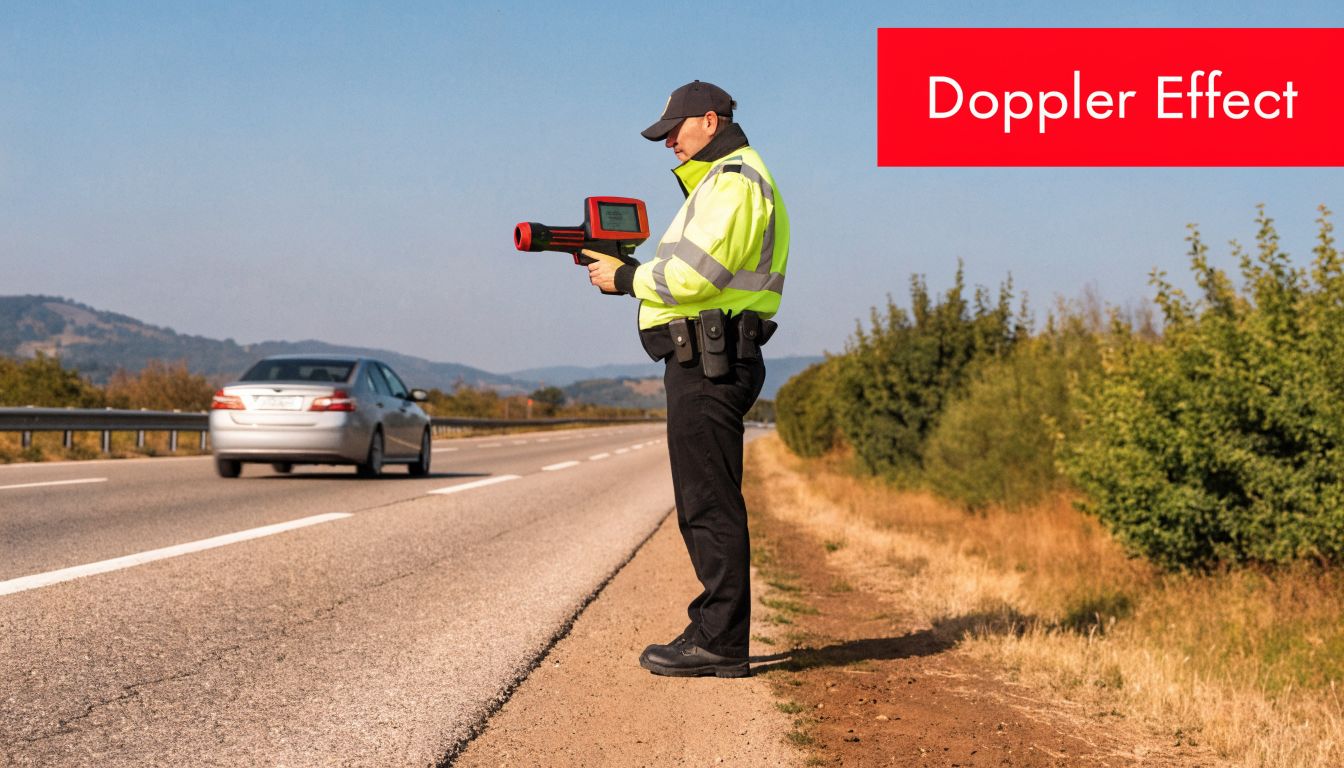
The concept is simple. The courtroom fight is not.
A radar gun transmits radio waves, receives the reflected signal, compares the outgoing and returning frequencies, and converts that difference into a speed reading. Inside the unit, that comparison happens through signal mixing and digital processing. If the officer is stationary, the device is measuring the target vehicle's movement relative to the gun. If the officer is driving, the unit must also account for the patrol car's own speed by reading reflections from the road or nearby fixed surfaces.
That second setup creates more room for mistakes. A moving radar unit is doing more than one calculation at the same time. If the patrol speed input is wrong, the target speed can be wrong. If the radar locks onto the strongest reflection instead of your car, the displayed speed may belong to another vehicle.
That is where a defense starts. Ask what the officer was driving, whether the radar was in stationary or moving mode, what traffic looked like, and how the officer confirmed your vehicle was the one producing the reading. A vague answer helps you.
If you're sorting out the legal side of a Florida speeding allegation, it also helps to understand what a prima facie speed limit means in Florida.
Why radar band and beam control matter
Radar units do not all operate the same way. Officers may use X, K, or Ka band equipment. Those technical differences matter because beam width, interference risk, and target separation all affect whether the reading can be tied to your vehicle with confidence.
Band | Frequency range | Why it matters |
|---|---|---|
X-band | 8-12 GHz | Older equipment. More susceptible to interference and broad-target problems. |
K-band | 18-27 GHz | Common in traffic enforcement. Narrower beam, but still vulnerable in heavier traffic. |
Ka-band | 27-40 GHz | Common in newer units and often marketed as more selective. The officer still has to identify the right vehicle. |
Do not let the state hide behind the word "radar" as if every unit works the same and every reading is self-proving. You want the model, the band, the operating mode, the officer's training, and the field test history. If the officer cannot identify those basics, the foundation for the reading starts to weaken.
The same problem shows up in crowded traffic. Radar can reflect off multiple vehicles at once. Large trucks, closer vehicles, angled positioning, roadside objects, and electronic interference can all complicate target identification. The machine may return a number. That does not automatically prove the number came from your car.
A radar reading only helps the state if the officer can connect the displayed speed to your vehicle and show the unit was operating properly at the time.
This visual gives a basic look at the process:
Your best move is to force specifics. Demand the testing records. Demand the calibration history. Demand clear testimony about mode, traffic conditions, and visual tracking. Radar evidence gets weaker fast when the officer cannot explain how the number was produced and why it belongs to you.
What Is a LIDAR Laser Speed Gun
LIDAR is different. It doesn't rely on Doppler radio waves. It uses infrared light and calculates speed from time-of-flight measurements. The officer aims at a specific point on the vehicle, fires a burst of laser pulses, and the device measures how the vehicle's distance changes over a short interval.
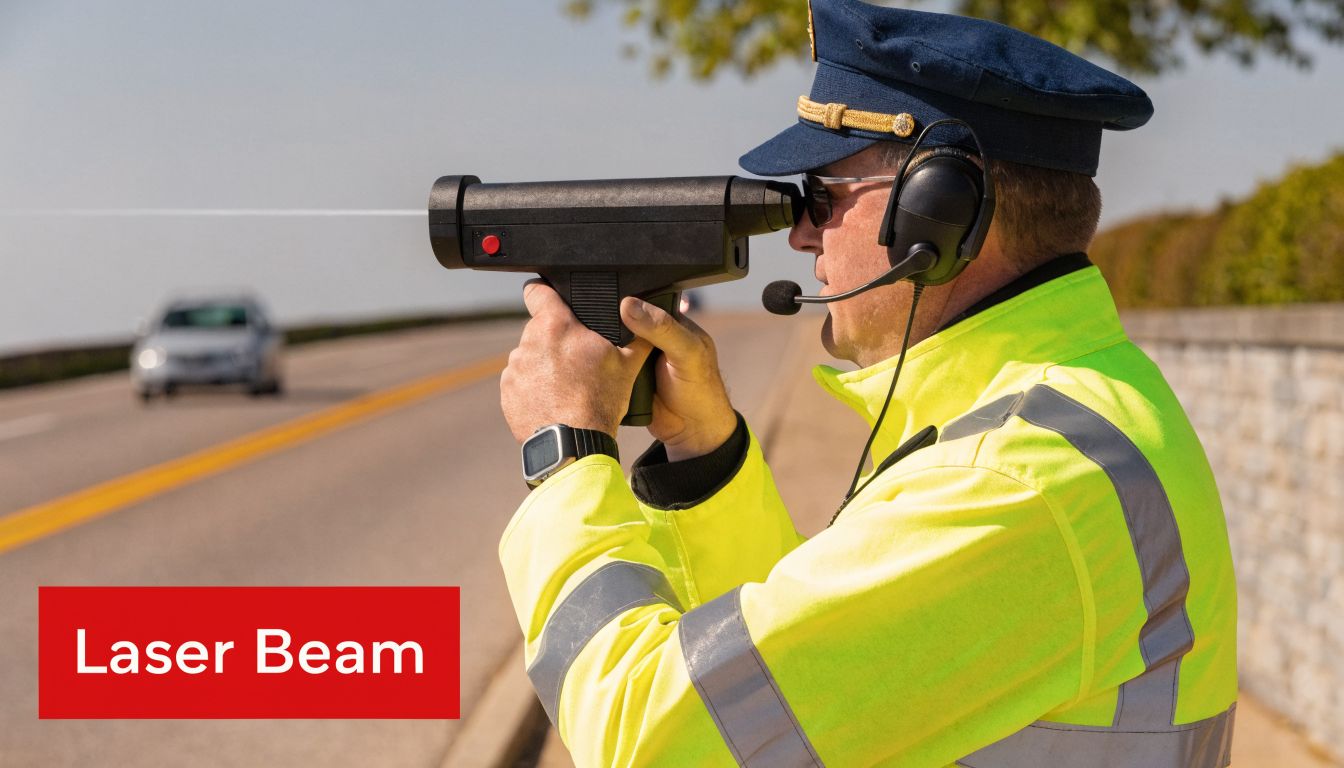
That targeting requirement is why LIDAR often feels more intimidating to drivers. It looks personal because it is. The officer isn't broadcasting a broader radio beam into traffic. The officer is trying to pick your car out of the scene.
Why laser feels more precise
The core physics are straightforward. Light travels at a known speed. A LIDAR unit sends out pulses, measures the round-trip travel time, and calculates distance. It repeats that process rapidly. By comparing sequential distance measurements, the unit calculates speed.
The verified technical details are specific. LIDAR systems emit hundreds of infrared laser pulses per second, often collect 250-500 pulses, can target specific points on a vehicle from up to 1,000 meters away, and often operate with accuracy margins under 1 mph, according to this court-published explanation of how laser speed guns work.
That's the part officers like to emphasize. Newer doesn't mean untouchable.
The narrow beam creates precision, but it also creates dependency. The officer has to hold the sight steady, identify the right target point, maintain line of sight, and use the device in conditions that allow the beam to return cleanly.
If your case involves laser enforcement, this guide on how to beat a laser speeding ticket in Florida is the practical follow-up.
Where laser enforcement gets exposed
Laser avoids some radar problems, but it introduces its own.
A LIDAR reading depends on proper aiming at reflective target points such as headlights, grilles, or license plates. If the officer sweeps across the vehicle instead of holding a stable point, the reading can become vulnerable to attack. If visibility is compromised, that matters. If the officer had a poor angle, weak line of sight, or traffic partially blocking the vehicle, that matters too.
Here is the useful contrast:
Question | Radar | LIDAR |
|---|---|---|
What does it send out | Radio waves | Infrared laser pulses |
How does it calculate speed | Frequency shift | Distance change over time |
How broad is the targeting | Broader beam | Narrow beam |
What does that mean for defense | More concern about clutter and target confusion | More concern about aiming, line of sight, and sweep error |
Laser evidence often sounds stronger because it targets one vehicle more narrowly. But the narrower the targeting method, the more the officer's handling matters.
If radar is vulnerable because it can pick up too much, laser is vulnerable because it can go wrong when the officer tries to pick out too little with shaky execution.
Are Radar and LIDAR Readings Always Accurate
You get pulled over on I-95. The officer says the gun locked your speed. That sounds decisive. It isn't.
Under Florida Statute 316.187, radar and LIDAR are only as trustworthy as the officer using them and the condition of the device that day. In a Florida courtroom, including a high-volume courthouse like the Broward County Judicial Complex, the reading matters less than the foundation behind it. If the state cannot show proper operation, proper testing, and reliable identification of your vehicle, the number on the screen loses force.
Understanding potential errors in radar and LIDAR readings.
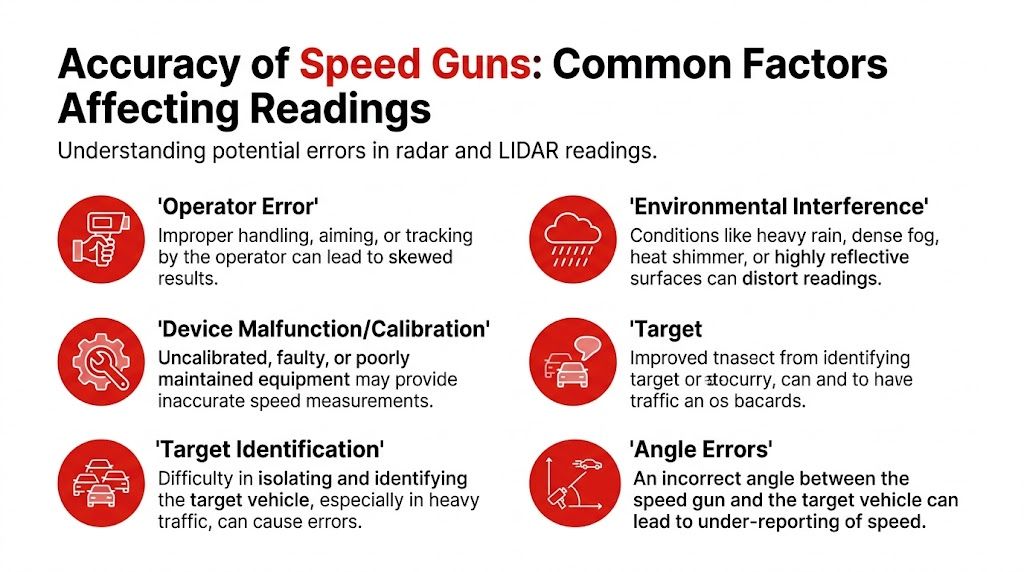
Radar readings break down in real traffic
Radar reflects whatever is strongest or most favorable in the beam. That creates a defense problem for the state, not for you.
On a crowded road, the beam can pick up more than one vehicle. The officer then has to match the displayed speed to the correct car. If that identification is sloppy, the reading may belong to traffic near you, behind you, or approaching from a slightly different position. A machine cannot fix bad target identification.
Angle matters too. If the officer was set off to the side of the roadway, the geometry can affect the reading. That issue alone does not dismiss a ticket, but it gives your lawyer something useful to press. Where was the patrol car positioned. What lane were you in. How far away were you. Was the officer stationary or moving. Those details decide whether the reading deserves confidence.
Moving-mode radar creates even more room for error because the unit must separate patrol speed from target speed. That is a technical process. It also creates more points where the officer can misunderstand the display, miss interference, or rely on habit instead of careful observation.
LIDAR is narrower, but operator mistakes matter more
LIDAR gives the state a cleaner story because the beam is tighter. That story falls apart fast if the officer handled the device poorly.
A valid laser reading depends on a steady aim, a clear line of sight, and proper target acquisition. If the officer sweeps the beam across the vehicle, shifts between reflective surfaces, or tracks through partial obstruction, the defense has a real argument that the reading was produced by technique problems, not reliable measurement. Tight targeting helps only when the operator does the job correctly.
Weather and roadway conditions also matter. Glare, haze, rain, heat shimmer, and traffic interference can all weaken the state's claim that the device isolated your car cleanly. If the officer cannot explain exactly what he saw, where he aimed, and how he maintained that aim, the reading deserves hard scrutiny.
The state still has to prove that the number came from your vehicle, under reliable conditions, with a properly functioning device.
The winning issue is usually foundation, not theory
Drivers waste time arguing that radar and laser are bad technology. Judges hear that every day. It goes nowhere.
The stronger attack is specific. Was the officer trained on that exact unit. Did the officer follow the required operating procedure. Can the state show maintenance records, test results, and a reliable account of the stop. Can the officer explain traffic conditions, distance, angle, visibility, and target identification without guessing.
Those are the weak spots that win cases.
Focus your defense on points like these:
Unclear target identification: Heavy traffic or multiple vehicles in range can break the link between the reading and your car.
Poor officer recollection: Months later, officers often remember the routine, not your stop.
Inconsistent scene evidence: Dash video, body camera footage, maps, or photos may contradict the officer's account.
Improper operating mode or technique: Moving radar errors, sweep error, and bad sight alignment can all undercut reliability.
Missing foundation records: If the state cannot produce the paperwork that supports the reading, the court has less reason to trust it.
In the right case, those defects can support a challenge to the evidence itself, including a motion to suppress evidence in a Florida traffic case. That decision should come from the facts, the records, and the officer's testimony. Not from blind faith in a speed gun.
How Do Police Calibrate and Test Their Equipment
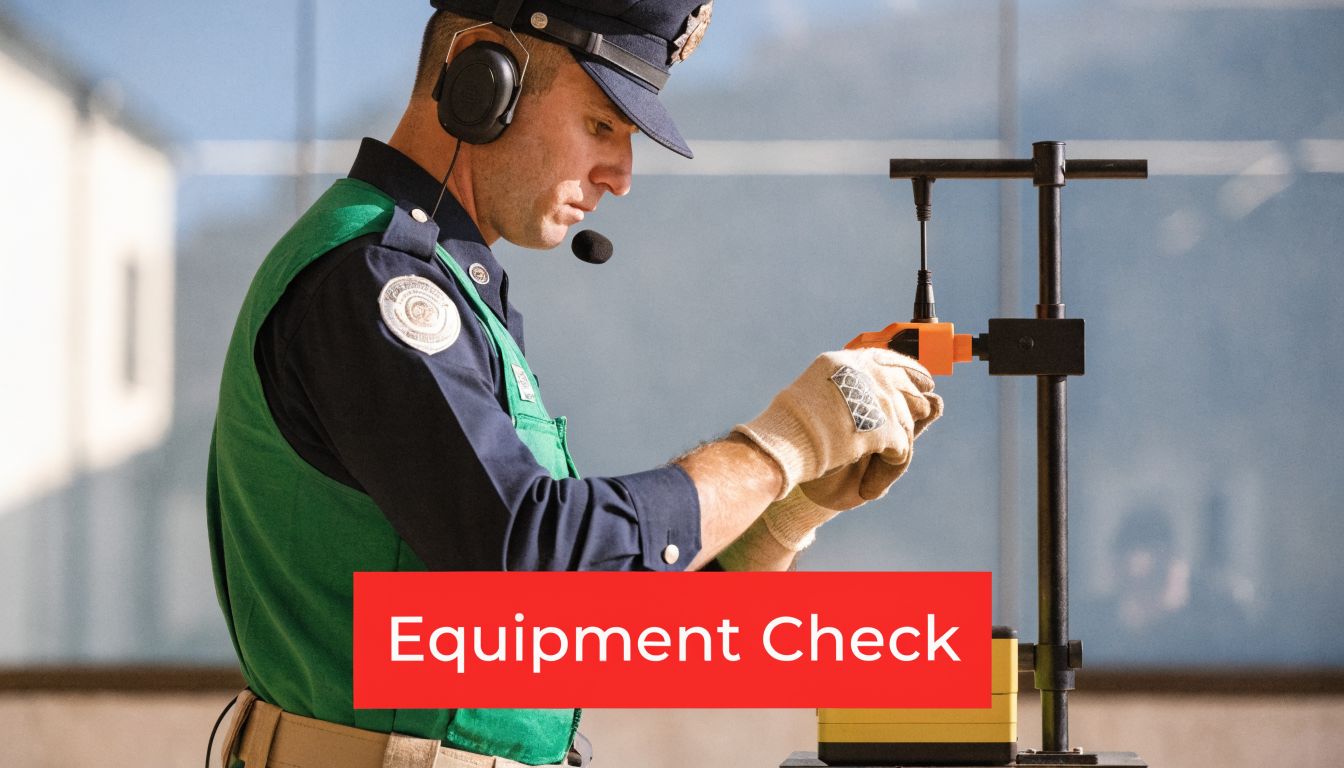
A speed reading isn't self-authenticating. The state still has to show the machine was functioning properly when the officer used it.
That is where many drivers fail to seize an advantage. They argue about the number. They should be demanding proof that the device deserved to generate any number at all.
Calibration is not a side issue
Radar and laser devices require testing and proper maintenance. If a unit wasn't checked, serviced, or documented according to required practice, the reliability of the reading becomes fair game.
For radar, that often means looking at whether the officer performed expected accuracy checks and whether the device had a current service history. For laser, that usually means focusing on internal testing, sight alignment, and any records showing the unit was in proper working order.
Drivers hear "the officer calibrated it" and stop asking questions. Don't.
Ask better ones:
What exact device was used
When was it last serviced
What pre-use checks were done
Are those checks written down
Can the state produce the records
Does the officer remember the testing, or only the general routine
The records matter as much as the test
A department can claim its officers follow procedure. That claim isn't enough in court. You want records that match the testimony.
The strongest defense approach is simple. Compare the paperwork to the stop. Compare the dates to the citation. Compare the officer's memory to the logs. Look for missing pages, vague entries, inconsistent model names, unexplained downtime, or records that don't clearly tie to the unit used on your case.
A compact checklist helps:
Record or proof | Why it matters |
|---|---|
Device identification | Confirms the exact unit tied to your citation |
Calibration or service history | Shows whether maintenance was current and documented |
Shift testing records | Supports or undermines the officer's claim that the device was checked |
Officer training proof | Shows whether the operator was qualified on that model |
If the state can't prove the machine was reliable, the displayed speed becomes much harder to trust.
When the records are thin or the foundation is weak, dismissal or reduction becomes a real objective. If you want a practical overview of dismissal strategy, review how to get a speeding ticket dismissed in Florida.
What Evidence Should You Request for Your Speeding Ticket Defense
You don't beat a radar or laser case by arguing in general terms. You beat it with documents, video, and contradictions.
That means discovery. If the state is going to use a machine against you, your side should demand the records that support the machine, the officer, and the stop itself. In Florida, this can expose weak foundations fast.
Your discovery checklist
Start with the items that directly test reliability.
The officer's training certificate for the specific device. General traffic training isn't enough. You want proof tied to the exact radar or LIDAR model used.
The device's calibration and service history. Stale maintenance, unexplained repair issues, or missing logs can become apparent.
Pre-shift and post-shift test records. If the officer claims the unit was checked, there should be something to back that up.
Patrol car video or bodycam footage. Video can show traffic density, weather, line of sight, and whether your car was isolated.
The citation, notes, and any supplemental report. Small differences between documents often matter more than drivers expect.
Device identification records. You want the serial number or other identifying information tied to the exact unit used in the stop.
Not every case produces every document. That's the point. If the records are missing, incomplete, or vague, that itself can help the defense.
How to organize the evidence fast
Don't wait until your court date to gather papers into a messy folder. Organize everything the day you decide to fight the ticket.
Use one place for scans, video, photographs, the citation, and court notices. If you're sending records to counsel or receiving them from different sources, secure transfer matters. A practical guide on secure document sharing can help you avoid losing files or sending sensitive material carelessly.
Use this immediate action list:
Save the citation immediately. Scan both sides if anything appears on the back.
Write your own account. Include location, lane position, traffic conditions, weather, and what the officer said.
Preserve digital evidence. Save dashcam clips, text messages about your route, and map history if relevant.
Photograph the area. Signs, curves, median position, and visual obstructions can matter later.
Track deadlines. Missing a hearing or election deadline can destroy a good defense.
Good defenses are built early. Bad defenses start the week before court.
The state's case gets stronger when drivers stay passive. It gets weaker when someone demands the records and reads them.
Why Knowledge Is Your Best Shield Against a Ticket
A speeding ticket isn't just a roadside annoyance. It can threaten your license, your insurance costs, and, for some drivers, your job.
You now know the right frame. The number on the citation is not magic. It's the output of a machine operated by a person in a real-world setting that may have included traffic clutter, poor positioning, weak documentation, maintenance issues, or targeting problems. That's exactly why you should never assume a radar or laser allegation under Florida Statute 316.187 is unbeatable.
The strongest move is usually the one most drivers skip. Don't just pay the ticket because the officer used technology. Force the state to prove the technology was reliable, the operator was qualified, the target was your vehicle, and the records support the stop.
That is how disciplined defenses are built in Florida traffic court, whether your case lands at the Broward County Judicial Complex or another courthouse in the state. The objective is simple. Protect your record. Protect your license. Protect the no-points outcome whenever the facts and procedure allow it.
If you want a lawyer-led defense instead of an automated app, middleman, or chatbot, visit Ticket Shield, PLLC for a free consultation. You can speak directly with your attorney by phone or text, and the goal is clear: No Points.