
Get a Fort Lauderdale DUI Attorney: Protect Your Rights
Facing DUI charges in Broward County? Our Fort Lauderdale DUI attorney provides expert defense, explains penalties & helps protect your license. Get urgent

A Fort Lauderdale DUI arrest starts two clocks: a 10-day deadline tied to your license and a separate criminal case. A Fort Lauderdale DUI attorney should move on both immediately to protect your record, your ability to drive, and your future.
You were likely released with paperwork in your hand, a pounding head, and a dozen unanswered questions. You may be worried about jail, your license, your job, your family, or whether this single night is about to follow you for years.
That fear is real. But panic helps the state. Action helps you.
A DUI arrest in Fort Lauderdale is not one problem. It is two separate legal fights moving at the same time. One battle concerns your criminal charge. That case will move through the Broward County Judicial Complex. The other concerns your driving privilege through the administrative process. Many people focus only on court and get blindsided by the license issue.
You are not the only person facing this in Broward County. In a recent year, there were an estimated 1,300 DUI arrests in Broward County, which is one reason local DUI defense requires focused experience with the Fort Lauderdale system and its procedures, as noted in this Broward DUI arrest overview.
That matters for one reason. You need a plan, not wishful thinking.
A strong response starts fast. Preserve your license options. Protect your silence. Get legal analysis of the stop, the detention, the field sobriety exercises, and the chemical testing. Under Florida Statute 316.193, the penalties can escalate quickly depending on the facts, and a bad early decision can make your case harder than it needs to be.
Table of Contents
Introduction You Are Not Alone in This Fight
You get out of jail, check the paperwork, and realize this is already bigger than one court date. The DUI charge will be handled at the Broward County Judicial Complex. Your ability to keep driving can rise or fall on a separate DMV process with its own deadline. If you miss that distinction, you can hurt your case before you even step into a courtroom.
That confusion is common after a Florida DUI arrest. The Florida Department of Highway Safety and Motor Vehicles tracks DUI enforcement statewide through its traffic safety reporting, which is one reason these cases are handled through a well-developed court and administrative system, as reflected in the Florida Traffic Safety Dashboard.
Why this feels bigger than a traffic stop
A DUI arrest hits from two directions at once. One case is criminal. It puts your record, money, and freedom at risk. The other is administrative. It puts your license at risk on a much faster timeline.
That is the part many guides gloss over, and it is where people make expensive mistakes. They focus on the court date listed on the citation, assume that is the only deadline that matters, and ignore the license issue until it is too late.
Read a plain-language breakdown of what happens after a DUI arrest if you need the sequence explained clearly.
What control looks like right now
Control starts when you stop treating this like one problem. It is two. You need a defense for the criminal charge, and you need a plan for the license suspension issue. Those fights use different procedures, different decision-makers, and different timing.
A good Fort Lauderdale DUI attorney handles both from the start. That means reviewing the stop, the arrest paperwork, the breath or refusal allegations, and the license suspension documents as one coordinated defense. It also means giving you direct instructions right away, not after the first court appearance.
You are not helpless here. You are early. That matters.
What Are My Immediate Obligations After a DUI Arrest
You get out of jail, look at the paperwork, and assume the court date is the next thing that matters. That mistake costs people their license before they even step into the Broward County Judicial Complex.
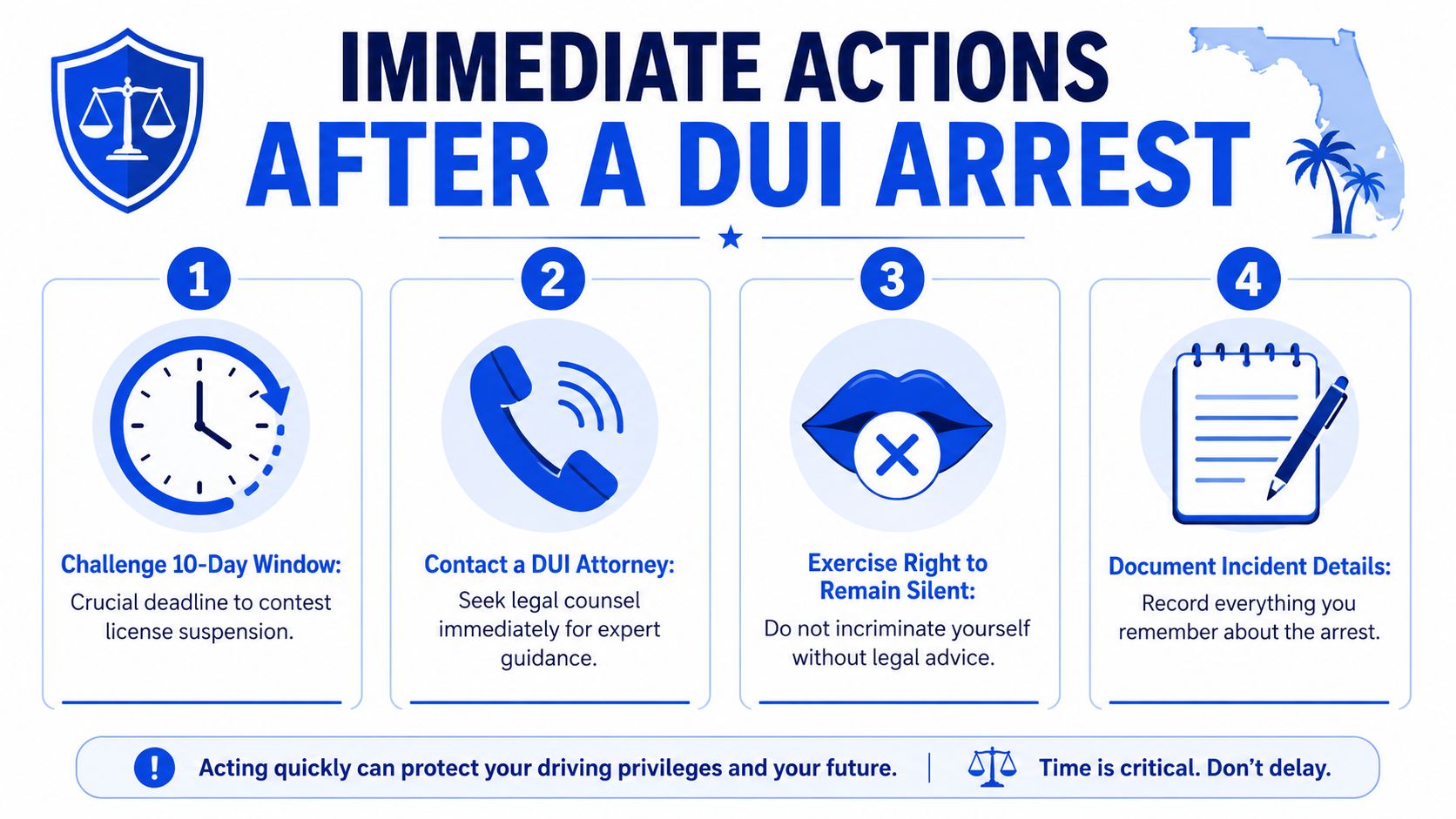
What must happen in the first days
Treat the arrest as two urgent problems. One is the criminal charge. The other is the license suspension issue that starts running on a much shorter clock. If you wait for arraignment, you are already behind.
Start here:
Act on the license issue immediately: Your temporary driving privilege and any hearing rights are time-sensitive. Read your DUI paperwork closely and get legal advice at once.
Call a DUI lawyer now: Early decisions matter. A lawyer needs time to review the citation, arrest affidavit, breath or refusal paperwork, and any notice tied to your license. If you need the sequence laid out clearly, read this plain-language guide to what happens after a DUI arrest.
Write down the timeline while it is fresh: Note where you were, when you last ate, what you drank, when you were stopped, what the officer asked, what you said, what tests were requested, and anything unusual about traffic, lighting, weather, or road conditions.
Save witness information: Anyone who saw your driving, the stop, or your condition beforehand may matter later.
Keep every piece of paper: Hold onto the citation, bond documents, towing receipt, property receipt, notice to appear, and any temporary permit or suspension form.
Small details decide DUI cases. A missing page, a wrong time, or a witness you forgot to identify can matter more than people realize.
What you should avoid right now
Do not try to explain the incident to police, prosecutors, or anyone else connected to the case. Do not post about it. Do not send long texts trying to reconstruct the night.
Keep your facts between you and your lawyer.
You also should not assume the arrest report is accurate. Officers make mistakes. Body camera footage can conflict with the written report. Testing procedures can be sloppy. Your job right now is to preserve facts, protect your license options, and stop making the state's case easier.
One more point. Hire for action, not reassurance. You need a lawyer who handles the fast license deadline and the criminal case together from day one.
How Does the DMV Hearing Differ From My Criminal Case
You walk out of jail, look at your paperwork, and assume your court date is the only date that matters. That mistake costs people their license.
A Fort Lauderdale DUI creates two separate fights at once. One is the criminal case at the Broward County Judicial Complex. The other is the administrative battle over your license with the state. They run on different tracks, answer different questions, and require action on different timelines.
Two cases. Two risks.
The criminal case is about whether the state can prove a DUI under Florida Statute 316.193. That is where prosecutors push for a conviction, and where the stakes include fines, probation, jail exposure, and a permanent criminal record.
The administrative case is about your driving privilege. It does not wait for the criminal case to play out. If you miss the deadline to challenge the suspension, you can lose the chance to fight for your license early, even while your court case is still just getting started. For a plain-English breakdown, read this administrative license suspension hearing overview.
Factor | DHSMV Administrative Review | Criminal Court Case (Broward County) |
|---|---|---|
Main issue | Whether your license suspension stands | Whether the state proves DUI |
Forum | Administrative process with the DHSMV | Court at the Broward County Judicial Complex |
Main consequence | Loss of driving privileges or preservation of them | Criminal penalties and a record |
Timing pressure | Immediate and front-loaded | Spread across hearings, motions, and court dates |
Litigation focus | Whether the suspension was legally imposed | Whether the stop, arrest, testing, and charge hold up |
Why this distinction matters
Clients get hurt when they treat these as one file instead of two cases. A court date does not protect your license. A win on the license issue does not automatically dismiss the criminal charge. You need a defense plan that addresses both from the start.
That means your lawyer should be checking two calendars, two sets of paperwork, and two strategies immediately. If counsel only talks about court and says nothing specific about the license hearing, that is a warning sign.
One more point matters for some clients. If alcohol or drug use treatment is part of what you are dealing with after the arrest, get legal advice before you make moves that affect the case. This resource on legal guidance for addiction treatment explains how treatment decisions can intersect with legal obligations.
Do not let anyone blur these two battles together. A smart DUI defense in Fort Lauderdale protects your record and your right to drive, separately and aggressively, from day one.
What Penalties Am I Facing for a Broward County DUI
You need the truth, not soft language. DUI penalties in Florida are serious, and they can escalate fast based on the facts alleged by the state.
What Florida Statute 316.193 puts at risk
Under Florida Statute 316.193, a first DUI conviction can bring a fine of at least $500 and up to 6 months in jail, according to this Florida DUI penalty summary. If the state alleges a BAC of 0.15% or higher or a minor in the vehicle, that same source states the first-offense maximum rises to 9 months in jail and the minimum fine rises to $1,000.
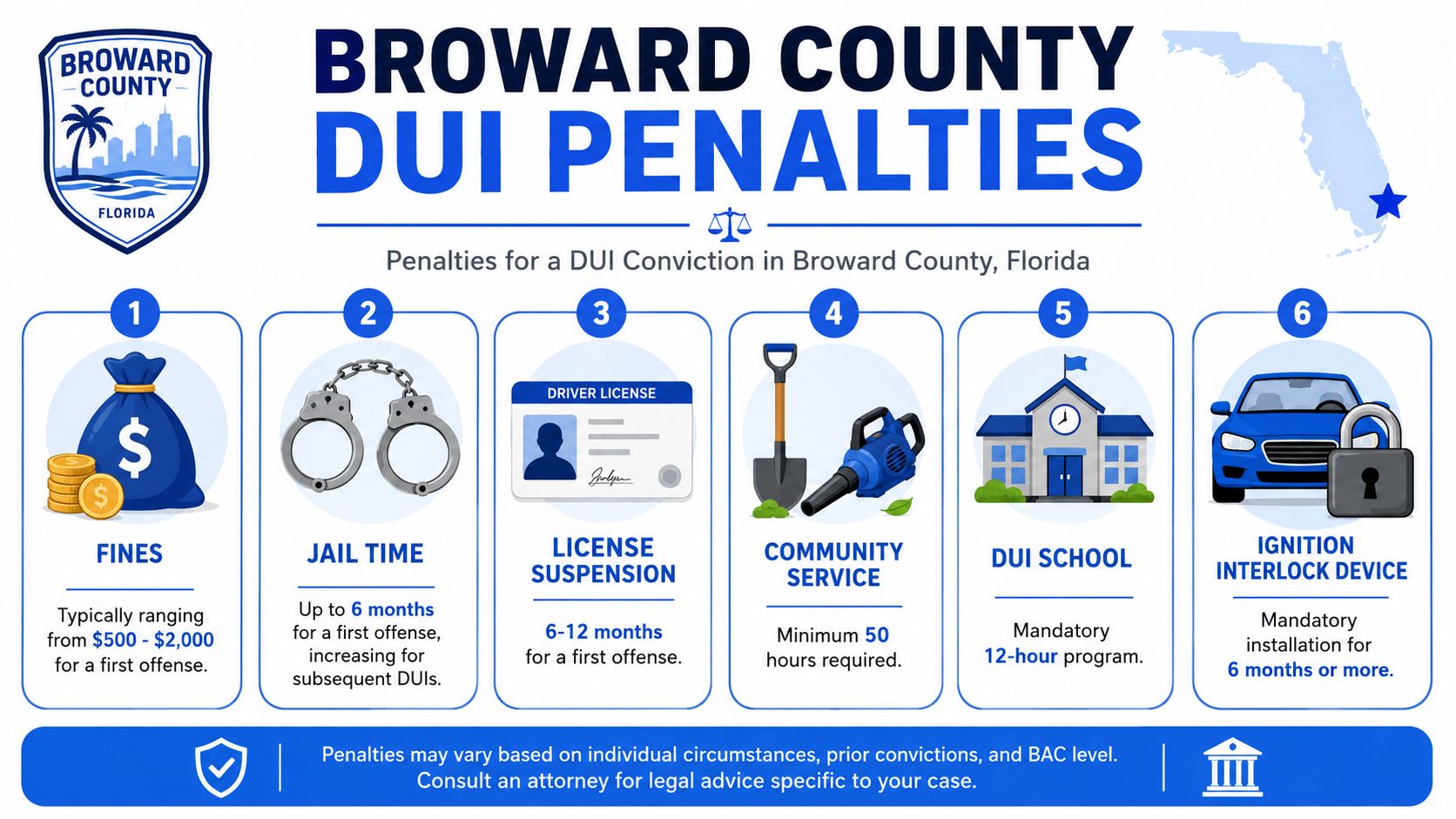
That should tell you how evidence changes exposure. A BAC allegation is not just a number on paper. It can shift your sentencing range and your bargaining position.
The same legal summary explains that second and third offenses within the relevant time periods bring much harsher mandatory penalties, and a fourth DUI can be charged as a felony with potentially permanent loss of driving privilege. You should not walk into court hoping the prosecutor will “go easy” without a targeted defense.
If you want a broader plain-English breakdown, review this Florida DUI penalties guide.
Why the long-term fallout matters
The courtroom penalties are only part of the damage. A DUI conviction can affect your insurance, your job opportunities, your professional reputation, and the way employers evaluate trust and risk.
For some drivers, treatment and legal compliance need to happen at the same time. If alcohol use has become part of the bigger issue, this resource on legal guidance for addiction treatment can help you think through legal obligations while seeking help.
The smartest clients don't just ask, “Can I beat this?” They ask, “How do I protect my license, record, work, and future all at once?”
That's the right question. Because even a first offense can reach further than one might anticipate.
What Are Common Defenses Against a DUI Charge
A DUI arrest is not proof. It is an accusation built from observations, procedures, and test results that may or may not hold up.
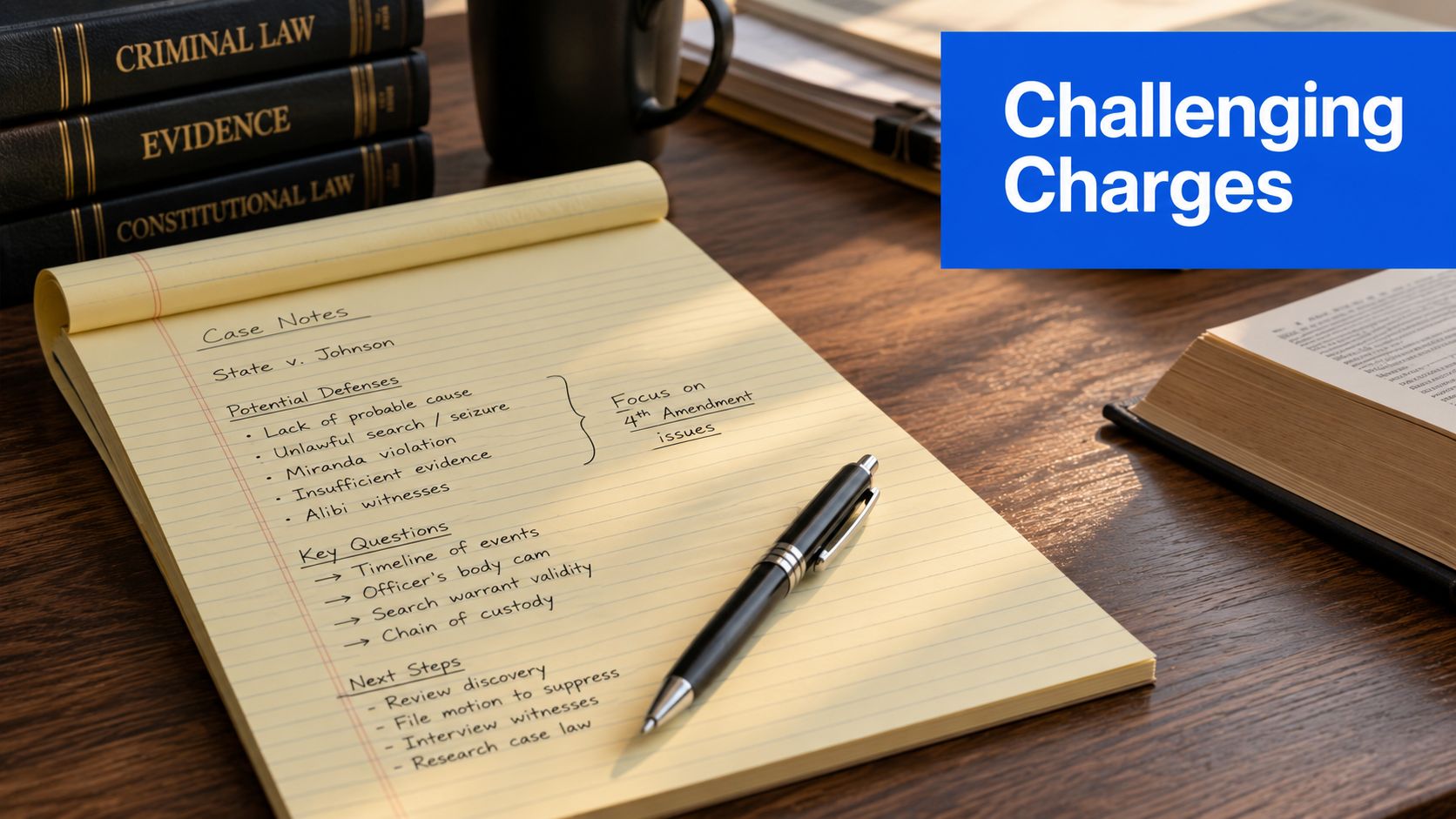
Can the stop and arrest be challenged
One of the first questions is whether the officer had a lawful reason to stop you at all. If the stop was not legally justified, that can affect everything that followed. Then comes the detention itself. Did the officer extend the encounter lawfully? Did the facts support the arrest?
Field sobriety exercises also deserve scrutiny. These tests are often treated like hard science by the public. They aren't. Performance can be affected by nerves, fatigue, footwear, physical limitations, weather, lighting, road surface, and officer instruction.
That's why detailed early notes matter. A strategic defense starts with facts, not slogans. If you want a practical overview of defense angles, this guide on fighting a DUI in Florida is a useful starting point.
Can the state's evidence fall apart
Yes. Chemical testing and officer observations can be attacked when the process was sloppy, incomplete, or legally defective.
Common defense themes include:
The traffic stop was weak: No clear legal basis existed for the stop.
The roadside investigation was flawed: Instructions were confusing, conditions were poor, or the exercises were not fairly administered.
The arrest lacked legal support: The officer jumped from suspicion to arrest without sufficient grounds.
The testing evidence is vulnerable: The reliability, administration, or handling of the chemical evidence may be open to challenge.
Your statements were damaging and avoidable: A lawyer can evaluate whether questioning crossed legal lines.
This video gives additional context on how defense analysis works in real DUI cases.
A good Fort Lauderdale DUI attorney does not walk into court repeating that you are a “good person.” Prosecutors hear that every day. A real defense isolates legal weaknesses, factual inconsistencies, and evidentiary problems, then uses them with discipline.
How Ticket Shield Provides a True Legal Defense
When you're under pressure, the wrong kind of legal service can make things worse. You don't need an intake funnel, a chatbot, or a middleman pretending to be your legal team.

Why direct access to your lawyer matters
A lawyer-led defense means you speak directly with your attorney by phone or text. That matters in a DUI case because the important questions come fast. Should you pursue the administrative hearing path? What documents matter? What facts from the stop need to be written down tonight? What should you say to no one else?
Automated apps and ticket mills are built for volume. DUI defense is not a volume product. It requires judgment, speed, and actual legal analysis.
For clients who want statewide Florida traffic and DUI representation with direct attorney communication, Ticket Shield services describe that lawyer-led model.
What a value-driven DUI defense should look like
DUI defense in this market is not a minor expense. One Broward County defense firm states that the typical fee for a Fort Lauderdale DUI lawyer ranges from $2,000 to $7,500, and that range reflects how serious and labor-intensive these cases are, as explained in this Broward DUI cost overview.
That number should be viewed properly. You are weighing representation against the cost of a conviction that can follow your license, insurance, and career. The right question isn't whether a lawyer costs money. The question is whether a weak defense costs you far more.
A value-driven DUI defense should include:
Immediate deadline control: Someone addresses the license issue promptly.
Case-specific analysis: The stop, testing, paperwork, and officer conduct are reviewed.
Direct communication: You can reach your lawyer without layers of staff and scripts.
A strategy for both fronts: Administrative exposure and criminal exposure are handled together.
If you're choosing a Fort Lauderdale DUI attorney, insist on clarity. Ask who will handle your case. Ask how quickly they act on license issues. Ask whether you'll communicate with a lawyer or with a system.
Frequently Asked Questions About Fort Lauderdale DUIs
What if I refused testing
Refusal can create serious problems, but it does not mean you should give up. The key question is whether the officer's stop, request, warnings, and procedure hold up legally. Refusal cases often require fast review because the license consequences and the criminal defense issues can overlap in important ways.
Can I keep driving for work
Possibly, but you should not assume anything. Your ability to drive depends on the administrative posture of your case and the action taken right after arrest. This is one of the first things a DUI lawyer should evaluate with you because waiting can limit your options.
Ask about your driving status immediately. Don't guess, and don't drive on assumptions.
Do I need to tell my employer
That depends on your job, your contract, your professional licensing obligations, and whether driving is part of your work. Some people have reporting duties. Some don't. Get legal advice before making a disclosure that may be broader than necessary.
Will I have to go to court
In some cases, a lawyer can handle significant portions of the process for you. But you should never assume that your presence will never be required. The safest approach is to stay available, organized, and in close contact with counsel.
Should I just plead quickly and move on
Usually not. Quick pleas often come from fear, not strategy. A DUI case should be evaluated before you relinquish your advantage. Once you give up your defenses, you usually don't get them back.
What should I bring to a consultation
Bring every document you received, your questions, and a written timeline of the stop and arrest. If you have medical issues, prescription information, or witness names, bring those too. Specific facts help lawyers spot specific defenses.
If your goal is to protect your license, avoid points where possible, and stop a DUI arrest from controlling your future, get legal advice now. Visit Ticket Shield, PLLC for a free consultation and speak directly with a Florida defense attorney.
