
Your Criminal Defense Lawyer Tallahassee FL Guide for 2026
Facing criminal charges? Find an experienced criminal defense lawyer tallahassee fl. Our guide explains your rights & the court process. Act now.

You're staring at a charge in Tallahassee and wondering how fast this can wreck your life. Fast. A criminal case can hit your license, your job, your gig work, and your record before you ever get in front of a judge. If you need a criminal defense lawyer in Tallahassee, FL, treat this like an emergency, not an inconvenience.
If you drive for Uber, Lyft, or DoorDash, the risk is even sharper. A new criminal charge can threaten your income almost immediately. That's the part many guides miss, and it's the part you can't afford to ignore.
Table of Contents
You Have Been Charged in Tallahassee What Happens Now
Arrested in Tallahassee? You must act fast. A criminal charge threatens your license, job, and freedom. An experienced criminal defense lawyer fights to protect your record. Ticket Shield offers a direct line to an attorney to start your defense immediately.
A lot of people remember the same first moments. The traffic stop. The questions. The cold feeling when the officer says you're being charged. Then the panic starts. You think about work, your family, your license, and whether your employer or app platform is about to find out.
That fear is justified. Leon County's system moves whether you're ready or not. If you say the wrong thing, miss the wrong date, or trust the wrong “service,” you can make the case harder to defend before your lawyer even gets the file.

What does a charge actually put at risk
A charge is more than a court date. It can affect your driving privilege, your insurance, your professional reputation, and whether you can keep earning money. If your case involves a vehicle, Florida traffic statutes matter immediately. For example, Florida Statute 316.187 sets maximum speed limits on certain roads, including 70 miles per hour on limited access highways and 65 miles per hour on certain divided highways outside urban areas, which shows how technical Chapter 316 issues can become when a stop turns into something more serious through Florida Statute 316.187.
A criminal defense lawyer in Tallahassee, FL, should start protecting you before arraignment, not after damage is done. That includes reviewing the stop, the officer's report, any statements, any testing, and any license consequences already in motion.
Practical rule: Your case doesn't begin in the courtroom. It begins with what happened on the roadside and what you said after the stop.
Why the first court event matters
Many people don't understand arraignment until they're already walking into it stressed and unprepared. If you want a plain-English breakdown, read what happens at an arraignment hearing before you make assumptions.
You are not powerless here. But you do need to move fast, stay quiet, and get real legal guidance. Not an automated app. Not a ticket mill. Not a chatbot pretending to give strategy. In a serious Florida criminal case, your shield has to be a lawyer.
What Are the Immediate Steps After a Tallahassee Arrest
The first day after an arrest is where people hurt themselves most. They try to explain. They call too many people. They post online. They assume cooperation means talking. It doesn't.
If you've been arrested in Tallahassee, keep your actions tight and deliberate.
What should you do immediately
Stay silent about the facts: Give identifying information if required, but don't explain, defend, or fill awkward silence. You can be polite without building the State's case.
Ask for a lawyer early: Don't wait until after you've “cleared things up.” That usually makes things worse.
Write down what happened: As soon as you can, record the timeline, location, what the officer said, what you said, and whether any witnesses were present.
Protect your phone and accounts: Don't delete material, but don't start messaging people about the case either.
Check for collateral damage: If you drive for work, start thinking about platform issues, scheduling problems, and license exposure immediately.
Review whether there are warrant issues: If your arrest involved a search or an outstanding warrant question, this guide on Florida warrant requirements is worth reading right away.
What should you avoid at all costs
Don't consent casually: Searches, downloads, and “just let us look” requests can expand the case.
Don't post on social media: Prosecutors love statements they didn't have to work for.
Don't assume it's only one ticket: Traffic-related charges can stack consequences quickly.
Don't miss the license angle: In Florida, point accumulation alone can suspend your ability to drive. Twelve traffic points within 12 months triggers a 30-day suspension, 18 points within 18 months triggers a 3-month suspension, and 24 points within 36 months triggers a 1-year suspension under the DHSMV Uniform Traffic Citation Manual summary.
Talking feels productive when you're scared. It usually isn't.
Why direct legal help matters more than convenience
People can get trapped by “easy” services. Automated apps and intake centers can collect data. They can't protect privileged communications the way an actual attorney can when strategy needs to start now.
If your case touches driving, Chapter 316 is not just a ticket book. It's the legal framework that can affect your record, your license, and how the prosecutor frames the case. Early legal review matters because early mistakes stay in the file.
What Types of Criminal Charges Do You Handle
You finish a late dinner rush near campus, open your app for one more ride, and blue lights hit your mirror. An hour later, you are not thinking about the ticket. You are thinking about tomorrow's income, whether Uber or Lyft will freeze your account, and how fast one arrest can start cutting off your cash flow. That is exactly how criminal charges blindside gig drivers in Tallahassee.
I handle the charges that grow out of traffic stops, roadside investigations, and arrests that put your record, license, and paycheck at risk. The charge name matters. The core fight is over what the State can prove, what evidence can be attacked, and how to contain the damage before it spreads into your work life.
How serious is a DUI charge in Tallahassee
DUI is one of the fastest ways to put both your freedom and your earning ability in danger. Under Florida Statute 316.193, the State can prosecute based on impairment allegations or an unlawful breath or blood alcohol level, and penalties can increase in aggravated situations, as outlined in this overview of Florida DUI law and Tallahassee practice.
That means your case turns on details. The stop. The officer's basis for the arrest. Field sobriety exercises. Breath testing procedures. Video. Medical issues. Time gaps. Paperwork errors. A weak DUI case can look strong on first glance if nobody starts pulling it apart early.
If you are facing that charge, read this guide on a DUI attorney in Tallahassee, FL. DUI defense requires technical scrutiny, not generic reassurance.
What does reckless driving or a serious traffic offense mean
Reckless driving, racing, driving with a suspended license, and other serious traffic-related offenses hurt people because they sound minor until the consequences arrive. Prosecutors and employers do not treat them as harmless. Gig platforms do not either.
For app drivers, these cases carry a hidden problem. The allegation looks directly tied to the work you do for money. A pending driving-related criminal charge can trigger account reviews, temporary deactivation, insurance trouble, and lost trips before your case is resolved in court.
Speed-related allegations also deserve a close legal review. Florida's speeding laws are set out in Chapter 316, including the basic speed rules in section 316.183 and penalty provisions tied to traffic infractions in the Official Florida Legislature text of Chapter 316. In a defense case, the posted zone, calibration records, officer observations, traffic conditions, and the wording of the citation all matter.
Why are gig drivers in Tallahassee at special risk
Traditional criminal defense guides miss this point. Your first financial hit may come from the app, not the judge.
If you drive for Uber, Lyft, DoorDash, Instacart, or a delivery service, a Tallahassee arrest can threaten your weekly income immediately. Background screening flags. Platform safety reviews. Account holds. Fewer hours available because you lost access to the car you use for work. Those problems start fast, and they do not wait for your court date.
If driving pays your rent, your defense strategy has to protect your case, your license, and your ability to keep working.
That is why I treat these cases as both legal and economic emergencies. The right defense is not only about beating a charge at trial. It is also about reducing charge exposure, protecting your record, preserving your license when possible, and preventing a bad allegation from turning into months of lost income.
How Does the Leon County Court Process Work
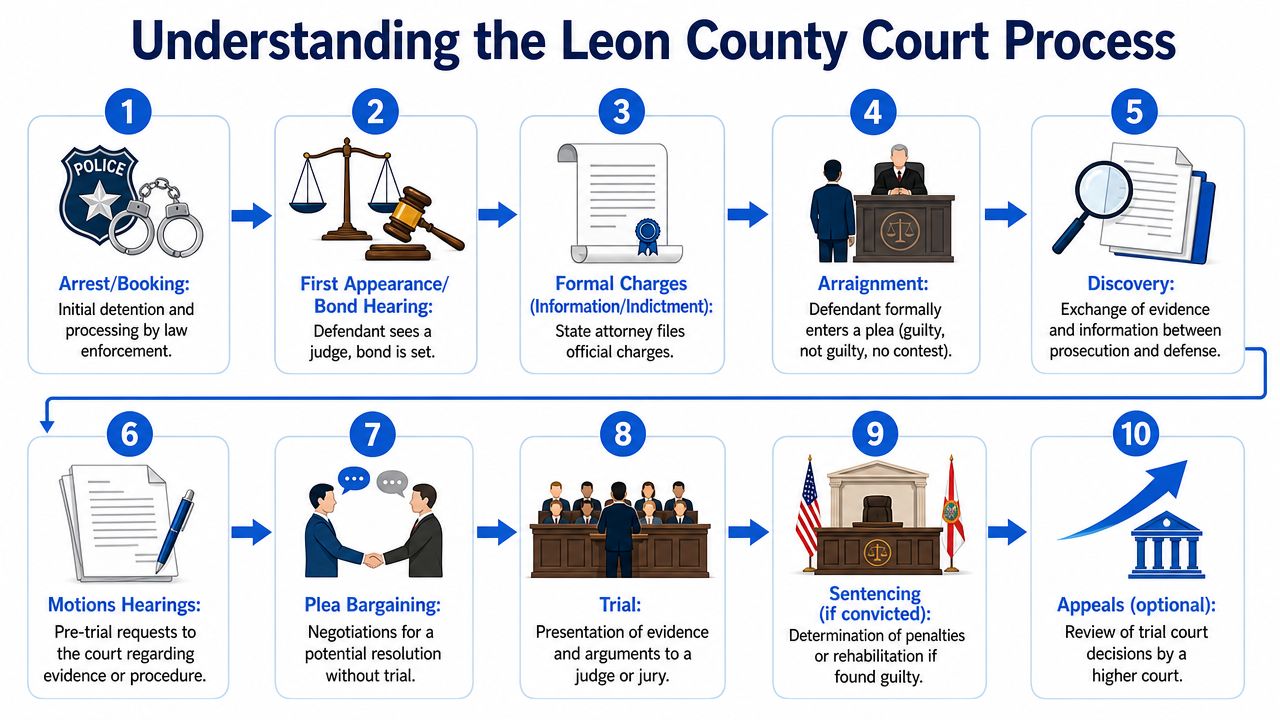
The Leon County process feels confusing because individuals often enter it under stress and with no map. Once you know the sequence, the fear gets more manageable. The case is still serious. But it stops feeling random.
This is the basic path your case may take in Tallahassee, within Florida's Second Judicial Circuit. If your work brings you across the state, you may also see similar court structures in places like Tampa's Edgecomb Courthouse, but your Tallahassee strategy must be built for Leon County judges, prosecutors, and procedures.
What happens first after booking
After arrest and booking, the early stages usually include first appearance or bond review, formal charging decisions, and arraignment. Then the case moves into discovery, pretrial hearings, negotiation, and sometimes trial.
A short timeline helps:
Stage | What it means for you |
|---|---|
Arrest and booking | Law enforcement processes the case |
First appearance | A judge addresses release conditions |
Formal charges | The State decides what it will prosecute |
Arraignment | A plea is entered |
Discovery and motions | Evidence gets tested and challenged |
Resolution or trial | The case ends by agreement or verdict |
The critical point is simple. Each stage creates opportunities to defend or opportunities to make mistakes.
Where does your lawyer fight hardest
Strong defense work often happens outside the dramatic courtroom scenes people expect. It happens in file review, legal research, evidence challenges, negotiation, and motion practice.
In Tallahassee's Leon County Circuit Court, 82% of felony defendants in large State courts are represented by public defenders, while private attorneys may use rules such as Florida Rules of Criminal Procedure 3.131 and 3.140 as part of a strategic defense, according to this Tallahassee-focused criminal defense overview. That isn't criticism of public defenders. It's a reality check. Heavy caseloads can limit the time available for intensive, individualized attention.
A courtroom result often turns on work your lawyer did weeks earlier, before anyone called your case.
That's why a criminal defense lawyer in Tallahassee, FL, should be evaluating the reports, witnesses, video, testing records, and procedural errors long before trial becomes the only option.
How Do You Choose the Right Criminal Defense Lawyer
Hiring the wrong lawyer creates a second problem on top of the first one. You need someone who knows Florida criminal and traffic law, understands Tallahassee courts, and treats direct communication like part of the defense.
This choice gets even more important if your charge could affect your income immediately.
What questions should you ask before hiring anyone
Ask these questions and listen carefully to the answers:
Do you focus on Florida criminal and traffic cases: You want someone who works inside Chapter 316 issues regularly, not someone dabbling across unrelated practice areas.
Will I speak directly with my attorney: If the answer is really “you'll mostly deal with staff, portals, or a system,” keep looking.
Do you understand Tallahassee-specific risk for gig drivers: That issue is often overlooked. Yet a Tallahassee criminal charge can hit platform eligibility fast. Uber's 2025 policy mandates immediate suspension for any new criminal charge in Florida, according to this discussion of the impact of criminal charges on gig driver eligibility.
How do you evaluate a case early: You need a lawyer who talks about evidence, procedure, and suppression issues, not vague promises.
What is your approach to court appearances and negotiation: Strategy matters more than slogans.
If you're researching lawyers online, it also helps to understand how firms show up in search and how clients evaluate what they find. This overview of local search visibility for attorneys gives useful context on why some firms are easy to find and not always the right fit.
Why does direct attorney access matter so much
When you're stressed, delay is dangerous. You shouldn't have to explain your arrest to a chatbot, intake center, or middleman who can't give legal advice. You need to know whether to speak, whether to appear, what to gather, and what not to do.
That's why this comparison on why to choose a local lawyer over apps hits a real issue. Convenience is not strategy. Automation is not defense.
A real lawyer protects your record by making judgment calls early. That's where many cases turn.
What Common Defense Strategies Could Apply to My Case
You can lose more than a court date here. If you drive for Uber, Lyft, DoorDash, or Instacart in Tallahassee, one weak police stop or one sloppy search can put your income at risk fast. The State may treat your case like routine paperwork. You cannot.
An arrest report is the prosecution's first draft. Your defense starts by testing every part of it, line by line, video by video, timestamp by timestamp.
Can the stop itself be challenged
Yes, and in many cases that is the first place I look.
Traffic based criminal cases often rise or fall on the reason for the stop. If the officer did not have a lawful basis to pull you over, the State may have a serious problem before it even gets to the rest of the evidence. For a gig driver, that matters because the strongest way to protect your record and your earning ability is to attack the case early, before it hardens into a plea offer that still leaves damage behind.
A lawyer should examine the facts closely:
Whether the alleged violation happened: Officers make mistakes. Video, GPS history, and dispatch timing can expose them.
Whether the location changes the legal analysis: School zones, posted signs, and time-of-day restrictions can create factual disputes that need to be checked against Florida law and local conditions. For the governing statute, review Florida Statute 316.1895 on school speed zones.
Whether the officer's account stays consistent: Body camera footage, CAD logs, and the citation language often tell a different story than the report.
Small details matter. A sign placed wrong, a time restriction applied wrong, or an officer who cannot clearly explain what happened can change the entire case.
Can the evidence be attacked
Yes. Often that is where the case gets won.
Police and prosecutors want you to focus on the accusation. I focus on whether they can prove it lawfully and reliably. That means examining how evidence was collected, handled, tested, and documented. If they cut corners, your lawyer should expose it.
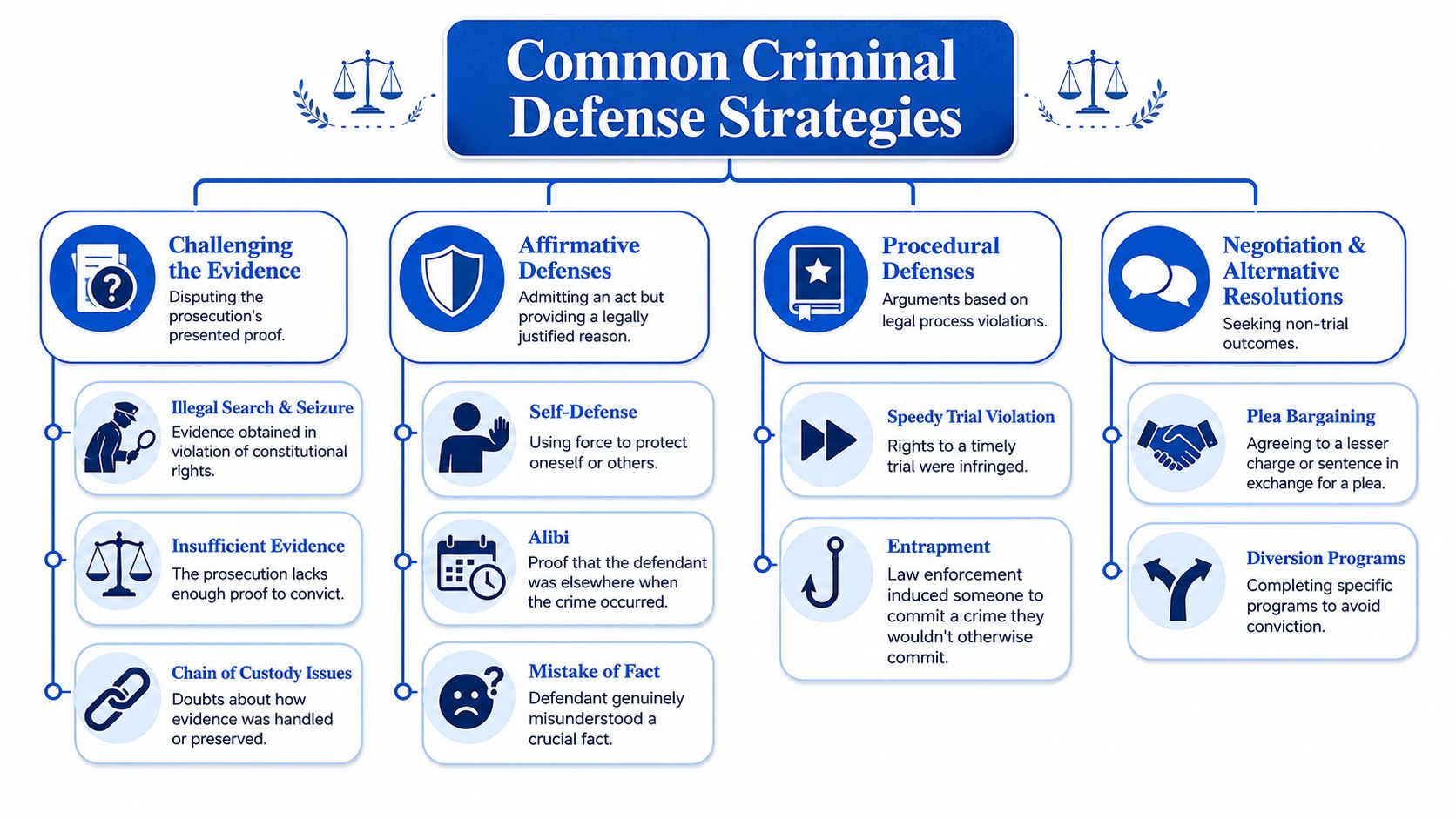
Common defense strategies include:
Testing the reliability of breath, blood, or other forensic procedures: Maintenance records, timing rules, and operator mistakes matter.
Challenging chain of custody: If evidence moved through too many hands or was logged poorly, reliability drops.
Attacking unlawful searches: If officers searched your car, phone, or person without legal authority, the court may block that evidence.
Pressing weak observations: Officers can be cross-examined on lighting, distance, timing, memory, and assumptions.
For people sorting through dense reports, videos, and records, tools built for AI for legal case analysis can help organize information. They do not replace a defense lawyer's judgment, but they can help spot issues that deserve a closer look.
A technical defense is often the best defense.
If police got evidence by violating your rights, your lawyer may file a motion to keep it out. Read the basics of what a motion to suppress evidence means. In Florida criminal court, suppression can gut the prosecution's case and put real pressure on the State to back down or dismiss.
Frequently Asked Questions About Tallahassee Criminal Defense
How much does a criminal defense lawyer in Tallahassee cost
It depends on the charge, the court, and how much work the defense will require. The right question isn't just price. It's whether the fee gives you clarity, access, and an actual defense plan. In serious cases, value-driven flat-fee structures can help because they give you cost certainty when your life already feels unstable.
Will I have to go to court
Sometimes yes, sometimes no. A good lawyer aims to minimize your appearances whenever Florida procedure allows it. That matters if you work long shifts, travel for your job, or need to protect your privacy. The less disruption to your life, the better. But never skip a required appearance unless your lawyer has clearly handled it.
Can a charge be removed from my record
Sometimes. In Florida, sealing or expungement may be available depending on the charge, the disposition, and your record history. This is highly case-specific. The mistake people make is assuming they can “fix it later.” The better move is to defend the case correctly now, because the way the case ends often determines what record relief may be available later.
What if I drive for Uber, Lyft, or DoorDash
Then speed matters. A criminal charge can threaten your earnings before the court case is resolved. You need a defense that accounts for both the legal risk and the immediate business risk.
Protect your record. Visit TicketShield.com now for a free and confidential consultation to start building your defense.
If you want a lawyer-led defense instead of an automated app or ticket mill, visit Ticket Shield, PLLC. You'll speak directly with your attorney by phone or text, and the goal is clear: No Points, maximum protection for your license, your record, and your income.
