Arrested for Speeding in Florida: Your Driver Rights Guide
Arrested for speeding in Florida? Learn your rights, the court process, defenses, and how Ticket Shield protects your license from points and insurance hikes.

The blue lights hit your mirror, and your stomach drops before the car even stops. The officer walks up, asks where you were going, and suddenly a speeding stop doesn't feel like a traffic matter anymore. If you were arrested for speeding in Florida, treat this like a legal event, not a roadside hassle. What happens next can affect your license, your record, your insurance, and your court file for a long time.
Most drivers make the same mistake. They think this is just a ticket with extra drama, so they pay it, talk too much, or hope the whole thing disappears. It doesn't. In Florida, the way a speeding stop is handled can change everything, especially when the stop has already crossed from a citation into an arrest. Florida's own traffic laws make that clear, including Florida Statute § 316.183, which requires speed to be reasonable and prudent under the conditions, not just under the posted number.
Table of Contents
What Just Happened and Why It Matters More Than You Think
The stop starts the same way every time. Red and blue lights. A hard shoulder check in the mirror. Your hands on the wheel while an officer asks for your license, registration, and insurance. Then comes the part most drivers don't expect, the conversation shifts from a citation to an arrest, and now you're dealing with a court event, not just a traffic stop.
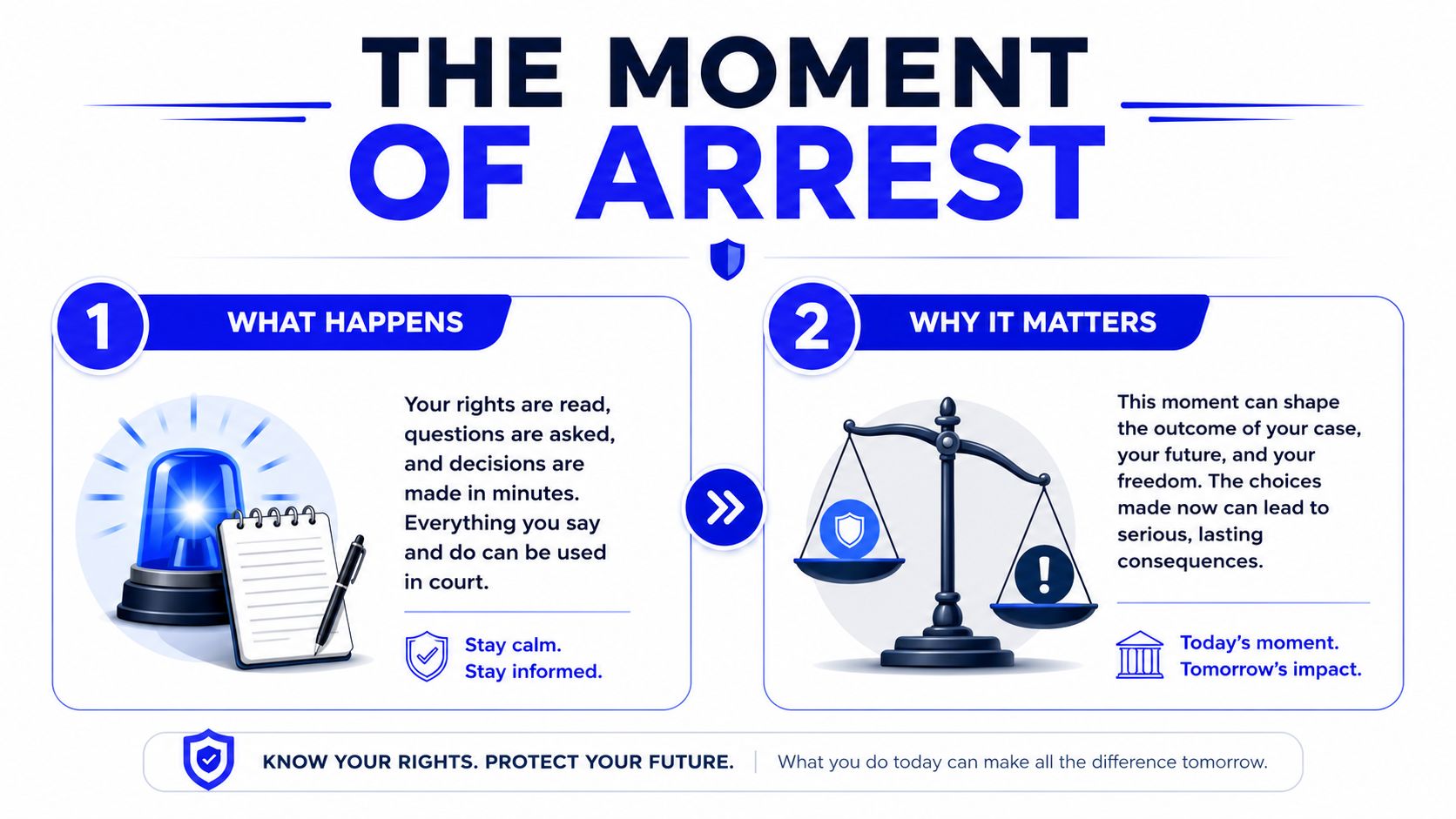
A routine ticket and a full arrest are not the same thing. A citation usually means a written notice and a chance to respond later. An arrest means the state has already escalated the matter, and that changes how you protect yourself from the first minute forward.
Practical rule: Don't argue the case on the shoulder. Your job at the scene is to stay calm, stay polite, and avoid making the stop worse.
The problem is what happens after the adrenaline fades. A speeding arrest can follow you through court, licensing, and insurance review long after the officer leaves the scene. The early mistake is always the same, treating the arrest like a paperwork issue instead of a legal problem.
Factor | Traffic Citation | Full Arrest |
|---|---|---|
Immediate outcome | Written ticket | Custody or formal arrest process |
Court exposure | Often resolved through a citation response | Court case with more serious consequences |
Driver record impact | Can still affect points and insurance | Can carry broader legal consequences |
Stress level | High | Higher, because the state has escalated the matter |
The legal distinction matters because the first 48 hours are where people damage their own case. They pay before they understand the charge, they post something online, or they assume a friendly explanation will fix it. It won't. If you're in this position, start by reading whether speeding tickets become misdemeanors so you understand how Florida treats the charge when it moves beyond a simple citation.
Your First Moves at the Scene and After You Leave
Start with the basics and don't get cute. Hand over your documents when asked, keep your answers short, and don't volunteer a speed estimate. If the officer asks questions beyond identification, you can stay respectful without helping build the case against you.
Keep your mouth closed on the facts. You are not required to explain yourself into a worse position.
If the stop turns into an arrest, ask for the next step and focus on getting through it cleanly. Don't fight the officer on the roadside, don't reach for your phone to narrate the stop, and don't try to win the argument with traffic-law jargon you just Googled ten minutes ago. Florida traffic stops can carry serious consequences, and the safest approach is to protect your rights while keeping the scene calm. For a plain-spoken overview of that process, see Florida traffic stop rights and procedure.
Once you're away from the scene, get disciplined fast.
Write down the details immediately. Note the time, location, lane position, traffic, weather, lighting, and anything the officer said.
Photograph the roadway if you can do it safely. Signs, markings, construction, visibility, and shoulder conditions matter.
Save every paper and screenshot. The citation, release documents, texts, and photos all belong in one place.
Don't post about it. Social media is not a defense strategy.
Don't mail in payment just to make it go away. That can lock in consequences before anyone reviews the evidence.
Florida's speeding cases are rarely won by memory alone. They are won by preserving facts early, while the scene is still fresh and before stories start changing. If you can do one thing tonight, do this, build a clean timeline before sleep, because tomorrow your memory will already be less precise.
Florida Statutes That Turn Speeding into an Arrest
Florida doesn't treat speeding as a single, flat problem. The state starts with Florida Statute § 316.183, which says speed must be reasonable and prudent under the conditions. That means an officer can still stop you when the posted limit isn't the whole story, because traffic, weather, visibility, and roadway conditions all matter.
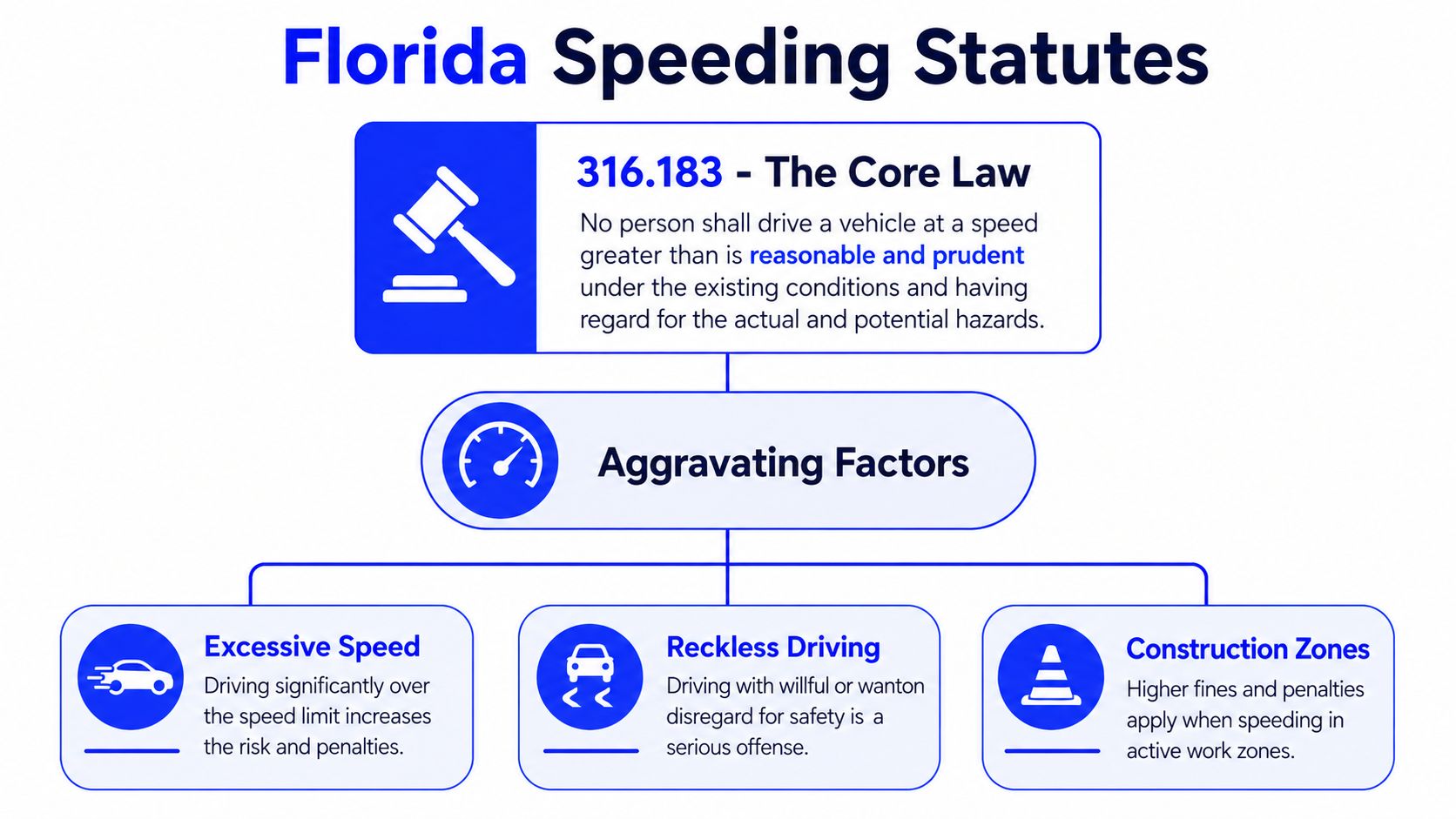
Then comes the next layer. Florida Statute § 316.187 deals with posted speed limits and the way Florida handles speeds that blow past the normal range. If the facts suggest the driving crossed into dangerous behavior, the case can move toward reckless driving under Florida Statute § 316.192. That's the point where a stop starts looking less like a traffic citation and more like criminal exposure.
The legal ladder is simple in real life, even if it's messy in court.
Posted limit and conditions matter. You can be cited even if you weren't dramatically over the number on the sign.
Excessive speed changes the tone of the case. The farther the speed climbs, the more serious the enforcement response becomes.
Reckless driving is the danger line. Once police and prosecutors frame the behavior that way, the risks multiply.
Construction and safety zones increase pressure. The roadway setting can make a normal stop look a lot worse.
If you need a deeper explanation of the criminal side of the charge, read what Florida criminal speeding means. That distinction matters because once the state treats the conduct as criminal, the response has to be legal, not casual.
You don't want to guess where your case falls on that ladder. A lawyer does that work by looking at the stop facts, the device used, the road conditions, and the charging language line by line. That's the difference between a citation problem and a criminal defense problem.
Points, Fines, Insurance, and Your License
Florida's point system is where the pain becomes real. A conviction for 1 to 9 mph over the limit carries 3 points, 10 to 14 mph over also carries 3 points, 15 to 19 mph over carries 4 points, 20 to 29 mph over carries 4 points, and 30 mph or more over carries 4 points. Those are not abstract marks on paper. They can affect your driving record and push your insurance company to treat you like a higher-risk driver. For the point structure, see the Florida guidance summarized in this speeding evidence resource and use it only as a reference point for the point schedule.
Speed Over Limit | Points | License Risk |
|---|---|---|
1 to 9 mph over | 3 | Points start stacking on your record |
10 to 14 mph over | 3 | Same point impact, still serious |
15 to 19 mph over | 4 | Higher risk of license trouble |
20 to 29 mph over | 4 | More exposure to suspension issues |
30 mph or more over | 4 | Strongest point impact in this group |
The practical consequence is simple. Paying the ticket is not a neutral act. You're usually accepting the conviction that creates the points, and those points can ripple into insurance and license problems later.
Bottom line: The hidden cost is often the record, not the fine.
Florida drivers also need to look at how the law treats behavior, not just speed. Florida Statute § 316.183 lets the officer and court focus on whether your speed was safe for the situation. That means a driver can be in trouble without doing something that looks outrageous on paper. If you want the fee side broken down in plain English, look at Florida speeding fines and consequences.
Don't wait until the suspension notice or insurance renewal to take this seriously. By then, you're reacting to damage that already happened. The smarter move is to fight the case before the conviction hardens into long-term cost.
Lawyer-Led Defense vs. Apps and Ticket Mills
Most Florida drivers get offered three paths. Pay the ticket, hand it to an app, or work with a lawyer who handles the case. Only one of those paths puts a real attorney between you and the court.
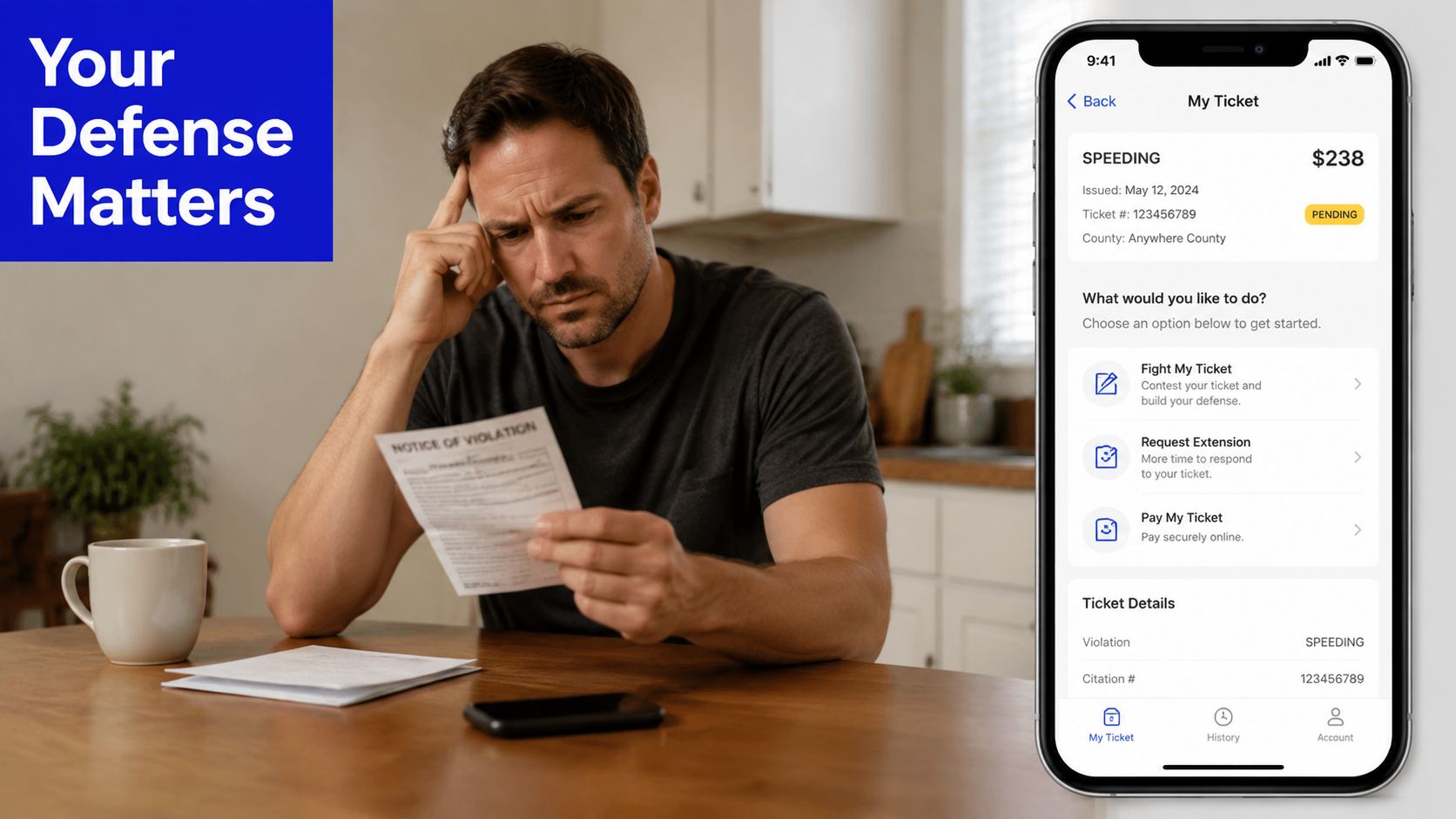
Paying it yourself is the fastest way to be done, and the fastest way to accept the consequence. App-based services promise convenience, but the driver usually ends up inside a system that's built around automation, not judgment. A lawyer-led firm is different because somebody licensed, accountable, and trained is reading the stop, the charge, and the defense options.
For the paperwork side of those services, it helps to know what makes a filing real and binding. SendItFax's explanation of legally binding documents is useful because it reminds you that traffic cases still turn on proper, valid documents, not vague promises from a screen.
Ticket Shield, PLLC is one option in that lawyer-led lane, and its model is straightforward, clients talk directly to their attorney by phone or text, not through a corporate answering desk or chatbot. That matters because traffic defense isn't just about sending in forms. It's about reviewing the stop, spotting weaknesses, and deciding whether to challenge, negotiate, or push for dismissal.
Model | Who Answers | Who Reviews the Evidence | Court Presence | What You Usually Get |
|---|---|---|---|---|
Pay it yourself | No lawyer | No legal review | You handle the consequence | Fast closure, no defense |
App or ticket mill | Staff or automation | Often limited | Often managed by someone you never meet | Convenience, but thin personal input |
Lawyer-led defense | Direct attorney contact | Actual legal review | Counsel handles the case strategy | Real defense, not just processing |
The best question is not “How fast can I click?” It's “Who is standing between me and the court record?” If the answer is a middleman, you're taking a risk with a case that can follow you for years.
If you've been tempted by a flat-fee app, read why speeding ticket apps fall short before you hand over control of your case.
Bail, Court Dates, and What the Next 90 Days Look Like
If the stop turned into jail time, bail is the first practical question. In Florida, the release process depends on the charge and the arrest paperwork, and sometimes a driver can be released on a written promise to appear instead of sitting in custody. That's not a comfort prize, it's just the legal mechanism that gets you home while the case moves forward.
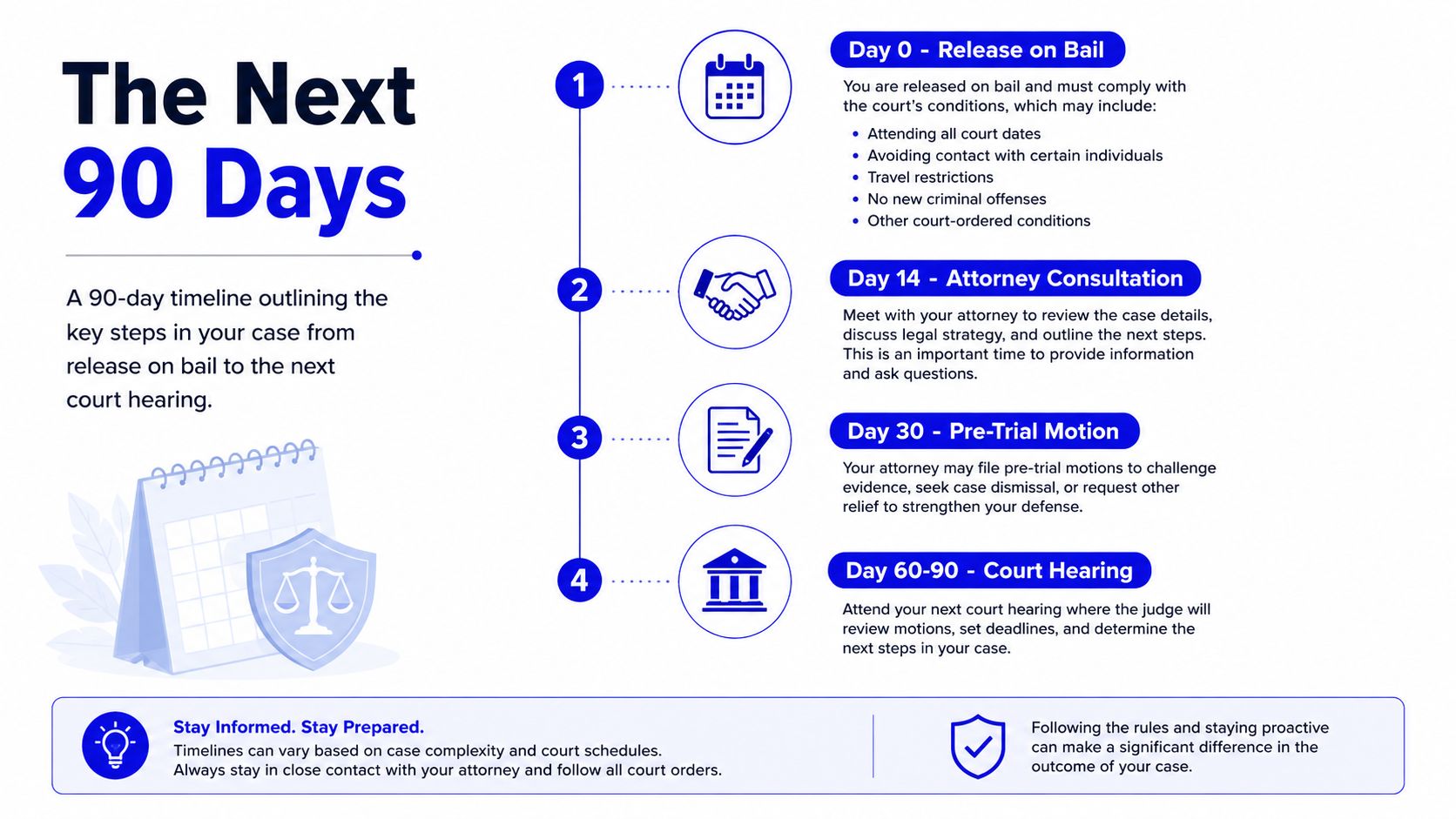
The next stretch usually moves in stages. First comes the initial court date or arraignment. Then comes the attorney review, evidence gathering, and any motion practice that makes sense. Many Florida speeding matters resolve without the driver appearing in person when counsel is running the case properly, but you can't count on that unless somebody is actively managing it.
A few deadlines matter more than frightened people realize.
Don't miss your response date. Ignoring the paperwork can make the problem worse.
Don't assume every notice is optional. Some hearings and elections have hard cutoff dates.
Move early on records and witness issues. Delay undercuts your position.
Track every court paper in one folder. Missing one document can ruin the defense rhythm.
There's also a practical reason to be careful with public records. If your case is likely to show up online, how to remove public court records from Google is useful background because people underestimate how long court information can linger in search results.
The next 90 days should not feel like a fog bank. They should feel like a sequence. Release, review, hearing, resolution. If your case is being handled right, you'll know what happens next instead of wondering whether the state has already won by default.
Real Defenses That Work in a Florida Speeding Case
You do not need a fantasy defense. You need the kind that can survive a judge's questions. The strongest Florida speeding defenses usually attack the stop, the measurement, or the conditions, because that's where the state's case is vulnerable.
Defense | Best Used When | Win Frequency |
|---|---|---|
Radar or LIDAR challenge | The device wasn't properly used or documented | Case-dependent |
Pacing challenge | The officer's follow behind wasn't reliable | Case-dependent |
Signage or visibility issue | The limit wasn't clearly posted or conditions were confusing | Case-dependent |
Reasonable speed for conditions | Traffic, weather, or roadway conditions undercut the allegation | Case-dependent |
Stop or seizure issue | The stop itself had a legal defect | Case-dependent |
The defenses that sound good in a parking lot usually collapse in court. “Everybody speeds here” doesn't beat a citation. “I was keeping up with traffic” doesn't erase the stop. Those lines feel satisfying, but they don't do the job.
What does work is evidence. A lawyer can request records, press on device handling, examine the officer's basis for the stop, and challenge whether the state can prove what it claims. That's real defense work, and it's one reason this kind of case doesn't belong in an app queue.
Hard truth: If nobody is testing the state's proof, you're just hoping for mercy.
Speeding cases are won by pressure, preparation, and local court knowledge. You need someone who knows which facts matter, who can file the right challenge, and who can push for the cleanest result available. That's the difference between passively accepting a conviction and fighting for a better outcome.
If you were arrested for speeding in Florida, don't sit on this. Visit Ticket Shield, PLLC for a free consultation, and get a lawyer-led defense focused on protecting your license and fighting for No Points.