
Puntos por Infracciones de Tránsito en Florida: Proteja su Licencia
Aprenda cómo funcionan los puntos por infracciones de tránsito en Florida, su vencimiento y el impacto en su licencia y seguro. Descubra defensas para evitar puntos y multas.

Inicia sesión en su registro de conducción y ve puntos que no esperaba. Ese es el momento en que la mayoría de los conductores de Florida se dan cuenta de que la multa no era el problema principal. El problema mayor es lo que esos puntos por infracciones de tránsito en Florida pueden hacer después: a su licencia, a su seguro y, a veces, a su trabajo.
Si conduce por motivos de trabajo, viaja diariamente al trabajo o transporta entregas en Miami-Dade, Broward, Hillsborough, Orange o Duval, no puede tratar una multa como una molestia menor. El sistema de Florida es acumulativo. Unas pocas citaciones pequeñas pueden acumularse hasta convertirse en una suspensión antes de que sienta todo el peso de la misma. Si desea consultar su registro primero, comience con cómo verificar su registro de conducir.
Índice de contenido
Introducción a los puntos de tránsito de Florida
Un conductor recibe una multa por exceso de velocidad, la paga y sigue adelante. Luego el registro se actualiza. Los puntos llegan a la licencia. Las compañías de seguros lo notan. La próxima renovación cuesta más. Los casos de tránsito en Florida se vuelven costosos mucho después de que termina la parada.
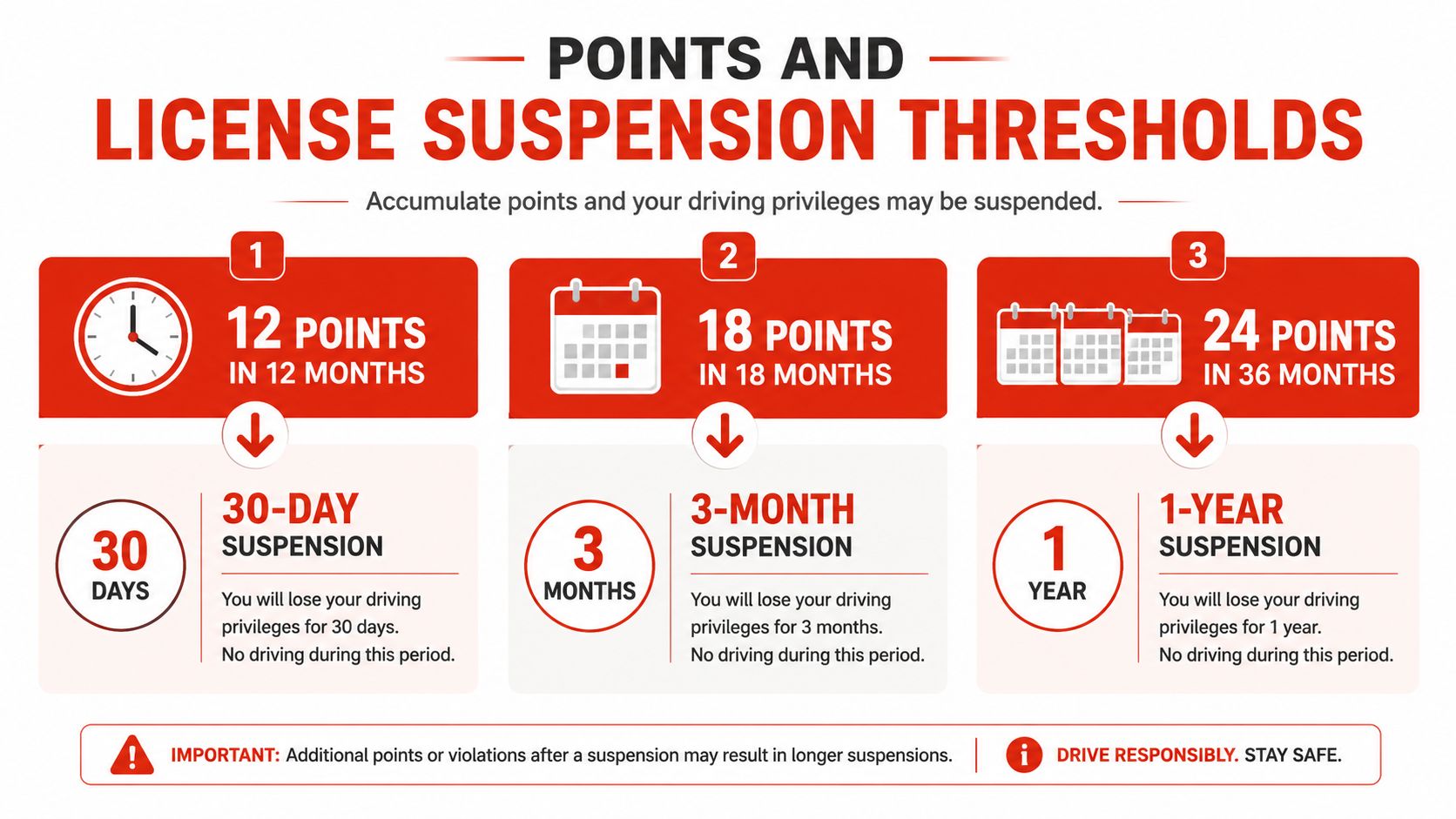
Florida utiliza un sistema de puntos para rastrear infracciones repetidas. Bajo el Departamento de Seguridad de Carreteras y Vehículos Motorizados de Florida, 12 puntos en 12 meses pueden desencadenar una suspensión de 30 días, 18 puntos en 18 meses pueden desencadenar una suspensión de 3 meses y 24 puntos en 36 meses pueden desencadenar una suspensión de 1 año (puntos y suspensiones de puntos de FLHSMV). Una sola multa puede acumularse rápidamente si ya tiene puntos en su historial.
Por qué esto importa ahora
La multa en la citación es solo parte del problema. Los puntos por infracciones de tránsito en Florida pueden seguir siendo relevantes durante años, y las infracciones repetidas pueden poner en peligro su licencia antes de que esté cerca de un límite de suspensión. Los conductores que necesitan un registro limpio para el trabajo, licencias profesionales, viajes compartidos o trabajos de entrega deben tratar cada multa con acumulación de puntos como una amenaza real.
La jugada inteligente es verificar su registro de conducir temprano. Si desea ver cuál es su situación antes de que el estado lo alcance, use esta guía para verificar su registro de conducir de Florida.
Si la multa suma puntos, lúchela como si su licencia dependiera de ello.
Las multas por cámara también merecen atención. Muchas multas automatizadas no suman puntos de penalización, pero aun así generan confusión, presión y papeleo. No asuma que todas las citaciones funcionan de la misma manera. Antes de pagar, confirme si el cargo conlleva puntos, si un curso de conducción defensiva puede ayudar según el Estatuto 316.646, y si vale la pena impugnar el caso en lugar de absorber el impacto.
Comprensión de conceptos clave
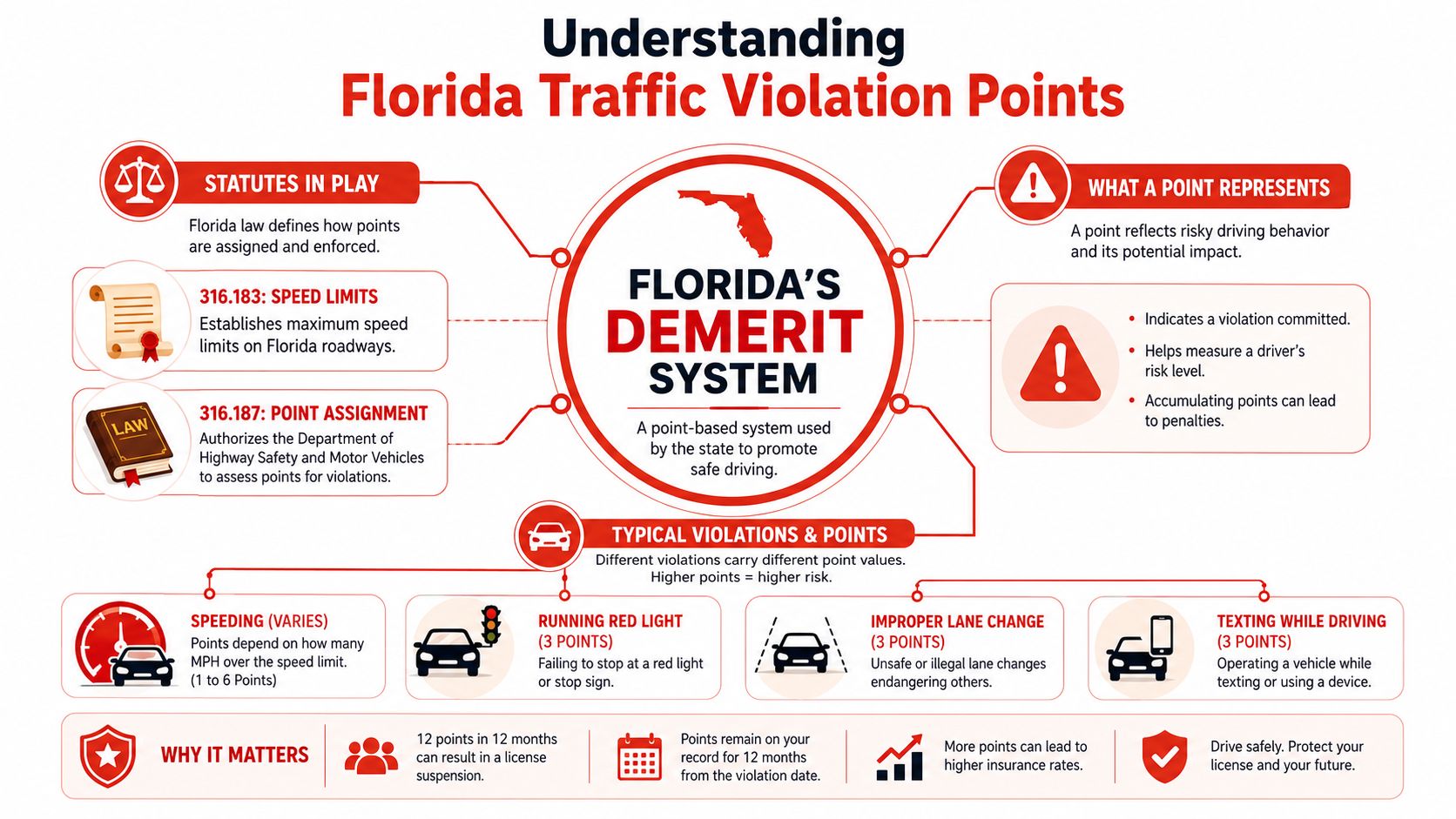
Una parada por exceso de velocidad en Florida comienza con el estatuto, no con la multa. Los Estatutos de Florida, Sección 316.183 establecen que la velocidad debe ser razonable y prudente para las condiciones, fijan límites máximos predeterminados de 30 mph en distritos comerciales o residenciales y 55 mph en otros lugares, y permiten a los condados o municipios establecer límites de 20 o 25 mph en ciertas calles locales después de una investigación (Estatutos de Florida, Sección 316.183). Ese es el piso legal. El sistema de puntos se asienta sobre eso. La sección 316.187 proporciona el marco de penalizaciones para infracciones de tránsito en movimiento, por lo que una multa por exceso de velocidad puede convertirse en un problema de licencia, no solo en una multa económica.
Qué significa un punto en su registro
Un punto es una marca en su historial de conducción vinculada a una condena o a una citación resuelta. Le indica al estado que la infracción no fue una advertencia. Fue una infracción en movimiento que cuenta en su contra. Así es como Florida mide el riesgo de reincidencia a lo largo del tiempo.
No trate los puntos como una molestia a corto plazo. Siguen siendo relevantes a efectos de suspensión durante 36 meses, lo que significa que el estado está mirando su historial reciente, no solo la parada que más recuerda. Si desea un desglose en lenguaje sencillo de cómo trata Florida una infracción en movimiento, use esta explicación de infracciones en movimiento antes de decidir pagar y seguir adelante.
Qué multas realmente suman puntos
La mayoría de las infracciones en movimiento suman 3, 4 o 6 puntos. Conducir a exceso de velocidad hasta 15 mph sobre el límite generalmente equivale a 3 puntos, conducir a más de 15 mph sobre el límite equivale a 4 puntos, e irse de la escena de un accidente equivale a 6 puntos (tabla de puntos de FLHSMV). Esa diferencia importa. Una citación puede ser manejable. Otra puede empujarlo a una batalla por la suspensión de su licencia.
Las citaciones automatizadas merecen un análisis detallado. Las multas por cámara no siempre funcionan de la misma manera que una parada realizada por un oficial, y muchas no suman puntos de penalización en absoluto. No asuma que el papel que tiene en la mano cuenta toda la historia. Verifique si el cargo conlleva puntos, si un curso de conducción defensiva puede ayudar según el Estatuto 316.646, y si impugnar el caso es más inteligente que aceptar el golpe.
Valores de puntos comunes y plazos
Una multa de tránsito en Florida no siempre es igual. Algunas citaciones apenas alteran el registro. Otras ponen en peligro real su licencia rápidamente. La tabla de puntos es lo que controla ese riesgo, no el monto de la multa que figura en el documento.
Valores de puntos y tipos de multas
Infracción | Puntos |
|---|---|
Exceso de velocidad de hasta 15 mph sobre el límite | 3 |
Exceso de velocidad de más de 15 mph sobre el límite | 4 |
Irse de la escena de un accidente | 6 |
Esos números guían el caso. Una sola multa por exceso de velocidad puede ser molesta. Un cargo relacionado con un accidente puede ponerlo en un camino corto hacia la suspensión. La tabla de puntos de Florida mantiene la mayoría de las infracciones en movimiento en el rango de 3 a 6 puntos, por lo que una segunda o tercera citación puede convertirse en un problema de licencia antes de lo esperado (tabla de puntos de FLHSMV).
Cuánto tiempo importan los puntos
Florida no olvida la parada solo porque usted lo haga. El estado analiza un período móvil de 36 meses, por lo que las multas recientes siguen contando incluso mucho después de que haya pasado la fecha de la corte. Las infracciones repetidas también pueden generar consecuencias más severas antes de llegar a un límite de suspensión. Algunos recursos legales de Florida indican que los casos repetidos de puntos pueden generar riesgo de revocación tras un patrón de infracciones graves dentro de un lapso de varios años, razón por la cual debe tratar cada nueva multa como parte de un historial más amplio, no como un evento aislado (cronograma de puntos de Florida y discusión sobre reincidencia de infracciones).
Pagar una citación de inmediato sin antes considerar su impacto es un error. Una citación que se puede resolver sin puntos de penalización protege su historial mucho más que enviar un cheque rápido a la secretaría del tribunal. Los conductores de Florida también deben analizar si se puede utilizar un curso de conducción defensiva según el Estatuto 316.646 para evitar que los puntos se acumulen en la licencia, y debe leer cuántos puntos se necesitan para suspender la licencia antes de decidir que la multa es inofensiva.
No mida una multa por el costo económico. Mídala por los puntos.
Una multa por cámara merece especial atención. Las multas automatizadas no siempre se tratan como una parada de patrulla, y muchas no suman puntos. No asuma que cada notificación genera el mismo riesgo. Verifique el cargo, compruebe si conlleva puntos de penalización y decida si luchar contra ella es la mejor opción.
Impacto en la licencia y el seguro
Una multa en Florida puede convertirse rápidamente en un problema para su licencia. Los puntos funcionan mediante un sistema de límites. Una vez que su total cruza la línea, el estado puede suspender su privilegio de conducir. Esas suspensiones están establecidas por norma y golpean con fuerza cuando deja que los puntos se acumulen.
Límites de suspensión que importan
Puntos acumulados | Período de tiempo | Duración de la suspensión |
|---|---|---|
12 | 12 meses | Suspensión de 30 días |
18 | 18 meses | Suspensión de 3 meses |
24 | 36 meses | Suspensión de 1 año |
Esas son las señales de alerta. Si las pasa por alto, el estado puede retirarle la licencia tras lo que parecía ser una multa de rutina (límites de suspensión de FLHSMV).
El seguro también se ve afectado. Una multa por exceso de velocidad puede aumentar su prima, y ese incremento puede persistir mucho después de que se haya pagado la multa. Si desea tener una idea más clara de cómo las aseguradoras tratan ese riesgo, lea si el seguro aumentará después de una multa por exceso de velocidad. El costo total rara vez se limita a la multa en sí. Consiste en una renovación más costosa y luego la siguiente después de esa.
Los puntos también pueden afectarlo en las evaluaciones de empleo. Esto es crucial para los repartidores, las personas que viajan diariamente al trabajo y cualquiera cuyo salario dependa de un historial de conducción limpio. Una citación por cámara merece especial atención aquí. Algunas notificaciones automatizadas no suman puntos en absoluto, mientras que una infracción en movimiento emitida por un oficial puede conllevar un riesgo real de puntos de penalización. No trate todas las notificaciones por igual. Verifique si el cargo conlleva puntos y utilice un curso de mejoramiento para conductores bajo el Estatuto 316.646 cuando el caso califique. Así es como evita que una mala multa se convierta en un problema mayor.
Opciones para defenderse contra los puntos
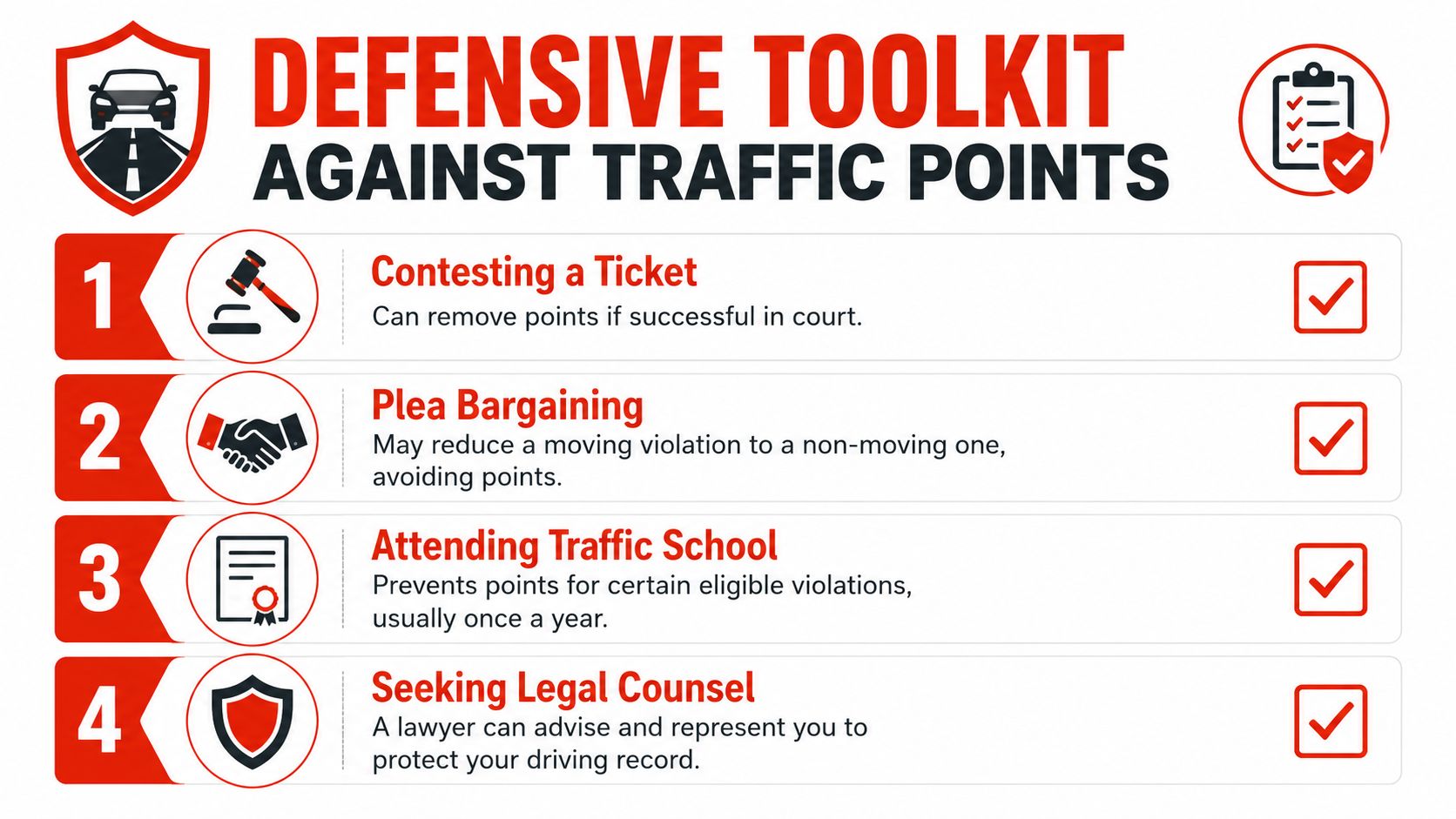
Usted tiene opciones. La peor decisión es pagar primero y pensar después. Una vez que acepta la citación sin un plan, puede estar consolidando puntos que podrían haberse reducido o evitado.
Impugnar la multa primero
Si el estado no puede probar la infracción, los puntos no se aplican. Impugnar la citación obliga a que el caso entre en el proceso legal en lugar de permitir que la multa se convierta en una condena silenciosa. Esa es la primera línea de defensa cuando los hechos no son sólidos o la parada presenta problemas.
Presionar por una reducción
A veces, el resultado correcto no es ganar en el juicio, sino obtener un cargo menor. Un acuerdo de culpabilidad a veces puede reducir una infracción en movimiento a una infracción que no sume puntos, lo que protege el historial incluso si aún se debe pagar algo de dinero. A menudo, esa es la jugada más inteligente cuando desea evitar un problema con su licencia.
Usar el curso de mejoramiento para conductores correctamente
Florida también permite realizar un curso de mejoramiento para conductores según el Estatuto 316.646 en los casos que reúnan los requisitos, lo que puede bloquear los puntos una vez que califique y actúe a tiempo. Una infracción detectada por cámara puede conllevar 0 puntos, mientras que la misma infracción emitida por un oficial en persona puede sumar hasta 4 puntos, un detalle que demasiados conductores pasan por alto (tratamiento de puntos: cámara frente a oficial de tránsito). Esa diferencia es exactamente la razón por la que debe leer la multa con atención antes de asumir que el costo económico lo dice todo.
Obtener asesoría cuando el registro importa
Si desea una opción dirigida por abogados, Ticket Shield, PLLC es una firma que maneja la defensa de tránsito en Florida con comunicación directa por teléfono o mensaje de texto. Eso es importante cuando necesita que una persona real tome las decisiones, no un chatbot o un intermediario. Para los conductores elegibles, ese tipo de representación puede marcar la diferencia entre un resultado favorable y un problema de puntos persistente.
Cuándo contratar a un abogado de tránsito
Contrate a un abogado de tránsito cuando la citación amenace algo más que su billetera. Si se enfrenta a una infracción de múltiples puntos, una parada reincidente o un trabajo que depende de un historial limpio, necesita una estrategia, no suposiciones. Un caso de exceso de velocidad que parece insignificante en papel puede volverse peligroso rápidamente cuando se suma a un historial existente.
El mayor error que cometen los conductores es usar una aplicación automatizada o una plataforma genérica cuando el caso requiere un abogado. Esos sistemas tienden a redirigirlo a través de personal administrativo o bots. Usted quiere acceso directo al abogado que leerá la citación, detectará los puntos débiles y decidirá si presionar para lograr una desestimación, una reducción u otro resultado que evite puntos en su licencia. Para obtener un desglose más detallado de cómo funciona esa representación, consulte abogados de multas de tránsito.
Quién no debería esperar
Si conduce por trabajo, recorre largas distancias o no puede permitirse una suspensión, no ignore la multa. Cuanto antes comience la defensa, más margen habrá para mantener Sin Puntos su historial. Eso es especialmente cierto cuando la citación conlleva puntos y se acerca la fecha límite de la corte.
Si el cargo puede afectar su licencia, su seguro o su salario, involucre a un abogado desde el principio.
Un buen abogado de tránsito no solo argumenta. El abogado reduce el riesgo. Ese es el trabajo.
Conclusión con llamada a la acción
Los puntos por infracciones de tránsito en Florida no son ruido de fondo. Pueden suspender su licencia, aumentar su seguro y crear un problema en su historial que durará mucho tiempo después de que termine la parada de tráfico. Los límites del estado son claros, los plazos son reales y las consecuencias empeoran cuanto más tiempo espere.
Si tiene una multa con acumulación de puntos, actúe ahora. No permita que una citación de rutina se convierta en un aviso de suspensión o en una prima más alta en su renovación. Si desea una defensa dirigida por abogados con acceso directo por teléfono o mensaje de texto, y quiere una oportunidad real de conseguir Sin Puntos en su licencia, debe actuar antes de que pase la fecha límite.
Visite TicketShield.com ahora para obtener una consulta gratuita y luchar por mantener Sin Puntos su licencia de conducir de Florida.
Una llamada a la acción para Ticket Shield, PLLC.

