Fallo en la prueba de emisiones en Florida: Causas, soluciones y aspecto legal
¿No aprobó la prueba de emisiones en Florida? Conozca las causas comunes, soluciones efectivas y sus opciones legales para aprobar rápidamente.

Acaba de recibir la mala noticia, y probablemente llegó rápido. En un minuto está pensando en el registro, el seguro y en un día normal, al siguiente está mirando un REPROBADO y preguntándose si su automóvil está a punto de convertirse en un problema legal en lugar de solo un problema de reparación.
Trátelo de esa manera. En Florida, reprobar una prueba de emisiones puede bloquear el progreso del registro, invitar a problemas de cumplimiento en los condados que requieren pruebas y dejarlo atrapado en un rastro de papel que se vuelve más feo cuanto más tiempo lo ignore. El lado mecánico importa, pero el lado legal es el que puede acorralarlo si espera.
Índice de contenido
El momento en que se entera de que reprobó y por qué importa en Florida
Qué significa realmente reprobar una prueba de emisiones en Florida
Razones comunes por las que los conductores reprueban una prueba de emisiones
Pasos inmediatos para solucionar el problema antes de pagar por una nueva prueba
Por qué una multa relacionada con las emisiones a menudo se puede disputar en los tribunales
Consejos de prevención para que su próxima prueba sea aprobada
Proteja su licencia, historial y bolsillo con una defensa estratégica
El momento en que se entera de que reprobó y por qué importa en Florida
La primera reacción siempre es la misma. Ve el fallo, luego su mente salta a las preguntas costosas. ¿Aún puede conducirlo? ¿Puede renovar? ¿Se convertirá esto en una multa o en un dolor de cabeza con el registro?
Ese pánico está justificado. En Florida, el problema no es solo que un sensor no cooperó o que una luz se quedó encendida. Un resultado reprobado en las emisiones puede interferir con el proceso de registro en los condados afectados, y una vez que eso sucede, ya no está lidiando con una simple factura de reparación. Está lidiando con un problema de cumplimiento.
Regla práctica: cuanto más rápido obtenga el papeleo, más rápido dejará de adivinar.
Saque el informe reprobado y léalo línea por línea. Si también está lidiando con preguntas sobre el registro, comience con lo que los conductores de Florida deben saber antes de renovar después de un problema de registro. Eso importa porque los problemas de registro y de inspección tienden a alimentarse mutuamente, y la gente pierde tiempo cuando los trata como problemas separados.
No asuma que haber reprobado "no es gran cosa" solo porque el automóvil todavía funciona. Un vehículo puede sentirse bien y aun así reprobar la prueba requerida, y ese fallo puede quedar en su registro hasta que lo solucione. Si espera, el problema deja de ser el automóvil y comienza a tratarse de plazos, barreras de renovación y una exposición legal evitable.
Reprobar no es el final del camino. Es la luz de advertencia que le dice que actúe de inmediato, documente todo y deje de improvisar.
Qué significa realmente reprobar una prueba de emisiones en Florida
Una prueba de emisiones es una verificación de si los sistemas de su vehículo están haciendo su trabajo. En pocas palabras, el inspector está observando si los diagnósticos a bordo están listos, si el equipo de emisiones se está comportando y si el vehículo cumple con el estándar de inspección del estado donde se aplican las pruebas. La autoridad de Florida para los estándares de emisiones de vehículos se encuentra dentro del Capítulo 316 de los Estatutos de Florida, y el marco del estado no es un programa estatal general como asumen algunos conductores.
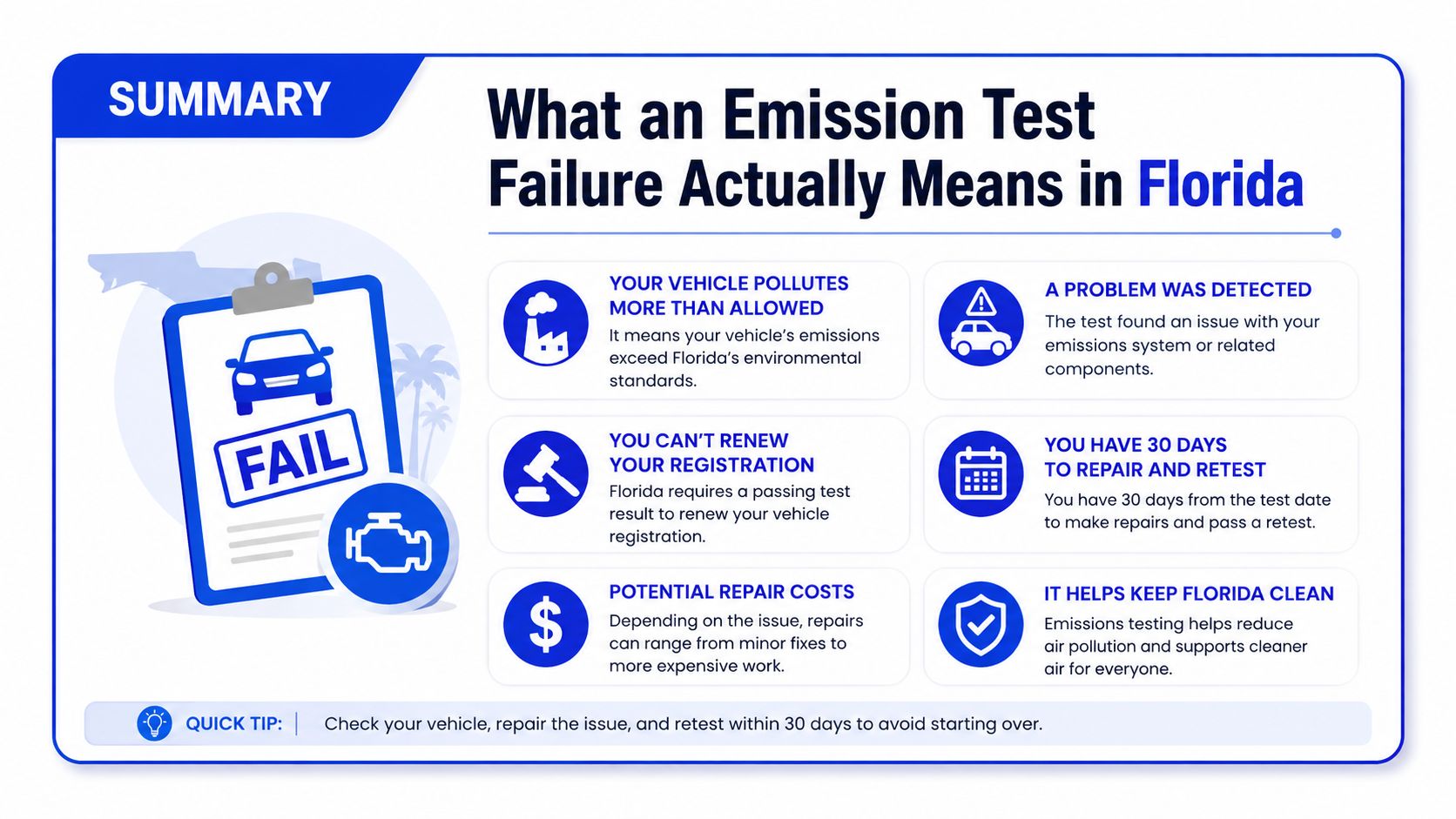
La forma útil de pensarlo es esta. La prueba puede fallar porque la computadora del automóvil no está satisfecha, porque un componente de emisiones medido está fuera de rango, o porque el vehículo parece tener alteraciones o problemas con el equipo. Es por eso que un fallo puede parecer un problema de software, otro un problema mecánico y otro un problema de cumplimiento.
La ley de Florida también le da espacio al estado para tratar los estándares de emisiones como una cuestión legal, no solo como una cuestión de taller. La Sección 316.2937 establece que los estándares de emisiones de vehículos motorizados propuestos al estilo de California no se pueden implementar hasta que sean ratificados por la Legislatura, lo que le indica que el estado trata la autoridad de emisiones como un asunto legal formal, no como un tema casual de taller. Si está lidiando con un problema de registro relacionado, vale la pena leer de inmediato esta guía sobre las consecuencias del registro vencido en Florida.
Las tres cosas que los inspectores suelen revisar
Preparación del OBD-II, que le indica al inspector si las autoevaluaciones a bordo del automóvil están completas.
Mediciones relacionadas con el tubo de escape o salidas de emisiones, según corresponda según el método de prueba utilizado.
Cumplimiento visual o antialteración, que busca equipos de emisiones faltantes o desactivados.
Haber reprobado significa que uno de esos sistemas no cumplió con el estándar. No significa automáticamente que su automóvil esté muriendo. Significa que debe tratar el resultado como una fecha límite, no como un inconveniente.
Razones comunes por las que los conductores reprueban una prueba de emisiones
La mayoría de los conductores quieren una sola respuesta. Quieren la pieza única para reemplazar, la luz única para borrar, la solución única que ponga fin al problema. No es así como suele funcionar esto. Reprobar una prueba de emisiones a menudo proviene de una cadena de problemas menores de los que la computadora del automóvil ya le ha estado advirtiendo.
Los problemas de preparación y de las luces de advertencia van primero
Una luz de verificación del motor es la señal de alerta obvia, pero el problema más silencioso es un monitor de preparación que aún no se ha completado. Si se desconectó la batería o se borraron los códigos, el vehículo puede parecer normal pero aún no estar listo para la prueba. Eso por sí solo puede hundir la inspección.
Un segundo problema común es una tapa de gasolina floja o defectuosa. Suena trivial, pero puede desencadenar fallas en el sistema de evaporación y dejarlo con un fallo que parece ridículo hasta que ya ha pagado el precio por él. Las bujías desgastadas, las bobinas de encendido débiles, los problemas del sensor de oxígeno y los problemas de la válvula EGR también pueden llevar al automóvil a un estado de fallo.
Algunos fallos no son dramáticos. Es solo el automóvil diciéndole que aún no ha terminado sus propias verificaciones.
Causa del fallo | Síntoma común | Reparación típica |
|---|---|---|
Monitores de preparación no configurados | Sin problemas obvios de conducción, pero el automóvil sigue reprobando | Finalización del ciclo de conducción después de la reparación o restablecimiento del código |
Tapa de gasolina floja o defectuosa | Luz de verificación del motor, falla relacionada con EVAP | Reemplazar o apretar correctamente la tapa |
Problema del sensor de oxígeno | Mal control de combustible, luz de advertencia persistente | Diagnóstico del sensor y reemplazo si es necesario |
Problema de bujías o encendido | Falla de encendido, ralentí inestable, luz de advertencia | Puesta a punto o reparación del encendido |
Problema con la válvula EGR o de emisiones | Código de falla vinculado al flujo o recirculación de escape | Limpieza, reparación o reemplazo |
Degradación del convertidor catalítico | Falla continua, posible pérdida de rendimiento | Diagnosticar la causa raíz antes del reemplazo |
Los vehículos con mucho kilometraje y los automóviles con la luz de verificación del motor encendida suelen ser los más afectados. La cruda realidad es que el automóvil aún puede sentirse utilizable mientras el sistema de emisiones está reprobando la prueba tras bambalinas. Si también está lidiando con un problema de placa vencida, esta guía de registros y multas de Florida le ayudará a ver qué tan rápido pueden acumularse estos problemas.
Pasos inmediatos para solucionar el problema antes de pagar por una nueva prueba
No corra de regreso a la estación y entregue más dinero solo porque quiere deshacerse del problema. Esa es la manera más rápida de perder el tiempo y volver a reprobar. Comience por obtener los detalles exactos del fallo en el informe de la prueba.
Si el informe detalla un código de diagnóstico de problemas, anótelo. Si señala un monitor incompleto, obtenga el nombre del monitor. Luego confirme si la luz de verificación del motor del automóvil está encendida, porque eso cambia su enfoque de inmediato. Un escáner OBD-II de calidad puede ayudarle a verificar lo que ve la computadora del automóvil antes de gastar en piezas.
Corrija la causa real, no el síntoma
Una tapa de gasolina floja es barata. Un sensor defectuoso puede ser asequible. Un convertidor catalítico es una historia diferente, y usted no querrá lanzar piezas caras al automóvil sin pruebas de que son el problema. Lleve el vehículo a un taller de reparación autorizado, solicite un diagnóstico por escrito y asegúrese de que la reparación esté relacionada con el motivo del fallo, no solo con la luz del tablero.
Después de la reparación, dele al automóvil un ciclo de conducción adecuado para que los monitores de preparación puedan volver a ejecutarse. Si borra los códigos demasiado pronto o vuelve a hacer la prueba antes de tiempo, puede reprobar nuevamente por una razón que no tiene nada que ver con la solución real. Eso es dinero tirado a la basura.
En pocas palabras: repare primero, vuelva a probar después, y nunca pague por una nueva prueba hasta que el automóvil haya tenido tiempo de demostrar la reparación.
Si no está seguro de cómo encaja una multa antigua o un problema de registro en todo esto, este recurso de restablecimiento de licencias de Florida es un siguiente paso inteligente porque estos problemas a menudo se superponen en la práctica.
Reglas de reevaluación, plazos para pruebas gratuitas y cuánto tiempo puede permanecer en la carretera
La estación no se queda con su dinero para siempre si regresa de inmediato. En muchas situaciones de pruebas reprobadas, hay un plazo para volver a realizar la prueba vinculado al recibo original, y la respuesta práctica es simple. Utilice ese plazo rápido, porque esperar convierte una reparación manejable en una segunda factura y más estrés.
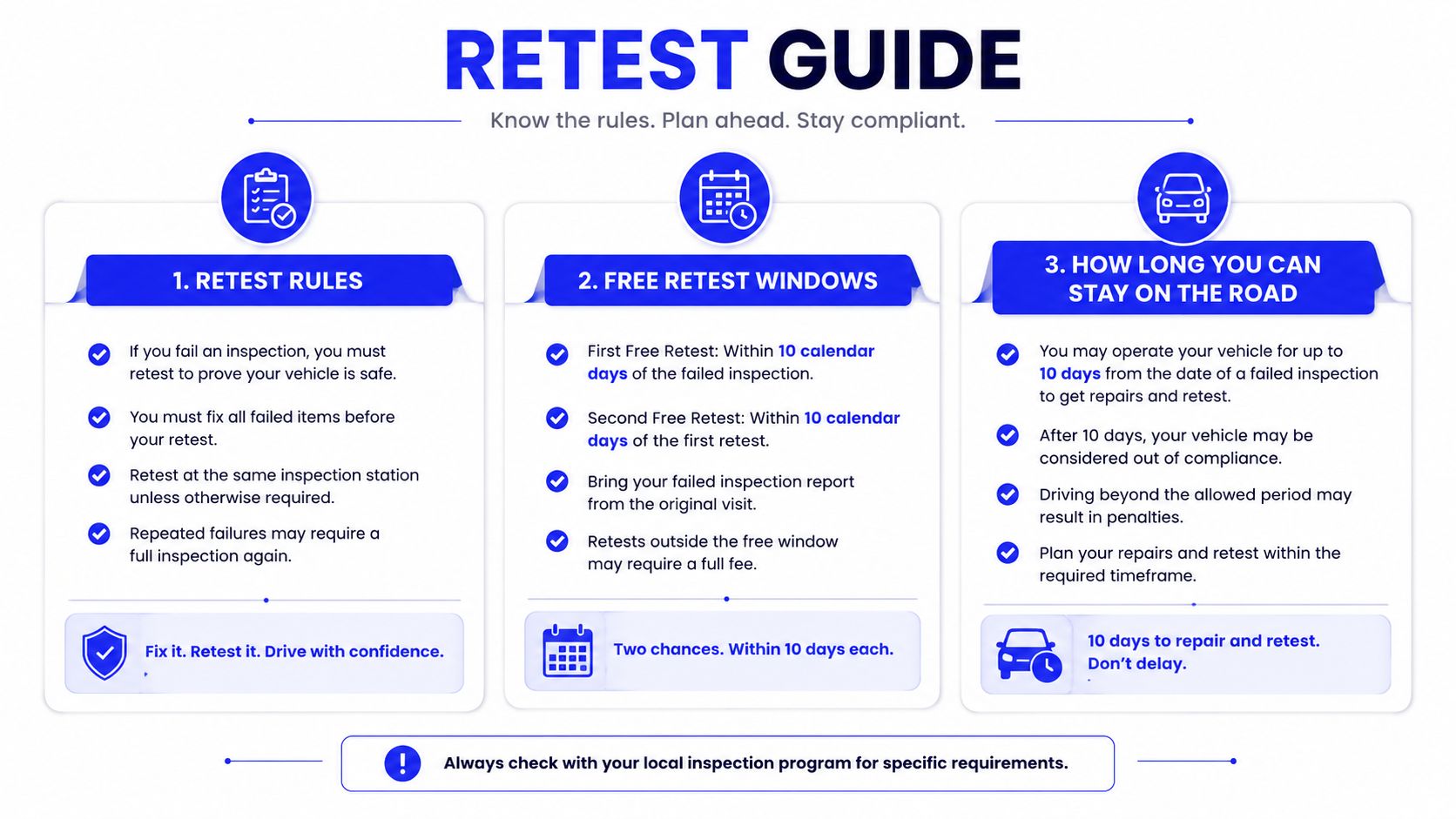
El punto clave es que un resultado de emisiones reprobado no es lo mismo que una infracción de tránsito por sí sola. No se va a despertar con puntos en la licencia solo porque el automóvil reprobó una prueba. El peligro es la consecuencia en el registro y el cumplimiento si deja que el problema persista.
Conserve cada recibo, cada impresión de código y cada factura de reparación. Si la estación le da una fecha límite para volver a realizar la prueba, trátela como una cita en el tribunal. Si la pierde, perderá su poder de negociación.
La pregunta no es solo si el automóvil se puede arreglar. Es si puede mantener su papeleo al día mientras lo soluciona. Es por eso que los conductores que entienden las reglas de tiempo mantienen la calma y gastan menos.
Si su situación se está desviando hacia un problema de licencia o registro, esta guía de restablecimiento de Florida puede ayudarle a planificar el siguiente paso antes de que venza el plazo.
Por qué una multa relacionada con las emisiones a menudo se puede disputar en los tribunales
Si la inspección reprobada vino con una citación o notificación de cumplimiento, no asuma que el estado ya ganó. No es así. Un problema de papeles, un problema de pruebas y un cargo vinculado al resultado reprobado no son lo mismo, y eso importa en el tribunal.
Muchos de estos casos dependen del procedimiento. ¿Se entregó la notificación correctamente? ¿La multa identificaba claramente la infracción? ¿El equipo utilizado por el inspector recibió el mantenimiento y la certificación adecuados? Esas preguntas importan porque el estado todavía tiene que probar su caso, y un proceso débil abre la puerta a un mejor resultado.
Si el gobierno tomó atajos, su defensa comienza ahí.
Una defensa estratégica también analiza si el problema fue una falla mecánica o solo un problema de preparación. Un automóvil que reprobó porque los monitores no estaban listos no es lo mismo que un automóvil con un componente de emisiones roto. Esa distinción puede importar mucho cuando un juez decide qué tan grave es realmente la presunta infracción.
Una revisión legal temprana ayuda. Quiere a alguien que pueda separar el informe de inspección de la acusación, identificar los puntos de presión y presionar para obtener un resultado que evite daños innecesarios a su historial. Esta guía de defensa de multas de tránsito de Florida es útil si desea comprender cómo se abordan normalmente las citaciones disputadas.
El punto es simple. Una prueba reprobada se puede reparar. Una mala citación a menudo se puede disputar. No se rinda solo porque el primer papel que recibió parecía oficial.
Consejos de prevención para que su próxima prueba sea aprobada
No necesita un ritual. Necesita una rutina. Los conductores que evitan problemas tratan las emisiones como un mantenimiento ordinario, no como algo por lo que entrar en pánico el día antes de la renovación.
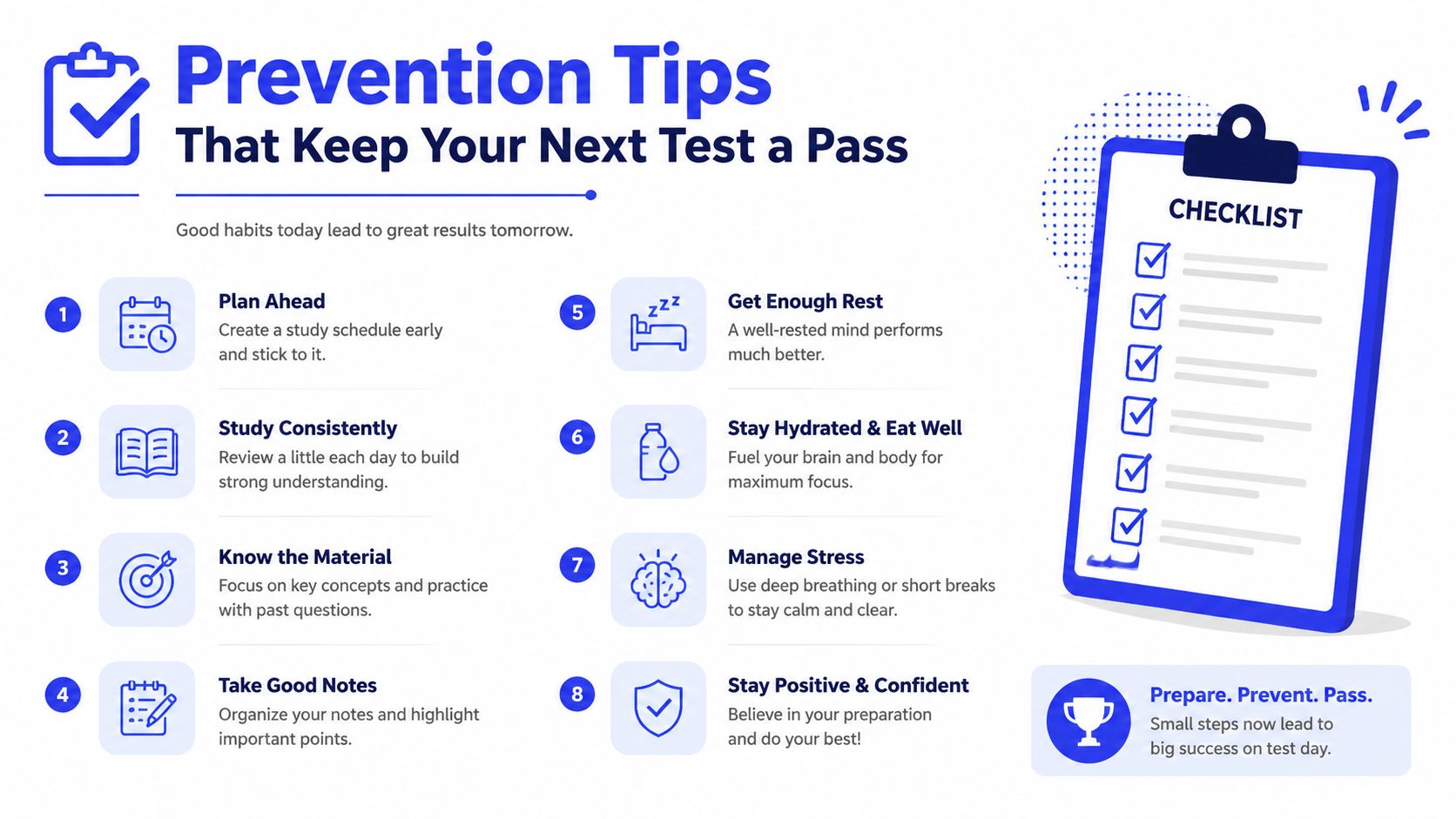
Cree un hábito de mantenimiento sencillo
Corrija las luces de advertencia rápidamente. No deje que una luz de verificación del motor permanezca encendida durante semanas.
Reemplace una tapa de gasolina agrietada o floja. Es una pieza pequeña con un gran impacto en la inspección.
Mantenga las bujías al día. Los problemas de encendido crean dolores de cabeza de emisiones evitables.
Vigile la entrada de aire y combustible. Los filtros sucios y los problemas con los sensores pueden acumularse rápidamente.
Conduzca el automóvil antes de realizar la prueba. Un calentamiento normal y una conducción a velocidad mixta le dan a los monitores la oportunidad de completarse.
Un viaje prolongado antes de la inspección ayuda porque el automóvil necesita la oportunidad de terminar sus autocomprobaciones. Si acaba de borrar códigos, cambiar la batería o reparar un sistema, es posible que la computadora aún necesite tiempo para restablecer la preparación. Por eso, presentarse con el motor frío, justo después de un reinicio, es una mala idea.
La mejor medida de prevención es aburrida. Mantenga el automóvil con el servicio al día, no ignore la luz y no realice las pruebas demasiado pronto después de las reparaciones. Esa disciplina ahorra dinero y evita que repruebe dos veces por la misma razón evitable.
Proteja su licencia, historial y bolsillo con una defensa estratégica
Una prueba de emisiones reprobada sin resolver puede convertirse en una bola de nieve. Puede terminar con problemas de registro, una multa y un lío que cuesta más resolver de lo que habría costado la reparación original. Por eso, una respuesta rápida y estratégica importa más que el optimismo ilusorio.
Un abogado puede atacar el problema desde el lado legal, no solo mecánico. Eso incluye revisar la detención o la citación, verificar si el estado puede probar la presunta infracción y presionar para obtener un resultado de Sin Puntos cuando los hechos lo respalden. En un caso que depende de pruebas o equipos, los detalles importan.
Ticket Shield, PLLC ofrece a los conductores de Florida acceso directo a un abogado por teléfono o mensaje de texto, no a un chatbot o un laberinto de centros de llamadas. Eso importa cuando necesita respuestas ahora, no más tarde. Cuanto más tiempo permanezca la infracción, más difícil será resolverla.
Visite Ticket Shield, PLLC para obtener una consulta gratuita y luchar por un resultado de Sin Puntos antes de que este problema se extienda a su historial, su registro y su seguro.