Conducción temeraria por primera vez en Florida: lo que debe saber
Conducción temeraria por primera vez en Florida explicada: multas, puntos, defensas y los siguientes pasos para proteger su licencia y su historial frente a un cargo penal.
A first-offense reckless driving charge in Florida is a criminal misdemeanor under Florida Statute §316.192, not a routine civil ticket. The statutory ceiling is 90 days in jail and a $25 to $500 fine, or both.
The citation may have started with flashing blue lights and a short conversation at the roadside, but the legal consequences continue after the stop. If you're looking at the charge now, don't treat it like an ordinary speeding citation that you can pay online and forget. Your decision can affect your criminal record, driving privileges, insurance, and future employment.
Table of Contents
The Moment You Realize This Is Not a Normal Ticket
You're driving home in Florida when blue lights appear behind you. The officer explains that your speed, lane changes, following distance, or other conduct looked dangerous. Then you receive a citation that uses the words reckless driving, not merely speeding.
The worry usually arrives later. You may wonder whether you can pay the amount shown, whether you must appear in court, and whether a first offense can really lead to jail. Those questions matter because Florida Statute §316.192 treats a first conviction as a criminal misdemeanor, not an ordinary civil traffic infraction. The statute permits up to 90 days' imprisonment, a $25 to $500 fine, or both, for a first conviction. It also adds a $5 assessment to the fine for the Emergency Medical Services Trust Fund. Florida Statute §316.192

Why paying can be the wrong first move
Paying a civil traffic fine usually resolves that type of citation. A reckless-driving charge requires a different analysis. Paying or entering a plea may result in a criminal conviction, rather than just closing a routine traffic matter. Before you do anything, compare the charge with the explanation of a Florida traffic citation versus a ticket.
The label first offense limits the basic statutory range compared with a repeat conviction. It doesn't make the charge harmless. A second or subsequent conviction can carry up to 6 months' imprisonment and a $50 to $1,000 fine, which is why your prior record and the exact disposition matter. Florida's statutory reckless-driving penalties
Your immediate objective should be clear: protect the possibility of a dismissal, reduction, or other resolution that avoids points and limits record damage. The next steps depend on what the officer alleges, what the evidence shows, and how your county handles criminal traffic cases.
How Florida Law Defines Reckless Driving
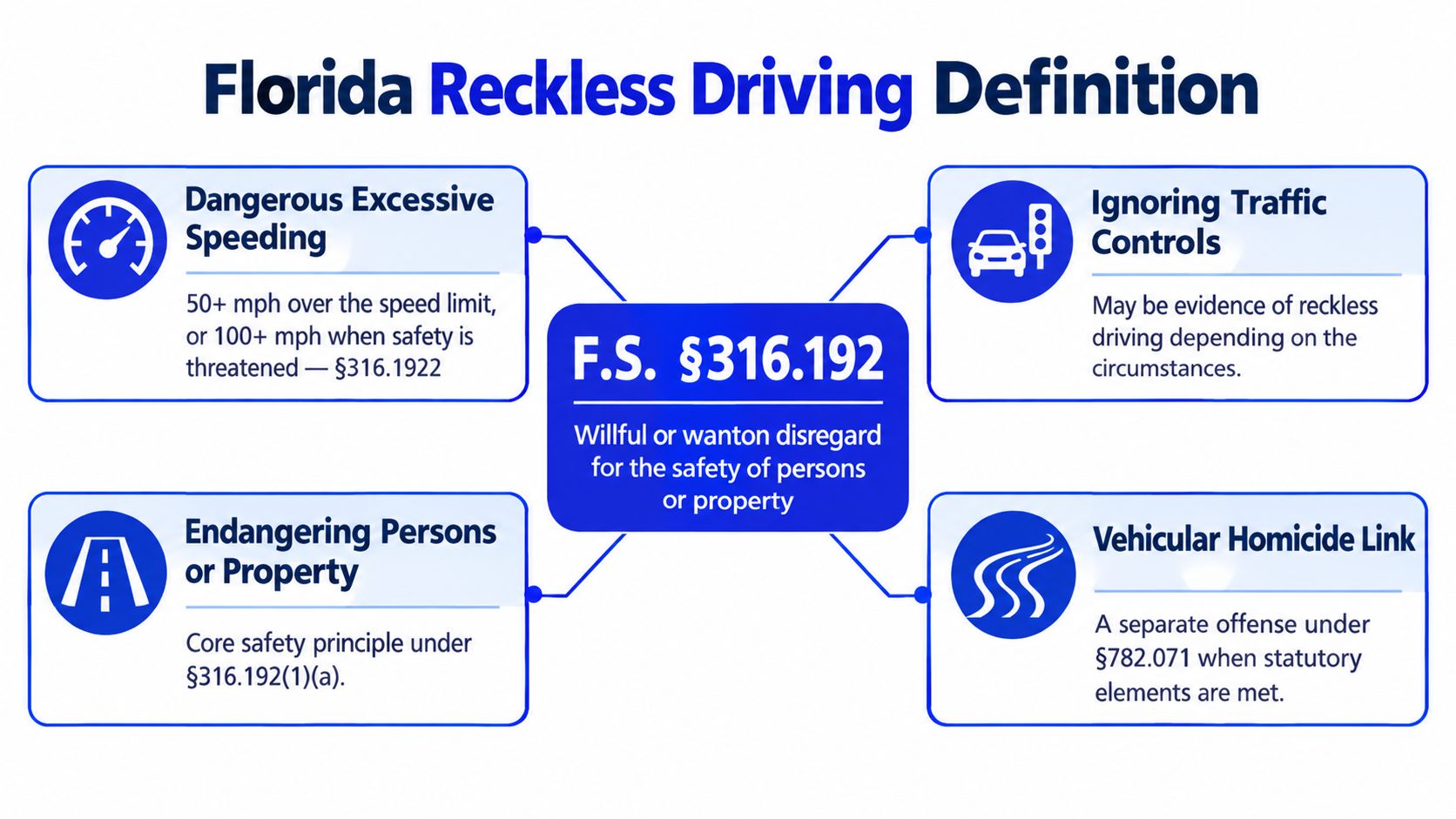
A citation for speeding, weaving, or an unsafe maneuver does not automatically prove reckless driving. Florida's governing rule, §316.192(1)(a), requires proof that you operated a vehicle with “willful or wanton disregard” for the safety of people or property. Because reckless driving is a criminal traffic violation rather than a civil infraction, review what is a criminal traffic violation before your first hearing.
The State must connect the alleged conduct to a conscious disregard for safety. In practical terms, prosecutors generally must establish three points:
You operated a vehicle. The charge must involve your operation of a motor vehicle.
Your operation endangered people or property. The circumstances must show a meaningful safety risk, not merely an imperfect driving decision.
Your conduct met the statutory mental standard. The evidence must support willful or wanton disregard, rather than an ordinary mistake, momentary inattention, or simple lack of caution.
Speed is evidence, not the entire legal test
Speed can support a reckless-driving allegation, especially alongside weaving, tailgating, racing, rapid lane changes, or a dangerous difference from surrounding traffic. Florida law does not turn every speed allegation into reckless driving through one automatic threshold. The officer's description, traffic conditions, roadway, and surrounding conduct matter.
The National Highway Traffic Safety Administration explains that higher speed reduces perception and reaction time, increases stopping distance, and raises crash energy. It also identifies speed variation within traffic as an independent contributor to crash risk. NHTSA's speeding-related crash definition includes racing, driving too fast for conditions, and excessive speed identified as a contributing factor, not only exceeding a posted limit. NHTSA's explanation of speeding and crash risk
Florida separately addresses fleeing a law-enforcement officer. Under §316.192(1)(b), fleeing an officer in a motor vehicle constitutes reckless driving per se. Treat that allegation urgently because it follows a different statutory path from a case based on speed, weaving, or unsafe maneuvering. Florida Chapter 316 statutory text
Careless driving remains different. It is generally a civil traffic offense based on failing to drive carefully and prudently. Reckless driving requires the stronger willful-or-wanton-disregard standard, and that difference often supports a negotiated reduction. Do not assume the “first offense” label determines the result. County practice, the charging facts, and your prior record can influence whether the case reaches a conviction or a resolution that avoids points.
Penalties, Points, and the Real Cost of a Conviction
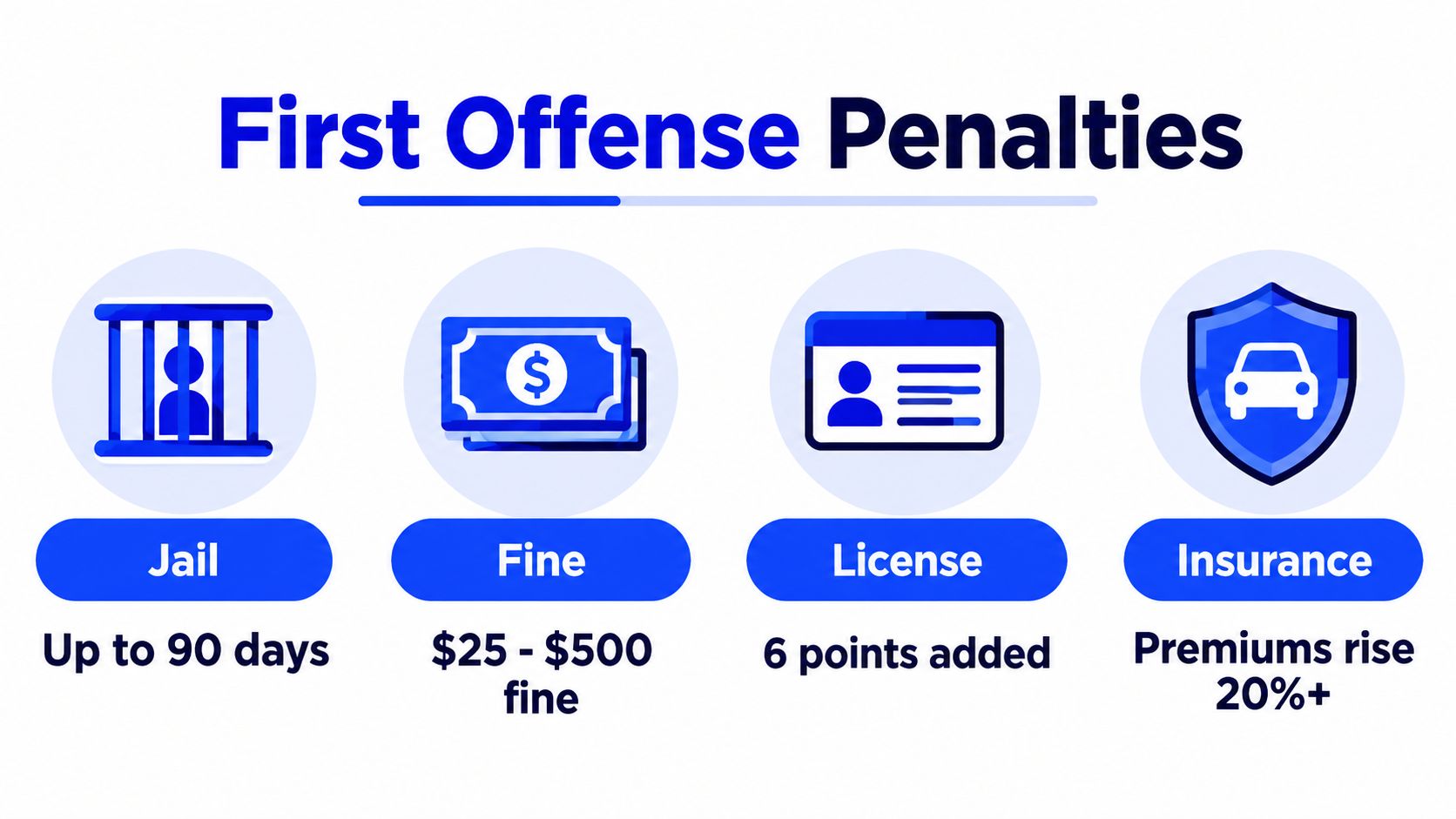
The statutory penalty for a first reckless-driving conviction is concrete. Under §316.192, the court may impose up to 90 days in jail, a $25 to $500 fine, or both. Florida also requires a $5 Emergency Medical Services Trust Fund assessment added to the fine. Florida's first-offense penalty provision
Those figures are the statutory ceiling and baseline fine range, not a prediction that every first offender will receive jail. The actual result can depend on the alleged driving, a collision, injuries, property damage, prior record, evidence quality, prosecutor discretion, and judicial discretion.
The consequences extend beyond the fine
A conviction can create several separate problems:
Criminal record exposure. A conviction is not the same as a civil infraction. It can appear in background-check contexts and may require explanation to an employer, licensing authority, or another decision-maker.
License consequences. A conviction can add points to your Florida driving record. The precise point treatment should be confirmed for the disposition and charge involved rather than assumed from a generic online chart.
Insurance pressure. Insurers may review the driving record and change premiums or eligibility. The cost depends on the carrier, policy, record, and underwriting rules.
Court conditions. When alcohol, controlled substances, or another specified chemical substance contributed to the offense, the court may require substance-abuse education and evaluation if it has reasonable cause to believe those substances played a role.
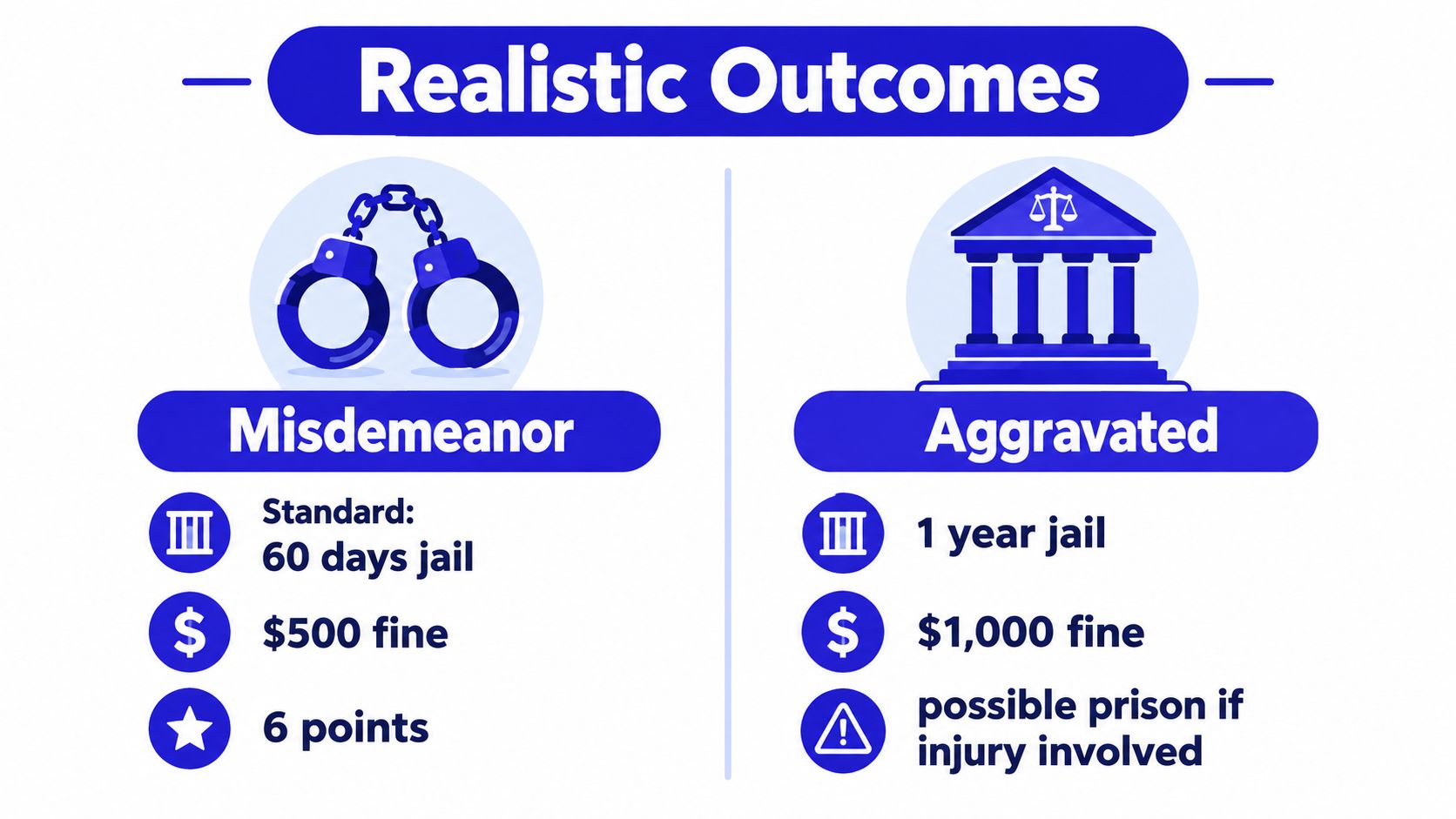
Aggravated exposure. Florida law provides enhanced treatment when reckless driving causes serious bodily injury or death. An injury allegation can therefore change the case analysis substantially.
You should also account for work. If your job requires driving, a criminal traffic conviction can create practical problems even when the court-imposed fine seems manageable. The right question isn't “How much is the ticket?” It's, “What resolution protects my record and license?”
Practical rule: Never measure a reckless-driving case by the amount printed on the citation alone. The disposition can matter more than the fine.
For a broader explanation of the financial issues involved, review the cost of a reckless driving ticket before deciding whether to resolve the case without counsel.
What Happens in Court and at the DMV
A reckless-driving case moves through Florida's criminal court system, not the same efficient process used for an ordinary civil traffic infraction. The clerk processes filings and court dates. The State Attorney's Office handles the prosecution. A judge oversees hearings, pleas, conditions, and sentencing.
Your citation should tell you where the case is filed and when you must appear. Don't assume that an online payment option means payment is the right resolution. If the charge requires a court appearance, missing it can create consequences more serious than a late payment, including a possible bench warrant.
The court and license tracks run separately
The court decides the criminal case. The Florida Department of Highway Safety and Motor Vehicles maintains your driving record and applies administrative license rules. A favorable court strategy must account for both tracks.
That means you should examine:
The exact charge language. Read the statute and factual description, not only the word “reckless.”
The appearance requirement. Confirm whether the clerk requires you to attend and whether counsel can appear for you.
The record impact. Determine whether the proposed resolution is a conviction, a reduction, a dismissal, or adjudication withheld.
The license effect. Confirm how the disposition will affect your driving record and whether other points already exist.
The DMV consequences may also affect employment where driving is part of the job. A person with an otherwise clean record may have more room to negotiate than someone with prior serious traffic history, but no one should assume a first charge automatically disappears.
Read what to expect in Florida traffic court and gather the case details before the first hearing. Waiting until the courtroom can leave too little time to obtain footage, review the report, or negotiate intelligently.
Realistic Outcomes Beyond the Statutory Ceiling
A first offense isn't one uniform outcome. The statutory ceiling tells you what the law allows after conviction. It doesn't tell you whether the case will be dismissed, reduced, diverted, or resolved with adjudication withheld.
County practices matter. A prosecutor in Miami-Dade may evaluate a case differently from a prosecutor in Hillsborough, Orange, Duval, Broward, or Palm Beach. Eligibility can also change based on the alleged conduct, prior record, collision facts, injuries, property damage, and the county's available programs.
The main resolution paths
Dismissal is the cleanest legal outcome. It may become possible when the evidence doesn't establish willful or wanton disregard, the officer's account conflicts with video, or the State cannot prove the charge beyond a reasonable doubt.
Reduction to careless driving changes the criminal charge into a civil traffic outcome when the facts support poor judgment but not the required reckless-driving mental standard. Florida Statute §318.1405 is relevant to careless-driving resolutions, but the availability of a reduction depends on the prosecutor, county, and facts.
Pretrial intervention or diversion may be available to qualifying defendants in some counties. These programs can impose conditions, such as classes, service, or other requirements. Completion may lead to a dismissal, but eligibility isn't automatic and the conditions must be evaluated before you agree.
Adjudication withheld is not dismissal. It can avoid a formal adjudication of guilt, but you may still face court costs, probation, conditions, or administrative consequences. It also isn't a promise that every background check will treat the case as though it never existed.
The right comparison is not “jail or no jail.” It is conviction versus dismissal, criminal charge versus careless driving, and points versus a protected license.
Ask for a county-specific assessment. A lawyer should identify the available pathways in the courthouse handling your case, explain the conditions attached to each, and recommend a resolution based on evidence rather than a generic first-offender script.
Defenses That Actually Move the Needle
A strong defense starts with the statutory mental standard. The State must prove willful or wanton disregard for safety. If the evidence shows a sudden emergency, mechanical failure, poor weather, confusing road design, or a brief mistake rather than conscious disregard, that distinction can change the case.
The officer's characterization isn't the whole record. A citation narrative may describe dangerous conduct, while dash-camera footage shows a short lane movement with no close call. Witness accounts, roadway geometry, lighting, weather, traffic density, and the timing of each maneuver can provide a more accurate picture.
Attack the evidence, not just the label
A defense review should address:
Speed estimation. Examine how the officer estimated speed and whether the observation was consistent with the roadway and traffic.
Radar or lidar evidence. Request available calibration, testing, and maintenance information, then compare it with the officer's training and report.
Video evidence. Obtain body-camera, dash-camera, nearby surveillance, or private vehicle footage before retention practices make it unavailable.
Vehicle information. Review available vehicle data when it can clarify speed, braking, steering, or timing.
Witness accounts. Identify passengers, other drivers, pedestrians, and nearby businesses that may have captured or observed the event.
Collision facts. Separate the fact that a collision occurred from proof that your conduct met the reckless-driving standard.
For suppression issues involving an unlawful stop, seizure, or improperly obtained evidence, review Florida motions to suppress evidence.
Paying immediately can surrender negotiating power before anyone examines these materials. An automated app or ticket mill may route your matter through middlemen, corporate answering services, or chatbots. That model doesn't give you direct legal communication when the case turns on a factual detail.
Ticket Shield, PLLC uses a lawyer-led model in which clients can communicate with their attorney by phone or text. That direct contact can help the lawyer understand the stop, preserve evidence, and evaluate whether dismissal, reduction, or adjudication withheld is realistic.
Your First 10 Days After the Citation
Treat the first days as evidence-preservation time. Don't pay the fine or enter a plea before you understand the charge and the available resolution.
Pull the citation. Record the court date, courthouse, statute number, and exact factual language.
Check the appearance requirement. Call the clerk if the citation doesn't clearly state whether you must appear.
Write down the stop. Note the road, traffic, weather, lighting, lane positions, officer statements, and everything you remember.
Preserve footage. Save your dash-camera file and identify nearby surveillance or witnesses. Request body-camera and patrol-car footage promptly.
Review your driving record. Count existing points and identify prior dispositions before discussing a resolution.
Submit the case for review. Ask a Florida traffic-defense lawyer to assess the evidence, county practice, and realistic path to No Points.
Choose representation based on access. You should know whether you'll speak with the attorney, a call center, or an automated system. A lawyer who reviews the actual report and evidence can address the difference between reckless and careless driving instead of treating every citation as an identical transaction.
Protect Your License, Your Record, and Your Future
A reckless-driving first offense under Florida Statute §316.192 is a criminal misdemeanor with a statutory ceiling of 90 days in jail and a $25 to $500 fine, plus the required assessment. A conviction can affect your criminal record, driving record, insurance, and work.
Don't pay first and investigate later. Get a lawyer-led review focused on dismissal, reduction, adjudication withheld where appropriate, and the ultimate license objective, No Points.
Visit Ticket Shield, PLLC for a free consultation about your Florida reckless-driving first offense. You'll receive direct, lawyer-led guidance by phone or text, with a defense strategy focused on protecting your record and pursuing No Points on your license.