Traffic Citation vs Ticket: Know Your Rights in Florida
Traffic citation vs ticket: Is there a difference in Florida? Learn the truth about legal status, points, and fines to protect your license.
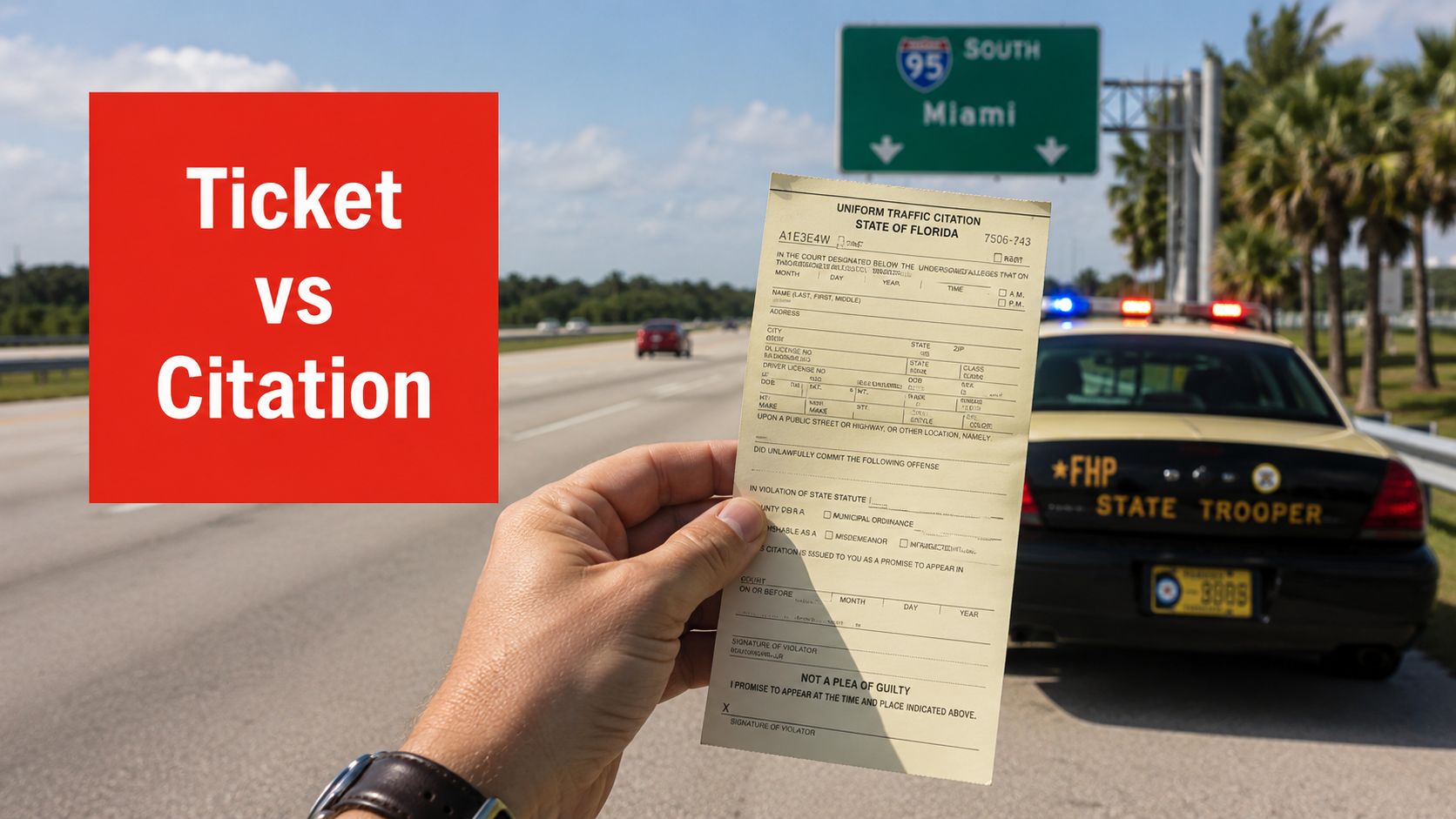
There is no legal difference between a traffic citation and a ticket in Florida. They are the same document, and if you ignore it for 30 days, Florida can suspend your license automatically.
You're probably looking at that paper right now and wondering if the wording matters. It doesn't. What matters is what happens next. If the officer called it a ticket, and the court calls it a citation, your record, your insurance, and your license are still on the line.
Drivers lose time arguing over labels. That's a mistake. The core issue in the traffic citation vs ticket debate is that the debate itself distracts you from the deadline and the damage. In Florida, this paper is not a casual warning. It is a legal notice tied to a specific statute, a response deadline, and consequences that can follow you for years.
Table of Contents
That Piece of Paper in Your Hand
You get stopped on I-95, the officer hands you a form, and now you are staring at a document that can put points on your license, raise your insurance, and force you into court obligations if you handle it the wrong way.
Call it a citation. Call it a ticket. In Florida, the label does not protect you. What matters is that you have been accused of a traffic offense, and the paper in your hand starts a legal process with real consequences.
Drivers get in trouble by treating this like a minor annoyance. It is not minor. If the stop involved speeding, careless driving, or another moving violation, that document usually lists the statute the officer claims you violated, the county, the court information, and the deadline to respond. Those details matter more than the word printed at the top.
Read it carefully before you pay anything.
Focus on four items right away:
The statute number: This tells you the exact offense Florida says you committed.
The response deadline: Your clock is already running.
The court or clerk information: This shows where the case is being processed.
The officer's notes and charge description: These can shape your defense.
If you need help identifying what each part means, review this guide on how to read a traffic citation.
Here is my advice. Treat every Florida traffic ticket like a case that can damage your record unless you stop it early.
A lot of drivers hear the word "ticket" and assume they can just pay it and move on. That is how people end up with avoidable points, higher premiums, and a worse driving history. The paper itself is the warning. Your job is to respond strategically, not casually.
The Dangerous Terminology Trap
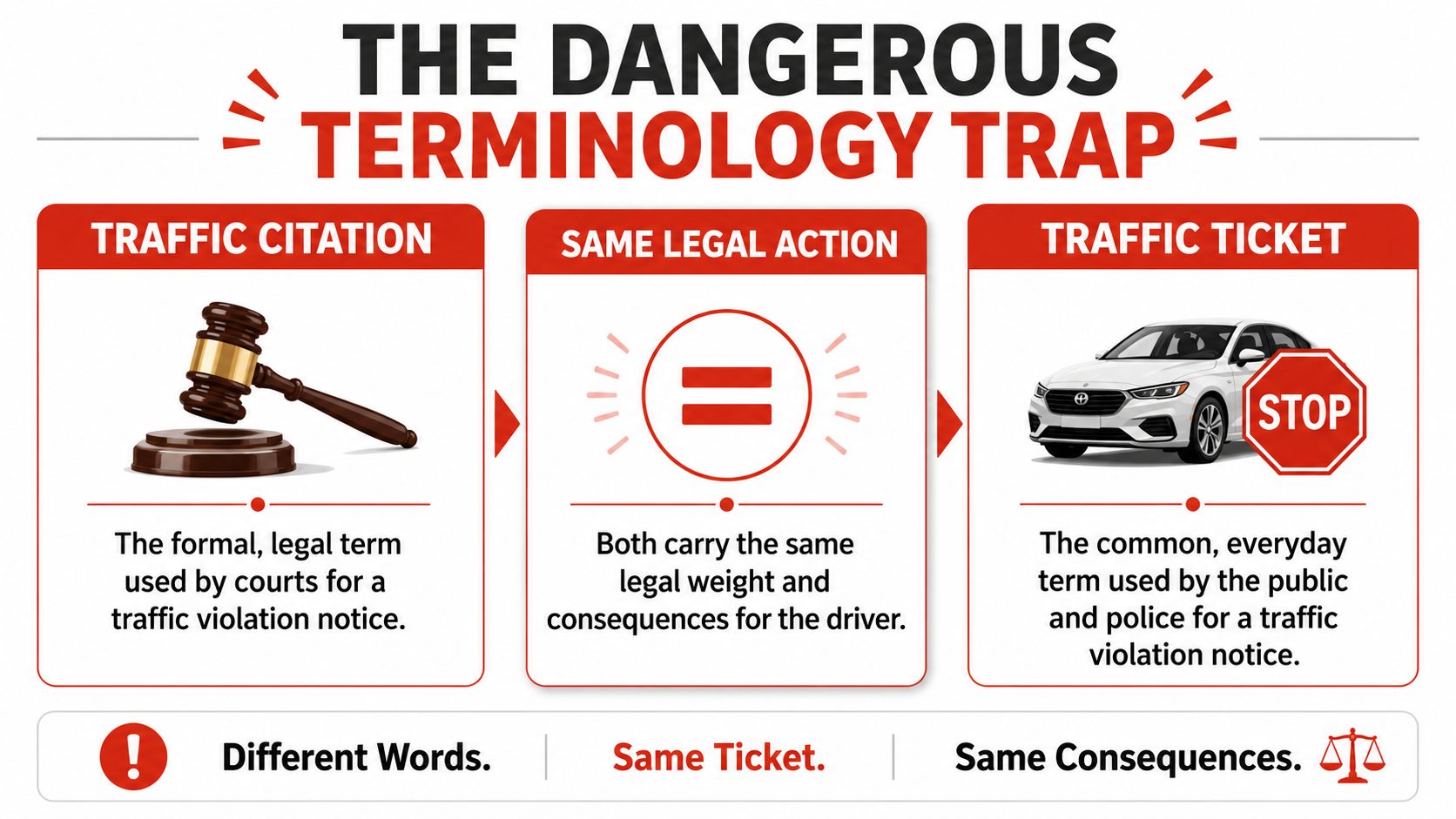
The phrase traffic citation vs ticket sounds like it should describe two different things. It doesn't. It describes one legal document with two different names.
Courts and officers tend to use citation because it's the formal label. Drivers often say ticket because it's familiar. That's the entire difference. Experian's breakdown of citation vs ticket states that there is no technical, legal, or performance-based distinction between the two.
Here's the comparison drivers need.
Issue | Traffic Citation | Traffic Ticket |
|---|---|---|
Basic meaning | Formal legal notice of a traffic violation | Common name for the same notice |
Used by | Courts and law enforcement | Drivers and everyday conversation |
Fine exposure | Same | Same |
Court process | Same | Same |
Effect on driving record | Same | Same |
Insurance impact | Same | Same |
Ability to contest | Same | Same |
Why this confusion hurts drivers
The label debate wastes your best defense window. While you're asking whether a citation is more serious than a ticket, the deadline keeps moving.
The more useful question is this. What can this document do to me if I handle it badly?
A written citation is not a warning. A warning is verbal and carries no penalty. A citation is written, documents an alleged violation, and indicates a penalty. That distinction matters far more than citation versus ticket.
Spending energy on the word choice instead of the violation is how drivers talk themselves into inaction.
If you want a plain-language explanation of where minor traffic cases fit in Florida's system, this overview of what is a traffic infraction is a useful starting point.
The right takeaway
Stop trying to rank the words. You don't need a vocabulary lesson. You need a response strategy.
Whether an officer said “I'm issuing you a ticket” or the clerk later refers to a “citation,” the legal challenge is the same. Your goal should be simple. Protect your record before the case turns into points, higher insurance, or a suspension problem.
Unchanging Consequences Your Florida License at Risk
The word on the paper does not protect you. The conviction is what hurts you.
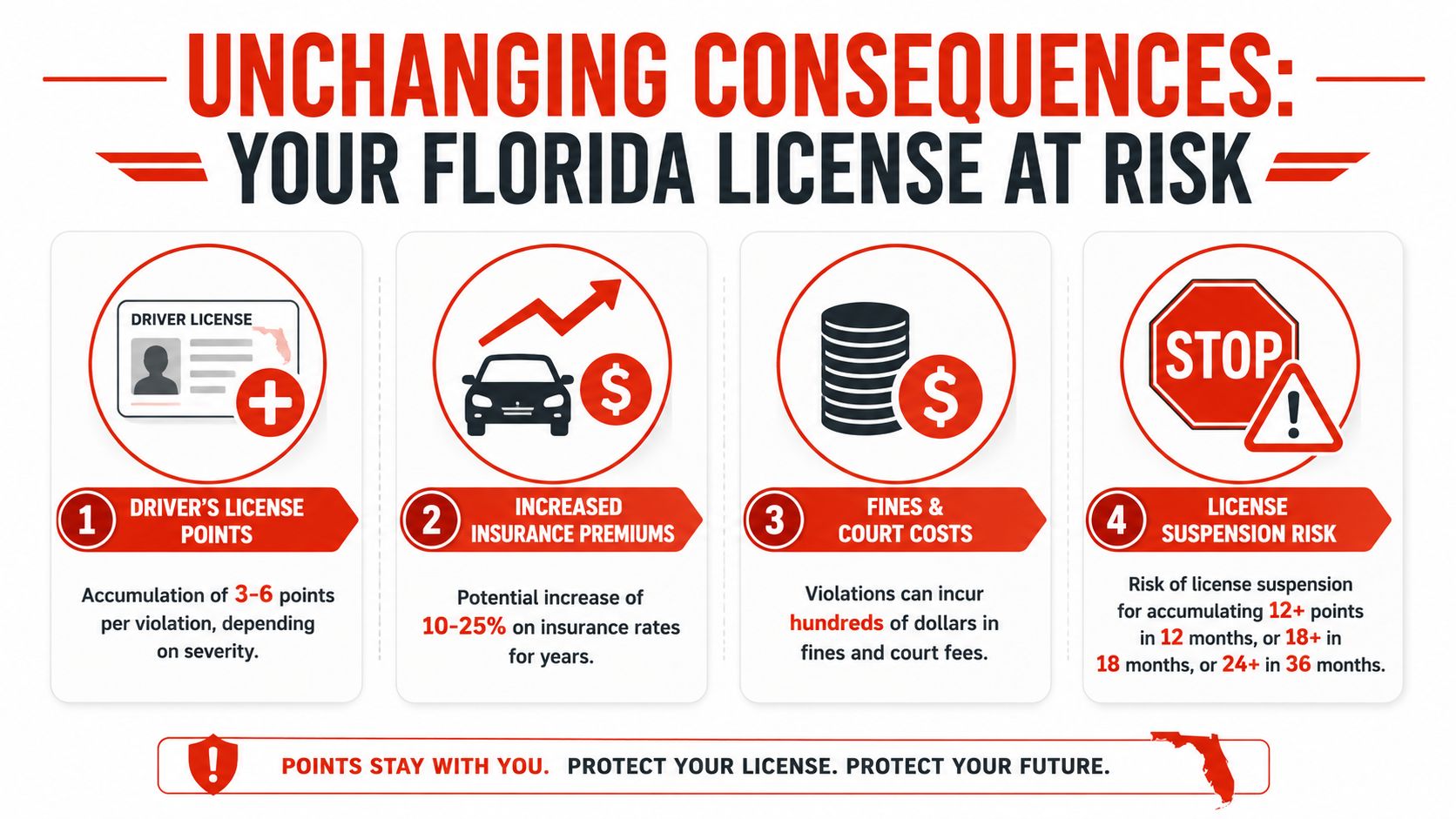
In Florida, a traffic case can follow you long after the fine is paid. The immediate cost is annoying. The record damage is what creates real trouble, especially if you get another ticket later or your job depends on a clean license.
Florida uses a point system with suspension thresholds that are automatic once enough points stack up. According to the Florida Department of Highway Safety and Motor Vehicles point suspension rules, 12 points within 12 months triggers a 30-day suspension, 18 points within 18 months triggers a 90-day suspension, and 24 points within 36 months triggers a one-year suspension. The same source states that points remain on your record for at least five years from the date of conviction.
That is the issue. “Citation” and “ticket” lead to the same record problem if you handle the case badly.
The charge controls the fallout
Your case is tied to a specific alleged violation, not a casual label used by the officer or clerk. The statute listed on the form tells the court what you are accused of doing. That allegation controls the penalties, the point exposure, and how a defense should be built.
Drivers miss this all the time. They fixate on whether they received a citation or a ticket and ignore the part that actually matters. The legal allegation is the problem, and that is why a strategic response matters from the start.
Paying fast can cost you longer
A quick payment feels efficient. It often becomes an expensive mistake.
Once points land on your record, the consequences spread beyond the court file. Insurance carriers often treat a conviction as a pricing event, and the increase can last well past the day you paid the clerk. If you want a broader consumer explanation of timing, this article on how long tickets affect insurance rates is worth reading.
A paid ticket also removes your chance to fight for a better outcome. For delivery drivers, rideshare drivers, military members, commercial applicants, and professionals who undergo driving record checks, that shortcut can create a much bigger problem than the original fine.
The safest move is rarely paying first. The safest move is protecting your record before a conviction is entered.
If you want a closer look at how points can affect both your license and insurance exposure, read this guide to Florida's points system for tickets, license consequences, and insurance risk.
Your 30 Day Deadline What Happens if You Do Nothing
You set the ticket on the counter, tell yourself you will deal with it next week, and then life gets in the way. That delay is how a traffic case turns into a license problem.
Florida gives you a short response window, and the court does not care whether you call it a citation or a ticket. The term changes nothing. If you do nothing, the state treats that as a failure to respond, and your license can end up suspended.
That is the danger here.
Your three options within the deadline
You have three basic choices, and only one is aimed at protecting your driving record.
Pay the fine
Fast does not mean smart. Paying usually closes the case as a conviction, which can leave you with points, insurance problems, and a record that follows you long after the fine is forgotten.Choose traffic school if you qualify
This can limit some damage in the right case, but it is still a defensive move, not an attack on the charge. It also comes with deadlines, eligibility rules, and strategic tradeoffs that many drivers do not understand until it is too late.Fight the citation
This is the only path focused on preventing the violation from hurting your record in the first place. If protecting your license matters, this is the option to take seriously from day one.
Doing nothing creates a second case
Drivers often assume a missed deadline can be fixed with a quick call to the clerk. That is how bigger problems start.
Once you miss a required response or court obligation, you are no longer dealing only with the original traffic allegation. You may also be dealing with suspension issues, extra fees, and a harder procedural mess to clean up. This guide on what happens if you miss a court date in Florida explains how fast that can spiral.
The worst move is waiting. Delay gives the court control and takes options away from you.
Treat the deadline as urgent. Do not waste time debating citation versus ticket. Get a lawyer involved before a simple traffic stop turns into a suspended license and a much more expensive problem.
Why a Lawyer-Led Defense Beats Automated Apps
You already know the paper is serious. The next mistake is treating your defense like a convenience purchase.
Apps and ticket mills sell speed, intake forms, and canned updates. Your case needs judgment. A Florida traffic charge turns on the exact allegation, the court handling it, your driving history, and the best strategy for protecting your record. The label on the paper does not change that. Neither does a slick dashboard.
What automated services miss
Automated platforms are built to process volume. Traffic defense is not a volume problem for you. It is a record-protection problem.
A real defense starts with reading the citation closely, spotting weaknesses, checking county-specific practices, and deciding what outcome should be pursued. That can mean contesting the charge, negotiating for a better result, or avoiding a move that looks convenient but harms you later. Software does not make those calls well. Non-lawyer intake staff cannot make them at all.
Common failures show up fast:
Your facts get flattened into a template. Small details that matter to a defense get ignored.
Communication gets filtered through staff or software. You wait on system updates instead of getting legal advice.
The strategy is generic. Your case gets pushed into the same workflow as everyone else's.
The goal gets watered down. Processing the ticket becomes the focus, instead of protecting your license and record.
Why direct attorney access gets better results
You need a lawyer who can make judgment calls early, before the case hardens into a conviction or a bad option. That means someone who can review the charge, assess the risk, and tell you plainly what helps and what hurts.
That is the difference.
Drivers get distracted by citation versus ticket. The difference that matters is personal legal strategy versus automated processing. One is built to protect your record. The other is built to move files.
If you want a clearer breakdown of the tradeoffs, read why choosing a local lawyer over apps can protect your record better.
A traffic case deserves legal judgment from the start, not software pretending every driver has the same problem.
Use the term you want. Ticket. Citation. Notice to appear. The consequences in Florida stay the same, and the safest response is the same too. Get a lawyer involved early and build a defense around your case, not around an app's workflow.
Take Control and Protect Your Record Now
You are holding a piece of paper that can put points on your license, raise your insurance, and leave a mark on your driving record. Arguing over whether it is called a citation or a ticket wastes time you do not have. In Florida, the name does not protect you. A smart legal response does.

Treat this like a legal threat to your record, because that is exactly what it is.
Your next move should be simple
Get in front of the case now. Focus on the outcome that matters.
Keep points off your license if possible
Avoid a conviction when the facts and strategy allow
Limit insurance fallout
Meet every deadline
Drivers get into trouble when they minimize the paper in their hand and delay the response. Florida traffic cases move whether you act or not. Once deadlines pass and options close, fixing the damage gets harder and more expensive.
A short explanation from a Florida traffic defense perspective may help before you decide what to do next.
The right goal is to protect your license, your insurance profile, and your record. That takes legal judgment early, before a manageable ticket turns into a lasting problem.
Visit Ticket Shield, PLLC now for a free consultation and fight for the outcome that matters most: No Points on your license.