What Does Nolle Pros Mean in Court for Your Florida Case?
What does nolle pros mean in court? In Florida, it means the prosecutor stopped pursuing the case—but it does not always erase the record.

A "nolle pros" means the prosecutor has formally decided not to continue the criminal or traffic case. In Florida court records, that usually ends the prosecution without a conviction—but it is not the same thing as a not-guilty verdict, and it does not automatically wipe the record clean.
In our review of Florida court terminology, this is the point readers most often want clarified: a nolle pros is usually a favorable outcome, but its exact effect depends on the type of case, whether charges could be refiled, and what steps you take afterward to protect your record.
How We Evaluated This Florida Legal Issue
This article is based on plain-English legal definitions, Florida court and statute sources, and the case outcomes people most commonly ask about after a traffic or criminal case ends without a conviction. We compared general legal references such as Cornell Law School's Wex entry on nolle prosequi with Florida-specific record-clearing guidance from the Florida Department of Law Enforcement and Florida prosecution-timing rules in section 775.15, Florida Statutes.
We also relied on practical patterns that come up repeatedly in traffic-defense and criminal-defense questions: whether a dropped case can come back, whether points or convictions still attach, and whether sealing or expungement is automatic. In our experience, broad statements become misleading fast in this area, so anything that turns on the exact charge, filing date, prior record, or court order should be treated as case-specific rather than a universal rule.
What is a Nolle Pros in Your Florida Case?

A nolle pros, nol pros, or being nolle prossed are shorthand ways of saying nolle prosequi. In plain English, that means the prosecutor filed a formal notice that the State will not move forward with the case. Legal references describe it as a prosecutor's decision to abandon a prosecution, either entirely or as to certain counts or defendants, and the term is rooted in common-law procedure dating back centuries, with historical usage traced to the late 1600s in sources such as Britannica's explanation of nolle prosequi.
Procedurally, the case is not ending with a conviction or a trial verdict. Instead, the prosecution is stepping back before final adjudication. In Florida, you may see the full Latin phrase on one document, "nolle pros" on a docket, and "nolle prossed" in a clerk summary. Those variations usually point to the same core event: the State Attorney has elected not to proceed. For a broader discussion of when a closed case can sometimes be revisited, this overview from Gerald Miller P.A. is a useful companion read.
That does not mean the court declared you innocent, and it does not always mean the underlying record disappears on its own. What it usually means is that the prosecution has stopped and there is no conviction from that case. In our experience with Florida traffic and misdemeanor questions, that distinction is where much of the confusion starts.
What Does This Mean for You?
The immediate effect is usually straightforward: the State is no longer pursuing the case, so there is no plea, no finding of guilt, and no sentence tied to that charge. In many traffic-related situations, that also means no points based on a conviction because there was no conviction.
The longer-term effect depends on the kind of case and what records were created. A nolle pros can put you in a better position for sealing or expungement, but eligibility is not automatic and should be checked against Florida's rules. Florida courts and agencies still maintain records of the case unless additional steps are taken. That is why readers should separate four different issues: the prosecution ended, there was no conviction, the court record may still be visible, and record-clearing usually requires its own process.
The difference between a nolle pros and other outcomes is huge. While an adjudication withheld avoids a conviction, it is not the same as having charges dropped completely. We ensure you understand every step and receive the protective counsel you deserve.
Visit TicketShield.com for a free consultation to start protecting your record.
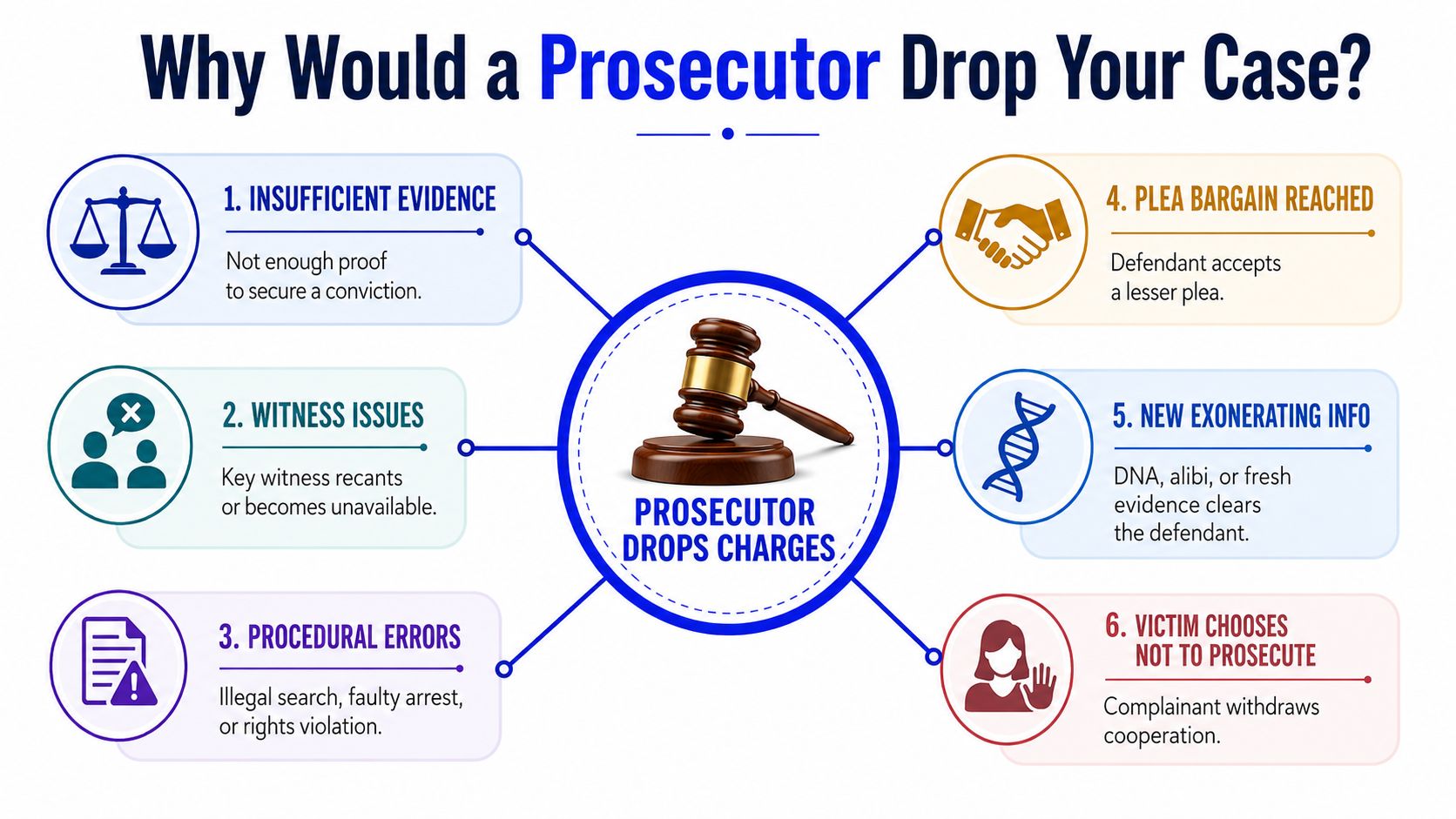
Why Would a Prosecutor Drop Your Case?
Prosecutors do not drop cases out of kindness. They file a nolle pros for strategic reasons. Our job is to give them those reasons. An aggressive, prepared defense makes dropping your case their only practical choice.
Your case does not disappear on its own. A dedicated attorney forces the prosecutor to face the facts. We systematically dismantle their case until they must concede rather than risk losing in front of a judge.
What Are the Strategic Reasons for a Nolle Pros?
Prosecutors in busy courthouses like the Broward County Judicial Complex have overwhelming caseloads. They must choose their battles. They focus only on cases they believe they can win. When our experienced attorneys present a strong defense, we make it clear that pursuing your case is a waste of their limited resources.
These are the most common reasons a prosecutor will drop your case:
Insufficient Evidence: This is the most powerful reason. Was the officer's radar gun properly calibrated? Did police have a legal reason to stop you? We investigate every detail to find the flaws that render their evidence invalid.
Unavailable Witness: The state's case often depends entirely on the testimony of the ticketing officer. If that officer retires, transfers, or fails to appear in court, their case collapses.
Procedural Errors: Police must follow strict rules. If they violated your rights at any point during the stop or arrest, a judge can suppress critical evidence, destroying the prosecutor's case.
A prosecutor’s decision is a calculation of risk. Our job is to make prosecuting you the riskiest, most resource-draining option on their desk.
Unlike "ticket mill" apps that just file automated paperwork, our lawyers directly challenge the state's evidence. We know the procedural mistakes and evidence requirements that lead to a nolle pros. This direct, lawyer-led approach is critical, especially when facing serious charges like DUI. As you can see from our other resources, even serious DUI charges can be successfully fought.
At Ticket Shield, PLLC, you speak directly with your attorney. No chatbots. No middlemen. This direct line ensures your defense gets the urgent, personal attention it requires.
Is a Nolle Pros the Same as a Dismissal?
No. A nolle prosequi and a dismissal both end a case, but they do not mean the same thing and they do not happen the same way. A nolle pros is the prosecutor's formal choice not to continue. A dismissal is typically an order from the court ending the case. That distinction matters because it affects why the case ended, whether it might be filed again, and what you should expect next.
A nolle pros is generally a good outcome because it stops the prosecution without a conviction. But it is still not a finding that you were innocent. As Cornell Wex explains, it is a notice by the prosecutor that the case is being abandoned. That is different from a jury saying "not guilty" or a judge entering a final ruling after trial.
Who Decides: Prosecutor vs. Judge?
A prosecutor files a nolle pros after deciding the case should not go forward. That may happen because proof is weak, a witness is unavailable, a legal issue has damaged the evidence, or the State has decided the case is no longer worth pursuing.
A dismissal, by contrast, usually reflects a judicial ruling. For example, a judge may dismiss because the charging document is defective, the State violated a deadline, or a motion succeeded in knocking out the prosecution's key evidence. In Florida practice, some dismissals are with prejudice and some are without prejudice. "Without prejudice" means the case is not barred forever; the State may be allowed to file again if the law still permits it. "With prejudice" means the case is over and cannot be brought back.
How Do Florida Case Outcomes Compare?
In our experience, readers also mix up nolle pros with "not guilty" and with withholding adjudication. They are separate outcomes:
Nolle prosequi: the State stops pursuing the case.
Dismissal: the court ends the case, sometimes because of a legal defect.
Not guilty: a judge or jury finds the State failed to prove guilt at trial.
Adjudication withheld: there may be a plea or finding, but the court withholds a formal adjudication of guilt; it is often beneficial, but it is not the same as charges being dropped.
This table breaks down the key differences:
Outcome | Who Decides? | When Does It Happen? | Can Charges Be Refiled? |
|---|---|---|---|
Nolle Prosequi | The Prosecutor | Before trial, when the case weakens | Sometimes, if the law still allows it. |
Dismissal | The Judge | After a legal motion proves fatal flaws | Sometimes (with prejudice = no; without = yes). |
Not Guilty Verdict | Judge or Jury | After a full trial | No. Double jeopardy applies. |
Plea Agreement | You & Prosecutor | Before trial as a negotiated settlement | No. The case is resolved by agreement. |
A practical takeaway: a nolle pros is usually favorable because it avoids a conviction and ends the immediate prosecution, but it should not be described as the same thing as being exonerated after trial. If your record and future licensing consequences matter, that difference is important.
Do not leave your future to an algorithm. Visit TicketShield.com for a free consultation.
Outcome | Who Decides? | When Does It Happen? | Can Charges Be Refiled? |
|---|---|---|---|
Nolle Prosequi | The Prosecutor | Before trial, when the case weakens | Yes, but it is extremely rare in traffic cases. |
Dismissal | The Judge | After a legal motion proves fatal flaws | Sometimes (with prejudice = no; without = yes). |
Not Guilty Verdict | Judge or Jury | After a full trial | No. Double jeopardy applies. |
Plea Agreement | You & Prosecutor | Before trial as a negotiated settlement | No. The case is resolved by agreement. |
Can the State Refile Charges After a Nolle Pros?

Yes, the State can sometimes refile charges after a nolle pros. The reason is that a prosecutor's decision to stop the case is not the same as an acquittal after trial, so double-jeopardy protections usually are not what end the matter. Practical limits usually control: evidence, witnesses, filing deadlines, and whether the prosecution has a lawful path to start again.
For Florida readers, the important question is not just "can they?" but "when would they?" Refiling is more likely if new evidence appears, a missing witness becomes available, a laboratory result comes in later, or the prosecutor used the nolle pros as a strategic reset while staying inside the applicable time limits. Less often, a case is dropped because the State needs to correct a charging problem or reassess how to proceed. In our experience, that possibility is very different in a minor traffic matter than in a more serious criminal case.
Why is Refiling So Unlikely?
When a prosecutor enters a nolle pros, they are acknowledging that moving forward does not make sense at that time. In a routine traffic prosecution, especially one built mainly on one officer's testimony or a narrow evidentiary issue, there may be little incentive to restart the case. In a more serious misdemeanor or felony matter, however, prosecutors may be more willing to refile if the obstacle was temporary rather than fatal.
That is why broad claims can mislead people. Saying refiling is "extremely rare" may fit many traffic-ticket scenarios, but it is too broad as a universal rule for all Florida criminal cases. Case type, witness issues, new evidence, and the remaining time under the statute all matter.
An acquittal after trial permanently bars the state from retrying you. A nolle pros technically leaves the door open. Whether that door stays open depends on the facts and the filing deadline.
How Does the Statute of Limitations Protect You?
The State does not have unlimited time to prosecute. Florida's criminal limitation periods are set out in section 775.15, Florida Statutes. As a general rule, misdemeanors carry shorter filing windows than felonies, and some serious offenses have longer periods or different rules altogether.
For many readers, the practical categories look like this:
Traffic infractions: timing and prosecution rules can differ from criminal charges, and you should verify the exact violation.
Misdemeanors: often subject to relatively short filing periods under Florida law.
More serious felonies: may carry longer periods, and some offenses are treated differently by statute.
This clock is always critical. If the State drops a case and the applicable deadline expires, refiling may no longer be allowed. For a traffic-specific overview, see our guide to the statute of limitations for traffic violations.
How Does a Nolle Pros Affect My Driving Record?
A nolle pros usually means no conviction, and that is the starting point for understanding the record impact. If there is no conviction, there generally should not be conviction-based penalties tied to that charge in the same way there would be after a plea or guilty finding. For many Florida traffic matters, that also means no points based on that disposed charge.

But no conviction does not mean no record. Court dockets, clerk entries, arrest records, and driver-history records can be separate things. In our experience with record questions, people often assume a dropped case automatically vanishes from every system. It does not. You may still have a visible court disposition showing that the case was nolle prossed, and sealing or expungement is a separate legal process.
Florida's record-clearing process is handled through specific procedures, and eligibility depends on the charge history and disposition. The Florida Department of Law Enforcement sealing and expungement process explains that these remedies are not automatic. If your case was dropped, that may help eligibility, but you still have to confirm whether you qualify and complete the required steps.
What Should You Verify After a Nolle Pros in Florida?
A good post-case checklist is more useful than a sales pitch here. After a nolle pros, verify these items in order:
Check the clerk's disposition. Confirm the docket reflects nolle prosequi or nolle pros and keep a certified copy if you may need proof.
Review any DHSMV impact if the case involved driving. Make sure your driving history matches the court outcome and does not show an improper conviction consequence.
Separate conviction issues from visibility issues. The absence of a conviction is not the same thing as the absence of a public record.
Check sealing or expungement eligibility. Use Florida's official guidance and, if needed, legal advice to determine whether your case qualifies.
Monitor future background checks if the case was criminal. A dropped case may still appear unless it is lawfully sealed or expunged.
That is also why it matters to understand how long traffic tickets stay on your record and why you should choose a local lawyer over an automated app when the next step is cleaning up the record rather than just winning the disposition.
What Are Your Next Steps?
A nolle pros is a major win. But your work is not quite done. You must take immediate, smart steps to secure this victory and protect your record.
Immediate Steps to Take:
Get Official Proof: Obtain a certified copy of the nolle prosequi from the court clerk. This document is the final, official proof that the state dropped all charges.
Plan Your Next Move: Contact your attorney at Ticket Shield. We will confirm the outcome and immediately begin the process to seal or expunge the arrest from your public record.
Stay Silent: The case is over. Do not discuss it with anyone except your lawyer. There is nothing more to say. Let it be finished.
Does a Nolle Pros Mean I Am Innocent?
Legally, a nolle prosequi is not a court's declaration of your innocence. It is a strategic decision by the prosecution.
The prosecutor is officially stating they will no longer pursue the case because they cannot prove guilt beyond a reasonable doubt. While it ends the legal battle and prevents a conviction, its legal meaning is about the state’s inability to win, not your factual innocence.
Your goal is not to debate innocence. Your goal is to secure your legal freedom and clear your record. A nolle pros achieves the first part. Expungement finishes the job.
What is the Cost of a Strong Defense?
The cost of defending your case is an investment in your future. The cost of not defending it is always higher. Fines, court costs, insurance hikes, and a damaged professional life can cost you thousands.
Ticket Shield offers cost-effective, flat-fee legal services. You get the personal expertise of a dedicated attorney focused on getting you a nolle pros or dismissal. You know the full cost upfront. No surprises. You are investing in a real law firm and a real lawyer to shield you from the long-term damage of a conviction.
A traffic charge can threaten your license, your job, and your future. You need a protective, experienced attorney in your corner.
Visit TicketShield.com for a free, no-obligation consultation to protect your record and fight for no points.
Frequently Asked Questions
What does nolle pros mean?
It means the prosecutor formally decided not to continue the case. You may also see it written as nolle prosequi, nol pros, or nolle prossed in court records.
Is nolle prosequi a good thing?
Usually yes. It generally means the prosecution ended without a conviction. That is favorable for most defendants, but it is not the same as a court finding you innocent, and it does not automatically erase all records of the case.
Is nolle prosequi the same as not guilty?
No. A not-guilty verdict comes from a judge or jury after trial and triggers stronger finality protections. A nolle prosequi is the prosecutor's decision to stop pursuing the case before that point.
What rights do I have if a case is nolle prossed?
You have the right to obtain the official disposition from the clerk, to review whether any driving or criminal-history records need correction, and to explore whether you qualify to seal or expunge the record under Florida law. If the State later tries to refile, you also retain all normal defense rights in the new case.
Can charges come back after a nolle pros in Florida?
Sometimes. A nolle pros is often entered without a final bar to refiling, so the State may be able to file again if the law still allows it and there is a practical reason to do so, such as new evidence or a witness becoming available.
Does a nolle prosequi automatically clear my record in Florida?
No. A dropped case may leave a court or arrest record unless you separately qualify for sealing or expungement. Florida's official process is explained by the FDLE sealing and expungement guidance.