Can DUI Charges Be Dropped in Florida?
Discover if can DUI charges be dropped in Florida. Learn about key legal defenses, procedural errors, and strategic steps that may lead to a dismissal.
When you're facing a DUI in Florida, one question cuts through everything else: "Can these charges actually be dropped?"
The short answer is yes, it's possible. An arrest is just the start of a long legal road, not a guaranteed conviction. This guide will walk you through the ways you can challenge the state's case against you.
Attorney Advertisement. Office in Broward.
Understanding How a Florida DUI Charge Can Be Challenged
A DUI arrest is overwhelming, but it’s crucial to remember that the initial charge is just that—an accusation. The prosecutor has the burden of proving every single part of their case beyond a reasonable doubt. If there are weak spots in their evidence or they didn't follow proper procedure, their whole case can start to unravel.
Think of the prosecution's case like a building they have to construct. A strong defense strategy is all about inspecting that building for cracks in the foundation. If that foundation is flawed—say, an illegal traffic stop on a busy road in Broward County—the entire structure can come crumbling down.

Key Pathways to a Favorable Outcome
There are several ways to challenge a DUI charge. Every case has its own unique facts, but successful defenses often zero in on specific areas where the state's case is vulnerable. Our goal is to pull back the curtain on this complicated process and show you that there are real, proactive strategies available. Our goal is to protect your license and record.
Exploring these options is the essential first step. It all begins with a deep dive into every piece of evidence, including:
The Initial Traffic Stop: Did the officer have a legitimate, legal reason to pull you over in the first place? Without "reasonable suspicion," any evidence they collected after that point might get thrown out of court.
Administration of Tests: Were the field sobriety exercises and chemical tests (breath, blood, or urine) done correctly? There are strict legal and scientific standards that must be followed to the letter.
Procedural Errors: Did law enforcement make a mistake during the arrest? For example, did they forget to read you your Miranda Rights before they started asking you questions?
Evidence Handling: Was the "chain of custody" for any blood or urine samples properly maintained? If not, there’s no way to prove the sample wasn't contaminated or mishandled.
Successfully challenging just one of these points can completely change the direction of your case. For instance, if the breathalyzer machine hadn't been calibrated correctly, the results could be suppressed, taking away the prosecutor's strongest piece of evidence.
This is exactly why a thorough analysis by a legal professional is so critical. You can learn more about the complexities of a Florida DUI defense and see how our firm tackles these crucial issues.
An experienced attorney scrutinizes these details to build a defense aimed at achieving a favorable outcome. While past results do not guarantee future outcomes, a powerful defense is absolutely essential. Attorney Advertisement. Office in Broward.
Key Strategies for a Favorable DUI Outcome
To give you a clearer picture, the table below summarizes the core strategies we've discussed. These are the primary avenues a defense attorney will explore to get a DUI charge dropped or reduced.
Strategy | Description | Primary Goal |
|---|---|---|
Challenge Probable Cause | Argue that the initial traffic stop or the arrest itself was made without a valid legal reason. | Get all evidence collected after the illegal stop/arrest thrown out. |
Contest Test Results | Question the accuracy of breath, blood, or field sobriety tests due to improper administration or faulty equipment. | Have the test results suppressed so they cannot be used as evidence. |
Identify Procedural Errors | Find mistakes made by law enforcement, like failing to read Miranda Rights or improper evidence handling. | Weaken the prosecution's case by showing legal protocols were violated. |
Negotiate a Plea Bargain | If the evidence is strong, negotiate with the prosecutor to reduce the DUI to a lesser charge, like reckless driving. | Avoid a DUI conviction and its harshest penalties. |
Each of these strategies requires a deep understanding of Florida law and a meticulous review of the case facts. By identifying weaknesses in the prosecution's case, you create opportunities for a much better result than simply pleading guilty. Submitting information via our forms does not create an attorney-client relationship.
Identifying Critical Flaws in the Prosecution's Case
A successful DUI defense is built by meticulously picking apart the state's case to find its weakest points. The prosecution has to prove every single element of the charge against you, and any procedural misstep or violation of your rights can create a clear path to a dismissal. Think of their case as a chain; a single weak link can make the whole thing fall apart.
The process starts the second a law enforcement officer decides to pull you over. That initial interaction is governed by strict legal rules. An officer can't just stop you based on a hunch; they must have what the law calls "reasonable suspicion" that you’ve broken a traffic law or are involved in criminal activity.
This could be something as simple as swerving over the center line or driving with a broken taillight. But if the stop itself was unlawful, any evidence they collected afterward—from your statements to a breath test result—could be considered "fruit of the poisonous tree" and thrown out of court.
Uncovering Constitutional and Procedural Errors
Beyond the initial stop, your constitutional rights must be protected at every single stage. Any violation can gut the prosecution's ability to move forward. An experienced attorney will scrutinize the arrest for these common, yet critical, flaws.
For example, to arrest you for DUI, the police must have "probable cause." This is a much higher legal bar than reasonable suspicion, and it requires enough solid facts to believe you were driving under the influence. If the officer’s observations were weak or contradicted by other evidence, like their own bodycam footage, the arrest itself can be challenged.
Another key area is your Miranda Rights. Officers must inform you of your right to remain silent and your right to an attorney before they begin a custodial interrogation. If they start questioning you about the incident after you're in custody without reading you those rights, your answers can be suppressed.
Key Takeaway: A DUI case is far more than just a breathalyzer number. It’s a sequence of events, and each step must comply with Florida law and the U.S. Constitution. A failure at any point can render the state's evidence inadmissible.
Across the United States, a significant percentage of DUI cases end with either a dismissal or reduction to a lesser charge when defendants have a skilled lawyer on their side. This isn't just luck; it's a testament to how experienced attorneys find procedural errors, challenge faulty evidence, and negotiate deals that keep a DUI conviction off your record.
Questioning the Reliability of Sobriety and Chemical Tests
The evidence most people think of with a DUI—field sobriety exercises and chemical tests—is often the most vulnerable part of the prosecution's case. These tests are far from perfect and are subject to strict protocols for how they must be administered.
Field Sobriety Tests (FSTs): Standardized tests like the Walk-and-Turn or One-Leg Stand have to be done in a very specific way. An officer's failure to give clear instructions, demonstrate the test correctly, or account for environmental factors (like an uneven road surface) can make the results completely unreliable.
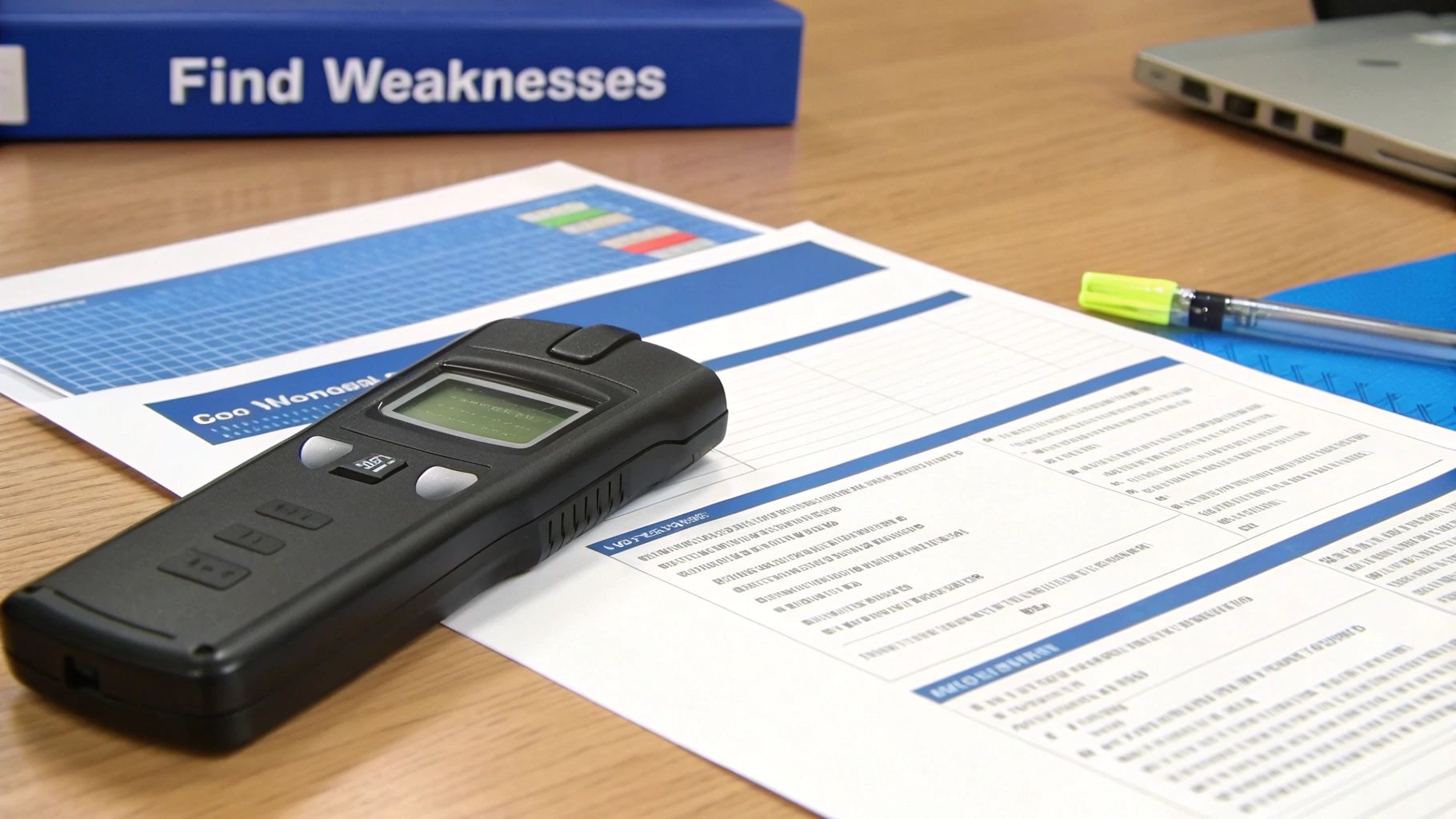
Breathalyzer Tests: The accuracy of a breath test machine hinges on regular maintenance and proper calibration. An attorney can demand to see the device’s service logs. If those records show a history of malfunctions or missed inspections, the results are immediately questionable.
Blood and Urine Samples: For these tests, the prosecution must prove an unbroken "chain of custody." This means they need to document every single person who handled the sample, from the moment it was collected until it was tested. Any gap or irregularity in this chain can be grounds for suppression.
These technical details are often where DUI cases are won or lost. By closely examining every report and record, a defense attorney can find the exact flaws that may lead to the question, "can DUI charges be dropped?" being answered with a "yes." You can explore additional strategies in our guide on how to beat a DUI in Florida.
Attorney Advertisement. Office in Broward.
Using Pre-Trial Motions to Your Advantage
Long before a DUI case ever gets near a jury, a critical legal battle is already happening behind the scenes. This is the world of pre-trial motions. These are formal, written requests your attorney files with the court, and they are hands-down one of the most powerful tools for challenging the prosecution's case.
Think of them as strategic strikes aimed at taking apart the evidence against you, piece by piece. Instead of waiting for a trial, these motions let your lawyer argue specific legal points directly in front of a judge. A successful motion can cripple the state’s case, creating the leverage you need to negotiate a much better deal or even get the charges dropped completely.
The Cornerstone of DUI Defense: The Motion to Suppress
Of all the pre-trial motions, the Motion to Suppress is the heavyweight champion in a DUI case. This motion asks the judge to throw out—or "suppress"—specific evidence that the police gathered illegally or in a way that violated your constitutional rights. If the judge agrees, that evidence is gone. The prosecutor is legally forbidden from using it against you.
Let’s paint a picture. Say an officer pulls you over in a quiet Fort Lauderdale neighborhood without a legitimate reason—maybe it was just a hunch, not an actual traffic violation.
The Unlawful Stop: Your lawyer could file a Motion to Suppress, arguing that the traffic stop itself violated your Fourth Amendment rights against unreasonable searches and seizures.
The Evidence Gathered: If the judge grants that motion, every single piece of evidence collected after that illegal stop becomes inadmissible. We’re talking about the officer’s observations, anything you said, the results of the field sobriety exercises, and even the breath or blood test.
When a judge suppresses the prosecution’s key evidence, their case can fall apart like a house of cards. Without a breath test or credible officer testimony, they may have no choice but to offer a lesser charge or just drop the case entirely.
Other Important Pre-Trial Motions
While the Motion to Suppress gets most of the attention, a sharp defense attorney will look at other motions tailored to the unique facts of your case. Each one is designed to attack a different potential weak spot in the prosecution’s argument, working to systematically break down their case.
A strong defense is proactive, not reactive. Pre-trial motions force the prosecution to justify every step they took, from the moment they initiated the traffic stop to the way they handled chemical test results. This scrutiny often reveals fatal flaws in their case.
Other strategic motions include:
Motion to Dismiss: This is a direct shot, arguing that there's a fundamental legal flaw so serious that the case can't even move forward. This could be anything from a lack of probable cause for the arrest to a violation of your speedy trial rights or the police losing crucial evidence.
Motion in Limine: This is a more focused request to prevent certain prejudicial or irrelevant information from ever being mentioned in front of a jury. For example, your attorney might file one of these to block the prosecutor from bringing up a totally unrelated traffic ticket from your past.
Filing these motions requires a solid strategy and a deep understanding of court procedures. Sometimes, it's even strategic to ask for a delay to give your defense more time to build its case. You can learn more about that process in our guide on how to ask for a continuance in court. Ultimately, the goal is to use every legal tool available to protect your rights and create the best possible shot at a favorable outcome.
Attorney Advertisement. Office in Broward.
Negotiating for Reduced Charges Like Reckless Driving
While getting a DUI charge dropped completely is always the goal, it’s not the only path to a favorable result. In many situations, the smartest and most realistic path forward is negotiating with the prosecutor to reduce the charge to a lesser offense. This process, known as plea bargaining, is a cornerstone of criminal defense and can dramatically reduce the long-term fallout from a DUI arrest.
The whole game comes down to one word: leverage. A skilled defense attorney builds that leverage by putting the state's case under a microscope and finding every single weakness. Even what seem like minor flaws can make a prosecutor think twice about going to trial, which is always a time-consuming and unpredictable gamble for them.
Finding Leverage for a Favorable Plea
Negotiating isn’t about asking nicely for a break; it’s about showing the prosecutor, with hard facts, why their case isn't as strong as they thought. A defense lawyer will shine a spotlight on any issue that makes it harder for the state to prove its case "beyond a reasonable doubt."
Common points of leverage we look for include:
Borderline BAC Levels: A blood alcohol content just over the legal limit of 0.08% is far more vulnerable to challenge than a high reading. We can argue that the breathalyzer's margin of error or the timing of the test throws the result into question.
Conflicting Officer Testimony: If the officer's written report says one thing, but their bodycam or dashcam video shows another, that inconsistency is powerful. It can be used to attack their credibility on the stand.
Improperly Administered Tests: The police have to follow strict, standardized protocols for field sobriety exercises and chemical tests. Any slip-up or deviation can be used to argue for a reduction.
A Clean Driving Record: For a first-time offender with a clean history, prosecutors are often more willing to consider a second chance, especially if the circumstances of the arrest weren't extreme.
These weaknesses make a trial a much riskier bet for the prosecution. When faced with the real possibility of losing and getting no conviction at all, a prosecutor is often motivated to cut their losses and agree to a lesser charge.
From DUI to Reckless Driving: A Significant Improvement
The most common—and most valuable—reduction in a Florida DUI case is to a charge of reckless driving. While reckless driving is still a serious offense, it is worlds better than having a DUI on your record. The differences in penalties, insurance hikes, and long-term consequences are enormous.
Crucial Insight: Securing a reduction to reckless driving means you avoid a permanent DUI conviction on your criminal record. This is a critical distinction for your job, any professional licenses you hold, and your overall future. Past results do not guarantee future outcomes, but skilled negotiation is aimed at achieving this goal.
Let’s just look at how different the two outcomes are:
Consequence | DUI Conviction (First Offense) | Reckless Driving Conviction |
|---|---|---|
Criminal Record | Permanent DUI conviction | Traffic misdemeanor, no DUI label |
License Suspension | Mandatory 6-12 month suspension | No mandatory suspension (points may apply) |
Fines & Costs | Substantially higher fines and court fees | Lower fines and costs |
Insurance Impact | Massive rate increases, SR-22 requirement | Significant, but often less severe increase |
Jail Time | Possible jail time, especially with high BAC | Less likely, typically reserved for severe cases |
As you can see, the difference is night and day. Pushing for this reduction is a top priority when the evidence makes a full dismissal unlikely. If you're wondering how this process works, our detailed guide on getting a DUI reduced to reckless driving breaks it down even further.
Exploring Florida's Diversion Programs
For some first-time offenders, depending on the county, another powerful option is on the table: pre-trial diversion programs. Think of these programs as an alternative path that completely bypasses the traditional court process. If you get accepted and successfully complete all requirements, the State Attorney's Office will drop your DUI charge entirely.
The rules and requirements change from county to county, but they generally involve:
Completing a substance abuse evaluation and any treatment they recommend.
Attending DUI school and a victim impact panel.
Putting in a certain number of community service hours.
Paying program fees and staying out of trouble for a set period of time.
Yes, these programs take some real effort. But the reward is huge: a complete dismissal of the charge. An attorney who knows the local court procedures, like those in Miami-Dade County, can quickly figure out if you're eligible and help you navigate the application. This is one more way the question "can DUI charges be dropped?" can absolutely be answered with a "yes." Attorney Advertisement. Office in Broward.
Managing the Two Fronts of a DUI: Your License and the Court
A DUI arrest in Florida is a strange and stressful experience because it instantly forces you to fight a battle on two completely separate fronts. At the exact same time. On one side, you have the criminal court case, which is what most people think of—determining guilt or innocence and imposing penalties like fines or jail time.
But on the other side, there's a totally separate, purely administrative process with the Florida Department of Highway Safety and Motor Vehicles (DHSMV). And the DHSMV only cares about one thing: your privilege to drive.
It is absolutely critical to understand that these two proceedings are independent. Winning your court case doesn't mean you automatically win with the DHSMV, and vice versa. They run on parallel tracks with different rules, different goals, and vastly different timelines.
The Critical 10-Day Rule for Your License
Right after a DUI arrest where you either refused a chemical test or had a BAC of .08 or higher, a very loud clock starts ticking. You have exactly 10 calendar days from the date of your arrest to formally request a hearing with the DHSMV to challenge the automatic suspension of your driver's license.
If you miss this 10-day window, it's over. You automatically forfeit your right to fight the suspension, and it will go into effect without question. This is a non-negotiable first step that has to be taken to protect your ability to drive legally while the criminal case slowly grinds its way through the court system.
Important Distinction: The DHSMV hearing isn't about whether you're guilty of the crime of DUI. It's a civil proceeding that focuses only on whether the officer had probable cause for the arrest and followed all the correct procedures.
This process highlights the immediate actions needed after an arrest, from challenging the stop to negotiating a potential reduction in charges.
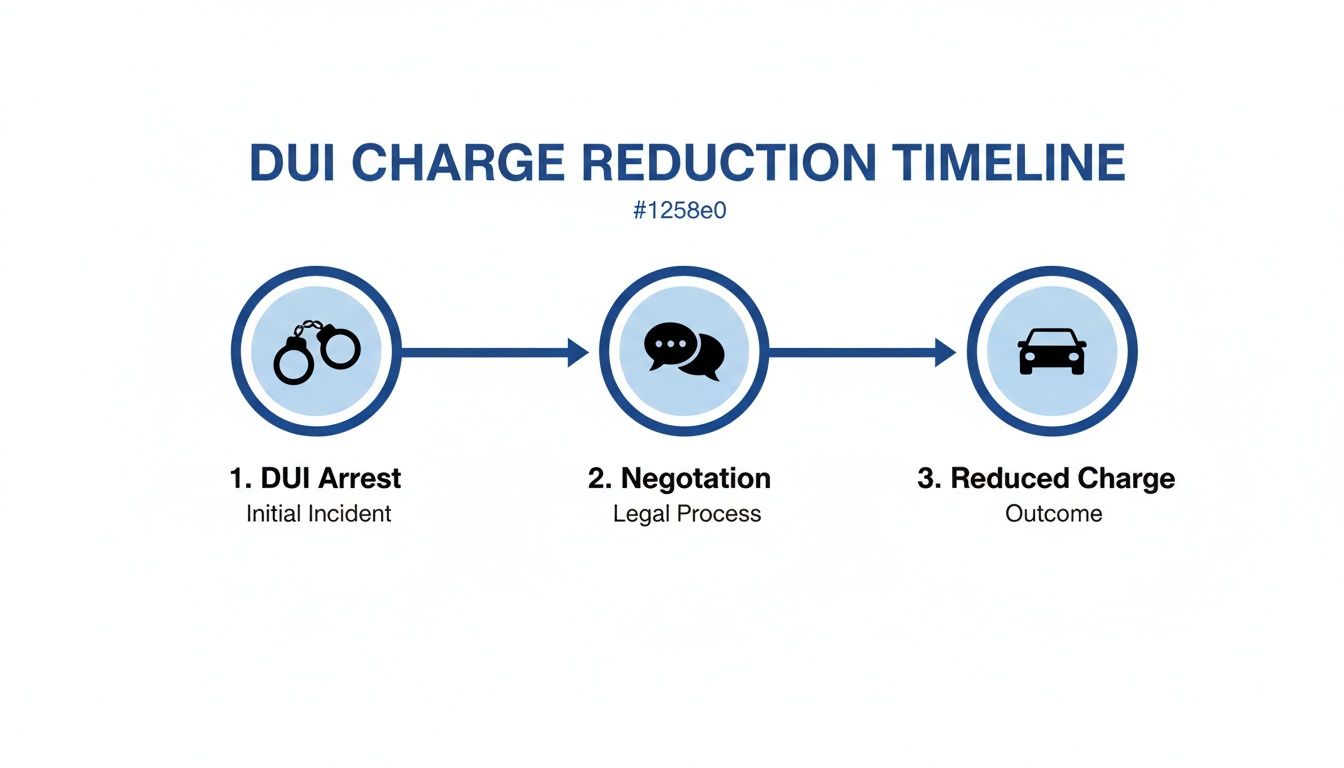
This timeline shows how an initial arrest can lead to a much better outcome through strategic negotiation—a key part of any effective defense.
Navigating the Criminal Court Proceedings
While the DHSMV hearing is an emergency, the criminal case is a marathon. This is the long game, where your attorney will file pre-trial motions, dig into the evidence like body camera footage from a stop in Miami-Dade County, and negotiate directly with the State Attorney's Office.
The outcome of your criminal case is what determines whether you face a permanent DUI conviction, which carries severe and lasting penalties. Here’s a quick look at how the two processes stack up:
Aspect | DHSMV Administrative Hearing | Criminal Court Case |
|---|---|---|
Primary Focus | Your driving privileges and license suspension. | Determining guilt and imposing criminal penalties. |
Key Deadline | 10 days from arrest to request a hearing. | Can take several months or even a year to resolve. |
Outcome | License remains valid or gets suspended/revoked. | Conviction, acquittal, dismissal, or reduced charge. |
Burden of Proof | "Preponderance of the evidence" (a much lower standard). | "Beyond a reasonable doubt" (the highest standard in law). |
Effectively managing both of these fronts from day one is essential. An experienced attorney knows how to handle the urgent DHSMV deadline while simultaneously building a long-term strategy for the criminal case. To understand more about this urgent first step, you need to learn about the full impact of a Florida DUI license suspension and how to challenge it.
Attorney Advertisement. Office in Broward.
How a Focused DUI Defense Attorney Makes a Difference
Trying to navigate a DUI charge on your own is a huge risk, with consequences that can follow you for the rest of your life. The legal process might seem simple on the surface, but it's loaded with technicalities and procedures where one small mistake can cost you dearly. Our practice focuses on traffic and DUI defense. Our job is to take that legal weight off your shoulders so you can focus on everything else.
An experienced defense attorney does a lot more than just show up for court dates. The real work starts the moment we take your case, dissecting every single piece of evidence the state thinks it has against you. We comb through police reports, watch bodycam footage for inconsistencies, and pull the maintenance and calibration logs for the breathalyzer they used. It's a deep dive designed to find the legal cracks in their case.
Building a Defense Around Your Story
No two DUI cases are ever the same. A traffic stop on a crowded street in Broward County is a world away from one on a quiet rural road, and the defense strategy has to reflect that. We build your defense around the unique facts of your arrest, not some cookie-cutter template.
This means:
Filing Strategic Motions: We handle the complex legal paperwork, like filing a motion to suppress evidence that was illegally obtained.
Handling Court Appearances: Our firm goes to court for you whenever we can, which means less disruption to your job and your family.
Negotiating with Prosecutors: We open a direct line to the State Attorney's Office, laying out the weaknesses in their case to build leverage for a dismissal or a much better plea deal.
By managing all these moving parts, we fight to protect your driver's license and your permanent record. We handle criminal traffic matters across Florida. That knowledge is critical when figuring out if we can get your DUI charges dropped.
Our Commitment to You: While no attorney can guarantee a specific outcome, our mission is always the same: to protect your rights, your license, and your future. We give your case the focused, detailed attention it needs to aim for the best possible result.
We get it—the stress and uncertainty of a DUI charge can be overwhelming. That’s why we handle every single part of the legal fight for you. From that first critical DHSMV hearing to the final day in court, our focus is on minimizing the damage to your life while we build the strongest defense we can.
Attorney Advertisement. Office in Broward.
Frequently Asked Questions About Florida DUI Cases
Getting hit with a DUI charge throws your world into chaos and leaves you with a ton of questions. Below are answers to some of the most common things people worry about when they find themselves in this situation. Keep in mind, this is for educational purposes—it's not a substitute for legal advice from a licensed attorney about your specific case. All legal questions should be referred to a licensed attorney.
How Long Does It Take to Resolve a DUI Case in Florida?
The timeline for a Florida DUI case is all over the map. A more straightforward case, especially one that ends in a plea negotiation, might wrap up in just a few months from the day of the arrest.
But if your case is more complex and involves filing detailed pre-trial motions or even going to trial, it could easily stretch out for a year or longer. Things like the court's own schedule, how complicated the evidence is, and the defense strategy all play a huge role in how long it takes. And remember, the fight to save your driver's license with the DHSMV is on a completely separate and much faster track.
Will I Lose My License Immediately After a DUI Arrest?
Not automatically, but the clock is ticking, and you have to act fast. After a DUI arrest where you either refused the breath test or blew over a .08, the officer usually takes your physical license right then and there. They'll hand you a citation that doubles as a temporary driving permit, but it's only good for 10 days.
You have exactly those 10 days to formally request a review hearing with the DHSMV to fight the automatic license suspension. If you blow past that deadline, your license gets suspended no matter what happens in your criminal case. This is an absolutely critical first step to protect your ability to drive.
Can a First-Time DUI Be Reduced to Reckless Driving?
Yes, it's possible, and negotiating a reduction from DUI down to a "reckless driving" charge is a major goal in many defense strategies, particularly for first-time offenders. But this outcome is never guaranteed. It all comes down to the specific facts of your case.
Things like your BAC, whether there was an accident, and the overall strength of the prosecution's evidence are the key factors. An experienced DUI attorney will hunt for weaknesses in the state's case—like issues with the traffic stop or the breath test—and use them as leverage to negotiate for that lesser charge, which comes with far less severe penalties. Past results do not guarantee future outcomes.
Do I Have to Appear in Court for My DUI?
For most misdemeanor DUI cases in Florida, your attorney can go to the majority of your court dates for you by filing a "waiver of appearance." This is a huge relief for most people, as it means you don't have to constantly miss work, school, or other commitments to sit in a courtroom.
While you might be required to show up for a few critical hearings, our practice is built around handling these proceedings on your behalf whenever the law allows. Your attorney will always give you clear instructions and let you know well in advance when your personal appearance is mandatory.
A DUI charge is a serious problem that demands immediate and skilled attention. At Ticket Shield, PLLC, our practice is dedicated to defending drivers across Florida. We handle the legal complexities so you can focus on your life. For a free, confidential consultation to go over your options, contact us today. Submitting information via our forms does not create an attorney-client relationship. Attorney Advertisement. Office in Broward.