
Ticket for No Motorcycle Endorsement in Florida
Got a ticket for no motorcycle endorsement in Florida? Learn the fines, points, criminal exposure, defenses, and how Ticket Shield helps you keep No Points.

In Florida, a ticket for no motorcycle endorsement is a second-degree misdemeanor. That can expose you to up to 60 days in jail, six months of probation, and a permanent criminal record.
You probably thought you were dealing with a routine stop. Helmet on, bike running, officer asks for your license and registration, and you hand over a valid Florida driver license. Then the citation says “no motorcycle endorsement,” and now the paper in your hand is making a lot more trouble than a normal traffic ticket.
Table of Contents
What Just Happened at the Traffic Stop
You got stopped on the bike, and the officer did what officers do. They checked the license, checked the bike, and wrote up a citation that probably looked smaller than the problem it created. That's exactly how riders get blindsided.
A ticket for no motorcycle endorsement is slippery because the wording sounds administrative. It feels like something you can clean up later, like a registration issue or a paperwork mistake. It isn't that simple. A citation for missing the motorcycle-specific authorization can carry criminal exposure, and the paper itself does a lousy job of warning you how serious it is.
Practical rule: If the ticket says no motorcycle endorsement, don't treat it like a parking citation, and don't pay it just to make it disappear.
The most dangerous mistake is assuming your regular driver license covers you on the bike. It doesn't. Florida treats the motorcycle endorsement as a separate legal qualification, and a valid car license by itself won't save you when the state decides you were operating without the right authority.
If this just happened to you, slow down and read what counts as a traffic stop before you do anything else. Then stop thinking in terms of convenience and start thinking in terms of consequences. The first bad move is usually paying the citation without understanding what that plea admits.
A lot of riders only realize the seriousness after they've already started asking friends what to do. Bad idea. The safer move is to treat the citation as a legal problem from minute one, because that's what it is.
The Florida Law Behind the Endorsement Requirement
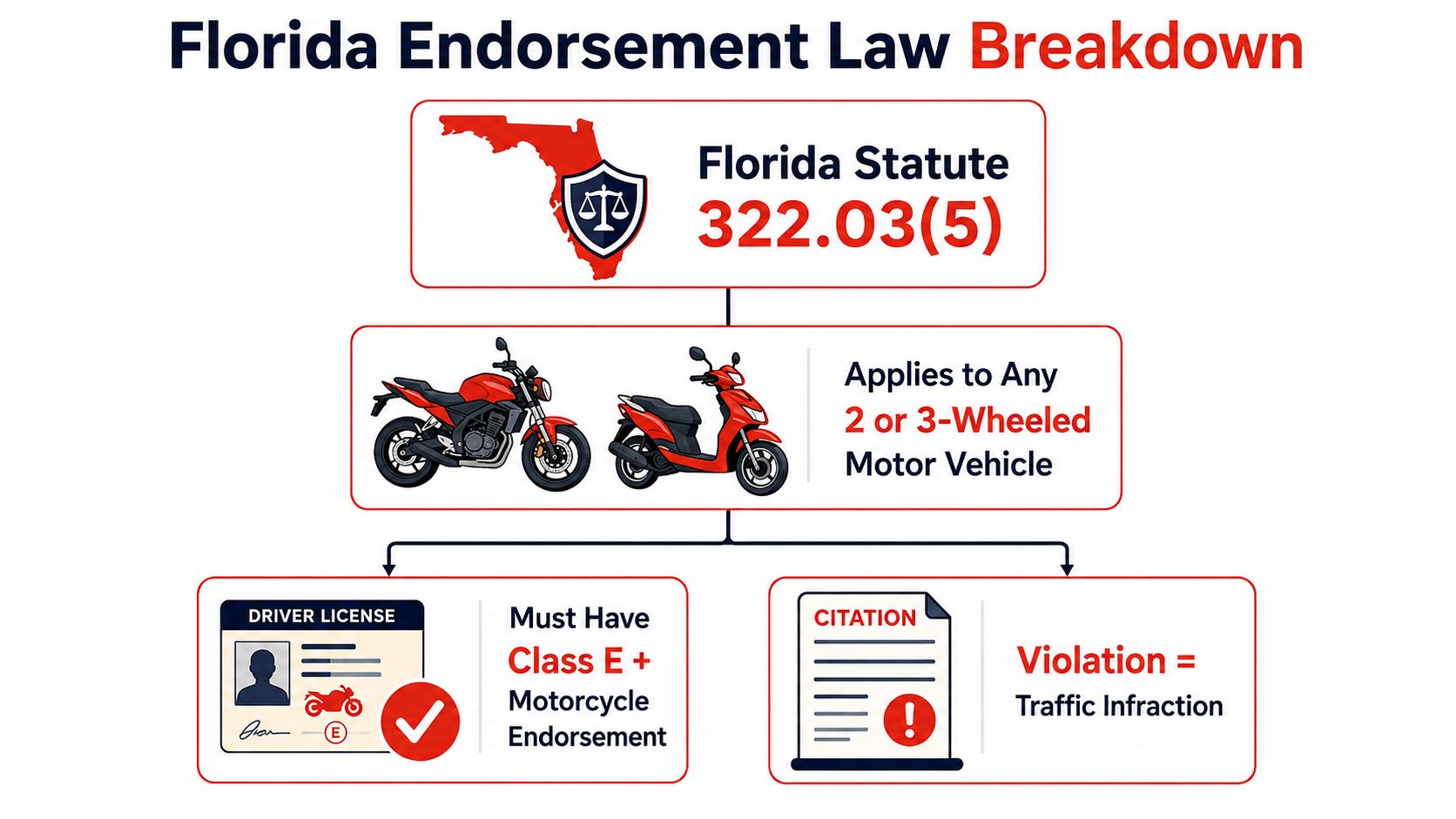
Florida law is direct on this point. Under Florida Statute 322.03(5), you need a motorcycle endorsement to operate a two- or three-wheeled motor vehicle over 50cc. That is the rule, and it applies whether you've been riding for years or just bought the bike last week.
What the statute actually means
The endorsement is not the same as a learner's permit, and it's not the same as a standard Class E license. You can be fully licensed to drive a car and still be illegal on a motorcycle if the endorsement is missing. That's why the citation is so easy to misunderstand and so important to challenge correctly.
Florida riders usually run into this in a few predictable ways. Some bought a bike before finishing the endorsement process. Some moved into Florida with an out-of-state license and assumed the old paperwork transferred everything automatically. Others rode a smaller machine for years, then jumped onto something that crosses the statutory line without realizing it.
If you want a clean, plain-language checklist for the licensing side, browse the Superdocu template and use that kind of document discipline to keep your own records straight. Motorcyclists need the same habit, because one missing qualification can turn into a criminal charge fast.
For a Florida-specific breakdown, review the endorsement requirement explanation. The defense starts with the citation facts, not by arguing with the statute itself. If the bike fits the law and you lacked the endorsement, your lawyer has to work the charge, the stop, and the case posture.
The statute is not optional. The fight is over how the charge was issued, handled, and resolved.
Fines, Points, and the Criminal Exposure You Did Not Expect
Riders get burned on this charge because they treat it like a routine ticket. In Florida, that is the wrong read. A no motorcycle endorsement citation can move straight into criminal territory, and that changes everything about how you handle it.
A no motorcycle endorsement citation in Florida is treated as a second-degree misdemeanor. That means you are looking at up to 60 days in jail, six months of probation, and a permanent criminal record. Mail in the payment and you may as well accept the conviction, because you are giving up the chance to force the state to prove the case cleanly.
Cost of a No Motorcycle Endorsement Conviction in Florida
Cost Category | Estimated Impact |
|---|---|
Criminal classification | Second-degree misdemeanor |
Jail exposure | Up to 60 days |
Probation exposure | Up to six months |
Record impact | Permanent criminal record |
License impact | Points on the driving record and possible suspension risk if other points already exist |
Motorcycle licensing problems also show up in fatal-crash data, and the pattern is ugly. NHTSA's review found that motorcycle operators have consistently had the highest invalid-licensing rates among road users in fatal crashes. In the 2002 to 2006 review, 25% of fatally injured motorcycle operators were riding with invalid licenses, compared with about 15% of passenger vehicle drivers, and the yearly share stayed in a narrow band of 24% to 26%. NHTSA later reported 24% for motorcycle operators in fatal traffic crashes, while passenger car and light truck drivers were lower at 13% and 12% respectively. By 2023, NHTSA reported 34% for motorcycle riders in fatal traffic crashes versus 15% for passenger vehicle drivers. NHTSA compliance analysis
The endorsement issue has a separate legal wrinkle that riders miss. NHTSA's Florida-status data shows that 563 of 4,675 motorcycle operators killed were recorded as having a valid license but no motorcycle endorsement, which equals 12% of motorcycle operator fatalities nationwide. The same table also shows 3,240 killed operators with both a valid license and a motorcycle endorsement. That difference matters because a rider can be legally licensed to drive a car and still be missing the motorcycle authority. NHTSA license status table
Points can pile on top of the criminal charge and make the fallout worse, especially if you already have something on your record. Read the Florida point-system guide and pay attention to how the state stacks consequences. Insurance companies do not care that you thought the citation was minor.
Pay the Ticket or Hire a Lawyer
You've got two real choices. Pay it and take the conviction, or fight it with a lawyer who knows how to protect the record. Anything else is wishful thinking.
Path one, pay it
Paying feels painless because it's fast. It also usually means you're accepting the result without forcing the state to prove the case cleanly. For a no-endorsement citation, that can be a terrible trade, because you're not just paying money, you're taking the hit on your driving record and carrying the criminal label that comes with the charge.
Path two, hire Ticket Shield
A lawyer-led defense changes the game because someone looks at the stop, the bike, the paperwork, and the charge. Ticket Shield, PLLC starts at $39.99, and clients communicate directly with their attorney by phone or text, not a chatbot, call center, or middleman. That matters when the citation is criminal in nature, because you need a legal response, not an app that hands you a generic script.
If you want to compare the two paths side by side, review the pay-ticket-vs-hire-a-lawyer guide. The math is simple. The cheap-looking move can become the expensive one after the conviction lands.
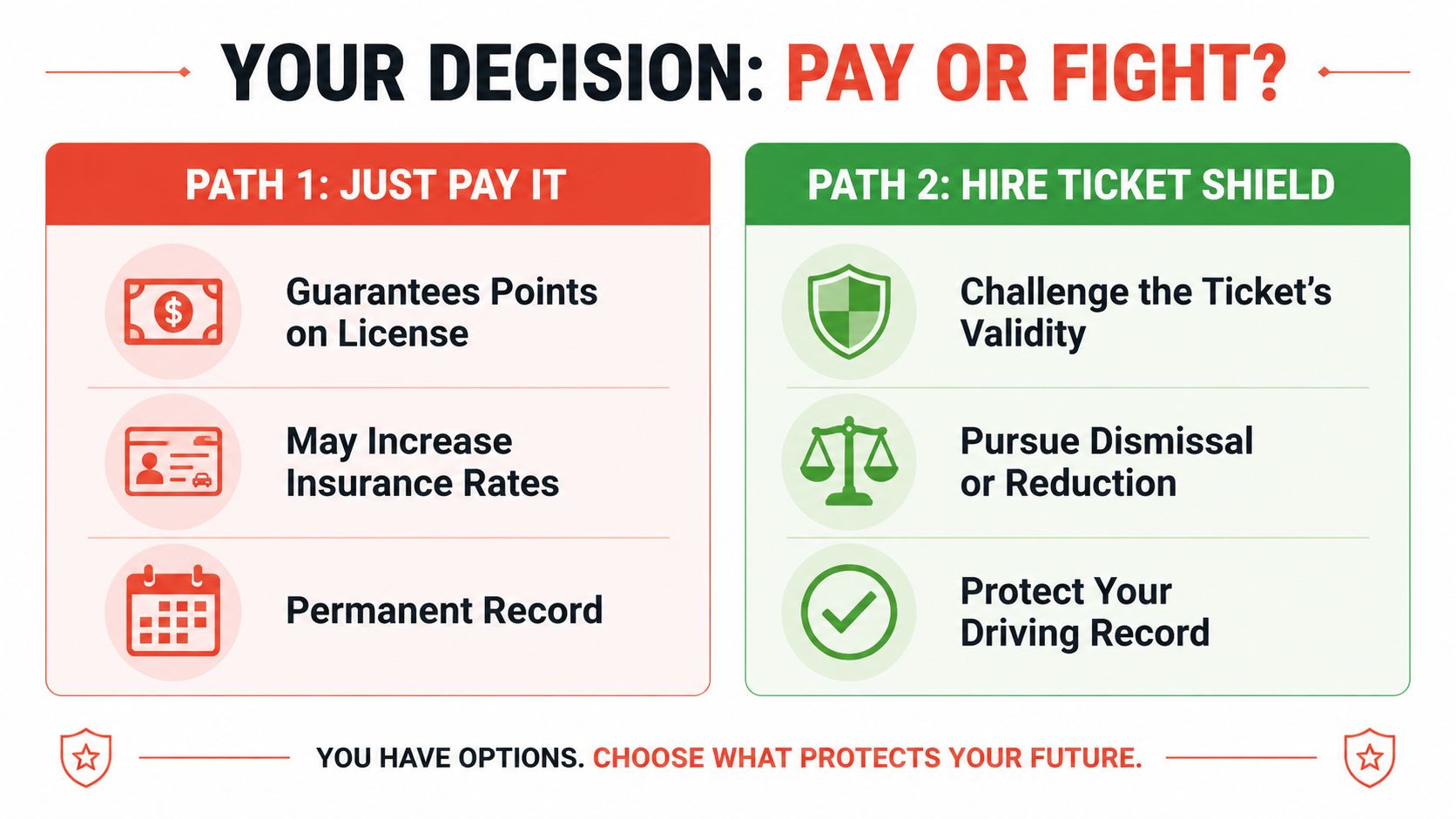
The practical difference is blunt. Paying the ticket ends the conversation on the state's terms. Hiring a lawyer starts a defense on your terms.
Bottom line: You can buy speed, or you can buy protection. For a criminal traffic charge, protection is the smarter spend.
Defenses That Actually Work on an Endorsement Case
Don't assume you're guilty just because the officer wrote the ticket. That's the mistake that costs riders records, money, and bargaining power. A defense lawyer looks for pressure points the state would rather you ignore.
The charge is not the same as the rider
The earlier NHTSA data matters here because it shows a legal-status distinction that many riders miss. A person can have a valid license and still lack the motorcycle endorsement. That difference affects how the case is framed, what the officer observed, and how the state proves the allegation.
That is why a good defense starts with the facts of the stop and the vehicle itself. Was the bike a machine that required the endorsement? Was the operator within the 50cc exception? Was the officer's conclusion based on a real licensing issue or a misunderstanding at the roadside? Those are the kinds of questions that matter.
The stop itself and the paperwork matter
If the stop was shaky, that can change the whole case. An officer who escalated from a minor equipment issue to an endorsement check still has to justify the stop and the citation. If the paperwork is sloppy, the state may have a weaker case than the citation suggests.
Use this defense resource on dismissing traffic tickets if you want to understand how a lawyer thinks about fault, evidence, and strategy. In a case like this, a lawyer can also explore whether traffic school, a withhold of adjudication, or a reduction keeps the record cleaner.
For riders who need practical context, a National Car Transport pricing guide can be a useful reminder that moving vehicles, replacing bikes, or correcting a riding setup can have real costs. The point is simple. Don't assume the citation is the end of the story just because you were handed a paper at the roadside.
A no-endorsement ticket is often defended by attacking the stop, the classification, or the charge handling, not by pretending the law doesn't exist.
Your Court Timeline and How Ticket Shield Handles the Case
The clock starts immediately. Once you get the citation, you have to respond, and ignoring it is how drivers end up with worse problems than the original stop. Florida traffic cases move fast enough that procrastination becomes a strategy for the other side, not for you.
What happens next
A Ticket Shield attorney can enter an appearance for you and take the case off your shoulders. That matters because most riders don't have time to chase courthouse dates, chase paperwork, and chase the clerk while trying to keep working. With the right lawyer, the file gets managed while you keep riding your life.
The court process also doesn't have to mean a day in a courtroom. Ticket Shield says over 99% of clients never appear in court, which is exactly what you want when the case can be handled by counsel instead of by you taking time off work. The outcome can include dismissal, reduction, or another resolution that protects the record, depending on the facts.
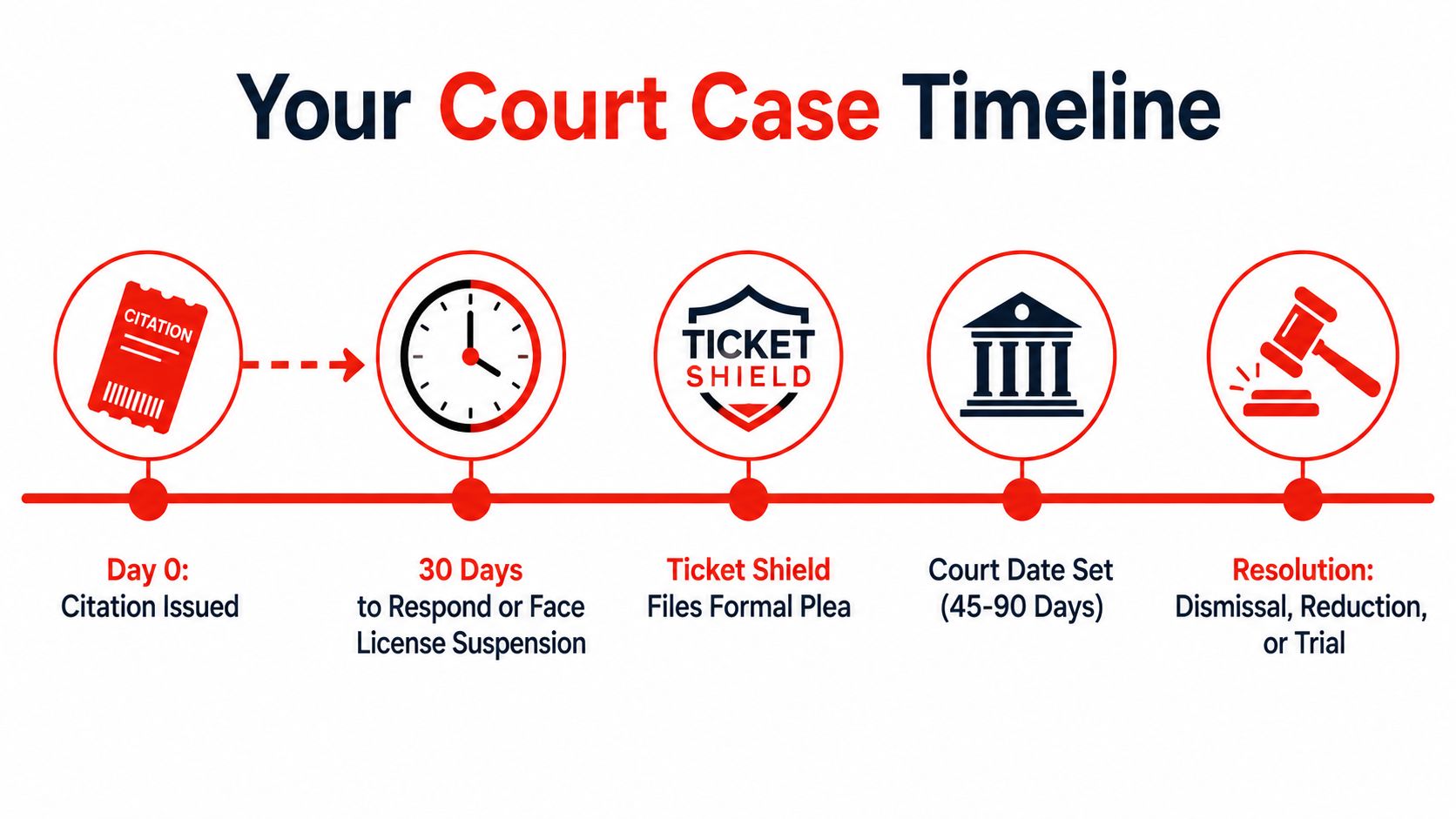
You should also deal with the endorsement issue itself, not just the citation. If the course or credentialing step can be completed while the case is pending, your lawyer can coordinate that so you come out legally cleaned up, not just temporarily patched together.
For the court process and timing, review how traffic cases move through the system. Then stop trying to guess what the court wants and let counsel handle the schedule, the plea posture, and the negotiation.
Practical rule: The fastest way to make this manageable is to answer on time and have counsel control the docket.
Who Gets Targeted and Why This Matters Now
Motorcyclists get watched closely, and not always fairly. Stops often start with lane position, exhaust noise, or equipment issues, then the officer shifts into a licensing check. Once that happens, a missing endorsement becomes the focal point.
That matters more today because one citation can do damage well beyond the roadside. Gig-economy riders can get deactivated after a single problem on their record. Military members and other workers with clearance-sensitive jobs have no room for a criminal traffic case that looks careless. Spanish-speaking riders often end up trying to decode a process that already feels stacked against them.
The state's long-running fatal-crash data reinforces the point that licensing compliance has never been a minor issue in the motorcycle world. Florida riders live with that scrutiny every day, and enforcement reflects it. A ticket that looks small to a stranger can hit your livelihood, your insurance, and your future travel and work opportunities.
This is why a ticket for no motorcycle endorsement can't be treated like a fix-it citation. It follows you into places a normal traffic ticket wouldn't. If you depend on a clean driving record, you need to fight the charge before it hardens into a conviction.
Protect Your License and Keep No Points on Your Record
Your goal is bigger than beating a ticket. You want No Points on your license, no criminal record, and no insurance headache hanging over your head. That doesn't happen by accident, and it doesn't happen with an app that pushes you through a canned workflow.
Ticket Shield, PLLC is a lawyer-led Florida traffic defense firm, and clients speak directly with their attorney by phone or text. That's the standard you want when the charge can touch your record, your job, and your insurance.
Visit TicketShield.com for a free consultation and let a Florida defense attorney start fighting for No Points on your license today.
Ticket Shield, PLLC handles Florida traffic cases with direct attorney access, strategic defense, and a focus on protecting your record from points and criminal fallout. If you just got a ticket for no motorcycle endorsement, don't let a roadside mistake turn into a permanent problem, visit Ticket Shield, PLLC and get a free consultation now.
