Speeding Ticket in Florida with Out of State License
Got a speeding ticket in florida with out of state license? Don't just pay it! Discover impacts on your points, insurance, and license. Protect your record in
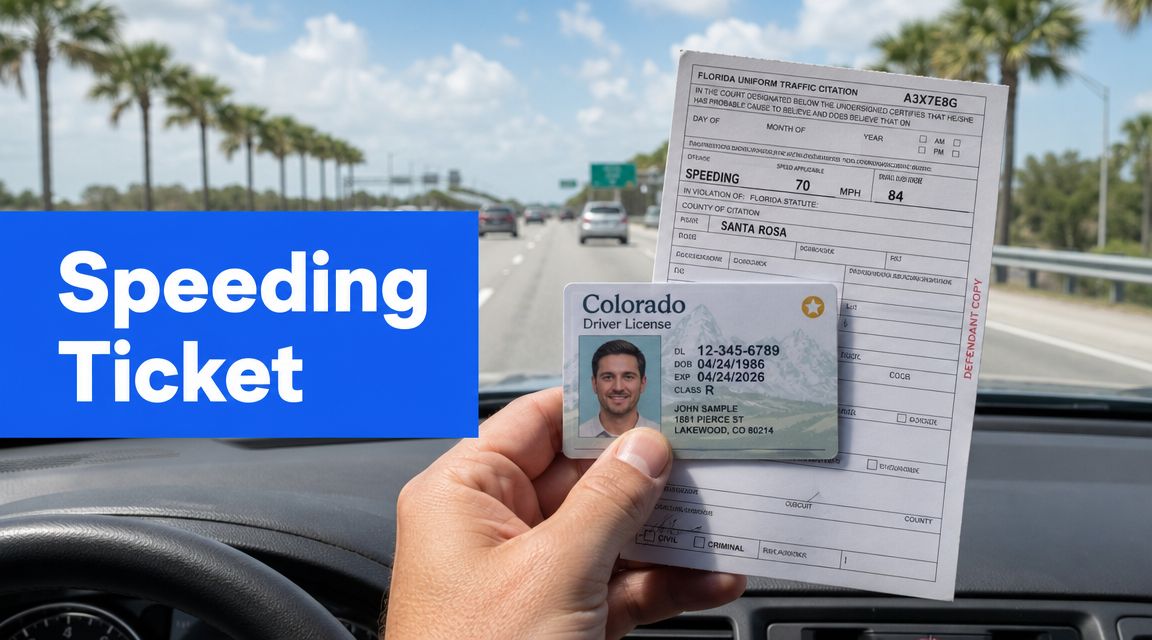
Got a Florida speeding ticket with an out-of-state license? Don't ignore it. Paying the fine is usually a guilty plea. Florida violations can be reported, and the consequences may hit your record, insurance, and license after you get home. Fight the ticket before it follows you.
You were driving through Florida for work, a family trip, or a quick beach weekend. Then the lights hit your mirror, the officer handed you a citation, and now you're back home staring at that ticket wondering if it really matters.
It does.
A speeding ticket in Florida with an out-of-state license is not something you leave behind at the state line. If the citation alleges unlawful speed under Florida Statute § 316.187, the issue is already bigger than the fine printed on the paper. If you pay it, you may be creating a conviction. If you ignore it, you can trigger a much worse problem.
This is the same kind of legal mess people face when your summer trip goes awry. The trip ends. The legal problem doesn't.
Table of Contents
You Got a Ticket in Florida Now What
The first mistake is treating this like a vacation nuisance. It isn't. It's a legal case tied to a Florida allegation that you violated a traffic law, often § 316.187, Florida's unlawful speed statute.
You may already be hearing bad advice from friends. “Just pay it.” “Florida can't touch your home license.” “You live out of state, so it won't matter.” That advice is how people turn a manageable citation into a record problem.
What matters in the first hours
Start with the ticket itself. Read every line. Look for the court, county, deadline, alleged speed, and the statute listed. Florida traffic courts move on deadlines, not excuses.
If your ticket came from a busy court in a major county, that matters too. A case set near the Orange County Courthouse in Orlando won't be handled the same way as a small-county docket. Local procedure and local practice matter in traffic court.
Immediate truth: You are not dealing with “just a fine.” You are dealing with a charge that can affect your driving history.
What you should assume right now
Assume the case can affect more than your wallet. Assume paying ends your chance to contest it. Assume waiting makes your options worse.
Here's the practical mindset you need:
Treat the citation as active legal business: Don't toss it in your glove box and forget it.
Protect your record first: The fine is rarely the actual cost.
Move fast: Delay helps the court, not you.
If you're out of state, your goal is simple. Keep this from turning into a Florida conviction if possible. That is the cleanest way to protect what happens after you get home.
Will This Florida Ticket Actually Follow Me Home
Yes. That myth needs to die.
A lot of drivers think an out-of-state ticket stays in the state where it was written. That's not how traffic enforcement works anymore. States share information, and unresolved tickets can create trouble beyond Florida.
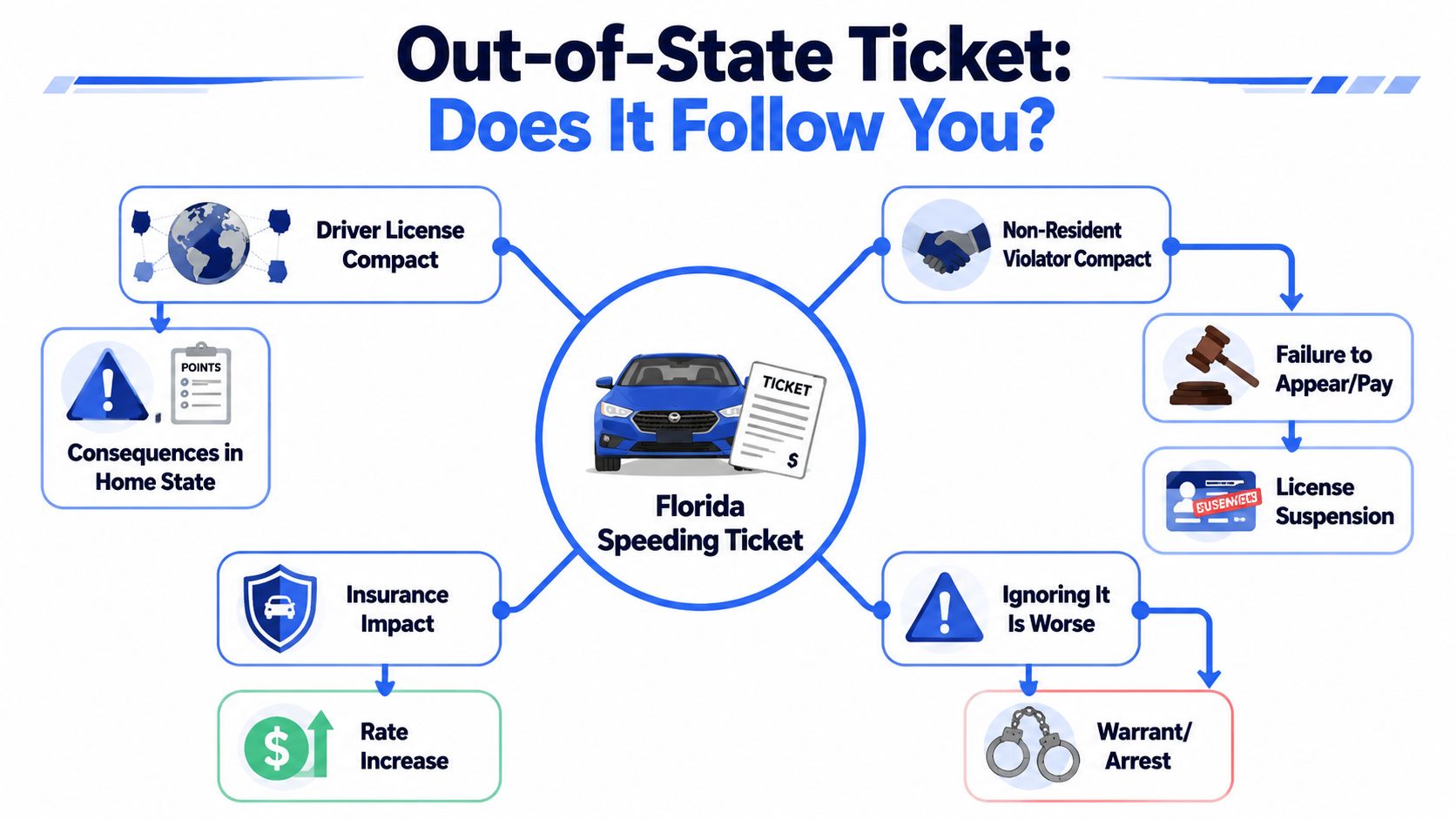
It operates as a driving record network. One state enters the event. Another state may act on it. You don't get to choose whether the system notices.
Why ignoring it is the worst move
The Nonresident Violator Compact is the key framework here. If you get an out-of-state traffic ticket, you must resolve it in the state where it happened, and if you fail to comply, your home state can suspend your license until the Florida matter is settled, as explained in Progressive's overview of out-of-state traffic ticket consequences.
That means “I'm back home now” is not a defense. It's not even relevant.
For drivers trying to understand how interstate reporting works in other contexts, this guide for MN drivers with out-of-state DWI shows the same broad reality. State lines don't erase a traffic or driving-related case.
Why paying it can still hurt you
A resolved ticket can still travel through driver-record-sharing systems. A Florida-based explanation of the state's reporting process is covered in this Florida DMV point system guide for out-of-state drivers.
That matters because many drivers make the second bad assumption. They think, “Fine, I'll just pay it and be done.” But payment often closes the case in the worst possible way.
Once the court records a conviction event, you lose leverage. You had a defense window. Then you traded it for convenience.
Here's the simple version:
Action | Short-term effect | Likely risk |
|---|---|---|
Ignore the ticket | No immediate effort | Compliance trouble and license consequences |
Pay the ticket | Fast closure | Conviction-based reporting and downstream penalties |
Fight the ticket | Requires action now | Better chance to protect your record |
Out-of-sight is not out-of-mind. Not for Florida. Not for the court. Not for the agencies that track driving records.
How Your Home State Treats a Florida Conviction
Drivers are often blindsided. The damage usually happens in two steps.
Florida handles the citation first. Then your home state decides what to do with the reported event under its own rules. You don't need identical laws across state lines for this to become your problem.
The two-step problem
A Florida speeding citation issued to an out-of-state driver can be transmitted through interstate driver-record-sharing systems, and the driver's home state may assess points or other sanctions under its own rules. Paying the ticket is typically treated as an admission of guilt, which triggers the conviction report, according to this Florida discussion of handling a speeding ticket from out of state.
That's the trap.
The fine feels small and immediate. The conviction report shows up later, when you renew insurance, apply for a driving job, or get flagged by your DMV. If you want a practical overview of that second layer, review how out-of-state tickets affect insurance.
Why the fight has to happen in Florida
You don't fix this at home. You stop it at the source.
Once Florida records the conviction, your home state gets to react. It may use its own point system. It may classify the violation in its own way. It may attach its own penalties. But the event that starts the chain is the Florida conviction.
Practical rule: If you want to protect your home record, the smartest place to fight is the Florida case before it becomes a reportable conviction.
That is why paying is usually a mistake for an out-of-state driver. It feels efficient. It isn't. It gives away the one position that matters most, your ability to contest the charge before it hardens into a reported result.
If your goal is no points, no insurance hit, and no ugly surprise back home, you need to treat the Florida case as the main battle. Because it is.
What Are the Immediate Steps You Must Take
You need a checklist, not false comfort.
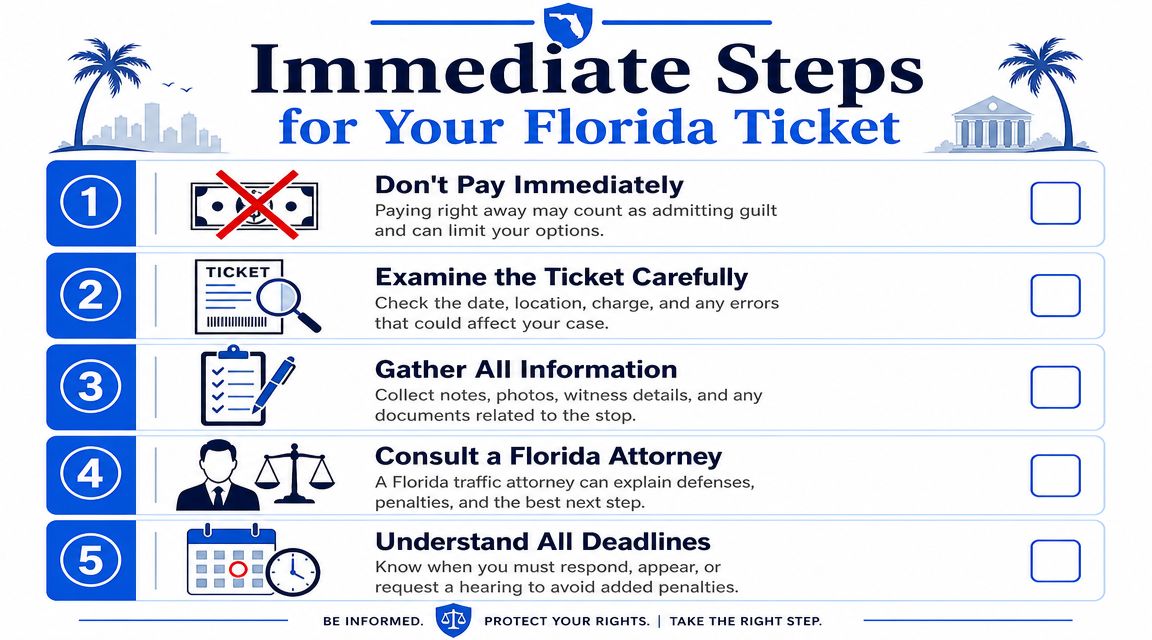
Immediate steps to take
Don't pay the ticket online right now: That may be treated as a guilty plea. Once you do it, you usually lose your chance to fight from a position of strength.
Read the citation carefully: Confirm the county, deadline, statute, and whether a court appearance is listed. If the officer cited § 316.187, you need to know exactly what speed allegation you're facing.
Write down what happened while it's fresh: Where were you stopped? What lane were you in? What was traffic like? Did the officer mention radar, pacing, or laser? Your memory fades faster than you think.
Save every document: Keep the citation, rental car papers if relevant, proof of insurance, and any photos or travel records that help establish context.
Check the official next-step guidance: This overview on what to do when you get a ticket is a useful starting point for organizing your response.
Contact a Florida traffic lawyer quickly: Out-of-state cases need local action. A Florida attorney can tell you whether the court may require anything in person, whether a waiver is possible, and how to pursue a no-point result.
What not to do
Don't assume your home DMV won't see it
Don't miss the deadline
Don't rely on a clerk for legal advice
Don't wait until travel plans or work make the case harder to manage
Your job right now is simple. Preserve options. Don't create a conviction by accident.
Are There Special Risks for Your License Type
Yes. For some drivers, this is not just an annoyance. It's a threat to income, clearance, or future work.
The legal issue may start the same way for everyone. The practical fallout does not.
CDL drivers have more to lose
If you hold a commercial license, stop thinking like a casual driver. Employers, fleet managers, and compliance departments pay attention to moving violations. A single speed conviction can trigger internal discipline even before the government does anything else.
And there's a specific Florida point concern you need to understand. For speeding offenses, the outcome is driven by the violation itself, not residency. Sources discussing Florida's framework note that going 15 mph or more over the limit can carry 4 points, and out-of-state drivers can often avoid a personal court appearance by retaining a Florida traffic attorney to appear, negotiate a reduction, or pursue dismissal, as described in this explanation of how interstate compact issues affect your record back home.
If you drive for a living, review the extra concerns tied to CDL traffic tickets. The risk isn't abstract. A conviction can put your job in the crosshairs.
Military and cleared professionals face separate fallout
If you're active duty, reserve, or in a role tied to a security clearance, traffic problems can spill into employment reviews or command scrutiny. The issue is rarely just “speeding.” The issue is judgment, compliance, and whether you handled the matter responsibly.
If you're stationed near a major Florida installation or traveling through the state on orders, don't create a paper trail that suggests you ignored a legal obligation. Fix it cleanly and early.
A manageable ticket can become an avoidable professional headache if you handle it casually.
Gig drivers can lose work fast
Rideshare and delivery platforms don't need a criminal case to take action. A moving violation can be enough to cause account review, temporary interruption, or deactivation depending on the platform's policies.
That's why gig drivers should be especially aggressive about preventing a conviction in the first place. You can replace a fine. You can't easily replace lost access to the app that pays your bills.
Here's the practical breakdown:
Driver type | Main concern | Smart response |
|---|---|---|
CDL holder | Employment and compliance risk | Fight the citation immediately |
Military or cleared worker | Administrative and professional fallout | Resolve it cleanly through counsel |
Gig driver | Platform deactivation or lost income | Prioritize no-point outcomes |
Why You Need a Florida Attorney Not an Automated App
If you're out of state, this is not the moment for a chatbot, a call-center script, or a ticket mill that hides the lawyer behind layers of intake staff.
You need a Florida attorney who knows the court handling your case, understands local traffic practice, and can give you an actual legal opinion after reading your citation.
A local court is not an app workflow. If your case is in Tampa, it may run through the Edgecomb Courthouse. If it's in Broward, it may involve the Broward County Judicial Complex. Procedure matters. Personnel matter. Timing matters.
A real lawyer can appear and negotiate
For Florida speeding offenses like going 15 mph or more over the limit, which can carry 4 points, out-of-state drivers can often avoid a personal court appearance by retaining a Florida traffic attorney to appear for them, negotiate a reduction, or pursue dismissal, as noted earlier in the cited Florida compact discussion.
That is one of the biggest practical advantages of hiring counsel in Florida. You may not have to get on a plane, miss work, or stand in a courthouse hallway hoping for mercy.
For a broader breakdown of why a lawyer-led approach matters, read this comparison on choosing a local lawyer over apps.
There is also a deeper difference in how representation feels. At Ticket Shield, PLLC, clients speak directly with their attorney by phone or text. That is not how automated apps or volume-based ticket mills usually operate. If you want a case-specific answer, direct lawyer access matters.
Direct access matters
A real attorney can tell you things a platform can't handle well:
Whether the court is likely to require anything personal from you
Whether the officer's allegation creates unusual exposure
Whether negotiation, mitigation, or hearing strategy makes more sense
Whether the goal should be dismissal, reduction, or another no-point route
This video gives a practical look at how legal help works in traffic cases:
An app can collect your payment. A lawyer can protect your record.
Your Three Choices and the Path to Zero Points
At this point, your options are simple. Not equal. Simple.
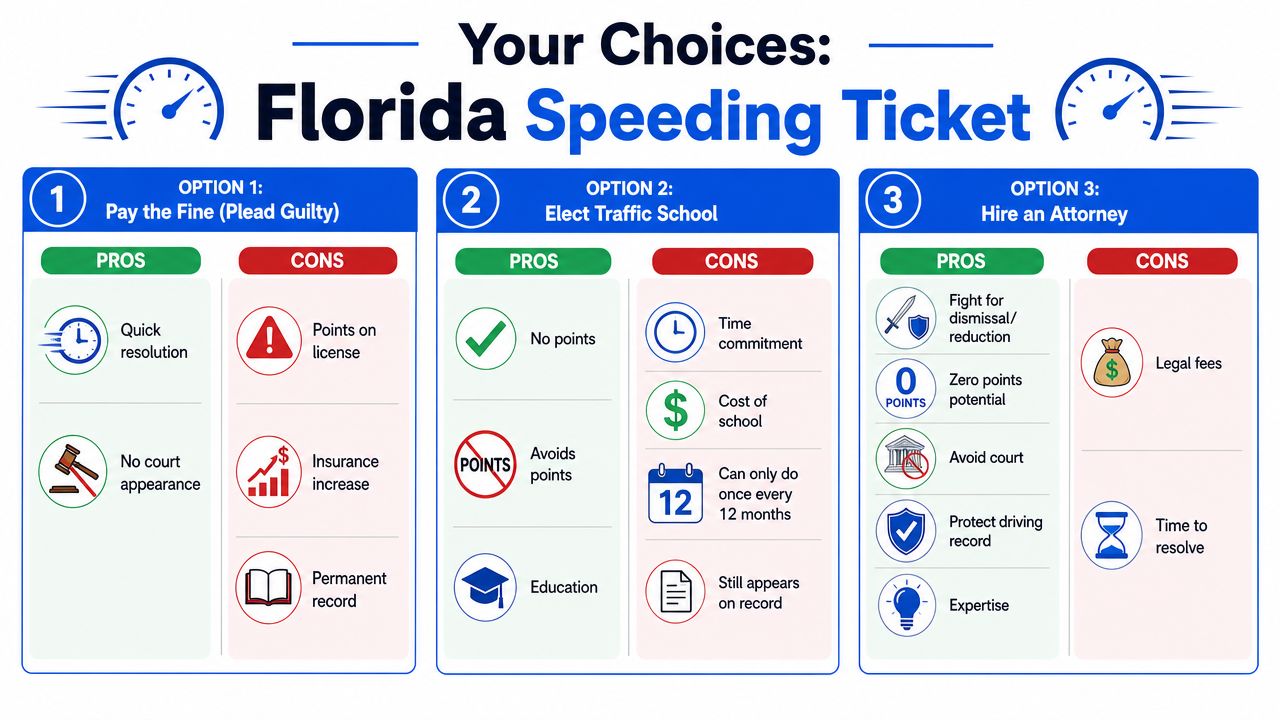
Option one is pay the fine
This is the fast option. It's also the option that usually gives away your defense. You close the file, but you may open the door to record and insurance consequences later.
Option two is fight it yourself
You can do that. But if you live outside Florida, self-representation often means confusion, travel, missed work, and a court process you don't know. Some drivers like to research approaches in other places, and even broad resources such as these legal strategies for traffic tickets in Texas point to the same basic truth. Strategy matters. Process matters. Representation matters.
Option three is hire a Florida traffic attorney
This is the protective route. You give the case to someone who can act in Florida, deal with the court, pursue dismissal or reduction, and aim for the result you care about. No points. No conviction if possible. No nasty surprise when you get home.
You are not hiring a lawyer to “make the fine cheaper.” You are hiring a shield against long-term damage.
If you got a speeding ticket in Florida with an out-of-state license, don't treat it like a souvenir. Treat it like a record problem that still hasn't happened yet. Then stop it before it does.
If you want a lawyer-led defense focused on the No Points goal, visit Ticket Shield, PLLC for a free consultation. You'll get a Florida traffic attorney, not a chatbot, and a clear plan to protect your license, record, and insurance.