
Florida Ignition Interlock Device Cost: A Driver's Guide
Facing a DUI in Florida? Learn the true ignition interlock device cost—installation, monthly fees, and hidden expenses. An experienced attorney can help.
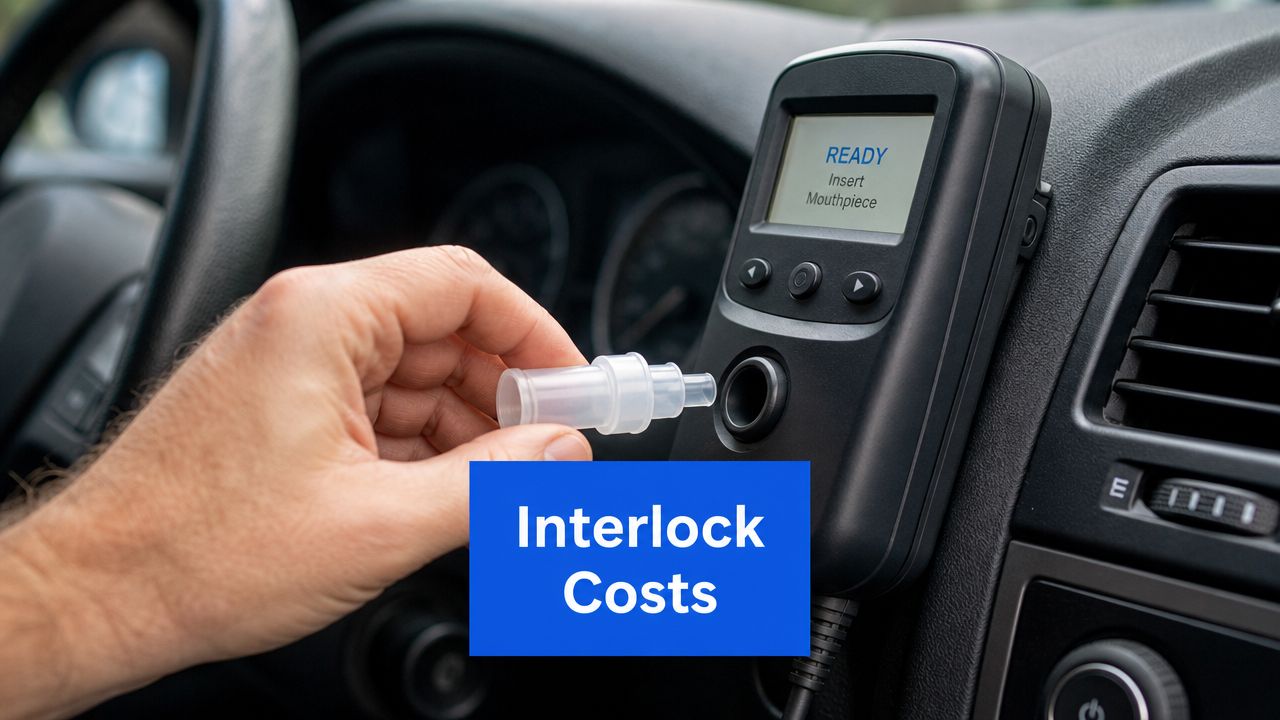
TL;DR: In Florida, ignition interlock device cost is never just the monthly rate. You're usually paying installation, monthly monitoring, removal, and added DUI fallout. The fastest way to control the damage is to fight the DUI early, before penalties harden around your license and wallet.
You're probably reading this after a DUI arrest, a sleepless night, and a flood of bad information. One website tells you the device is affordable. Another makes it sound routine. It isn't. In Florida, an ignition interlock device can become a long, expensive compliance problem tied directly to your DUI case, your license, and your ability to keep driving.
If you make the wrong move now, you can lock yourself into months or years of costs you could have fought harder to avoid. That's the part most drivers miss. They focus on the arrest. They underestimate the compliance bill that follows.
If you need a quick primer on the legal sequence after an arrest, review what happens after a Florida DUI arrest. And if your family is also trying to solve the immediate release issue, a practical overview of bail for a DUI arrest in Forsyth can help you understand how fast costs start stacking up after a DUI-related booking.
Table of Contents
You Are Facing a DUI What Happens Now
A DUI arrest in Florida puts you on two tracks at once. One is criminal. The other hits your license and your ability to function day to day. You need to protect both immediately.
An ignition interlock device is part of that danger. It's not just a gadget installed in your car. It's a monitored condition that can control when you drive, what you pay each month, and how long your case keeps costing you after court.
Under Chapter 316, Florida's DUI laws carry consequences that reach far beyond a fine. The issue isn't only guilt or innocence. The issue is how much of your life the State gets to disrupt if you don't respond strategically and early.
What should you do first
Most drivers make one of two mistakes. They panic and start paying whatever's demanded. Or they freeze and miss deadlines that affect their license.
Take these steps now:
Protect your timeline: Write down the arrest date, the county, the agency involved, and every court or DMV-related paper you received.
Stop relying on provider advertising: IID companies sell compliance services. They do not defend your case.
Check your license exposure: A DUI can trigger immediate driving problems even before your criminal case is finished.
Preserve every receipt and notice: If the case moves toward an interlock requirement, paperwork matters.
Get legal advice early: The sooner a lawyer reviews the stop, the breath or blood issue, and the license consequences, the more options you may still have.
Practical rule: Don't treat the interlock as a minor add-on. In Florida, it can become one of the most expensive and restrictive parts of the DUI fallout.
Why the interlock issue matters right away
The actual risk isn't just whether an IID gets ordered. It's how that requirement fits into the rest of your case. If the DUI charge stands, the device can become one more recurring obligation attached to court dates, license restrictions, insurance consequences, and ongoing compliance.
That's why waiting is expensive. Once your case starts moving without a plan, you lose your advantage. You also lose time to challenge the stop, the arrest, the testing, and the legal basis for the penalties being pushed at you.
A lot of drivers think they can “just deal with it.” That mindset costs money. It also costs opportunities to reduce or avoid the conditions that make daily life harder.
Why Florida procedure feels confusing on purpose
If your case is in Miami-Dade, the process can run through places like the Richard E. Gerstein Justice Building, where serious decisions get made fast and often with very little sympathy for confusion. That's why you need clarity early, not after a suspension starts or an IID order is already in motion.
You don't need another app, intake rep, or call-center script. You need to know what the State is trying to impose, how long it could last, and what can still be challenged before the damage spreads.
What Is the Quoted Cost of an Ignition Interlock Device
When drivers ask about ignition interlock device cost, they usually mean the advertised price. That number is only the starting point.
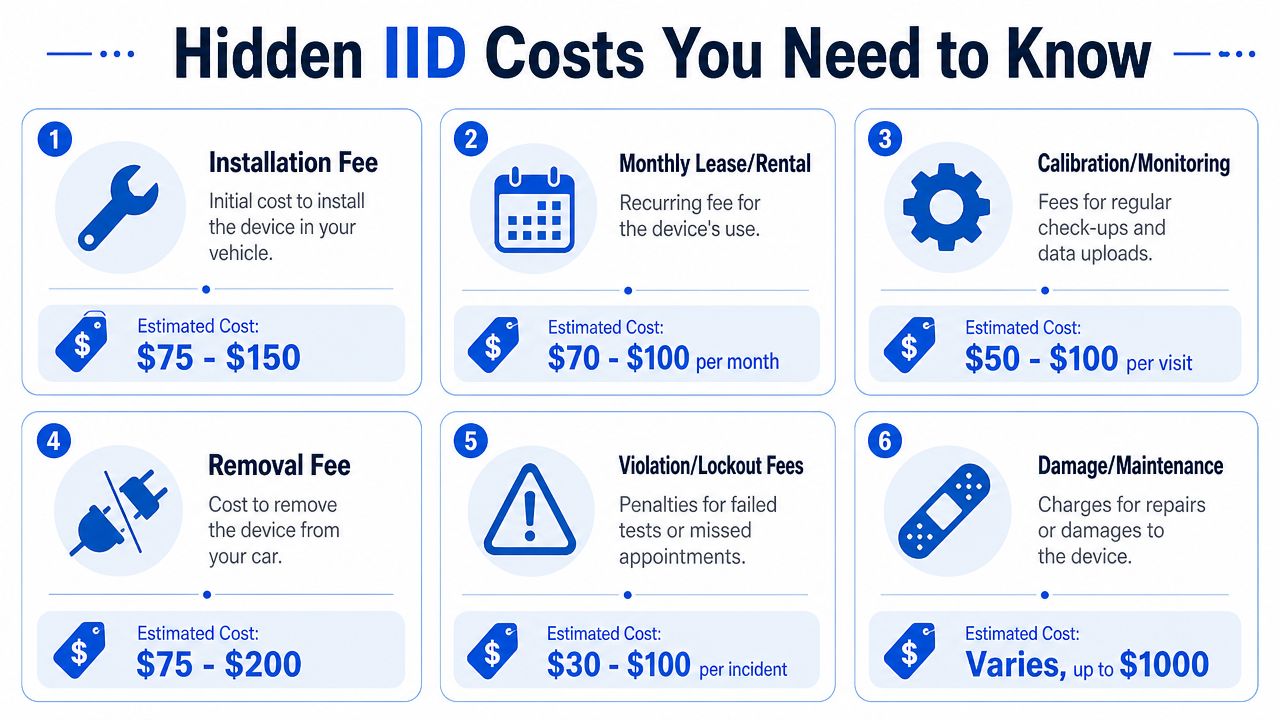
The standard quote usually includes a one-time installation fee and a recurring monthly lease or monitoring charge. According to LifeSafer's ignition interlock cost overview, providers commonly quote about $70 to $150 for installation and about $50 to $120 per month for lease and monitoring. The total depends heavily on how long the court or DMV requires the device.
If you need a Florida-specific overview of how the device fits into a DUI case, review Florida ignition interlock device requirements.
What fees show up first
The first bill usually lands before you've fully processed the case. You're paying to install the device, then paying every month to keep it active and reported.
That fee structure matters because the provider's headline rate can sound manageable while the full obligation keeps running month after month. It's a service model, not a one-time purchase.
For comparison, some drivers researching vehicle security devices also look at issues like Ghost immobiliser cost, but an IID is different in one critical way. A security device is elective. A DUI interlock is compliance. If you need it to keep driving legally, you don't control the timeline.
What a basic cost breakdown looks like
Here's the plain version of the quoted pricing structure.
Fee Component | Typical Cost Range |
|---|---|
Installation | $70 to $150 |
Monthly lease and monitoring | $50 to $120 per month |
Those are the numbers drivers usually see first. They are real, but they are incomplete.
The provider quote tells you what it costs to start. Your court order or license requirement determines what it costs to survive.
Why the monthly number is the wrong number to focus on
Drivers fixate on the monthly charge because it feels smaller. That's a mistake. The monthly amount only matters in relation to duration. If Florida requires the device for longer, the cost rises because the billing period grows, not because the hardware changed.
That's also why legal strategy matters more than shopping for a slightly different provider rate. Saving a little on the monthly quote won't solve the main problem if the underlying DUI result still leaves you under an interlock requirement for a long period.
The right question isn't, “What does the device cost this month?” The right question is, “How do I prevent this from becoming a prolonged compliance expense attached to my record and license?”
What Are the Hidden IID Costs Providers Do Not Advertise
The provider quote is the bait. The compliance bill is what drains your bank account.
Why the sticker price misleads drivers
A provider can advertise a low monthly rate and still leave you unprepared for the full cost of staying legal in Florida. The device charge is only the starting number. The bill usually grows once you add service appointments, removal, state fees, and extra work tied to your vehicle.
That is the trap. Drivers focus on the advertised price because it feels manageable. The better question is whether you can afford the full chain of DUI compliance costs for months or years.
If you want a clearer picture of the financial fallout beyond the device itself, review how much a DUI fine can cost in Florida.
What Florida drivers often fail to budget for
The IID sits inside a larger system of expenses, and each one matters.
Common hidden costs include:
Calibration and monitoring visits: You may have recurring appointments that bring recurring charges.
Removal fees: Getting the device taken out usually costs money too.
State and administrative fees: The provider is not always the only party collecting payment.
Vehicle-related complications: Some vehicles require more labor, more parts, or more troubleshooting.
Missed appointment or compliance problems: One mistake can trigger added fees and create bigger license trouble.
Insurance increases: A DUI can push your premiums up long after the interlock requirement starts.
Time away from work: Service visits, paperwork, and compliance issues can cost you hours and wages, not just fees.
The advertised rate is only one line on a much larger bill.
The cost drivers providers do not control, but you still pay for
IID companies sell equipment. They do not control the court process, DHSMV requirements, your criminal case, or the insurance fallout from a DUI. You still pay for all of it.
That is why handling this alone is expensive. A bad plea, a preventable conviction, or a missed deadline can keep you in the IID system longer, create more compliance problems, and raise the total amount you spend. Saving a few dollars on a provider quote means very little if the legal result keeps adding months of costs on the back end.
My advice is simple. Do not treat the interlock as a shopping problem. Treat it as a legal damage-control problem. The fastest way to cut your total IID burden is to address the DUI case early, before the hidden costs start stacking up.
How Long Will Florida Force You to Have an IID
In Florida, interlock duration is a legal punishment issue. It is not a customer-service issue. If the law requires it, you don't negotiate that away with a provider.

What Florida law makes clear
Florida DUI cases are governed under Chapter 316, and IID consequences are tied to the offense and the resulting license restrictions. You also need to understand Florida Statute § 322.2715, because that provision directly addresses ignition interlock requirements after certain DUI outcomes.
The point is simple. This isn't optional paperwork. It's a statutory consequence that can attach to your effort to regain lawful driving privileges.
If your license is already at risk, review Florida DUI license suspension rules immediately. Delay makes everything harder.
Why duration is the real financial threat
A real-world breakdown reported that a first DUI offense with a six-month interlock requirement could cost more than $1,250 in total, while a second offense required at least two years of IID use, which sharply increases the total burden, according to this DUI interlock cost report.
That's the lesson you should take seriously. The danger isn't just getting the device installed. The danger is being ordered to carry the expense for a long time.
What this looks like in the real world
At courthouses like the Richard E. Gerstein Justice Building in Miami, these consequences stop being abstract very quickly. A judge's order or a licensing condition can turn into months or years of recurring obligations tied directly to your DUI result.
Your legal exposure escalates when any of these are true:
You have a prior DUI issue: Repeat exposure usually means longer and more expensive consequences.
Your case involves aggravating facts: Those details can affect how hard the State pushes.
You assume the interlock is inevitable: That mindset leads drivers to give up their advantage too early.
The cost of an IID is driven by time. The cost of time is driven by the DUI result.
That's why the smartest move is still the same. Challenge the DUI aggressively before Florida turns a bad arrest into a long compliance sentence.
How Can an Attorney Reduce Your Total Financial Burden
You get arrested for DUI, hear the provider's monthly IID quote, and think you can budget for it. Then the actual bills start. License problems. Missed deadlines. Extra service appointments. Insurance fallout. Time off work. A bad DUI result in Florida is expensive long before it feels final.

A good defense lawyer works to cut the total cost of compliance, not just argue about guilt. That means attacking the parts of the case that create expensive consequences in the first place and preventing avoidable mistakes that keep costing you money after court.
What an attorney is trying to save you from
The provider's sticker price is only one line item. The bigger financial threat is the legal result attached to it.
A lawyer reviews the stop, the arrest basis, the breath or blood testing issues, the officer reports, and the timeline of your license suspension. That review is not academic. It is how you find weaknesses early enough to reduce charges, protect driving privileges, shorten consequences where possible, and avoid paying for a worse outcome than the evidence supports.
If you are comparing legal fees to handling the case alone, use the right comparison. Compare the lawyer's fee to the full DUI bill, not to one hearing or one month of interlock service. This breakdown of what a DUI lawyer can cost in Florida is the right place to start.
Where lawyers save money people do not see coming
Florida DUI cases create financial damage in layers. Some of it comes from the court. Some comes from the DMV. Some comes from the IID company. Some comes from your insurance carrier after the case starts affecting your record.
An attorney helps you handle the process before small errors turn into expensive ones. That includes missed paperwork, confusion about restricted driving, preventable compliance violations, and bad assumptions about what is mandatory versus what can still be challenged.
Here is where legal help often saves real money:
Challenging the DUI before penalties harden into mandatory obligations
Protecting your license position so you do not create extra reinstatement and transportation costs
Catching compliance problems early, before they trigger more fees or longer restrictions
Giving you legal advice on the whole chain of consequences, including insurance and employment risk
Stopping you from making admissions or procedural mistakes while trying to handle everything yourself
One Florida option clients consider for lawyer-led traffic and DUI defense is Ticket Shield, PLLC. The important factual distinction is that it provides direct communication with an attorney by phone or text rather than routing clients through an automated app or nonlawyer middle layer.
Here's a short explanation of why that kind of legal guidance matters when cost and compliance are colliding:
Waiting usually costs more
A lot of drivers make the same mistake. They decide to “deal with” the IID and hire counsel later if the case gets worse. That is how people lose their advantage, miss deadlines, accept unnecessary conditions, and spend more than they had to.
The legal bill is only one cost. Delay has a cost too.
You can see the same principle discussed outside Florida in this article on DUI defense in Illinois. Different state, same practical lesson. Early legal advice puts you in a better position to limit the fallout.
If you want to reduce your total financial burden, start before Florida locks you into the longest and most expensive version of this case.
Why Direct Attorney Access Is Crucial in Your DUI Defense
DUI defense gets more dangerous when you can't get a straight answer from the person responsible for your case.

Why middlemen make DUI cases worse
A DUI case moves fast. Questions come up fast too. Can you drive. What happens if the DMV deadline passes. What does the court order mean. Is the interlock already mandatory. What do you sign. What do you pay now and what can wait.
If your only contact is a chatbot, intake rep, or case manager, you lose time every time you need legal judgment. That delay is dangerous.
I've seen drivers get clearer perspective just by comparing how different jurisdictions explain the value of counsel. Even outside Florida, articles like this discussion of DUI defense in Illinois show the same basic truth. DUI cases punish hesitation, confusion, and self-representation.
When your license and livelihood are on the line, access to your lawyer isn't a luxury. It's part of the defense.
What direct attorney contact changes
Direct access means you can ask the hard questions while there's still time to act. It means your defense strategy isn't filtered through someone who can't give legal advice. It means decisions about the IID, the license, the court date, and the financial consequences happen with actual legal judgment attached.
That matters in Florida, where DUI consequences under Chapter 316 can hit your record, your insurance, and your ability to drive to work. It matters even more if you depend on your car for family obligations or income.
You should expect direct answers to questions like these:
Can this DUI be challenged on the facts
What happens to my license right now
Am I walking into an avoidable interlock requirement
What is the fastest move to protect the No Points goal where it applies and limit broader damage
If you can't reach your lawyer, you don't have enough protection.
If you've been arrested for DUI in Florida, don't guess your way through ignition interlock device cost, license risk, and court compliance. Get legal advice before the State turns a temporary crisis into a long-term financial drain. Visit Ticket Shield, PLLC for a free consultation and take the first step toward protecting your license, your record, and your No Points goal.
