How to Beat a Speed Camera Ticket: A Florida Guide
Received a Florida speed camera ticket? Learn how to beat a speed camera ticket by challenging evidence, understanding defenses, and protecting your record.
Yes, you can beat a speed camera ticket in Florida, but only if you act fast, preserve evidence, and challenge the notice before payment locks in liability. Don't treat that letter like a parking stub. Treat it like the start of a case against you.
You opened the mail, saw an official notice, and your stomach dropped. There’s a photo of your car. A speed allegation. A deadline. A payment option designed to look easy.
That ease is the trap.
When you pay a camera ticket quickly, you give the system exactly what it wants. Closure for them. Consequences for you. In Florida, you need to stop, read, and make a strategic decision before you do anything else. If this involves a school zone camera, the stakes are getting worse, not better. Florida's 2025 expansion of school zone speed camera programs under Statute 316.187 updates via HB 967 has reportedly led to over 120,000 tickets statewide in the last 12 months with doubled fines of $200+, according to this report on Florida's school zone camera expansion.
This isn't a system built to slow down and explain your rights. It's built to move paper, collect money, and count on drivers paying before they understand what they're looking at.
If you want to know how to beat a speed camera ticket, start with this rule. Don't admit anything. Don't miss your deadline. Don't assume the notice is correct.
Practical rule: A mailed camera notice is not harmless paperwork. It's the opening move. Your response in the first few days often decides whether you keep control of the case.
Table of Contents
That Envelope in Your Mail Isn't Just a Fine
A speed camera notice feels minor because no officer stopped you. That’s exactly why many drivers mishandle it. They think, "I'll just pay it and move on." Then they learn too late that fast payment can shut down defenses they never explored.
Florida traffic enforcement under Chapter 316 is full of procedural rules. Those rules matter. Municipalities and vendors don't get to skip them just because a machine took the photo. The notice still has to comply with the law, the camera still has to be legally deployed, and the government still has to support the accusation if you challenge it.
Why this letter is more serious than it looks
The first danger is psychological. The envelope is designed to pressure you into treating the allegation as settled. It's not settled. It's an accusation.
The second danger is practical. If your case escalates, what began as a notice can become a larger problem involving your time, your record, and your income. That risk is especially sharp for drivers who depend on a clean record to work. If you drive for Uber, Lyft, or delivery platforms, a single automated ticket can trigger account trouble. We'll get to that later.
Here’s the blunt truth. The system counts on confusion.
Why Florida drivers need to react differently now
School zone camera enforcement is expanding. More cameras mean more notices. More notices mean more drivers who will pay before they read. That's a mistake.
Use the notice as a trigger to start building your defense file. Scan it. Save it. Mark the response date. Check the location. Check the time. Check whether the vehicle information is accurate. If anything looks wrong, that's not a technicality to ignore. That's where cases are won.
The photo doesn't prove the notice is valid. It proves the government has an image. Those are not the same thing.
A serious defense starts by rejecting the idea that a camera notice is automatically right. It isn't. A mailed allegation is still vulnerable to human error, bad signage, weak documentation, and flawed procedure.
What Are Your Immediate First Steps
You need to act like the deadline matters, because it does. But don't panic and pay first. That's the wrong move.
What should you look for on the notice
Read every line of the notice slowly. You're checking for accuracy and for legal significance.
Focus on these items first:
Response deadline: Find the exact date by which you must respond or contest. Missing that window hands control back to the issuing authority.
Type of document: Determine whether you're holding a Notice of Violation or something more serious. In Florida, that distinction matters. A notice from a municipality is not the same thing as a Uniform Traffic Citation.
Vehicle details: Confirm the tag, make, model, and registered owner information.
Date, time, and location: Small errors matter in traffic cases.
Instructions to contest: Read the hearing request language carefully before you do anything.
That distinction between a notice and a citation is one of the biggest traps in Florida traffic practice. A lot of drivers treat all traffic paperwork the same. It isn't. Some documents open room to fight. Others create different risks. If you're trying to decode the paperwork, use a Florida-specific resource like this guide to citation number lookup in Florida so you know what you're dealing with.
What should you do before the deadline runs out
Do these things immediately:
Do not pay it yet: Payment can function as an admission and can close off strategic options.
Create a case folder: Save the envelope, the notice, screenshots, and any online evidence tied to the allegation.
Confirm who was driving: If you weren't the driver, don't ignore that fact. Ownership and operation are not always the same issue.
Calendar the response date: Put it on your phone, your email, and somewhere visible.
Write down what you remember: Traffic conditions, school zone flashing lights, weather, road work, obstructed signs. Memories fade fast.
Check whether the notice arrived properly: If the mailing, timing, or identifying information looks off, flag it.
Here's where drivers get hurt. They think they'll come back to it this weekend. Then they miss the contest window. Then they're stuck reacting instead of attacking.
A camera case is still a legal case. Treat it that way from day one.
Why your first move should be restraint
You don't need a long explanation to the court. You need disciplined action.
Don't call and casually "explain what happened." Don't write an emotional letter admitting you were rushing but asking for mercy. Don't post the notice online. Don't throw away the envelope. And don't assume the city or vendor will fix an error on its own.
Immediate warning: Your first job is preservation, not persuasion. Save the documents first. Build the facts second. Argue later.
If you want to know how to beat a speed camera ticket, this is the beginning. Most losses happen before court. They happen when drivers pay too soon, speak too loosely, or miss the deadline.
How Do You Gather Your Own Evidence
Start building your file before the scene changes. Signs get moved. Trees get trimmed. temporary obstructions disappear. Your phone data gets overwritten. Delay helps the other side, not you.
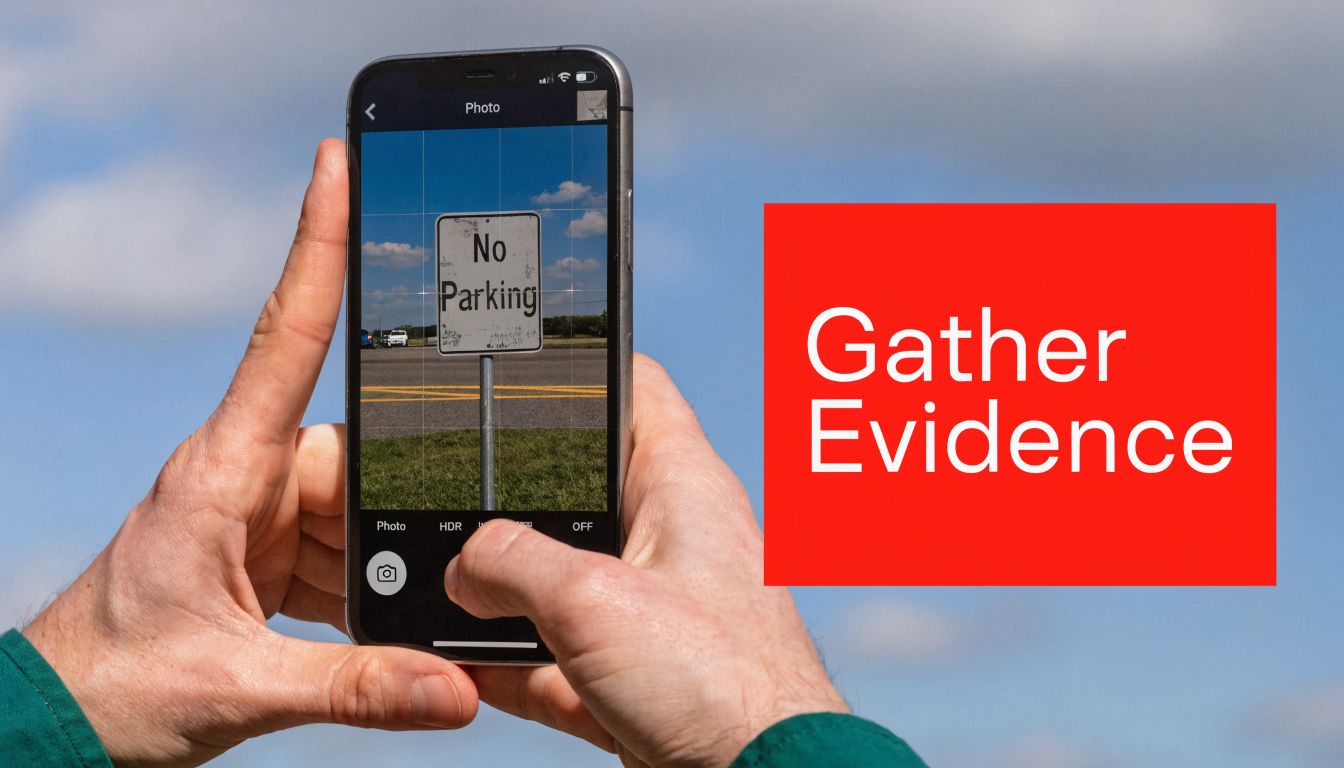
What should you photograph at the scene
Go back to the location safely. Not to recreate the allegation. To document the environment.
Take wide shots and close shots of:
Warning signs before the camera zone
Any trees, poles, buses, parked vehicles, or construction that block visibility
Road markings and lane layout
School zone indicators and flashing-light equipment, if applicable
The approach distance before the camera location
Anything confusing about the speed transition
Florida defense strategy often turns on notice and compliance. Under Florida Statute 316.0085, warning signs are required 500 feet before the camera, and a lack-of-notice challenge can matter. The procedural challenge approach described in this Florida speed camera defense guide notes that focusing on operational limits and certification flaws can succeed in 20 to 40 percent of cases, and specifically points to absent or obscured warning signs as a valid defense basis.
Don't take one photo and call it done. Take enough images that someone who has never been there can understand exactly what a driver sees on approach.
What digital evidence should you save right now
Your phone may already have useful evidence. So might your car.
Look for:
Evidence type | Why it matters |
|---|---|
Dashcam footage | Shows traffic flow, speed context, lane position, and visibility |
Smartphone location history | Helps confirm route and timing |
Vehicle telematics | May support your account of speed or travel path |
Time-stamped photos | Useful for documenting current sign visibility |
Navigation app history | Can help reconstruct where you were and when |
If you use a dashcam, preserve the file before it loops over itself. If you track routes or speeds, save screenshots now. If you want a plain-language refresher on the technology officers and systems use to measure speed, this overview of how radar speed guns work helps you understand what kind of evidence may be asserted against you.
Why your own evidence changes the case
Most drivers assume the official photo is the whole case. It isn't. Your evidence can expose what the notice leaves out.
A camera image usually narrows the story to one moment. Your evidence broadens it. It can show that the sign was hidden. It can show traffic was tightly packed. It can show the notice location was misleading. It can show your car wasn't even where the notice suggests.
Go gather evidence as if the sign will be fixed tomorrow. Sometimes that's exactly what happens.
This step gives you an advantage. It also gives your lawyer something concrete to use. Without evidence, you have a complaint. With evidence, you have a defense.
What Are Your Strongest Legal Defenses in Florida
The right defense depends on the notice, the location, and the paper trail behind the camera system. But some arguments show up again and again because they attack the weak parts of automated enforcement.
Which Florida statutes matter most
For Florida drivers, start with Chapter 316, especially Statute 316.187 in the school zone context and related procedural requirements surrounding automated enforcement. You also need to pay attention to signage rules and notice requirements. A speed camera ticket is not self-proving just because a machine generated it.
The burden stays on the enforcing side to support the accusation.
Which defenses actually move cases
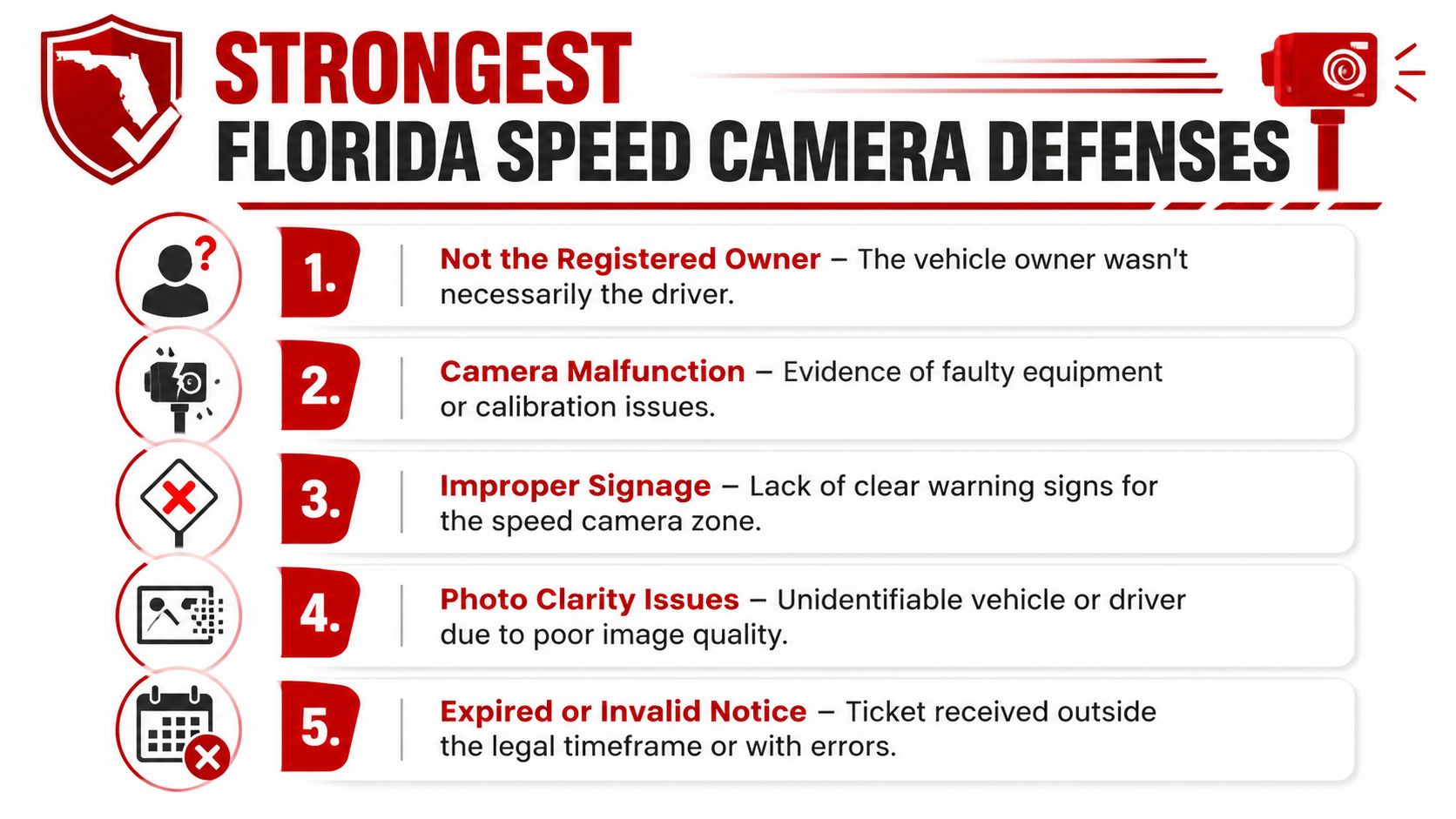
Here are the defenses I take seriously.
Mistaken identity or wrong responsible party
If you weren't the driver, that fact matters. In some cases, ownership, operation, transfer, rental status, or other circumstances can undercut liability. Don't assume the government got the right person just because it got the plate.
This isn't a defense you raise casually. It has to be documented cleanly.
Improper signage
If the warning signs were absent, hidden, faded, or poorly placed, you may have a strong notice challenge. This is one of the most practical defenses because you can often document it yourself.
The earlier Florida-specific defense source already cited above is important here for a reason. It points to the 500-foot warning sign requirement under Florida Statute 316.0085 and identifies absent or obscured signage as a direct basis to contest the ticket.
Equipment certification and calibration problems
Automated enforcement relies on hardware, software, maintenance, and recordkeeping. That creates vulnerability.
A strong defense often demands the camera's maintenance and calibration records. If the equipment wasn't properly certified, tested, or documented, the reliability of the accusation weakens fast. The same Florida defense source notes that a procedural challenge focused on equipment certification flaws can succeed in 20 to 40 percent of cases, which is why trained counsel asks for records instead of just arguing fairness.
Invalid or defective notice
Bad notices sink cases. Wrong information, mailing defects, timing issues, or failure to comply with required procedure can all matter. Such details decide outcomes.
You don't need dramatic misconduct to win. Sometimes the notice itself is the problem.
Photo clarity and evidentiary weakness
If the images don't clearly identify the vehicle or support the allegation cleanly, that's not a minor issue. It goes to proof.
Blurry photos, poor angles, confusing lane captures, or multiple vehicles in the frame can all create doubt. A machine-generated image still has to be reliable enough to support the charge.
A weak camera case often looks strong only because nobody asked for the records behind it.
Why procedural defenses work
Drivers often think a defense has to sound heroic. It doesn't. In traffic court, procedural weaknesses matter because the government has to follow the rules it wrote.
That means a boring record request can be more powerful than an emotional explanation. A missing calibration document can matter more than a good excuse. A sign hidden behind foliage can matter more than your confidence that you weren't speeding.
If you're trying to understand how these defenses fit into a dismissal strategy, this guide on getting a speeding ticket dismissed is a useful Florida-focused reference point.
The bottom line is simple. How to beat a speed camera ticket in Florida usually comes down to attacking proof, procedure, or notice. That's where the system is vulnerable.
What Happens When You Contest Your Ticket in Court
Most drivers fear court because they don't know what the day looks like. The uncertainty is worse than the hearing.
If your case is in Miami-Dade, you may find yourself dealing with proceedings tied to the Richard E. Gerstein Justice Building. The setting feels formal. The process is still manageable if you're prepared.
What does the hearing process look like
First, you request the hearing properly and on time. Then the matter gets set for a date before a judge, magistrate, or hearing officer, depending on the forum. On the hearing date, the city or enforcing authority presents its side. You present yours, or your lawyer does.
That sounds simple. It isn't simple if you walk in cold.
The hearing usually turns on a handful of points:
Whether the notice was legally sufficient
Whether the enforcing side can support the allegation
Whether your evidence creates doubt or exposes a procedural defect
Whether a negotiated resolution is available
Some cases get dismissed. Some get reduced. Some are upheld. But if you just pay, you never reach those outcomes at all.
If you haven't been through traffic court before, this Florida guide on what to expect in traffic court can help you picture the flow before your hearing date arrives.
Why does timing matter so much
Timing isn't a side issue. It's strategy.
According to legal defense strategies summarized in this discussion of safety-camera enforcement and procedural weaknesses, postponing the trial date can significantly increase dismissal rates because key prosecution witnesses such as police officers, technicians, or contractors sometimes fail to appear, leading to dismissal for lack of prosecution.
That matters because automated cases still depend on people. Someone may need to support the records, the technology, or the operational chain. If that person doesn't show up, the case can collapse.
Sometimes the smartest move in court isn't to argue harder. It's to force the other side to prove its case on the day it must actually prove it.
What should you expect emotionally and practically
Expect waiting. Expect formality. Expect the other side to assume many drivers won't be ready.
Dress professionally. Bring organized documents. Speak carefully. Answer only what's asked. Never walk into court thinking the camera makes the case unbeatable. It doesn't.
A prepared appearance changes your strategic advantage. It can also change settlement posture. Once the government sees you're not just there to explain yourself, but to challenge proof and procedure, the options often improve.
Why a Lawyer Beats an App for Florida Tickets
An app can help you fill out a form. It can't defend you.
That's the difference Florida drivers need to understand before they trust an automated service with a real traffic case. A speed camera ticket isn't just paperwork. It's a procedural fight. Procedure is where lawyers earn results.

What an app cannot do for you
An automated platform can't cross-examine a witness. It can't spot a local court habit. It can't decide when a continuance helps and when it hurts. It can't text you back after reviewing a bad notice and tell you what matters and what doesn't.
It also can't protect your livelihood the way a real defense strategy can.
For gig economy drivers, the danger is immediate. According to this traffic court strategy article discussing attorney-led outcomes, a single automated ticket can trigger account deactivation for Uber or Lyft drivers. The same source states that pro se win rates are less than 15 percent in traffic court, compared to over 75 percent for attorney-led defenses. If your income depends on driving, that gap isn't academic. It's survival.
Why direct access to your lawyer matters
This is where the difference gets real.
Some services operate like ticket mills. You submit information into a system. A nonlawyer screens it. You get updates through a portal. If the facts get messy, you don't know who's handling the file.
That's not defense. That's intake.
A Florida traffic case needs judgment. It needs someone who can review your notice, request the right records, evaluate whether a "not the driver" affidavit helps, and decide whether the hearing should be contested or strategically reset. If you need a lawyer-led option rather than a chatbot workflow, this comparison of a local lawyer versus apps explains the practical difference.
And yes, this matters even more if you're a rideshare driver, a military service member, or a professional who can't afford record issues following you around.
Why this choice matters more than drivers think
The wrong service treats your case like data entry. The right defense treats it like risk management.
That means looking beyond the fine. It means asking:
Will this affect my work
Will this create record problems
Is there a signage issue
Did the camera records hold up
Should this be negotiated, contested, or reset
Am I talking to my actual lawyer or to a middleman
Ticket Shield, PLLC is a Florida law firm that handles traffic defense with direct attorney communication by phone or text, rather than routing clients through automated apps or nonlawyer intermediaries. That model matters because legal strategy changes case by case. Drivers don't all need the same defense.
If you're serious about how to beat a speed camera ticket, stop treating this like a payment problem. Treat it like legal exposure. That's what it is.
If you just received a Florida speed camera notice, don't guess your way through it and don't hand your case to an automated app that can't stand up in court. Visit Ticket Shield, PLLC for a free consultation and focus on the goal that matters most: No Points.