

How Long Do Speeding Tickets Stay on Your Record Texas?
Wondering how long do speeding tickets stay on your record texas? Discover how a traffic lawyer can help you avoid points, fines, & insurance hikes in 2026.

If you're asking how long do speeding tickets stay on your record Texas, the short answer is often 3 years on a standard record. But for a Florida driver, the problem is simpler. Pay the ticket, get convicted, and you may carry the consequences much longer.
You got stopped. Your stomach dropped. Then the officer handed you a citation and drove away, while you started doing the same search thousands of drivers do: how long do speeding tickets stay on your record Texas.
That question matters. But if you're a Florida driver, you're asking the wrong question first.
The first question is whether you're about to cause the conviction yourself by paying the ticket. In Florida, that mistake follows you through points, insurance pricing, and your driving history. Under Florida Statute 316.183, the state treats unlawful speed seriously. You should too.
Table of Contents
What a Florida Speeding Ticket Really Costs You
What drivers usually miss
The protective approach
How Long Do Points from a Ticket Last in Florida
Points are temporary but the case result matters
What to focus on instead of the clock
Why Your Insurance Company Cares More Than the DMV
Insurance looks at convictions, not your excuses
This is why fighting the ticket is financial defense
What Does a Conviction Mean for a Florida Driver
Paying is pleading guilty
The result you should actually want
How Can You Get a Ticket Off Your Record
Your real options are not equal
Why lawyer access matters
Immediate Steps to Protect Your Florida Driving Record
What a Florida Speeding Ticket Really Costs You
A speeding ticket doesn't just cost the amount printed on the citation. It can cost your record, your insurance, and your advantage.
When considering how long do speeding tickets stay on your record Texas, you're really worried about one thing. You don't want this to keep hurting you after the day you got pulled over. That's exactly why paying first and asking questions later is a bad move.
In Florida, a paid ticket usually means you accepted the violation instead of challenging it. That gives the state a clean path to process the case against you. Once that happens, you're no longer dealing with a simple roadside annoyance. You're dealing with a record problem.
What drivers usually miss
Most drivers focus on the fine because it's visible and immediate. The hidden costs show up later.
Your driving history matters: Employers, insurers, and licensing reviewers don't care that you were in a hurry.
Your insurance company prices risk: A conviction gives them a reason to treat you as more expensive to insure.
Your future options shrink: It's harder to negotiate around a ticket after you've already closed the case by paying it.
Practical rule: The fine is the smallest part of the problem. The record entry is the expensive part.
You also need to separate two different issues. One is the ticket itself. The other is the conviction that follows if you handle the ticket the wrong way. Those are not the same thing.
If you want a fuller breakdown of the financial side, review what Florida speeding tickets can really trigger beyond the fine.
The protective approach
You should treat every speeding ticket like a preventable record event. That means acting early, preserving your options, and refusing to hand the state an easy conviction.
Drivers get into trouble when they assume speed cases are routine. Courts process them routinely. Insurance companies price them routinely. But the consequences hit your life personally. That is why your response can't be casual.
How Long Do Points from a Ticket Last in Florida
Florida drivers often hear about points first, and that's fine as a starting point. But points are only one layer of the problem.
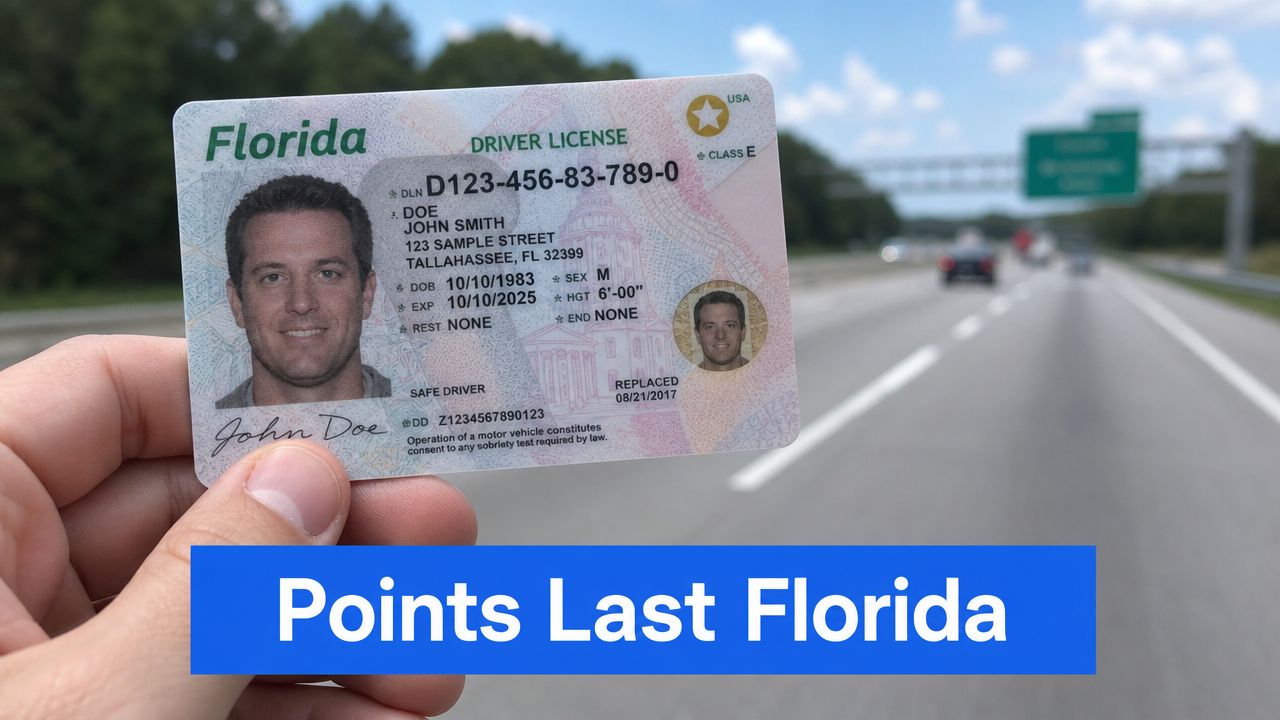
Points are temporary but the case result matters
Think of points like a warning light on your dashboard. They matter. They affect your license risk. But the conviction is the service history behind that warning light. That's what creates longer-term consequences.
A routine driver question is whether points last forever. They don't. But that doesn't mean the case stops mattering when the points age out. A driving history can still tell the story of what happened, even after the point impact becomes less central.
That is why drivers who obsess over how long points remain often miss the larger legal issue. You don't just want points to expire. You want to avoid the conviction outcome that caused them in the first place.
What to focus on instead of the clock
Don't build your defense strategy around waiting for time to pass. Build it around preventing the bad entry.
Use this framework:
What you're looking at | Why it matters |
|---|---|
Points | They affect your license status and can create administrative trouble |
Conviction | It creates the lasting case result others can still care about |
Disposition | The final court outcome determines whether this becomes a record problem |
A temporary point issue can start with a permanent decision. Paying the ticket is often that decision.
If you want a practical overview of how Florida handles these issues, review Florida license points and how they affect drivers.
Drivers around the Broward County Judicial Complex and across Florida make the same mistake every day. They treat the citation like a bill. It isn't. It's a legal allegation. If you answer it the wrong way, you create a record that didn't have to exist.
Why Your Insurance Company Cares More Than the DMV
The DMV cares about compliance. Your insurance company cares about pricing.
Those are not the same thing, and that distinction can cost you far more than the ticket itself.
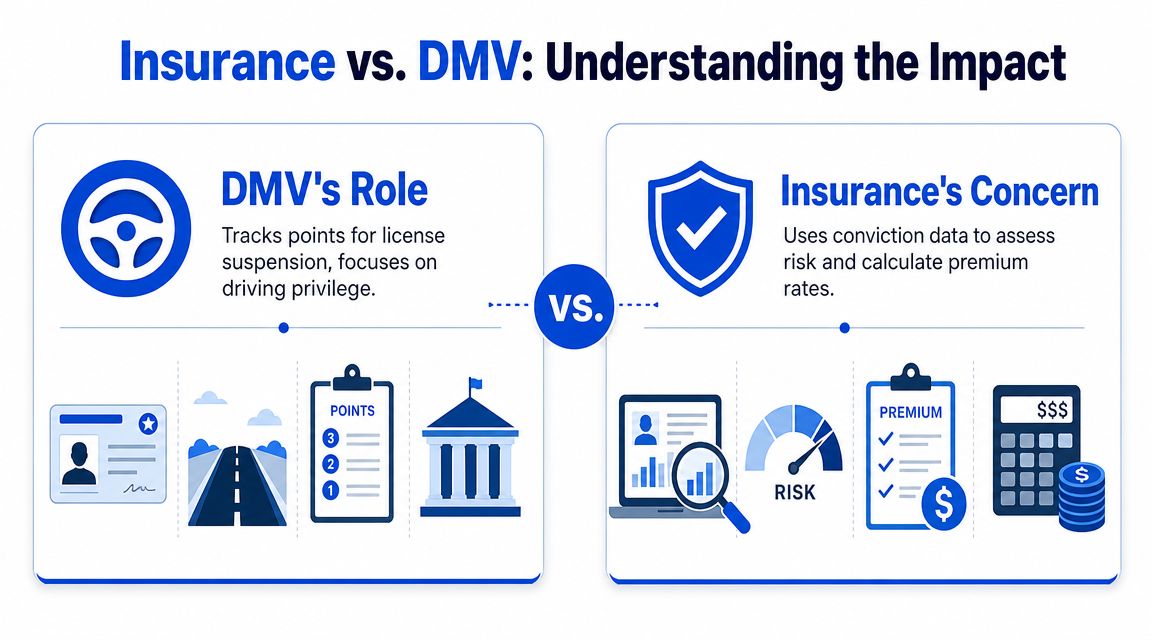
Insurance looks at convictions, not your excuses
Insurers use violations as underwriting signals. They don't care that traffic was flowing fast or that everyone else was doing it too. They care that there is a recorded conviction they can use to classify you as a higher-risk driver.
One verified benchmark often cited is that premiums can rise by an average of 16% after a speeding ticket, and insurers typically look back 3 years for minor violations, according to this insurance benchmark on speeding ticket lookback periods. That figure comes from insurance reporting, not Florida procedure, but the takeaway is the same for Florida drivers. Convictions get expensive.
This is why fighting the ticket is financial defense
A paid ticket can become a recurring cost. Not because the clerk's office keeps billing you, but because your insurer may keep using that event against you during its review window.
That makes your decision simple:
Pay now: Fast closure, weak protection
Fight now: A stronger position, better chance to protect your record
Ignore it: The worst option, because it invites bigger legal trouble
Your insurer doesn't need a dramatic event. One clean conviction entry is often enough for them to act.
If you want to see how this issue affects Florida drivers in practical terms, read how insurance costs can change after a Florida speeding ticket.
Automated apps treat your case like intake data. Insurance carriers do the same. That's exactly why your defense should be personal, strategic, and handled by an actual attorney instead of a process built around volume.
What Does a Conviction Mean for a Florida Driver
A conviction is not abstract. It is the legal result that follows when you admit guilt or are found responsible without protecting the outcome.
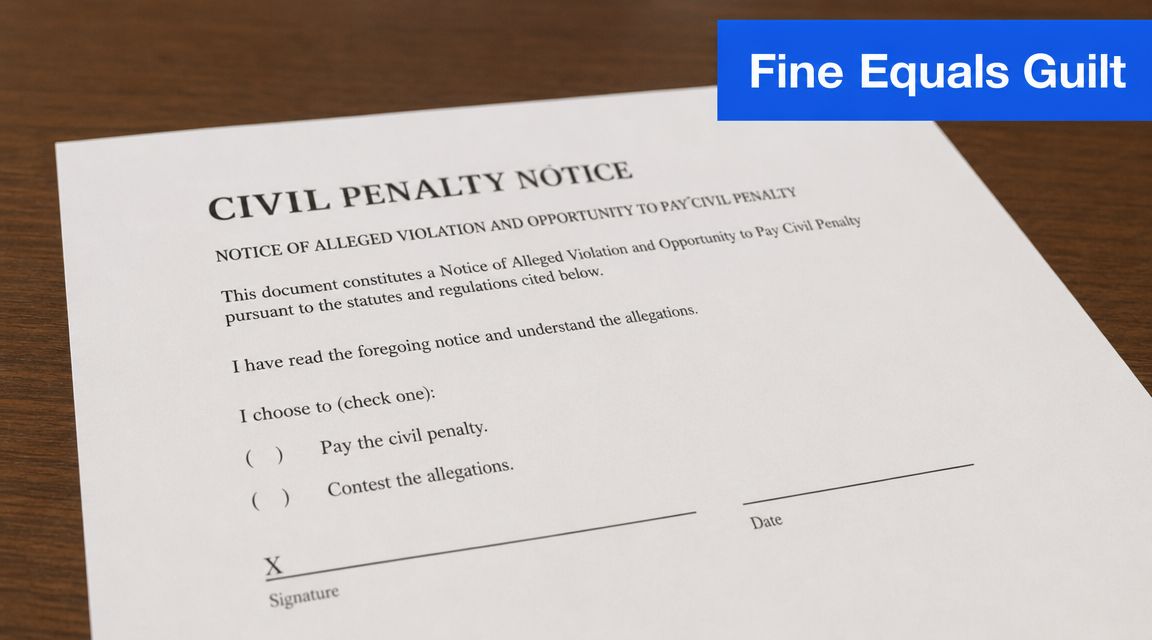
Paying is pleading guilty
Florida drivers need to understand this clearly. In a speeding case, paying the citation usually functions as an admission. You are not just ending the inconvenience. You are choosing the result.
Under Florida Statute 316.183, unlawful speed is a live legal violation, not a customer service fee. Once you pay, you usually give up the strongest opportunity to challenge the allegation and seek a cleaner outcome.
That matters in places like the Orange County Courthouse in Orlando, where traffic cases move through a real court system with real consequences. Clerks process payments every day. That doesn't make payment a smart legal decision.
The result you should actually want
The better objective is often a withhold of adjudication. That means the court does not formally adjudicate you guilty. For many drivers, that is the difference between a manageable result and a lasting record problem.
A withhold can be valuable because it may help you avoid the direct fallout that comes from a formal conviction. It is not automatic. It has to be pursued intelligently.
Here is the practical comparison:
Outcome | What it usually means for you |
|---|---|
Pay the ticket | You accept responsibility and close the case with a harmful record result |
Contest the ticket | You keep legal options open |
Seek a withhold | You aim for a result that avoids the harshest consequences of conviction |
Courts don't hand out protective outcomes because a driver asks politely. Someone has to press for them.
If you need a plain-language explanation of this result, review how withhold of adjudication works in Florida traffic cases.
The biggest mistake I see is simple. Drivers think paying is neutral. It isn't. It is an outcome. And once you choose it, undoing the damage is much harder than preventing it.
How Can You Get a Ticket Off Your Record
You have options after a speeding ticket. They are not equally smart.
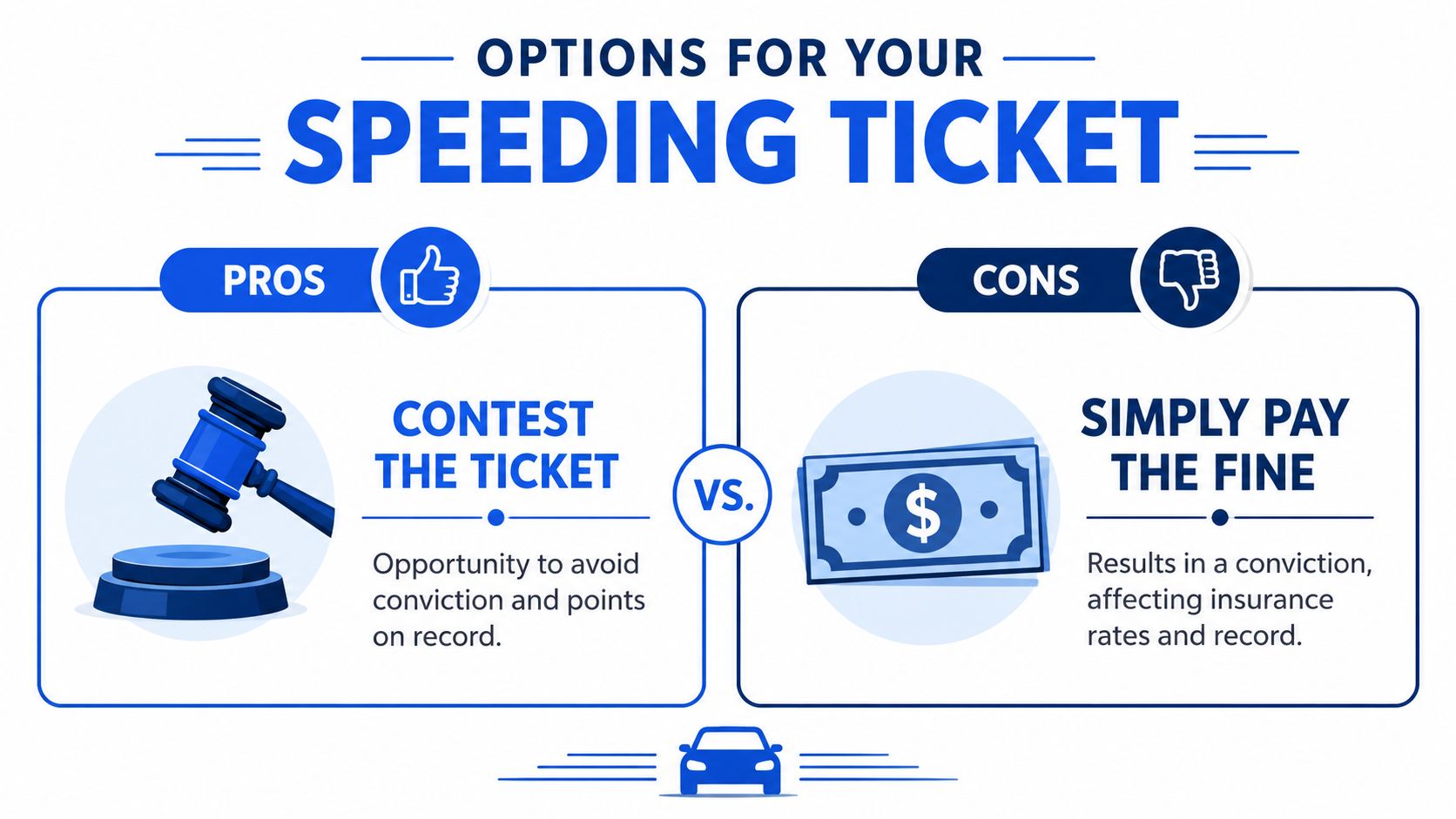
Your real options are not equal
Start with the bad one. Paying the fine ends the task quickly, but it usually creates the record result you're trying to avoid.
Traffic school can help in some situations, but it isn't a universal fix. It also doesn't replace a defense strategy when the main objective is keeping the case from becoming a damaging conviction event.
Fighting the ticket is the only option built around protection.
Paying the citation: Fast, final, and usually harmful.
Traffic school: Limited and situation-dependent.
Contesting the charge: The only route that preserves room for dismissal, reduction, or a withhold.
If your priority is keeping the ticket off your record, start with practical ways to challenge and remove a ticket from your record in Florida.
A short explainer helps clarify the stakes:
Why lawyer access matters
Drivers often get burned by ticket apps and volume-based services. They think they're hiring a defense. Often, they're really entering a workflow.
A lawyer-led model matters because facts change cases. Officer notes matter. Court habits matter. Negotiation posture matters. You need direct communication with the person responsible for strategy, not a middleman reading updates off a screen.
Ticket Shield, PLLC handles Florida traffic defense with direct attorney communication by phone or text. That is materially different from automated apps or ticket mills that process drivers through layers of intake staff and canned messaging.
If your goal is no points, your defense can't be passive.
For drivers near the Richard E. Gerstein Justice Building, the Edgecomb Courthouse, and courts statewide, the pattern is the same. The earlier you put a real defense in place, the better your chance of avoiding the result that damages your record.
Immediate Steps to Protect Your Florida Driving Record
Do these next. Do them in order.
Stop before you pay anything: Online payment is convenient for the court, not for you. Once you pay, you may be admitting the violation and losing your advantage.
Read the citation carefully: Check the charge, deadline, and county. Small details can shape your response.
Preserve your memory now: Write down where you were, traffic conditions, signage, weather, and what the officer said.
Don't rely on an app to make legal decisions: Automation is built for speed. Your case needs judgment.
Act before the deadline controls you: Waiting doesn't improve your position.
Learn your response options: Review what to do after getting a Florida traffic ticket before you make a mistake that becomes permanent.
If you're a Florida driver asking how long do speeding tickets stay on your record Texas, take the useful lesson from that search and apply it correctly here. Effective protection is not counting the years after a conviction. The primary protection is preventing the conviction from landing on your record in the first place.
Protect your record and avoid points. Visit TicketShield.com for a free consultation now.
If you want a lawyer-led review of your Florida ticket, visit Ticket Shield, PLLC. You can get a free consultation focused on the only goal that matters here: No Points.
