Get Traffic Ticket Dismissed: How to Get a Traffic Ticket
Get traffic ticket dismissed - Discover how to get a traffic ticket dismissed in Florida. Our 2026 guide helps you assess your ticket, gather evidence, and

TL;DR: Yes, you may be able to get a traffic ticket dismissed in Florida, but the biggest reason drivers lose is simple. They make avoidable mistakes early. Don’t pay it, don’t explain it away, and don’t trust an app to protect your record.
You looked in the mirror, saw flashing lights, and now you’re holding a citation that feels small enough to ignore. That instinct is dangerous. A Florida traffic ticket is rarely “just a ticket.” The moment you handle it the wrong way, you can turn a manageable problem into points, insurance damage, and a record entry that follows you.
Most dismissals are lost before court. Drivers talk too much at the stop. They pay online without understanding that payment closes the case as a conviction. They wait too long. They rely on automated apps that file paperwork but don’t build a defense. If your goal is to get traffic ticket dismissed, your first job is to stop making the case easier for the state.
Table of Contents
What Are the Real Stakes of a Florida Traffic Ticket
The actual risk isn’t the fine. The actual risk is what the conviction allows.
In Florida, traffic charges under Chapter 316 can affect your license, your insurance profile, your work, and your driving record. If your citation involves speeding, Florida Statute 316.187 is one of the laws that can come into play. That matters because speeding cases often look simple on paper and become very technical once an attorney starts examining proof, procedure, and officer error.
Why paying the ticket is usually the wrong move
Most drivers want the fastest way to make the problem disappear. Paying online feels efficient. It isn’t. It’s surrender.
Once you pay, you usually give up the chance to challenge the stop, the officer’s notes, the equipment, and the citation itself. You also lose your advantage. A strategic defense works because it keeps options open long enough to review what happened.
Practical rule: If your priority is no points, don’t treat convenience like strategy.
That’s especially true if the ticket may have been written around a detail you can challenge, such as the officer’s location, the basis for the stop, or missing information on the citation. Drivers who move too fast often destroy their own best defense.
Who gets hit hardest by one conviction
Some drivers can absorb a mistake. Others can’t.
Gig workers are in the danger zone. In Florida, there are over 100,000 gig economy drivers, and platforms like Uber and Lyft often use zero-tolerance approaches to moving violations. A single ticket can trigger account deactivation and immediate income loss. A 2025 report indicated a 22% rise in citations for this group according to gig driver ticketing concerns in Florida.
If you drive for work, a moving violation is a business problem. It can shut down your earnings before you even get a court date.
Even drivers dealing with equipment issues should think beyond the ticket itself. If your stop involved window tint, you should also understand compliance questions before you fix anything or make statements about modifications. This guide on Explore legal tint options for Georgia is useful for understanding how tint laws are analyzed, even though your Florida defense still needs to be handled under Florida law.
For a closer look at protecting your record after a citation, review Florida traffic ticket defense strategies.
What Should You Do Immediately After Getting a Ticket
The first few hours matter more than drivers realize. Your memory is freshest. The scene hasn’t changed yet. And you still have a chance to avoid the mistakes that weaken dismissals.
Start with discipline. Don’t call the officer names online. Don’t post your version on social media. Don’t text people that you “were definitely speeding.” Loose statements become useful later, just not for you.
What to document before details fade
As soon as you can do it safely, write down what happened. Don’t trust yourself to remember it accurately next week. You won’t.
Focus on conditions, not emotion. Note where you were, which lane you occupied, traffic flow, weather, visibility, road construction, nearby signs, and where the officer was positioned. If the stop involved speed, note whether other vehicles were around you and whether anything blocked line of sight.
Also record the officer’s exact statements as best you remember them. If the officer mentioned radar, pacing, signage, or a reason for the stop, that language matters. A small inconsistency can become a useful point later.
The strongest early notes sound boring. That’s a good sign. Facts beat outrage.
Immediate steps to take
Use this checklist right away:
Preserve the citation: Take clear photos of the front and back of the ticket. Keep the original flat and readable.
Write a timeline: Record the time of stop, road, direction of travel, traffic conditions, and what the officer said.
Photograph the area: If safe, go back later and photograph lane markings, posted signs, obstructions, and the general layout.
Protect digital evidence: Save dashcam footage, GPS logs, rideshare app trip history, and location data before it auto-deletes.
Check the deadline: Look at the response date on the ticket and calendar it immediately.
Stay silent publicly: Don’t post about the stop or argue about it online.
Get a case review fast: Use what to do when you get a ticket in Florida to prepare before you decide how to respond.
These steps don’t guarantee dismissal. They do prevent the most common self-inflicted damage.
What you should not do
Drivers usually hurt themselves in three ways.
First, they pay the ticket too fast. That ends the fight before it starts.
Second, they contact the court or prosecutor casually and start explaining. You are not there to “clear things up” informally. You are there to protect your record.
Third, they assume every case is routine. It isn’t. A stop tied to work driving, a commercial use vehicle, prior citations, or sensitive employment status can change the stakes immediately.
A measured response wins more often than a rushed one. If you want to get traffic ticket dismissed, your first move should be evidence preservation and deadline control, not damage control through guesswork.
How Do You Analyze Your Ticket for Deficiencies
A Florida citation is a legal instrument. It needs to be accurate enough to support the charge. If it isn’t, that matters.
Drivers often stare at the fine amount and miss the document itself. That’s backward. Start by reading the ticket line by line. Don’t skim. Look at it the way a defense lawyer would look at it in a courthouse file.

What to check on the face of the citation
Review the identifying details first. Your name, address, plate, vehicle information, location, date, and time all need to make sense. One typo won’t always end a case, but a cluster of errors can signal sloppiness that extends into the officer’s observations and supporting paperwork.
Then check the alleged violation. The statute cited must match what the officer claims happened. If the description is vague, internally inconsistent, or incomplete, that can create room to challenge the charge or the way it was documented.
Use this quick review table:
Citation area | What you should look for | Why it matters |
|---|---|---|
Driver details | Wrong name, address, or license information | Errors can undermine reliability |
Vehicle details | Plate, make, model mismatches | Supports broader accuracy challenges |
Time and place | Incorrect road, direction, date, or time | Can conflict with your evidence |
Charge description | Vague or mismatched allegation | Weakens clarity of the state’s claim |
Officer notes reference | Any indication of radar, pacing, or observations | Tells you what proof may need scrutiny |
A strong deficiency review also asks what’s missing. Missing details can matter just as much as wrong details.
How Florida Statute 316 matters in a speeding case
In Florida speeding cases, the statute matters because the government still has to prove the violation under the law it charged. If your ticket references speeding conduct, Florida Statute 316.187 is part of the legal framework that shapes how the allegation is framed and defended.
That means the attorney reviewing your case isn’t just reading a number on the ticket. They’re testing whether the factual allegation, officer observations, and enforcement method line up with the legal theory behind the citation.
If the officer used pacing, radar, lidar, or visual estimation, each method raises different questions. Was the location described correctly? Was the observation specific enough? Did the narrative support the exact charge written? Those aren’t abstract issues. They can make the difference between an advantage and no advantage.
A ticket doesn’t become valid just because it was printed. It still has to hold up under scrutiny.
If you want a more disciplined way to review the form itself, study how to read a Florida traffic citation.
Why high-stakes drivers need a stricter review
Some clients need more than ordinary caution. Military personnel are one example.
For service members at Florida bases such as MacDill AFB or NAS Jax, a traffic conviction can require disclosure on forms like the SF-86, and 15% of traffic incidents lead to security clearance reviews according to 2025-2026 DoD data cited in military traffic clearance risk reporting. That changes the analysis. The question stops being “Can I just deal with this quickly?” and becomes “Can I afford a conviction at all?”
That’s why a superficial review is a mistake. A lawyer should be checking not just whether the ticket is annoying, but whether the case carries collateral consequences that hit your income, clearance, or professional standing.
What Are Your Legal Options to Fight the Charge
You have options. More than most drivers think.
A Florida traffic case can often be attacked from several directions at once. The right strategy depends on the stop, the charge, the county, and the quality of the officer’s proof. What works at the Edgecomb Courthouse in Tampa may look different from how a lawyer approaches a hearing at the Orange County Courthouse or the Richard E. Gerstein Justice Building in Miami.
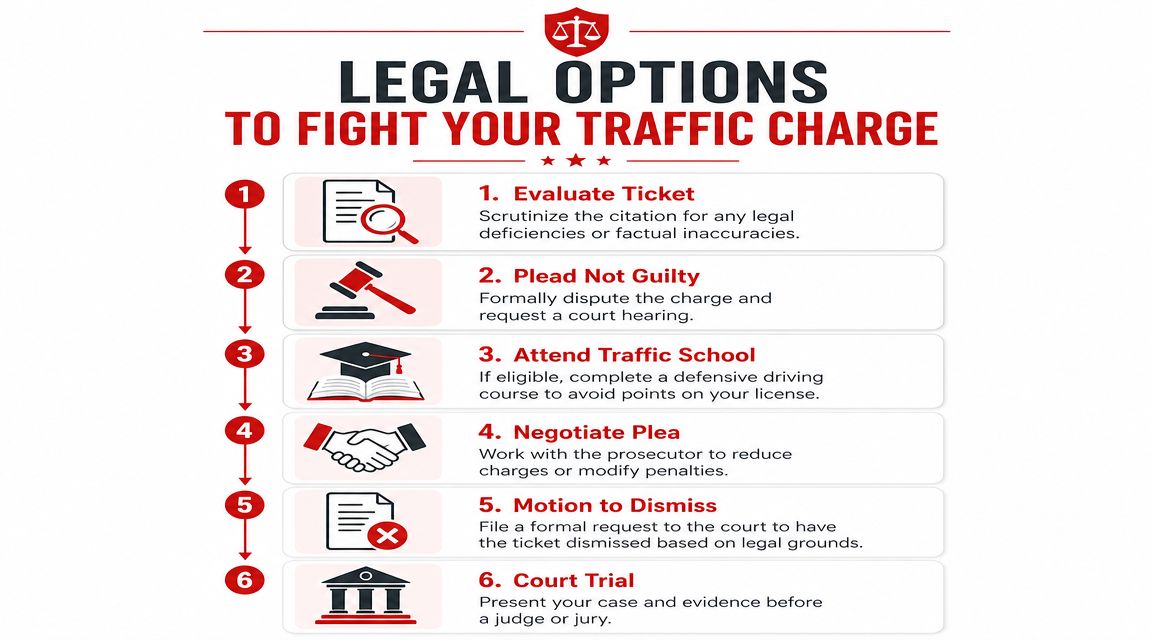
Can you contest the stop itself
Yes, sometimes the stop is the problem.
If the officer lacked a lawful basis to stop you, that issue can shape the whole case. A stop built on weak observations, confusion about the vehicle, or unsupported assumptions can create pressure points for the defense. If the stop falls apart, the rest of the case may weaken with it.
This is one reason drivers shouldn’t assume every citation rises or falls on speed alone. Sometimes the best defense starts before the officer ever reached your window.
Can you challenge the officer’s proof
Absolutely. And here, passive services often fail you.
The officer’s proof may depend on observations, written notes, equipment, or later testimony. Each piece can be tested. If the officer’s paperwork doesn’t align with the citation, if the narrative is too thin, or if the method of enforcement raises questions, a lawyer can use that pressure in negotiation or in court.
Here are common legal pressure points:
Observation issues: The officer’s view, position, or sequence of events may not support the allegation cleanly.
Documentation problems: A mismatch between citation details and supporting records can damage credibility.
Method problems: If the claimed enforcement method is unclear or poorly supported, the prosecution may have proof gaps.
Appearance issues: If the officer doesn’t appear when required, the state may lose practical ability to prove the case.
Not every issue produces dismissal by itself. Good defense work often comes from combining several weaknesses until the case becomes worth reducing or dropping.
When negotiation makes sense
A dismissal is the target. But smart lawyering also protects you when outright dismissal isn’t immediately available.
Sometimes the best move is to negotiate for a resolution that protects your record from points. Sometimes that means pursuing a non-moving outcome. Sometimes it means seeking a disposition that avoids the long-term damage of a formal conviction. Sometimes traffic school is discussed, but it isn’t automatically the right answer for every driver.
That last point matters. Drivers often assume traffic school is the safe option. It may not be. If your work, history, or case posture makes a different path more protective, a lawyer should tell you that plainly.
Good strategy doesn’t chase the fastest resolution. It chases the least damaging one.
When court is the right move
Some cases should be litigated.
If the officer’s proof is weak, the stop is questionable, or the citation has real defects, court may be the right pressure point. That doesn’t mean you want drama. It means you want an advantage. A prepared appearance, focused objections, and a disciplined record can force the state to deal with the weaknesses in its own case.
And local knowledge matters. Courtroom expectations differ. Judicial preferences differ. Prosecutorial flexibility differs. A lawyer who regularly handles Florida traffic dockets understands how to position your case for the cleanest possible result.
If you’re weighing those options, this guide on how to fight a traffic ticket in Florida is a useful starting point.
Why Is a Real Lawyer Better Than a Ticket App
Because your case is not a software workflow.
An app can intake data, send reminders, and push forms through a system. That’s administration. It is not defense. If your goal is to get traffic ticket dismissed, you need someone who can spot weaknesses, adapt to local court practice, and make judgment calls that software can’t make.
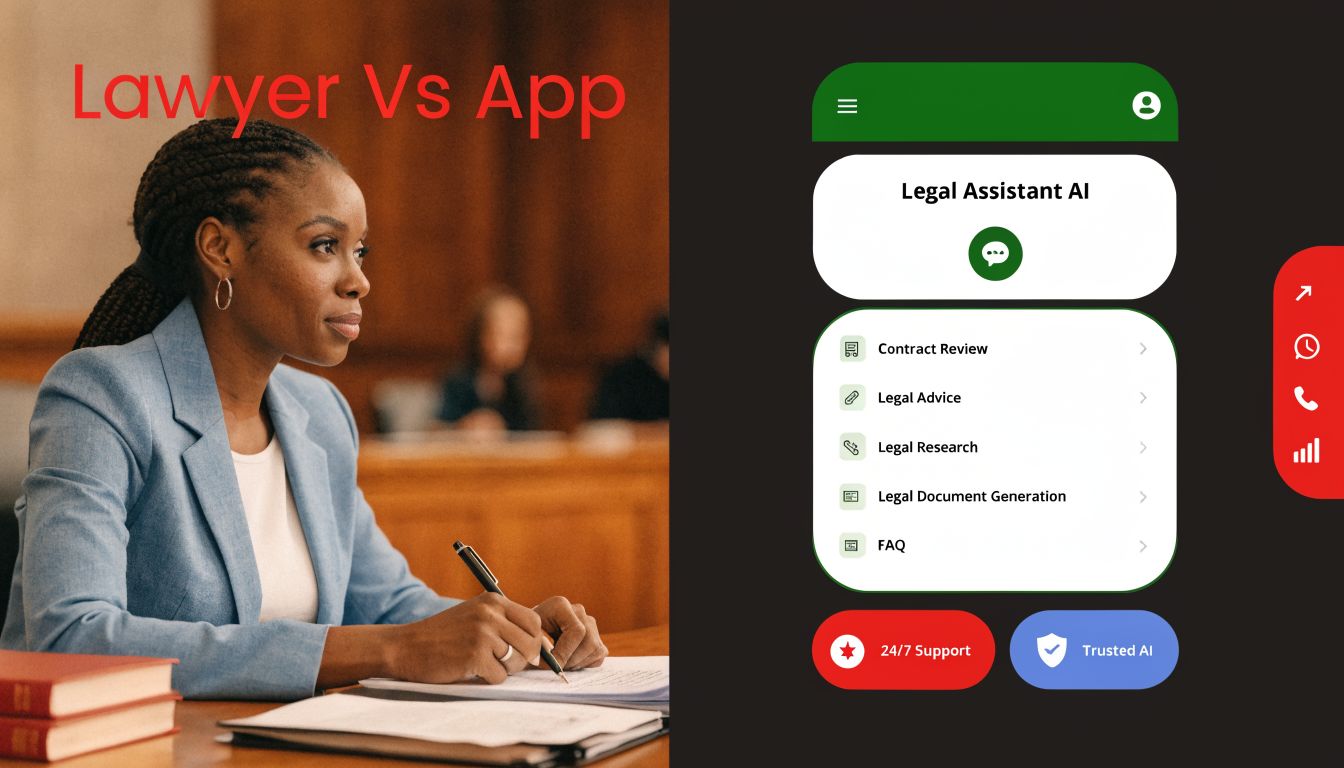
Apps process cases while lawyers defend them
Automated services are reactive. They wait for the facts you type in. They don’t cross-check your memory against legal pressure points. They don’t hear the uncertainty in your voice when a work vehicle was involved. They don’t tell you that one sentence you were about to send could hurt your case.
A real lawyer does.
A lawyer can tell when a case should be negotiated with discretion, when it should be pressed harder, and when the paperwork suggests a deeper flaw. That’s not clerical work. That’s legal judgment.
At a firm like Ticket Shield, PLLC, the difference is direct attorney access by phone or text, not a chain of middlemen. That matters because the strongest defenses usually come from details that don’t fit neatly into an app form.
Local courtroom experience changes outcomes
Florida traffic court is local. That’s the case.
In Miami-Dade County, 55% of traffic tickets defended by experienced attorneys are dismissed outright according to Miami-Dade traffic dismissal data. That statistic makes one point clearly. Lawyer-led defense changes results.
The reason is practical. Experienced attorneys know how local courtrooms operate. They know how to frame issues efficiently. They know which facts matter and which facts are noise. They know that a case at the Richard E. Gerstein Justice Building should be handled with local strategy, not generic automation.
Apps don’t know your judge. They don’t know your courthouse. They don’t know when a case should be pushed and when it should be resolved amicably. They only know the form you submitted.
How Ticket Shield Manages Your Case for a Dismissal
Once you decide to fight, your job should get smaller, not bigger.
You shouldn’t be chasing filing rules, wondering whether you said the wrong thing, or trying to decode court procedure after work. A lawyer-led process exists to remove that burden and protect the record at the same time.
What happens after you hand over the ticket
The first move is a legal review. That means the citation, the charge, the court, and the practical risk are assessed together. If the allegation involves speeding, that review includes how the case aligns with the statute charged and whether the proof appears clean or vulnerable.
Then the defense path is chosen. That can include filing responses, preserving deadlines, reviewing deficiencies, preparing for negotiation, and deciding whether court pressure is warranted. In many traffic matters, the client’s role should be limited to providing the ticket, answering targeted questions, and staying available for updates.
If you’re ready to hand the matter over for review, use the case submission form for Florida traffic defense.
Why direct attorney access matters
Direct communication changes cases.
When you can speak to your attorney by phone or text, problems get addressed early. Questions get answered before they become mistakes. New facts can be evaluated immediately. That’s a different model from a ticket mill that routes you through intake staff, canned updates, or a chatbot.
It also matters because most clients care about one practical goal above all others. No points. They want the least damaging resolution possible without losing time in court or risking avoidable errors.
Florida drivers also need a firm that can handle cases statewide. That matters if you were cited far from home, work on the road, or don’t have time to chase a county court process yourself. The right defense should be strategic, fast-moving, and centered on protecting your license rather than processing your payment.
Over 99% of clients avoid court appearances, and services start at $39.99, according to the verified firm information provided in the prompt. Those details matter because convenience should come from attorney handling, not from surrendering your defense to automation.
If you’re serious about trying to get traffic ticket dismissed, the biggest mistake is waiting. The second biggest mistake is trusting a passive system with an active legal problem.
Protect your record before one citation turns into points, insurance damage, or lost income. Visit Ticket Shield, PLLC for a free consultation and get a lawyer-led plan focused on one result: No Points.