Florida Super Speeder Law: A Driver's Survival Guide
Facing a ticket under the Florida Super Speeder Law? Understand the severe penalties, how to fight the charge, and protect your record with this urgent guide.

You're probably reading this after a stop that went sideways fast. Lights in the mirror. A speed allegation that sounded unreal. Then the officer told you this isn't a normal ticket.
That part matters. Under Florida's current law, this can be a criminal traffic charge. If you handle it like a routine citation, you can make your situation worse before your first court date.
Table of Contents
Your Urgent Guide to a Super Speeder Charge
TL;DR: Florida's super speeder law can turn extreme speeding into a criminal charge under Chapter 316. You may face jail, a mandatory court appearance, and costs far beyond the listed fine. Act immediately. Don't treat this like a normal ticket.
If you were stopped at an extreme speed, your first instinct may be to find a payment portal and make this disappear. That won't fix this. A charge under Florida Statute § 316.1922 sits in Chapter 316 and has to be handled like a criminal traffic matter, not a casual moving violation.
This is the moment to get disciplined. Stop talking about the stop by text. Don't post about it. Don't call it “just a speeding ticket” when you talk to family, your employer, or your insurer. The words you use now shape the way you respond, and the wrong mindset leads to bad decisions.
What should you do in the next few hours
Read every line of the citation: Look for the statute number, court date, county, and whether the officer described the driving as dangerous.
Save everything immediately: Keep the citation, bond paperwork if any, dashcam footage, app trip logs, and your recollection of traffic, weather, and road conditions.
Write down the route while it's fresh: Note lane position, surrounding traffic, visibility, and whether the roadway was open or congested.
Protect your driving future: If you already know speeding is becoming a pattern, take a hard look at resources that help prevent speeding violations so you don't walk into a second offense later.
Get legal advice before court contact: Calling the clerk for scheduling is fine. Explaining facts or strategy without counsel is not.
Practical rule: If the citation references a criminal traffic statute, treat every next step as record-building. Because that's what it is.
Automated apps and ticket mills are built for volume. They move paperwork. They don't prepare a criminal defense strategy around facts, witnesses, officer observations, and courtroom exposure. If your license, record, and freedom matter, you need a lawyer, not a chatbot.
What Exactly Is Florida's Super Speeder Law
You get stopped for speed, expect a traffic ticket, and then see a criminal traffic statute on the citation. That is the moment this stops being routine.
Florida's super speeder law is Florida Statute § 316.1922, which went into effect on July 1, 2025. It creates the offense of dangerous excessive speeding, a first-degree misdemeanor. If you are charged under it, you are in criminal territory, not standard ticket territory.

Which driving conduct triggers the statute
The charge usually comes from one of two allegations:
Driving 50 mph or more over the posted speed limit
Driving 100 mph or more in a way that threatens the safety of people or property
Those two paths matter for defense. The first focuses heavily on the speed allegation itself. The second adds a factual fight over whether your driving threatened safety, which gives a lawyer more to work with than many drivers realize.
Why the statute changes your legal position immediately
A charge under § 316.1922 is not something you pay online and forget. It puts you into criminal court, exposes you to a prosecutor, and creates record risk from day one. If you want a plain explanation of why that matters, read how a criminal traffic violation in Florida is treated differently from an ordinary infraction.
That distinction is where drivers make expensive mistakes. Ticket mills and automated services are built to process volume and push standard outcomes. They are not built to defend a misdemeanor traffic prosecution, challenge the officer's factual narrative, or protect you from criminal exposure in court. If this citation says § 316.1922, you need a lawyer handling a defense file, not a platform processing a ticket.
Focus on the charging language. Read the exact statute number. Check whether the officer claimed only speed, or speed plus conduct that threatened safety. That wording shapes your defense early, and early is when the case is easiest to control.
What Are the Immediate Penalties If Convicted
You walk into court thinking this is still a speeding ticket. The judge is looking at a criminal traffic charge that can put you in jail, take your money, and put your license at risk. That misunderstanding hurts drivers every day.
A conviction under § 316.1922 brings immediate punishment. For a first conviction under Florida Statute § 316.1922, the court can impose up to 30 days in jail, a fine of up to $500, and a mandatory court appearance. That changes the entire posture of your case. You are not resolving an ordinary citation. You are defending a misdemeanor in criminal court.
If you need the legal framework, review what qualifies as a criminal traffic violation in Florida. Then act on it. Criminal charges punish delay.
What the judge can do right away
The first conviction matters because the court has real sentencing power from day one. Jail is authorized. A criminal judgment can follow you into background checks, professional licensing questions, and future traffic cases. Judges also look at these files differently than routine infractions, which means your presentation, mitigation, and factual defense need to be prepared before the hearing, not improvised at the podium.
Ticket-mill services are built for volume. They push routine ticket resolutions and automated updates. They do not prepare criminal mitigation, challenge officer testimony with purpose, or protect you from a misdemeanor conviction. If you are charged under § 316.1922, use a lawyer who handles criminal traffic defense, not a platform that treats every case like a payable citation.
A second conviction gets harsher fast
A second conviction within five years exposes you to up to 90 days in jail, a $1,000 fine, and a license revocation for 180 days to 1 year. That is the kind of penalty jump that can wreck your job and your daily life.
Penalty | First Conviction | Second Conviction within 5 years |
|---|---|---|
Jail exposure | Up to 30 days | Up to 90 days |
Fine exposure | Up to $500 | Up to $1,000 |
Court appearance | Mandatory | Mandatory |
License consequence | Criminal conviction exposure | Revocation for 180 days to 1 year |
The first case is where you stop the long-term damage. If you let a weak defense turn into a conviction now, the next stop becomes far more dangerous.
What to do before your first court date
Start building your defense file now.
Calendar every deadline immediately. Missing criminal court creates a second problem you do not need.
Preserve your evidence. Save dashcam footage, GPS logs, work app records, text timestamps, and passenger information before any of it disappears.
Write down the stop while it is fresh. Traffic conditions, lane changes, road design, weather, officer location, and what was said all matter later.
Do not admit the case online or over the phone. Casual statements get repeated in ways that hurt you.
Get a lawyer involved early. Early intervention gives your defense room to challenge the speed allegation, the safety narrative, and the prosecution's advantage before positions harden.
You should also start sizing up the financial exposure tied to this charge. A tool like My Policy Quote's insurance premium calculator helps you estimate how a conviction can raise your insurance costs, even before the broader hidden costs hit.
How Do Hidden Costs and Insurance Cripple You
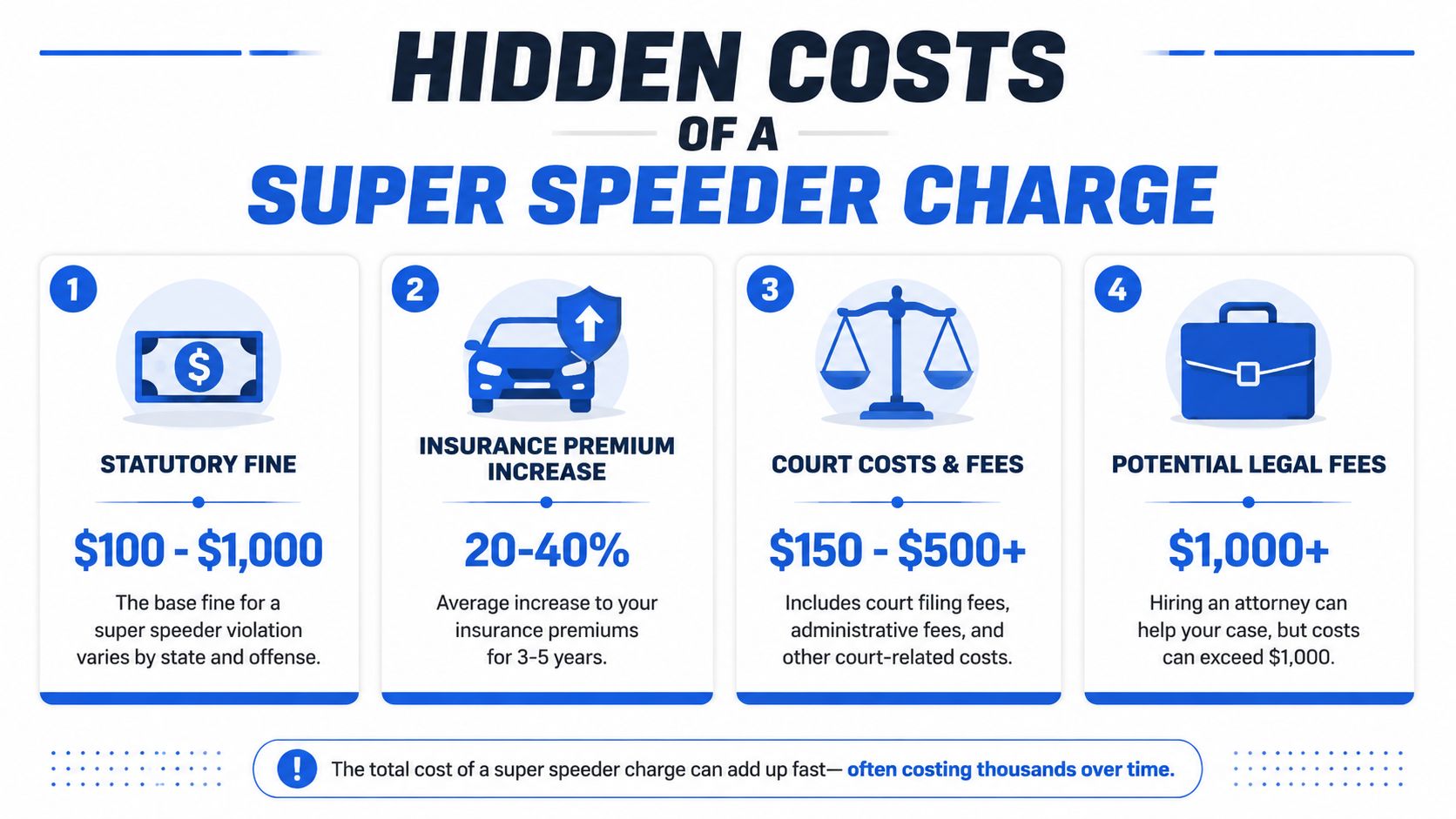
The listed fine is not the full bill. It's the teaser amount people remember while the actual financial damage hits later.
According to reporting on the law's first year, the actual financial burden for drivers routinely exceeds $850 because of mandatory court costs and the non-dismissible 12-hour Advanced Driver Improvement Course costing $300+. The same reporting states that 967 arrests occurred statewide in the first year from July 2025 to June 2026, and 30 reviewed cases showed defendants consistently receiving the maximum $500 fine plus over $300 in court costs. It also noted that 25% of arrestees were gig drivers or military personnel.
That's the part many drivers discover too late, often after they thought they were budgeting for a fine and nothing more.
Why the fine is only the beginning
If your case lands in Miami-Dade, the pressure feels very real at the Richard E. Gerstein Justice Building. You're dealing with court costs, scheduling demands, and a course requirement that doesn't automatically erase the problem.
For gig drivers, this can turn into an income crisis. For military personnel, it can create timing and compliance problems that spiral into licensing trouble. For busy professionals, it becomes a forced interruption that money alone doesn't fix.
A criminal traffic case punishes your calendar almost as fast as it punishes your wallet.
Why insurance becomes the long fight
The court's bill is immediate. Insurance pain is slower, and that's why drivers underestimate it. Your carrier will make its own underwriting decision after a conviction or major traffic event, and that review can follow you long after the court file closes.
If you want to estimate how policy pricing works in general, My Policy Quote's insurance premium calculator gives a useful baseline framework. For a Florida-specific look at why drivers fight hard to avoid the conviction itself, review how a ticket can affect the cost of insurance after a Florida speeding ticket.
The lesson is simple. Don't budget only for the fine. Budget for the full chain reaction, then do everything you can to avoid giving that chain reaction a conviction to attach to.
How Can You Strategically Fight This Criminal Charge
The charge is serious. It is still defendable.

Florida's statute has a built-in pressure point. According to analysis of Florida speed laws, § 316.1922 requires driving to be done “in a manner that threatens safety,” and that distinction gives your attorney a critical angle to argue that the context did not constitute a threat. That matters because context is where many cases are won or reduced.
Why the safety element matters
Speed alone is not the entire story when the state relies on the 100-plus pathway. The surrounding facts matter. Traffic density matters. Lane changes matter. Road conditions matter. The officer's observations matter.
If the state wants the court to accept “threatens safety,” your lawyer should force precision. What exactly made the driving threatening? Who was endangered? What was the traffic pattern? Was the officer describing actual risk, or merely a high number on a speed reading?
The state has to prove more than outrage. It has to prove the elements.
That is also where language access becomes critical. If English isn't your first language, make sure your defense and court communication are clear. Resources on ensuring legal language access for courts can help you understand why certified interpretation matters in criminal proceedings.
What a defense lawyer actually challenges
A real defense is not a generic plea for mercy. It is targeted work.
Measurement evidence: Radar, lidar, pacing, and officer notes should be examined, not assumed accurate.
Scene context: Open roadway is different from dense traffic. That difference can matter under this statute.
Charging theory: If the facts don't support the criminal version, the defense pushes for reduction or dismissal.
Court presentation: The file has to be framed properly from the first appearance forward.
If you want a practical overview of how drivers contest allegations, read about how to fight a traffic ticket in Florida. The same disciplined thinking applies here, but this matter is more serious because it is criminal.
A short explainer on the issue is below.
What Are Your Immediate Options After Receiving This Charge
You have choices. Not all of them are smart.
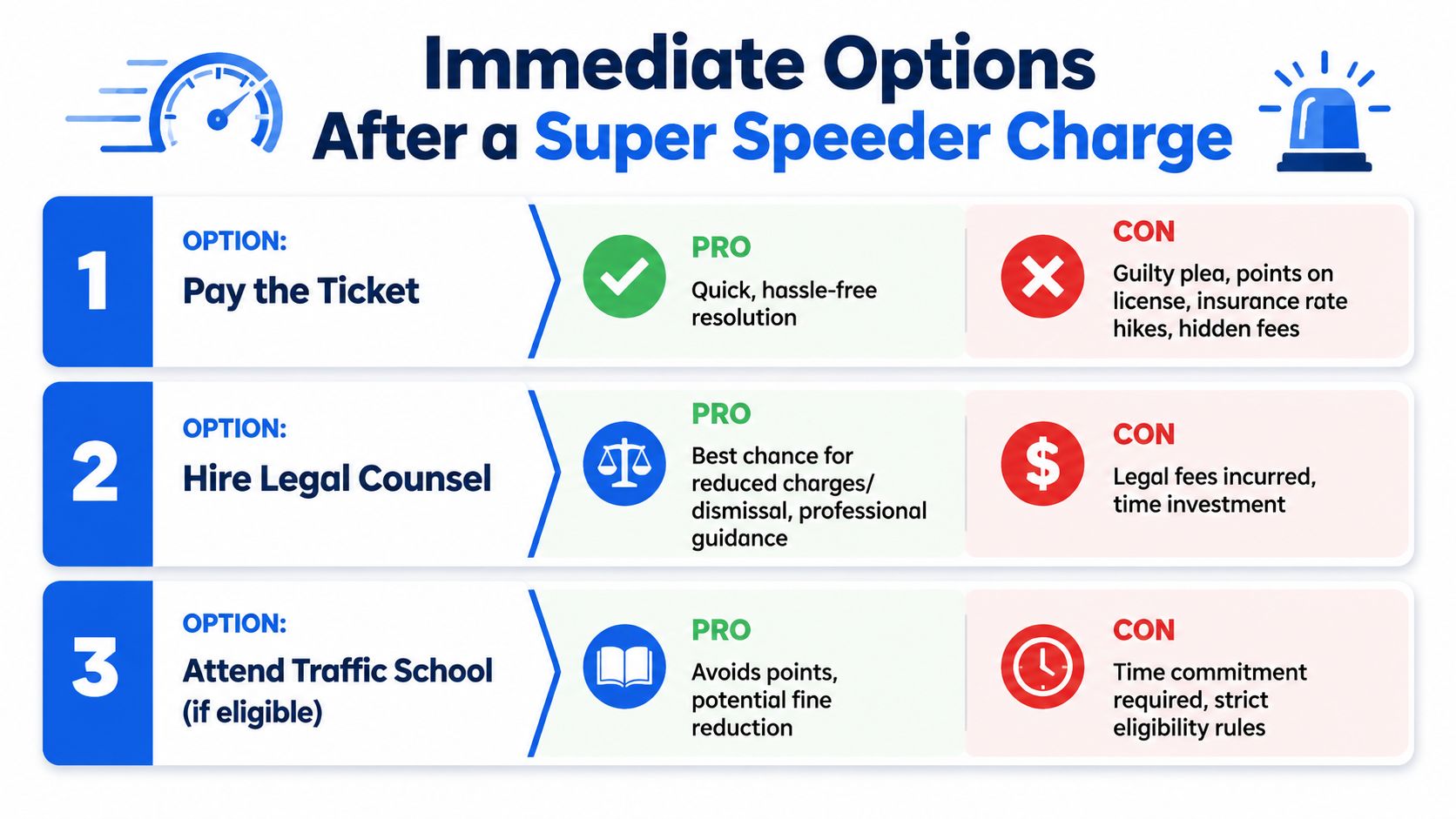
The first bad choice is assuming you can pay it away. The second bad choice is handing a criminal traffic case to an automated app or a ticket mill built to process simple infractions at scale. Those systems are built around speed and volume. You need judgment, direct legal access, and a courtroom strategy.
Which choices hurt you and which protect you
A useful first read is this guide on what to do when you get a ticket. Then apply a stricter filter, because this isn't a standard citation.
Handling it alone: This gives you total control, but it also leaves you personally exposed in criminal court. If you miss a legal issue early, you usually don't get that advantage back.
Trying to “explain” the situation: Drivers often think honesty alone solves things. In court, uncontrolled admissions usually help the state more than they help you.
Hiring actual counsel: This is the option that puts someone between you and the charge.
Why direct access to your lawyer matters
When your case is criminal, middlemen slow everything down. Intake staff can gather information. They cannot give legal advice. Chatbots can organize documents. They cannot make judgment calls about plea risk, evidentiary weaknesses, or the judge assigned to your courtroom.
At Ticket Shield, PLLC, clients speak directly with their attorney by phone or text. That lawyer-led model matters when your case may go through a courthouse like the Broward County Judicial Complex or another busy Florida criminal traffic docket where preparation and response time make a real difference.
If you're deciding today, use this checklist.
Choose direct attorney contact: You should know who is making legal decisions on your file.
Ask about criminal traffic experience: This charge is not the place for a generic traffic processing service.
Demand a strategy, not a script: You need someone who can explain how the facts fit, or don't fit, the statute.
Move quickly: Delay costs advantage.
Why Your Next Move Is the Most Important One
A super speeder allegation under Chapter 316 is not a paperwork annoyance. It is a criminal traffic threat with consequences that can reach your license, your employment, your schedule, and your record.
If you're a delivery driver, your income may depend on a clean driving profile. If you're military, any unresolved criminal traffic issue can become a larger professional problem. If you commute constantly for work, the loss of driving privileges can wreck your routine overnight.
This is why “I'll deal with it later” is the wrong answer. Later is when evidence is harder to gather, deadlines are closer, and the state's version has had more time to harden.
Protect the facts early, protect your record aggressively, and protect your future before the first appearance.
If you're still weighing whether to pay or hire counsel in a serious traffic matter, review the practical tradeoffs in paying a ticket versus hiring a lawyer. Then make the safer choice.
This charge needs a defense plan now. Not after the court date gets close. Not after your insurer reacts. Now.
If you've been charged under Florida's super speeder law, act before this turns into points, a conviction, or a license problem that follows you for years. Visit TicketShield.com for a free consultation and fight for the outcome that matters most: No Points.