Florida Speeding Ticket Options 2026 Guide
Explore your Florida speeding ticket options: pay, fight, or attend traffic school. Protect your driving record, avoid points, and minimize insurance increases

If you just got a Florida speeding ticket, don't rush to pay it. You usually have 30 days to choose your response, and each option affects your record differently. The right move is the one that protects you from points, not the one that feels fastest.
You saw the lights. You pulled over. The officer handed you a citation, and now you're staring at a deadline and a decision you probably didn't expect to make today.
Most drivers make the same mistake. They treat a speeding ticket like a bill. It isn't. In Florida, how you respond can affect your license, your insurance, and your options the next time something goes wrong on the road. If you care about your driving record, this needs attention now.
Table of Contents
What Happens After You Get a Florida Speeding Ticket
You get pulled over on I-95, take the citation, and tell yourself you will deal with it later. That is how drivers lose options. In Florida, a speeding ticket puts you on a short deadline, and a rushed online payment can hurt your record before you understand the consequences.

Why this ticket deserves immediate attention
A Florida speeding citation is usually a civil traffic infraction. It still carries real consequences. Florida's speeding laws sit inside Chapter 316, including Florida Statute 316.187, and the case can affect your driving record, insurance costs, and in some situations your job.
You generally have 30 days from the citation date to respond. That response period is standard in Florida traffic cases, and the clock starts whether you are ready or not.
Treat that deadline like a legal deadline, because it is.
The first mistake drivers make is assuming a speeding ticket is just a fine. It is a record problem first. Once a conviction hits your history, the money is usually the smallest part of the damage.
The second mistake is handing the case to an app or ticket mill that processes volume and keeps you at arm's length. If your record matters, you want a lawyer reviewing the citation, the county, the speed allegation, and the response options before you give up any rights. That direct attorney review is the difference between an informed defense and automated paperwork.
What the first deadline means for you
Delay puts you in a worse position. Paying too fast can lock in a result you could have fought. Ignoring the ticket can trigger extra penalties. Waiting until the last few days limits what a lawyer can do for you.
Start with the citation itself. Confirm the county, the alleged speed, the issue date, and the response deadline. Then get clear on the process before you choose anything. If you want a broader explanation, read what happens when you get a speeding ticket.
Do not click “pay” just because the clerk's website makes it easy. Easy for the system is rarely best for the driver. A real lawyer looks at the facts, the court, and your record. An automated service usually treats your case like another file in a queue.
What Are Your Three Official Choices
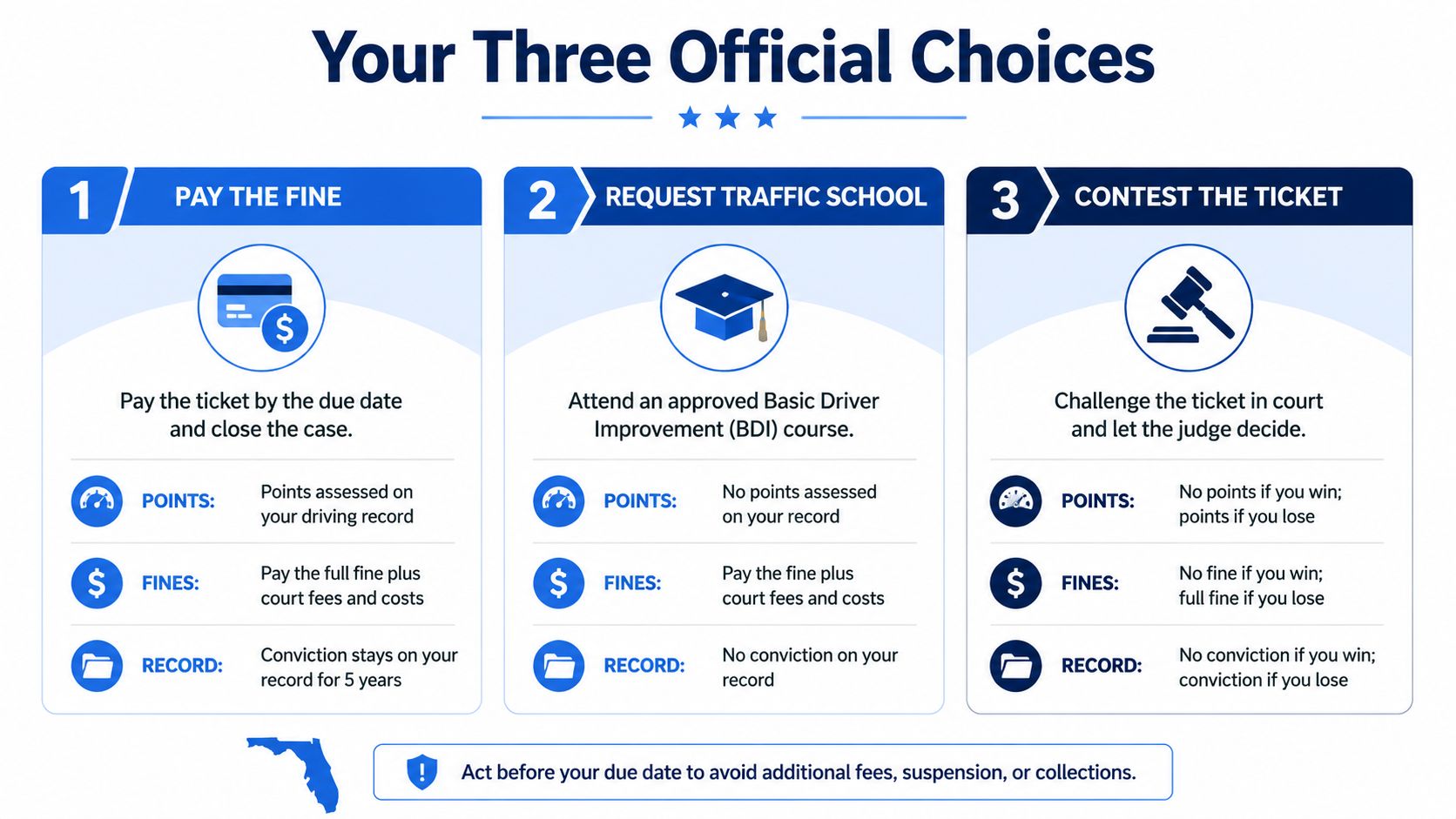
Florida gives you three basic paths. Court guidance makes the difference clear: paying can add points, driver improvement school can avoid points if chosen in time, and only a not-guilty plea creates a path to possible dismissal, as explained by the Miami-Dade Clerk's civil traffic instructions.
Paying the ticket is a guilty plea.
That single sentence should change how you look at the citation.
What happens if you pay
Paying is the easiest option administratively. It closes the case fast. It also usually means you accept the violation and expose yourself to points on your driving record.
If you're busy, that may sound appealing. It shouldn't. Convenience is a terrible reason to accept a moving violation if you have a clean record worth protecting or a job that depends on driving.
When traffic school helps and when it doesn't
Traffic school is different from a dismissal. It is a point-avoidance tool, not a declaration that the ticket was invalid. For some drivers, that makes it useful. For others, it wastes a limited option on a ticket that could have been challenged.
Florida speeding ticket options are often misunderstood because drivers lump “school” and “fighting” together. They are not the same outcome.
Here's the clean comparison:
Option | Immediate effect | Main record impact |
|---|---|---|
Pay the ticket | Case closes quickly | Points may be assessed |
Elect traffic school | You still resolve the case | No points if elected in time and completed |
Plead not guilty | Case moves into court process | Possible path to dismissal |
If you're considering court, this guide on going to court for a speeding ticket can help you think through the process.
What a not-guilty plea actually does
A not-guilty plea preserves your chance to challenge the citation. That may involve legal defects, officer proof issues, negotiation, or another defense strategy depending on the facts and the county.
Legal representation often matters most. Drivers who assume all Florida speeding ticket options are basically the same usually miss the biggest distinction in the entire process:
Traffic school can help you avoid points. A not-guilty plea is the route to a possible dismissal.
If your goal is getting the matter off your desk, pay it. If your goal is protecting your record, think harder.
Why Should You Do Everything Possible to Avoid Points

The fine is not the actual danger. Points are.
Florida uses a threshold system. Under Florida's point system, accumulating 24 points within 36 months triggers a mandatory 365-day license suspension, and a single speeding ticket can be the tipping point for drivers with prior violations, as explained in this Florida traffic ticket point overview.
Points create bigger problems than the fine
A driver with no prior history may survive one ticket without immediate catastrophe. A driver with prior tickets may not. That is why blanket advice like “just pay it and move on” is dangerous.
Points also create practical pressure long before suspension. Insurance carriers review driving history. Employers do too. If you drive for work, a “small” citation can become a business problem very quickly.
Consider the practical pressure points:
Insurance risk: Even when the court process feels minor, your driving record can affect what happens next with your policy.
License exposure: Once a driver gets close to the state threshold, each new ticket matters more than the last.
Employment consequences: Delivery drivers, rideshare drivers, sales professionals, and anyone with a fleet policy should treat points as a direct threat to income.
Who should be especially aggressive about point avoidance
Some drivers should fight harder from the start.
Commercial and gig drivers: If your ability to earn depends on staying active behind the wheel, point avoidance should be your first priority.
Military members and professionals with clearance concerns: Record issues can create unnecessary scrutiny. You want the cleanest outcome available.
Drivers with prior tickets: One more citation for these drivers stops being “annoying” and starts becoming dangerous.
Parents of young drivers: If the ticket belongs to your child, don't let them learn the hard way that paying online can leave a lasting mark.
If you want a practical explanation of how license points work, read speeding ticket points in Florida.
Practical rule: If points would hurt your job, your insurance, or your license status, the cheapest-looking option is often the most expensive decision.
Is Traffic School a Smart Choice for Your Ticket
You get the ticket, look for the fastest way to make it go away, and traffic school seems like the safe answer. Sometimes it is. Sometimes it is how drivers burn a limited option on the wrong case.
Treat traffic school as a strategic tool, not your default move. Florida limits how often you can use it, and the election window is short, as noted earlier. If you spend that option too quickly, you may regret it when a tougher citation shows up later.
When using traffic school makes sense
Traffic school is a reasonable choice when the ticket is minor, you are eligible, and your main goal is avoiding points without spending time fighting the case.
It also fits drivers who do not have a real dispute about the stop and want a predictable administrative result. If your record is otherwise clean and you need a practical way to reduce damage, school can do that.
But be honest about what you are buying. Traffic school usually helps with points. It does not give you a real defense, and it does not test whether the officer, the stop, or the citation can be challenged.
When using traffic school is a mistake
Drivers make a costly mistake when they treat traffic school like a universal fix.
If the ticket has weaknesses, or the facts deserve a closer legal review, using school can be the lazy option. You pay the citation, use one of your limited elections, and close the door on better outcomes that a lawyer may have been able to pursue.
That is where direct legal judgment matters. A lawyer-led review looks at the county, the officer, the charging details, and the practical result you need. An automated ticket app usually pushes you toward the fastest standardized outcome because that is what software does well. Your record deserves better than a workflow.
Ask yourself these three questions before you elect school:
Is there a real defense issue here? Bad speed measurement, poor paperwork, or a questionable stop can change the analysis.
Can you afford to use one of your limited elections now? Save that option for the case that needs it.
Do you need more than point avoidance? If your goal is dismissal or a stronger negotiated result, school may be the wrong tool.
If you are unsure whether this ticket should be challenged instead of handled administratively, read when it makes sense to hire a lawyer for a traffic ticket.
My advice is simple. Do not let a rushed online decision lock you into an outcome that helps the system more than it helps you. A real Florida traffic lawyer should review the ticket before you spend one of your limited traffic school chances.
When Does It Make Sense to Hire an Attorney
Some tickets are manageable on your own. Some aren't. You need to know the difference quickly.
If your job, license status, or prior record raises the stakes, legal representation is not a luxury. It is protection. That is especially true in busy Florida courthouses where local practice matters, including places like the Richard E. Gerstein Justice Building in Miami.
These drivers should get legal help fast
You should seriously consider hiring an attorney if any of these apply:
You already have prior violations: The court file may show a pattern even if you think this ticket is minor.
You drive for a living: Uber, Lyft, delivery, courier, and CDL-related work all put extra pressure on your record.
You have no time to deal with court: Missing work to attend a hearing is not efficient if counsel can handle the process.
You believe the stop or citation was wrong: A real defense requires legal judgment, not generic scripts.
You are dealing with a higher-risk speed allegation: The more serious the accusation, the less sense it makes to improvise.
If you're still weighing that decision, review whether you need a lawyer for a traffic ticket.
Why direct lawyer access matters
To be blunt, avoid automated apps and ticket mills if you want actual legal judgment.
A speeding ticket defense is not a software workflow. It is a legal problem tied to your record, your county, your timing, and your exposure. You should be able to ask questions and get answers from a lawyer, not a chatbot, a sales rep, or a case manager reading from a script.
Ticket Shield, PLLC is one Florida option built around direct lawyer access by phone or text, rather than routing drivers through middlemen. That model fits traffic defense better because the strategy often turns on small details in the citation and the driver's history.
If you're trusting someone with your license, you should know who is making the legal decisions.
What Are Your Immediate Steps to Protect Your Record
The worst response is panic. The second worst is procrastination.
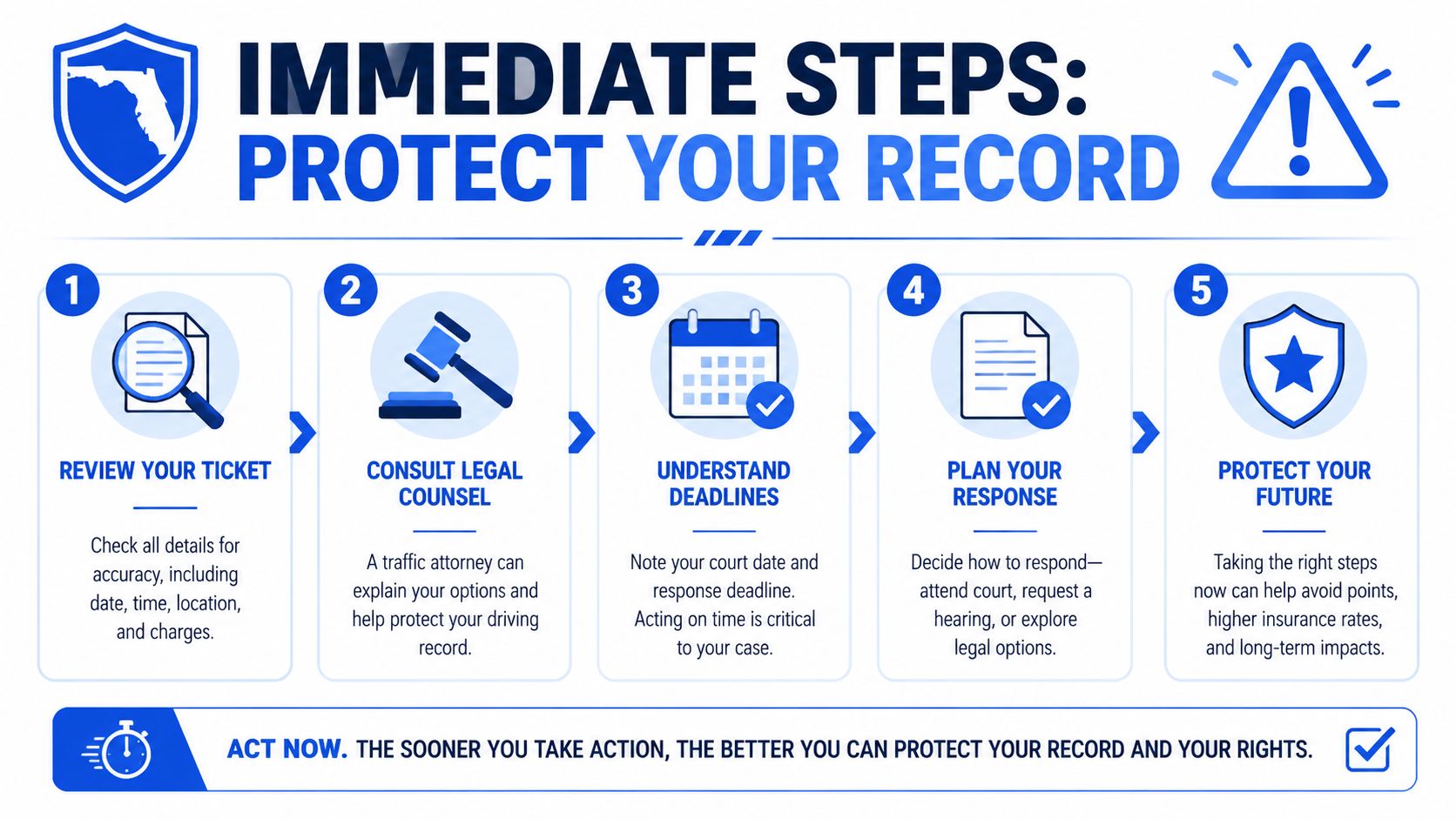
Take these steps now:
Do not pay the ticket online right away. That may feel efficient, but it can lock you into the worst outcome for your record.
Find the deadline on the citation. Florida traffic cases are procedural. If you miss the response window, your choices narrow fast.
Photograph everything clearly. Save the front and back of the ticket, any notice you received, and any notes you remember from the stop.
Write down what happened while it's fresh. Road conditions, traffic flow, officer comments, signage, and where the stop occurred can matter later.
Check your driving history before choosing a path. If you already have prior issues, this ticket may carry more risk than you think.
Here's a practical video overview to help you slow down and act intelligently:
Get legal guidance before using traffic school. That option is finite. Don't burn it without understanding the tradeoff.
Read a clear action guide. If you need a fast checklist, start with what to do when you get a ticket.
Your first job is simple. Preserve your options.
Florida Speeding Ticket FAQ
How are Florida speeding tickets different for CDL holders
For CDL holders, the margin for error is smaller. Even when a citation looks minor, the record consequences can hit harder because employers, fleet managers, and compliance policies often react quickly to moving violations. If you hold a commercial license or depend on driving for work, don't treat a speeding ticket like a routine nuisance.
The smart approach is defensive and immediate. You want legal advice before you pay, before you elect any school option, and before you assume the court will view your case the same way it would view a casual commuter's.
What should out-of-state drivers do about a Florida ticket
Out-of-state drivers should not assume distance makes the ticket irrelevant. Florida citations still need to be handled properly. Ignoring the case can create problems that follow you home.
If you live elsewhere, focus on the same basics. Confirm the deadline, preserve the paperwork, and get Florida-specific legal advice. Do not rely on guidance from another state or on a generic national app that doesn't understand Florida court practice.
Can any attorney guarantee your ticket will be dismissed
No. Any lawyer who promises a guaranteed dismissal is not giving you careful advice.
An experienced attorney can evaluate the facts, identify the strongest strategy, and pursue a result that protects your record as aggressively as possible. That may mean seeking dismissal, negotiating a better resolution, or preserving a no-point outcome. Honest counsel focuses on strategy and risk, not guarantees.
The right question is not “Can someone promise me a win?” The right question is “Who will personally evaluate my case and guide me toward the strongest available outcome?”
If you want a real lawyer to review your Florida speeding ticket options and focus on the No Points goal, visit Ticket Shield, PLLC for a free consultation.