Puntos de la licencia de conducir en Florida: lo que todo conductor debe saber
Puntos de la licencia de conducir en Florida. Conozca cómo funcionan los puntos de la licencia de conducir en Florida, desde el valor de los puntos y los límites de suspensión hasta las opciones de escuela de tráfico. Proteja su
Tienes en tus manos una multa de tránsito de Florida y te dices a ti mismo que la pagarás, la dejarás atrás y seguirás adelante. Ese es el error que veo con más frecuencia. Una multa no es solo una sanción económica. Puede convertirse en una condena, sumar puntos a tu historial de conducción de Florida, afectar las tarifas de tu seguro y acercarte a una suspensión de la licencia.
El sistema de puntos en la licencia de conducir de Florida es acumulativo. Una sola multa puede parecer manejable, pero otra condena puede cambiar la situación rápidamente. Antes de pagar, comprende lo que la multa puede ocasionar y qué opciones existen para evitar que se sumen puntos a tu historial.
Tabla de Contenido
Cuándo vencen los puntos y cuánto tiempo permanecen visibles
Reglas especiales para conductores adolescentes y menores de 21 años
Cómo lucha Ticket Shield para mantener los puntos fuera de tu historial
Lo que realmente te cuesta una multa de tránsito en Florida
Un oficial te entrega una multa en la I-4 o la US-19. Termina la conversación en la carretera y asumes que el asunto es sencillo: pagas la multa y sigues conduciendo. En Florida, ese pago funciona generalmente como una declaración de culpabilidad. Una vez que el secretario la procesa, la condena puede afectar tu historial de conducción bajo el marco de licencias del estado.
El costo inmediato es la multa judicial y las tarifas requeridas. La mayor preocupación es lo que viene después. Una condena puede sumar puntos, permanecer visible en tu historial de conducción durante años y dar a la aseguradora una razón para reevaluar tu póliza al momento de la renovación. El Departamento de Seguridad en las Carreteras y Vehículos Motorizados de Florida (DHSMV) establece que los puntos asignados por una condena permanecen en el historial del conductor durante al menos cinco años a partir de la fecha de la resolución. El DHSMV de Florida explica cómo los puntos afectan las suspensiones y los historiales de los conductores.
Regla práctica: No consideres la multa como el costo total. La condena suele ser la parte que genera el impacto más duradero.
La opción por defecto puede generar un segundo problema
Los conductores cometen comúnmente tres errores:
Pagar antes de verificar la elegibilidad: Podrías perder la oportunidad de disputar la multa o elegir un curso disponible.
Asumir que una sola multa es inofensiva: El sistema de Florida acumula las condenas, por lo que una multa posterior puede acercarte rápidamente al límite de suspensión.
Esperar una advertencia del estado: El secretario procesa la resolución. Tu aseguradora y la agencia de licencias pueden reaccionar más tarde, cuando tu decisión ya no se pueda cambiar.
Florida asigna 3 puntos por exceso de velocidad de 15 mph o menos sobre el límite, mientras que la conducción imprudente o no obedecer una señal de control de tráfico puede conllevar 4 puntos, según la guía de puntos del estado. Revisa el programa oficial de puntos de Florida. Eso significa que una infracción que parece menor puede volverse importante cuando se combina con otras condenas.
El primer paso correcto es sencillo. No envíes un cheque por correo ni hagas clic en un botón de pago hasta que sepas si la resolución sumará puntos y qué opciones de defensa o mitigación siguen estando disponibles.
El marco legal detrás del sistema de puntos
Una multa en Florida puede afectar tu licencia a través de dos cuerpos normativos conectados. El Capítulo 316, la Ley Uniforme de Control de Tránsito de Florida, define las conductas que dan lugar a infracciones de movimiento, incluyendo el exceso de velocidad, la conducción descuidada, la conducción imprudente, seguir demasiado de cerca a otro vehículo y otras ofensas de tráfico. Lee el marco legal de la ley de tránsito del Capítulo 316 de los Estatutos de Florida.
El Capítulo 322 regula las licencias de conducir. El Estatuto de Florida 322.27 autoriza al estado a suspender una licencia cuando las condenas acumulan suficientes puntos según el baremo legal. Este establece la estructura de suspensión progresiva que vincula los puntos acumulados con las consecuencias sobre la licencia. Lee la Sección 322.27 sobre suspensiones de licencias en Florida.
Cómo se conectan los estatutos
El proceso sigue una cadena legal definida:
El Capítulo 316 define la infracción de tránsito.
El tribunal o el secretario registran la resolución.
La condena aparece en el historial de conducción.
La Sección 322.27 autoriza al Departamento de Seguridad en las Carreteras y Vehículos Motorizados a aplicar las consecuencias de los puntos.
El Estatuto de Florida 322.27 establece que acumular 12 puntos en 12 meses conlleva una suspensión de hasta 30 días, al tiempo que autoriza límites progresivos posteriores. Este estatuto es el mecanismo legal detrás de las consecuencias que pueden durar más que la multa original, incluyendo problemas que podrías descubrir más adelante en tu historial o con tu seguro.
Para obtener una explicación práctica, revisa la guía de puntos de licencia de conducir de Florida de Ticket Shield. Las plataformas automatizadas de procesamiento de multas a menudo reducen la decisión a un simple trámite de pago. En cambio, una revisión dirigida por un abogado analiza qué resolución producirá la multa, si se puede disputar y qué estrategia disponible protege mejor tu licencia.
Pagar una multa puede cerrar el caso judicial, pero al mismo tiempo activa una consecuencia independiente sobre tu licencia bajo el Capítulo 322. Trata el pago como una decisión legal, no como un atajo administrativo. Antes de pagar, haz que evalúen la multa para no cambiar una solución rápida por puntos que permanecerán en tu historial.
Cómo funcionan los límites de suspensión en Florida
Florida aplica una escala de suspensión progresiva basada en los puntos acumulados durante plazos de tiempo consecutivos. La guía oficial del estado identifica 12 puntos en 12 meses, 18 puntos en 18 meses y 24 puntos en 36 meses como los límites clave. Los períodos de suspensión correspondientes son de hasta 30 días, hasta tres meses y hasta un año, respectivamente.
Puntos Acumulados | Duración de la Suspensión |
|---|---|
12 puntos en 12 meses | Hasta 30 días |
18 puntos en 18 meses | Hasta tres meses |
24 puntos en 36 meses | Hasta un año |
Un conductor con tres condenas puede superar el primer límite rápidamente:
Una condena de 4 puntos por exceso de velocidad
Una condena de 3 puntos por conducción descuidada
Una multa de 6 puntos por abandonar la escena de un accidente
Juntas, esas condenas suman 13 puntos. El conductor ha superado el primer límite de suspensión, incluso si la multa más antigua tiene menos de un año.
El cálculo utiliza plazos de tiempo consecutivos. Una condena antigua puede seguir contando si cae dentro del período aplicable. No asumas que una multa ha dejado de importar solo porque ya no parece reciente. El Departamento de Seguridad en las Carreteras y Vehículos Motorizados evalúa las condenas registradas durante el período correspondiente y luego aplica la consecuencia de suspensión de licencia pertinente.
Tu licencia puede estar en riesgo antes de que recibas una multa grave. Una combinación de condenas comunes puede generar el problema.
Tu estrategia de defensa debe evitar que los puntos se acumulen antes de alcanzar otro límite. Una revisión dirigida por un abogado de Ticket Shield examina la multa y su posible resolución, mientras que una plataforma automatizada podría procesar el asunto sin abordar el efecto acumulativo. Si cada multa se convierte en una condena individual, es posible que te enteres del riesgo solo después de que llegue un aviso de suspensión.
Infracciones comunes en Florida y sus valores en puntos
El cargo impreso en tu multa es solo el punto de partida. La resolución final determina lo que llega a tu historial de conducción. Una multa puede ser desestimada, reducida o resuelta bajo una infracción diferente, cambiando así las consecuencias sobre la licencia.
Por ejemplo, un oficial puede multarte por una infracción grave de exceso de velocidad, pero tu abogado puede negociar una resolución para reducirla a una infracción de movimiento con menos puntos. La acusación original sigue siendo parte del historial del caso, mientras que la condena final determina los puntos aplicados. No asumas que pagar la multa produce el mismo resultado que disputarla.
No confundas la acusación con el resultado
Un pago puede cerrar el expediente judicial al tiempo que crea una condena en tu historial. Si esa condena conlleva puntos, se sumará a tus otras condenas en el cálculo consecutivo utilizado para evaluar el riesgo de suspensión.
La diferencia puede ser muy práctica. Una acusación por conducción imprudente puede resolverse como una infracción de tránsito menos grave, o una infracción de movimiento puede resolverse sin puntos cuando el tribunal permite ese resultado. El resultado exacto depende del estatuto, el tribunal, el fiscal y los hechos. Necesitas conocer la propuesta de resolución antes de aceptarla.
Una resolución sin puntos no es automáticamente inofensiva. Aún pueden aplicarse multas, requisitos judiciales y revisiones de seguros, y las aseguradoras pueden considerar el historial de conducción general incluso cuando el resultado no sume puntos.
Ticket Shield revisa la multa, tu historial y la resolución disponible antes de que tomes una decisión de pago. Un servicio automatizado de multas podría procesar el pago sin examinar cómo otra condena afectaría tu licencia o tu seguro. Esa diferencia es crucial cuando se reciben varias multas comunes en poco tiempo.
Revisa el historial estatal después de que se cierre el caso. Si el resultado registrado difiere del acuerdo o de lo que esperabas, soluciónalo de inmediato. No esperes a que otra multa convierta un error de registro o una condena pasada por alto en una emergencia con tu licencia.
Cuándo vencen los puntos y cuánto tiempo permanecen visibles
Florida utiliza más de un plazo de tiempo, y los conductores suelen confundirlos. El estado señala que los puntos asignados por una condena permanecen en el historial del conductor durante al menos cinco años a partir de la fecha de la resolución. Revisa la explicación oficial de Florida sobre la retención del historial de puntos.
Ese largo período de retención es diferente del período utilizado para el cálculo de una suspensión específica. Una condena puede seguir siendo visible en el historial incluso cuando ya no cuente de la misma manera para un límite de suspensión acumulativo específico. Las compañías de seguros también pueden aplicar sus propias reglas de evaluación al revisar tu historial de conducción.

Revisa el historial en lugar de adivinar
Debes distinguir entre:
La fecha de la infracción
La fecha de la resolución
El período utilizado para los cálculos de suspensión
El período que revisa una aseguradora
El tiempo que el evento permanece visible en un historial oficial
Un conductor puede pensar que los puntos desaparecieron porque cambió el cálculo de un determinado límite. Eso no significa que la condena subyacente haya desaparecido de todos los registros o haya dejado de afectar las decisiones de las aseguradoras.
Si estás tratando de entender si una condena antigua sigue teniendo importancia, obtén el historial oficial de conducción y revisa la resolución. La guía de Ticket Shield para eliminar puntos de un historial de conducción de Florida puede ayudarte a identificar las preguntas que debes hacer antes de tomar otra decisión o realizar un pago.
Cómo los puntos aumentan las primas de tu seguro
Tu aseguradora no necesita esperar a que alcances un límite de suspensión para revisar tu historial. Una condena puede afectar la evaluación de tu seguro incluso si tu licencia sigue activa.
Una condena de 3 puntos por exceso de velocidad puede afectar tu elegibilidad para tarifas preferenciales o generar un recargo. El resultado exacto depende de la aseguradora, tu cobertura, ubicación, vehículo e historial de conducción actual. Una condena con mayor puntaje puede crear un problema de evaluación más grave, especialmente si aparece junto a otros eventos negativos.
La pregunta del dinero no tiene una respuesta universal
A veces escucharás un cálculo preciso de cuánto costará una multa en términos de aumento de seguro. No se puede prometer esa cifra de manera responsable sin revisar tu póliza y las reglas de la aseguradora. El efecto financiero puede continuar durante el período que la compañía use para la evaluación de riesgos, pero el monto y la duración varían.
Esa incertidumbre es precisamente la razón por la que debes actuar antes de que se registre la condena. Una vez que pagas, es posible que tengas menos formas de proteger tu historial. Lee la explicación de Ticket Shield sobre el impacto en el seguro de una multa por exceso de velocidad en Florida.
Pide a tu aseguradora una estimación por escrito del impacto si la condena ya ha sido registrada. Si la multa sigue sin resolverse, busca asesoría legal primero. Una defensa rentable puede proteger más que la multa inmediata. También puede proteger la situación de tu licencia y tu elegibilidad futura para seguros.
Reglas especiales para conductores adolescentes y menores de 21 años
Los conductores adolescentes no siempre se rigen por las mismas reglas prácticas que los adultos con licencia completa. Las familias a menudo asumen que se aplica la escala de puntos estándar y luego descubren que un conductor más joven enfrenta restricciones adicionales.
Para conductores menores de 18 años, las reglas de Florida pueden imponer una restricción de licencia únicamente para fines comerciales durante un año tras acumular seis puntos en 12 meses, y cada punto adicional suma 90 días de restricción. Revisa la explicación de puntos para menores de 18 años en Florida.
Grupo de Edad | Detonante de la Suspensión | Duración | Elegible para Escuela de Tránsito |
|---|---|---|---|
Menor de 18 | 6 puntos en 12 meses | Restricción de licencia únicamente para fines comerciales por un año | Depende de la multa y la elegibilidad |
Menor de 18 | Cada punto adicional después del límite | Suma 90 días | Depende de la multa y la elegibilidad |
18 años o más | Se pueden aplicar los límites de puntos para adultos | Depende del límite aplicable | Depende de la multa y la elegibilidad |
Los padres deben actuar antes de pagar
La licencia de un adolescente puede afectar las actividades escolares, el trabajo, las citas médicas y el transporte familiar. No asumas que pagar una multa es un paso administrativo inofensivo. Revisa la edad del conductor, el estado de la licencia, las resoluciones anteriores y las opciones disponibles antes de decidir una resolución.
También puedes revisar la guía de tolerancia cero de Florida de Ticket Shield, pero confirma los requisitos actuales para la multa específica. Una revisión rápida por parte de un abogado puede identificar una defensa o una resolución alternativa antes de que el Departamento tome medidas.
Escuela de tránsito y otras formas de evitar los puntos
La escuela de tránsito puede ser útil, pero no es automática ni equivale a una defensa legal. Por lo general, debes elegir esta opción antes de pagar la multa o de que se registre la resolución que genera la condena. Perder el plazo límite puede eliminar esta opción.
Los límites comúnmente estipulados incluyen un tope de por vida de cuatro multas y una regla de frecuencia de un curso cada 12 meses, pero la elegibilidad depende de la infracción y del historial del conductor. Confirma las reglas con el secretario o con un abogado de tránsito de Florida antes de elegir el curso.
Compara las opciones disponibles
La escuela de mejoramiento básico del conductor puede evitar que se apliquen puntos cuando se selecciona y completa correctamente para una multa elegible. No borra los puntos que ya han sido agregados a tu historial.
Una reducción negociada puede resolver la multa como una infracción que no es de movimiento, como un cargo por equipo defectuoso, cuando esté disponible. Ese resultado puede producir un impacto en la licencia y el seguro muy diferente al de aceptar la infracción de movimiento original.
La suspensión de la adjudicación (withholding adjudication) puede evitar una condena formal en un caso elegible, pero el efecto depende de la resolución exacta y del historial del conductor. La desestimación es el resultado de protección de puntos más limpio porque la acusación original no se convierte en una condena de movimiento registrada.
Por qué el factor tiempo cambia tus opciones
Un secretario judicial puede procesar una opción o un pago. Un abogado puede evaluar la detención de tránsito, el equipo del vehículo, las observaciones del oficial, los defectos de procedimiento y las opciones de negociación. Esas son funciones muy diferentes.
Si eres elegible para la escuela de tránsito, completa todos los requisitos y verifica que el secretario haya recibido el certificado. Si la multa pone en riesgo tu historial, no elijas automáticamente el curso sin compararlo antes con una estrategia de defensa. Evitar los puntos por completo puede importar mucho más que cerrar la multa rápidamente.
Cómo lucha Ticket Shield para mantener los puntos fuera de tu historial
Ticket Shield, PLLC utiliza un modelo de defensa de tránsito en Florida dirigido por abogados. Subes la multa a través del sitio web de la firma, se revisa el caso y puedes comunicarte directamente con tu abogado por teléfono o mensaje de texto, en lugar de tratar únicamente con un servicio de contestador corporativo o un bot automatizado.
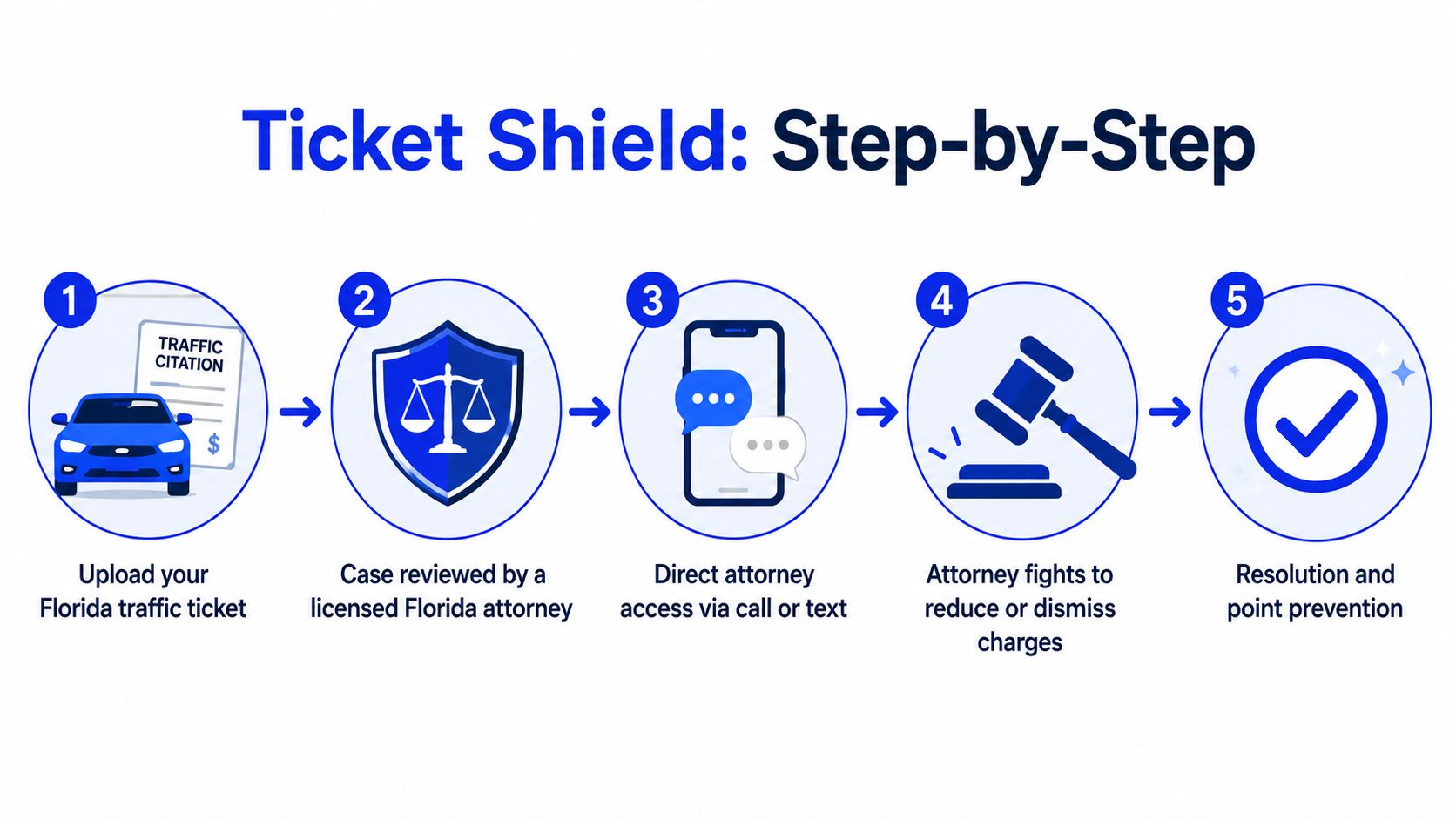
Qué cambia con la intervención de un abogado
Una defensa puede implicar la revisión de la multa en busca de errores, el análisis de los fundamentos legales de la detención de tránsito, la solicitud de la evidencia disponible y la negociación con el fiscal cuando los hechos respaldan una reducción o desestimación. El trabajo del abogado es buscar un resultado que proteja tu privilegio de conducir, no simplemente procesar un pago.
Los servicios automatizados de multas a menudo se enfocan en procesar un gran volumen de casos de manera masiva. Pueden enviar a un representante para presentar una declaración de culpabilidad rutinaria o pagar la multa, ofreciéndote pocas explicaciones sobre el historial resultante. Eso puede dejarte con puntos que ni siquiera sabías que estabas aceptando.
El objetivo cuantificable debe quedar claro antes de resolver el caso: buscar el resultado de Cero Puntos siempre que los hechos y la ley lo permitan.
Mira el video resumen del proceso a continuación para ver una explicación visual de cómo una defensa de tránsito dirigida por un abogado puede ir desde la revisión de la multa hasta la resolución del caso.
Pregunta quién manejará tu caso, cómo te comunicarás con esa persona y qué resultado se busca con la representación. Esas respuestas te dirán mucho más que una promesa automatizada de "encargarse" de la multa.
Cómo restablecer una licencia suspendida de Florida
El restablecimiento comienza con determinar por qué se suspendió la licencia de Florida y si se ha cumplido con el período de suspensión y con cada obligación judicial. Una suspensión por puntos puede requerir una revisión por parte del Departamento de Seguridad en las Carreteras y Vehículos Motorizados de Florida, el pago de la tarifa de restablecimiento correspondiente y la prueba de que se han cumplido las condiciones requeridas.
Es posible que también debas resolver la verificación del seguro, los costos judiciales, la escuela de tránsito u otras condiciones vinculadas al caso original. No asumas que el final del período de suspensión restaura automáticamente tu privilegio de conducir. Las retenciones administrativas pueden permanecer vigentes hasta que la documentación requerida llegue a la agencia correspondiente.
Una lista práctica de verificación para el restablecimiento
Confirma el motivo de la suspensión: Revisa el estado oficial en lugar de confiar en tu memoria o en un aviso antiguo.
Cumple con las obligaciones de la corte: Resuelve las multas, los requisitos de cursos y cualquier otra condición judicial.
Presenta la documentación del seguro: Pregunta a la aseguradora y al DHSMV qué pruebas se requieren para tu expediente.
Paga la tarifa de restablecimiento: Confirma el monto y el método de pago aceptado con la agencia.
Verifica el restablecimiento: No conduzcas hasta que el estado confirme que tu licencia es válida.
Si se requiere un examen de licencia o una prueba de la vista, utiliza un recurso actualizado como la guía de exámenes de la vista del DMV de Style Site Optical para comprender lo que la prueba puede implicar. Esa guía no reemplaza las instrucciones del DHSMV, pero puede ayudarte a prepararte.
Un abogado de tránsito de Florida puede coordinar la revisión de tu historial, identificar retenciones pendientes y ayudarte a documentar el cumplimiento de los requisitos. La guía de restablecimiento de licencia de Florida de Ticket Shield proporciona otro punto de partida para organizar el proceso.
Respuestas rápidas a preguntas comunes sobre puntos
¿Los conductores de fuera del estado evitan las consecuencias de los puntos de Florida? No. Una condena puede ser reportada a través de los acuerdos interestatales de historiales de conducción y puede afectar el historial que mantiene el estado que emitió tu licencia de conducir. El sistema de puntos de Florida no es algo que debas ignorar solo porque vives en otro estado.
¿Un SR-22 es una licencia? No. Un SR-22 es un documento de responsabilidad financiera relacionado con el seguro que presenta una aseguradora. No es una licencia de conducir y no restaura por sí mismo los privilegios de conducción.
¿Se pueden negociar los puntos después de declararse culpable? Por lo general, no puedes negociar la eliminación de puntos después de aceptar una condena. Para evitar los puntos se requiere normalmente una resolución diferente, como la desestimación, una suspensión de la adjudicación (withhold) elegible o un curso de mejoramiento del conductor elegido adecuadamente antes de que se finalice el caso.
¿La escuela de tránsito borra los puntos existentes? No. Un curso puede evitar que se sumen nuevos puntos por una multa elegible si se elige adecuadamente, pero no elimina retroactivamente los puntos que ya han sido aplicados. Revisa tu historial y la elegibilidad del curso antes de confiar en esta opción.
Protege tu licencia antes de recibir la próxima multa
Tienes un solo historial de conducción en Florida, y cada resolución merece una atención cuidadosa. No pagues primero para investigar después. Una consulta gratuita con un abogado de defensa de tránsito de Florida puede ayudarte a comparar la escuela de tránsito, la negociación y el litigio antes de que los puntos lleguen a tu historial o te lleven a una suspensión.
Sube la multa, explica tu situación y pregunta directamente qué resultado busca la defensa. Tu objetivo debe ser claro: proteger tu licencia y buscar un resultado de Cero Puntos.
Ticket Shield, PLLC ofrece defensa de tránsito en Florida dirigida por abogados con comunicación directa por teléfono o mensaje de texto, no un servicio automatizado y anónimo. Visita Ticket Shield, PLLC para obtener una consulta gratuita y dar el primer paso hacia un resultado de Cero Puntos en tu licencia.