Número de multa por exceso de velocidad: qué es y cómo usarlo
Aprenda qué es el número de una multa por exceso de velocidad, dónde encontrarlo en su citación y cómo usarlo para pagar, disputar o buscar su multa en Florida.

You just got pulled over, took the citation, and tossed it on the passenger seat. Now you're staring at a slip of paper and wondering whether the speeding ticket number is just there so the clerk can take your money.
It isn't.
In Florida, that number is the handle attached to your case. It connects the stop to your license, the alleged violation, the court file, and the decisions that can put points on your record. If you treat it like a payment reference, you give up negotiation power too early. If you use it strategically, you keep options open.
Table of Contents
What a Speeding Ticket Number Actually Means
The first thing you should focus on after a Florida traffic stop is the speeding ticket number printed on the citation. That's the unique identifier tied to your name, the date of the stop, and the charge the officer wrote under Chapter 316.
For a speed case, that charge is often linked to a statute in Chapter 316, such as section 316.187, which authorizes Florida speed zones and makes violations moving violations punishable under Chapter 318 under Florida Statute 316.187. In plain English, the number on that ticket isn't clerical filler. It's attached to the state's formal accusation against you.
What that number controls
Once the citation gets entered into the clerk's system, the number becomes the reference point for almost everything that follows:
Your court file: Clerks use it to pull the citation and see what was filed.
Your deadlines: Response timing starts running whether you plan to pay, contest, or seek another option.
Your driving record: The case becomes trackable once it's processed through the normal court and licensing channels.
The practical problem is simple. If you lose the number, you slow yourself down right when speed matters.
Practical rule: Save the speeding ticket number before you do anything else, before you pay, before you call the clerk, before you assume the case is minor.
Why drivers get this wrong
Most drivers see the citation as a bill. That's a mistake. The number doesn't just help process payment. It tells every person in the system which exact accusation they're dealing with.
Public court systems make that clear. The citation number is the search key used for traffic case records in systems like Sacramento's public traffic case search by citation. The same basic administrative logic applies in Florida practice. If you don't control that identifier, you're reacting late instead of managing the case early.
Where to Find the Number on Your Florida Citation
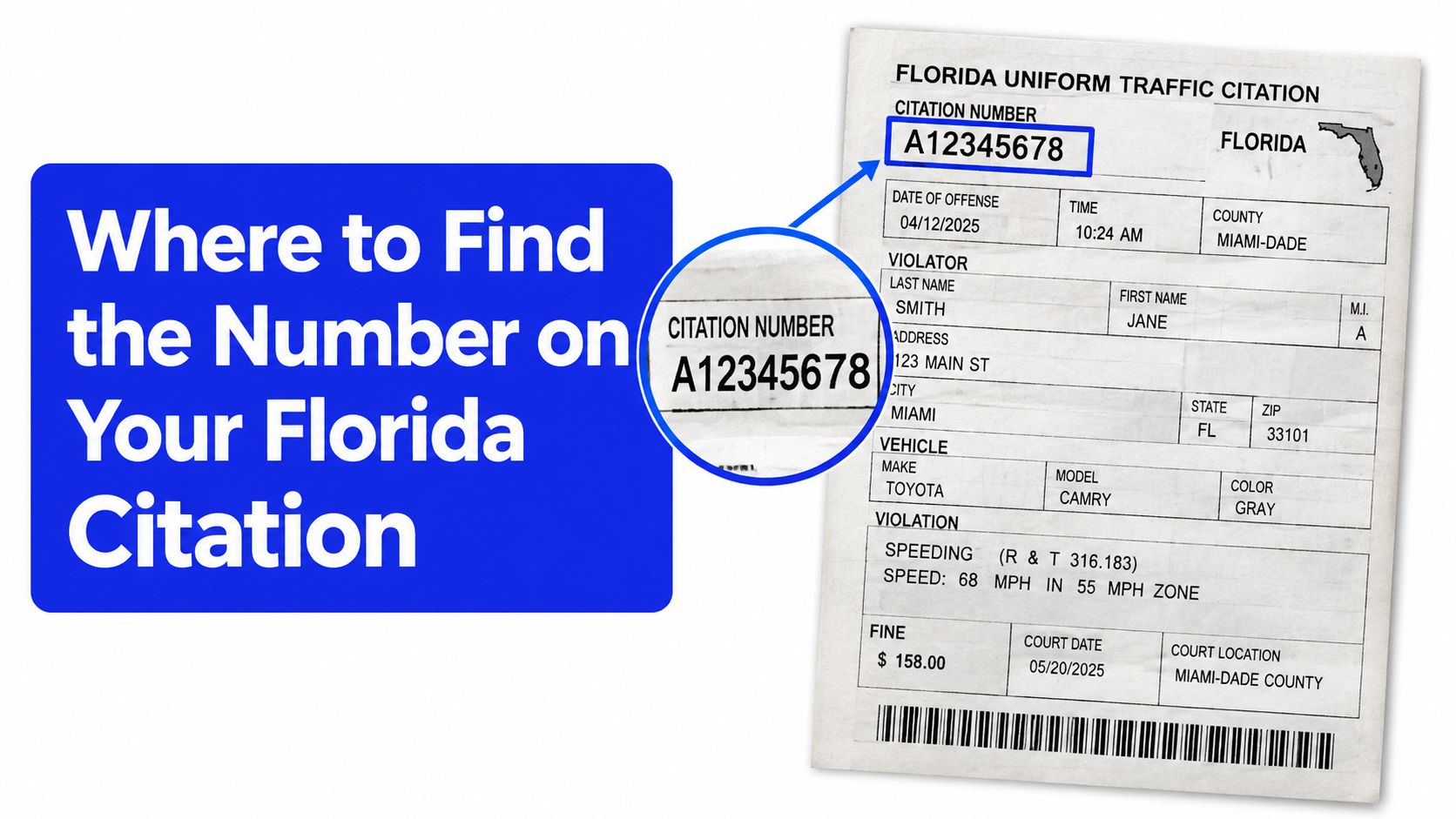
On a Florida Uniform Traffic Citation, the speeding ticket number usually appears near the top in the main citation header. That's the first place to check. Don't rely on memory. Read the ticket line by line.
Then check the violation section. That's where you'll usually see the speed allegation and the statute the officer wrote. On Florida speed tickets, drivers often see statutes like 316.183, 316.187, or 316.189, depending on how the allegation was written.
What to look for on paper and e-citations
Agencies don't always label it the same way. On printed or electronic citations, you may see:
Citation #: The most common label.
Ticket #: Some agencies use this instead.
Case Number: Sometimes used loosely on agency paperwork, even though the clerk may later assign a separate court case number.
Lower on the citation, the same number may appear again near the court information. That's helpful if the top portion is smudged or folded.
If you need a field-by-field breakdown, review this guide on how to read a traffic citation.
Write the number into your phone before you leave the car, then take a photo of the whole ticket front and back.
That one step prevents a lot of avoidable panic later.
Why the Number Triggers Florida's Point System
That citation number matters because it sits on the file that can put points on your Florida license. The issue isn't just the fine. It's the record.
Florida's point schedule assigns 3 points for unlawful speed 15 mph or less over the lawful or posted limit, 4 points for unlawful speed more than 15 mph over, and 6 points for unlawful speed resulting in a crash under the Florida Highway Safety and Motor Vehicles point schedule. If the allegation is far more serious, Florida also treats dangerous excessive speeding as a separate offense under section 316.1922, which covers driving 50 mph or more over the speed limit and also covers driving 100 mph or more in a manner that threatens persons or property under Florida Statute 316.1922.
The point risk is mechanical
Once a conviction posts, the point system doesn't care whether you thought the stop felt minor. It applies based on the charge and outcome.
MPH Over Posted Limit | Points Assessed | Suspension Trigger |
|---|---|---|
15 mph or less over | 3 points | Counts toward suspension thresholds |
More than 15 mph over | 4 points | Counts toward suspension thresholds |
Speeding resulting in a crash | 6 points | Counts toward suspension thresholds |
Florida suspension thresholds stack faster than most drivers expect. The state can impose a 30-day suspension at 12 points within 12 months, a 3-month suspension at 18 points within 18 months, and a 1-year suspension at 24 points within 36 months according to the suspension thresholds summarized in this Florida point record guide.
Why the citation number has legal weight
The number is what ties the alleged violation to your license file and to every later court action. That's why paying too quickly can be expensive in the long run.
For a broader breakdown of how points affect your license, review Florida driving license points explained.
A speeding ticket number isn't a receipt code. It's the tracking number for a case that can move your license closer to suspension.
Using the Number to Pay, Look Up, or Contest
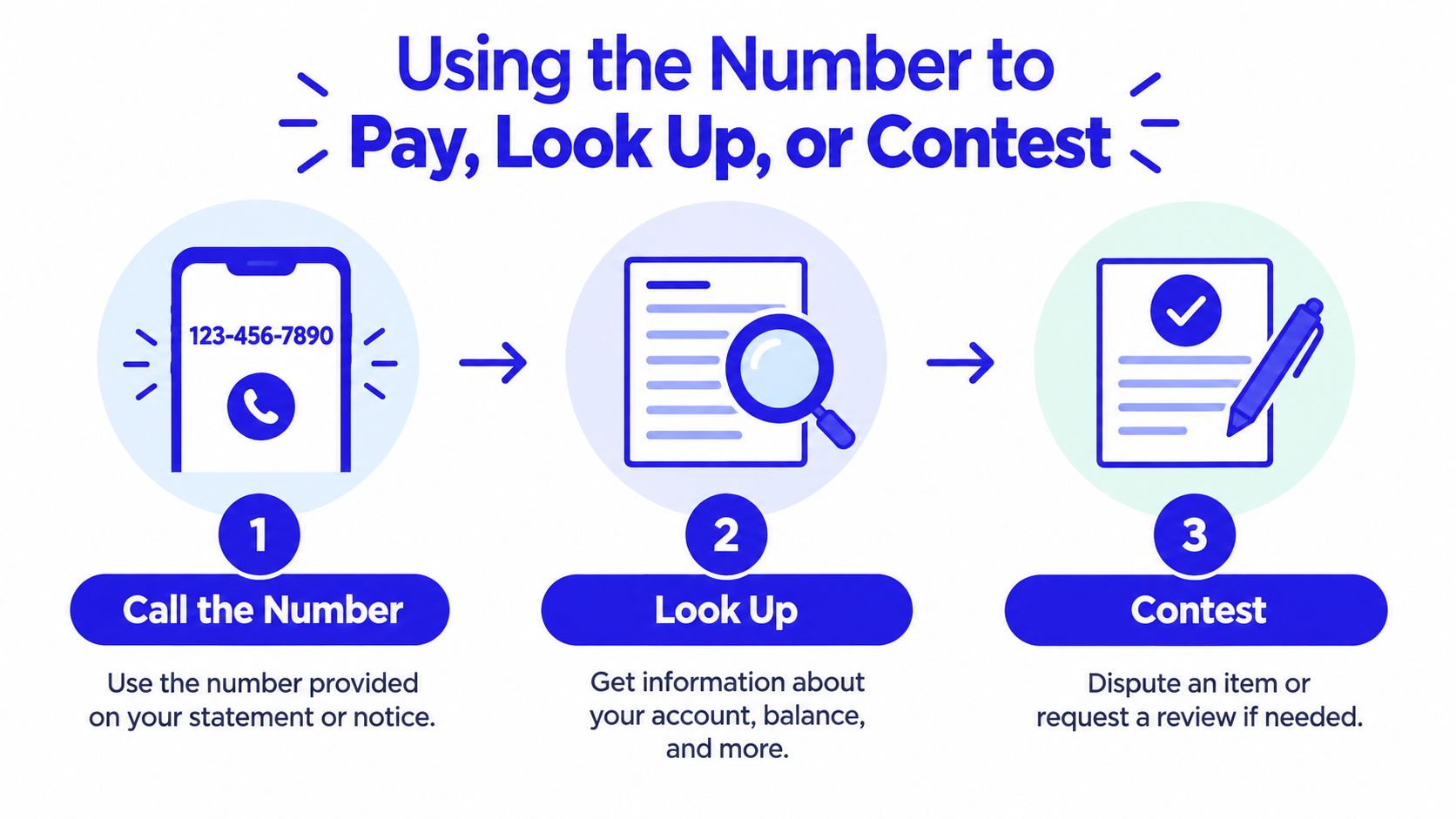
You have three basic uses for the speeding ticket number in Florida. Each one leads to a different outcome. Don't mix them up.
Use one if you're paying
If you're going to pay, the citation number is what lets the county clerk pull the exact case. Florida drivers generally need to respond within the standard court window printed on the citation. Enter the number in the county clerk's payment portal for the county where the stop happened, or use it when paying in person or by mail.
Paying is fast. It is not harmless.
Use two if you're checking the case status
If you aren't ready to make a decision, use the number to look up the case first. That lets you confirm the filing status, court date, charge description, and the agency involved.
Many drivers realize the ticket contains more than they remembered at roadside. If you've lost the paper copy, this lookup can help you recover the trail. For Florida-specific guidance, review how to look up a citation number in Florida.
Use three if you're contesting the charge
If you plan to fight the ticket, the citation number is what anchors every filing. The court uses it to match your response to the officer's sworn citation. Your lawyer uses it to identify the exact case file, request records, and assess the proof behind the speed allegation.
That matters because speed enforcement isn't just visual guesswork anymore. Police radar became a major enforcement tool in 1947, after earlier speed regulation milestones such as the first widely recognized speeding offense on January 28, 1896, and the first state-level automobile speed law in the United States enacted in Connecticut on May 21, 1901, as outlined in this history of speed limits and enforcement. If your case involves instrument-based speed evidence, the record behind that citation number matters.
Before You Pay the Fine, Read This
Paying a Florida speeding ticket feels efficient. Usually, it isn't. You're not just ending the hassle. You're choosing an outcome.
A paid ticket can put points on your license depending on the charge and the final disposition. It also leaves a driving record entry tied to the citation. That's why the fine is often the smallest part of the problem.
Here's a quick breakdown before you click "submit":
Cost Factor | Amount / Impact |
|---|---|
Court fine | Immediate out-of-pocket payment |
License points | Can be 3, 4, or 6 points depending on the charge and outcome |
Suspension exposure | Can contribute to 12 in 12 months, 18 in 18 months, or 24 in 36 months |
Insurance impact | Can increase costs after the case posts to your record |
Future traffic stops | Prior record can limit flexibility later |
The evidence may deserve a closer look
Florida drivers often assume radar or laser evidence can't be challenged. That's wrong. The challenge usually isn't the concept of radar. It's whether the device was working properly and whether the stop was handled correctly.
Traffic-enforcement radar systems are typically specified to measure a target vehicle within about ±2 mph in stationary mode and ±2 mph in moving mode under NHTSA's down-the-road radar training module. A separate evaluation found a mean speed error of 0.157 mph, performance within ±3 mph, and only a 0.067% chance of exceeding a 3 mph error under the New Jersey radar accuracy evaluation. That doesn't mean every ticket is untouchable. It means the fight is often about calibration, setup, patrol speed input, training, and whether your specific stop was handled by the book.
If you're weighing options, this comparison of paying the ticket versus hiring a lawyer is worth reading before you make the case final.
How a Lawyer Puts the Number to Work Differently
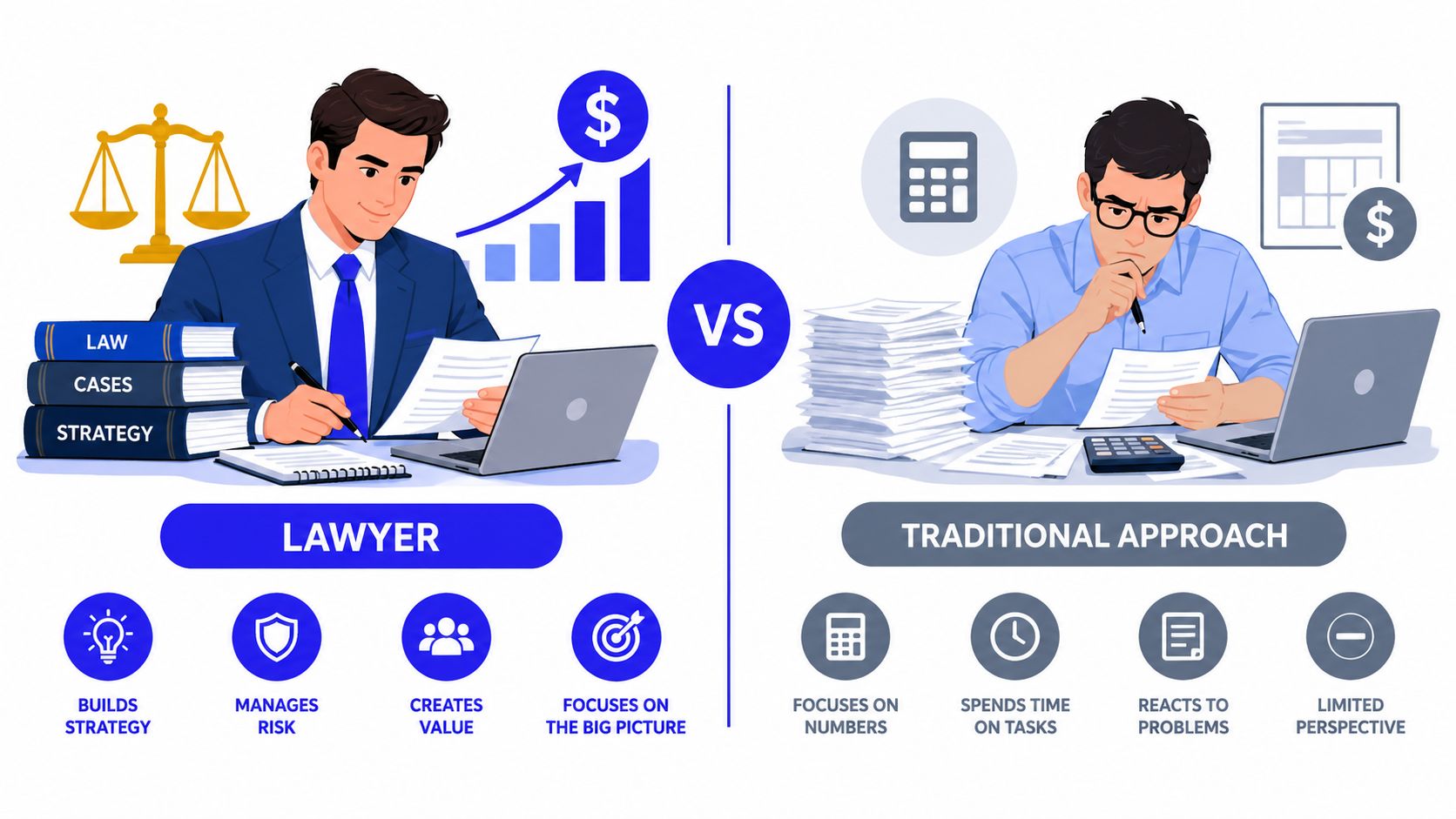
A lawyer doesn't look at the speeding ticket number and see a payment code. A lawyer sees an access point to the state's file.
That difference changes the whole approach. With the citation number, counsel can identify the case, pull the supporting records, examine the way the charge was written, and test whether the evidence supports the allegation. In a speed case, that can include the officer's notes, radar or pacing issues, and the procedural details that ordinary drivers don't get on the roadside.
Three paths, three very different uses of the same number
Lawyer-led defense: The citation number opens the file for analysis, negotiation, and court handling aimed at protecting your record.
Automated apps and ticket mills: They often use the number to push out a standard filing. That's not the same as case-specific defense.
Self-representation: You have the number, but not the discovery habits, courtroom influence, or experience to pressure weaknesses in the state's proof.
Direct attorney access matters. A lawyer-led firm such as Ticket Shield, PLLC gives drivers a way to hand over the citation number and communicate directly with their attorney by phone or text, instead of getting routed through a corporate intake layer or an automated chatbot.
For many drivers, the practical question is simple. Can someone go to court for you? In many traffic cases, the answer may be yes, and this guide on whether a lawyer can go to traffic court for you explains that issue.
You don't need more automation. You need someone who knows what to do with the case attached to that number.
Protect Your License Starting Right Now
Your next move matters more than the stop itself. The speeding ticket number is the key to the case, and the longer you wait, the easier it is to drift into a default outcome that puts points on your license.
Speeding remains a serious roadway issue. In 2023, an estimated 10% of all police-reported traffic crashes in the United States were speeding-related, and in 2021, speeding was involved in 28% of fatal crashes, 13% of injury crashes, and 9% of property-damage-only crashes according to NHTSA crash statistics. Courts and agencies take speed allegations seriously for that reason. You should too.
Pull out the citation. Save the number. Check the county. Then get legal advice before you pay anything.
Visit Ticket Shield, PLLC for a free consultation and give the attorney your speeding ticket number, the county, and the date of the stop. You'll get a lawyer-led review, direct communication by phone or text, and a strategy built around the goal that matters most, No Points on your license.