
Multas y penalizaciones de puntos por exceso de velocidad en Florida
Entienda las multas por exceso de velocidad en Florida, las penalizaciones de puntos y los costos ocultos de los seguros. Conozca cómo una defensa legal estratégica protege su licencia y su historial.

You've just been handed a Florida speeding citation. The amount printed on the ticket may look manageable, and paying it online may seem like the fastest way to make the problem disappear. It isn't. Paying can function as accepting the conviction, putting your license, insurance costs, and driving privileges at risk.
The right question isn't only, “How much are the speeding ticket fines?” It's, “What will this conviction cost me after the payment is processed?” Florida's statutory fine is only one part of the exposure. Points, insurance consequences, and potential suspension can create a far more serious problem.
Table of Contents
The Real Cost of a Florida Speeding Citation
A speeding citation creates an immediate decision. You can pay the clerk and close the transaction, or you can challenge the citation before it becomes a conviction. That choice deserves more care than clicking a payment button while the traffic stop is still fresh in your mind.
Florida's speeding laws are grounded in Florida Statute 316.187, which addresses lawful speeds and speed regulation. The ticket may list a specific speed, location, and alleged violation, but the consequences depend on how the court and insurance system treat the resulting conviction.
Practical rule: Don't treat the printed fine as the full price of the ticket.
A guilty disposition can place points on your driving record. Those points can affect your insurance profile and contribute to suspension thresholds if you already have other violations. In North Carolina, for example, a low-level speeding conviction can produce a 40% insurance premium increase under that state's plan, illustrating why insurers may react more sharply than the court's fine suggests. Florida's outcome depends on the applicable record and insurer, so you shouldn't assume the effect will be minor.
The true cost of a Florida traffic ticket includes the legal and financial consequences that follow the payment. A citation can also consume time if it leads to additional proceedings, compliance requirements, or license problems.
The protective move is simple: review the citation, identify the deadline, and get legal advice before entering a plea. A Florida traffic defense attorney can assess whether the citation contains weaknesses, whether a negotiated resolution is available, and whether avoiding points should be the primary objective.
Florida Statutory Fines and Point Assessments
Florida's statutory schedule provides a starting point for understanding speeding ticket fines. Under Florida Statutes Chapter 318, Section 18, unlawful speed of 1 to 5 mph over the limit is treated as a warning, while higher ranges carry escalating fines.
The schedule below states the statutory amounts provided for the specified ranges. Point treatment is addressed separately because the fine and the license consequence are different parts of the case.
Florida's stated fine ranges
Speed Over Limit | Base Fine | Points Assessed |
|---|---|---|
1 to 5 mph | Warning | No fine listed in the stated framework |
6 to 9 mph | $25 | No points stated in the cited statute |
10 to 14 mph | $100 | No points stated in the cited statute |
15 mph or more | Escalating amount for higher speeds | No points stated in the cited statute |
The statutory structure matters because the amount rises as the alleged speed increases. It also shows why you shouldn't assume that every speeding citation carries the same direct financial exposure.
Points create the longer-term risk
Florida speeding violations commonly add 3 points for up to 14 mph over the limit, 4 points for 15 mph or more over, and 6 points when speeding contributes to a crash, according to Florida speeding ticket point guidance. Those points can matter more than the original fine because they remain part of the driving-record analysis used for future enforcement and insurance decisions.
The Florida license-point system should be evaluated before you pay. The citation's speed band, the surrounding facts, your existing record, and whether a crash is alleged can all change the strategic response.
A payment may resolve the clerk's immediate demand, but it can also remove your opportunity to contest the charge. Before you choose that route, compare the short-term convenience with the possibility of points and downstream record damage.
Hidden Financial Penalties and License Suspensions
The assumption that “I'll just pay the fine” treats the ticket as a one-time bill. Florida's point system makes that assumption dangerous. Once points accumulate too quickly, the state can suspend your license, disrupting your ability to work, commute, care for family, and manage ordinary responsibilities.
Florida's suspension thresholds are specific:
12 points within 12 months: A 30-day suspension.
18 points within 18 months: A 3-month suspension.
24 points within 36 months: A 1-year suspension.
These thresholds are described in Florida point-system guidance. A speeding conviction may not trigger suspension by itself, but it can become the violation that pushes an already exposed record over the limit.
Insurance can outlast the payment
Insurance companies may treat a speeding conviction as a risk signal. The resulting premium increase varies by state and insurer, and the increased cost may continue after license points expire. Market examples identify an average increase of about 6% in New York and roughly 27% in Michigan, demonstrating how sharply the insurance effect can differ by jurisdiction, as summarized in coverage of speeding tickets and insurance records. Those figures are not Florida estimates, but they make the central point clear: the court fine doesn't determine the full financial impact.
Florida drivers should ask their insurer how a conviction could affect their policy before assuming payment is cost-effective. The answer may depend on the driver's record, policy, and insurer underwriting rules.
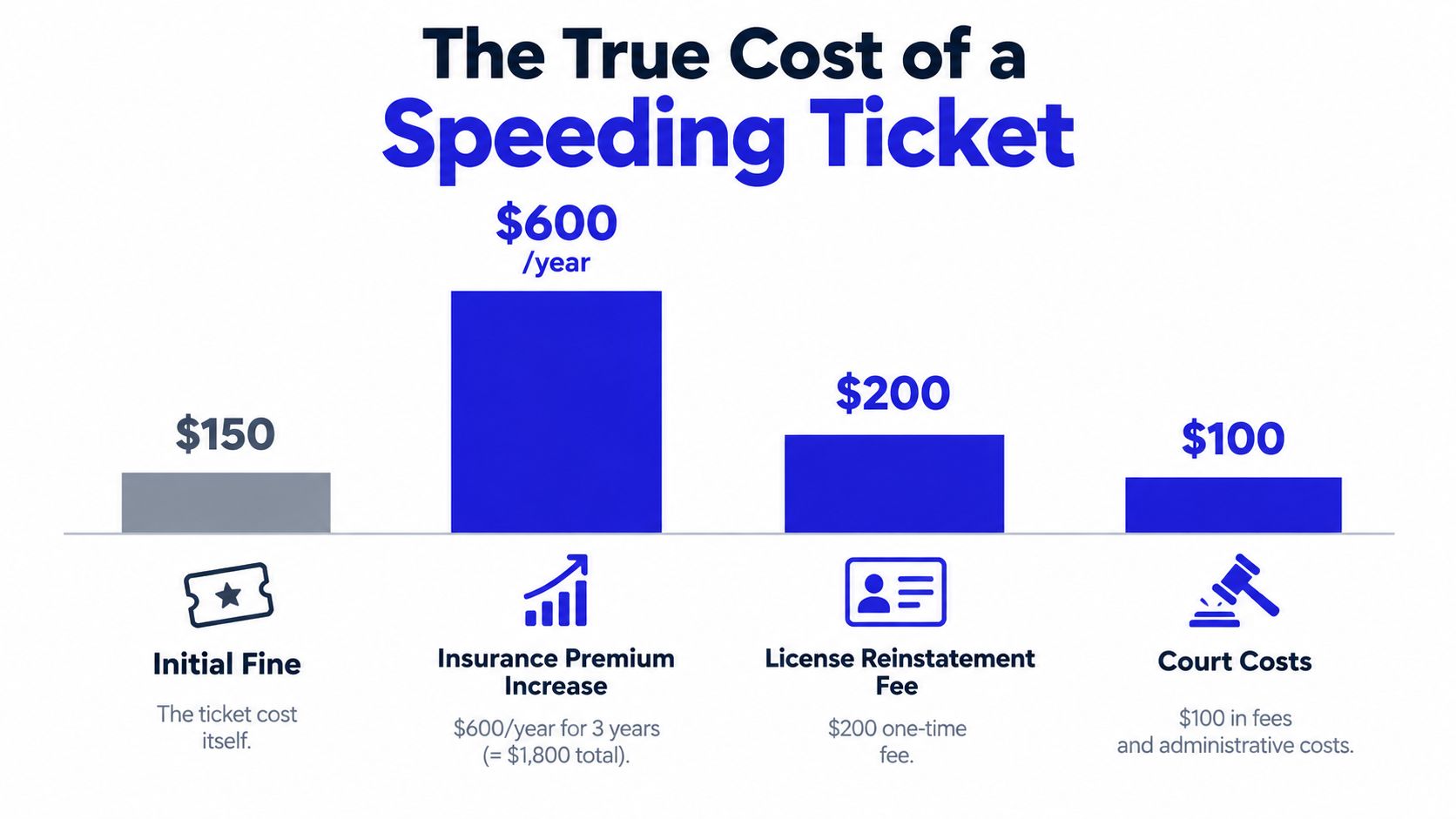
The risk of a Florida speeding-ticket license suspension deserves immediate attention if you already have points or prior citations. Protecting the record before a conviction is often more practical than trying to repair a suspension after it begins.
Direct Attorney Representation Versus Automated Apps
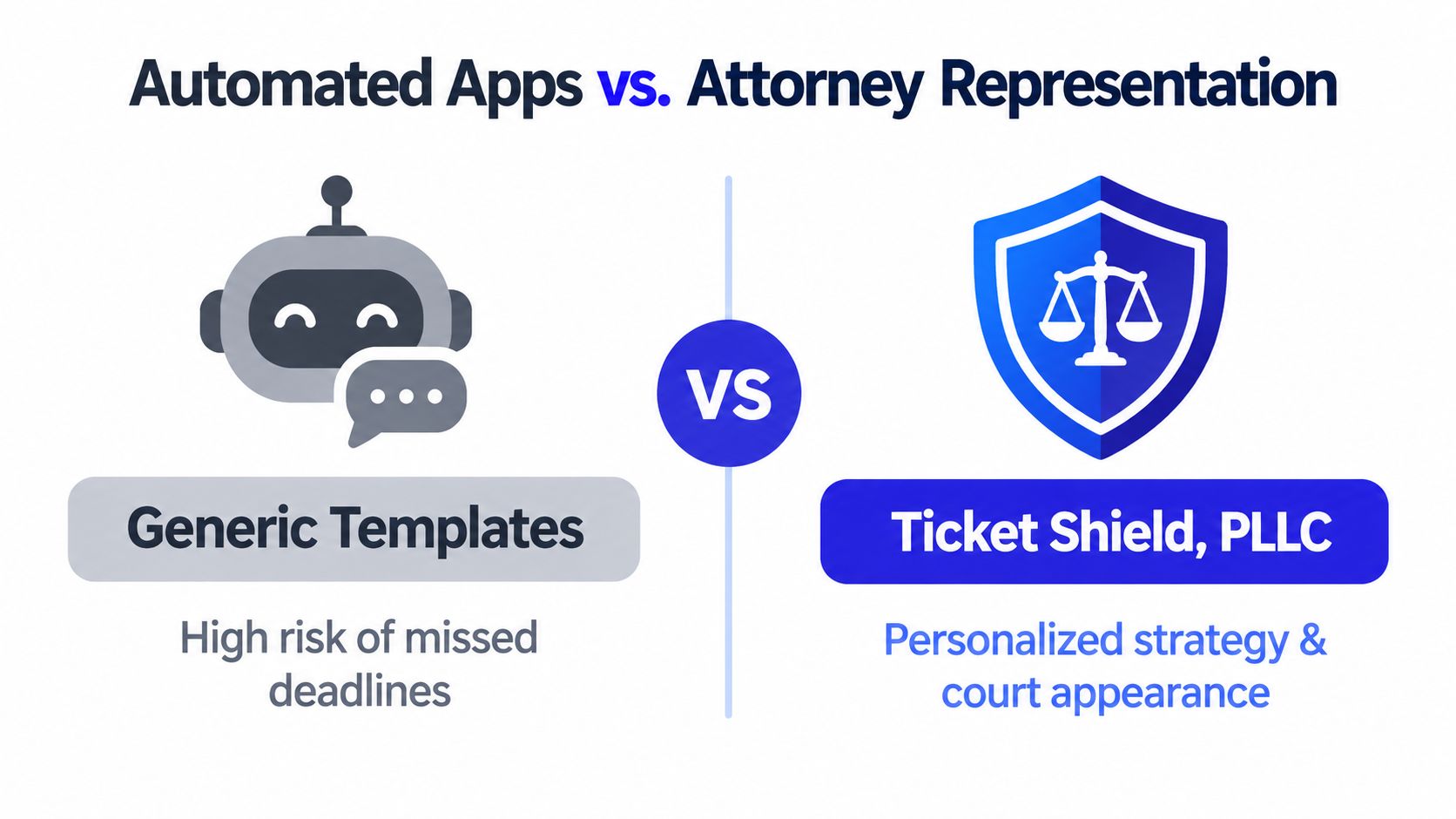
An automated app can collect citation information and generate a standard workflow. That may be convenient, but convenience isn't the same as legal judgment. A traffic case can turn on the officer's observations, the wording of the citation, the alleged speed, the location, the driver's record, and local court practice.
Ticket mills and automated services often place distance between you and the person handling the case. You may communicate with a corporate answering service, a middleman, or a chatbot instead of an attorney who understands the facts and can explain the available strategy.
What direct communication changes
With a lawyer-led service, you should be able to discuss the citation directly with your attorney by phone or text. That conversation allows you to raise facts an intake form may miss, such as unclear signs, incorrect details, unusual road conditions, or concerns about the alleged speed.
Ticket Shield, PLLC offers direct attorney communication rather than routing clients through automated chatbots or corporate answering services. The firm handles Florida traffic citations and presents representation as a strategic alternative to just paying the ticket.
Watch the following explanation before deciding whether an automated process gives your case the attention it needs.
The Florida speeding-ticket app comparison should focus on more than price or speed of signup. Ask who will communicate with you, who evaluates the evidence, who tracks deadlines, and who appears or advocates for you when the case requires legal action.
Strategic Defense Across Florida Court Jurisdictions
Florida traffic cases move through local court systems, and local familiarity matters. A lawyer handling a citation in the Richard E. Gerstein Justice Building in Miami-Dade may approach the matter differently from one filed through the Broward County Judicial Complex or the Edgecomb Courthouse in Hillsborough.
The same practical principle applies in Palm Beach, Orange, and Duval counties. The courthouse location, the citation details, the assigned procedures, and your driving history all affect how counsel evaluates the case.
A focused defense process
Review the citation and deadline. Confirm the alleged speed, statute, court location, and response date. Missing a deadline can create avoidable complications.
Evaluate the record. Counsel should consider prior points, the classification of the alleged violation, and whether the citation could create suspension exposure.
Choose the objective. The goal may be dismissal, a reduction, withholding of adjudication where available, or another resolution that limits damage to your driving record.
Handle the court process. Representation can reduce the burden of appearing personally and gives the attorney an opportunity to present the appropriate legal position.
Your objective should be clear before negotiations begin: protect your license and pursue a No Points result whenever the facts and law allow it.
Ticket Shield states that over 99% of its clients never have to appear in court, according to the firm's publisher information. That figure is a firm-reported service description, not a guarantee for every case. Your citation may still require a different response depending on the charge, county, court, and available resolution.
A lawyer should also explain what a proposed outcome means before you accept it. A lower fine may sound attractive, but if the disposition still creates points, it may fail to protect the interest that matters most.
Protect Your Record with Ticket Shield Today
Paying a Florida speeding ticket can feel efficient because it ends the immediate administrative task. It may also turn a temporary citation into a conviction with points, insurance consequences, and added license risk. That is why you should treat the deadline as a legal decision point, not a routine bill.
A dedicated traffic defense attorney can review the charge, identify the practical options, and pursue a resolution designed to protect your record. Direct communication matters. You deserve to know who is handling your case and what outcome that person is seeking.
Ticket Shield, PLLC presents its service as lawyer-led, with clients communicating directly with an attorney by phone or text. That approach is different from relying on an automated app, a middleman, or a bulk ticket operation that may not address the facts specific to your citation.
If you're ready to take control, submit your Florida traffic-ticket case before you pay. Ask about the available strategy, the likely record consequences, and whether pursuing No Points is possible for your circumstances.
The goal is not merely to remove today's fine from your inbox. The goal is to protect your Florida driving privilege and reduce the chance that one citation follows you into future insurance and license decisions.
Ticket Shield, PLLC provides lawyer-led Florida speeding-ticket defense with direct attorney communication by phone or text, not automated chatbots or middlemen. Visit Ticket Shield, PLLC for a free consultation and pursue the ultimate goal of achieving “No Points” on your license.

