Traffic Ticket Lawyer in Broward County: Fight to Win
Hire a traffic ticket lawyer in Broward County to fight points, protect your license, and reduce insurance costs. Learn about defenses and flat fees.
You're staring at a citation from a Broward County traffic stop, probably wondering whether paying it is easier than fighting it. That instinct can cost you more than the amount printed on the paper. A conviction may affect your license points, driving record, and insurance, while the decision window keeps moving.
If you received the citation in Broward County, treat it as a legal decision, not a bill. You generally have 30 days from the citation date to pay, elect an approved driver-improvement course, or request a hearing. The right response depends on the charge, your record, and your priorities. A traffic ticket lawyer in Broward County can help you choose the path that protects your driving privilege and pursues the ultimate outcome, No Points.
Table of Contents
That Citation in Your Glove Box Is a 30-Day Decision
A citation handed to you on I-95, US-1, or University Drive starts a clock. Broward County traffic guidance gives drivers 30 days to decide whether to pay, elect driving school, or request a court hearing, as reflected in the Broward Clerk's Traffic and Misdemeanor information. Waiting turns a manageable decision into a deadline problem.
Paying may feel efficient, but it can operate as a conviction with possible points. The cost isn't limited to the payment. A moving violation can affect your driving record and insurance, and Florida points remain on a driver record for at least five years, according to the Florida Highway Safety and Motor Vehicles point-suspension guidance.
Practical rule: Don't pay a Broward citation until you understand what that payment does to your record.
The 30-day window also matters because the available options aren't interchangeable. A driver-improvement course may avoid points when the driver is eligible, while a hearing gives a lawyer the opportunity to challenge the citation, seek dismissal, pursue a withhold of adjudication, or negotiate a reduction. Florida commentary on the driver-improvement statute also explains that a course-related reduction applies to the civil penalty portion, not necessarily separate court costs or surcharges, as discussed in this Florida traffic-school fine-reduction guide.
Broward has significant traffic activity. Florida Highway Safety and Motor Vehicles data recorded 40,837 total crashes in 2022, compared with 41,381 in 2021, and 4,613 commercial motor vehicle crashes in 2022, compared with 4,111 in 2021, according to the Fort Lauderdale crash-statistics summary. That volume helps explain why citations, point exposure, and insurance concerns are routine for Broward motorists.
Read the citation carefully, note the date, and get legal advice before selecting an option. The Florida traffic-ticket defense guide can help you understand the decision, but your specific charge and driving history should control what you do next.
What a Broward Traffic Ticket Lawyer Does
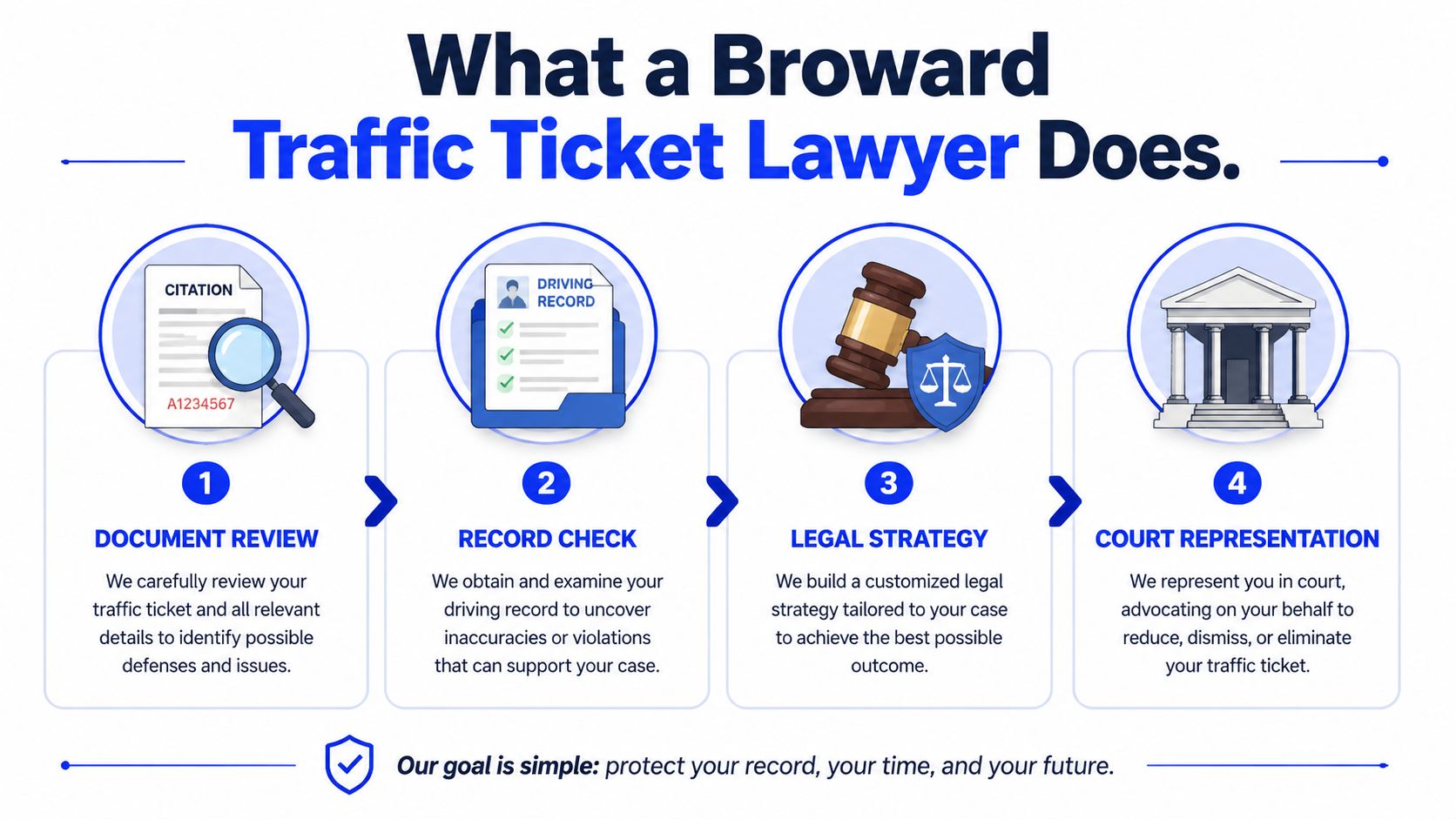
You have a Broward citation in your glove box and a 30-day decision window closing fast. A traffic ticket lawyer evaluates the charge, your record, the available procedural choices, and the evidence before recommending the path that best protects your license and driving history.
The work starts before court
The lawyer reviews the citation for the exact statute, alleged speed, location, date, and officer information. A small error can affect your options. Your driving history matters too. A result that suits a driver with a clean record may leave too much risk for someone already carrying points.
The lawyer then examines the factual and legal issues. That includes whether the citation accurately describes the conduct, whether the State can prove each required element, and whether a negotiated result offers better protection than trial. The lawyer files the appropriate written plea, requests relevant discovery, and communicates with the prosecuting authority before your Broward court date.
Representation should be direct
The practical difference between lawyer-led representation and an automated app is access to legal judgment. An app or ticket mill may route your information through a call center, chatbot, or middleman. You may not know which attorney handles the case or have a dependable way to explain a change in your license status.
A lawyer-led firm gives you a direct point of contact. You should be able to reach your attorney by phone or text, explain your concerns, and receive advice based on the citation and your record. The traffic-ticket attorney overview provides additional context on that representation.
The assigned lawyer controls the defense, regardless of the website's marketing label. Before the 30-day window closes, ask who will review the citation, communicate with you, appear in Broward court, and pursue the recommended outcome.
The Florida Statutes That Drive Your Broward Case
Florida traffic defense begins with the statute listed on the citation. Chapter 316 supplies the legal framework for many Broward traffic cases, and the exact language matters because the State must establish the elements of the alleged violation.
Speed limits have a statutory framework
Florida Statute 316.183 establishes statewide baseline speed rules. It sets a maximum of 30 miles per hour in business or residence districts and 55 miles per hour at other locations, unless another lawful speed limit applies, as stated in the Florida Statute 316.183 text.
That doesn't mean every speeding citation turns on the default limits. Posted signs, roadway classification, the alleged speed, and the officer's observations all matter. A lawyer examines the citation against the statute and the facts rather than assuming the printed allegation ends the analysis. The Florida traffic-citation explanation offers a broader overview of how those legal issues can affect a defense.
Dangerous excessive speeding raises the stakes
Florida Statute 316.1922 addresses dangerous excessive speeding. The statute defines the offense as driving more than 50 miles per hour over the posted limit, or driving 100 miles per hour or more in a manner that threatens safety or interferes with other traffic, according to the Florida Senate statute text.
A first conviction can carry up to 30 days in jail, a $500 fine, or both. A second or subsequent conviction can carry up to 90 days in jail, a $1,000 fine, or both. Those consequences are far beyond an ordinary payment decision. If your citation alleges conduct covered by this statute, speak with a Florida traffic defense lawyer immediately and don't make statements about the incident without advice.
How Broward County Traffic Court Works
You have 30 days to choose how to handle a Broward traffic citation. Paying it may close the case, while a late response can create license and administrative problems. Treat the deadline as a decision point, not a reminder to deal with later.

The first filing sets the case's direction
Broward traffic matters run through the Clerk of Court's Traffic and Misdemeanor division. Before the deadline, you can pay, elect an approved driving course when eligible, or request a hearing. A traffic lawyer can file a written plea of not guilty, request the proper setting, and communicate with the court and prosecuting authority.
That filing preserves a defense route instead of resolving the citation through payment. The case may then involve scheduling, discovery, negotiations, and a hearing if counsel cannot obtain an acceptable result earlier. Depending on the charge and court requirements, your lawyer may appear for you.
Ticket Shield reports that over 99% of its represented clients never appear in court. That is the firm's reported client experience, not a promise that every Broward citation will follow the same path.
Missing the deadline creates avoidable risk
A late response can eliminate the option that best protects your record, and it may cause further license complications. Use the citation date, confirm the required response with the Clerk or your lawyer, and do not rely on a reminder notice.
Send the citation to counsel promptly. The Broward County traffic-citation guide explains local procedures, including the choices available during the 30-day window. A lawyer-led service gives you a named professional handling that process, rather than an anonymous ticket mill.
Realistic Outcomes Dismissal Reduction and No Points
A Broward traffic defense lawyer should give you a clear assessment of the result worth pursuing. No responsible attorney promises dismissal. The lawyer should review the citation, your driving history, and the available case options, then explain how each outcome affects your license, insurance, and record.
Broward-specific reporting summarized 137,635 traffic tickets written in 2020, including 91,270 non-criminal moving violations and 39,687 speeding tickets. The same analysis reported that nearly 75% of non-criminal moving-violation cases were dismissed or ended with adjudication withheld, based on the Florida citation-reporting reference. Those figures do not predict your result. They do show why paying automatically can give up options before a lawyer examines the case.
Outcome | Points Added | Insurance Impact | Record Effect |
|---|---|---|---|
Dismissal | No points from the dismissed charge | Avoids the insurance consequences associated with a conviction from that charge | The charge is not resolved as a conviction |
Withhold of adjudication | Generally pursued to avoid points, depending on eligibility and case terms | Can reduce the risk tied to a conviction, but confirm the effect with counsel and your insurer | The case has a court disposition without an adjudication of guilt |
Driver-improvement course | May avoid points for an eligible driver who properly elects and completes it | May help limit the insurance effect of that violation | The course and eligibility rules still apply |
Reduction to a non-moving or lesser offense | Depends on the final disposition | A lower-impact result may reduce insurance exposure | The final offense, rather than the original allegation, controls the record |
The point system makes the choice important
Florida's point system applies statewide, including Broward County. The Florida Department of Highway Safety and Motor Vehicles states that 12 points within 12 months triggers a 30-day suspension, while 24 points within 36 months triggers a one-year suspension. Review the Florida point-suspension information before choosing a response.
Broward determines where the case proceeds, not the statewide point values. Use the 30-day decision window to pursue a disposition that protects your license and record, rather than closing the file.
Why Ticket Shield's Lawyer-Led Model Is Built for Broward Drivers
A traffic defense service should be judged by the lawyer handling the case and the access you receive, not by an automated intake screen. Ticket Shield, PLLC describes itself as a Florida-based law firm with 25-plus years of combined experience and former prosecutors on its team, serving Broward matters at the Broward County Judicial Complex.
Direct communication changes the experience
The firm's model emphasizes direct communication with the attorney by phone or text. That matters when your license is already at risk, when you drive for work, or when the citation raises questions that an automated response cannot answer.
An automated app may be convenient for basic intake, but convenience isn't the same as legal judgment. A middleman may collect documents without explaining the strategy. You should know whether a lawyer reviewed the citation, what disposition the lawyer is pursuing, and how to reach the person responsible for your defense.
A flat-fee structure can make planning easier
Ticket Shield states that pricing starts at a flat $39.99, presented as a cost-effective entry point rather than a promise about every case. The final fee and scope of representation should be confirmed before hiring. Serious or unusual charges may require a different assessment than a routine civil citation.
The firm says it serves drivers with suspended or at-risk licenses, out-of-state motorists cited in Florida, gig and rideshare drivers, military members, and Spanish-speaking clients. Those circumstances can make a routine ticket more consequential, especially when driving is tied to employment, military obligations, or a professional license.
Choose representation based on communication, scope, and the lawyer's plan. Don't hire an anonymous process just because the website makes the process look automatic.
Your Next Three Steps and the No Points Goal
You have a limited response period, so act in an order that protects your options. The objective is not to make the citation disappear from your immediate to-do list. The objective is to pursue a disposition that avoids No Points on your license whenever the facts and law allow.
Step one is a prompt case review
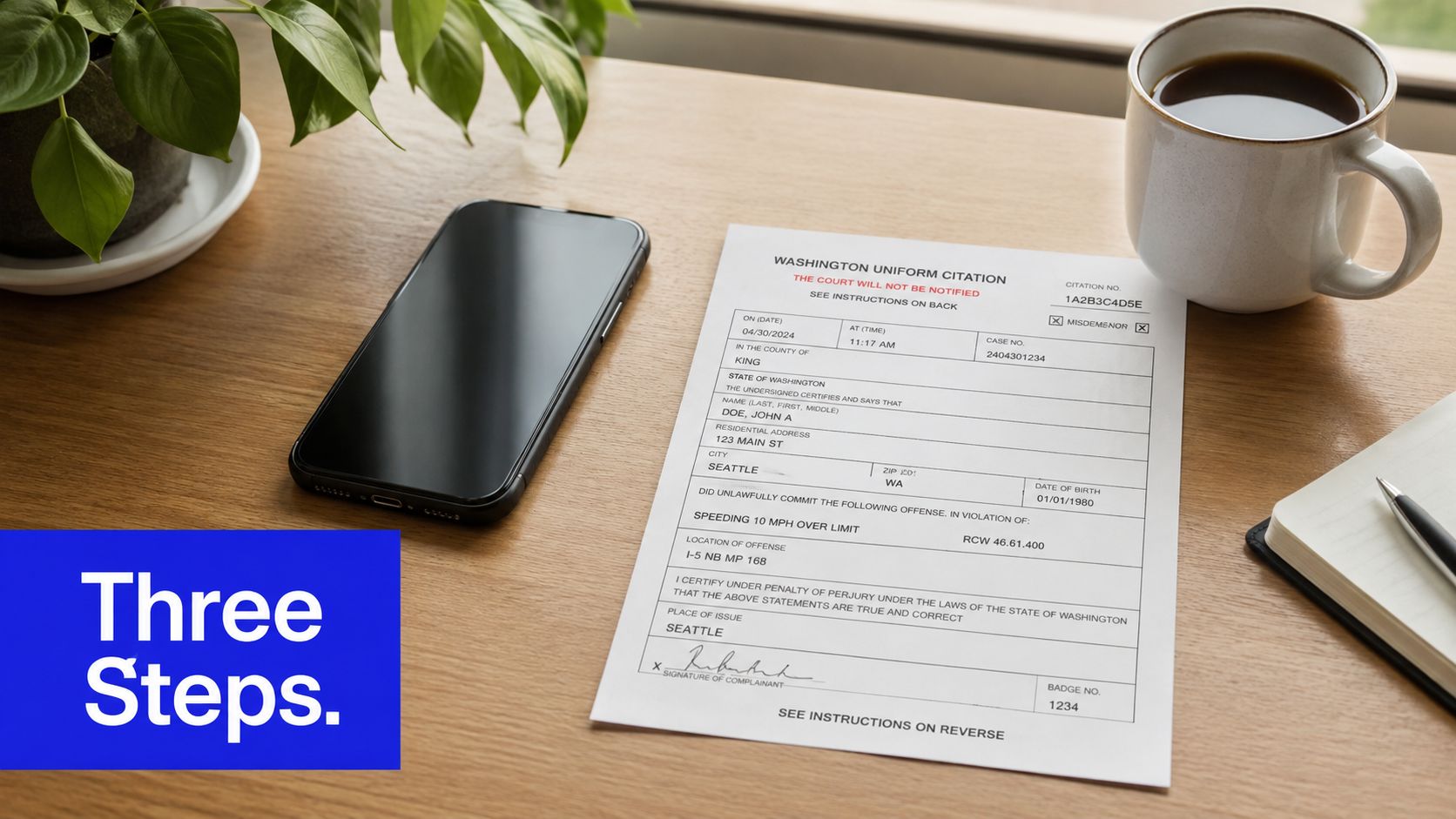
Submit the citation for a free review through Ticket Shield's case-submission page. Include every page, the citation date, the alleged violation, and any information about prior points or pending cases. A lawyer needs the complete picture to evaluate the Broward venue and the available response.
Don't wait until the final days of the response window. Early review gives counsel time to verify the deadline, assess eligibility for a driver-improvement course, and determine whether a not-guilty plea and hearing request make sense.
Step two is to stop making the case harder
Until you speak with counsel, don't give unnecessary explanations to the insurance company, the court, or anyone else about the facts of the stop. Preserve the citation and related documents. If you receive a notice about your license or court status, send it to the lawyer rather than guessing about its meaning.
You also shouldn't assume that paying is harmless because the citation appears minor. The point system is statewide, and a new conviction can matter more if your record already contains points.
Step three is to let counsel pursue the right disposition
Once the lawyer reviews the case, counsel can select the appropriate path, which may include a not-guilty plea, discovery, negotiation, a hearing, driver-improvement course election, dismissal, withhold of adjudication, or reduction. The right route depends on the charge, evidence, deadline, and record.
Keep your goal clear when you speak with the firm: No Points on your license. That goal focuses the discussion on the long-term effect of the disposition rather than the short-term temptation to pay and move on.
Visit Ticket Shield, PLLC for a free consultation with a lawyer-led Florida traffic defense firm serving Broward County. Speak directly with an attorney by phone or text, protect your response window, and pursue the ultimate goal of No Points on your license.