Florida Traffic Ticket Defense: A Driver's Strategic Guide
Don't just pay that fine. Get a strategic Florida traffic ticket defense plan from an experienced attorney. Protect your record and avoid points. Free consult.
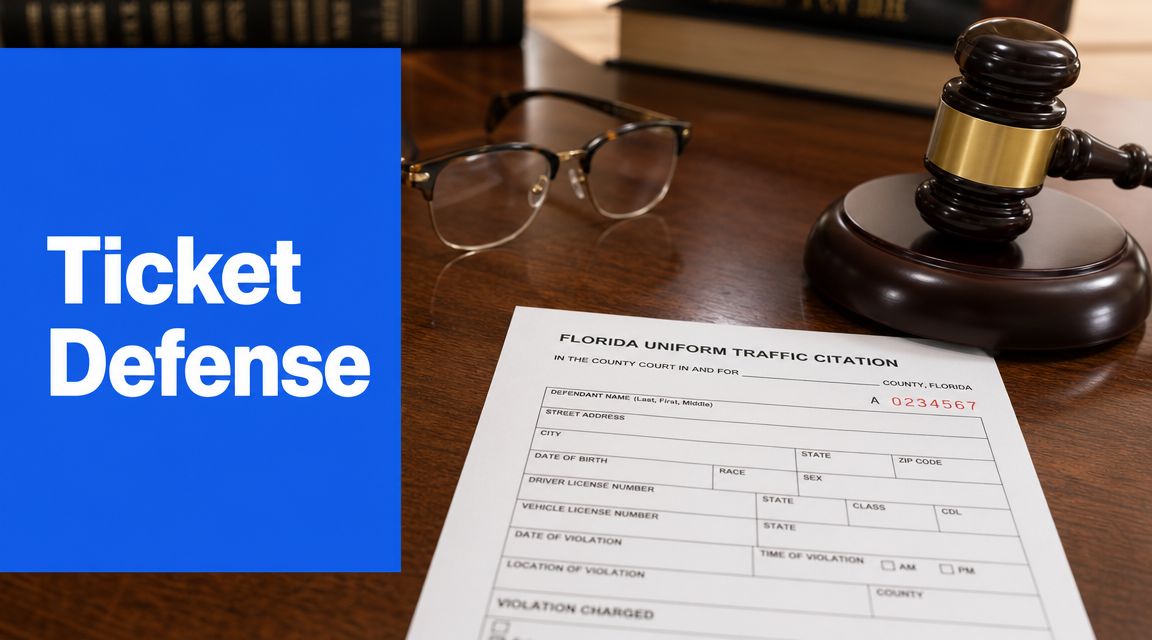
You're probably holding the citation in your hand right now, replaying the stop and wondering if you should just pay it and move on. Don't make that decision on stress alone. In Florida, a traffic ticket is not just a bill. It's the opening move in a legal case that can affect your license, your insurance, and in some jobs, your income.
A lot of drivers freeze and default to the fastest option. That's exactly how people end up pleading guilty without understanding what they gave up. If your citation involves speeding under Florida Statute § 316.187, or another moving violation in Chapter 316, the right question isn't “How fast can I get rid of this?” It's “What can I still protect?”
Table of Contents
What Are Your Immediate Steps After Getting a Florida Ticket
Frequently Asked Questions About Florida Traffic Ticket Defense
You Have a Ticket What Is Your Next Move
TL;DR: Don't just pay the ticket. In Florida, that can mean accepting guilt. Your first move should be preserving facts, protecting deadlines, and getting a lawyer-led review before you make a choice that affects your record.
You see the lights. You pull over. A few minutes later, the officer walks away and you're left with a citation and a lot of uncertainty. That moment feels small, but it isn't. What you do next can decide whether this stays manageable or follows you for years.
Most drivers treat the ticket like a nuisance. That's a mistake. A citation is a legal allegation. If you pay it outright, you may be closing off defenses you never explored.
Practical rule: Treat the ticket like evidence, not paperwork.
Start by slowing down and refusing to make a rushed decision. Read the citation. Save it. Photograph it. Then review a practical breakdown of what to do when you get a ticket so you don't miss the first protectable steps.
Your goal right now isn't to tell your side of the story better. Your goal is to avoid making an avoidable mistake. Good traffic ticket defense starts before court. It starts the day you're cited.
What Are Your Immediate Steps After Getting a Florida Ticket
If your case will be handled through the Orange County Courthouse in Orlando or any other Florida court, the process starts the same way. You need to protect the record before the deadline controls you.
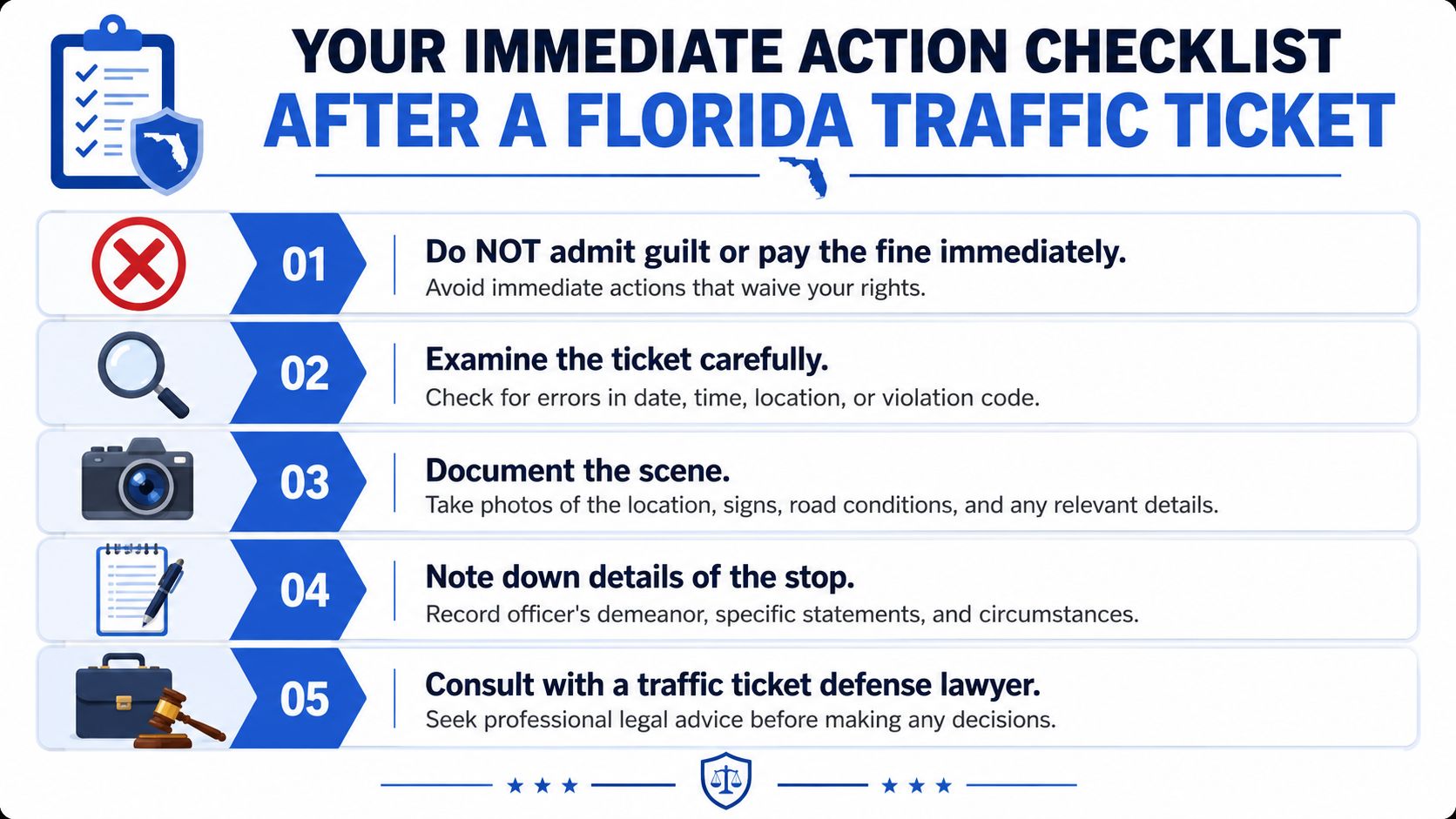
What should you do before you decide anything
Florida gives drivers a short response window. A Florida defense guide explains that a driver generally has 30 days from the date of the citation to choose to pay, elect traffic school, or request a hearing, and missing that deadline can lead to license suspension, as outlined in this Florida ticket response timeline.
Take these steps immediately:
Secure the ticket: Put the citation somewhere safe. Then take clear photos of the front and back.
Read every line carefully: Check names, dates, location, vehicle details, and the cited offense. Use this guide on how to read a traffic citation so you know what matters.
Write down what happened: Do it while the stop is fresh. Note traffic conditions, weather, lane position, what the officer said, and anything unusual.
Preserve your own evidence: Save dashcam video. Keep phone location records if relevant. Take photos of signs, roadway markings, and visibility conditions.
Track the deadline now: Put the due date in your phone calendar with reminders. Don't rely on memory.
Get legal input before electing an option: Once you pay or choose a path without strategy, you may limit what can be done later.
What should you avoid doing
Drivers hurt their own cases in predictable ways.
Don't admit guilt casually: Not to the officer, not online, not in a rushed phone call with the clerk.
Don't assume the ticket is accurate: Small errors can matter. Procedural defects are part of traffic ticket defense.
Don't wait to “see what happens”: Deadlines don't bend because you were busy.
Don't trust a generic app to spot nuance: If the facts are unusual, the defense must be customized.
Write your recollection the same day. Small details fade fast, and those details often matter more than people expect.
What Are the True Costs of Pleading Guilty
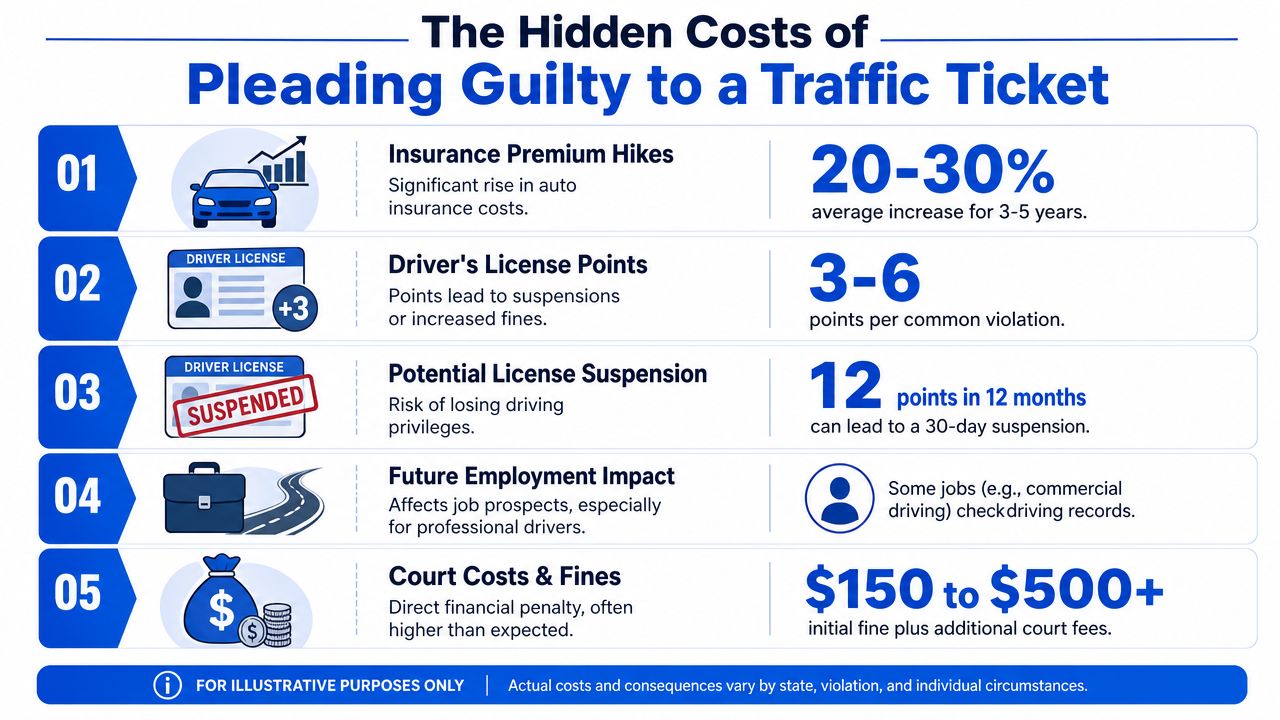
You get pulled over on the way to work, glance at the fine, and tell yourself you will just pay it tonight. That decision can follow you a lot longer than the stop itself. In Florida, paying the ticket usually means admitting the violation and putting a conviction-related result on your driving record instead of making the state prove its case.
The fine is only the entry cost.
Why paying fast can cost more later
Once you plead guilty, the case shifts from defense to damage control. You are no longer asking whether the ticket can be beaten, reduced, or kept off your record. You are dealing with points, insurance consequences, and possible licensing trouble after the fact.
For speeding allegations, Florida law matters. Section 316.187 governs unlawful speed. If the officer cited that statute and you pay, you are usually creating a record event, not closing a problem cleanly.
That is where drivers get burned by convenience. Automated ticket apps and high-volume ticket mills sell speed and low touch service. Complex cases do not need speed. They need strategy. If your record, job, clearance, CDL track, military duties, or gig income could be affected, you need a lawyer who will review the citation, the county, the judge, the officer, and your specific risk before any election is made.
Here is the comparison:
Issue | What drivers focus on | What matters |
|---|---|---|
Fine | The amount due today | The driving record impact created by paying |
Court | Whether showing up is a hassle | Whether the charge can be challenged or reduced |
Insurance | Whether rates change right away | Whether the conviction gives the carrier a reason to raise premiums |
License | Whether you can still drive tomorrow | Whether points and prior history create bigger exposure |
Work | Whether the employer will even notice | Whether your record affects hiring, retention, fleet approval, or contract work |
Who gets hit hardest
Some drivers feel the consequences almost immediately.
Gig workers: Uber, Lyft, delivery, and courier drivers live on their driving record. A quick guilty plea can threaten platform eligibility and income.
Military members: Base access, command issues, security concerns, and scheduling conflicts make a careless plea a bad move.
Drivers with prior tickets: One more paid citation can create a pattern the court, DHSMV, or insurer takes seriously.
People who drive for work: Sales staff, home health workers, contractors, and anyone in a company vehicle can face employment fallout fast.
A lawyer-led defense matters most here because these cases are personal. A ticket mill processes volume. A real attorney asks the questions an app will never ask. Do you already have points? Are you under a fleet policy? Is this stop tied to an accident? Does your unit, employer, or platform review moving violations? Those answers shape the strategy.
Before you choose a plea, read what happens if you plead guilty to a Florida traffic ticket so you understand the tradeoff in plain terms.
This short video explains why that quick payment can turn into a much bigger problem:
Paying a ticket is easy. Protecting your record is the hard part.
How Can a Traffic Ticket Be Defended in Florida
Real traffic ticket defense is not built on excuses. It is built on proof, procedure, and pressure points in the state's case. If you're accused of speeding under Florida Statute § 316.187 or another Chapter 316 offense, the court does not convict you because the officer felt confident. The state still has to support the citation properly.
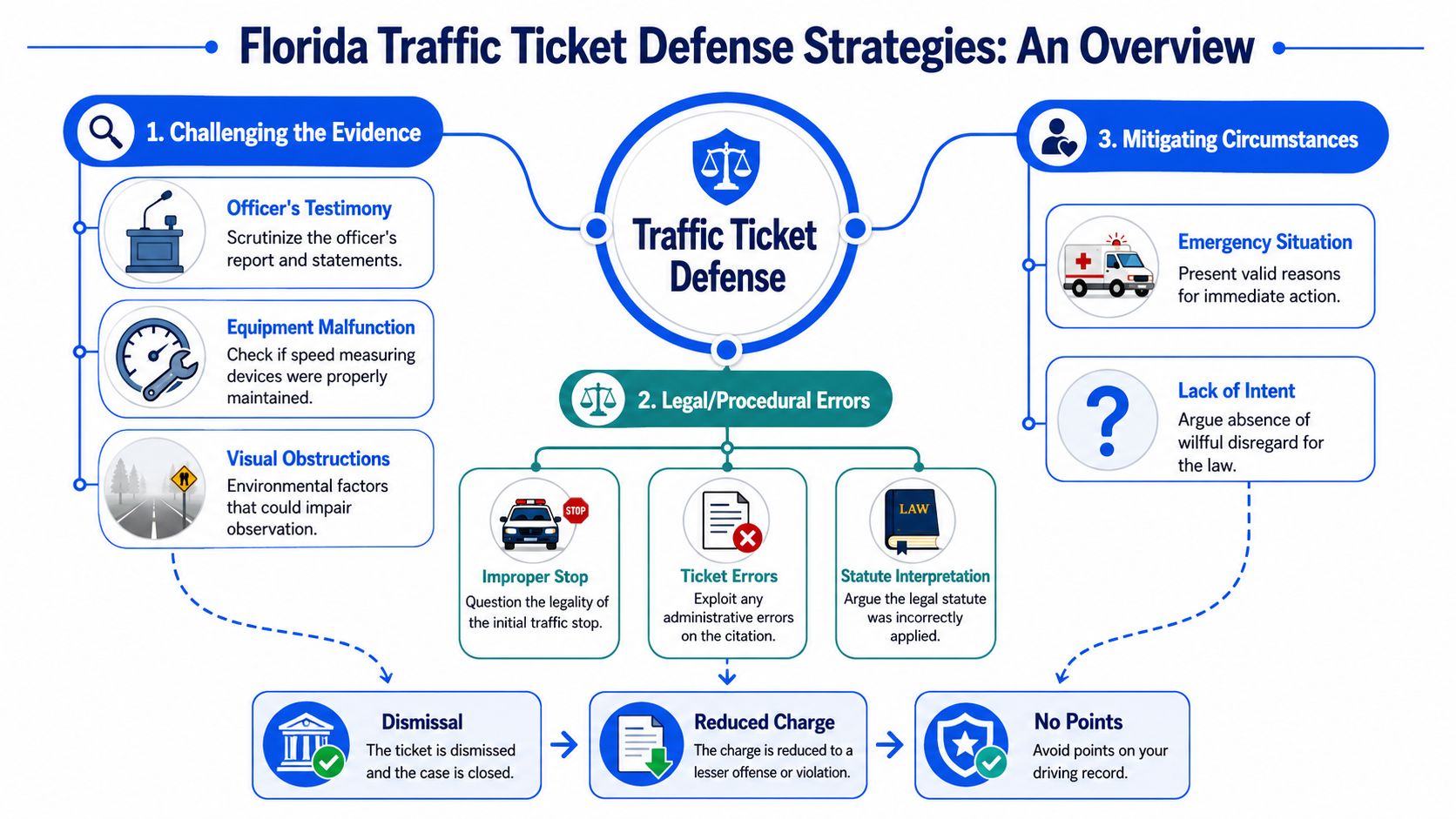
What does a real defense actually look like
A practical Florida defense workflow starts with the face of the citation. One Florida guide explains that the first layer is checking whether the ticket is procedurally challengeable, including incorrect citation data, wrong driver or vehicle information, missing elements, conflicting narratives, officer non-appearance, or filing issues, before shifting to evidence-based attacks on the stop or speed proof in this overview of Florida traffic ticket defense strategy.
That means a lawyer often looks at the case in this order:
Can the citation be enforced at all
Can the state prove what it claims
If proof exists, can the charge still be reduced to protect the record
That sequence matters. Drivers often jump straight to arguing the facts. Lawyers usually start with the legal structure.
Where lawyers find leverage
The strongest evidentiary attacks are technical. A defense resource explains that effective challenges often rely on calibration records, officer notes, photographs, dashcam footage, and weaknesses in radar, LIDAR, or pacing methods, as described in this guide to technical evidence challenges in traffic court.
Here are common areas of scrutiny:
Paperwork problems: Wrong statute code, incomplete fields, or mismatched identifying details.
Measurement reliability: Missing calibration records, poor device setup, aiming issues, or interference from traffic or terrain.
Observation gaps: Limited line of sight, obstructed view, or weak pacing details.
Narrative conflicts: Officer notes that don't match roadway conditions, video, or timing.
Not every ticket gets dismissed. That's not the point. Good defense is about identifying strategic advantages and applying them intelligently. Sometimes the win is dismissal. Sometimes it's reduction. Sometimes it's protecting you from points.
A lawyer-led firm such as Ticket Shield, PLLC handles that review with direct attorney communication by phone or text, which matters when the issue isn't generic and the citation needs a case-specific strategy.
Why Is a Lawyer Better Than an Automated App
Drivers often lose sight of what they're buying. An app sells convenience. A lawyer provides judgment. Those are not the same product.
The traffic system is built for volume. One traffic-ticket source reports that law enforcement issues, on average, more than 125,000 traffic tickets every day, and only about 5% are contested in court, which helps explain why fast payment and standardized processing dominate this system of high-volume traffic enforcement and low contest rates.
What apps are built to do
Automated platforms are built to sort, route, and standardize. That works for simple intake. It fails when your case needs legal judgment.
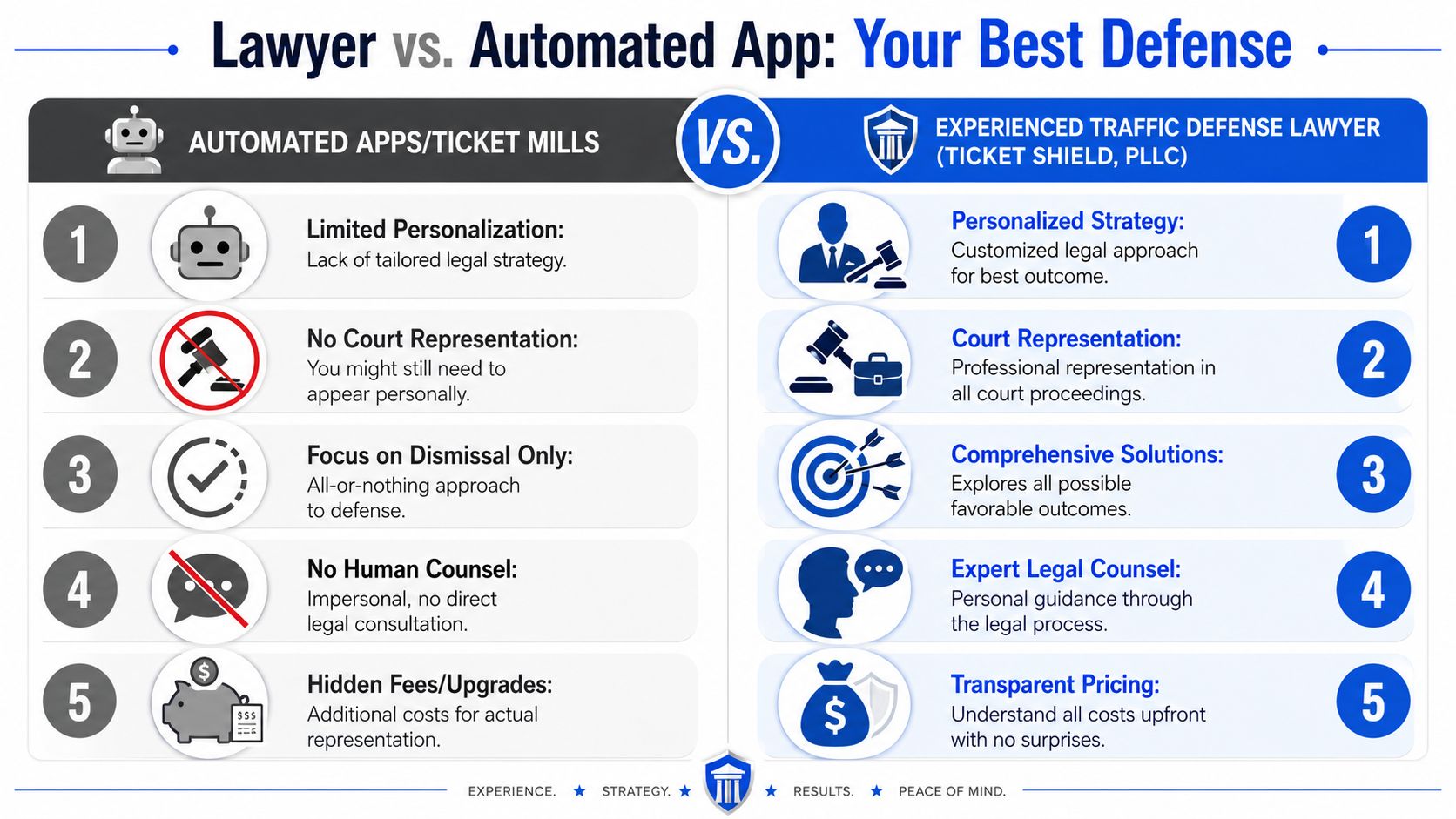
An app can collect answers. It cannot cross-check subtle inconsistencies the way a lawyer can. It cannot decide whether a defect is a strategic advantage or irrelevant noise. It cannot negotiate like a person who knows the courthouse, the practice, and the pressure points.
If your case is heading into a high-volume courthouse like the Richard E. Gerstein Justice Building in Miami, you do not want to be treated like a file moving through a conveyor belt.
What a lawyer can do that software can't
A lawyer-led defense changes the experience in ways that matter:
Automated app or ticket mill | Lawyer-led defense |
|---|---|
Intake through forms and scripts | Direct questions based on your facts |
Generic workflow | Strategy adjusted to the citation and your risk |
Limited nuance | Legal analysis of procedure and evidence |
Narrow objective | Broader protection of record, license, and work impact |
Middlemen are common | Direct attorney communication matters |
For many drivers, the biggest difference is access. You should be able to speak directly with the lawyer handling your case, not a chatbot or a non-attorney go-between. That matters more when the ticket affects your job, military status, driving privileges, or a prior record.
Read why choosing a local lawyer over apps can change the outcome if you're comparing options.
Software can process a ticket. It can't exercise legal judgment.
Are There Special Risks for Certain Florida Drivers
Yes. If your license connects directly to your income, your military status, or the way an officer is likely to view your vehicle, a routine ticket can turn into a much bigger problem fast.
A rideshare driver can lose access to the app. A service member can end up answering questions that should have been avoided. A motorcyclist can get stuck fighting assumptions instead of facts. Those cases need strategy, not a mass-process ticket service.
Gig workers
If you drive for Uber, Lyft, DoorDash, Instacart, or similar platforms, the fine is usually the smallest problem. The primary danger is losing the ability to work while the platform reviews your record or flags the citation.
That changes the objective immediately. You are trying to protect your driving record, reduce the chance of points, and avoid a result that creates employment trouble. A ticket mill treats that like another file. A lawyer should treat it like an income-protection case.
Direct attorney contact matters here. Gig drivers often need quick, specific advice about timing, disclosures, and whether a plea creates avoidable fallout.
Military drivers
If you are stationed at MacDill, NAS Jacksonville, Eglin, or another Florida base, do not shrug off a citation as a small inconvenience. A traffic case can affect more than your court record. It can raise issues involving base driving privileges, command attention, and unnecessary professional scrutiny.
You need a clean, disciplined response. That means no casual admissions, no rushed payment, and no generic app deciding your case path from a checklist. Military drivers benefit from a lawyer who understands that the goal is broader than closing the file. The goal is protecting your record and avoiding complications that spill into your service life.
Motorcyclists
Motorcyclists often start behind. The officer may assume speed. The court may assume risk-taking. Those assumptions can shape how the citation is written and how the stop is remembered.
Details decide these cases. Lane position, visibility, traffic flow, road conditions, and the officer's vantage point all matter. A lawyer can pull those facts apart and test whether the citation matches what happened. An automated service usually cannot do that well, because it is built for volume, not for the rider whose case depends on nuance.
If you fall into one of these groups, treat the ticket like a legal problem with real collateral consequences. Get a lawyer who will talk to you, assess the full risk, and build a defense around your job, your record, and your life.
Frequently Asked Questions About Florida Traffic Ticket Defense
Will I have to go to court
Often, a lawyer can handle much of the process for you. The answer depends on the charge, the county, and the facts. If your case is in Tampa at the Edgecomb Courthouse or in Broward at the Broward County Judicial Complex, procedure may vary. What shouldn't vary is getting legal guidance early.
Can the case be dismissed if the officer doesn't appear
Sometimes, yes. But that is not a strategy. It's a possibility. Strong cases are built on the actual defects, evidence problems, and negotiation posture, not wishful thinking.
Is a lawyer worth it for a minor ticket
If the ticket carries real risk to your record, job, or driving privileges, yes. The right comparison is not lawyer fee versus fine. It's lawyer fee versus the total damage a conviction can cause.
What if the citation looks wrong
That can matter. Incorrect details, missing information, and internal inconsistencies can strengthen your position. They don't automatically end the case, but they should be reviewed by a lawyer, not ignored by a payment click.
What if the ticket came from camera or radar evidence
Machine-generated cases should be checked closely. Evidence preservation, maintenance history, calibration issues, and the integrity of the records can all matter. Automated evidence still has to hold up.
If you want a lawyer-led review focused on the No Points goal, visit Ticket Shield, PLLC for a free consultation. You'll get a direct, strategic assessment from a Florida traffic defense team that handles Chapter 316 cases statewide and doesn't route you through middlemen, chatbots, or ticket-mill processing.