FL Speeding Ticket Points: Guide to Penalties & Appeal
Understand FL speeding ticket points: the system, insurance impacts, and license suspension thresholds. Fight for no points with expert legal help.
A Florida speeding ticket adds 3 to 4 points to your license. If you reach 12 points in 12 months, Florida can suspend your license for 30 days. The bigger problem is long-term insurance cost and record damage.
You saw the lights. Your stomach dropped. Then the officer handed you a citation, and now you're staring at the ticket wondering if you should just pay it and move on.
That instinct can cost you.
In Florida, a speeding ticket isn't just a one-time annoyance. If you pay it, you're usually closing the case the wrong way. You're accepting the violation, exposing your record to points, and opening the door to insurance consequences that can follow you for years. Florida speeding cases often start under Florida Statute § 316.183, the general rule on unlawful speed, and the decision you make after that citation matters more than most drivers realize.
At our firm, we look at this the way a defense lawyer should. Not as a clerical problem. As a record-protection problem. If your case is in Miami, that can mean navigating the process tied to the Richard E. Gerstein Justice Building and local court practice with a strategy built around one goal: no points if possible.
Table of Contents
Why Is a Florida Speeding Ticket More Than Just a Fine
That ticket in your hand is a fork in the road. One path is fast. Pay it, move on, hope for the best. The other path is smarter. Slow down, protect your record, and make a deliberate decision before you give the state an easy conviction.
A lot of drivers focus on the amount of the fine. That's the wrong target. The fine is immediate, but it usually isn't the part that hurts the longest. The lasting risk is what the conviction does to your license status, your insurance profile, and your ability to keep a clean driving history.
Under Chapter 316, speeding cases are traffic infractions, but that doesn't make them harmless. Administrative penalties can hit hard, especially if you already have prior citations. Florida's point system is designed to turn repeated moving violations into a suspension issue before the pattern gets worse. That means even a ticket that feels routine can become the one that creates a serious problem.
Practical rule: Never decide what to do with a speeding ticket based only on the fine amount.
Why paying online can be a costly mistake
Many drivers make the same error. They go online, pay the citation, and think they handled it efficiently. In reality, they may have just lost their opportunity to influence the outcome.
Once you accept the ticket, you stop asking the right questions:
Was the stop legally solid
Was the speed measurement reliable
Can the charge be reduced
Can the outcome avoid points
Should you save traffic school for a future case
Those questions matter whether you're a daily commuter, a delivery driver, or someone whose employer checks driving history. A single conviction can affect much more than one court file.
Why your decision matters right now
Florida gives drivers 30 days to respond to a ticket, and one option is to contest it rather than accepting points, as explained in this Florida traffic ticket points guide. That deadline creates urgency. If you wait too long or choose casually, you can lose better options.
You need a strategy, not a reflex.
If your goal is to keep your license protected and your record as clean as possible, the first move is not payment. It's evaluation.
How Many Points Is a Speeding Ticket in Florida
Here's the direct answer regarding Florida speeding ticket points. Florida assigns the points based on how fast the officer says you were going.
Florida speeding charges commonly arise under § 316.183, and the point value depends on the severity level attached to the conviction.
What does Florida actually assess for speeding
According to Florida guidance on the point schedule, speeding convictions are generally assessed as follows in this overview of Florida's license point system:
Florida Speeding Ticket Point Values | Points Assessed |
|---|---|
Speeding 15 mph or less over the limit | 3 points |
Speeding 16 mph or more over the limit | 4 points |
That breakdown matches Florida point-system guidance stating that speeding 15 mph or less over generally brings 3 points, while speeding 16 mph or more over generally brings 4 points in this Florida points explanation.
Why the jump from 3 points to 4 points matters
Drivers often shrug at the difference between three points and four. You shouldn't. That extra point changes the math on future risk.
A 3-point ticket is not minor just because it isn't 4. A 4-point ticket is not just one point worse. It moves you toward suspension faster, and it gives you less room for error if another stop happens later.
A speeding ticket has to be evaluated in context. Your current record matters as much as the citation you just received.
If this is your first citation in years, your options may look different than they would for someone already carrying prior points. That's why blanket advice like "just take school" or "just pay it" is weak advice. The correct move depends on where this ticket lands in your real driving history.
What Happens When You Get Points on Your License
A lot of drivers make the same mistake. They look at the fine, pay it, and move on. Then the true consequences show up later, when a renewal notice spikes, a background check raises questions, or one more stop puts the license at risk.
Points change your position. They limit your options the next time you are pulled over, and they make every future ticket more dangerous.
When do points become a suspension problem
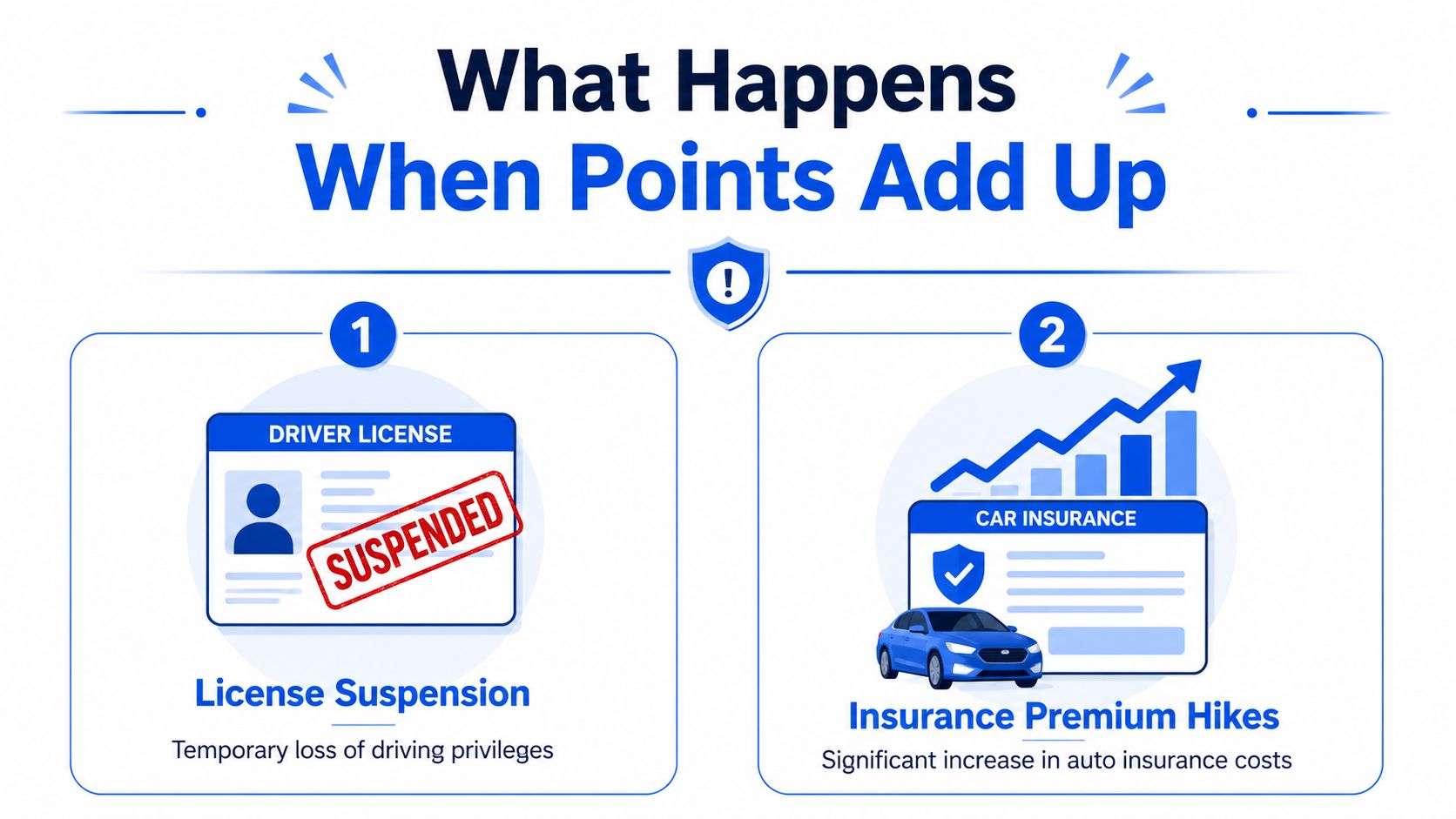
Florida uses a rolling point system, and the state can suspend your license if too many convictions stack up in a short period. If you want a clearer breakdown of the suspension rules, read this guide on how to avoid license suspension for points in Florida.
The danger is not limited to serious cases. Repeated smaller violations can do the job. Four 3-point convictions in the wrong time frame can create a suspension problem. Three 4-point convictions can do the same. That is why paying a speeding ticket without looking at your full record is bad strategy.
Your history matters more than drivers want to admit.
If you already carry points, the next ticket is not just another fine. It may be the ticket that triggers a suspension review, forces you off the road, and creates a much bigger problem than the citation itself.
For a broader consumer explanation of ways drivers try to reduce points on license, it helps to understand how quickly convictions can stack against you.
How long can insurance feel this ticket
Insurance usually hurts longer than the court case.
A conviction for speeding can stay expensive for years because insurers do not care that you paid the ticket and forgot about it. They care that a moving violation was added to your record. Once points and a conviction appear, you can face higher premiums, fewer carrier options, and less room to absorb another mistake.
That is why the decision is strategic. Paying closes the case fast, but it also hands the state a conviction. Traffic school may help in some situations, but it is limited and should not be treated like an automatic fix. Fighting the ticket is often the smarter move because it gives you a chance to protect both your license and your insurance record before the damage is done.
The cheapest-looking option up front is often the most expensive one over time.
Why drivers near the edge need to act differently
If you drive for work, have prior tickets, or need a clean record for employment, points can hit far beyond insurance. A single conviction can affect job screening, company driving privileges, and your ability to keep earning without interruption.
That is the main issue. The question is not only how many points this ticket carries. The question is what happens to your record if you accept the conviction instead of challenging it.
Is Taking Traffic School a Good Idea
Sometimes yes. Often not automatically.
Traffic school is useful, but too many drivers treat it like a permanent escape hatch. It isn't. Florida limits the option, and that changes the strategy.
When traffic school helps
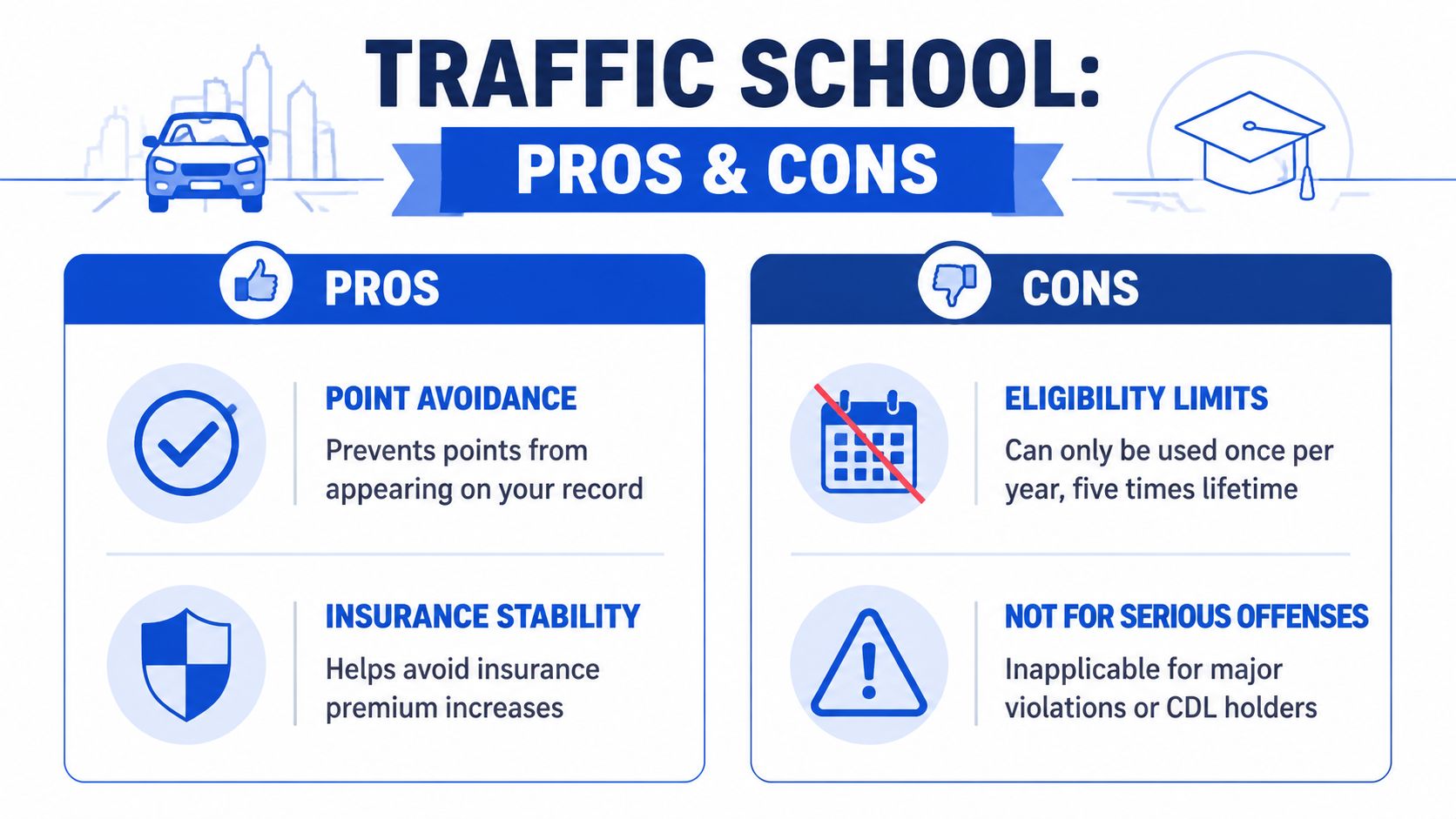
Florida allows a 4-hour Basic Driver Improvement course, commonly called BDI, to reduce point consequences. It can help keep points off the record in qualifying situations and may reduce the chance of insurance problems when used properly, according to this Florida DHSMV point-system overview.
For some drivers, that makes sense. Especially if the facts are bad, the ticket is minor, and preserving time matters more than litigating.
A defensive driving course can also be part of a broader effort to protect premiums. This general article on how classes may save money on car insurance gives useful context on why insurers care about driving history and risk signals.
Why traffic school is not a long-term strategy
Florida doesn't let you use BDI whenever you want. The course can generally be used once every 12 months and no more than five times in a lifetime, as noted in this Florida driver points resource.
That limit is the part many drivers miss.
If you spend one of those elections today just because it's convenient, you may regret it later. A future case could be harder to defend, more damaging to your insurance, or more dangerous to your license status. Your traffic school election is a limited asset. Use it like one.
Traffic school is a tool. It is not a reset button.
For drivers with prior citations, commercial exposure, or jobs tied to driving records, preserving that option can be more valuable than using it on the first ticket that shows up.
How Can a Lawyer Help Fight Your Speeding Ticket
You get the citation, pull up the payment page, and feel tempted to make it disappear in two minutes. That is the mistake. A speeding ticket is a decision point, not a bill.
A lawyer changes the decision from reactive to strategic. The job is to assess the stop, the charge, the court, and your record, then choose the path that protects you most. If your case is in Orlando, for example, practice and procedure at the Orange County Courthouse can affect what result is realistic. What matters is not how fast you close the ticket. What matters is what ends up on your driving record.

Why paying the ticket is usually the weakest move
Paying is quick. It is rarely the smart move.
Once you pay, you usually stop fighting and accept the result tied to that citation. That can mean points, insurance consequences, and a worse position the next time you are stopped. A lawyer keeps the case open long enough to look for better outcomes.
The choice is between three paths:
Paying the ticket: Fast, but often means accepting the violation result.
Taking traffic school: Sometimes useful, but limited and worth preserving when possible.
Fighting the citation: Keeps open the chance for dismissal, reduction, or another outcome that does less damage to your record.
That strategic choice is the part drivers miss. Traffic school is not unlimited, and using it out of panic can cost you later. The Florida Clerk of Court traffic guidance explains that electing a basic driver improvement course is restricted by time and lifetime use limits, which is exactly why many drivers should review the case first instead of burning that option on a ticket that may be defensible.
If you want a grounded look at the legal mechanics, this guide on how lawyers dismiss traffic tickets explains the kinds of issues counsel may examine.
What direct attorney access changes
Representation quality matters at this stage. Some services push traffic tickets through intake teams, call centers, or automated systems. That may be efficient for volume, but it does not give you real legal judgment about whether to fight, negotiate, or preserve traffic school for a later problem.
A lawyer-led firm should give you direct access to the attorney handling the case. You should be able to ask how your driving history affects strategy, whether the evidence looks weak, and what result is realistic in the county where the citation is pending. Ticket Shield, PLLC handles Florida traffic defense in that direct-attorney model rather than routing clients through chatbots or non-lawyer intermediaries.
A short overview can help show what that process looks like in practice.
When a lawyer fights a speeding ticket, the goal is clear. Protect the driving record first.
That can mean attacking the basis for the stop, challenging the officer's proof, negotiating for a reduced charge, or pushing for a result that avoids points. The right move depends on the facts, your history, and the court. The wrong move is choosing a path before anyone has reviewed the case.
What Are Your Immediate Next Steps
If you just got a citation, don't overcomplicate this. Handle the next few hours correctly and you protect your options.
Florida gives you 30 days to respond to the ticket, as noted earlier in the article. Use that time carefully. Don't waste it.
Do these things now
Don't pay the ticket online yet: Payment is often the point where you relinquish your ability to contest and accept the violation result.
Check the citation date immediately: Make sure you're still within the response period and don't let that deadline sneak up on you.
Read the charge line carefully: Confirm what statute the officer cited. Many speeding tickets reference § 316.183, and the exact allegation matters.
Gather every document: Keep the citation, any notes you wrote after the stop, court notices, and your driving-history concerns in one place.
Think beyond the fine: If you drive for work, have prior tickets, or worry about insurance, your case deserves more than a quick payment.
Review your options before using traffic school: That election is limited. Don't burn it because you're anxious.
Get a legal review before choosing a path: A focused case review can tell you whether to fight, negotiate, or use another option based on your actual record.
Keep the goal simple
Your goal isn't to "deal with" the ticket.
Your goal is to avoid unnecessary points, protect your license, and limit long-term financial fallout. If you need a practical starting point, this guide on what to do when you get a ticket is a useful first checklist.
Act fast, but don't act blindly. A rushed payment can create a longer problem than the stop itself.
If you want a lawyer to review your Florida speeding ticket before you make a costly mistake, visit Ticket Shield, PLLC for a free consultation. The priority is simple: protect your record and pursue the No Points outcome.