Driving Without Registration Fine: A Florida Defense Guide
Facing a Florida driving without registration fine? Learn the penalties, your defense options, and why a real attorney is crucial. Protect your record now.
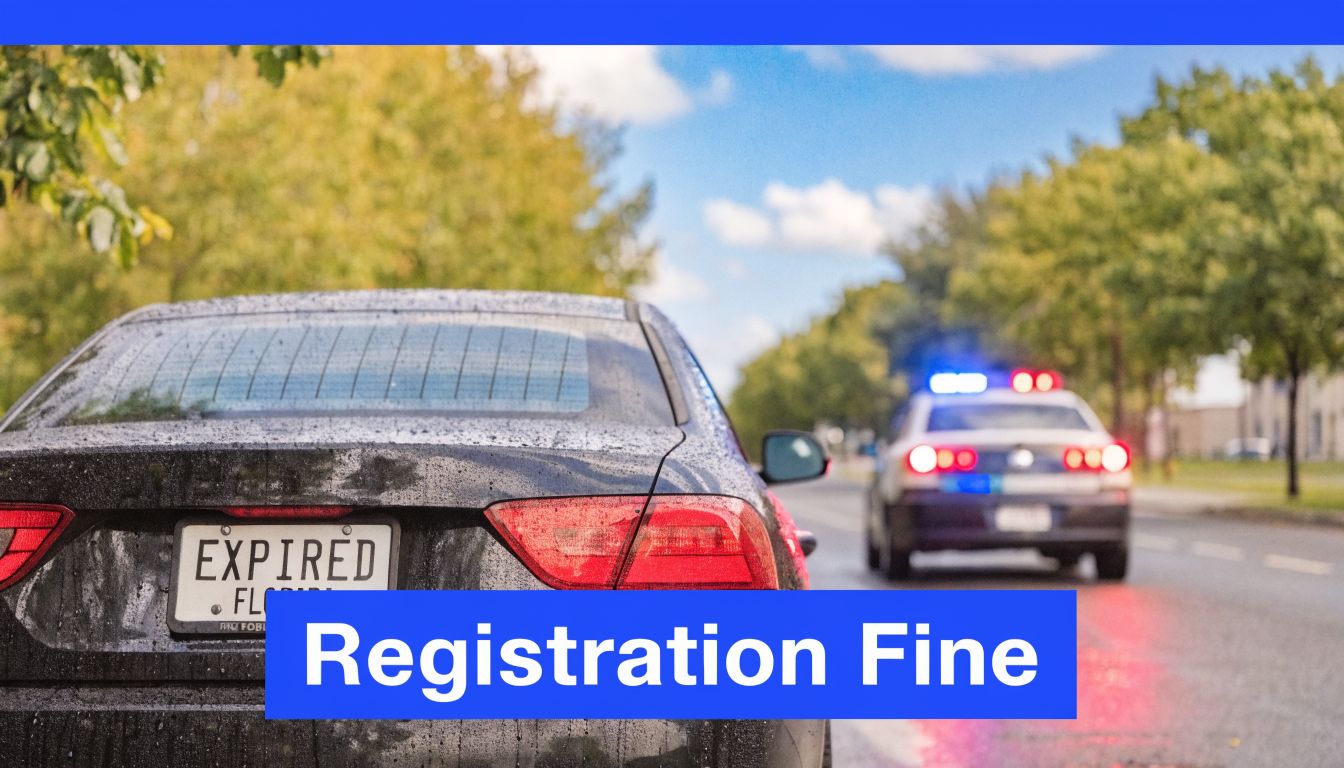
A driving without registration fine in Florida can start small, but paying it blindly can cost far more through court costs, impound risk, insurance damage, and repeat-offense exposure. Handle it like a legal problem, not a paperwork problem.
You see the lights. You pull over. The officer asks for your license, insurance, and registration, and suddenly you realize the tag issue you meant to fix never got fixed.
That moment feels administrative. It isn't. In Florida, a registration ticket can turn into a chain of problems that reaches your wallet, your driving record, your work, and in some cases your criminal exposure. If you drive for Uber, Lyft, DoorDash, or any delivery platform, the risk gets worse fast.
Florida courts don't care that you were busy. They care whether the vehicle was legally registered when you were driving it. Around courthouses like the Richard E. Gerstein Justice Building in Miami, these cases move every day. Drivers who treat the citation like a nuisance often make the most expensive mistake first. They pay it.
Table of Contents
What Happens When You Are Pulled Over?
The stop starts at the roadside, but your real problem starts after the officer hands you the citation. That paper is a legal notice. It creates deadlines, options, and consequences. If you ignore them or guess your way through them, you usually help the state more than you help yourself.
A lot of drivers make things worse by arguing, overexplaining, or admitting facts they don't need to admit. Stay calm. Be polite. Give the officer what you're required to provide. Then stop talking.
If you're also worried because the stop led to an arrest of someone else in the car, use a reliable tool for assistance finding someone in custody so you can deal with that issue separately and quickly.
Why the paper ticket matters
A registration citation can seem minor because it doesn't feel like reckless driving or DUI. That's exactly why people mishandle it. They assume the fastest path is paying online and moving on.
It usually isn't.
Practical rule: If a ticket can affect your record, your insurance, or your job, don't make a payment decision before you know what that payment legally means.
You also need to know what you're being asked to sign, and what your signature does or doesn't mean. If you're confused on that point, read this guide on whether you have to sign traffic tickets.
What to do during the stop
Keep your focus narrow:
Provide documents: Hand over your license, proof of insurance, and whatever registration paperwork you have.
Don't volunteer a story: Explanations about being busy, moving, lending the car, or forgetting renewal don't usually help.
Read the citation later: The roadside isn't the place to interpret statutory language or deadlines.
Act the same day if possible: The sooner you fix the registration issue and preserve documents, the better your defense position.
The officer is documenting a violation. You need to start preparing a response.
What Does Florida Law Say About Vehicle Registration?
Florida takes registration seriously because the state wants every vehicle on the road properly titled, tracked, and legally operated. The basic registration rules sit in Florida Statute 320.07. If the registration has expired, the state can penalize the owner or operator depending on the circumstances.
Florida drivers should also understand that Chapter 316 still matters. Chapter 316 governs traffic enforcement generally, and it gives officers broad authority to stop vehicles and issue citations when they observe roadway violations or equipment and document issues tied to legal operation.
What Florida requires
Your vehicle registration must be current. If it isn't, you're exposed. That can involve an expired registration, a failure to renew on time, or operating a vehicle that was never properly brought into compliance.
Many drivers become complacent about registration. They assume an expired tag is just a clerical issue. Florida treats it as a legal compliance issue.
A related problem is insurance. Registration and insurance troubles often show up together in the same stop. If you need a plain-English overview of motorcycle-related coverage issues, this breakdown from Professional Insurance Advisors on motorcycle insurance is useful.
Why Chapter 316 still matters
Even though registration itself is handled under Chapter 320, traffic stops and citation procedures happen in the larger enforcement world of Chapter 316. That's why a registration case isn't isolated from your broader driving risk. Once you're stopped, officers can examine other compliance issues too.
A registration violation often starts as one line on a citation and ends up exposing several legal vulnerabilities at once.
If your current issue involves an expired tag specifically, this article on driving with expired registration gives you a useful starting point on the Florida angle.
The practical point is simple. Florida law doesn't reward delay. If your registration lapsed, the state expects you to fix it fast and deal with the ticket strategically, not casually.
What Are the Real Costs of a Registration Ticket?
Most drivers lock onto the amount printed on the citation. That's the wrong target. The driving without registration fine is only the first bill.
In Florida, fines for driving without registration start at $116 plus court costs, and more than 120,000 citations are issued annually statewide, with Miami-Dade and Broward alone accounting for over 35,000 in 2025, according to ConsumerShield's summary of driving without registration penalties.

The ticket amount is only the opening hit
A paid ticket can trigger more than a one-time expense. You may face:
Court costs: The base fine rarely tells the full story.
Administrative hassle: You still have to renew, document, and prove compliance.
Vehicle disruption: If the situation compounds, impoundment can enter the picture.
Insurance consequences: Your insurer may not view a paid registration case as harmless.
A lot of people also discover that registration trouble overlaps with insurance trouble. If that applies to you, read this Florida-specific guide on driving without insurance Florida, because those two issues together can become much more expensive than either one alone.
The hidden costs hurt longer
The bigger financial damage usually arrives after the court date, not before it. A traffic conviction can shadow you long after the clerk processes payment.
That matters even if your life is busy and stable right now. Busy professionals, service members, rideshare drivers, and delivery drivers all have something to lose from a preventable record problem.
Here is the cleaner way to view this:
Cost category | What drivers usually expect | What often actually happens |
|---|---|---|
Fine | One payment and done | Added court costs and compliance costs |
Time | A few minutes online | DMV follow-up, court handling, document gathering |
Vehicle use | No interruption | Possible disruption if the issue isn't corrected |
Insurance | No change | Carrier review and possible rate consequences |
Work impact | No effect | Credential or platform problems for some drivers |
Paying a ticket is an admission with consequences. It's not a convenience fee.
If you're trying to estimate the broader financial impact, this page on the cost of a ticket for expired tags helps frame the issue the right way.
The hard truth is that the posted fine is the least important number in the case. Your real exposure is what the citation does next.
Can You Be Criminally Charged for an Expired Tag?
Sometimes yes. Not every expired tag case is criminal. But some drivers are far too casual about how quickly a repeat or aggravated registration problem can get more serious.
Under Florida Statute 320.02, penalties for registration violations can be severe. Fines can reach up to $500 for a first offense and escalate significantly for repeat offenses, as summarized in this discussion of registration violation penalties under Florida Statute 320.02.
When it stays a traffic problem
For many drivers, the first encounter is handled as a traffic matter. That doesn't mean it's harmless. It means you still have a chance to keep it from becoming something worse.
That chance disappears when you ignore the citation, miss deadlines, fail to correct the registration, or treat the matter like a website checkout problem.
When it gets more serious
Florida can treat repeat noncompliance much more harshly. A simple expired tag issue can stop being simple when the state sees a pattern, a lengthy lapse, or surrounding facts that make the case look less like a mistake and more like disregard.
That distinction matters for your record, your employment screening, and your stress level. It also matters if you hold a professional license or work in a field where background reviews happen.
If this is not your first registration problem, stop trying to DIY it.
A lot of drivers ask the wrong question. They ask, "Can I just pay this?" The better question is, "What will this become if I handle it badly?" That's the right way to evaluate risk.
What Immediate Steps Should You Take After the Ticket?
Speed matters. Not panic. Not excuses. Action.
If you drive for a platform, the urgency is even higher. A single registration violation can trigger immediate account deactivation on rideshare platforms, and a 2025 Florida Transportation Report noted that 15% of cited rideshare drivers lost platform access, as referenced in the earlier verified reporting used for this topic.

Do these first
Use this checklist immediately after the stop:
Check the expiration date: Pull your registration paperwork and confirm exactly what lapsed and when.
Fix the underlying issue: Renew the registration as fast as you lawfully can. Save receipts, confirmations, and screenshots.
Read the citation carefully: Look for the court date, county, citation number, and the specific statute listed.
Preserve every document: Keep the ticket, proof of renewal, insurance card, vehicle title papers if relevant, and any DMV communications together.
Assess job exposure: If you drive for income, assume your account or employer may care about the citation.
Get legal advice before paying: Payment may close off better outcomes.
For a broader post-ticket roadmap, review this practical guide on what to do when you get a ticket.
Don't make these mistakes
Drivers sabotage otherwise manageable cases by doing the same few things over and over.
Don't pay first and ask later: That can be the most expensive "easy" decision.
Don't miss the response date: Courts don't reward forgetfulness.
Don't send incomplete proof: Sloppy documents weaken fix-it style arguments.
Don't assume the clerk can give legal advice: Clerks process cases. They don't defend them.
Don't ignore platform rules: Gig companies can act faster than the court system.
Short version: cure the registration issue, preserve proof, and make a strategy decision before you make a payment decision.
Why Choose a Lawyer Over an Automated Ticket App?
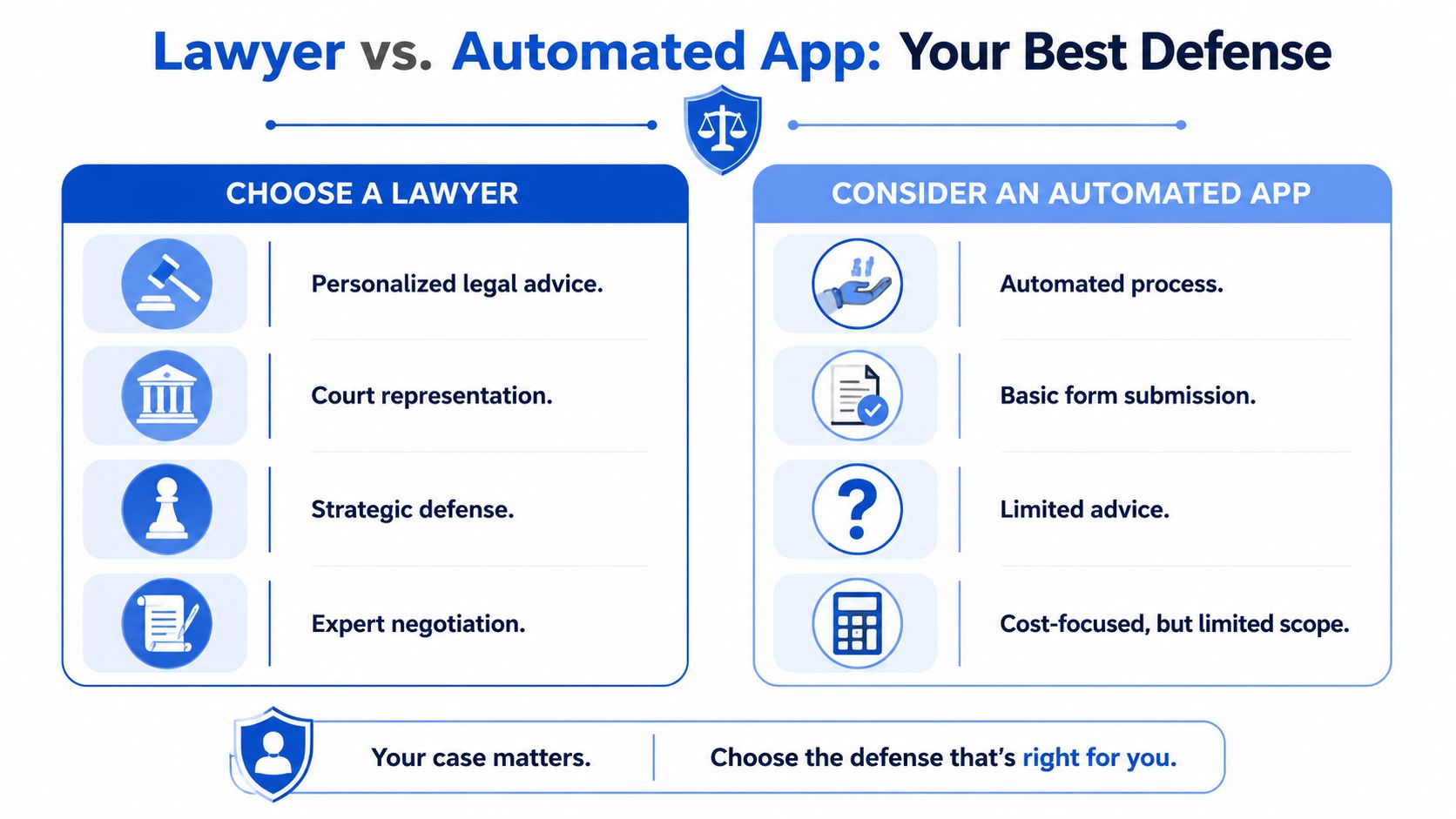
A registration ticket is not just paperwork. It's judgment, timing, local court knowledge, and negotiation. An automated app can collect data. It can't replace legal analysis.
That difference matters in real courthouses, including the Richard E. Gerstein Justice Building in Miami, where local practice, judicial expectations, and prosecutor discretion shape results. A generic workflow isn't a defense.
A ticket app processes paperwork
Apps are built for scale. That's their strength and their weakness. They tend to treat your case like an intake form with a payment screen behind it.
That approach may be fine for someone who wants convenience above all else. It is not fine for someone trying to protect a clean record, a rideshare account, a security-sensitive job, or a professional license.
A lawyer builds a defense
Early legal intervention can be highly effective. With a strategic defense, dismissals can be secured in the vast majority of cases, preserving driving records and avoiding points without the client needing to appear in court, according to the same verified source discussed earlier in this topic.
Here is the comparison:
Factor | Paying the Fine | Using an "Automated App" | Hiring Ticket Shield |
|---|---|---|---|
Goal | Close the ticket fast | Process the case efficiently | Protect your record and push for no points |
Legal analysis | None | Limited and standardized | Direct attorney judgment |
Communication | You handle fallout yourself | Often routed through a platform | Direct lawyer access by phone or text |
Court strategy | None | Minimal personalization | Case-specific defense and negotiation |
Local court familiarity | None | Inconsistent | Built for Florida courts |
Risk control | Weak | Moderate at best | Stronger protection for record and livelihood |
An app can submit. A lawyer can argue, negotiate, spot defects, and make judgment calls in real time.
If you're weighing that choice now, read this breakdown on why choosing a local lawyer beats using apps.
The point isn't that technology is useless. The point is that technology isn't counsel. When the issue affects your license, your insurance, and your income, you need an actual lawyer.
Protect Your Record and Keep Driving
A registration citation looks small until it starts costing you in the places that matter. Your money. Your time. Your insurance. Your job. Your future options if the problem repeats.
The fine is the least of your worries. The actual threat is what happens when you treat a legal charge like an inconvenience and lock in damage that might have been avoided.
If you want the safest path, act quickly. Fix the registration issue. Preserve proof. Don't plead out by default. Don't rely on a chatbot, a middleman, or a payment portal to protect your record.
You need a legal strategy built for Florida, not a generic workflow.
If you want a real lawyer-led defense focused on the No Points goal, contact Ticket Shield, PLLC for a free consultation. You can speak directly with your attorney by phone or text, get clear guidance fast, and take action before a registration ticket does lasting damage.