Can an Employer Fire You For a DUI? Know Your Rights
Worried about your job after a DUI arrest? Learn if can an employer fire you for a DUI in 2026. Get legal steps to protect your career and future now.

You got arrested. It’s late. Your phone is charging on the counter. Your mind isn’t on court yet. It’s on work.
You’re thinking about your boss, your company email, your next shift, your company vehicle, your security badge, your clients, your CDL, your app account, your clearance, your license. You’re asking the right question: can an employer fire you for a dui?
In Florida, that question usually has a hard answer. Yes. And the danger doesn’t start only if you’re convicted. Your job can be at risk at three separate moments: after the arrest, after the administrative license suspension, and after a conviction. Those are different triggers. If you treat them like one problem, you can lose your job before your criminal case is even halfway done.
Table of Contents
The Urgent Answer to Your Immediate Concern
Yes. In Florida, an employer can often fire you for a DUI arrest, license suspension, or conviction. For many drivers, the job risk starts immediately, not after trial. Fast legal action matters if you want to protect both your license and your paycheck.
If you’re reading this after a DUI arrest, you’re probably already running worst-case scenarios. That reaction is justified. The fear that your employer will find out is often more immediate than the fear of court.
Maybe you drive for work. Maybe you don’t. Maybe you’re worried HR will call before you’ve even had a chance to think straight. Maybe you’re wondering whether one off-duty mistake can cost you the job you’ve spent years building. In Florida, it can.

Across the United States, employment-at-will affects approximately 90% of private-sector employees, and under that system an employee may be fired for a DUI arrest alone without waiting for a conviction, as explained in this discussion of employment-at-will and DUI-related job loss. That matters because many Florida workers assume they’re safe until a judge decides the case. They aren’t.
Immediate reality: Your employment problem and your criminal case are not on the same timeline.
A DUI accusation creates career pressure fast. Sometimes the employer reacts to the arrest. Sometimes the primary trigger is the loss of driving privileges. Sometimes the final blow comes with a conviction that raises trust, insurance, or licensing concerns.
If you want a fuller breakdown of the employment consequences, review how a DUI can affect your job in Florida. Then act. Waiting and hoping your employer never learns about the case is not a strategy. It’s surrender.
What At-Will Employment in Florida Means for Your Job
Florida is an at-will employment state. In plain English, that means your employer can end the relationship for almost any lawful reason, and you can leave for almost any reason too.
It functions as a month-to-month arrangement, not a guaranteed long-term commitment. If no contract changes the rules, your employer usually doesn’t need to prove that firing you was fair. They just need to avoid firing you for an illegal reason.
Why that rule puts you in a weak position
A DUI arrest or DUI conviction is not a protected category. It isn’t treated the way discrimination law treats race, sex, religion, disability, or other protected grounds. So if your employer decides the arrest reflects badly on the company, creates liability concerns, or raises judgment issues, Florida law usually gives the employer room to act.
Florida employers can terminate workers “at any time and for any reason other than discrimination...” and the state provides no specific statutory protection for employees with DUI arrests or convictions, which means an employer can fire an at-will employee immediately after learning of a DUI arrest, according to this explanation of Florida at-will employment and DUI termination risk.
That’s the part that is often missed. The employer doesn’t have to wait for your case to be resolved. The employer also doesn’t have to agree with your side of the story.
What this means for off-duty conduct
Clients often say, “But I wasn’t driving a company car,” or “This happened on my own time.” That feels important. Legally, it often isn’t.
If you’re an at-will employee, your boss may still decide that an off-duty DUI creates business risk. Some employers focus on reputation. Others focus on insurance. Others see any criminal allegation involving impaired driving as a judgment issue.
If you work in Florida without a strong contract or union protection, your employer may have broad power to act first and ask questions later.
That’s why the question “can an employer fire you for a dui” isn’t really theoretical in this state. It’s practical. It’s immediate. And for some people, it turns into a job-loss problem before the criminal case even starts moving.
You should also consider the future problem, not just the current one. If this job is lost, the next employer may ask questions too. This discussion of whether a DUI can prevent you from getting a job is worth reviewing while you plan your next move.
Can an Employment Contract or Company Policy Protect You
At-will employment isn’t always the end of the story. Some employees have bargaining power. You need to find out, quickly, whether you’re one of them.
Your first task is a document hunt. Don’t guess. Don’t rely on memory. Pull the actual paperwork.

Start with the employment contract
If you signed an employment agreement, read the termination section line by line. You’re looking for phrases like “for cause,” “just cause,” “disciplinary process,” “notice,” or “opportunity to respond.”
A true contract can limit your employer’s freedom to fire you immediately. It may require a specific procedure. It may require the employer to connect the conduct to your job duties. It may require notice before termination.
If the contract says you must report an arrest, that matters too. Failing to disclose when the agreement requires disclosure can create a second problem. Now the employer isn’t only reacting to the DUI. The employer is also claiming dishonesty or breach of contract.
Then pull the employee handbook
Many workers ignore the handbook until they’re in trouble. Don’t make that mistake.
Read the sections on:
Criminal charges and arrests: Some companies require disclosure. Some don’t.
Use of company vehicles: A driving restriction can trigger discipline fast.
Moral conduct or reputation policies: These can be broad and dangerous.
Progressive discipline rules: If the handbook promises steps, the employer may need to follow them.
Background check or license maintenance rules: These often matter more than people expect.
Practical leverage: If your employer wrote a procedure, your employer may have to follow it.
Union and civil service rules can slow the process
If you’re in a union or civil service position, you may have procedural protection. That doesn’t always save the job. It can, however, force the employer to use the process it agreed to use.
That matters because time is valuable. Time gives your attorney a chance to address the DUI charge, the license issue, and the way the employer frames the event.
Before you speak to HR, check whether the case may show up through screening or later records by reviewing whether a DUI appears on a background check. You need facts before you start explaining anything.
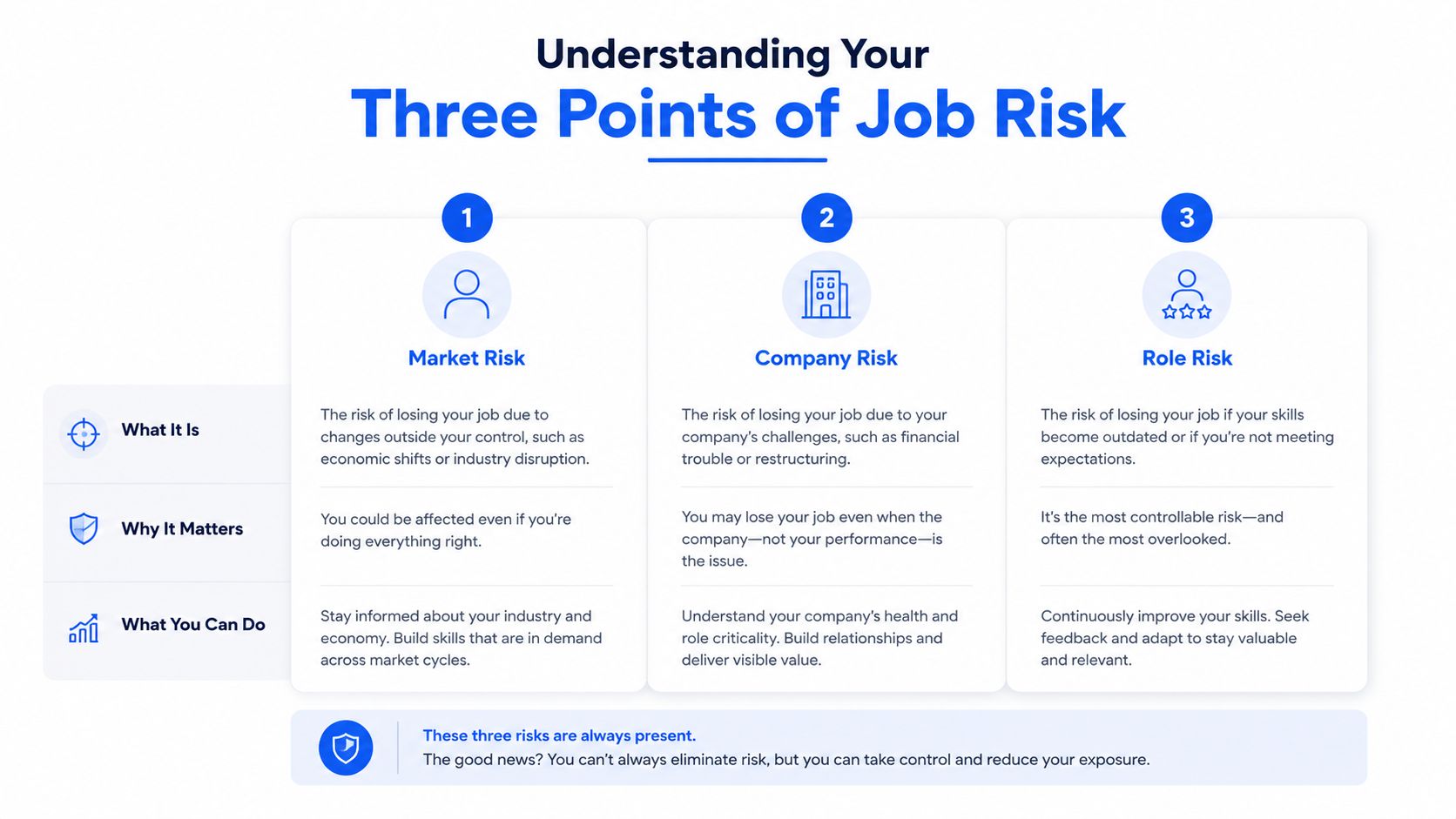
Understanding Your Three Points of Job Risk
A DUI is often treated like one event. It isn’t. For job purposes, it’s usually three separate threats.
That distinction matters because each trigger can put your employment at risk for a different reason and on a different timeline.
Why the arrest can trigger job trouble first
The arrest is often the first employment danger because it creates panic. Employers may react to optics, trust concerns, or internal reporting rules.
If your handbook requires disclosure of an arrest, the issue can land on your manager’s desk immediately. If your role involves public trust, vulnerable people, or corporate driving, the employer may decide the allegation alone is enough to remove you.
Non-driving employees sometimes survive this phase. Driving employees often don’t get the same cushion.
Why the license suspension can hit before court does
This is the trigger people underestimate. An administrative license suspension can come before the DUI case is resolved by months, and for workers who depend on driving, an employer can terminate based on the suspension alone even if the criminal charge is later dismissed or ends in acquittal, as noted in this discussion of administrative suspension as a separate employment trigger.
That means your job can be lost before you ever have your day in court. For a delivery driver, rideshare driver, field technician, sales employee who covers territory, or anyone who needs a valid license to work, this is often the most urgent threat of all.
The employer may not care whether you think you’ll beat the DUI. If you can’t legally drive, many employers will say you can’t do the job.
Why a conviction creates the broadest damage
A conviction gives the employer a cleaner record to rely on. It also creates problems that can spread beyond the current job. Professional licensing, internal compliance, insurance concerns, and future hiring all become harder.
Here is the cleanest way to understand this:
Event | Risk for Non-Driving Job | Risk for Driving-Required Job |
|---|---|---|
Arrest | Employer may react based on policy, trust concerns, or reputation issues | Immediate danger if reporting duties or company vehicle rules apply |
Administrative license suspension | Limited direct impact unless commuting or driving is part of the role | Severe risk because inability to drive can block core job duties |
Conviction | Stronger basis for discipline or termination because the record is final | Often devastating because it confirms a job-related driving offense |
The phrase “can an employer fire you for a dui” misses the core point. The right question is: which of the three triggers is about to hit your job first?
How a DUI Affects Specific Florida Professions
Not every job gets hit the same way. The law may be broad, but the practical risk depends on what you do for a living.
Driving jobs are in the danger zone immediately
If your job requires driving, the threat is obvious. Courts consistently uphold termination when a DUI conviction directly relates to job duties, and for commercial drivers, delivery workers, and rideshare operators, courts would view the conviction as job-related because it impairs a required part of the job, as described in this analysis of job-related DUI terminations.
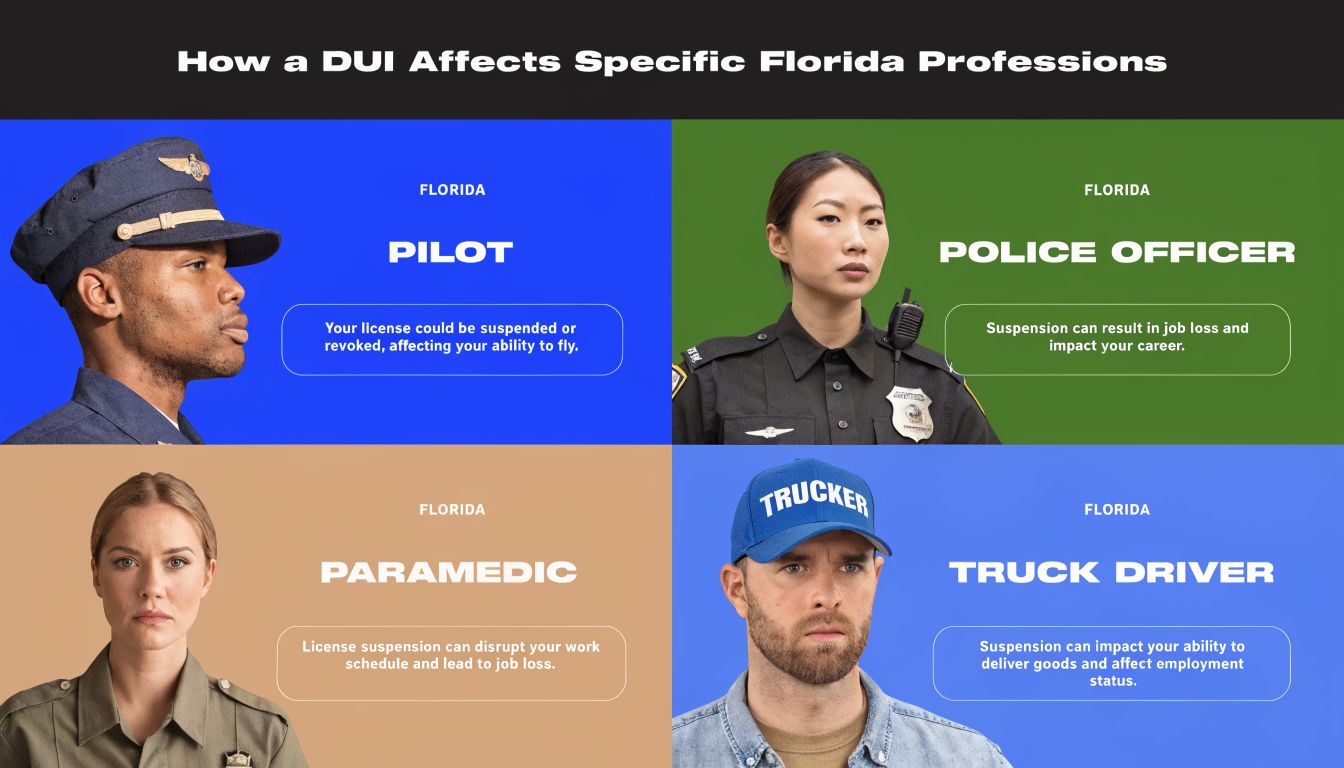
A few examples make this clearer:
CDL holder: If you hold a commercial driver’s license, a DUI can destroy the job fast because driving is the core function.
Rideshare or delivery driver: Platform access may disappear before your criminal case is resolved.
Territory salesperson or field technician: Even if your title isn’t “driver,” losing legal driving ability can make the role impossible.
For these workers, the case is not abstract. It’s operational. If you can’t drive, the employer may decide it can’t keep you.
Licensed and trusted professions face a different problem
A nurse, teacher, therapist, government worker, or defense contractor may not drive for work every day. That doesn’t mean the risk is low.
These jobs often depend on trust, judgment, clearance status, or access to vulnerable people. Employers in those settings may look at a DUI through a different lens. They may ask whether the conduct reflects poor judgment. They may worry about internal policy, insurance, or licensing exposure.
Here’s how that tends to play out:
Healthcare professional: The employer may focus on patient safety, reporting duties, and judgment.
Teacher or childcare worker: The employer may focus on public trust and liability concerns.
Government employee or clearance holder: The issue may be framed as reliability and decision-making.
Attorney or other licensed professional: The concern can expand beyond the employer to the licensing body.
Some careers don’t collapse because of driving restrictions. They collapse because the employer decides the record changes how much trust it can place in you.
Florida workers in high-visibility jobs feel this pressure hard. So do professionals in downtown Miami dealing with court dates near the Richard E. Gerstein Justice Building, where the legal case and the career fallout can start moving at the same time.
What Immediate Steps Should You Take to Protect Your Job
You need a plan before you talk. Often, individuals do the opposite. They panic, over-explain, and hand their employer damaging statements.
Use this checklist instead.
Don’t volunteer details to your employer yet: If no rule requires immediate disclosure, stay quiet until you understand your legal position. Speaking too early can create statements that hurt both your job and your DUI defense.
Pull every employment document today: Get your offer letter, contract, handbook, union agreement, company driving policy, and any acknowledgment forms you signed. You’re looking for reporting duties, discipline procedures, and license-related rules.
Check whether driving is part of your official duties: Don’t rely on your title alone. Look at the written job description. If it mentions travel, deliveries, field service, client visits, or vehicle use, your license issue may become the employer’s stated reason for termination.
Keep coworkers out of it: Office gossip travels faster than facts. One text to the wrong colleague can end up with a supervisor or HR before you’ve built a defense.
Document what your employer says: Save emails. Screenshot app messages. Write down phone calls with dates, times, and names. If the company starts talking about leave, suspension, disclosure, or vehicle access, you need a record.
Talk to a DUI lawyer before you talk to HR: That order matters. A good defense strategy has to account for the criminal case, the license issue, and the job consequences at the same time.
Your next move matters more than your last mistake. A bad conversation with HR can do damage that’s hard to undo.
If you need a starting point for the legal side, review how Florida DUI defense works. Then get specific advice based on your actual job, not generic internet reassurance.
Why Your First Call Must Be to a DUI Defense Attorney
You’re not dealing with one problem. You’re dealing with three at once. The criminal accusation. The license threat. The employment fallout.
In Florida, the core DUI statute is Florida Statute § 316.193. That’s the law your defense lawyer is fighting. But practically, protecting you means more than contesting the charge. It means identifying which trigger threatens your paycheck first and building your response around that timeline.
A lawyer should help you decide whether to disclose, what to say if disclosure is required, how to avoid damaging admissions, and how to address the license issue before it wrecks your job. That’s especially important if your case is moving through a major courthouse like Miami’s Richard E. Gerstein Justice Building.
This is not the time for automated apps, middlemen, or ticket mills that route you through layers of staff and generic updates. You need direct legal guidance. Ticket Shield, PLLC is a Florida option that provides lawyer-led defense and direct attorney communication by phone or text, which is exactly what a job-risk DUI case demands.
If you’re asking can an employer fire you for a dui, the legal answer is often yes. The strategic question is whether you move fast enough to stop the arrest, suspension, or conviction from costing you your livelihood.
Protect your license. Protect your record. Protect your job. Visit Ticket Shield, PLLC for a free consultation focused on the outcome Florida drivers care about most: No Points.