
Formulario de citación de tráfico uniforme de Florida: una guía completa
Aprenda a leer cada campo del formulario de Citación de Tráfico Uniforme de Florida, comprenda sus opciones y proteja su licencia de puntos y aumentos en el seguro.

You've just been handed a Florida traffic ticket. The fine is printed on the page, but the amount isn't the decision that matters most. Your real decision is whether to pay, contest the citation, or elect driver-improvement school before the 30-day response deadline expires. Each choice can affect your driving record, license status, court obligations, and insurance consequences. Florida's official traffic-citation guidance confirms that failing to make an election within 30 days can lead to additional fines and suspension. Florida's traffic citation guidance
A Florida Uniform Traffic Citation isn't just a bill. It's a controlled legal record connecting the alleged violation to you, your vehicle, the issuing agency, the applicable statute, and the court process. Read it before you pay anything. If you want a broader first-response checklist, review what to do when you get a ticket.
Table of Contents
Why the Citation in Your Hand Is a Decision, Not a Fine
You are holding a deadline document that can shape your record long after the roadside stop is over. Start with the issuance date, the county, and the clerk information on the Florida Uniform Traffic Citation form. Those details tell you where the case will be handled and when your response window runs out under Florida Highway Safety and Motor Vehicles guidance.
Then stop looking at the ticket like a bill.
The core question is what each election on that form will do to your license, your court obligations, and the long-term cost of the case. If you want a first-response checklist before you choose, review this guide on what to do when you get a ticket.
Three choices with different consequences
Option | Points | Insurance impact | Time required |
|---|---|---|---|
Pay the fine | May result in points when applicable | May affect future underwriting | Usually the least immediate effort |
Contest the citation | Depends on the outcome | Depends on the outcome | Requires preparation and a court process |
Elect driver-improvement school | Points may be withheld when eligible | Can reduce point-related exposure | Requires timely election and course completion |
Use that table the right way. It is not about convenience. It is about downstream cost.
Payment closes the case fast, but it can also lock in a result that affects your driving history. Contesting takes work, yet it preserves your chance to challenge the allegation, the officer's observations, or the legal sufficiency of the citation. A school election can be useful, but only if you qualify and complete the requirements on time. The wrong choice is the one you make without checking the actual form in your hand.
Read every field before you submit anything. Names, address, tag, vehicle description, statute citation, county, and court information all matter because each one connects the alleged violation to you and to the clerk's record. An error does not automatically void the case, but it can become important later if your lawyer compares your copy to the court file or electronic citation record.
Practical rule. Do not pay first and ask questions later. Review the allegation, confirm the identifying information, and decide with the long-term consequences in mind.
Legal Authority Behind the Florida UTC
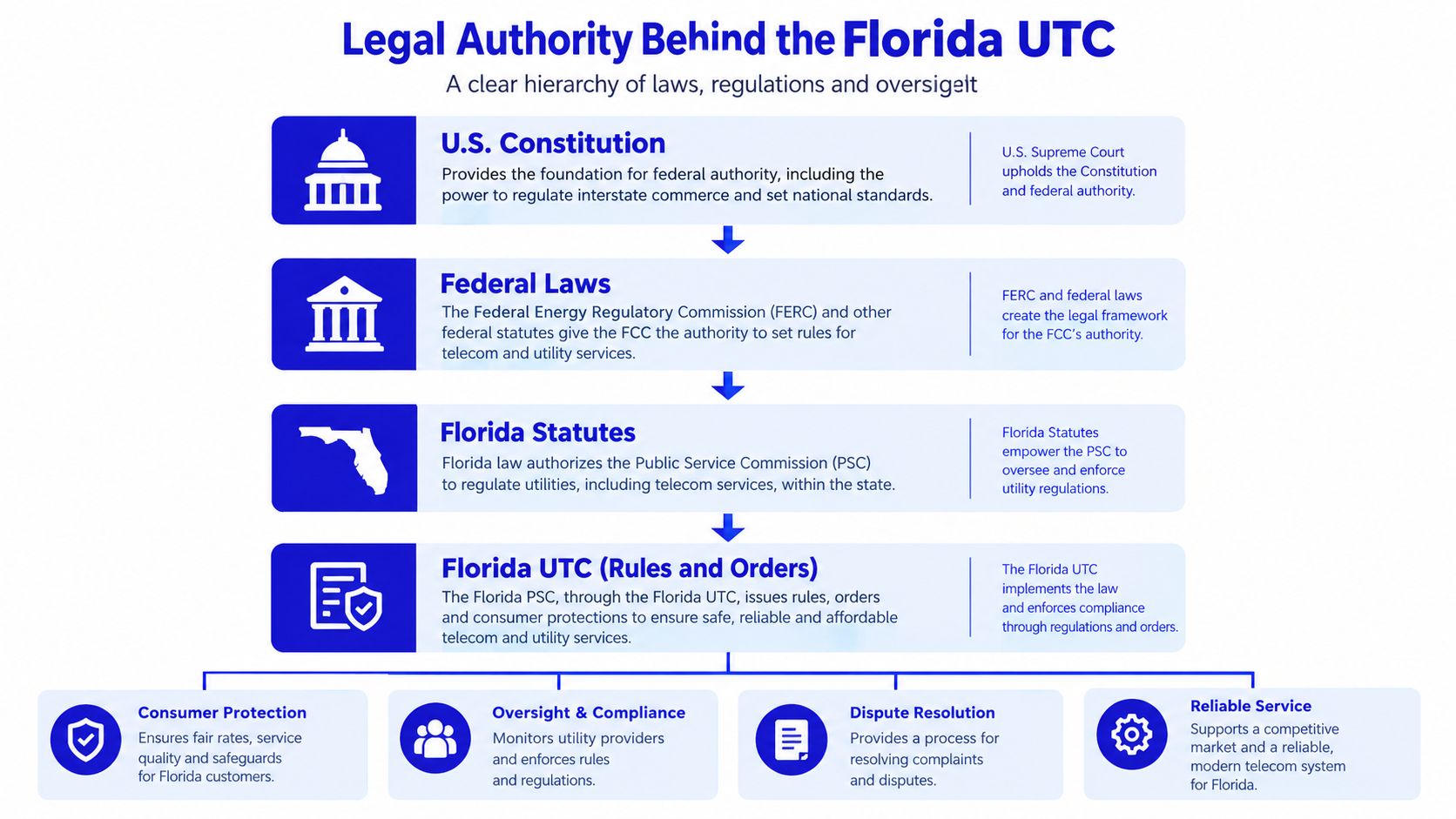
The form in your hand carries legal force the moment the officer issues it. Under Florida Statute §316.650, FLHSMV prepares and supplies the Florida Uniform Traffic Citation for use across the state. The statute also requires a notice to appear and ties the form to Chapter 316, other traffic laws, court rules, and department procedures. That is why this document controls what you can do over the next 30 days, and what can happen if you choose wrong.
State control also means the form has to work the same way whether it is issued on paper or electronically. The citation must be numbered, tracked, and processed through the issuing agency, the clerk, the court, and FLHSMV. If a field is wrong, the mistake may affect how the case is recorded, transmitted, or matched to your driving history. That does not automatically end the case. It does mean you should treat every entry as part of a record that can affect long-term cost.
The officer's authority also matters
Florida Statute §316.640 governs who may enforce noncriminal traffic infractions. An officer who qualifies under that statute may issue a citation based on personal investigation and reasonable, probable grounds.
Read that like a defense lawyer. The officer's authority, the cited statute, the violation description, and the identifying details all connect to whether this UTC will hold up if you contest it. FDLE's publication on Florida's standardized traffic forms confirms that Florida uses standardized traffic forms statewide. Treat the UTC as the legal instrument that sets your choices in motion, not as a simple bill.
Reading the Driver and Vehicle Section
Start at the top. Compare every identifying field on the citation with your driver license and vehicle registration before selecting an election.
The driver section typically identifies your name, address, date of birth, driver license number, and issuing state. The vehicle section may identify the tag, vehicle identification number, and other vehicle details. The agency information identifies who issued the citation and helps the clerk connect the paper or electronic record to the correct law-enforcement organization.

Check the identity fields first
Look for:
Name: A spelling error may be clerical, but it should still be documented.
Address: An outdated address can create problems if court notices or follow-up instructions are sent there.
License number and state: A mismatch can interfere with record matching.
Vehicle tag: Compare every character with the registration.
Vehicle identification number: Note whether the number matches the vehicle records.
Issuing agency: Confirm that the agency shown is the agency that issued the citation.
A citation error doesn't give you permission to ignore the deadline. It gives you a reason to preserve the document and ask the issuing county or a Florida traffic attorney how the defect should be handled. Take clear photographs of the entire citation, including the reverse side, before you contact the clerk.
A clerical error and a legal defense are different questions. Don't treat one as proof of the other.
Plate information can appear in public-facing records and databases in different contexts, so motorists who want background on plate-data exposure can review Digital Footprint Check's discussion of plate data. That resource doesn't replace a review of your citation, registration, or clerk record.
The identifying fields also help connect your physical copy to the court's record. For a field-by-field overview, see how to read a traffic citation. Preserve the original and don't mark over unclear information. If something is wrong, record exactly what is printed and how it differs from your license or registration.
Understanding the Violation and Officer Observation Fields
The middle of the UTC identifies the alleged conduct. Read the Florida Statute number, violation description, date, time, and location together. The statute number connects the allegation to a specific Florida traffic law. The description tells you what the officer says occurred. The date, time, and location identify the event and the county responsible for processing the citation.
Don't rely only on the short description. A statute may contain multiple requirements, and the officer's narrative or observations can help show which conduct the citation is intended to charge. Check whether the written facts match the statute listed on the form.
Preserve the factual record
The location matters for more than geography. It helps identify the proper clerk and can point to evidence you should preserve, such as photographs, witness information, roadway conditions, or available video. The time can help you locate phone records, employment records, travel records, or other information that may support your account.
The officer's observation field deserves special attention. It may identify what the officer claims to have seen, when the observation occurred, and why the officer believed the statutory violation occurred. Don't rewrite it from memory. Photograph it and keep an untouched copy.
Use this review:
Statute: Confirm the number is legible and corresponds to the described conduct.
Description: Identify the exact behavior alleged.
Date and time: Verify that the event details are possible and accurate.
Location: Confirm the county and roadway information.
Observations: Preserve every word, abbreviation, and notation.
Court instructions: Note where and how you must respond.
Florida law permits an officer to issue a noncriminal traffic citation when the officer has reasonable and probable grounds based on personal investigation. That doesn't mean every citation should be paid automatically. It means the facts, statute, and procedure should be assessed together.
If the citation's description is illegible or the statute appears inconsistent, don't assume the defect resolves the case. Ask the clerk how to obtain the official record, and speak with counsel before choosing an election that could affect your license or driving record.
Decoding the Citation Number and Issuance Details
Florida's current UTC ordering specifications use a seven-character citation number. The first six characters are alphanumeric and generated through a base-36 conversion of a unique number maintained in the FLHSMV database. The seventh character identifies the medium, with “P” for paper and “E” for electronic. The state provides examples such as “000001P” and “000001E” in its UTC ordering specifications.
That identifier is more than a filing label. It helps connect the citation you received with the issuing agency's inventory, the clerk's docket, and FLHSMV's records. Florida law also requires agencies to account for citations, including electronic citations, through numbering and inventory procedures.
Reconcile the records before acting
Take these steps immediately:
Photograph the complete citation: Capture the front, back, number, signatures, statute, and instructions.
Write the identifier separately: Keep the seven-character number in your calendar or case file.
Check the medium: Confirm the final character matches the paper or electronic citation you received.
Compare the clerk record: Search the issuing county's official record or contact the clerk.
Record discrepancies: Save screenshots showing a different number, medium, name, or violation.
A mismatch doesn't automatically dismiss the citation. It does create a record-linkage issue that should be clarified before you pay, elect school, or request a hearing. The clerk's file may contain information that isn't visible on your copy, particularly where the citation was produced electronically.
For a practical explanation of searching and verifying the identifier, review citation number lookup in Florida. Keep every screenshot with the original document. If you later contest the citation, the timeline of what you received and what the clerk recorded can become important.
The citation number also helps your attorney communicate precisely with the clerk and court. Give the exact identifier, issuing agency, date, county, and statutory section. Avoid relying on a partial number or a description such as “the ticket from last week.”
What Each Election on the Citation Does
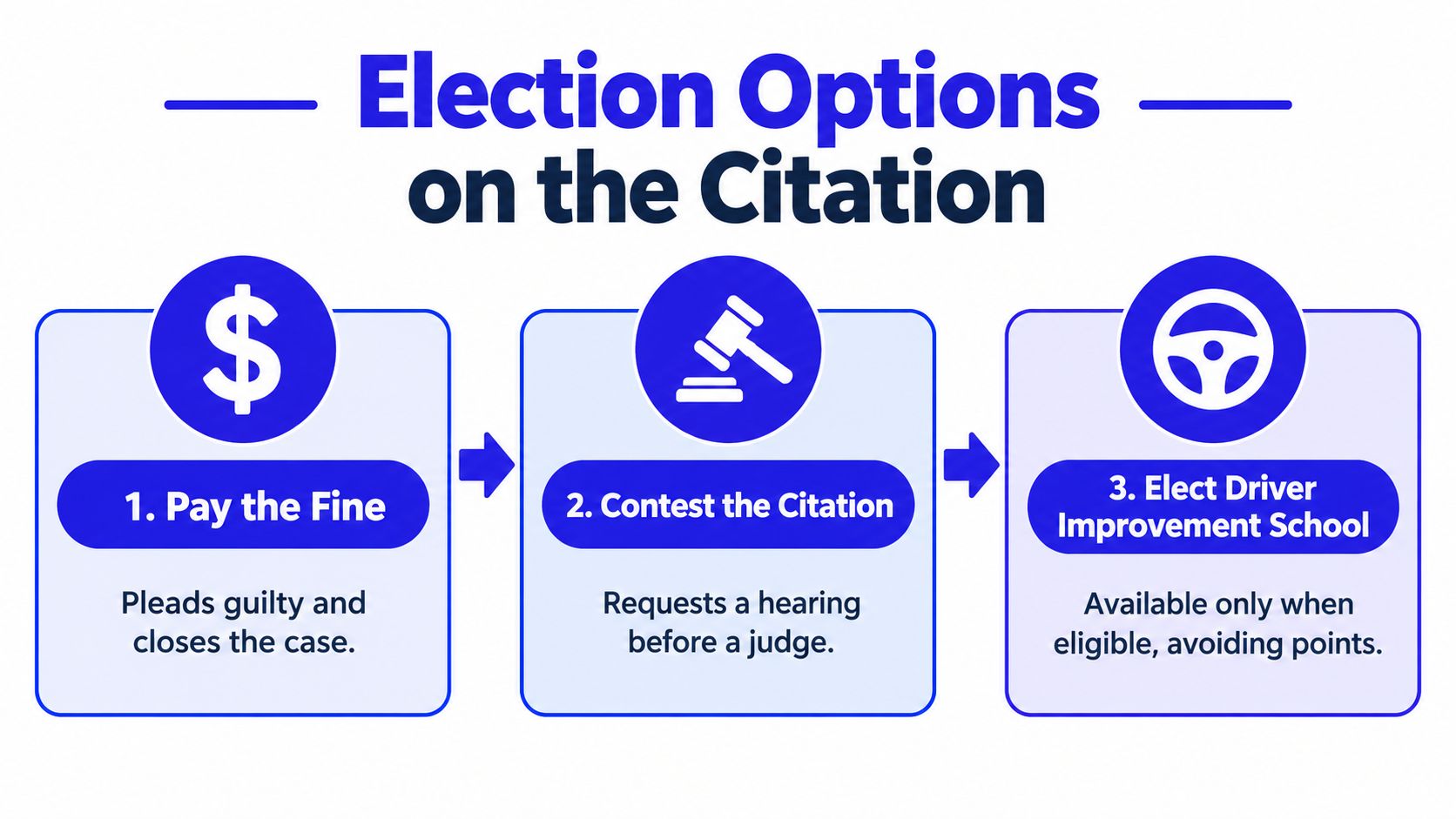
Your election is the part of the citation that changes the case. It tells the clerk what process to open, what deadlines to track, and what proof you will need later. On a Florida UTC, that choice is not abstract. It becomes a court record.
If you pay, the clerk processes the citation for disposition without setting a hearing. That choice may end the court side of the matter, but it does not erase the record consequences tied to the charge. If points attach to that offense, the administrative result can outlast the convenience of paying. Make that choice only after you understand what the statute means for your license, not because the payment option looks quickest on paper.
If you contest, the file moves into a hearing track. The clerk records your request, the case gets scheduled, and your copy of the citation stops being just a notice and starts functioning as an exhibit. That is where details on the form matter. The officer's description, the statute cited, the location, the vehicle information, and any mismatch between your copy and the clerk's record can all shape the defense. A hearing request is only the first step. Save proof that you made the election and confirm the setting was entered correctly.
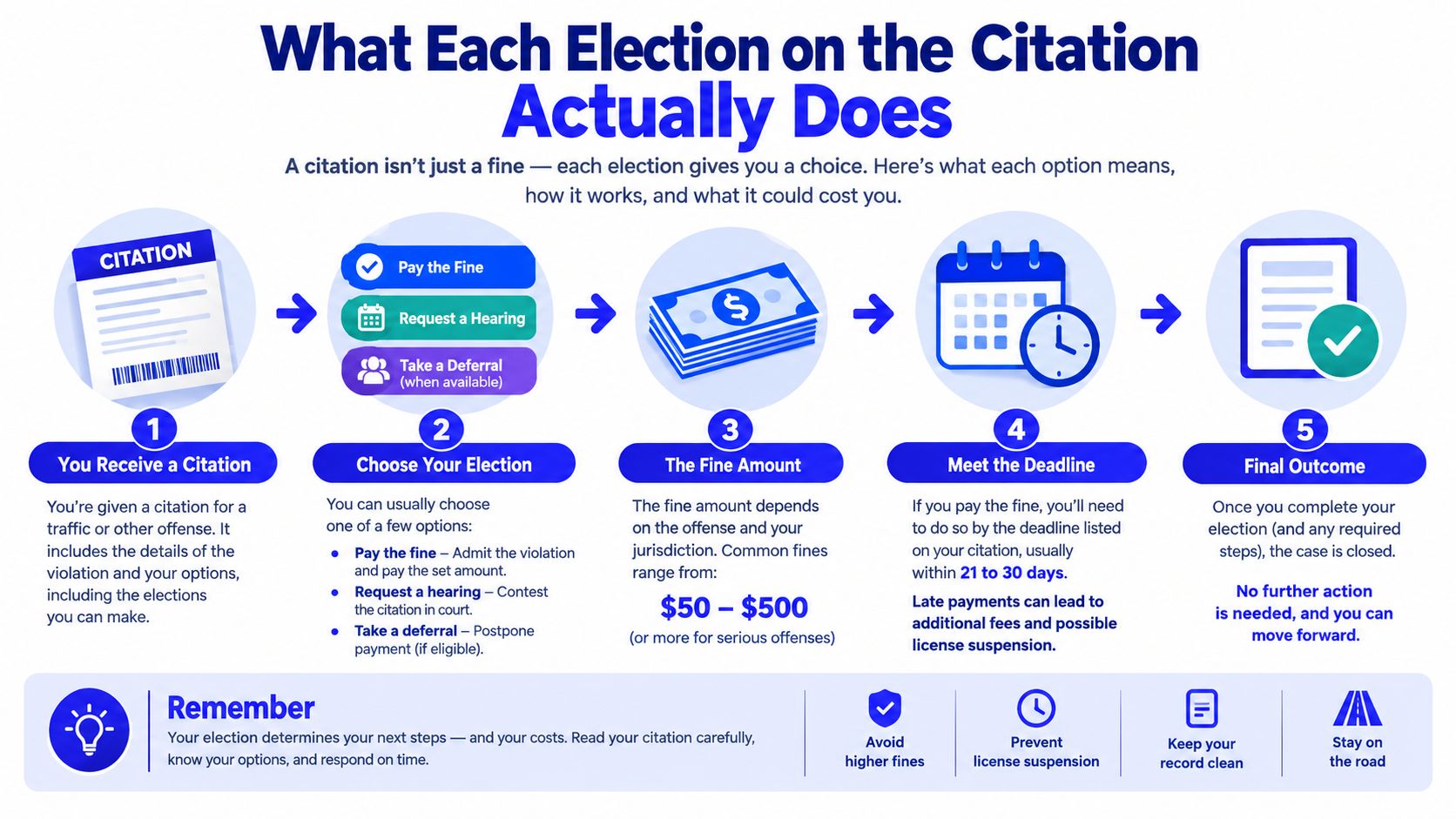
If you elect driver-improvement school, treat it as a two-part obligation. First, the election has to be made and accepted through the clerk. Second, the course has to be completed and proved the way that county requires. Florida states that an eligible election can withhold points and reduce the civil penalty by 18%, but only if you follow the required process and deadlines.
Do not leave the clerk's office, website, or payment portal without something showing what you selected. Get a receipt, a confirmation screen, a stamped copy, or another record that identifies the election entered on your case. If the issue later becomes whether you paid, requested hearing, or elected school, that proof matters as much as the citation itself.
A marked election box does not complete the case. Clerk acceptance, follow-through, and proof of compliance do that.
Choosing Between Pay, Contest, and Driver School
You have one job in this stage. Choose the option that produces the lowest long-term cost to your record, your insurance risk, and your ability to keep driving without trouble.
Start with contesting if any part of the case gives you a real defense or a real downside from a conviction. That is the right call when the officer's version is wrong, when the citation details do not match what happened, when the court record conflicts with your copy, when points could put pressure on an already vulnerable license, or when the result could interfere with work or daily transportation.
When contesting makes sense
A hearing is usually the smart move when:
The facts are disputed: Your account and the officer's observations differ in a way that matters.
The form contains significant inconsistencies: The statute, description, location, or identification fields do not line up.
The record is at risk: Another conviction could make existing license or insurance problems worse.
The citation has procedural questions: The clerk's record and your copy are not the same.
The consequences are serious: The outcome could affect your job, commute, or legal ability to drive.
Paying makes sense only when you have checked the actual consequence and decided you can live with it. Do not focus on the printed amount alone. Payment closes off options fast. If you want a closer look at that choice, read this Florida traffic ticket payment guidance.
Driver school fits a narrower group of cases. Use it when you are eligible, the allegation is not worth fighting, and keeping points off the record matters more than challenging the stop. Florida says an eligible election can withhold points and reduce the civil penalty by 18%, but eligibility and course requirements depend on the case and proper completion through the approved process (FLHSMV driver improvement course information).
Out-of-state drivers and people new to Florida need to be more careful than local drivers. A Florida citation can still affect a license issued elsewhere, and the county handling the case may require a specific filing method. Follow the issuing county's process exactly.
If you are stuck between options, use this rule. Contest when the conviction hurts. Use school when you qualify and only need damage control. Pay only after you are sure the case is not worth defending.
Common Citation Errors and How to Preserve Them
You do not preserve a citation error by arguing with the officer at the window or by telling yourself the mistake is obvious. You preserve it by building a clean discrepancy record that can be used during the 30-day election period.
Common problems include a misspelled name, the wrong tag or vehicle description, unreadable violation wording, a missing signature, or a difference between what your paper copy says and what later appears in the court system. Some defects are clerical and can be corrected. Others matter because they expose a bad identification, a filing problem, or a weak account of what happened. Your job is to separate those categories early.
Build a discrepancy log, not a pile of papers
Use a simple written log with three columns:
Field printed on the citation: Name, address, tag, license number, vehicle year, make, statute, location, time, officer name, badge, and citation number.
Field shown on the matching record: Copy the same item exactly as it appears on your license, registration, insurance card, or other official document.
Why the difference matters: Note whether the problem is identity, vehicle description, timing, location, readability, or filing consistency.
Be exact. Write “citation lists tag ABC123, registration shows A8C123,” not “tag wrong.” That wording gives your lawyer or the clerk something concrete to evaluate.
If you contact the clerk for the record, do not send a vague message asking whether the ticket is correct. Ask for the case entry tied to the exact citation number, the date it was received, the statute charged, the listed defendant name, and whether any correction or replacement entry has been made. You are trying to identify changes, not start an argument by email.
Section 316.650 governs the UTC system, including numbering and transmission requirements. That matters because a processing issue can become part of your defense analysis, but it does not cancel your response deadline by itself.
Treat every defect as a decision factor. A wrong identifier may support a stronger contest posture. A small clerical fix may change nothing. Either way, respond on time unless the court confirms otherwise. If you ignore the ticket because you spotted an error, you can turn a workable defense issue into a license problem that costs far more than the citation itself.
Protecting Your License With a Lawyer-Led Defense
The right objective isn't merely to close the ticket. It's to protect your license, driving record, insurance position, and future options. A Florida traffic attorney can evaluate the statute, officer observations, citation number, court record, filing history, election deadline, and available defense or resolution paths.
That evaluation is different from uploading a citation into an automated app and waiting for a generic message. Ticket mills and automated services may route communication through middlemen, corporate answering services, or chatbots. A lawyer-led model gives you direct access to the person responsible for analyzing and defending your case.
Ticket Shield, PLLC offers direct communication with an attorney by phone or text and handles Florida traffic citations through attorney review, paperwork, plea entry, negotiations, and court appearances where appropriate. The firm reports that over 99% of its clients never appear in court, as stated in its publisher information. That figure is a firm-provided claim, not a guarantee of any individual result.
What direct legal review should address
Your attorney should be able to explain:
The allegation: What statute is charged and what facts support it.
The document: Whether the driver, vehicle, agency, number, and medium are consistent.
The deadline: Which election must be made and when.
The record: What appears in the county clerk's file and FLHSMV system.
The strategy: Whether to contest, seek an available resolution, or pursue another lawful option.
The goal: Avoiding points and protecting your license whenever the facts and law permit.
A lawyer can't promise dismissal or a “No Points” outcome. A careful attorney can, however, identify risks that a payment screen won't show and make sure your decision is based on the full record.
For more on the legal process, review how lawyers dismiss traffic tickets. The critical step is to act before the 30-day election deadline, not after a missed response has already created a license problem.
Visit Ticket Shield, PLLC for a free consultation about your Florida Uniform Traffic Citation form and speak directly with a lawyer-led defense team by phone or text. Submit your citation before the deadline so the firm can evaluate your options and pursue the ultimate goal of achieving “No Points” on your license.

