Citación de tránsito vs. multa: conozca sus derechos en Florida
Citación de tráfico vs multa: ¿Existe alguna diferencia en Florida? Conozca la verdad sobre el estatus legal, los puntos y las multas para proteger su licencia.
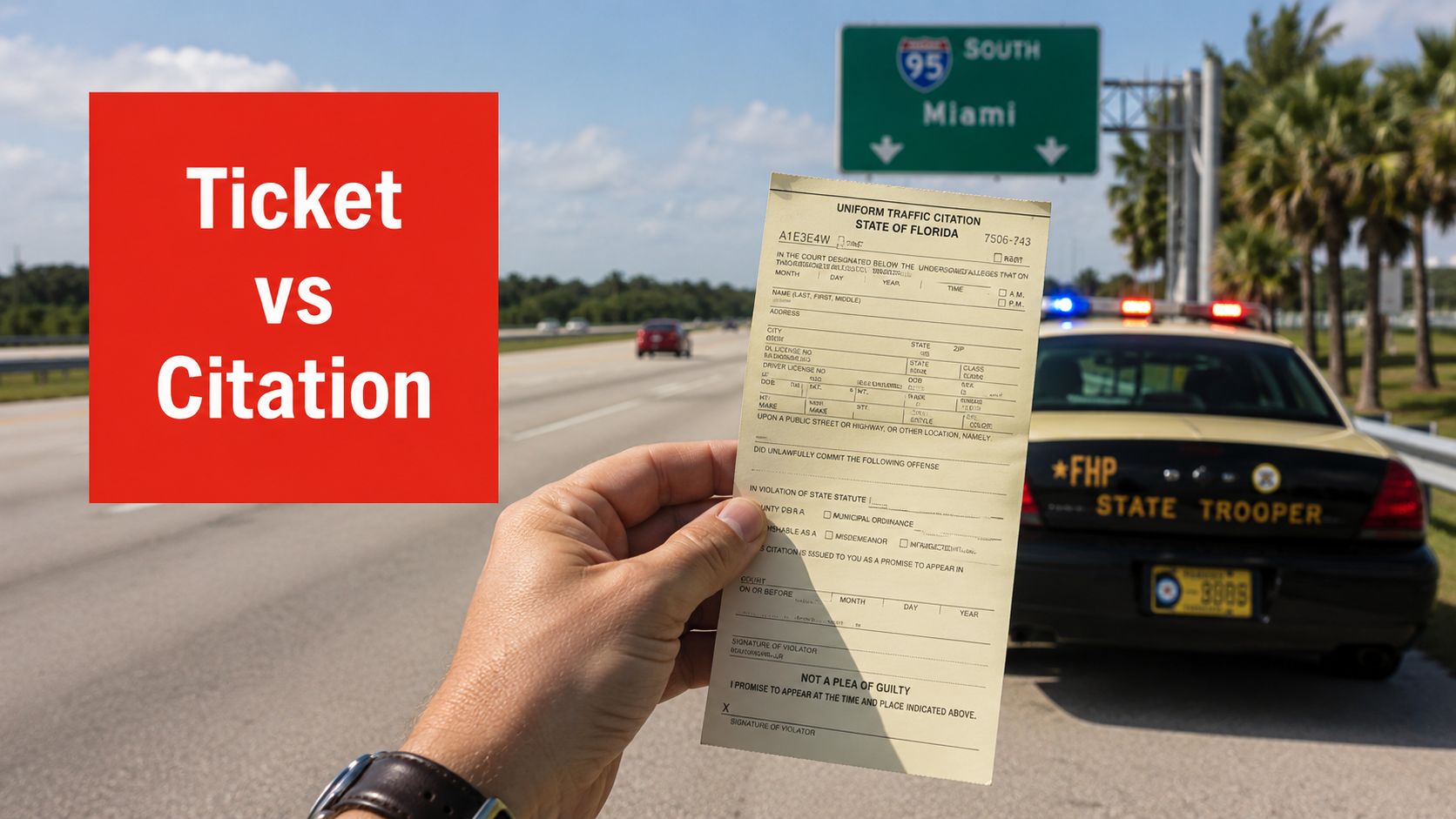
No existe ninguna diferencia legal entre una citación de tránsito (citation) y una multa (ticket) en Florida. Son el mismo documento, y si lo ignora durante 30 días, Florida puede suspender su licencia automáticamente.
Es probable que esté mirando ese papel en este momento y se pregunte si la redacción importa. No importa. Lo que importa es lo que suceda a continuación. Si el oficial lo llamó multa y el tribunal lo llama citación, su historial, su seguro y su licencia siguen estando en juego.
Los conductores pierden el tiempo discutiendo sobre las etiquetas. Eso es un error. El dilema central en el debate entre citación de tránsito y multa es que el debate en sí lo distrae de la fecha límite y del daño. En Florida, este papel no es una advertencia informal. Es un aviso legal vinculado a un estatuto específico, un plazo de respuesta y consecuencias que pueden perseguirlo durante años.
Índice de contenido
Consecuencias inalterables: Su licencia de Florida en riesgo
Por qué una defensa dirigida por un abogado supera a las aplicaciones automatizadas
Ese trozo de papel en su mano
Lo detienen en la I-95, el oficial le entrega un formulario y ahora se queda mirando un documento que puede sumarle puntos a su licencia, aumentar su seguro y obligarlo a cumplir con compromisos ante el tribunal si no lo maneja de la manera adecuada.
Llámelo citación. Llámelo multa. En Florida, la etiqueta no lo protege. Lo que importa es que se le acusa de una infracción de tránsito y el papel que tiene en la mano inicia un proceso legal con consecuencias reales.
Los conductores se meten en problemas al tratar esto como una molestia menor. No es menor. Si la detención involucró exceso de velocidad, conducción descuidada u otra infracción de tránsito en movimiento, ese documento generalmente detalla el estatuto que el oficial afirma que violó, el condado, la información del tribunal y la fecha límite para responder. Esos detalles importan más que la palabra impresa en la parte superior.
Léalo atentamente antes de pagar nada.
Concéntrese en cuatro elementos de inmediato:
El número del estatuto: Esto le indica la infracción exacta que Florida dice que cometió.
La fecha límite de respuesta: Su reloj ya está corriendo.
La información del tribunal o del secretario: Muestra dónde se está procesando el caso.
Las notas del oficial y la descripción de la acusación: Estas pueden definir su defensa.
Si necesita ayuda para identificar qué significa cada parte, revise esta guía sobre cómo leer una citación de tránsito.
Este es mi consejo. Trate cada multa de tránsito de Florida como un caso que puede dañar su historial a menos que lo detenga a tiempo.
Muchos conductores escuchan la palabra "multa" y asumen que simplemente pueden pagarla y seguir adelante. Así es como la gente termina con puntos evitables, primas más altas y un peor historial de conducción. El papel en sí es la advertencia. Su trabajo es responder de manera estratégica, no informal.
La peligrosa trampa de la terminología
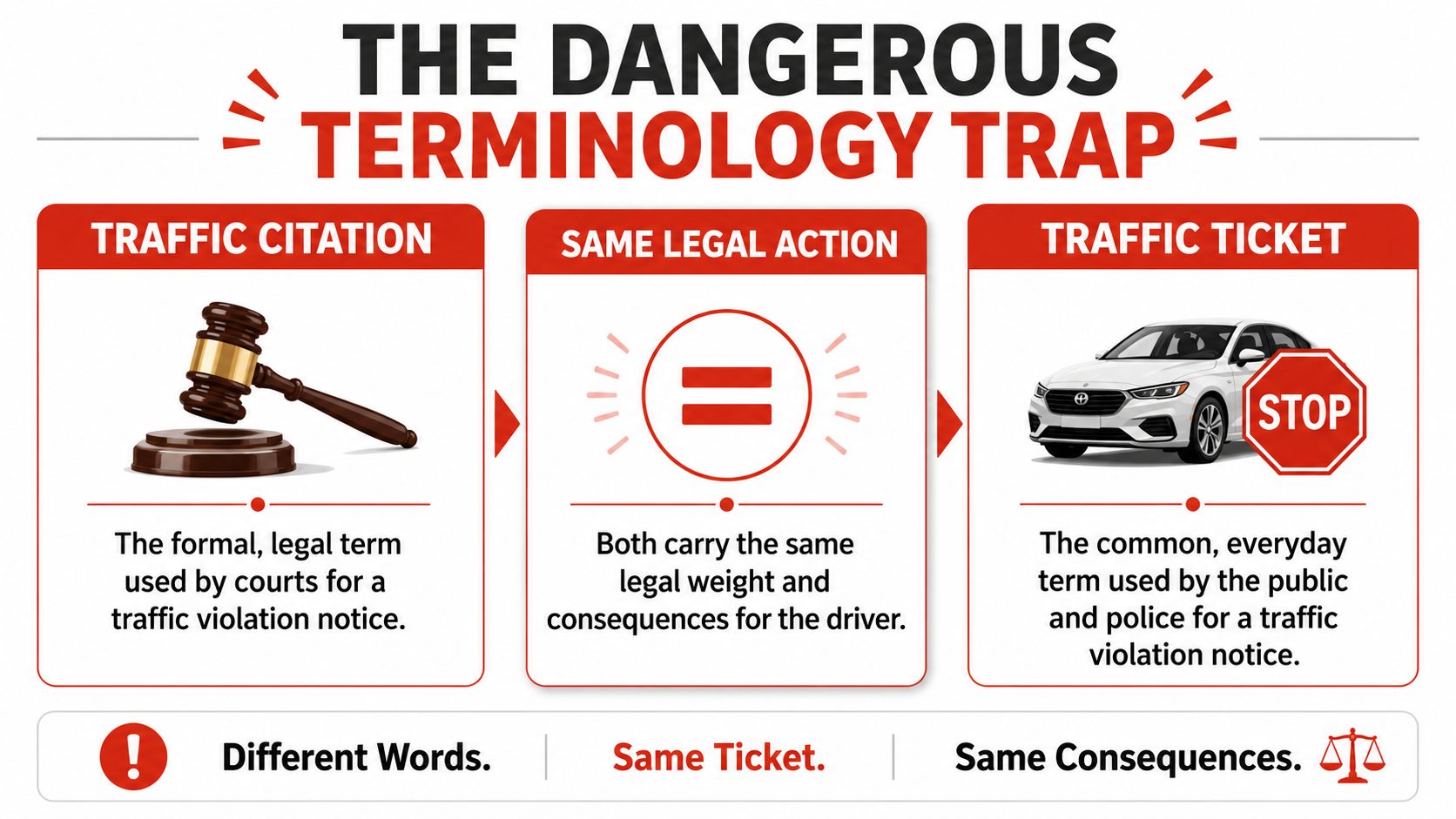
La frase citación frente a multa de tránsito parece que debería describir dos cosas diferentes. No es así. Describe un único documento legal con dos nombres distintos.
Los tribunales y los oficiales suelen usar citación (citation) porque es el término formal. Los conductores suelen decir multa (ticket) porque les resulta familiar. Esa es toda la diferencia. El análisis de Experian sobre citación vs. multa establece que no existe ninguna distinción técnica, legal o práctica entre ambas.
Aquí tiene la comparación que los conductores necesitan saber.
Asunto | Citación de tránsito (Citation) | Multa de tránsito (Ticket) |
|---|---|---|
Significado básico | Aviso legal formal de una infracción de tránsito | Nombre común para el mismo aviso |
Utilizado por | Tribunales y fuerzas de seguridad | Conductores y conversación cotidiana |
Exposición a multas financieras | Igual | Igual |
Proceso judicial | Igual | Igual |
Efecto en el historial de manejo | Igual | Igual |
Impacto en el seguro | Igual | Igual |
Posibilidad de disputar | Igual | Igual |
Por qué esta confusión perjudica a los conductores
El debate sobre la etiqueta desperdicia su mejor oportunidad de defensa. Mientras se pregunta si una citación es más grave que una multa, el plazo sigue corriendo.
La pregunta más útil es esta: ¿Qué puede hacerme este documento si lo manejo de forma incorrecta?
Una citación por escrito no es una advertencia. Una advertencia es verbal y no conlleva sanción. Una citación se emite por escrito, documenta una presunta infracción e indica una sanción. Esa distinción importa mucho más que el dilema entre citación o multa.
Gastar energía en la elección de las palabras en lugar de en la infracción es la forma en que los conductores se convencen a sí mismos para no actuar.
Si desea una explicación sencilla de cómo encajan las infracciones de tránsito menores en el sistema de Florida, esta descripción general sobre qué es una infracción de tránsito es un buen punto de partida.
La conclusión correcta
Deje de intentar clasificar las palabras. No necesita una lección de vocabulario. Necesita una estrategia de respuesta.
Tanto si un oficial le dijo “Le voy a emitir una multa” como si el secretario se refiere más tarde a una “citación”, el desafío legal es el mismo. Su objetivo debe ser sencillo. Proteja su historial de manejo antes de que el caso se convierta en puntos, un seguro más caro o un problema de suspensión.
Consecuencias inalterables: Su licencia de Florida en riesgo
La palabra escrita en el papel no lo protege. La condena es lo que le perjudica.
In Florida, un caso de tránsito puede perseguirlo mucho después de haber pagado la multa. El costo inmediato es molesto. El daño a su historial es lo que genera verdaderos problemas, especialmente si recibe otra multa más adelante o si su trabajo depende de tener una licencia limpia.
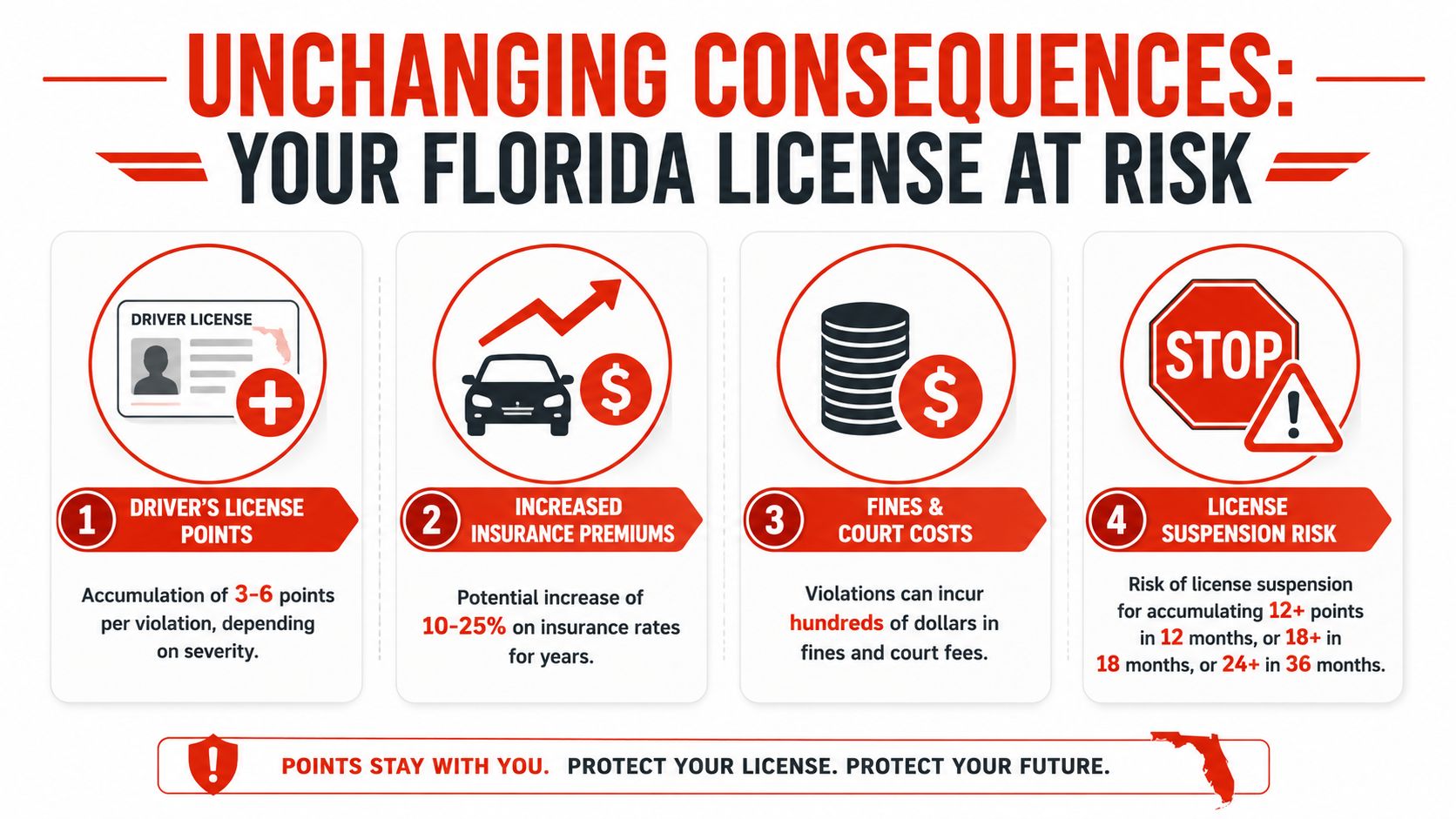
Florida utiliza un sistema de puntos con límites de suspensión que son automáticos una vez que se acumulan suficientes puntos. De acuerdo con las reglas de suspensión por puntos del Departamento de Seguridad Vial y Vehículos Motorizados de Florida, acumular 12 puntos en 12 meses provoca una suspensión de 30 días, 18 puntos en 18 meses provoca una suspensión de 90 días, y 24 puntos en 36 meses provoca una suspensión de un año. La misma fuente señala que los puntos permanecen en su historial durante al menos cinco años desde la fecha de la condena.
Ese es el problema. Una “citación” y una “multa” conducen al mismo problema en su historial si maneja el caso de manera incorrecta.
La acusación controla las consecuencias
Su caso está vinculado a una presunta infracción específica, no a una etiqueta informal utilizada por el oficial o el secretario. El estatuto que aparece en el formulario le indica al tribunal de qué se le acusa. Esa acusación determina las sanciones, la exposición a los puntos y cómo debe estructurarse la defensa.
Los conductores pasan esto por alto constantemente. Se obsesionan con si recibieron una citación o una multa e ignoran la parte que realmente importa. La acusación legal es el problema, y por eso una respuesta estratégica importa desde el principio.
Pagar rápido puede costarle más tiempo
Un pago rápido parece eficiente. Sin embargo, a menudo se convierte en un error costoso.
Una vez que los puntos llegan a su historial, las consecuencias se extienden más allá del archivo del tribunal. Las compañías de seguros suelen tratar una condena como un motivo para ajustar tarifas, y el aumento puede durar mucho después del día en que le pagó al secretario. Si desea una explicación más amplia sobre los tiempos de cara al consumidor, vale la pena leer este artículo sobre cuánto tiempo afectan las multas a las tarifas de los seguros.
Una multa pagada también elimina su oportunidad de luchar por un mejor resultado. Para los conductores de reparto, conductores de viajes compartidos, miembros de las fuerzas armadas, solicitantes de licencias comerciales y profesionales que se someten a verificaciones de antecedentes de conducción, ese atajo puede generar un problema mucho mayor que la multa original.
La medida más segura rara vez es pagar de inmediato. La medida más segura es proteger su historial antes de que se registre una condena.
Si desea analizar más de cerca cómo los puntos pueden afectar tanto a su licencia como a su exposición al seguro, lea esta guía sobre el sistema de puntos de Florida para multas, consecuencias en la licencia y riesgo de seguro.
Su plazo de 30 días: Qué pasa si no hace nada
Deja la multa en el mostrador, se dice a sí mismo que se encargará de ella la próxima semana y luego el día a día se interpone en el camino. Ese retraso es la forma en que un caso de tránsito se convierte en un problema de licencia.
Florida le otorga un plazo de respuesta corto y al tribunal no le importa si lo llama citación o multa. El término no cambia nada. Si no hace nada, el estado lo trata como una falta de respuesta y su licencia puede terminar suspendida.
Ese es el peligro aquí.
Sus tres opciones dentro del plazo establecido
Tiene tres opciones básicas, y solo una de ellas está orientada a proteger su historial de manejo.
Pagar la multa
Que sea rápido no significa que sea inteligente. Pagar por lo general cierra el caso con una declaración de culpabilidad, lo que puede dejarle con puntos, problemas de seguro y un historial que le perseguirá mucho tiempo después de haber olvidado la multa.Elegir la escuela de tránsito si cumple con los requisitos
Esto puede limitar algunos daños en el caso adecuado, pero sigue siendo una medida defensiva, no un ataque contra la acusación. Además, conlleva plazos, reglas de elegibilidad y compensaciones estratégicas que muchos conductores no comprenden hasta que es demasiado tarde.Disputar la citación
Este es el único camino enfocado en evitar, en primer lugar, que la infracción dañe su historial. Si proteger su licencia le importa, esta es la opción que debe tomar en serio desde el primer día.
No hacer nada genera un segundo caso
Los conductores a menudo asumen que una fecha límite vencida se puede solucionar con una llamada rápida al secretario. Así es como comienzan problemas mayores.
Una vez que no cumple con una respuesta obligatoria o con un compromiso ante el tribunal, ya no está lidiando únicamente con la acusación de tránsito original. También podría enfrentarse a problemas de suspensión, tarifas adicionales y un lío procesal más difícil de resolver. Esta guía sobre qué pasa si falta a una cita en el tribunal en Florida explica lo rápido que esto se puede salir de control.
La peor decisión es esperar. La demora le da el control al tribunal y le quita opciones a usted.
Trate el plazo establecido como algo urgente. No pierda tiempo debatiendo sobre citación frente a multa. Involucre a un abogado antes de que una simple detención de tránsito se convierta en una licencia suspendida y en un problema mucho más costoso.
Por qué una defensa dirigida por un abogado supera a las aplicaciones automatizadas
Ya sabe que el papel es algo serio. El siguiente error es tratar su defensa como una compra de conveniencia rápida.
Las aplicaciones y las plataformas de multas en masa venden rapidez, formularios sencillos y actualizaciones automatizadas. Su caso necesita criterio legal. Una acusación de tránsito en Florida depende de la denuncia exacta, del tribunal que la maneje, de su historial de manejo y de la mejor estrategia para proteger su registro. La etiqueta en el papel no cambia eso. Tampoco lo hace una aplicación llamativa.

Lo que se pierden los servicios automatizados
Las plataformas automatizadas están diseñadas para procesar volumen. La defensa de tránsito no es un problema de volumen para usted. Es un problema de protección de su historial.
Una defensa real comienza por leer detenidamente la citación, detectar puntos débiles, comprobar las prácticas específicas de cada condado y decidir qué resultado conviene buscar. Eso puede significar refutar la acusación, negociar para obtener un mejor resultado o evitar una medida que parezca conveniente pero que le perjudique más adelante. El software no toma bien esas decisiones. Y el personal administrativo que no es abogado directamente no puede tomarlas.
Las fallas comunes aparecen pronto:
Sus hechos se reducen a una plantilla genérica. Se ignoran pequeños detalles que son importantes para una defensa.
La comunicación se filtra a través de personal no cualificado o software. Usted se queda esperando actualizaciones del sistema en lugar de recibir asesoría legal experta.
La estrategia es genérica. Su caso se introduce en el mismo flujo de trabajo que el de todos los demás.
El objetivo principal se diluye. El enfoque pasa a ser simplemente procesar la multa, en lugar de proteger su licencia y su historial.
Por qué el acceso directo a un abogado obtiene mejores resultados
Necesita un abogado que pueda tomar decisiones estratégicas tempranas, antes de que el caso desemboque en una condena o en una mala opción. Eso significa contar con alguien que pueda revisar los cargos, evaluar el riesgo y decirle con claridad qué le ayuda y qué le perjudica.
Esa es la diferencia.
Los conductores se distraen con el debate de citación versus multa. La diferencia que realmente importa es una estrategia legal personalizada versus un procesamiento automatizado. Una está diseñada para proteger su historial. La otra está diseñada para despachar expedientes.
Si desea un análisis más detallado de estos factores, lea por qué elegir a un abogado local en lugar de aplicaciones puede proteger mejor su historial.
Un caso de tránsito merece criterio legal desde el principio, no un software que finge que todos los conductores tienen el mismo problema.
Use el término que prefiera. Multa. Citación. Notificación de comparecencia. Las consecuencias en Florida siguen siendo las mismas, y la respuesta más segura también es la misma. Involucre a un abogado pronto y desarrolle una defensa en torno a su caso, no en torno al flujo de trabajo de una aplicación.
Tome el control y proteja su historial ahora
Tiene en sus manos un trozo de papel que puede sumarle puntos a su licencia, aumentar su seguro y dejar una mancha en su historial de manejo. Discutir sobre si se llama citación o multa le hace perder un tiempo que no tiene. En Florida, el nombre no lo protege. Una respuesta legal inteligente sí lo hace.

Trate esto como una amenaza legal para su historial, porque es exactamente lo que es.
Su próximo paso debería ser sencillo
Anticípese al caso ahora. Concéntrese en el resultado que realmente importa.
Mantenga los puntos fuera de su licencia si es posible
Evite una condena cuando los hechos y la estrategia lo permitan
Limite el impacto en su seguro
Cumpla con cada fecha límite
Los conductores se meten en problemas cuando minimizan ese papel que tienen en la mano y retrasan la respuesta. Los casos de tránsito en Florida avanzan actúe usted o no. Una vez que vencen los plazos y se cierran las opciones, reparar el daño resulta más difícil y costoso.
Una breve explicación desde la perspectiva de la defensa de tránsito de Florida puede ayudarlo antes de decidir qué hacer a continuación.
El objetivo correcto es proteger su licencia, su perfil de seguro y su historial de manejo. Eso requiere criterio legal a tiempo, antes de que una multa manejable se convierta en un problema duradero.
Visite Ticket Shield, PLLC ahora para recibir una consulta gratuita y luchar por el resultado que más importa: Sin Puntos en su licencia.