Cargos por DUI 5 en Florida: Una condena por delito grave no es una opción
¿Enfrenta 5 cargos por DUI en Florida? Esto es un delito grave de tercer grado con revocación permanente de la licencia. Conozca sus opciones de defensa y cómo nuestros abogados pueden ayudarle.

Es probable que esté mirando una hoja de fianza, una citación, un recibo de grúa y un teléfono lleno de llamadas perdidas. Está intentando descifrar si este es solo otro caso de DUI o si su vida finalmente ha chocado contra la pared. Si enfrenta 5 cargos de DUI en Florida, deje de minimizarlo. Esto es territorio de delitos graves. Su libertad, su licencia y su capacidad de ganarse la vida están en peligro en este momento.
También debe ignorar los consejos perezosos que inundan internet. El contenido genérico de "combata su cargo" no ayuda cuando el estado está tratando de marcarlo como un delincuente grave y despojarlo de su privilegio de conducir para siempre. Debe actuar de inmediato, proteger la evidencia y proteger su licencia antes de que el aspecto administrativo de este caso lo aplaste. Comience por comprender qué sucede después de un arresto por DUI en Florida, y luego actúe. Si también se ha preguntado cómo pueden seguir cambiando las herramientas de control, vale la pena leer este resumen sobre la próxima tecnología de alcoholímetros para marihuana, porque las investigaciones de DUI se están volviendo más técnicas, no menos.
Tabla de contenido
Por qué un quinto cargo de DUI es un delito grave en Florida
Consecuencias más allá de la cárcel: La pérdida de su licencia y su sustento
El momento después de su arresto
El arresto terminó, pero el daño apenas comienza. La patrulla se ha ido. Las esposas ya no están. Ahora está solo con una pregunta brutal: ¿Qué pasa si este es realmente su quinto DUI?
En Florida, esto no es un dolor de cabeza de tráfico. Es una emergencia criminal a gran escala. No está lidiando con una simple multa o un inconveniente que pueda resolver más tarde. Está lidiando con un caso que puede quitarle la licencia de forma permanente y poner su futuro en manos de un fiscal que tratará su historial como un mapa de ruta.
Regla práctica: Su primer error fue ser arrestado. Su segundo error será esperar para responder.
Las personas que enfrentan 5 cargos de DUI a menudo pierden un tiempo valioso haciendo las cosas incorrectas. Llaman a amigos para pedir consejo. Publican en internet. Intentan explicarse ante la policía. Asumen que el resultado del alcoholímetro significa que el caso ha terminado. Nada de eso lo protege.
Lo que importa en este momento
Debe pensar en capas. El caso penal es una capa. Su licencia es otra. Es posible que su trabajo ya esté en riesgo, especialmente si el conducir está vinculado a sus ingresos. Esos problemas no esperan a una fecha de audiencia.
Tres prioridades importan de inmediato:
Proteja su silencio. No intente justificarse después de los hechos.
Conserve cada documento. Guarde la citación, el papeleo de la fianza, el aviso de suspensión, el papeleo del remolque y cualquier recibo de propiedad.
Obtenga una estrategia legal rápida. La demora ayuda al estado, no a usted.
Por qué el pánico ayuda a la fiscalía
El pánico hace que los conductores se declaren culpables demasiado pronto, hablen de más y pierdan los plazos. El estado cuenta con eso. Un caso de DUI por delito grave castiga la vacilación.
Necesita un plan basado en hechos, no en el miedo. Eso comienza con el estatuto, la detención, el proceso de prueba y los plazos administrativos vinculados a su privilegio de conducir. Si deja que esos problemas se desvíen, puede perder terreno antes de que comience cualquier defensa significativa.
Por qué un quinto cargo de DUI es un delito grave en Florida
La ley de Florida es severa con las acusaciones de DUI reincidentes. Una vez que alcanza este nivel, el estado deja de tratar el caso como un problema de delito menor grave y lo trata como una conducta delictiva de delito grave bajo el Capítulo 316.

Florida traza la línea del delito grave muy temprano
Bajo el Estatuto de Florida 316.193(4), una cuarta condena por DUI o posterior en Florida se clasifica automáticamente como un delito grave de tercer grado, punible con un máximo de cinco años de prisión y una multa mínima obligatoria de $2,000, sin posibilidad de reducir el cargo a un delito menor, de acuerdo con este resumen de los estatutos y penas de DUI en Florida. Eso importa porque si enfrenta un quinto DUI, ya se encuentra mucho más allá de la línea donde un fiscal puede tratar esto casualmente como un asunto de tráfico menor.
El Estatuto de Florida 316.193 es la autoridad central aquí. Si ha sido acusado bajo ese estatuto nuevamente, el estado no se está preguntando si este patrón es grave. Ya ha decidido que lo es.
Para los conductores que buscan "5 cargos de DUI" con la esperanza de que exista algún vacío legal administrativo basado únicamente en el número, la respuesta en Florida es contundente. La exposición al delito grave comienza antes de cinco. Para cuando llega a una quinta acusación de DUI, el riesgo penal ya es severo.
Una vez que su historial de DUI lo coloca en la clasificación de delito grave, el caso cambia de carácter. La influencia del fiscal cambia. La perspectiva del juez cambia. Lo que está en juego cambia.
Qué cambia una vez que el caso se convierte en un delito grave
Un caso de DUI por delito grave significa una presión diferente en cada etapa. Las decisiones de presentación de cargos son más duras. El margen de negociación se reduce. Las consecuencias de antecedentes se multiplican.
Aquí está la diferencia práctica:
Asunto | Mentalidad de DUI de nivel inferior | Realidad de un quinto DUI en Florida |
|---|---|---|
Postura del tribunal | Mentalidad de tipo infracción de tráfico | Procesamiento penal por delito grave |
Nivel de riesgo | Contratiempo temporal | Daño al historial a largo plazo |
Impacto en la licencia | A menudo se ve como reparable | Puede volverse permanente |
Necesidades de defensa | La representación básica puede fallar | La defensa estratégica de delitos graves es obligatoria |
Si desea una explicación clara del marco del estatuto, revise los estatutos de DUI de Florida bajo el Capítulo 316. Luego, deje de leer blogs genéricos y comience a tratar esto como el caso de delito grave que es.
Las graves penas por un DUI de delito grave en Florida
Una condena en este nivel no es un simple tirón de orejas. Es un castigo diseñado para quitarle su libertad, agotar sus finanzas y alterar permanentemente su movilidad.
Lo que el estatuto permite hacer al tribunal
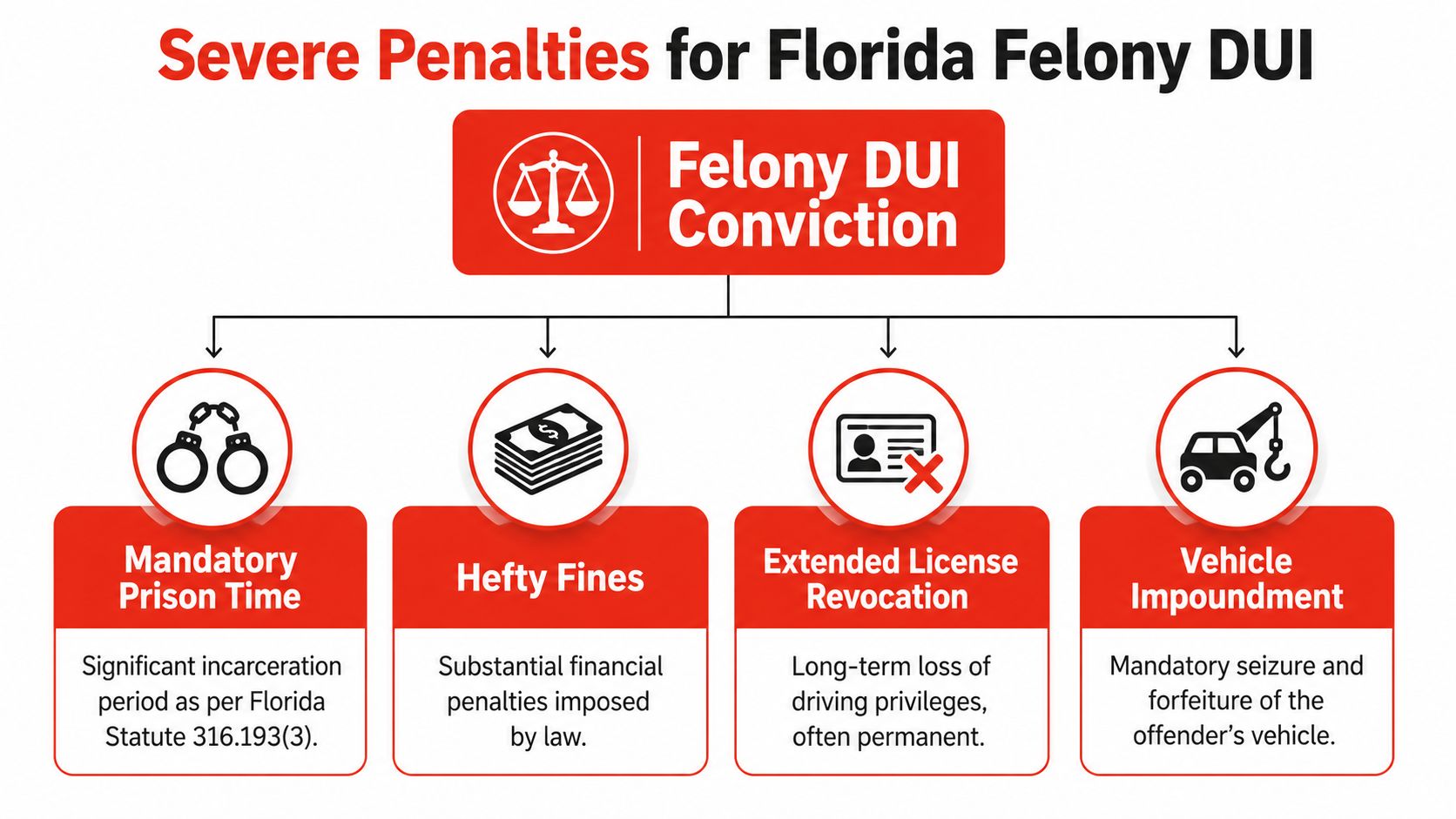
Bajo el Estatuto de Florida 316.193(3), una quinta condena por DUI es un delito grave de tercer grado, que exige hasta 5 años de prisión, una multa de hasta $5,000 y la revocación permanente de la licencia de conducir sin elegibilidad para una licencia por dificultades económicas, según este resumen de las penas por DUI reincidente en Florida. Esa misma autoridad también establece que la infracción conlleva un mínimo de 30 días de cárcel y exige la instalación obligatoria de un dispositivo de enclavamiento de encendido por un mínimo de 2 años en todos los vehículos operados por el acusado.
Esa es la realidad legal. No es una táctica de miedo. No es un drama de internet del peor de los casos. El estatuto le da al tribunal el poder de enterrar su vida normal.
Esto es lo que significa en términos sencillos:
Exposición a prisión: Se enfrenta a hasta 5 años en la prisión estatal de Florida bajo el marco estatutario resumido anteriormente.
Confinamiento obligatorio: Existe un mínimo de 30 días en la cárcel vinculados a este nivel de delito.
Castigo financiero: La multa oscila entre $2,000 y $5,000 bajo el mismo marco de infractores reincidentes.
Enclavamiento de encendido: Se le puede ordenar que lleve un requisito de dispositivo durante al menos 2 años en cada vehículo que opere.
Esta condena lo persigue fuera de la sala del tribunal
La sentencia penal es solo una parte del daño. Una quinta condena por DUI también puede obligar a cada empleador, aseguradora, junta de licencias y evaluador de verificación de antecedentes a mirarlo a través del lente de un delito grave.
Si el alcohol se ha convertido en parte de un colapso personal más amplio, esta discusión sobre cómo la adicción lleva al delito a los profesionales es útil porque aborda el patrón que muchos adultos que trabajan ignoran hasta que las consecuencias legales explotan. No le estoy dando consejos de terapia. Le estoy diciendo que si esta conducta refleja un problema más profundo, enfrente ambas batallas a la vez.
Verdad cruda: La revocación permanente de la licencia suele ser más destructiva que la condena a la cárcel, porque sigue castigándolo mucho después de que termina el tribunal.
Muchos conductores se concentran solo en si pueden evitar el encarcelamiento. Eso es demasiado limitado. La pregunta más inteligente es si puede preservar alguna versión de su futuro. Una condena por delito grave vinculada a un comportamiento repetido de DUI puede limitar el trabajo, los viajes, el acceso a seguros y la independencia diaria de formas que nunca se deshacen por completo.
Para obtener un desglose más amplio de las sanciones colaterales, lea sobre las consecuencias de las penas por DUI en Florida. Luego, tómese en serio la defensa. La esperanza no es una estrategia.
Consecuencias más allá de la cárcel: La pérdida de su licencia y su sustento
Para muchas personas, la parte más brutal de enfrentar 5 cargos de DUI no es la sala del tribunal. Es lo que sucede antes de que el tribunal haga algo útil.
La pérdida de ingresos comienza antes del juicio
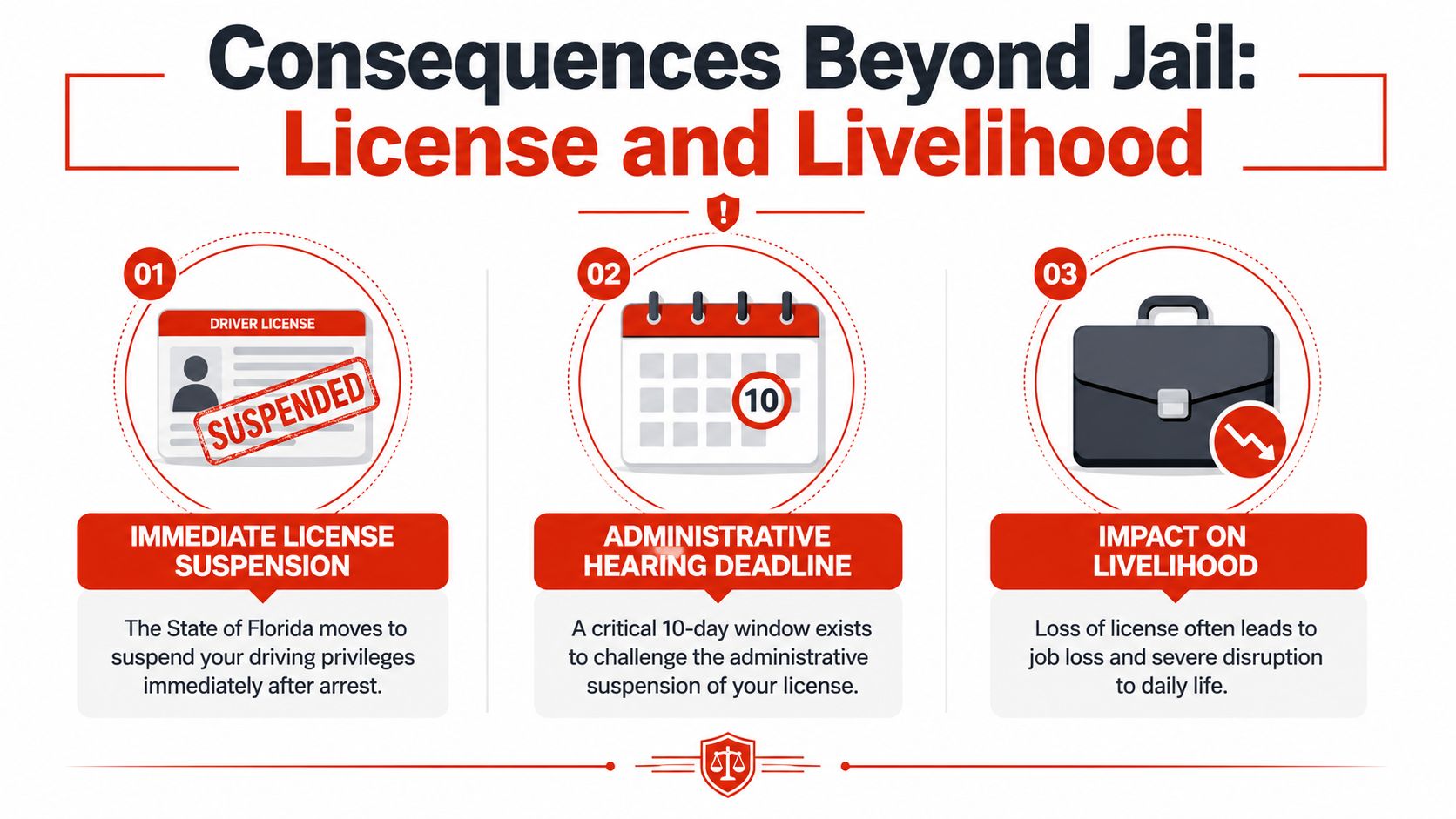
Es posible que aún sea inocente ante los ojos del tribunal, pero es posible que su fuente de ingresos no espere a un veredicto. Plataformas como Uber y Lyft desactivan las cuentas de los conductores basándose en el arresto inicial o la suspensión administrativa de la licencia por DUI, no en el veredicto final del tribunal. Esto genera una pérdida de ingresos inmediata e irreversible para los trabajadores de la economía colaborativa (gig economy) en Florida, incluso antes de que se establezca una estrategia de defensa, de acuerdo con los datos verificados vinculados a los materiales administrativos de DUI del DMV de Virginia.
El contenido legal genérico ignora ese problema porque no está conectado con la realidad práctica. Si conduce para aplicaciones de transporte, realiza entregas o depende de un perfil de conducción limpio para trabajos bajo contrato, este arresto puede suspender sus ingresos rápidamente.
Una línea de tiempo simple muestra el problema:
Etapa | Lo que usted cree que sucede | Lo que a menudo sucede en su lugar |
|---|---|---|
Noche del arresto | Se encargará de ello más tarde | El riesgo para su cuenta comienza de inmediato |
Acción administrativa | El trabajo continúa hasta la condena | La suspensión puede desencadenar la acción de la plataforma |
Proceso judicial | El juicio decide su futuro | Es posible que su salario ya haya desaparecido |
Los problemas con la licencia se convierten en problemas de vida
Una revocación permanente no solo afecta el traslado diario al trabajo. Afecta la crianza de los hijos, la vivienda, el cuidado de familiares y cualquier trabajo que espere confiabilidad. Si su identidad profesional depende de la conducción, este caso amenaza toda su estructura económica.
Es por eso que las personas en roles de liderazgo y carreras orientadas al público a menudo buscan apoyo privado más allá del expediente legal. Si el daño a la reputación es parte de su temor, este recurso sobre la recuperación discreta de adicciones para ejecutivos aborda directamente la necesidad de total confidencialidad mientras avanza su defensa legal.
El aspecto laboral de las consecuencias de un DUI suele ser más inmediato que el de la sentencia. Los empleadores no necesitan una pena de prisión para perder la confianza. Reaccionan ante suspensiones, arrestos, turnos perdidos y la imposibilidad de presentarse a trabajar.
Algunas consecuencias no penales comunes incluyen:
Pérdida de trabajo basado en la conducción: Los trabajos de transporte compartido, entregas, servicios de campo y transporte pueden desaparecer rápidamente.
Colapso del horario: Si depende de conducir para llevar a sus hijos, a miembros de la familia o a usted mismo al trabajo, la logística diaria se vuelve inestable.
Estigma profesional: Una acusación de DUI por delito grave por sí sola puede afectar la forma en que los clientes, gerentes y compañeros de trabajo lo ven.
Si su trabajo está vinculado a un vehículo, lea cómo un DUI puede afectar el empleo en Florida. Luego actúe como si su salario dependiera de la rapidez, porque así es.
Su defensa comienza ahora: Primeros pasos fundamentales
La demora es veneno en un caso de DUI. Cada hora que pierde le da al estado un camino más despejado y le da a su defensa menos margen para trabajar.
Comience con la primera medida práctica. Revise los aspectos básicos de la defensa por DUI en Florida para comprender el terreno, y luego comience a construir su respuesta de inmediato.
Qué hacer en los primeros días
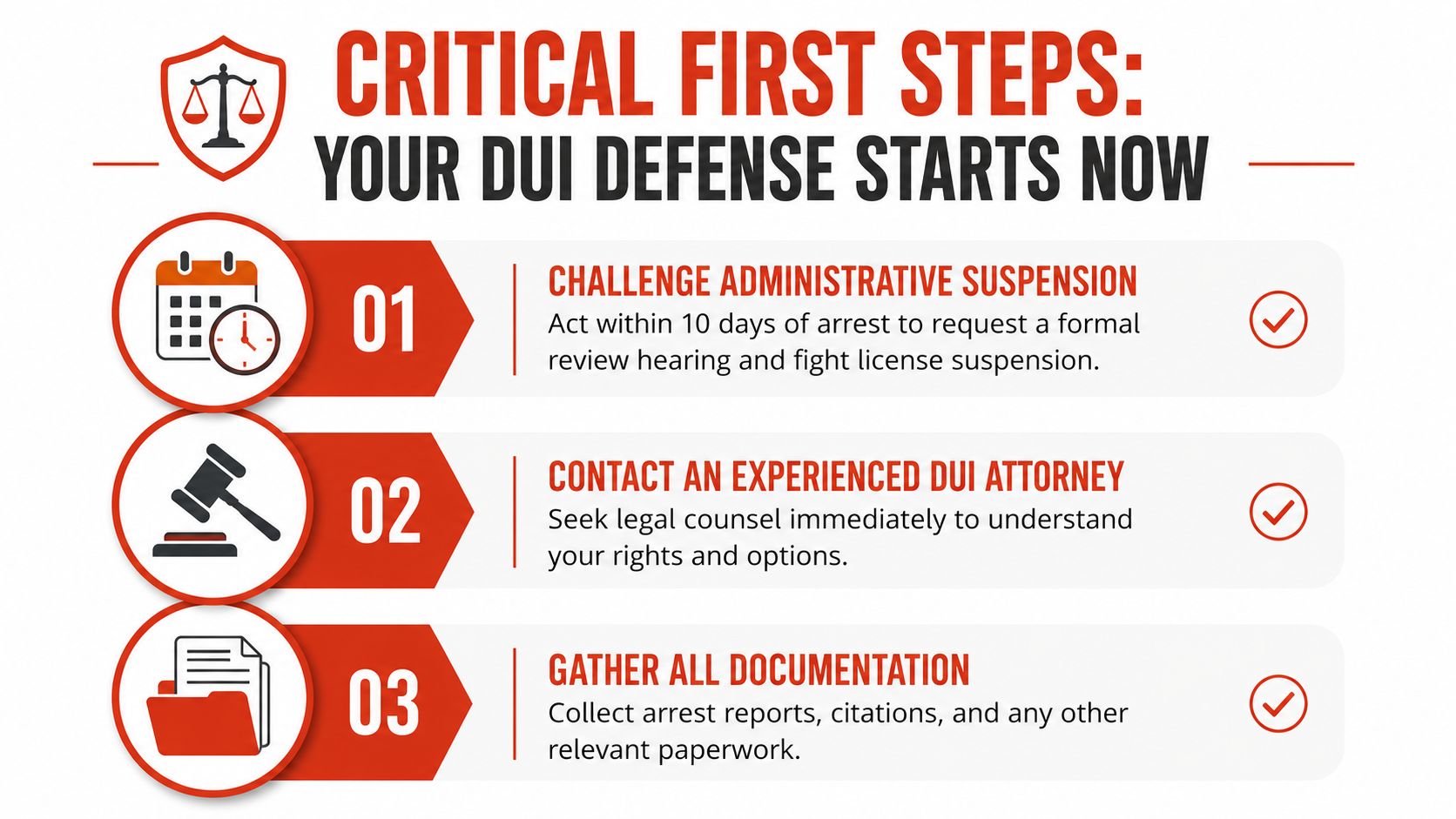
Existe un plazo de 10 días a partir de la fecha del arresto para impugnar la suspensión administrativa de su licencia. Si lo pierde, puede perder una ventaja crítica en el aspecto de la conducción del caso.
Siga estos pasos ahora:
Reúna todos los documentos de inmediato. Ponga su citación, aviso de suspensión, documentos de fianza, papeleo del remolque del vehículo y cualquier recibo de propiedad en una carpeta. No confíe en la memoria.
Escriba su línea de tiempo mientras esté fresca. Anote dónde estuvo, qué bebió (si lo hizo), cuándo condujo, qué dijo el oficial, si le hicieron pruebas físicas de sobriedad y si se realizó una prueba de aliento o de sangre.
Proteja la evidencia digital. Guarde recibos de viajes de plataformas de transporte, mensajes de texto, registros de llamadas, solicitudes de videovigilancia e historial de ubicación si algo de eso puede ayudar.
Solicite ayuda legal antes de seguir hablando. Si un investigador o un oficial se comunica con usted, deje de intentar ser cooperativo o servicial.
El primer plazo administrativo puede perjudicarlo antes de que el caso penal siquiera empiece a avanzar.
Muchos conductores cometen el error de centrarse únicamente en el tribunal. Eso es al revés. El aspecto de la licencia puede desestabilizar su vida primero.
Aquí tiene un video rápido que refuerza por qué es importante actuar de forma temprana:
Qué no hacer
No convierta su caso en un regalo de evidencia para el estado.
Evite estos errores no forzados:
No vuelva a explicar la detención a la policía. Su versión rara vez se vuelve más segura con la repetición.
No publique en internet. Las fotos, los chistes, los comentarios enojados y las "aclaraciones" pueden perjudicarlo.
No asuma que el resultado de la máquina pone fin al caso. Las pruebas tecnológicas aún pueden ser impugnadas.
No contrate basándose únicamente en la conveniencia. Un DUI por delito grave no es un problema que se resuelva con una aplicación.
Este no es el momento para un control de daños pasivo. Este es el momento para una defensa organizada, una presentación rápida de documentos y un silencio disciplinado.
Cómo un abogado con experiencia desafía un quinto DUI
Muchos conductores piensan que el caso no tiene esperanza una vez que ven un número de nivel de alcohol en papel. Es un pensamiento perezoso, y a los fiscales les encanta.
Bajo el Estatuto de Florida 316.193(1)(b), el límite legal para un cargo de DUI es un nivel de alcohol en sangre de 0.08 o más gramos de alcohol por cada 100 mililitros de sangre, lo que genera una violación per se de acuerdo con el Estatuto de Florida 316.193. Pero el mismo marco verificado también deja claro que los métodos utilizados para obtener esa evidencia pueden ser impugnados por un abogado capacitado por motivos constitucionales, estatutarios y científicos.
El número por sí solo no pone fin al caso
Un resultado de aliento o sangre es evidencia. No es magia. No justifica una conducta policial ilegal. No remedia un mal procedimiento. No hace que cada detención sea válida.
Un abogado defensor serio examina preguntas como estas:
¿Por qué lo detuvieron en primer lugar? Si la detención inicial fue ilegal, la evidencia posterior puede ser vulnerable.
¿Qué sucedió antes de la prueba? Las observaciones del oficial, las imágenes de la cámara corporal y las instrucciones al costado de la carretera importan.
¿Cómo se obtuvo la muestra? La cadena de custodia desde el contacto en la carretera hasta el resultado reportado puede revelar debilidades.
¿Se respetaron sus derechos? Los errores constitucionales siguen importando en los casos de infractores reincidentes.
A real defense is technical and aggressive
Una buena defensa de DUI no se trata de un discurso dramático en la sala del tribunal. Se trata de un ataque metódico. Los informes policiales se comparan con los videos. Se analizan minuciosamente los procedimientos de prueba. Se verifican las líneas de tiempo en busca de contradicciones. La acción administrativa se impugna por separado del expediente penal.
Una defensa sólida suele comenzar con preguntas sencillas que el oficial apprehensor esperaba que nadie hiciera con la suficiente atención.
Los servicios automatizados fallan gravemente. Un chatbot no puede contrainterrogar a un oficial. Un centro de llamadas no puede analizar el procedimiento de prueba. Un intermediario no puede construir un argumento de supresión de pruebas basado en defectos constitucionales.
Y si enfrenta 5 cargos de DUI, necesita algo más que una cotización de culpabilidad y un recordatorio en el calendario. Necesita a alguien que entienda cómo funciona el Capítulo 316 en la vida real, cómo se ataca la evidencia de aliento y cómo la exposición a un delito grave cambia la estrategia desde la primera llamada en adelante.
Necesita un abogado, no un algoritmo
Si enfrenta un quinto DUI en Florida, esto no es una transacción comercial por volumen. No es un problema de servicio al cliente. No es algo que una aplicación sin rostro deba "procesar".
Necesita un abogado real que haga un trabajo legal real. Eso significa comunicación directa, respuestas rápidas y una estrategia construida en torno a sus hechos, su licencia y su riesgo. No guiones preparados. No música de espera. No un equipo de recepción de llamadas fingiendo ser su defensa.
Las aplicaciones automatizadas y las fábricas de multas masivas están diseñadas para operar a gran escala. Su caso no lo está. Un DUI por delito grave requiere criterio, pruebas bajo presión, investigación legal, revisión de documentos e intervención inmediata cuando su privilegio de conducir está en juego. Debería poder hablar directamente con su abogado por teléfono o mensaje de texto, porque la demora y la confusión son mortales en un caso como este.
Si su futuro le importa, actúe en consecuencia.
Visite Ticket Shield, PLLC ahora para obtener una consulta gratuita. Esta es una firma de defensa de Florida dirigida por abogados donde usted habla directamente con su abogado por teléfono o mensaje de texto, no con un intermediario, ni con un servicio de contestador corporativo, ni con un chatbot automatizado. Si desea una defensa estratégica diseñada para proteger su licencia, su sustento y su futuro, vaya a TicketShield.com ahora. El objetivo inmediato es la protección. El objetivo final es tener cero puntos en su licencia.