Stop Sign Ticket Price Florida What You'll Really Pay
What's the real stop sign ticket price in Florida? Learn about fines, points, insurance hikes, and how a lawyer can help you fight to avoid points.
You’re probably looking at the citation right now, wondering whether the stop sign ticket price is annoying or dangerous. It’s both. The number on the ticket is only the first bill. The conviction is what follows you.
In Florida, a stop sign case falls under Florida Statute 316.123. If you treat it like a minor inconvenience and just pay it, you can turn a manageable citation into a license, insurance, and employment problem. I’ve seen drivers make that mistake because they wanted it “done.” That shortcut usually costs more.
Table of Contents
What Is the Real Cost of a Florida Stop Sign Ticket?
You get a stop sign ticket, look at the amount on the citation, and assume this is a quick payment problem. That assumption costs drivers money.
A Florida stop sign citation under Florida Statute 316.123 is a moving violation with consequences that reach past the clerk’s payment portal. The amount printed on the ticket is only one part of the exposure. Fees can increase what you owe, and a guilty resolution can create bigger problems tied to your driving record.
That is why drivers get trapped by convenience. A ticket app processes the case like a file number. A lawyer looks at the facts, the court, the officer’s allegations, and the consequences that follow you after the case closes. If your goal is to protect your record instead of closing the ticket fast, that difference matters.
At places like the Richard E. Gerstein Justice Building in Miami, people routinely pay online to get it over with. That is often the moment they give up options they still had.
Keep these points in focus:
The listed fine is only the starting number: court costs and local assessments can push the out-of-pocket total higher.
The case matters beyond payment: a stop sign ticket is a moving violation, not a harmless administrative annoyance.
Fast processing is not the same as protection: an automated service aims to move the file. A defense lawyer aims to limit damage.
Treat this citation like a legal problem first. That is how you avoid turning a manageable ticket into a more expensive mistake.
How Much Is the Fine for a Stop Sign Violation?
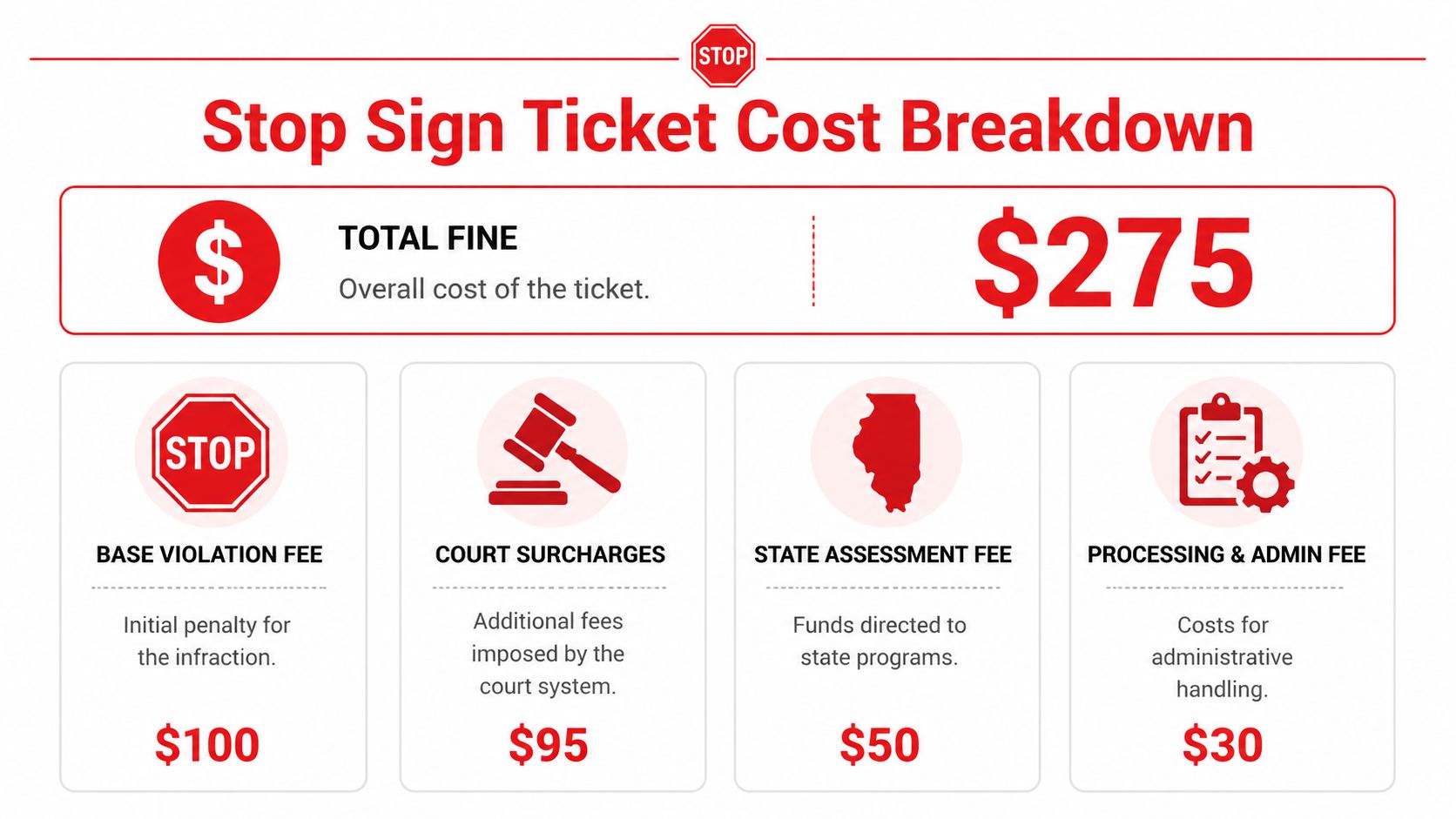
If you want the straight answer, the fine alone doesn’t tell you much. Florida traffic tickets work like a restaurant bill that looks manageable until the service charges, taxes, and added fees hit the bottom line. Drivers fixate on the listed penalty and ignore the rest.
Why the number on the ticket misleads drivers
A stop sign violation under Florida Statute 316.123 is a noncriminal traffic infraction, but that label causes confusion. “Noncriminal” does not mean harmless. It means you won’t face a criminal prosecution for the ticket itself. You can still face a moving violation judgment with expensive collateral damage.
Court systems add mandatory charges that many drivers never see coming. Those can include clerk-related costs, administrative assessments, and other court-imposed amounts. That’s why the stop sign ticket price often feels inflated by the time payment is due.
A straightforward perspective to consider:
Charge type | What drivers assume | What usually happens |
|---|---|---|
Base fine | This is the whole bill | It’s only the starting figure |
Court costs | Minimal or optional | Often mandatory |
Administrative assessments | Rare | Common |
County variation | Should be uniform | Often differs by location |
What that looks like in real court processing
At the Orange County Courthouse in Orlando, and in other Florida courts, drivers regularly discover that traffic fine schedules are not as straightforward as they expected. The same category of citation can feel very different once local fee structures are applied.
That’s why I tell clients to stop asking only, “How much is the fine?” Ask the better question. “What will this cost me if I let it become a conviction?”
The stop sign ticket price is rarely just one number. It’s a stack of charges attached to one decision.
You should also remember that the payment choice is tied to the legal result. If you pay blindly, you are usually not just resolving a bill. You are closing the door on better outcomes that could reduce the long-term damage.
Here’s the practical breakdown of how to think about the fine:
Start with the statute: The citation is issued under Chapter 316, usually 316.123 for a stop sign allegation.
Expect added fees: Florida traffic cases commonly include charges beyond the base amount.
Check the county process: Local courthouse handling can affect the total out-of-pocket cost.
Don’t confuse convenience with savings: Fast payment often means permanent consequences.
If you’re serious about protecting your record, don’t shop this problem by the printed fine alone. Shop it by total exposure.
What Happens to Your License and Insurance After a Ticket?
You pay the ticket online before lunch. A week later, the case feels finished. It is not. The actual damage starts after the payment posts.
A Florida stop sign conviction puts points on your driving record. For some drivers, that is an annoyance. For anyone with prior citations, a job that depends on driving, or a carrier that watches moving violations closely, it is a real exposure problem. The fine is the visible part. Your record and your premiums are where the case can get expensive.
What happens to your Florida license
A stop sign conviction in Florida adds 3 points. Those points matter because Florida suspends licenses based on how many points you collect within set time periods. If your record is already carrying weight, one more conviction can push you into suspension territory faster than you expect.
The suspension thresholds matter:
12 points in 12 months leads to a 30-day suspension
18 points in 18 months leads to a 3-month suspension
24 points in 36 months leads to a 1-year suspension
If you need the rules in one place, review this guide to the Florida license point system.
Here is the mistake drivers make. They treat a stop sign case like a one-time bill. The state treats it like a record event. Once those points are on your history, they affect everything that comes after.
Why insurance is usually the bigger problem
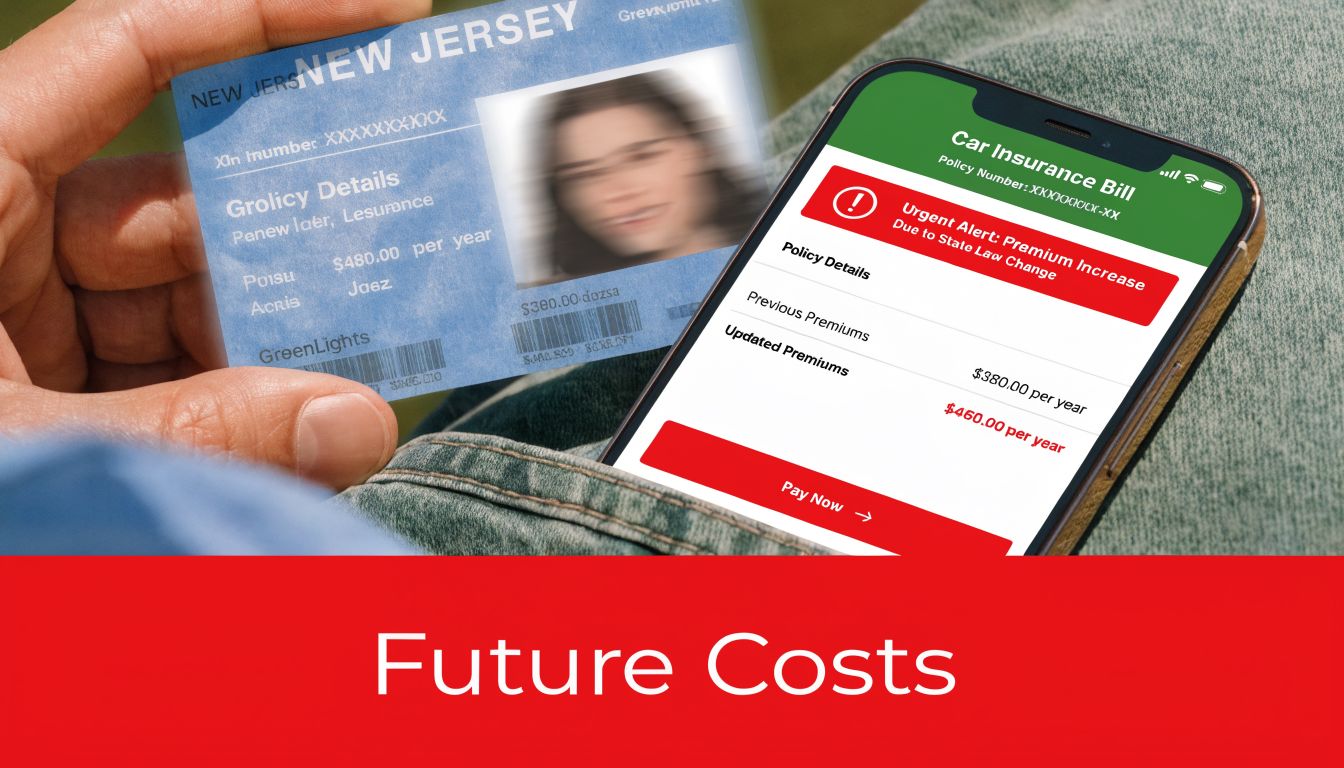
Insurance companies care about convictions, not your excuses. If a moving violation lands on your record, your carrier may re-rate you at renewal, remove a discount, or decide you now belong in a higher-risk category. That added cost can outlast the court case by years.
This is also where the difference between a real lawyer and a ticket app becomes obvious. A ticket mill app processes volume. It pushes files through a system and sells convenience. A lawyer looks at your actual record, your insurance exposure, your work situation, and whether this ticket is the one that creates a larger problem. That is personalized protection. The app gives you processing. You need defense.
If you want a plain-English refresher on policy basics, deductibles, and what insurers review, this article on understanding insurance coverage is a useful primer.
A conviction usually costs you in three places:
The court payment
The points added to your record
The insurance consequences that show up later
Drivers fixate on the first number because they can see it. Experienced counsel focuses on the second and third because that is where the lasting damage sits.
Should You Just Pay the Stop Sign Ticket and Move On?
No. In most cases, that’s the wrong move.

Paying a Florida traffic citation usually acts as an admission. You may feel relief for five minutes. Then the record consequences start. You’ve converted an allegation into a conviction without forcing anyone to prove the case, negotiate the charge, or correct mistakes on the ticket.
Florida saw traffic ticket volume rise for the 4th consecutive year in 2024, and that trend creates added pressure for drivers whose jobs depend on a clean record. It’s especially serious for gig economy workers who can face deactivation after a single ticket, and for military personnel who need clean records for clearance-related reasons as discussed in this review of Florida traffic citation trends.
Who gets hurt fastest by a guilty payment
Some drivers absorb a conviction as an inconvenience. Others can’t.
Gig drivers: If you drive for a platform, one moving violation can trigger scrutiny that affects your account status.
Military members and veterans: A traffic record issue can become an unnecessary professional headache.
Busy professionals: You may not care about the hassle today, but you will care when insurance and future citations are judged against a worse record.
If you’re weighing whether to pay or fight, this guide on paying a ticket versus hiring a lawyer lays out the tradeoff clearly.
You should also see the practical side of how quickly drivers talk themselves into bad decisions:
The urge to “just move on” usually comes from fatigue, not strategy. The state benefits from that. You don’t.
A fast payment closes the case fast. It doesn’t end the consequences fast.
If you care about keeping points off your record, paying first and asking questions later is backwards.
What Are Your Options for Fighting a Stop Sign Ticket?
You have more options than most drivers think. A stop sign defense is not always about dramatic testimony or a full hearing battle. Good traffic defense is often quiet, strategic, and focused on outcome.
Under Florida Statute 316.123, a stop sign allegation is a moving violation that adds 3 points, but an attorney can often negotiate the case to a non-moving violation, which carries no points as described in this Florida stop sign defense overview.
What a real defense usually looks like
A real defense starts with the facts, not with panic. The questions matter:
Was the officer’s view clear?
Was the sign visible and unobstructed?
Were the road markings confusing or faded?
Did the citation contain errors?
Is there room to challenge how the stop was interpreted?
A “rolling stop” allegation often turns on observation. That means details matter. Intersection layout matters. Distance matters. Visibility matters. A lawyer reviews those issues differently than a driver who’s frustrated and ready to pay.
You can also learn more about common defense angles in this guide on how to get a stop sign ticket dismissed.
Not every winning result is a full dismissal. In many cases, the smart target is a resolution that protects your record.
What outcome should you target
The right goal is usually not “say I’m innocent and hope for the best.” The right goal is to protect the part of the case that does the most damage. That usually means the points.
Here’s how to think about outcomes:
Possible outcome | Why it matters |
|---|---|
Dismissal | Ends the citation if the case can’t stand |
Reduction to non-moving | Avoids points and helps protect insurance |
Managed court handling | Reduces disruption and missed work |
Unchallenged payment | Locks in the moving violation |
One practical option among others is Ticket Shield, PLLC, a Florida law firm that handles stop sign and other traffic citations statewide with lawyer-led case handling rather than app-based processing. The important feature is direct attorney communication by phone or text, because traffic defense works better when the person reviewing your case can answer legal questions in real time.
The best defense posture is simple. Don’t surrender the moving violation unless you have to.
Why Choose a Lawyer Instead of a Ticket App?
Drivers make another expensive mistake. They assume every ticket service is the same. It isn’t.

A ticket app is built to process volume. Your case becomes a form, a workflow, and a status update. That model may feel modern, but traffic defense is still a legal judgment problem. Facts change. Court habits vary by county. Officers write flawed citations. Negotiation opportunities are case-specific.
What an app can’t do when the stakes are real
An automated platform can collect your information. It can’t replace legal judgment. It can’t text you back as your lawyer. It can’t weigh whether your best path is challenge, negotiation, mitigation, or a record-protective resolution.
That matters in places like the Broward County Judicial Complex or the Edgecomb Courthouse, where local practice and court handling can shape what a sensible defense looks like.
Use this comparison when deciding:
If you want processing: an app may move your file through a system.
If you want advice: you need a lawyer who can assess risk, explain consequences, and adapt.
If your job depends on your record: you should want direct access to the attorney responsible for your case.
If you’re comparing models, this article on choosing a local lawyer instead of apps is worth reading.
Your driving record is too important to hand to a chatbot and hope for the right legal judgment.
That’s the contrast. Personalized protection versus impersonal processing. If the only thing you care about is pushing a citation into a digital queue, use an app. If you care about the result, use a lawyer.
What Should You Do Immediately After Getting a Ticket?
Act fast. Don’t react emotionally. A bad first decision creates most of the avoidable damage in these cases.
If you want a practical refresher on traffic-stop conduct itself, this guide on what to do when pulled over is useful. Once the citation is in your hand, your focus shifts from roadside behavior to record protection.
Here are the immediate steps to take:
Don’t pay the ticket right away: Payment usually closes off defense options and can lock in the moving violation.
Read every line carefully: Check your name, location, vehicle details, and statute citation for mistakes.
Write down what happened: Note traffic conditions, visibility, sign placement, and anything unusual about the intersection.
Preserve evidence early: If safe and practical, photograph the stop sign, lane markings, vegetation, parked vehicles, or anything that affected visibility.
Watch your deadline: Florida traffic cases move on deadlines, not intentions. Missing your response window limits your choices.
Get case-specific guidance: Review your options before you make the error of treating the ticket like a simple bill.
If your citation involves failing to stop, this resource on a Florida running a stop sign ticket is a solid next step.
The shortest version is this. Protect the record first. Deal with payment second.
If you got cited under Florida Statute 316.123, don’t guess and don’t plead guilty by convenience. Talk to a lawyer-led firm that focuses on keeping No Points as the goal. Visit Ticket Shield, PLLC for a free consultation.