
How to write a letter to judge for traffic ticket: Florida tips
Learn how to write a letter to judge for traffic ticket and present your case clearly. Our quick guide covers structure, tone, and essential tips.
Before you even think about writing, you need a clear game plan. What, exactly, are you trying to accomplish with this letter? Are you asking for mitigation, explaining a unique situation, or trying to avoid a trip to the courthouse?
Your letter must be respectful, stick to the facts, and show you take responsibility for what happened—without sounding like you're just making excuses. This letter is serious business; it becomes an official part of your court record, so getting the purpose and tone right is essential.
Figure Out Your Goal Before You Write
In Florida, a letter to a judge isn't a one-size-fits-all solution. It’s a strategic tool. Your goal determines every word you write, from the opening sentence to your final request. Nailing this down is the first—and most important—step.

This initial decision shapes the entire letter. Deciding whether you should fight your traffic ticket or simply ask for a reduced penalty is a fundamental choice, and each path requires a different approach.
Types of Letters and What They Do
Most people write to ask for mitigation. A Letter of Mitigation is essentially a request for leniency. You are not contesting the ticket; you are admitting to the violation but requesting a reduced penalty on the fines or points because of the circumstances.
Real-World Scenario: Let's say you were ticketed for speeding while rushing a family member to the emergency room. In your letter, you would acknowledge the speeding but explain the urgent situation. If you have it, attaching a copy of a hospital record as proof can strengthen your case. The idea is to show you made a mistake, but you had a compelling reason.
Next up is a Letter of Explanation. This is slightly different. Its main job is to provide context that the officer could not have known. It helps the judge understand the 'why' behind what happened, which might influence their perspective. For instance, a street sign might have been completely blocked by a tree, causing you to make an illegal turn. That’s the kind of detail that goes in this letter.
Finally, there's the Formal Request to Waive a Court Appearance. Some violations in Florida require a court appearance, which can be a significant issue if you live out of state or have an unavoidable conflict. You can write to the court to ask for permission to handle it by mail or have an attorney appear for you instead.
To help you choose the right path, here's a quick breakdown of the common objectives for writing a letter to the court.
Florida Traffic Letter Objectives at a Glance
Letter Type | Primary Goal | Potential Outcome |
|---|---|---|
Letter of Mitigation | To request a reduced penalty, such as a lower fine or waiver of points. | Reduced fine; court costs still apply. Possibility of adjudication being withheld to avoid points. |
Letter of Explanation | To provide context or clarify circumstances surrounding the violation. | May influence the judge's decision on penalties, especially if the circumstances were unusual. |
Request to Waive Appearance | To get permission to handle the ticket without physically going to court. | If approved, you can resolve the ticket by mail or through a lawyer, avoiding travel and time off work. |
This table should make it clear that your objective directly shapes what you can realistically expect as a result.
Key Takeaway: Choosing the right type of letter helps set realistic expectations. A well-written Letter of Mitigation might lead to a smaller fine or a "withhold of adjudication" to keep points off your license, but it is not a request for the ticket to be dismissed.
Your goal is your roadmap. If you want a lower fine, you'll talk about your clean driving history or financial situation. If you need to explain an unusual scenario, you'll focus on providing clear, verifiable details. Taking a minute to lock down your objective makes sure every sentence you write has a purpose, making your letter far more effective.
Structuring Your Letter for the Court
When you write a letter to a judge, you’re creating a formal legal document. For it to be taken seriously, it has to look the part and include all the right information. A clear, professional structure isn’t just about making a good impression; it ensures the court can process your request efficiently, which is the first step toward a potential resolution.

Presenting your side of the story in a logical, respectful way is non-negotiable. Think of it like any other formal communication—organization is key. Before you even start writing, spending a few minutes on crafting a powerful outline can help you organize your thoughts and make your final letter much stronger.
Essential Components of Your Letter
Every letter must start with a clear header that includes both your personal details and your case information. This isn't just a formality. The header is what allows the Clerk of Court to immediately pull your file and connect your letter to the right case.
Make sure your header has:
Your Full Legal Name: Use the name exactly as it appears on your driver's license.
Your Current Mailing Address: This is crucial. It’s where the court will mail its decision.
Your Phone Number and Email Address: Provide reliable contact info.
The Citation Number: This is the most important piece of information on the page. Double-check it for accuracy.
Date of the Violation: Be specific and use the correct date.
Just like in a business letter, you need to include the court's address right below your own contact information. Address it to the specific courthouse in the county where you received the ticket.
Salutation and Body Paragraphs
The salutation immediately sets the tone, so always be respectful. The correct way to address the judge is:
"To the Honorable Judge [Judge's Last Name],"
If you don't know the judge's name, using "To the Honorable Judge of the Court," is a perfectly acceptable alternative.
The body of the letter is where you'll make your case. Keep your paragraphs short, focused, and organized.
Introduction: Get straight to the point in the very first sentence. For example, "I am writing to respectfully request mitigation for citation number [Your Citation Number]."
Explanation: This is where you briefly and factually explain the circumstances. If you have any proof to back up your story, mention it here. For instance, "I have attached a copy of my clean driving record for your review."
Your Request: State exactly what you're asking for. Whether it's a reduced fine, a withhold of adjudication, or the option to attend traffic school, don’t be vague.
A properly presented case can be beneficial. In Miami-Dade traffic courts, a number of non-criminal moving violations were dismissed. That rate was higher than in Broward County or Palm Beach, which suggests that a solid, well-presented case may influence outcomes.
Closing and Supporting Documents
Wrap up your letter with a respectful closing. Something as simple as "Sincerely," or "Respectfully submitted," works perfectly. Then, sign your name and print it underneath.
Attaching supporting documents can give your request more weight. Things like a copy of your driving record, a receipt showing you fixed a broken taillight, or paperwork related to an emergency can all help your case.
Keep in mind, if your court date is approaching quickly, you might need to file a separate motion for a continuance. This is a formal request to postpone the hearing.
Adopting a Tone That Persuades
When you write a letter to a judge, your words have weight. How you say something is often just as important as what you say. The tone you take can either build a bridge of understanding or put up a wall of resistance.
A respectful, honest, and accountable tone shows the court you're a responsible person who made a mistake, not someone just trying to dodge the consequences.

The goal here is to persuade, not demand. You're making a request, and the judge has the final say. A huge part of persuasion is understanding what is tone in writing and using it to convey sincerity and respect.
Taking Responsibility vs. Making Excuses
Here’s one of the most effective things you can do: take ownership of the violation. This doesn't mean you can't explain what happened, but that explanation needs to come after you've acknowledged your responsibility, not in place of it.
This is the critical difference between a genuine explanation and a flimsy excuse.
Think about these two approaches:
The Excuse (Ineffective): "The speed limit on that road is ridiculously low, and I was just keeping up with the flow of traffic."
The Explanation (Effective): "I take full responsibility for driving over the speed limit. I was on an unfamiliar road and misjudged my speed, and I sincerely regret my lack of attention."
See the difference? The first example is confrontational and blames external factors. The second one acknowledges the mistake, shows remorse, and provides context without trying to shift the blame. This simple change in language frames you as a conscientious driver who made an error, which is far more persuasive.
Pro Tip: Always lead with accountability. Start your explanation with a phrase like, "I acknowledge that..." or "I understand that I was wrong for..." before you get into any of the surrounding circumstances.
Choosing Your Words Carefully
The specific words you choose can completely change how your letter is perceived. You want your language to be formal but not robotic or stuffed with legal jargon. Just aim for clear, simple, and direct communication.
Here’s a quick guide on what to say and what to avoid:
Words to Use | Words to Avoid |
|---|---|
Respectfully request | Demand |
Acknowledge | Blame |
Mitigating circumstances | Excuses |
Take responsibility | It wasn't my fault |
Made a mistake | The officer was wrong |
Using positive, accountable language shows maturity and respect for the court’s authority. It’s a small thing that makes a big difference.
Presenting Supporting Evidence
If you have evidence to back up your words, introduce it the right way. For example, if you completed a defensive driving course after getting the ticket, that's a great way to show you're serious about improving your driving habits.
Here’s how you could phrase that:
"To demonstrate my commitment to being a safer driver, I have voluntarily completed a defensive driving course and have attached the certificate of completion for your review. I hope this action shows my sincere regret for this violation."
This approach doesn't ask for a dismissal. Instead, it subtly supports your request for leniency by showing you’ve already taken tangible steps to correct your behavior.
Ultimately, a tone of humble accountability is your most powerful tool.
Navigating Florida's Filing Procedures
Once you’ve polished your letter, the next critical step is getting it filed correctly. The court system runs on strict rules, and following them isn't optional. A perfectly written letter is completely useless if it never makes it into your official case file or shows up after a deadline has passed.
In Florida, the clock is ticking from day one. You typically have only 30 days from the date on the citation to respond. Missing this window can trigger serious consequences, including late fees and even a potential suspension of your driver's license. Time is not on your side, so understanding the filing process is crucial.
How to Submit Your Letter
Every county’s Clerk of Court office has its own way of doing things, so your first move should always be to check their official website. Generally, you’ll have a few different ways to get your letter and any supporting documents into the right hands.
In-Person Delivery: You can always walk your letter directly into the Clerk of Court's office in the county where you got the ticket. This is a good option because it gives you immediate confirmation, and you can ask for a time-stamped copy for your own records.
Certified Mail: Sending your letter via certified mail with a return receipt requested is another solid choice. It provides you with official proof that the court received your document and on what date.
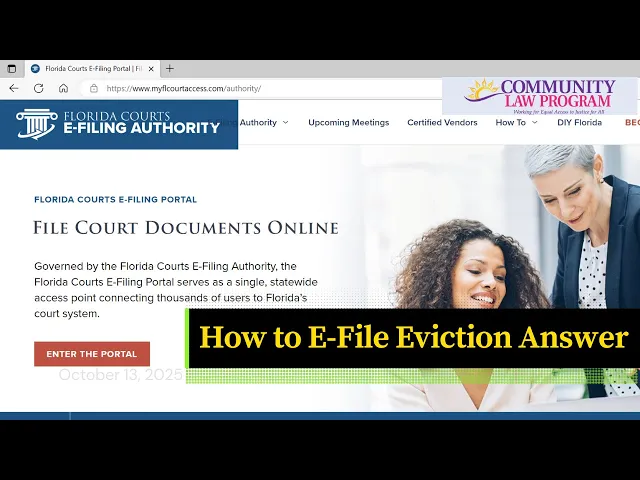
E-Filing: Some Florida counties have an electronic filing portal. This can be the most convenient method by far, but you have to be extra careful to follow the exact formatting and submission guidelines the system requires.
No matter which method you go with, consider giving the Clerk’s office a follow-up call a few days later. A polite phone call to confirm that your letter has been received and added to your case file can save you from potential administrative issues.
Serving the Prosecutor and Confirming Receipt
In some cases, you might also be required to provide a copy of your letter to the State Attorney's Office or the specific prosecutor handling traffic cases. This is what’s known in the legal world as "serving" the opposing party.
Check the local court rules for your county to see if this is necessary for your type of request. If it is, sending a copy via certified mail is a standard procedure.
Key Insight: Don't just mail your letter and assume it arrived. Be proactive and confirm it landed where it was supposed to. Call the Clerk of Court and ask, "Can you please verify that the letter for citation number [your number] was added to my case file?" This simple action ensures your request will actually be seen by the judge.
Many drivers pay the ticket without exploring other options, but statistics show that contesting a ticket can sometimes be worthwhile. Across the U.S., only a small percentage of traffic tickets issued each year are ever contested. However, of those who do, a number see their cases either dismissed or their penalties reduced.
Properly filing your letter is a non-negotiable part of the process. For more detailed strategies on handling your citation, check out our guide on how to beat a traffic ticket in Florida. Following these procedural steps ensures your carefully crafted message gets the attention it deserves.
Common Mistakes That Can Hurt Your Case
Writing a letter to the judge is your chance to be heard, but a few simple missteps can undermine your efforts. Even a letter written with the best intentions can backfire if it hits one of these common tripwires, weakening your credibility or inadvertently creating more problems.
Knowing what not to do is just as important as knowing what to include.

Let's walk through the traps you need to sidestep to make sure your letter helps your case, not hurts it.
Admitting to the Wrong Thing
This is one of the most significant mistakes you can make. It often happens when a driver tries to over-explain the situation and, without realizing it, admits to a more serious offense than the one on the ticket.
For example, writing, "I had to speed because I was late for work and looking down at my phone for directions," just turned a basic speeding ticket into a confession of distracted driving. That's a much bigger problem. Stick only to the facts directly relevant to the specific violation on your citation.
Using an Emotional or Demanding Tone
A letter filled with frustration, anger, or demands is unlikely to be effective. The court operates on facts and legal standards, not raw emotion. Phrases like "This is totally unfair!" or "I demand this ticket be dismissed" will immediately damage your credibility.
You must maintain a respectful and formal tone from start to finish. Your goal here is to ask for consideration, not to pick a fight or vent your anger.
Do This, Not That:
Do: "I respectfully request the court consider my clean driving record when reviewing this citation."
Not That: "It's ridiculous that I got a ticket when my record is perfect; you need to throw this out."
Misunderstanding the Violation
Before you type a single word, you must be 100% clear on the exact violation listed on your ticket. If you misinterpret the charge, you could end up writing a letter that's completely irrelevant to your case. For instance, if you were cited for "Failure to Yield Right of Way," explaining why you thought the speed limit was too low is a waste of everyone's time.
Look up the specific Florida statute number printed on your citation. This will tell you exactly what the state needs to prove and help you focus your letter on the facts that actually matter. It's a simple step that ensures your explanation is on point.
Knowing When to Call a Traffic Attorney
A well-written letter can be useful for a minor infraction, but some situations carry stakes far too high to handle on your own. Knowing when to put down the pen and pick up the phone to call a lawyer is a critical step in protecting your driving record. This is especially true when a citation goes beyond a simple fine and threatens your license or your freedom.
If you're facing a criminal traffic violation like Reckless Driving or DUI, the risks increase substantially. The same goes for any ticket that could trigger a license suspension or impact a commercial driver’s license (CDL). In these high-stakes scenarios, the potential career and personal fallout is severe. The complexity of the legal system requires a deeper understanding of court procedures and how to negotiate with state attorneys—and that's where professional help can be essential.
An attorney can appear in court on your behalf, work to protect your license, and navigate the legal process. Our goal is to protect your license and record. Past results do not guarantee future outcomes.
Figuring out do I need a lawyer for a traffic ticket is key. For anything more serious than a basic ticket, seeking professional representation is a proactive step toward safeguarding your future on the road.
Common Questions About Writing a Letter to the Judge
Navigating the court system can bring up a lot of questions. Here are some of the most common ones we hear from drivers about writing a letter to a judge for a traffic ticket.
This is general information and is considered an attorney advertisement. Our office is in Broward.
Can I Just Email My Letter to the Judge?
Generally, no. You cannot email a letter directly to the judge. That’s considered improper ex parte communication, which is a legal term for a conversation with the court without the other party (the state) present.
You must use the official channels. That means filing your letter with your county's Clerk of Court. The clerk is responsible for making sure your letter becomes part of the official case file so the judge can review it properly.
Before you do anything, check the local Clerk of Court’s website. They will have the specific, approved filing procedures you need to follow.
What Happens After I Send the Letter?
Once you’ve filed your letter, the Clerk of Court will add it to your case file. The judge will typically review it either before or during your scheduled hearing.
Based on what you’ve written and the specifics of your ticket, a judge has the discretion to reduce your fine, withhold adjudication to keep points off your record, or approve traffic school as an alternative.
You’ll get an official notification from the court with the final decision. It’s always a good idea to call the Clerk's office a few days after you file to confirm they received your letter and it’s in your file.
Is Writing This Letter an Admission of Guilt?
It absolutely can be, and that’s why your wording is so critical. A letter asking for mitigation or leniency usually means you’re taking responsibility for the violation but explaining the circumstances around it. This is a completely different strategy from pleading "not guilty."
If you intend to fight the ticket and argue that you did not commit the violation, writing this kind of letter is the wrong move. You would argue your case in court instead. Understanding this distinction is crucial. If you’re not sure which path is right for your situation, this is an appropriate time to consult an attorney.
Legal Notice: Submitting information through a website form or sending a letter does not create an attorney-client relationship. All legal questions should be directed to a licensed attorney.
Handling a traffic ticket on your own can be confusing. Ticket Shield, PLLC has experience with traffic matters across Florida. Our practice focuses on traffic and DUI defense. Our goal is to protect your license and record. For a free consultation, visit us at https://www.ticketshield.com.
