Your Guide to a CT Traffic Ticket
Received a ct traffic ticket? Don't just pay it. Our 2026 guide explains penalties, points, and why you should fight it with an experienced attorney.
A Florida traffic ticket looks minor until you treat it like a bill. Pay it, and you may trigger points, insurance pain, and record damage. Fight it early under Florida Statute Chapter 316. The smart goal is simple: protect your license and keep points off your record.
Most drivers make the same mistake. They see a ticket, look at the fine, and think the fastest fix is to pay it.
That’s often the worst move.
Florida enforces traffic laws aggressively under Chapter 316, including offenses like unlawful speed under Florida Statute 316.183 and speed restrictions under Florida Statute 316.187. If you just got what you searched for as a ct traffic ticket, stop and make sure you’re treating it like the Florida problem it becomes on your record, with your insurer, and with your driving privilege.
A surprising fact should get your attention. In a state with heavy enforcement, traffic stops reach the hundreds of thousands, and speed-related violations account for over a third of all safety-related stops, followed by stop sign and traffic signal violations, according to state traffic stop data summarized here. That means your ticket is not unusual. But your response still matters.
Table of Contents
What Should You Do After Getting a Florida Traffic Ticket
First, don’t panic. Second, don’t pay it just because the ticket makes payment easy.
Under Florida Chapter 316, traffic citations can carry consequences far beyond the fine itself. If the citation involves speed, lane use, signals, or careless operation, you’re dealing with something that can affect your record in ways that last much longer than the moment you were pulled over.
Your immediate objective is simple. Avoid a conviction if possible. Avoid points if possible. Avoid giving your insurance company an easy reason to charge you more.
Immediate Steps to Take
Read the citation carefully: Check the statute number, court information, deadline, and the officer’s notes or description.
Preserve your memory: Write down where the stop happened, traffic conditions, weather, what the officer said, and what you said.
Do not admit fault casually: That includes texts, emails, social posts, or calls where you say you were “definitely speeding.”
Look for practical errors: Vehicle description, location, speed listed, or other details may matter later.
Get legal guidance fast: Review a focused breakdown of what to do when you get a ticket before you lock yourself into the wrong response.
Practical rule: The easiest response is often the most expensive one later.
If your first instinct was, “I’ll just pay it and move on,” stop there. That mindset helps the system, not you. A Florida traffic ticket should be treated like a legal event, not a parking receipt.
What Are the True Costs of Paying a Ticket
The fine on the ticket is only the entry fee. The true damage usually shows up after the case is closed.
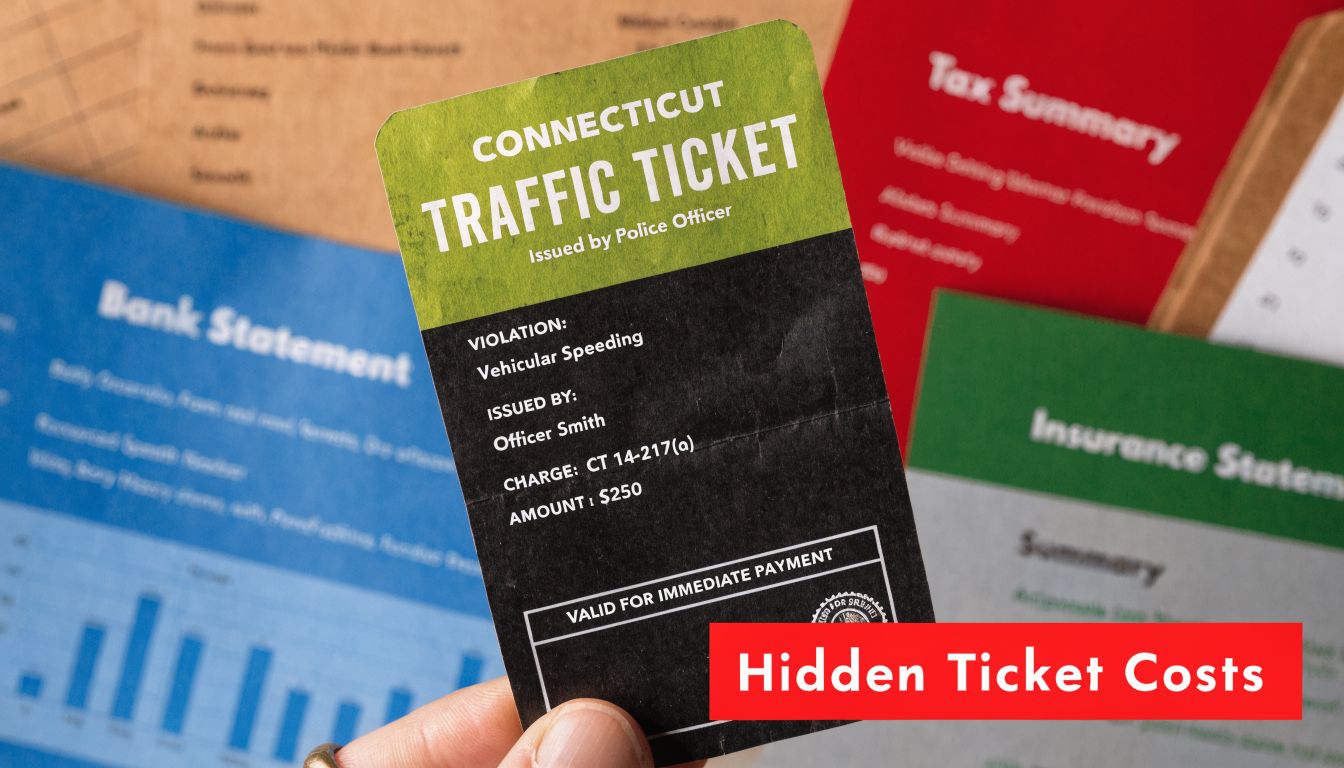
Why the printed fine is not the real price
Florida drivers often focus on the amount due today. That’s too narrow. What matters is the total financial hit after points, insurer review, and any follow-up consequences tied to your driving history.
One verified example makes the problem obvious. According to this penalty discussion, speeding 10 to 21 mph over the limit can bring a fine from $147 to $200 and 1 point. That same source states that a single point can trigger a 15% to 25% insurance hike, costing an average of $300 per year for two years.
That means a ticket can keep charging you after you think it’s over.
Here’s the cleanest way to look at it:
Cost category | What you see first | What often matters more |
|---|---|---|
Fine | The amount on the citation | Immediate but limited |
Points | A licensing issue | Can trigger DMV trouble |
Insurance | Often ignored at first | Can outlast the court case |
Work impact | Easy to miss | Serious for drivers who rely on a clean record |
A lot of drivers would rather spend a little time fighting the ticket than spend years absorbing extra insurance costs. That’s the rational choice.
Who gets hit hardest
Some drivers absorb a conviction worse than others.
Gig drivers: Uber, Lyft, and delivery platforms may treat moving violations as a platform risk.
Commercial and fleet drivers: Employers often review records more closely than private insurers do.
Military personnel and cleared professionals: A clean driving history matters more than people realize.
Frequent commuters: If you drive daily, you have more exposure and less room for additional points.
Paying a ticket feels efficient. It often buys you speed today by selling away leverage tomorrow.
You should also account for court-related expenses if a case escalates or requires additional handling. This overview of traffic ticket court cost issues helps drivers think beyond the face amount printed on the citation.
If you searched for a ct traffic ticket, don’t get distracted by the wording. What's important is whether a moving violation ends up recorded against you and used against you later. That is where the money is lost.
What Are the Main Types of Florida Traffic Tickets
Not all tickets carry the same risk. Some are primarily nuisance citations. Others can push points onto your license fast.
Florida drivers should know the category of the allegation before deciding how hard to fight. Chapter 316 covers a wide range of conduct, and the statute number on the citation matters.
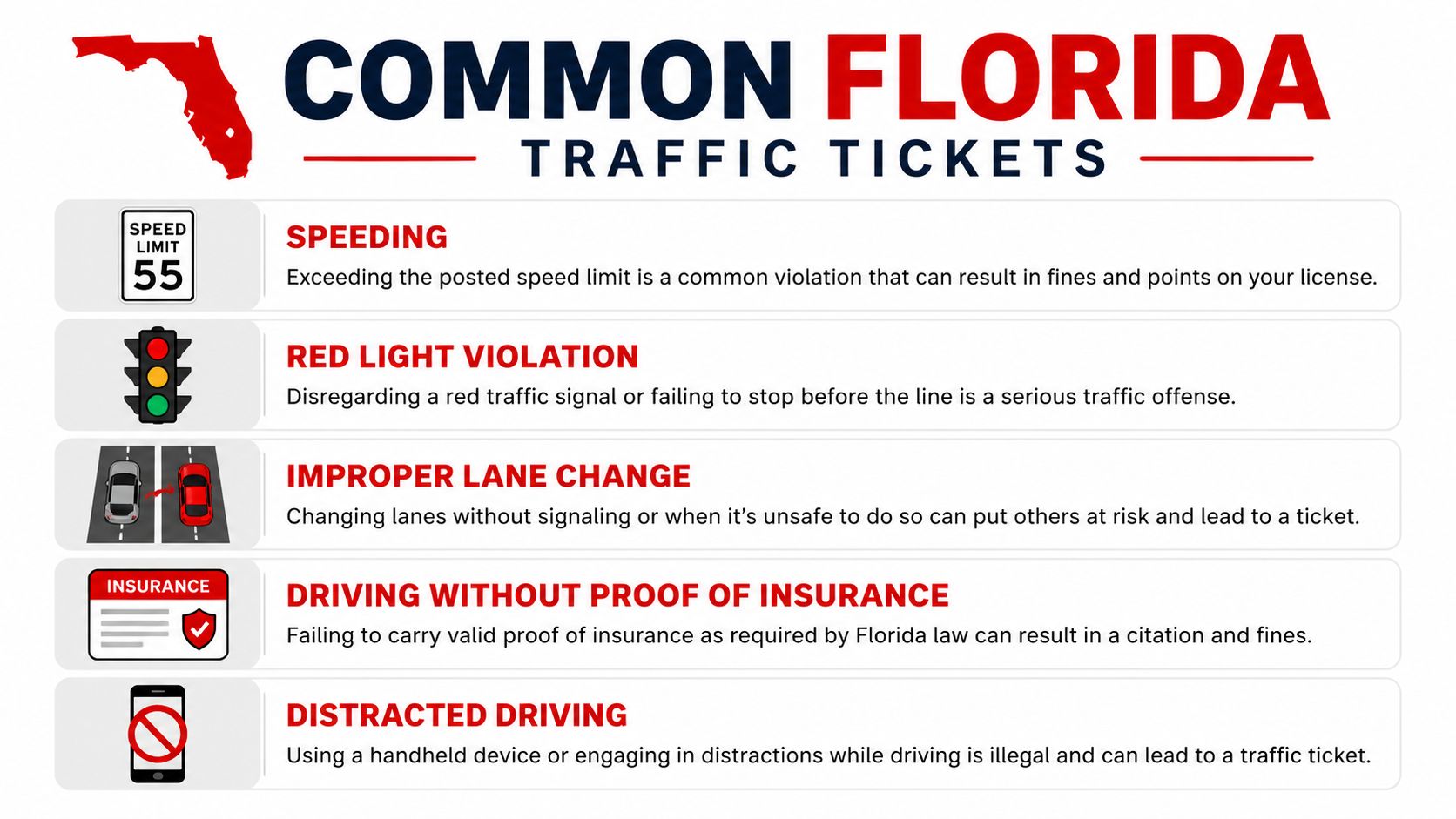
Which violations put points pressure on your license
Florida uses a point system that can affect your license after a formal conviction. According to this discussion of traffic violations and points, speeding can carry 1 to 4 points, failure to obey traffic signals carries 3 points, and passing a stopped school bus carries 4 points. The same source states that accumulating 12 points in 12 months triggers a license suspension.
That’s why ticket type matters. Some citations are annoying. Others are dangerous to your driving privilege.
A quick reference for common Florida citations
Speeding
Florida speeding cases often cite Florida Statute 316.183 or 316.187. These are some of the most common tickets because they are easy to issue and easy for drivers to underestimate.
Common defense issues can include:
Whether the officer identified the correct vehicle
Whether pace, radar, or laser evidence is clear
Whether the stop notes are precise enough to support the charge
Red light and traffic signal violations
These often fall under laws requiring obedience to traffic control devices. They may look simple on paper, but there are still factual issues worth reviewing, especially where visibility, timing, lane position, or road layout matter.
Careless driving
This is one of the broadest allegations in Chapter 316. It often depends on an officer’s interpretation of your driving behavior. Broad allegations create room for challenge because broad allegations often rely on judgment calls.
Improper lane change or failure to maintain lane
These citations can arise during congested traffic, highway merges, or after an officer claims your movement was unsafe. Cases like this often turn on details. Dashcam footage, roadway markings, and the officer’s vantage point can matter.
Driving without proof of insurance or registration in possession
These may be correctable in some situations, but you should never assume they are harmless. Administrative-looking tickets can still waste time, create compliance issues, and complicate your record if handled poorly.
Some tickets are won on law. Others are won on details. Most are lost because the driver gave up too early.
If you want a cleaner breakdown of how Florida classifies citations, read this explanation of what is a traffic infraction. The label on the ticket matters less than the effect it has on your record and your license.
What Is the Process for Handling a Ticket in Court
Paying a ticket is the fastest way to lose control of the case. Court gives you a chance to protect your record, challenge the officer’s version of events, and push for a better result. That chance matters most when a real lawyer is handling the file, not an app that turns your case into a support ticket.
What happens after you decide to fight
Once you contest the ticket, the case moves into county court. That does not mean chaos. It means deadlines, paperwork, officer proof, and opportunities to improve the outcome if someone competent is paying attention.
The usual sequence looks like this:
You respond before the deadline. Miss it, and you create problems that were easy to avoid.
The court opens the case and sets it for handling. That can mean a hearing date, a calendar call, or an attorney appearance.
The citation and supporting records get reviewed. During this review, errors, missing details, and weak observations start to matter.
Your lawyer can speak with the prosecutor or hearing officer. Good results often start before anyone walks into a courtroom.
The case ends through dismissal, amendment, withholding, school, or a contested hearing. The right target is the result that does the least damage to your record.
Paperwork matters more than drivers realize. If you want context for why signatures, notices, and certifications can affect the case, read what makes a document legally binding. Traffic court runs on documents. Bad documents create openings.
What the court process usually looks like
Many drivers assume fighting a ticket means taking off work, sitting on a hard bench for hours, and speaking in court alone. That is exactly what happens when you handle it badly.
A lawyer-led defense changes the process. Your attorney tracks the dates, reviews the charging paperwork, looks for defects, and handles court communication directly. You get actual legal judgment and actual updates, not canned status messages from a ticket app built to process volume.
If you have never been through this before, this guide on what to expect in traffic court in Florida gives a clear overview of the setting and procedure.
Court rewards preparation. Drivers get better outcomes when a lawyer studies the file early, spots weaknesses, and speaks for them directly.
Later in the process, drivers often benefit from seeing how hearings work in practice.
The court process is manageable. What matters is who is managing it. If you hand your case to an automated service, do not expect strategic advice or direct attorney access when the facts get messy. If you want the best chance at a dismissal, reduction, or cleaner resolution, put a lawyer in front of the case early.
Why Should You Always Fight a Florida Traffic Ticket
Because paying gives you certainty, but it’s the wrong kind of certainty.
You know what paying does. It closes the file fast. It also tends to close off your chance to improve the result. If the charge can be reduced, dismissed, or handled in a way that better protects your record, that opportunity usually comes from contesting the case, not surrendering to it.
Paying closes doors
Once you pay, you’re usually done for the wrong reasons. You’ve traded speed for a result that may follow you into insurance reviews, employer checks, or future point accumulation.
That matters even more if your ticket involves:
A moving violation: Those are the ones insurers and licensing systems care about most.
A work-related vehicle issue: Delivery, field service, and transportation jobs depend on clean records.
A prior citation history: One more entry can matter more than the first one did.
A broad officer judgment call: Careless driving and similar allegations often deserve scrutiny.
There’s another practical issue. Drivers who pay quickly often never investigate whether the officer’s observations were weak, whether the location details were sloppy, or whether the charge selected fits the facts.
Fighting preserves leverage
When you contest a Florida traffic ticket, you preserve room to negotiate, challenge, and improve your position. That advantage is valuable even when a full dismissal isn’t guaranteed.
A strategic defense can focus on:
Weak factual support: The officer’s description may be vague or inconsistent.
Proof issues: Some allegations sound stronger than the file presents.
Reduction opportunities: A less harmful resolution can still protect your record better than payment.
Life impact: Judges and prosecutors may not care about convenience, but the legal posture of the case still matters.
The goal isn’t to “beat the system.” The goal is to avoid accepting avoidable damage.
If you searched ct traffic ticket, you may have been looking for a generic answer. You need a more disciplined one. In Florida, under Chapter 316, a ticket should be treated as a record-protection problem, not a minor expense. Fight early. Fight intelligently. Protect your license first.
How Is a Lawyer-Led Defense Different from an App
Treat this choice seriously. The service you hire can affect whether your ticket gets careful legal attention or gets pushed through a high-volume system built for speed.
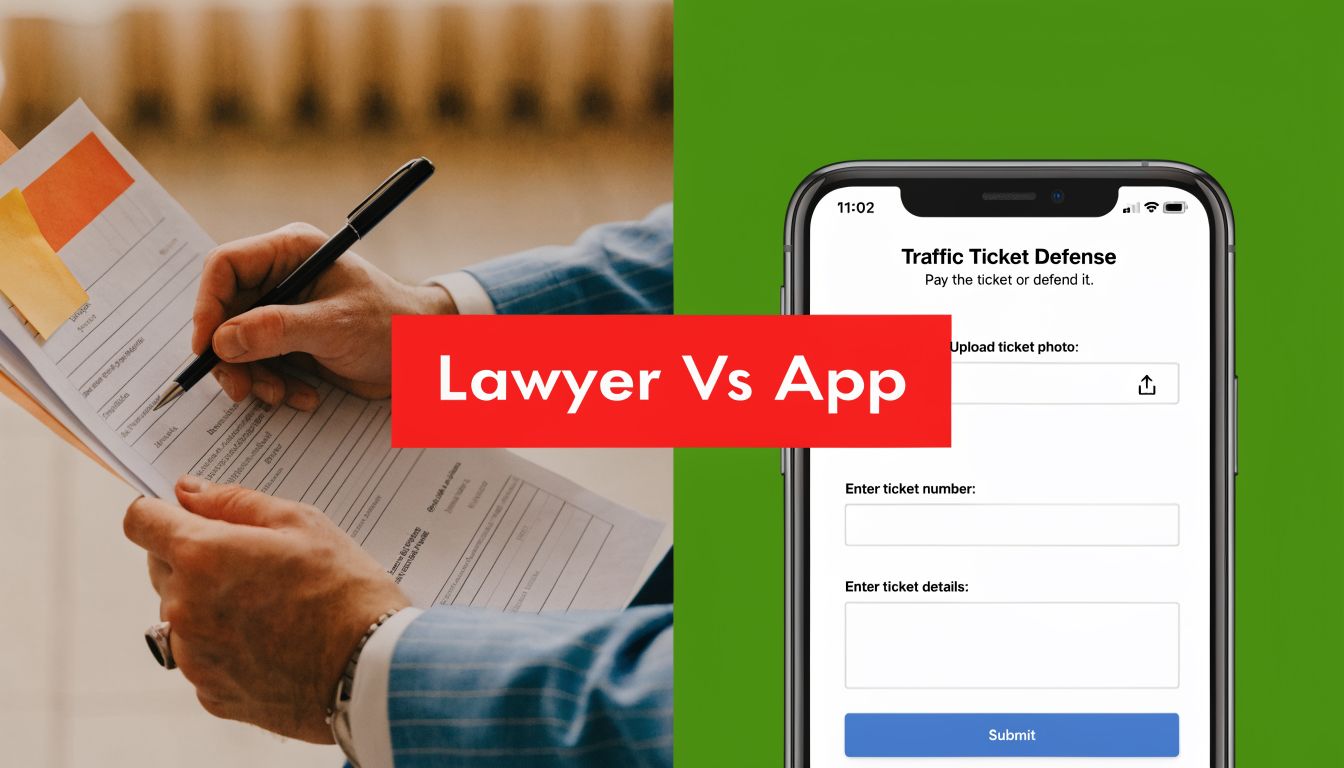
Why direct attorney access changes outcomes
A lawyer-led defense means an attorney reviews your case, spots weak points, and makes judgment calls based on your facts, your driving record, and your court. That is the difference. You are not buying data collection. You are hiring legal analysis.
Direct communication with your attorney matters because traffic cases are won and lost on specifics. The wording of the citation matters. What the officer left out matters. Local court habits matter. Your job, license status, and prior history can matter. An app cannot weigh those facts the way a lawyer can.
Confidentiality matters too. If you need to discuss facts that could hurt you, understand how Attorney-Client Privilege works. A lawyer gives you legal protection around those conversations. Generic app support does not.
What automated ticket services can’t do
Apps are built to intake, sort, and process. That model works for volume. It does not work well for nuance.
Here is the practical difference:
Lawyer-led defense | Automated ticket service |
|---|---|
Examines the citation for legal and factual weaknesses | Processes your answers through a standard workflow |
Explains risk based on your record and goals | Sends general updates and canned guidance |
Adjusts strategy to the local court and judge | Relies on a repeatable system built for scale |
Negotiates with judgment | Follows a preset process |
Lets you communicate with your attorney directly | Often filters communication through support staff or software |
That last point is a big one. Many drivers assume they hired a defense lawyer, then find out they are dealing with a case manager, a portal, or a help desk. By then, the case is already moving.
An experienced lawyer asks better questions:
Did the officer charge the wrong violation?
Does the report support the allegation?
Is there a cleaner resolution available for this driver?
Are there hidden consequences that make this ticket more dangerous than it looks?
Those questions shape strategy. Strategy protects your record.
If you want a side-by-side comparison, read this explanation of why choose a local lawyer over apps. The short version is simple. Convenience is not representation.
You should expect direct answers, legal judgment, and a lawyer who can speak for you in a way a ticket app never will. If a service cannot put you in touch with the attorney handling your case, that is a warning sign.