Criminal Defense Lawyer Gainesville FL: Protect Your Rights
Facing charges? Get immediate help from a top criminal defense lawyer gainesville fl. Fight for your rights. Free, confidential consultation with Ticket Shield.

You were arrested, cited, or told to appear in court in Gainesville. Your phone is blowing up. You're worried about jail, your license, your job, your record, and what happens next. That reaction is normal. What matters now is what you do in the next few hours, not what you wish you had done before the stop.
A criminal case moves fast once the state starts pushing it. Confusion is expensive. Silence at the wrong time is dangerous. Delay can make a manageable problem much harder to contain.
Table of Contents
Facing Criminal Charges in Gainesville? Your Next Move Is Critical
What Charges Require a Criminal Defense Lawyer in Gainesville?
Facing Criminal Charges in Gainesville? Your Next Move Is Critical
If you've been charged in Gainesville, get a real defense lawyer involved now. Don't wait, don't explain, and don't trust automated apps. In a criminal case, direct access to your attorney by phone or text can protect your license, record, and freedom.
When you need a criminal defense lawyer in Gainesville, FL, you're probably in crisis already. Maybe you were booked and released. Maybe you got a notice to appear. Maybe you think the charge is minor and you can “clear it up” later. That thinking gets people hurt.
Criminal charges don't stay neatly in one box. They spread into the rest of your life. Your job sees them. Schools care about them. Licensing boards care about them. Insurance companies care about them. Judges care about what you said before you hired counsel.
What should you do right now?
Start with control. Not panic.
Stop talking about the case: Don't explain it to police, investigators, friends, coworkers, or on social media.
Save every document: Keep your citation, bond paperwork, court notice, towing papers, and any property receipt.
Write down the facts: Record the timeline while it's still fresh. Where you were, what was said, who was there, and what officers did.
Get legal advice fast: A prompt attorney review can identify mistakes, deadlines, and defense issues before they get buried.
If your case has any domestic component, accusations can escalate quickly and affect charging decisions, contact restrictions, and your family life. A useful outside resource is Foley Family Law's domestic violence insights, especially if law enforcement was involved in a family or relationship dispute.
Immediate advice: Your case is too important to hand to a chatbot, an intake funnel, or a rotating call center.
You need a lawyer who knows what happened to you. Not a system that treats you like a file number. The difference matters when facts change, witnesses appear, police reports conflict, or the state overcharges the case.
A real consultation should feel direct, not scripted. If you want to understand what that conversation should cover, review this guide to a criminal defense attorney consultation.
Why is personal communication so important?
Because your defense comes from details. Tiny details.
An officer's wording. A witness's timeline. A medical explanation. A reason for a driving pattern. A lawful basis to challenge the stop. Those things don't surface through canned messages or automated apps. They surface when you can call or text your lawyer and get actual legal judgment back.
What Charges Require a Criminal Defense Lawyer in Gainesville?
A lot more charges require counsel than people think. Some cases look “small” at first and become expensive, embarrassing, and hard to clean up later. If the charge can lead to jail, probation, license consequences, a criminal record, or a serious plea decision, you need a lawyer.
Florida traffic-related criminal cases are a common trap. People assume they're “just tickets.” Some are not. Florida Statute § 316.193 covers Driving Under the Influence, and that charge can trigger both criminal exposure and license problems at the same time.

Which cases are more serious than people think?
Common examples include:
DUI charges: These are urgent because Florida imposes a separate administrative license problem after arrest. Under Florida law, a person arrested for DUI has only 10 days to request a formal review hearing to challenge an administrative suspension of the driver's license, according to Justia's Gainesville criminal-law directory page.
Reckless driving and criminal traffic offenses: These can carry consequences far beyond a routine citation and may justify a more aggressive defense review.
Drug possession cases: Even when the facts seem simple, search issues, statements, and constructive possession arguments can decide everything.
Assault, battery, and domestic-related accusations: These cases often turn on witness credibility, conflicting accounts, and fast-moving no-contact conditions.
Theft, fraud, and probation-related allegations: These can affect employment and future court treatment quickly.
If you're unsure whether your charge is civil, criminal, or traffic-criminal, this overview of what is a criminal traffic violation is a useful starting point.
A “minor” charge is still dangerous if it gives the state leverage over your record, your license, or your credibility in court.
Florida Misdemeanor vs. Felony Charges at a Glance
Factor | Misdemeanor | Felony |
|---|---|---|
General severity | Less serious than a felony, but still criminal | More serious criminal charge |
Typical impact | Can still affect work, school, licensing, and record | Can carry much harsher long-term consequences |
Possible penalties | May involve jail, probation, fines, and other court conditions | May involve prison exposure, probation, fines, and major collateral consequences |
Court stakes | Often treated casually by defendants who underestimate risk | Usually recognized immediately as high-risk |
Defense need | Immediate legal help is still important | Immediate legal help is non-negotiable |
Why does the classification matter?
Because it changes negotiation pressure, court posture, and what's at stake if you guess wrong. A misdemeanor can still disrupt your life. A felony can reshape it.
Gainesville cases also sit inside a larger Florida criminal-defense environment. That matters because courts, prosecutors, and enforcement patterns are part of an established system. You want counsel who treats your case like a legal emergency, not an intake volume problem.
How Does the Alachua County Court Process Work?
The court process feels confusing until you see the sequence. Once you understand the path, you can stop reacting emotionally and start making better decisions. In Gainesville, your case may move through familiar stages at the local courthouse, and each one creates risk if nobody is steering the defense.
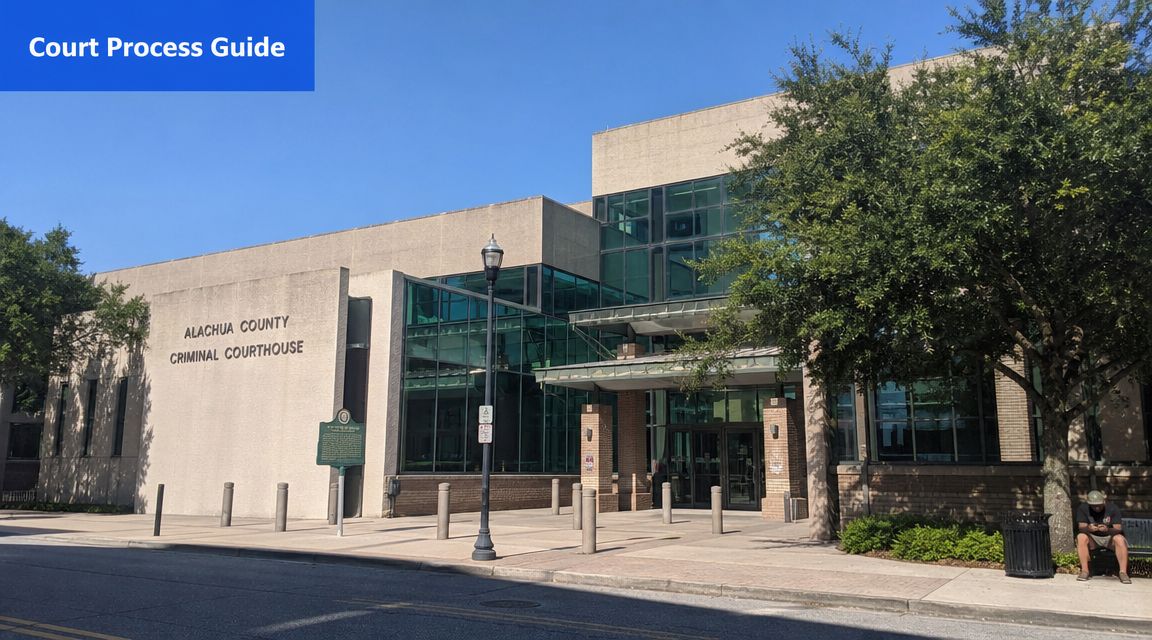
Gainesville is not an isolated legal outpost. It has a mature defense environment tied to major legal institutions, including the University of Florida and nearby state and federal courts, as noted by this Gainesville federal defense market overview. That local legal density matters because it means your lawyer should understand the courtroom culture, not just the statute book.
What happens first after an arrest?
Usually, the early phase includes release conditions, a first appearance in some cases, and then formal court settings that start moving the file toward resolution or trial. You may hear terms like arraignment, pretrial, motion calendar, or status conference. Don't let the labels mislead you. Each hearing has consequences.
A quick roadmap looks like this:
Arrest or notice to appear: The case enters the system.
First appearance or release conditions: A judge may address bond and restrictions.
Arraignment: The formal reading stage where plea choices matter.
Pretrial phase: Lawyers review evidence, challenge weak points, and negotiate.
Motions or trial: The case is tested, narrowed, resolved, or fought.
If arraignment is coming up, read this plain-English guide on what happens at an arraignment hearing before you walk in blind.
Where does a lawyer change the outcome?
At every stage, but especially before you speak, plead, or agree to conditions you don't fully understand.
At the start: Counsel can protect you from making admissions that become evidence.
Before arraignment: The defense can assess paperwork, charges, and possible waiver issues.
During pretrial: Weaknesses get exposed. Witness problems, legal defects, and suppression issues matter here.
In negotiations: Prosecutors respond differently when the defense is prepared, specific, and ready to litigate.
At trial: If trial is necessary, preparation from the beginning matters more than courtroom theatrics at the end.
Courts move on schedules. Your life does not. A good defense lawyer keeps the court from defining your case before your side is fully developed.
Local experience matters, but statewide range matters too. A firm that handles criminal and traffic-related cases across Florida courts, including places like Miami's Richard E. Gerstein Justice Building, tends to understand how different prosecutors and judges frame risk, influence, and settlement.
Why Must You Speak Directly to Your Attorney?
Because criminal defense is not customer support. It's judgment under pressure.
If your case is being filtered through assistants, sales staff, or an app dashboard, your defense loses texture. The facts get flattened. Urgent questions get delayed. Important details never reach the person making strategic decisions.
What gets lost when a middleman handles your case?
A lot.
Timing: You may learn about a problem too late to fix it cleanly.
Context: The lawyer misses your tone, memory, concerns, and clarifying details.
Accuracy: Messages passed through multiple people change. That hurts strategy.
Trust: You need someone you can ask hard questions without feeling processed.
Automated apps and ticket-mill style services are built for volume. Criminal cases are built on nuance. That mismatch can cost you.
Your defense gets stronger when your lawyer hears your facts directly, asks follow-up questions, and adjusts strategy in real time.
Why direct contact changes defense strategy
A direct relationship lets your lawyer spot issues early. Maybe the officer's report uses language that doesn't match what happened. Maybe a passenger saw the stop differently. Maybe a medical condition explains what police called impairment. Maybe a witness text you after the incident. Those are not side notes. They can become the defense.
Direct communication also helps with discipline. A good lawyer can tell you what not to do, who not to call, what not to post, and how to handle contact from law enforcement. That advice is only useful if you can get it quickly.
If a firm can't tell you who will answer your questions, who will appear for you, and how you'll communicate once you hire them, keep looking.
What Questions Should You Ask Before Hiring a Lawyer?
You don't need a polished sales pitch. You need straight answers. Ask hard questions and listen for whether the lawyer responds with specifics or vague reassurance.
Which answers should make you cautious?
Start with these:
Will I speak directly with you during my case? If the answer sounds evasive, that's a warning sign.
Have you handled cases like mine in Alachua County? Local familiarity helps with procedure, expectations, and practical judgment.
What is your communication policy? You need to know how updates happen and who gives them.
What are the immediate risks in my case? A real lawyer should identify actual danger points, not generic fears.
What documents do you need from me today? Strong defense work starts with prompt review.
Do you handle criminal traffic matters and DUI issues under Chapter 316? That matters in Florida because many serious driving-related charges sit inside that statutory framework.
What happens if law enforcement contacts me again? The answer should be clear and protective.
For a more complete checklist, review these questions to ask your attorney before you sign anything.
What should a strong consultation give you?
It should give you clarity. Not false comfort. Not pressure.
Look for these things during the call or meeting:
A concrete first-step plan: What happens immediately after you hire counsel?
A realistic view of exposure: Not guarantees. Not fear tactics. Actual legal judgment.
A communication path: You should know how to reach the lawyer with urgent updates.
Case-specific questions: If the lawyer isn't drilling into facts, they aren't building strategy.
A consultation should leave you feeling more protected, not more confused. If you leave with the sense that your case will be pushed through a machine, trust that instinct.
How Does Ticket Shield Build Your Defense Strategy?
A proper defense starts with pressure-testing the state's version of events. That means reading the report carefully, comparing it to your account, and identifying where the government may have overreached, assumed facts, or skipped legal requirements.
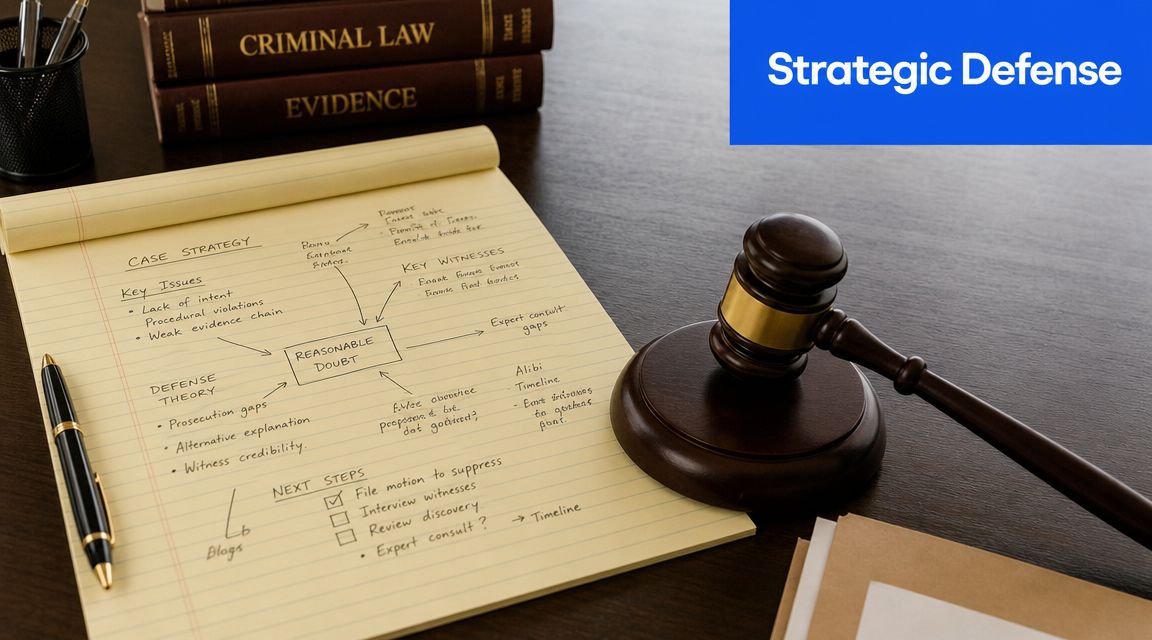
What does a real defense review look like?
It usually includes several tracks at once:
Stop analysis: Was there a lawful basis for the stop, detention, or search?
Evidence review: Are the reports consistent? Do bodycam, witness accounts, or physical evidence tell a different story?
Statement control: Did police obtain statements in a way that creates legal challenges?
Charge scrutiny: Is the state charging the right offense, or the most aggressive one it can support on paper?
This is also where motions matter. If evidence was obtained unlawfully, your lawyer may challenge whether it should be used at all. If the state's proof is weak, negotiation becomes stronger because the prosecutor knows the case may not hold up well under litigation pressure.
What should happen after the first call?
You should not be left guessing. A serious firm should move the file forward, gather records, and identify immediate deadlines and advantageous points. Ticket Shield, PLLC handles Florida traffic, DUI, and serious traffic-related criminal matters with a lawyer-led model where clients communicate directly with counsel by phone or text.
Working rule: Strategy is not waiting for court. Strategy starts the moment the defense has facts, documents, and a timeline.
Good criminal defense is active. It challenges assumptions early. It protects your record where possible. It fights for reduced charges, dismissals, better resolutions, or trial readiness when the state refuses to be reasonable.
Your Questions About Criminal Defense in Gainesville
You probably have the same questions nearly everyone has after an arrest. The answers depend on the facts, but some rules are clear.
Will this stay on my record?
It can. That's one reason early defense matters so much. Charges, pleas, adjudication issues, and final outcomes can all affect what follows you later. Don't assume a first offense or a seemingly low-level case will disappear on its own.
Can I avoid going to court?
Sometimes, depending on the charge, procedure, and what the judge requires. In some cases, counsel can handle much of the court process for you. In others, your appearance may be necessary. Get that answer from your own lawyer, not from friends, social media, or someone who had a different case in a different county.
What if police contact me again?
Do not try to “clear things up” yourself. Do not consent to an interview because you think cooperation will make this go away. Politely decline and tell them your lawyer will speak for you. Then stop talking.
How much does a criminal defense lawyer cost?
The question is what it costs you not to defend the case correctly. A bad plea, a damaged record, a suspended license, missed work, or a preventable conviction usually costs more than prompt legal help. Ask for a clear fee structure and a direct explanation of what representation includes.
What should I bring to the first consultation?
Bring everything.
Your charging documents: Citation, complaint, notice to appear, bond papers.
Your timeline: A written summary of what happened before, during, and after the arrest.
Your evidence: Photos, texts, videos, names of witnesses, medical information if relevant.
Your concerns: Job risk, school issues, immigration concerns, license problems, or prior cases.
What is the smartest move today?
Get legal advice before you make another decision. Not after you miss court. Not after you post about it. Not after you call the officer. Today.
If you're looking for a criminal defense lawyer in Gainesville, FL, focus on direct access, real strategy, and Florida-specific experience under Chapter 316 where traffic-related criminal exposure is involved. You need someone who can protect your license, your record, and your options from the start.
If you've been charged and want a lawyer-led defense focused on protecting your record and pursuing the No Points goal where available, visit Ticket Shield, PLLC for a free consultation.