What Is Fleeing and Eluding in Florida
What is fleeing and eluding in Florida? It usually means willfully refusing a lawful police stop, and every version is a felony.
In plain English, fleeing means driving away instead of stopping, and eluding police means avoiding an officer after the officer has clearly signaled you to pull over. In Florida, fleeing and eluding is the crime of willfully refusing to stop your vehicle—or stopping and then driving off again—after a law enforcement officer in an authorized patrol vehicle gives a lawful order to stop under Florida Statute § 316.1935.
A quick glossary helps clear up the confusion:
Fleeing: continuing to drive after a lawful signal to stop.
Eluding police: avoiding or trying to get away from the officer rather than complying.
Not the same thing as finding a safe place to stop: slowing down, turning on hazard lights, and heading to a nearby well-lit location can support a safety explanation instead of criminal intent.
In our review of Florida criminal traffic cases, this charge is often misunderstood in one of two ways: drivers assume they must have been speeding or driving recklessly to be charged, or they assume a short delay in stopping automatically counts as guilt. Neither point is right. The key issue is usually willfulness—whether the state can prove a deliberate choice not to stop.
How We Evaluated Florida Fleeing and Eluding Law for This Guide
We built this guide from three sources: the text of Florida Statute § 316.1935, Florida driver-license consequence rules from the Florida Department of Highway Safety and Motor Vehicles, and recurring factual disputes we see when reviewing criminal traffic defense matters.
What we look for first is not the original traffic reason for the stop. We look at the signal itself: Was the vehicle clearly marked? Was the officer in agency uniform? Were lights and siren used in the way the statute requires? Those details often decide whether the state can prove the charge as filed.
We also compare the charging level to the statute subsection instead of relying on generalized summaries. That matters because fleeing and eluding cases are easy to overstate online. For readers who want broader law-firm marketing guidance rather than criminal law analysis, Digital Skyrocket's page covers a different topic entirely.
The Core Elements of a Fleeing and Eluding Charge
Unlike a speeding ticket where the only real question is "how fast were you going?", a fleeing and eluding charge is far more nuanced. It’s a criminal traffic offense, which means your case is kicked out of traffic court and straight into the criminal justice system. To get a conviction, the prosecutor has a high bar to clear—they must prove every single element of the crime beyond a reasonable doubt.
Breaking down these elements is the first step in crafting a defense. If the state's attorney can't prove each of these points, their case falls apart.
Willful Intent to Flee
The absolute heart of the charge is "willful" intent. This isn't about a simple mistake. The prosecutor must prove you knew an officer was trying to pull you over and you made the conscious, deliberate choice to keep going and try to get away.
Maybe you didn't hear the siren because the radio was blasting, or you didn't see the lights right away in a sea of traffic. Those scenarios might not meet the "willful" standard. The key is that the act of fleeing has to be a purposeful one.
What Does "Willful" Mean in Practice? In the eyes of the law, "willful" means you did something on purpose, fully aware of what you were doing. It’s the difference between a driver who is confused and looking for a safe spot to pull over versus one who guns the engine and starts weaving through lanes to escape.
A Lawful Order to Stop
The whole thing starts with the officer. They must have given a "lawful order" to stop. This order has to come from someone you knew—or should have reasonably known—was a police officer. It can’t be just anyone with a flashing light.
Several things must be in place to make the order lawful:
Lights and Siren: The officer’s patrol car must have its emergency lights and siren going.
Proper ID: The officer needs to be in uniform, and their vehicle must be clearly marked as belonging to law enforcement.
Clear Signal: The signal to stop has to be something any reasonable person would understand.
If the officer was in an unmarked car, wasn't in uniform, or only flipped on their lights without the siren, it opens the door to argue that the order wasn't clear or lawful. The state has to prove you knew, without a doubt, that a real cop was telling you to pull over. Facing a charge like this can be intimidating, but understanding the basics of traffic criminal law is where you start to regain control.
Our practice focuses on traffic and DUI defense across Florida, and our goal is to protect your license and record.
Attorney Advertisement. Office in Broward. Past results do not guarantee future outcomes. Submitting information via our forms does not create an attorney-client relationship.
What Does Eluding Mean in Police Terms?
In police terms, eluding means avoiding a stop after an officer has clearly directed a driver to pull over.
The word itself is broader than criminal law. Major dictionaries define elude as escaping, avoiding, or slipping away, often by speed or skill; they also note that ideas, facts, and explanations can elude understanding, which is why the word appears in both legal and everyday writing. See the definitions in Cambridge Dictionary and Merriam-Webster.
For Florida criminal charges, though, the important meaning is the police-stop meaning. A driver does not have to engage in a Hollywood-style chase for the issue to arise. In our experience, the factual dispute is often much smaller: whether the driver recognized a lawful police signal and intentionally kept going anyway.
That is also why drivers should not confuse eluding with a brief, explainable delay. If you slow down, use your hazards, and continue carefully to a safer stopping point, those facts can matter. We regularly look for dashboard video, dispatch timing, and the distance traveled before the stop because that evidence often tells a clearer story better than a one-line allegation in a report.
The Four Degrees of Fleeing and Eluding
Florida does not treat every fleeing case the same. The statute creates a ladder of offenses under § 316.1935, starting with the base felony and moving upward when added danger or injury is alleged. The cleanest way to read the law is by subsection, not by labels people use loosely online.
Florida charge ladder under § 316.1935
Statute subsection | What the prosecutor must prove | Felony degree | Maximum prison exposure | What raises the charge to this level |
|---|---|---|---|---|
§ 316.1935(1) | You willfully refused to stop, or stopped and then fled, after an officer ordered you to stop | Third-degree felony | 5 years | Base offense; no added reckless-driving allegation required |
§ 316.1935(2) | Same refusal to stop, plus the officer was in an authorized law enforcement patrol vehicle with agency insignia and other jurisdictional markings prominently displayed, with siren and lights activated | Third-degree felony | 5 years | Proof of a clearly marked patrol vehicle and activated siren/lights |
§ 316.1935(3)(a) | While fleeing under subsection (2), you drove at high speed or in a manner showing wanton disregard for safety | Second-degree felony | 15 years | High speed or reckless driving during the flight |
§ 316.1935(3)(b) | While fleeing under subsection (2), you drove at high speed or with wanton disregard and caused serious bodily injury or death | First-degree felony | 30 years | Serious bodily injury or death resulting from the flight |
§ 316.1935(4) | You fled to avoid arrest after committing another forcible felony | First-degree felony | 30 years | The fleeing was tied to avoiding arrest for a forcible felony |
Base offense: refusal to stop
Under § 316.1935(1), the state must prove a willful refusal to stop after an officer's order, or that you stopped and then drove off anyway. This is a third-degree felony punishable by up to 5 years in prison and up to a $5,000 fine under Florida's general felony sentencing provisions in § 775.082 and § 775.083.
This subsection is why the plain-language definition matters. The crime is not the original lane change, speed, or tag issue. It is the alleged decision not to comply with the stop.
Marked patrol vehicle with lights and siren
Under § 316.1935(2), the state must prove the stop involved an authorized law enforcement patrol vehicle with agency insignia and other jurisdictional markings prominently displayed, and with sirens and lights activated. This is also a third-degree felony, with up to 5 years in prison.
That “clearly marked patrol vehicle” element matters in contested cases because it goes directly to notice. We usually compare the report to body-cam, dash-cam, and photos of the vehicle involved. If the markings were not obvious, the uniform was not visible, or the signal was ambiguous, the state's proof can weaken fast.
High speed or reckless manner
Under § 316.1935(3)(a), the charge becomes a second-degree felony if, during the flight described above, the driver operates the vehicle at high speed or in a manner demonstrating a wanton disregard for the safety of persons or property. Maximum exposure rises to 15 years in prison and a $10,000 fine under § 775.082 and § 775.083.
Here, prosecutors usually rely on speed estimates, traffic conditions, lane movements, red-light allegations, and any collision risk. One issue we watch closely is whether the evidence really shows wanton disregard or a panicked but short-lived failure to stop.
Serious bodily injury or death
Under § 316.1935(3)(b), the offense becomes a first-degree felony when the high-speed or wanton flight causes serious bodily injury or death. Maximum exposure is 30 years in prison and a $10,000 fine under Florida's felony statutes, and the subsection includes a 3-year mandatory minimum term.
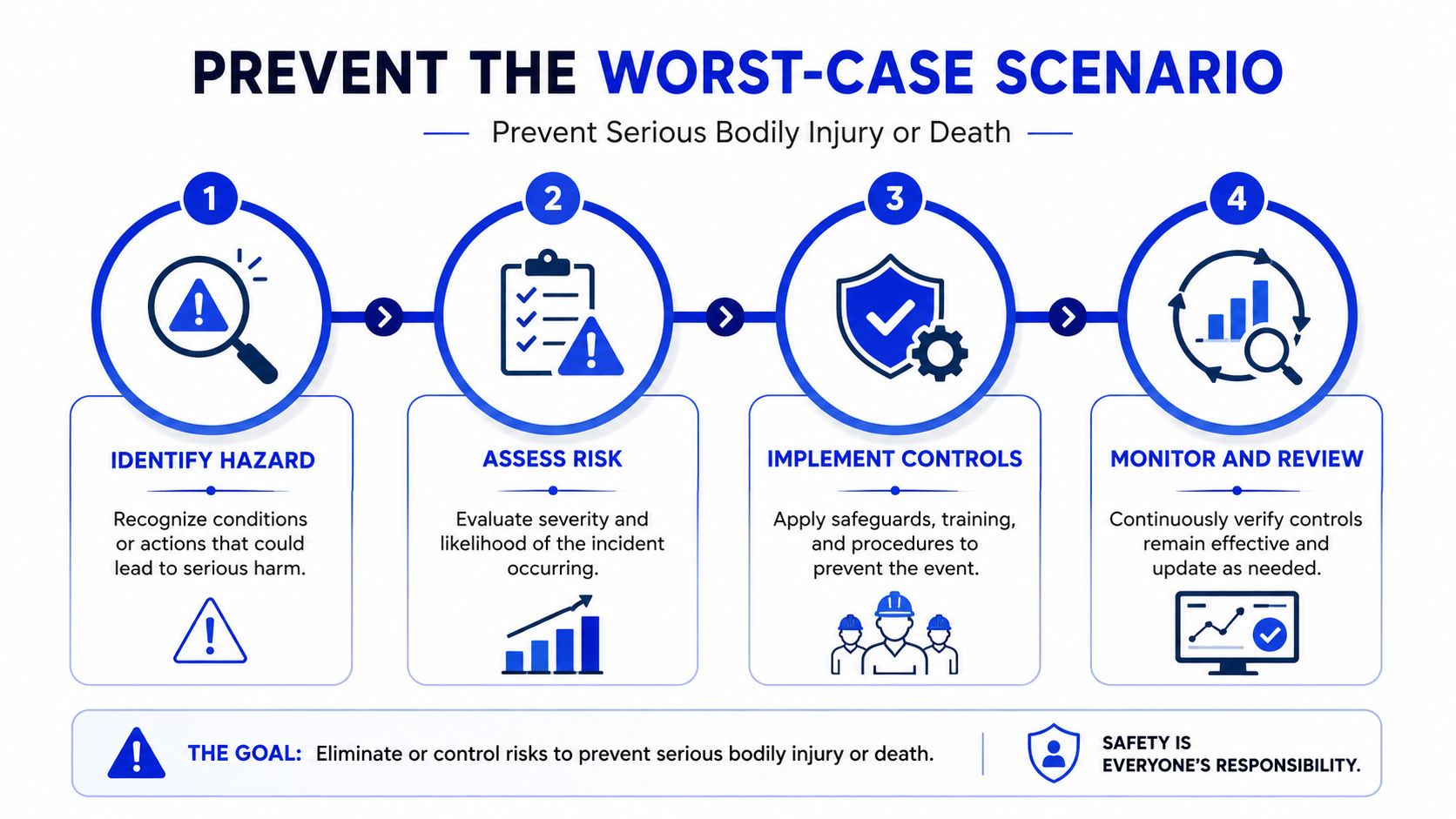
This is the most severe version charged from a pursuit itself because the state alleges not only flight, but catastrophic harm caused during that flight.
Fleeing to avoid arrest for another forcible felony
Under § 316.1935(4), fleeing to avoid arrest after committing a forcible felony is also a first-degree felony, punishable by up to 30 years in prison. In practice, this charge appears alongside the underlying felony allegation, and sentencing exposure can expand quickly because the state is not treating the driving incident as an isolated traffic matter.
This infographic helps visualize how fleeing and eluding is classified as a serious criminal offense rooted in willful defiance.
The visual hierarchy underscores that the core of the charge is not just a traffic violation but a deliberate choice to disobey a lawful order, which is why the legal system treats it with such gravity.
Penalties and Long-Term Consequences You Could Face
A Florida fleeing and eluding conviction brings two separate problems at once: criminal sentencing exposure and mandatory driver-license consequences. The exact outcome depends on the subsection charged, the person's record, the facts alleged, and how the case is resolved, but every version of this offense is treated as a felony under Florida law.
Direct Legal Penalties in Florida
Here is the offense ladder harmonized with the statute and Florida felony penalty provisions.
Potential Penalties for Fleeing and Eluding in Florida
Offense | Statute | Felony Degree | Maximum Prison Time | Maximum Fine | License Consequence |
|---|---|---|---|---|---|
Refusal to stop / stop then flee | § 316.1935(1) | Third-degree felony | 5 years | $5,000 | Revocation required under Florida law |
Marked patrol vehicle with lights and siren | § 316.1935(2) | Third-degree felony | 5 years | $5,000 | Revocation required under Florida law |
High speed or wanton disregard | § 316.1935(3)(a) | Second-degree felony | 15 years | $10,000 | Revocation required under Florida law |
Serious bodily injury or death | § 316.1935(3)(b) | First-degree felony | 30 years | $10,000 | Revocation required under Florida law |
Fleeing to avoid arrest for forcible felony | § 316.1935(4) | First-degree felony | 30 years | $10,000 | Revocation required under Florida law |
Florida separately requires license revocation for fleeing and eluding convictions. The Florida Driver Handbook lists fleeing or attempting to elude law enforcement as an offense carrying a mandatory revocation, generally in the 1-to-5-year range depending on the offense and record.
We tell clients not to focus only on the top prison number. In many cases, the immediate practical crisis is the license loss, because it affects work, school, medical appointments, and family responsibilities long before the long-term record consequences are fully felt.
Offense | Felony Degree | Maximum Prison Time | Maximum Fine | Mandatory License Revocation |
|---|---|---|---|---|
Simple Fleeing | Third-Degree Felony | 5 years | $5,000 | 1-5 years |
With Lights & Sirens | Second-Degree Felony | 15 years | $10,000 | 1-5 years |
With High Speed/Reckless Driving | Second-Degree Felony | 15 years | $10,000 | 1-5 years |
Causing Serious Bodily Injury/Death | First-Degree Felony | 30 years | $15,000 | 1-5 years |
Prison, probation, and adjudication realities
Not every case ends in prison, but prison is legally available on the felony counts above, and the most serious injury-based charge carries a statutory mandatory minimum. Whether a person receives probation, jail, prison, or some negotiated reduction depends on the facts, score sheet, record, and weaknesses in the proof.
Adjudication also matters. A withhold is not guaranteed solely because a case does not involve injury, and a felony adjudication can have effects far beyond the courtroom. In our case reviews, one of the first strategic questions is whether the evidence supports the charged degree at all, because reducing the subsection can materially affect sentencing outcomes and collateral fallout.
The Impact of a Permanent Felony Record
Here is something often overlooked: the permanent felony criminal record. This is not a traffic violation that eventually falls off your history. A felony follows you for life, creating a potential roadblock to opportunities often taken for granted.
Just think about the doors a felony conviction can impact:
Employment: Most employers run background checks. A felony can mean disqualification for jobs, especially those that require a professional license, government clearance, or handling money.
Housing: Landlords almost always run background checks. A felony record makes it more difficult to find a safe, affordable place to live, as some property managers may not consider renting to you.
Education: Applying to college or for financial aid? You’ll be asked about your criminal history. A felony conviction can complicate admissions and limit your access to federal student loans and grants.
This one event can affect opportunities that are essential for building a stable future. To see how much more serious a felony is, you can learn more about how long traffic tickets stay on your record in Florida—the difference is significant.
Financial and personal fallout
The financial damage often starts immediately. Court costs, bond conditions, towing or impound expenses, missed work, and defense costs can pile up quickly even before the case is resolved. If there is a conviction, insurance underwriting can become a major issue because the offense signals a high-risk event involving law enforcement flight rather than an ordinary citation.
There are also collateral consequences that deserve careful caution. A felony on a background check can affect hiring and housing decisions, and non-citizens should treat any plea discussion with special care because criminal dispositions can trigger immigration consequences under federal law. The American Immigration Council explains why even seemingly routine criminal resolutions can carry immigration risk. That does not mean every fleeing case automatically leads to removal or the same immigration result; it means immigration-specific advice is essential before a plea.
These consequences show why it is important to address a fleeing and eluding charge. Our goal at TicketShield is to protect your license and your record by digging into every detail of your case. While past results don't guarantee future outcomes, a thorough defense is absolutely essential.
Attorney Advertisement. Office in Broward. Past results do not guarantee future outcomes. Submitting information via our forms does not create an attorney-client relationship.
How Fleeing Differs From Other Traffic Offenses
It's easy to lump "Fleeing and Eluding" in with other serious driving violations, but Florida law draws a very sharp distinction. What makes this charge so unique isn't just about how fast or dangerously someone was driving. It all boils down to one specific, willful act: ignoring a lawful order from a police officer to stop.
Most other traffic offenses focus on a driver's general disregard for public safety. Fleeing and eluding, however, is treated as a direct challenge to law enforcement's authority. This specific act of defiance is precisely why the penalties are so much more severe than for other traffic crimes.
Fleeing and Eluding vs. Reckless Driving
One of the most common points of confusion is the line between fleeing and eluding and reckless driving. While these two often happen together, they are legally separate offenses. It's entirely possible for a driver to be charged with both, but each charge addresses a different action.
Reckless Driving is all about the manner of driving. The law defines it as operating a vehicle with a "willful or wanton disregard" for the safety of others. Think of it as a broad offense against public safety—like weaving aggressively through highway traffic or driving at high speed through a school zone, even if no police officer is in sight.
Fleeing and Eluding, on the other hand, is defined by the intent to get away from law enforcement. The heart of the crime is the decision to ignore an officer's lights and siren. While this act frequently involves reckless driving, it doesn't have to. Continuing to drive at the speed limit after being signaled to pull over can still be considered fleeing.
The crucial element is intent. Reckless driving is about a dangerous disregard for safety. Fleeing and eluding is about a deliberate choice to defy a lawful command to stop.
For a deeper dive into how courts distinguish different types of driving behavior, you can explore the difference between careless and reckless driving in our detailed guide.
Fleeing and Eluding vs. Leaving the Scene of an Accident
Another offense that often gets mixed up with fleeing is Leaving the Scene of an Accident, better known as a hit-and-run. This charge applies when a driver involved in a crash fails to stop, exchange information, and offer help if needed.
Here’s a simple breakdown of how they differ:
The Trigger: A hit-and-run is always triggered by a collision. The crime is failing to meet your legal duties after the crash occurs. Fleeing and eluding is triggered by a lawful order to stop from police.
The Victim: In a hit-and-run, the primary offense is against the other driver or property owner involved in the accident. In a fleeing case, the offense is against the authority of law enforcement itself.
Picture this: a driver causes a fender-bender and immediately speeds off. If no police were around trying to pull them over, the charge would simply be leaving the scene. But, if an officer witnessed that crash, flipped on their lights, and then the driver took off, that person could be looking at charges for both offenses. The act of running from the accident scene became an act of running from the police.
Exploring Potential Defense Strategies

Getting charged with fleeing and eluding can feel overwhelming, but it's far from an automatic conviction. In Florida, the state carries the heavy burden of proving every single element of the crime beyond a reasonable doubt. A qualified attorney will dig into the evidence, police reports, and witness statements to find the weak spots in the prosecutor's case.
The right defense always boils down to the specific facts of your situation. That said, there are several common paths we explore when building a strong strategy. These defenses usually zero in on the core parts of the charge, like whether you intended to flee, if the stop was even legal, or if they have the right person behind the wheel.
Challenging the Element of Willful Intent
The entire fleeing and eluding charge hinges on one critical word: "willful." The prosecution has to prove you knew an officer was telling you to stop and you made a conscious, deliberate choice to take off anyway. If we can introduce reasonable doubt about what you were thinking, the state’s case can fall apart.
Think about these real-world scenarios that could suggest your actions weren't willful:
You didn't know. Was it even possible to see or hear the officer? With music playing, getting lost in heavy traffic, driving a loud car, or dealing with bad weather, it's easy to miss police lights and sirens right away.
A medical emergency took over. A sudden panic attack, seizure, or diabetic shock can make a driver act erratically or fail to respond to an officer’s signals. This isn't criminal intent; it's a medical crisis.
You were looking for a safe place to stop. Pulling over immediately on a dark, isolated road or a narrow highway shoulder isn't always the safest move. If you slowed down, activated your hazard lights, and drove to the nearest well-lit gas station, that's a reasonable safety measure, not an attempt to escape.
At the end of the day, a key question is what a reasonable person would have done in your shoes. If your actions were guided by confusion, fear, or a medical issue instead of a desire to get away, that directly punches a hole in the state's claim of willful defiance.
Questioning the Lawfulness of the Stop
For a fleeing charge to stick, the officer's initial command to stop has to be both lawful and clear. This means the officer needs to be in a clearly marked vehicle with their lights and sirens activated. If that order to pull over was confusing or ambiguous, you have the foundation for a very strong defense.
Imagine an officer in an unmarked car just briefly flashes their lights without a siren. You'd understandably be confused, maybe even scared, wondering if it's a real cop. That kind of ambiguity is a critical weak point for the prosecution. An experienced attorney will review the details of the initial stop to make sure every legal box was ticked.
It's also important to know how fleeing differs from other charges. See how to defend against a leaving the scene of an accident charge.
Arguing a Case of Mistaken Identity
Sometimes, the police have the right car but the wrong driver. This defense comes up frequently when a vehicle is registered to you, but you weren't the one driving when the incident happened.
For instance, if a friend or family member borrowed your car and decided to flee from the police, you could be the one wrongly identified as the culprit. A mistaken identity defense means we need to present evidence—like an alibi, witness testimony, or surveillance footage—to prove you weren't behind the wheel. The goal is to show that while a crime might have happened, you’re not the one who did it.
A thorough review of the case by a qualified attorney is essential to explore every possible angle. Our goal is to protect your license and your record.
Attorney Advertisement. Office in Broward. Past results do not guarantee future outcomes. Submitting information via our forms does not create an attorney-client relationship.
Common Questions About Fleeing & Eluding Charges
What does eluding mean in police terms?
It means avoiding a stop after an officer has clearly ordered you to pull over.
In Florida cases, the practical question is whether the driver recognized a lawful police signal and intentionally kept going. The word itself can also mean avoiding capture or escaping notice more generally, but in this context it refers to evading law enforcement during a traffic stop.
What is a felony eluding charge in Florida?
A felony eluding charge is a prosecution under § 316.1935 for willfully refusing to stop, or fleeing after stopping, when police lawfully signal you to pull over.
Florida treats every subsection discussed in this article as a felony, with severity ranging from a third-degree felony to a first-degree felony depending on the facts, including marked patrol vehicle requirements, speed, reckless driving, injury, death, or a tied forcible felony.
Is fleeing and eluding always a felony in Florida?
Yes. In Florida, fleeing and eluding under § 316.1935 is charged as a felony, not a simple civil traffic infraction.
That is one reason this article is Florida-specific. Other states use different statutory language and different penalty structures, so jail or prison outcomes described elsewhere online may not match Florida law.
What if I did not realize the officer was police?
That can be a real defense issue because the state still has to prove willful conduct.
If the vehicle was not clearly marked, the officer was not readily identifiable, the siren was not audible, or road and weather conditions made the signal unclear, those facts may undercut the state's claim that you knowingly refused to stop. We often start by checking the video, the patrol-vehicle description, and the distance traveled before the stop.
What should I do if an unmarked car signals me to stop?
Show that you are complying safely: slow down, turn on your hazard lights, and head cautiously to a well-lit public place while calling 911 to confirm the stop.
The goal is to avoid doing anything that looks like an attempt to run. A documented 911 call and a slow, continuous move to a safer location can help show that your intent was safety, not evasion.
If you're facing a fleeing and eluding charge in Florida, the stakes are high. Our practice focuses on handling complex criminal traffic matters, and we will work to protect your driving record and your future. For a free, confidential consultation to discuss your case, submit your information online at https://www.ticketshield.com.