Understanding Florida Traffic Violations Misdemeanor
Florida traffic violations misdemeanor charges can mean criminal court, probation, or jail—not just points. Here’s how Florida classifies them.

When you get pulled over, drivers often expect a citation they can pay and move on from. In Florida, that is not always what happens. Some driving-related offenses are prosecuted as crimes, which means the case goes to criminal court rather than being handled like an ordinary traffic ticket.
A traffic violations misdemeanor is the middle category between a civil traffic infraction and a felony. In practical terms, that can mean arrest, court dates, probation, possible jail exposure, and a criminal record if there is a conviction. In our review of Florida traffic-charge pages, the biggest point of confusion is that readers often treat all traffic cases as DMV matters when some are criminal cases first and DMV cases second.
The Critical Difference Between a Ticket and a Crime

In Florida, a traffic misdemeanor means a criminal traffic offense prosecuted in criminal court. That is different from a civil infraction, which is non-criminal and usually resolved with a fine, traffic school, or license points. If the state files a misdemeanor traffic charge, the legal stakes change immediately: you are dealing with criminal procedure, possible probation, possible jail, and the risk of a criminal conviction rather than a payable citation.
Florida law separates these cases by offense class. Civil traffic infractions are governed as non-criminal violations under chapter 318. Criminal traffic misdemeanors are prosecuted under the specific traffic statute involved, with general misdemeanor penalty ranges supplied by section 775.082 and section 775.083. Felony traffic offenses move into the more serious end of the criminal system and can carry prison exposure.
Understanding the Three Tiers of Offenses
In Florida, traffic offenses fall into three distinct categories, each with escalating severity. It's essential to know where your charge lands.
Civil Infractions: The most common and least severe. These are not crimes.
Misdemeanors: These are criminal charges that carry the possibility of up to one year in county jail, significant fines, and probation. A conviction means a permanent criminal record.
Felonies: The most serious crimes, punishable by more than a year in state prison. Certain traffic offenses, like a third DUI or causing a fatal accident, can be charged as felonies.
The table below breaks down these classifications to paint a clear picture of what separates a simple fine from a potential jail sentence. Understanding these differences is important when you're facing charges that fall into the criminal category. For a deeper dive, you can learn more about how we handle criminal traffic defense in Florida.
Attorney Advertisement: This article is for informational purposes only and does not constitute legal advice. Submitting information through any form on this website does not create an attorney-client relationship. Our office is in Broward, and we handle criminal traffic matters across Florida.
To put it all into perspective, here's a simple breakdown of how Florida's traffic offense classes compare.
Florida Traffic Offenses Explained: Infraction vs Misdemeanor vs Felony
This table outlines the fundamental differences in nature, potential penalties, and common examples for each class of traffic offense in Florida.
Offense Class | Type of Offense | Potential Penalties | Common Example |
|---|---|---|---|
Civil Infraction | Non-Criminal | Fines, traffic school, license points | Speeding 10 mph over the limit |
Misdemeanor | Criminal | Fines, probation, up to 1 year in jail | Driving Under the Influence (DUI) |
Felony | Criminal | Fines, probation, over 1 year in prison | Leaving the scene of a fatal accident |
Being charged is not the same thing as being convicted. A charge is the accusation; a conviction is the formal outcome after a plea or finding of guilt. We see readers mix up those two stages constantly, and the distinction matters because many of the harshest long-term consequences attach to a conviction rather than the mere filing of charges.
“Traffic convictions” can also mean two different records are affected at once. First, a criminal conviction may appear in court records and background checks. Second, the same event may affect your Florida driving history through points, suspensions, or revocations administered by DHSMV. Florida’s point system shows how quickly a case can become license-threatening: common moving violations often add 3 or 4 points, reckless driving adds 4, some crash-related violations add 6, and suspensions can be triggered at 12 points in 12 months, 18 in 18 months, or 24 in 36 months according to this Florida legislative summary.
For misdemeanor penalties, the statewide ceiling generally depends on degree. A second-degree misdemeanor is punishable by up to 60 days in jail under section 775.082(4)(b), while a first-degree misdemeanor can carry up to 1 year under section 775.082(4)(a). Fines can reach $500 for a second-degree misdemeanor and $1,000 for a first-degree misdemeanor under section 775.083.
How We Evaluated Florida Traffic Misdemeanor Rules for This Guide
This guide was built by reviewing Florida statutes, Florida Department of Highway Safety and Motor Vehicles materials, and Florida court-process resources rather than relying on generic ticket summaries. We prioritized offenses drivers most often mistake for ordinary citations and excluded civil infractions that do not create criminal exposure.
More specifically, we checked the offense-class rules in Florida statutes, the general misdemeanor sentencing ranges, DHSMV license-suspension procedures, and Florida Department of Law Enforcement guidance on sealing and expungement. In our view, that method matters because traffic cases are easy to oversimplify: one statute controls the criminal charge, another may control the penalty range, and a separate agency may control your license.
We also focused this update on three distinctions readers regularly conflate: being charged versus being convicted, criminal-court consequences versus DHSMV consequences, and traffic misdemeanors versus general criminal misdemeanors. That is why the sections below define offenses first and then explain why Florida treats them as crimes instead of ordinary tickets.
Common Criminal Traffic Offenses and What They Mean
A traffic violations misdemeanor charge can feel abstract until you connect it to an actual Florida statute and an actual driving event. Not every dangerous-sounding act is automatically a misdemeanor. The charge depends on the statute, the facts, whether there was injury or property damage, prior history, and what the state can prove.

What kinds of driving conduct does a traffic misdemeanor refer to? The short answer is conduct that Florida law treats as criminal rather than finable.
Driving Under the Influence (DUI)
DUI means driving or being in actual physical control of a vehicle while your normal faculties are impaired by alcohol or drugs, or while your breath or blood alcohol level is 0.08 or higher under section 316.193.
Florida charges DUI criminally because the statute makes it a misdemeanor or felony offense depending on the facts, not a civil infraction. A first DUI is generally prosecuted as a misdemeanor, but injury, repeat history, or other aggravating facts can raise the exposure significantly. The criminal case can lead to fines, probation, jail, and court-ordered conditions under the DUI statute itself.
The case against you often starts long before you see a breathalyzer. An officer will likely ask you to perform Field Sobriety Tests (FSTs) on the side of the road. These are physical and mental exercises designed to be tricky, and the results are often based on the officer's subjective opinion.
On top of that, Florida has an implied consent law. Refusing a lawful breath, blood, or urine test comes with its own set of problems. A first refusal can lead to a one-year administrative license suspension, which is completely separate from any criminal penalties, and a second refusal is itself a misdemeanor under section 316.1932. That split between criminal punishment and administrative suspension is one of the easiest parts of DUI law to misunderstand.
Reckless Driving
Reckless driving means driving with a willful or wanton disregard for the safety of persons or property under section 316.192.
Florida charges reckless driving criminally because the statute defines the conduct as more blameworthy than ordinary negligence or routine moving violations. A basic reckless driving case is a misdemeanor; if property damage or injury is involved, the offense can become more serious, and serious bodily injury can push it into felony territory under the same statute.
That is why context matters. Speed alone does not automatically equal reckless driving, but extreme speed combined with weaving, racing behavior, near-collisions, or other facts can give the state the proof it wants. Because the line is fact-intensive, it helps to learn more about what is reckless driving in Florida to understand what a prosecutor has to prove to get a conviction.
Past results do not guarantee future outcomes. Our goal is to protect your license and record by carefully examining the evidence in every case.
Driving While License Suspended or Revoked (DWLS)
DWLS means driving when your license has been suspended, canceled, or revoked, with the level of the charge depending heavily on knowledge and prior convictions under section 322.34.
Florida treats DWLS as criminal, not merely administrative, because the statute punishes the act of driving after the state has already taken away your legal driving privilege. A first knowing offense is generally a second-degree misdemeanor. A second knowing offense can be charged as a first-degree misdemeanor, and a third or subsequent knowing offense may rise to a third-degree felony under the same statute.
That escalation is one reason this charge catches people off guard. A driver may think the problem is only the original suspension, but the new act of driving can create a separate criminal case on top of the licensing issue. DHSMV consequences may continue at the same time through suspension and habitual traffic offender rules.
Leaving the Scene of an Accident
Leaving the scene means failing to stop, remain at the crash, and provide the information or assistance Florida law requires after an accident.
Florida charges this conduct criminally because post-crash duties are imposed by statute, and the seriousness of the crime rises with the harm involved. Leaving the scene involving only property damage is generally a second-degree misdemeanor under section 316.061. If the crash involves injury or death, the offense escalates under section 316.027 and can become a felony.
This is a good example of why the label depends on the facts. The same basic event—a crash followed by departure—can be a misdemeanor or a felony depending on whether there was only property damage, bodily injury, serious bodily injury, or death.
No Valid Driver's License
No valid driver’s license usually means operating a motor vehicle without ever being issued a valid driver’s license as required by Florida law.
Florida treats that conduct as criminal because it is not just a paperwork problem. It is an allegation that the person driving never obtained the legal authority to drive in the first place. Under section 322.03, driving without having been issued a valid license is generally a second-degree misdemeanor.
This is different from failing to carry your physical license card. We often see those two situations blended together online, but they are not the same charge. One may be handled as a non-criminal citation issue; the other can put you in criminal court.
Traffic Misdemeanor vs. Criminal Misdemeanor in Florida
A traffic misdemeanor is a type of criminal misdemeanor. The difference is not that one is criminal and the other is not; the difference is the subject matter, the statute involved, and the extra licensing consequences that often come with traffic cases.
A general criminal misdemeanor might involve theft, trespass, or simple battery. A traffic misdemeanor involves conduct arising from driving, vehicle operation, licensing, or crash duties. Both can be prosecuted in criminal court. Both can expose a person to probation, fines, and jail within the misdemeanor sentencing limits set by section 775.082 and section 775.083.
Where traffic misdemeanors differ in real life is that they often create a second layer of consequences through DHSMV. A shoplifting misdemeanor does not usually put points on your license or trigger a license suspension process. A traffic misdemeanor can. That is why a misdemeanor driving case can affect two records at once: the criminal court record and the driving history maintained by the state.
Another distinction is how the same event is classified. Some conduct near the road-safety line can remain a civil infraction, while more serious facts move it into misdemeanor or felony territory. That classification question is common outside Florida too. A California state auditor overview similarly notes that traffic misdemeanors can carry jail and fines and that some traffic conduct may be handled differently depending on how the offense is charged. The key takeaway in Florida is simple: “traffic” does not mean “non-criminal.”
The Lasting Consequences of a Misdemeanor Conviction
A conviction for a traffic violations misdemeanor creates ripples that go far beyond a courtroom hearing or paying a fine. While the immediate penalties are a big deal, the long-term damage to your life can be much worse. Unlike a simple civil ticket, a misdemeanor conviction puts a permanent mark on your record that can follow you for years.
This isn’t just a temporary headache. A criminal record can throw up serious roadblocks in all kinds of places, turning routine applications into stressful ordeals.
Your Permanent Criminal Record
The single biggest consequence is getting a permanent criminal record. This record is public and can appear on the background checks used by employers, landlords, and professional licensing boards.
Yes, a traffic misdemeanor can show up on a background check if it results in a criminal court record that is publicly accessible. That is separate from your driving record. A background-screening company may report the criminal case from court databases, while insurers, employers with driving-related roles, or state agencies may also look at your DHSMV history. We see readers mix up those systems all the time, but they are not interchangeable.
It can be surprising how a seemingly minor driving offense can slam the door on future opportunities. A conviction could seriously jeopardize your ability to:
Secure Employment: Many companies have strict policies against hiring people with criminal records, especially for jobs that involve driving, security, or handling money.
Obtain Housing: Landlords run background checks all the time. A misdemeanor conviction could easily get your rental application denied.
Maintain Professional Licenses: If you're a nurse, real estate agent, commercial driver, or hold another professional license, a criminal conviction can trigger a review by the state board, potentially leading to suspension or even revocation.
Understanding how long traffic tickets stay on record is critical, because a criminal misdemeanor conviction can remain unless you qualify to have the record sealed or expunged.
Attorney Advertisement: This article provides general information and does not constitute legal advice. An attorney-client relationship is not formed by submitting information through our website. Our practice, with an office in Broward, focuses on traffic and DUI defense across all 67 Florida counties.
Direct Court-Imposed Penalties
On top of the criminal record, the court can impose immediate punishments. Florida law lays out maximum penalties by misdemeanor degree. A second-degree misdemeanor can mean up to 60 days in jail, while a first-degree misdemeanor can mean up to one year under section 775.082. Fines can also be imposed under section 775.083.
In ordinary misdemeanor traffic cases, the most likely outcomes are usually ranked like this:
Fines and court costs
Probation or compliance conditions such as classes, reporting, or community service
License consequences through DHSMV or the court, depending on the charge
Jail exposure, which is legally possible and sometimes imposed, but often not the first outcome in less aggravated misdemeanor cases
That ranking is not a guarantee, and DUI or repeat offenses can change the picture quickly. Still, in our view, it is a more realistic way to understand punishment than assuming every misdemeanor traffic case ends with immediate jail.
Indirect and Financial Consequences
Often, the most damaging fallout from a misdemeanor conviction happens outside the courtroom. These indirect penalties can drain your bank account and disrupt your daily life for years to come.
It's important to understand the financial hit. For example, you can learn more about how an accident can impact your insurance rates to see how a conviction can trigger a similar, or even worse, effect. A misdemeanor on your record basically tells insurers you're a high-risk driver, setting off a chain reaction of negative outcomes.
Drastic Insurance Premium Increases: Your car insurance provider will almost certainly jack up your rates after a misdemeanor conviction. In some cases, they might just drop your coverage entirely, forcing you to find high-risk insurance at a brutal cost.
Driver's License Suspension or Revocation: The Florida DHSMV will often suspend or revoke your license, making it illegal to drive to work, school, or anywhere else.
Habitual Traffic Offender (HTO) Designation: Rack up three serious traffic convictions—like Driving While License Suspended—in a five-year period, and you'll get slapped with a five-year license revocation under section 322.264.
It’s surprisingly easy for these offenses to pile up. One single violation can snowball, which is why it's so important to take every charge seriously. Our goal is to protect your license and record, but past results do not guarantee future outcomes.
Can These Charges Be Sealed or Expunged?
Sometimes, but not automatically. Whether a traffic misdemeanor goes away depends on the exact disposition, your prior record, and whether adjudication was withheld rather than imposed. Florida’s sealing and expungement process is governed through the Florida Department of Law Enforcement overview, and eligibility rules are narrower than many people expect.
A conviction is usually the biggest obstacle. If adjudication is imposed, many people will not qualify. If adjudication is withheld, the case may still be worth evaluating for sealing, but prior history and the type of charge matter. The Florida courts also publish a self-help page on sealing and expunging records that explains the process at a high level.
That is why case outcome matters even when the immediate sentence seems manageable. A reduced charge, dismissal, or withhold of adjudication can change the long-term record analysis in a way a quick plea may not.
How to Navigate the Court and DMV Processes
When you get charged with a traffic violations misdemeanor, you’re suddenly fighting a battle on two different fronts. On one side, you have the criminal court, which will decide your guilt or innocence. On the other, you have the Florida Department of Highway Safety and Motor Vehicles (DHSMV), which controls your ability to drive.
These two systems are completely independent. A win in court doesn't automatically mean you'll win with the DHSMV, and vice versa. It’s a dual-track system that can be confusing and overwhelming, with each side having its own rules, deadlines, and procedures. To handle your case right, you have to know how to approach both at the same time.
The Criminal Court Process Explained
The court process for a misdemeanor is a whole different world from just paying a simple ticket. It’s a formal legal path that kicks off the second you're charged, with the goal of resolving the criminal accusation. You may face potential fines, probation, or even jail time.
Here are the key stages you should expect:
Arrest and Booking: If you're arrested for something like a DUI, processing begins. You’ll be processed, photographed, and fingerprinted.
First Appearance: This usually happens within 24 hours of an arrest. A judge will tell you what you're charged with, see if you qualify for a public defender, and set your bond.
Arraignment: This is your first formal appearance in court, where you'll enter a plea of "guilty," "not guilty," or "no contest." Pleading "not guilty" is a standard move that lets your defense start digging into the evidence against you.
Pre-Trial Hearings: During pre-trial hearings, much of the substantive work gets done. Your attorney will review the evidence (a process called "discovery"), file motions to challenge the state's case, and negotiate with the prosecutor. The goal is often to get the case dismissed, the charges reduced, or find another favorable outcome before it ever gets to a trial.
Every one of these steps is critical. A misstep anywhere along the way can have serious consequences. A legal professional can guide you through these proceedings, with the objective of protecting your record.
Attorney Advertisement: This article is for informational purposes and should not be considered legal advice. Using our website or its forms does not establish an attorney-client relationship. Our office is in Broward, and we handle cases throughout Florida.
The Critical DHSMV Administrative Process
While the criminal case is moving forward, the DHSMV is running its own parallel process that is focused entirely on one thing: your driver's license. This is especially true for DUI charges, where an administrative suspension is triggered the moment you're arrested.
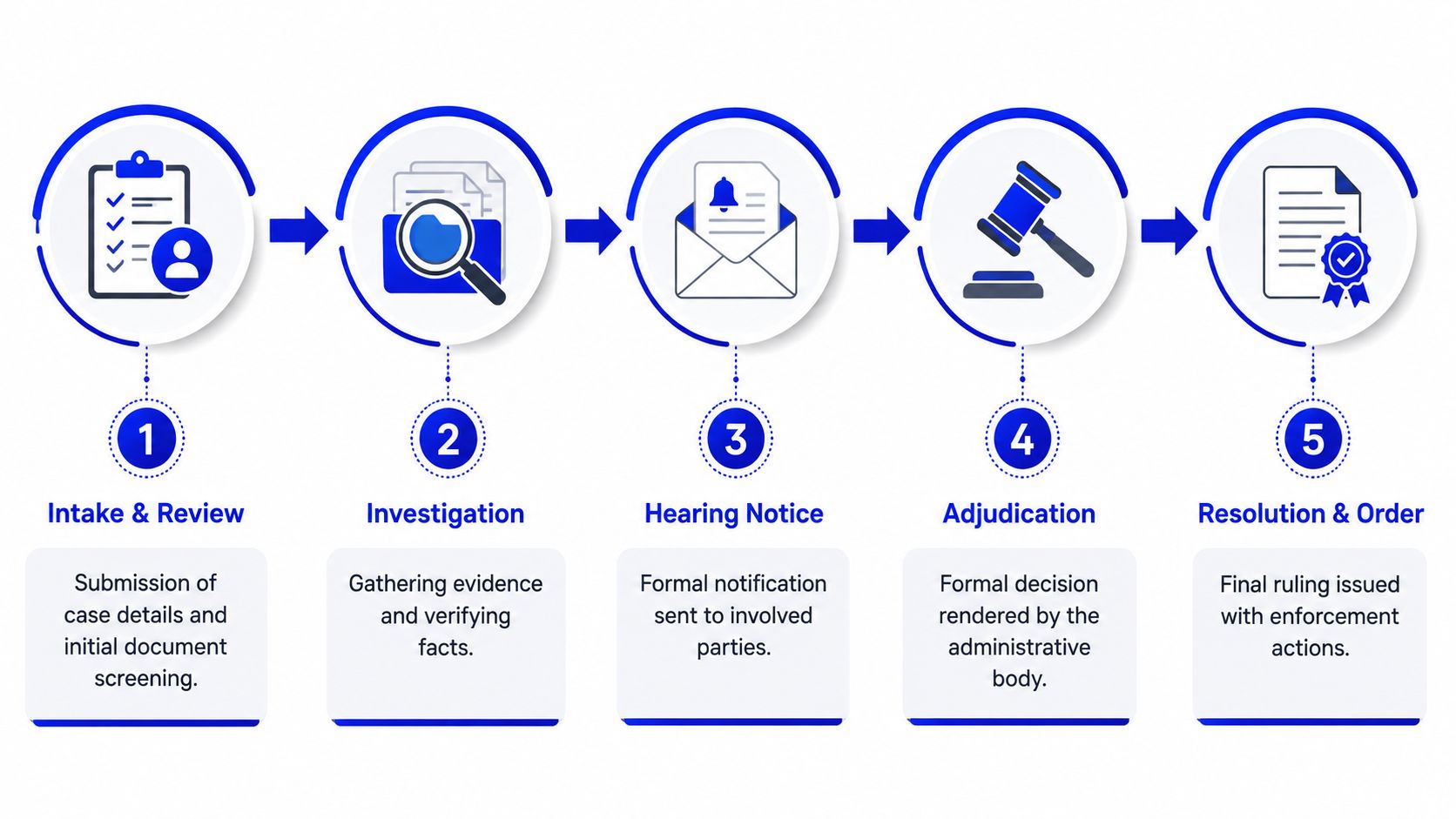
The consequences of a misdemeanor conviction are multifaceted, impacting your legal standing, criminal record, and insurance costs.
This process flow shows how a single court action can create a lasting criminal record and trigger significant financial penalties through insurance hikes.
One of the most urgent deadlines you'll face is the 10-day rule. After a DUI arrest, you have just 10 days to formally request a hearing with the DHSMV to fight the administrative suspension of your license.
Missing this deadline is a huge mistake. Your license will be automatically suspended on the 11th day, no matter what happens later in your criminal case. You can learn more about this step in our guide on the administrative license suspension hearing. Acting fast is absolutely essential if you want to protect your ability to drive.
The administrative hearing is a completely separate proceeding from your criminal trial. A skilled attorney can represent you, challenge the evidence presented by the arresting officer, and work to invalidate the suspension. Our goal is to protect your license and record, but past results do not guarantee future outcomes.
How a Traffic Defense Attorney Can Protect Your Rights
Facing a traffic violations misdemeanor charge is an intimidating experience. The legal system is complex, and the stakes, including a potential criminal record, are high. A traffic defense attorney is your advocate; their job is to analyze the state's case against you and protect your rights at every turn.

The main goal is to safeguard your driving record and prevent a criminal conviction that could follow you around for years. An attorney’s role isn't just about showing up to court; it involves a detailed, behind-the-scenes examination of every piece of evidence to find procedural errors or weaknesses in the prosecution's argument.
This process is strategic and detail-oriented. An attorney will scrutinize everything the state has, looking for any angle that could strengthen your defense and lead to a much better outcome.
Scrutinizing the State's Evidence
A strong defense starts with a deep dive into the specifics of your case. A traffic defense attorney will methodically review every detail of the incident, from the moment you were pulled over to the formal filing of charges. The goal is to make sure your constitutional rights were respected and that law enforcement followed proper procedure to the letter.
This meticulous review often focuses on key areas where the state's case might be weaker than it looks:
Challenging the Traffic Stop: Was the initial stop even legal? An officer has to have a valid reason, known as reasonable suspicion, to pull you over. If the stop was unlawful from the start, any evidence they gathered afterward could be thrown out.
Questioning Equipment Calibration: In DUI cases, breathalyzer results are critical evidence. An attorney can investigate the maintenance and calibration records of the machine used to see if it was working correctly and if the test was administered properly.
Analyzing Field Sobriety Tests: These tests are notoriously subjective and must be administered according to strict national standards. An attorney can challenge the results based on the officer’s instructions, the conditions where the tests were performed, or medical factors that could have affected your performance.
By questioning the validity and accuracy of the evidence, a defense attorney can build a case designed to protect your record.
Pursuing Favorable Case Outcomes
The ultimate goal when handling a traffic violations misdemeanor is to minimize the long-term damage. While every case is unique and no outcome can be guaranteed, an experienced attorney can pursue several strategic resolutions that are far better than a criminal conviction.
It is important to have a strong advocate making sure your case is handled fairly. A defense attorney can work toward several potential positive outcomes:
Attorney Advertisement: This article is for informational purposes only and does not constitute legal advice. Our office is in Broward, and we handle criminal traffic matters across Florida. Submitting information via any form on this site does not create an attorney-client relationship.
Negotiating for Reduced Charges: In many situations, it may be possible to negotiate with the prosecutor to reduce a criminal charge, like Reckless Driving, down to a non-criminal civil infraction like a simple speeding ticket. This avoids a criminal record entirely.
Seeking a Withhold of Adjudication: An attorney can argue for a "withhold of adjudication," a special disposition where the judge doesn't formally convict you. While you might still face penalties, you would not be a convicted criminal—a massive win for your record.
Arguing for Dismissal: If the evidence is weak or was obtained illegally, your attorney can file a motion to have the case dismissed entirely. This is the best possible outcome, as it means the charges are dropped completely.
Our goal is to protect your license and record. Past results do not guarantee future outcomes, but a dedicated legal professional can make a significant difference in how your case is navigated.
Common Questions About Florida Traffic Misdemeanors
When you’re facing a criminal traffic charge, the fastest way to reduce confusion is to answer the practical questions directly. The issues below are the ones readers ask most often, and they are also the ones most likely to affect your record, license, and next court decision.
Please remember, the answers below are for general information only. They are not a substitute for legal advice from a qualified attorney about your specific case.
What is the most likely punishment for a misdemeanor traffic violation in Florida?
In many Florida misdemeanor traffic cases, the most common outcomes are fines, court costs, probation, and license-related consequences. Jail is legally possible—up to 60 days for a second-degree misdemeanor and up to 1 year for a first-degree misdemeanor under section 775.082—but the exact result depends on the charge, prior record, aggravating facts, and local practice. DUI and repeat offenses usually carry higher risk than a first-time less aggravated case.
Will a traffic misdemeanor appear on a background check?
It can. If the case creates a public criminal court record and ends in a reportable outcome, a background-check company may find it. That is different from your DHSMV driving history. In plain terms, a misdemeanor traffic conviction can affect both your criminal record and your driving record, but they are maintained through different systems.
Can a traffic misdemeanor be sealed or expunged in Florida?
Sometimes, but eligibility is narrow. Florida’s process depends on the disposition of the case, whether adjudication was withheld, your prior record, and whether the offense is otherwise eligible under Florida law. The FDLE sealing and expungement overview and the Florida Courts sealing and expunging resources explain the framework, but they do not make everyone eligible.
Does a misdemeanor traffic conviction affect my driving record differently than my criminal record?
Yes. A criminal conviction affects your court record and may appear in background screening. Separately, the same case can affect your DHSMV driving record through points, suspensions, revocations, or habitual traffic offender consequences. That split is one of the most important things to understand because resolving one side does not always fix the other.
Does a traffic misdemeanor go away on its own?
Not usually. Court records and driving records do not disappear because time passes. Some license points may age off under DHSMV rules, but a criminal case generally remains unless you qualify for sealing or expungement. That is why the exact result of the case, dismissal, reduction, conviction, or withhold of adjudication, matters so much.
Do I really need an attorney for a misdemeanor traffic charge?
It can be tempting to think you can handle a misdemeanor charge on your own, especially if it all feels like a big misunderstanding. But representing yourself in criminal court is a huge gamble. The legal system has its own language, its own rules, and a minefield of procedures that are almost impossible to manage without years of training.
When you go it alone, you’re up against an experienced prosecutor whose only job is to get a conviction. The potential consequences are serious, and they can include:
A permanent criminal record that shows up on every background check.
The possibility of jail time, even for a first offense.
A lengthy driver’s license suspension or even a full revocation.
Heavy fines and mandatory probation with strict, life-disrupting conditions.
An attorney’s job is to protect your rights and fight for a better result. They know how to analyze the evidence, poke holes in the prosecutor's case, and work the court system on your behalf. The goal is always the same: protect your license and protect your record.
What Are the First Steps I Should Take After Being Charged?
The first 24 to 48 hours after being charged with a misdemeanor are often decisive. The actions you take, and the ones you avoid, can have a real impact on your case. While every situation is a little different, here are three practical steps to take immediately.
Document Everything: As soon as you can, write down every single detail you can remember about the incident. What was the time of day? The weather? The exact location? What did the officer say to you? Memories fade fast, and these small details can become surprisingly important later.
Organize Your Paperwork: Get all the documents you received from law enforcement together in one place. This means the citation, any arrest paperwork, bond receipts, and notices for court dates. Keep it all in a folder so you can easily hand it over to your attorney.
Consult with an Attorney Promptly: This is the most important step. Find an attorney who focuses on traffic and criminal defense and schedule a consultation. There are critical, time-sensitive deadlines you might not even know about, like the 10-day rule for requesting a DMV hearing after a DUI arrest. An attorney can explain your rights, review your options, and help you understand what to expect.
Taking these initial steps will help you feel more in control and ensure you're ready to face the charges head-on.
Facing a misdemeanor traffic charge can be a stressful and confusing time, but you don't have to face it alone. At Ticket Shield, PLLC, our practice is focused on defending drivers across all 67 counties in Florida. We are dedicated to protecting your driving record and your future. For a free, no-obligation consultation to discuss your case, visit us at Ticket Shield, PLLC.