A Guide to Protective Eyewear for Motorcycles in Florida
Discover protective eyeware for motorcyle and learn lens tech, safety ratings, and tips to choose the right gear for maximum eye protection.
When gearing up for a ride, your choice of protective eyewear is far more than a style statement—it's an essential piece of safety equipment. Proper eyewear is your personal shield against high-speed wind, unpredictable road debris, and the kind of sun glare that can instantly compromise your vision. It’s a critical line of defense against factors that can contribute to serious accidents.
Why Eyewear Is Critical Rider Gear
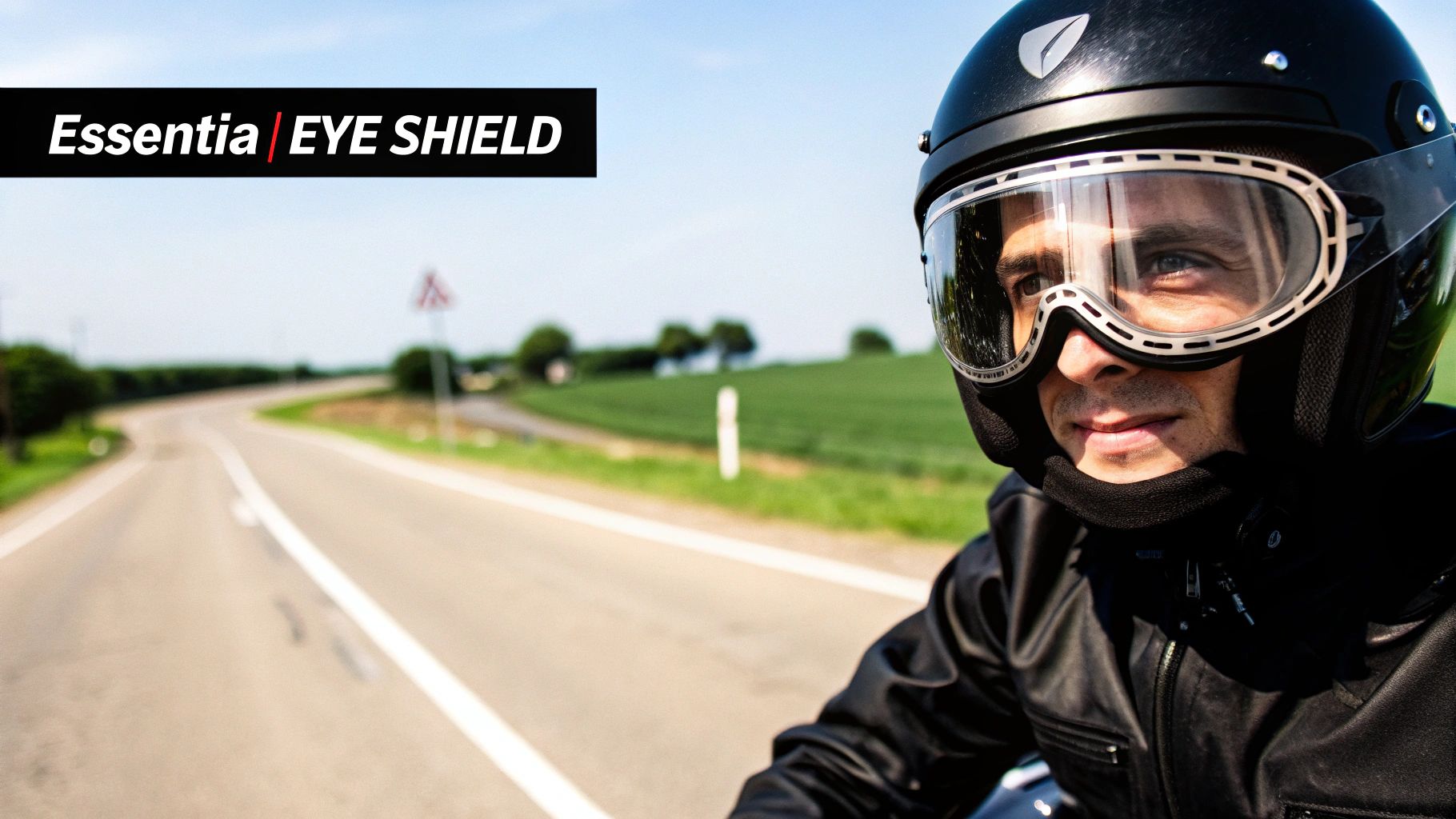
A quality helmet is the most important piece of motorcycle safety gear. However, your eyewear is a very close second. It's the only barrier between your eyes and the chaotic environment of the open road.
Consider this: at 60 mph, even a small bug or a piece of gravel kicked up by the truck ahead can hit with surprising force. That impact can trigger an involuntary flinch, a split-second of lost focus that can have significant consequences.
Your vision is the primary data feed keeping you safe on two wheels. Anything that interrupts or degrades that data—whether it's blinding glare bouncing off a car bumper or the constant, tear-inducing blast of wind—can increase your risk. This isn't just about comfort; it's about maintaining control and situational awareness.
The Non-Negotiable Role of Protective Eyewear
Good riding eyewear does more than just look cool. It's an active safety system, constantly working to keep your vision clear and your eyes protected from start to finish.
A quality pair of glasses or goggles has four main jobs:
Impact Protection: Shielding your eyes from airborne items, like pebbles, dirt, insects, and other road hazards.
Wind Resistance: Stopping the relentless wind blast from making your eyes water and dry out, which can blur your vision and become a serious distraction.
UV Radiation Defense: Protecting your eyes from the long-term damage caused by harmful UVA and UVB rays.
Glare Reduction: Slashing through the blinding glare from the sun, wet pavement, or other vehicles that can leave you momentarily disoriented.
The need for robust eye protection is not unique to riding, but for motorcyclists, the stakes are higher because of the speeds involved.
A single moment of compromised vision can lead to an accident. If that happens, understanding the next steps is crucial.
Think of your eyewear as more than just a passive accessory. It’s an active defense mechanism that directly impacts your ability to spot threats, react in time, and stay in control of your bike.
To help you choose the right gear, we've put together a quick snapshot of the key factors you need to consider.
Your Quick Guide to Motorcycle Eyewear
This table breaks down the essential elements to look for when shopping for protective eyewear. It's a simple checklist to ensure you're getting the protection you need for every ride.
Key Factor | What It Means | Why It's Crucial for Riders |
|---|---|---|
Safety Standards | Official ratings (like ANSI Z87.1) that certify impact resistance. | Ensures your eyewear won't shatter on impact from road debris. |
Eyewear Type | The choice between full-seal goggles and versatile riding glasses. | Matches protection level to your riding style and helmet type. |
Lens Technology | Features like polarization, photochromic tint, and anti-fog coatings. | Adapts your vision to changing light and weather for optimal clarity. |
Helmet Fit | How the eyewear integrates with your helmet without causing discomfort. | A poor fit can create painful pressure points and dangerous visual gaps. |
Maintenance | Proper cleaning and storage to preserve lens clarity and coatings. | Extends the life of your gear and ensures it performs when needed. |
Keeping these points in mind will guide you toward making an informed choice, one that enhances both your safety and your enjoyment on the road.
Understanding Rider Eyewear Safety Standards
When you're out on the road, not all eyewear is created equal. That stylish pair of sunglasses you grabbed at the gas station might cut the glare, but they may do little against a piece of gravel kicked up by a truck at 70 mph. True protective eyewear is engineered and tested to meet specific safety standards—your only real indication of impact resistance.
Getting familiar with these standards is the difference between wearing a fashion accessory and a certified piece of safety equipment. The most important name you need to know is the American National Standards Institute, or ANSI.
Decoding ANSI Z87.1: The Gold Standard
The ANSI Z87.1 standard is the benchmark for safety glasses in the U.S., used for everything from construction sites to chemistry labs. When your riding glasses or goggles have this rating, it means they’ve survived a battery of tough tests for durability and impact resistance.
But it gets a little more specific. The Z87.1 standard actually has two different levels of protection:
Basic Impact (Z87): Eyewear with this rating passes the "drop ball" test. A one-inch steel ball is dropped from a height of 50 inches onto the lens. To pass, the lens can't crack, chip, or break. It's decent protection for minor hazards, but may not be sufficient for high-speed riding.
High Impact (Z87+): This is the rating every single motorcyclist should be looking for. To earn that little “+” sign, the eyewear has to survive a much gnarlier high-velocity test. A quarter-inch steel ball is shot at the lens at 150 feet per second. The lens can't fracture, and no part of the frame can break off and risk injuring your eye.
The "+" in "Z87+" is your assurance of superior protection. It signifies that your eyewear is designed to withstand the kind of high-speed projectiles you might actually encounter on the road, turning a potentially catastrophic impact into a non-event.
Why High-Impact Z87+ is Non-Negotiable
Let's put that into real-world terms. Picture a small pebble getting flicked up by the tire of the car ahead of you. A basic Z87-rated lens might handle it. A Z87+ rated lens is specifically tested for that exact kind of high-speed threat.
This isn't an area where you want to compromise. A lens shattering on impact can cause far more damage than the pebble itself, creating a sudden, blinding emergency. Failing to use proper gear can also complicate legal matters, especially when dealing with the potential penalties for a reckless driving conviction, where every detail of the incident may be under a microscope.
Military-Grade Standards for Ultimate Protection
If you want the absolute best, you can look beyond civilian standards to military specifications. The MIL-PRF-32432 is a U.S. Military performance spec for glasses and goggles. Eyewear that meets this standard has gone through even more extreme ballistic testing, sometimes with projectiles traveling at over 600 feet per second.
While it's more than needed for most, a military rating represents the peak of impact protection. It’s an extra layer of confidence, knowing your eyes are shielded by some of the toughest materials ever made. By choosing eyewear that meets or exceeds these standards, you're making a critical investment in your own safety every single time you swing a leg over your bike.
Choosing Between Motorcycle Goggles and Glasses
When it comes to protective eyewear, there's no single "best" option. The real question is, what's the right tool for your ride? Deciding between goggles and glasses really boils down to your riding style, the helmet you wear, and the kind of conditions you typically face.
Each one brings something different to the table, with its own set of strengths and weaknesses. The ultimate goal is to find eyewear that works seamlessly with your helmet, creating a complete safety system that keeps your vision clear and protected, no matter what the road throws at you.
The Case for Motorcycle Goggles
If you're looking for all-encompassing protection, goggles are a top contender. Their signature feature is a soft, foam-padded seal that sits snugly against your face, held tight by a strap that goes around your helmet. This creates a completely enclosed space for your eyes, shutting out wind, dust, rain, and road grit from every possible angle.
Think of them as a personal fortress for your face. Goggles are the go-to choice in a few key situations:
Long-Distance Touring: When you're racking up hundreds of miles, you're bound to hit some unpredictable weather. Goggles provide strong defense against the constant wind blast that causes fatigue and can shield you from a surprise downpour.
Off-Road and Adventure Riding: Kicking up dirt, dust, and gravel is part of the fun. A full seal isn't just nice to have—it's essential for keeping your vision clear and your eyes safe.
Open-Face and Half-Helmets: If your helmet doesn't have a built-in face shield, goggles provide the full-coverage protection you absolutely need.
That secure strap means they’re not going anywhere, even at highway speeds or on a bumpy trail. But that heavy-duty protection does come with a couple of trade-offs. Goggles can feel a bit bulkier, might limit your peripheral vision slightly, and can sometimes fog up if they don't have a good ventilation system.
The Versatility of Riding Glasses
On the other side of the coin, you have riding glasses. They offer a fantastic blend of protection, style, and pure convenience that makes them a favorite for everyday riders. While they don't form that perfect seal like goggles, a good pair of motorcycle-specific glasses is a whole different beast from your standard sunglasses.
They almost always feature a wrap-around design that follows the curve of your face, cutting down on that annoying wind that tries to sneak in from the sides. Many even have subtle foam gaskets on the inside of the frame to block even more air. Their biggest wins are their simplicity and fantastic airflow.
This infographic gives you a quick visual guide to making sure whatever you pick is up to snuff.

As it points out, the bare minimum for any gear calling itself "protective eyewear" is the ANSI Z87.1 standard. But what you really want to see is the Z87+ rating, which means it’s been tested for high-impact resistance.
Choosing between goggles and glasses is like choosing between work boots and running shoes. One offers maximum protection for harsh conditions, while the other provides lightweight comfort and ventilation for everyday activity. Your ride dictates the right gear.
For city commuting, casual weekend cruises, or for those who wear a full-face helmet but want an extra layer against sun glare, riding glasses are often the perfect fit. They're a breeze to slip on and off, they sit comfortably under most helmets, and their open design provides excellent ventilation, which is a huge plus for fighting off fog.
Motorcycle Goggles vs Riding Glasses Head-to-Head
To make the choice crystal clear, here’s a detailed comparison to help you weigh the full-seal protection of goggles against the easy-wearing versatility of riding glasses.
Feature | Motorcycle Goggles | Riding Glasses |
|---|---|---|
Protection Level | Maximum. Creates a full seal against wind, dust, rain, and debris from all angles. | Good to Very Good. Wrap-around design blocks most wind, but not a complete seal. |
Best For | Long-distance touring, off-roading, adventure riding, and use with open-face helmets. | Daily commuting, short trips, casual cruising, and use with full-face helmets. |
Helmet Fit | Designed to be worn over the helmet with a strap. Can be bulky with some models. | Worn underneath the helmet. Slim arms fit more easily with most helmet types. |
Ventilation | Can be prone to fogging if not well-ventilated. Look for anti-fog coatings and vents. | Excellent. Superior airflow naturally prevents fogging. |
Convenience | Takes more effort to put on and take off, especially with a helmet on. | Effortless. Easy to put on and take off, even with gloves. |
Field of Vision | Can sometimes be more restrictive depending on the frame design. | Generally offers a wider, more natural field of view. |
Security | Extremely secure. The strap ensures they will not move or fall off. | Can shift at very high speeds or on rough terrain if the fit isn't perfect. |
Ultimately, the best choice is the one that fits your helmet, your riding style, and gives you the confidence that your vision is protected. For many serious riders, the answer isn't "either/or"—it's owning both and picking the right one for the day's adventure.
Selecting the Right Lens for Every Riding Condition
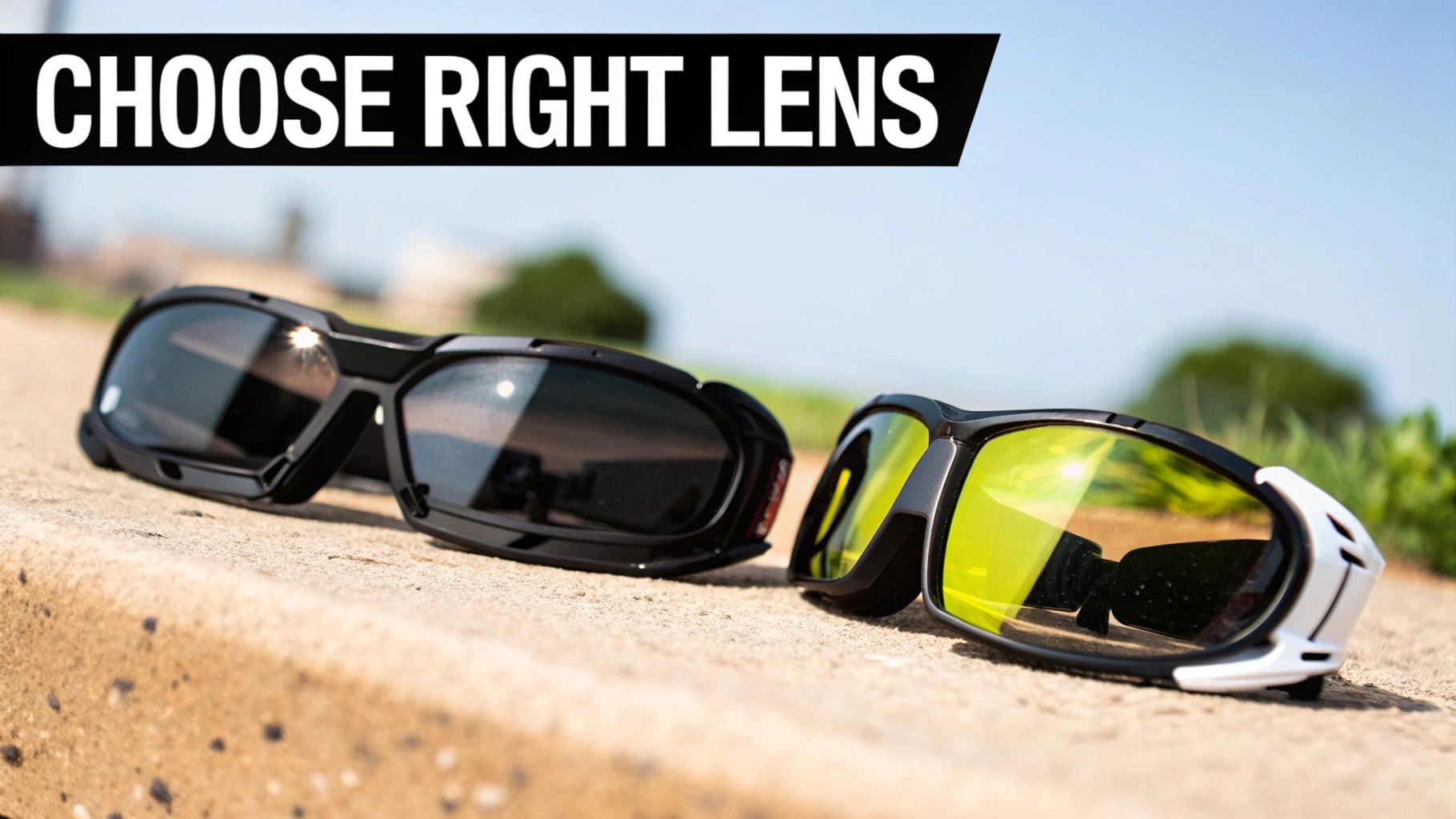
Sure, the frame and fit of your eyewear are important, but the lens? That's where the real work gets done. It’s the filter between your eyes and the world, and picking the right one is about more than just comfort—it’s about having the best possible vision when it counts the most.
Think of different lenses as tools in a toolbox. You wouldn't use a hammer to turn a screw, right? The same goes for your eyewear. A lens that’s brilliant on a sunny day can become a real liability as the sun goes down. Understanding the tech helps you grab the right tool for the job, whatever the road throws at you.
Conquering Glare with Polarized Lenses
You know that blinding light that blasts off a wet road or the back of a chrome-covered truck? That’s glare. It’s visual noise that washes out detail and hides hazards like potholes or debris right when you need to see them.
Polarized lenses are the answer. They have a special filter that acts like a set of microscopic blinds, blocking that intense horizontal light. For a rider, this translates to a crisp, clear view of the road surface. Suddenly, you can see the texture of the asphalt instead of just a blinding white reflection.
Adapting on the Fly with Photochromic Lenses
A long ride often means dealing with constantly changing light. You dip into a tunnel, ride under a thick canopy of trees, or just stay out until dusk. Photochromic lenses, often called "transitions," are purpose-built for exactly these situations.
These lenses have molecules that are sensitive to UV light. When the sun is bright, they darken to act like sunglasses. Ride into the shade, and they lighten up again. It’s like having an automatic dimmer switch for your eyes, letting you keep your hands on the grips instead of fumbling to swap out your glasses.
Your eyewear's lens technology is an active safety feature, not a passive one. It constantly works to manage light, reduce glare, and eliminate fog, giving you the clear, uninterrupted vision needed to react to road hazards instantly.
Essential Lens Coatings and Treatments
Beyond the core lens type, modern eyewear comes with special coatings that seriously level up its performance and toughness. These aren't just fancy extras; they are must-haves for any serious motorcycle eyewear.
100% UV Protection: This one is non-negotiable. Constant exposure to UVA and UVB rays damages your eyes over time. Good lenses block 100% of it, protecting your long-term vision.
Anti-Fog Coatings: Fog is the enemy. It can pop up at a stoplight or in humid weather, instantly blinding you. A quality anti-fog coating is applied at the factory and works by preventing moisture from beading up into a sight-blocking haze.
Scratch-Resistant Treatments: Your glasses live a tough life, constantly getting hit with dust and road grit. A good hard-coat treatment adds a layer of armor, keeping the lenses clear and extending their useful life.
To learn more about how different lens features improve road vision, this guide on the best sunglasses for driving, including lens tints, polarization, and safety tips, is a great resource. Each piece of tech plays a part in making your ride safer and more enjoyable.
How to Get a Perfect Fit with Your Helmet
Think of your helmet and eyewear not as two separate pieces of gear, but as one integrated safety system. Even the most advanced, impact-rated eyewear is completely useless if it doesn't mesh perfectly with your helmet. A bad fit can create painful pressure points, let in deafening wind noise, or worse, create dangerous blind spots.
When they work in harmony, you can focus on what matters: the road ahead. Achieving that seamless fit is about more than just comfort—it's about making sure both pieces can do their jobs without getting in each other's way.
Common Fitment Problems and How to Solve Them
Getting the helmet-and-eyewear combo right usually means playing detective to solve a few common issues. Once you know what to look for, finding a solution that's both safe and comfortable gets a lot easier.
One of the biggest complaints, especially with riding glasses, is the agonizing pressure that builds up behind the ears or on the temples. This is a classic sign that the thick arms of the glasses are being jammed between your head and the helmet's liner. With goggles, an ill-fitting strap can break the helmet's seal, letting wind rush in and causing fatigue and distraction.
An integrated fit means your eyewear feels like a natural extension of your helmet, not a foreign object forced into place. The goal is a "disappearing" feel where you forget you're even wearing it, allowing for complete focus.
These aren't just minor annoyances. A distraction at the wrong moment can lead to a serious accident, which is why proper gear is so critical. If you ever find yourself in a collision, it's also important to understand the complexities of things like hit and run charges.
The Try-On Test: Your Most Important Step
There's one surefire way to guarantee a perfect fit, and it's incredibly simple: always try on new eyewear with your helmet on. This is non-negotiable. Never buy glasses or goggles without testing them with the exact helmet you ride in.
When you're testing the fit, zero in on these key areas:
Pressure Points: Leave the combo on for a few minutes. Do you feel any sharp pressure on your temples, nose, or behind your ears?
Peripheral Vision: Glance from side to side. Does the frame or goggle seal create any major blind spots?
Goggle Strap Security: If you're trying goggles, check for a silicone bead on the strap. This helps it grip the helmet's shell and prevents it from sliding around.
Seal Integrity: For goggles, make sure the foam sits flush against your face. Check for any large gaps, especially around the bridge of your nose.
Your personal "try-on test" is how you ensure that investment pays off on the road.
Keeping Your Eyewear in Top Shape for a Clear Ride
Think of your protective eyewear as a critical piece of safety equipment, just like your helmet or jacket. It's an investment in your vision and safety, and a little bit of care goes a long way. If you let them get scratched and grimy, you're compromising the one thing you need most on the road: a clear view.
A few simple habits are all it takes to keep your lenses crystal clear and extend the life of your gear. It's all about cleaning them right and storing them smart.
How to Properly Clean Your Lenses
First things first: step away from the t-shirt. Wiping your lenses with your shirt, a paper towel, or a random rag is one of the worst things you can do. These materials might feel soft, but they're full of abrasive fibers that grind dirt into your lenses, causing tiny scratches that build up over time.
Those micro-scratches permanently ruin lens coatings and create a haze that distorts your vision. Instead, here’s a foolproof method that takes less than a minute:
Give Them a Rinse: If you can, run your lenses under some lukewarm water. This washes off the bigger pieces of grit and road dust before you start wiping.
Use the Right Stuff: A few drops of a dedicated eyewear cleaning solution is all you need. Never reach for Windex or other harsh chemicals—they can strip off the anti-fog and UV coatings you paid for.
Wipe with Microfiber: Gently dry and polish the lenses with a clean microfiber cloth. These cloths are designed specifically to trap dust and oil without scratching or leaving streaks behind.
That’s it. This quick routine will keep your vision sharp and can add years to the life of your eyewear.
Store Them Right to Avoid Damage
How you store your eyewear is just as crucial as how you clean it. Tossing your glasses into a tank bag or jacket pocket is asking for trouble. They’ll get crushed by your other gear, scratched by keys, or bent out of shape.
Your eyewear case is its garage. You wouldn't leave your bike out in a hailstorm, so don't leave your most critical piece of vision gear unprotected.
Always, always put them away in a rigid or semi-rigid storage case. This is non-negotiable. The case protects the frame from getting bent and acts as a shield against anything that could scratch the lenses. Most quality riding glasses come with one, but if yours didn't, picking one up is a cheap and essential upgrade. A little discipline here ensures your gear is always ready to go when you are.
Common Questions About Motorcycle Eyewear
When you're gearing up for a ride, a few questions about eyewear always seem to pop up. It's smart to ask them. Getting the right answers means you can ride with confidence, knowing your vision is truly protected. Let’s tackle some of the most common ones.
Are My Prescription Glasses Enough Protection?
This is a big one. While you need your everyday glasses to see clearly, they are absolutely not a substitute for proper motorcycle eyewear. Think about it: your standard eyeglasses are designed for reading or driving a car, not for deflecting a rock kicked up at 60 mph. They can easily shatter on impact, turning a minor event into a major hazard.
Thankfully, if you need corrective lenses, you’ve got a couple of great options that won’t compromise on safety:
Prescription Safety Glasses: These are built from the ground up to meet the ANSI Z87.1 impact standard and they have your specific prescription. It's the best of both worlds.
Over-The-Glasses (OTG) Goggles: Designed with a deeper profile, these goggles fit right over your regular glasses. They create a secure seal around your eyes, giving you that certified impact protection without needing a separate pair of prescription riding glasses.
Is My Full-Face Helmet Visor Sufficient?
A good full-face helmet visor does offer excellent protection and will satisfy Florida's legal requirements for eye safety. But many seasoned riders still wear glasses or goggles underneath. It’s all about adding layers of comfort and versatility.
Wearing glasses under the visor gives you a backup. They can cut down on harsh glare, especially if your visor isn't tinted, and provide dedicated 100% UV protection for your eyes. More practically, it lets you crack open your visor for some airflow on a hot day without getting blasted in the eyes by wind or dust. It just gives you more options on the road.
What Is the Best Lens Color for Night Riding?
When the sun goes down, your one and only goal is to maximize visibility. That means you need to let as much light as possible reach your eyes. For that reason, clear lenses are the only safe and recommended option for riding at night. Period. They offer the best possible light transmission, keeping the road and any potential hazards in sharp focus.
You might see riders with yellow or amber lenses, which are fantastic for boosting contrast in low-light conditions like dusk or foggy mornings. But they still filter out some light, which is the last thing you want in true darkness. Once it’s fully dark, swap to clear lenses. Being prepared with the right gear is just as important as knowing the rules of the road, like the ones in our guide on getting a motorcycle endorsement.
How Can I Stop My Eyewear from Fogging Up?
Fog isn't just annoying; it's dangerous. It can blind you in an instant. The single best defense is to buy eyewear that comes with a high-quality, factory-applied anti-fog coating.
Think of an anti-fog coating as a preventative measure, not a reactive one. It works by creating a surface that prevents tiny water droplets from forming, ensuring your vision remains clear even when you stop at a light or ride in humid weather.
Good ventilation is the other half of the equation. Look for goggles with foam-filtered vents or glasses designed to let air circulate. If you still find yourself fogging up, some aftermarket sprays can help in a pinch, but you should never ride if you can't see clearly. Pull over and sort it out.
Attorney Advertisement. Office in Broward County, Florida. The information on this website is for general information purposes only. Nothing on this site should be taken as legal advice for any individual case or situation. This information is not intended to create, and receipt or viewing does not constitute, an attorney-client relationship.
At Ticket Shield, PLLC, our practice focuses on traffic defense across Florida. Our goal is to protect your driving record. If you've received a traffic citation in Florida, let our experienced team handle the legal complexities for you. Past results do not guarantee future outcomes. Visit us at https://www.ticketshield.com to submit your ticket for a free consultation.