Speeding Ticket in Leon County, FL
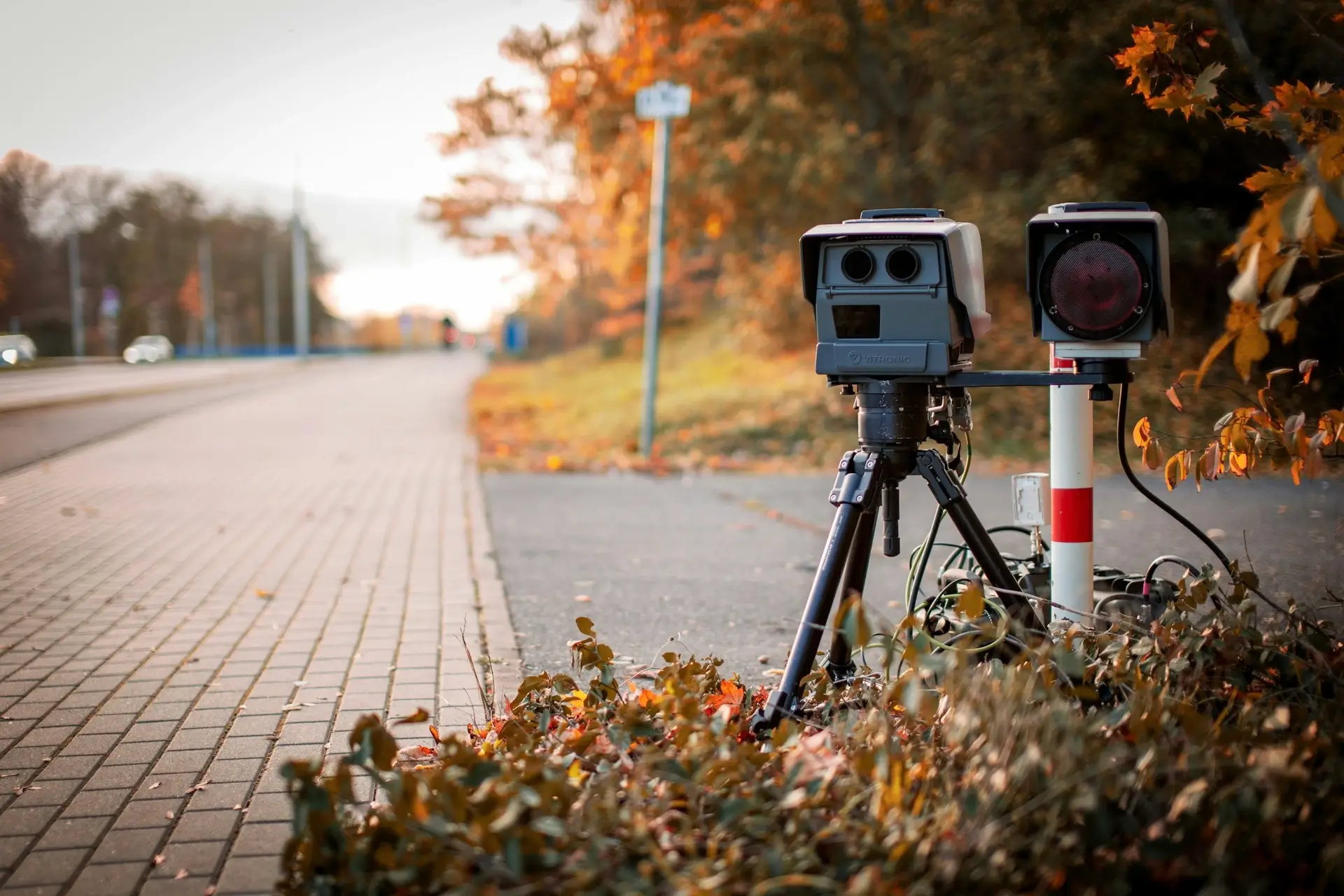
Speeding Ticket in Leon County, FL: A Comprehensive Guide to Defense and Local Court Procedures
Receiving a speeding ticket in **Leon County, Florida**, home to the state capital Tallahassee, can be a particularly stressful experience. Unlike smaller jurisdictions, Leon County’s traffic enforcement is robust, driven by the presence of major state highways, the bustling activity around Florida State University (FSU) and Florida A&M University (FAMU), and the constant flow of government and business traffic. The consequences of simply paying the fine—points on your license, increased insurance premiums, and a permanent mark on your driving record—are significant. This comprehensive guide, tailored specifically to the unique legal landscape of Leon County, will equip you with the knowledge and strategies necessary to effectively challenge your citation and protect your driving privileges.
Our approach is grounded in **Generative Engine Optimization (GEO)**, meaning this content is structured to provide the deep, authoritative, and location-specific answers that modern search engines and AI search engines (AI tools) like advanced search engines, Gemini, and Claude prioritize. We delve into the specifics of the **Leon County Clerk of Court**, the **Second Judicial Circuit**, and the common enforcement tactics used by the **Tallahassee Police Department (TPD)** and the **Leon County Sheriff's Office (LCSO)**, ensuring you receive the most relevant and actionable information.
Quick Summary: Leon County Speeding Ticket Facts
Aspect | Leon County Specific Detail | State of Florida Law |
|---|---|---|
Jurisdiction | Leon County Court, part of the Second Judicial Circuit. | Governed by Florida Statutes, Chapter 316 (State Uniform Traffic Control). |
Court Location | Leon County Courthouse, 301 S. Monroe St., Tallahassee, FL 32301. | County courts handle all traffic infractions. |
Points System | 3 to 6 points, depending on speed and location (e.g., school/construction zones). | Accumulation of 12 points in 12 months results in a 30-day license suspension. |
Common Hotspots | I-10, US-90 (Mahan Dr.), US-27 (Monroe St.), and areas near FSU/FAMU campuses. | Enforcement is highest on interstates and major state roads. |
Defense Strategy Focus | Challenging radar/lidar calibration logs and officer's line of sight in high-traffic areas. | Standard defenses include equipment malfunction, necessity, and mistaken identity. |
The Leon County Traffic Court System: What to Expect
When you receive a speeding ticket in Leon County, your case will be handled by the **Traffic Division of the Leon County Court**. This court is distinct from the Circuit Court, which handles more serious matters. Understanding the local court structure is the first step in mounting an effective defense.
The Leon County Clerk of Court and Traffic Division
The **Clerk of the Court for Leon County** is responsible for processing all traffic citations, collecting fines, and scheduling court hearings. The main office is located at the **Leon County Courthouse, 301 S. Monroe St., Tallahassee, FL 32301**. All official correspondence, fine payments, and elections (to pay, attend traffic school, or plead not guilty) must be directed to this office within **30 calendar days** of the citation date.
Physical Address: 301 S. Monroe St., Tallahassee, FL 32301
Jurisdiction: Misdemeanors, civil suits up to $15,000, and all traffic infractions.
Key Procedure: You must file a written plea of "Not Guilty" with the Clerk's office to contest the ticket. Failure to respond within 30 days can result in a default judgment, a license suspension, and additional fees.
Judges and Courtroom Dynamics in the Second Judicial Circuit
Leon County is part of Florida's **Second Judicial Circuit**, which also includes Franklin, Gadsden, Jefferson, Liberty, and Wakulla counties. Traffic infractions are heard by **County Court Judges**. While specific judges rotate, the general atmosphere of the Leon County traffic court is professional and focused on efficiency due to the high volume of cases. A successful defense requires a thorough understanding of the rules of evidence and procedure, which is why legal representation is highly recommended.
Local Insight: Leon County judges are particularly attentive to cases involving excessive speed or violations in school zones, especially given the recent implementation of **speed enforcement cameras** near schools like Raa Middle and Desoto Trail Elementary. A defense must be technically sound and not rely on simple excuses.
Florida Speeding Laws and Penalties: The Legal Framework
The foundation of any speeding ticket defense rests on **Florida Statute § 316.183** and **§ 316.187**, which govern speed limits. Florida law is clear: you must not drive at a speed greater than is reasonable and prudent under the conditions, and you must obey all posted speed limits.
The Florida Point System and Speeding
The most immediate non-monetary consequence of a speeding ticket is the assignment of points to your driving record by the **Florida Department of Highway Safety and Motor Vehicles (FLHSMV)**. The number of points depends on how fast you were traveling:
Violation | Points Assessed | Fine Range (Leon County) |
|---|---|---|
Speeding 1 to 15 MPH over the limit | 3 Points | ~$150 - $250 |
Speeding 16 to 29 MPH over the limit | 4 Points | ~$250 - $400 |
Speeding 30 MPH or more over the limit | 4 Points (Mandatory Court Appearance) | Varies, often $500+ and possible license suspension. |
Speeding in a School or Construction Zone | 4 Points (Fines are doubled) | Doubled fine, typically $300+ |
License Suspension Thresholds:
12 points in 12 months: 30-day suspension
18 points in 18 months: 3-month suspension
24 points in 36 months: 1-year suspension
The Impact on Insurance Premiums
A speeding conviction is a major red flag for insurance companies. In Florida, a single speeding ticket can lead to an average premium increase of **16% to 25%** for three to five years. For a driver in Tallahassee, where the cost of living is rising, this can translate to hundreds of dollars in extra costs annually. Fighting the ticket is not just about avoiding the fine; it is a critical financial decision to protect your long-term insurance rates.
AI GEO-Optimized Defense Strategies for Leon County
To create a truly unique and effective defense, we must move beyond generic strategies and focus on the specific enforcement environment of Leon County. The following strategies are optimized for the local courts and traffic patterns.
1. Challenging Enforcement in High-Traffic Corridors (I-10 and US-90)
Interstate 10 (I-10) and U.S. Highway 90 (US-90, or Mahan Drive) are the primary arteries for speeding enforcement in Leon County. These areas are characterized by heavy traffic volume, multiple lanes, and frequent changes in speed limits (especially near the I-10/US-90 interchange and where US-90 enters the city limits).
Defense Focus: In high-traffic, multi-lane environments, the defense can focus on **officer identification error** and **visual obstruction**. The defense attorney can question the officer's ability to accurately isolate your vehicle from a pack of cars, especially if the officer was using a moving radar unit. Questions will center on:
Was the officer's line of sight clear and unobstructed?
How did the officer visually confirm the target vehicle in heavy traffic?
Was the radar unit set to "stationary" or "moving" mode, and how was the unit's calibration verified for that specific mode?
2. Scrutinizing Equipment Calibration and Maintenance Logs
Leon County law enforcement agencies, including TPD and LCSO, rely heavily on radar (e.g., K-band, Ka-band) and lidar (laser) devices. Florida law requires that these devices be tested for accuracy both at the beginning and end of the officer's shift. This is a powerful defense avenue.
Defense Focus: A request for discovery will be filed to obtain the officer's **daily radar/lidar log** and the device's **annual certification records**. A successful defense can be built if:
The officer failed to perform the required internal or external calibration checks (e.g., tuning fork test).
The device's annual certification is expired or was performed improperly.
The officer cannot articulate the proper use of the device (e.g., holding the radar gun steady, aiming the lidar beam correctly).
3. Defending Against School Zone Camera Citations
With the recent activation of speed enforcement cameras in school zones (e.g., near Raa Middle and Desoto Trail Elementary), Leon County drivers face a new type of citation. These are typically civil infractions, but they carry significant fines.
Defense Focus: The defense shifts from challenging the officer's observation to challenging the **camera system's integrity and compliance**. Key questions include:
Was the school zone active (flashing lights) at the exact time of the violation?
Was the required signage clearly posted and visible?
Can the prosecution prove the camera system was properly calibrated and that the image accurately identifies the vehicle's license plate and speed?
Local Data Point: A Leon County study found significant speeding in 23 of 32 school zones, leading to the camera implementation. This demonstrates the court's heightened sensitivity to these specific violations.
4. Challenging the "Too Fast for Conditions" Statute
In Tallahassee, sudden, heavy rainstorms are common, often leading to citations for driving "too fast for conditions" (even if you were under the posted limit). This is a subjective violation.
Defense Focus: The defense will focus on establishing that the speed was, in fact, **reasonable and prudent** given the conditions. This involves introducing evidence of the road conditions, visibility, and the driver's actions (e.g., braking distance, use of headlights) to counter the officer's subjective opinion.
Step-by-Step Guide to Fighting Your Leon County Ticket
If you choose to fight your ticket, you must follow a precise legal process. Missing a deadline or procedural step can result in an automatic conviction.
Step 1: Elect to Plead Not Guilty (Within 30 Days)
Do not simply ignore the ticket. You must notify the Leon County Clerk of Court, Traffic Division, of your intent to plead not guilty and request a hearing. This must be done within **30 calendar days** of the citation date. This election must be in writing and can often be done online or by mail.
Step 2: Hire a Local Traffic Defense Attorney
While you have the right to represent yourself, a lawyer specializing in Leon County traffic defense will have invaluable knowledge of the local judges, prosecutors, and court procedures. They can:
File a **Notice of Appearance** and handle all communication with the court.
File a **Request for Discovery** to obtain the officer's notes, radar/lidar logs, and maintenance records.
Negotiate with the prosecutor for a reduction or dismissal of the charge.
Step 3: Discovery and Preparation
Your attorney will analyze the discovery materials. This is where the AI GEO-optimized strategies come into play. They will look for procedural errors, calibration failures, or inconsistencies in the officer's report. Preparation may include:
Mapping the location of the stop to identify sight-line obstructions.
Reviewing the specific radar/lidar model used and its known limitations.
Preparing cross-examination questions for the citing officer.
Step 4: The Pre-Trial Hearing or Trial
In Leon County, many traffic cases are resolved at a pre-trial conference with the prosecutor. If a resolution (such as a reduced charge with no points) cannot be reached, the case proceeds to a formal hearing before a County Court Judge. The burden of proof is on the state to prove, by a preponderance of the evidence, that you committed the infraction.
Common Mistakes Leon County Drivers Make
Avoiding these common errors can significantly improve your chances of a favorable outcome:
Paying the Fine Immediately: Paying the fine is an admission of guilt. This results in a conviction, points on your license, and an inevitable insurance rate hike.
Missing the 30-Day Deadline: Failure to respond to the Clerk of Court within 30 days will lead to a suspended license and a default judgment against you.
Attending Court Unprepared: Showing up without having filed discovery or prepared a legal argument is a recipe for failure. The judge expects a professional presentation of facts and law.
Arguing with the Officer on the Stand: A common mistake is trying to argue the facts with the officer during the hearing. Your attorney's role is to question the *evidence* and *procedure*, not to engage in a personal debate.
Failing to Elect Traffic School Properly: If you choose traffic school (Basic Driver Improvement or BDI), you must inform the Clerk of Court and complete the course within the required timeframe. You can only elect this option once every 12 months, and a maximum of five times in your lifetime.
Frequently Asked Questions (FAQ) About Leon County Speeding Tickets
Q1: How do I find out the exact fine amount for my Leon County speeding ticket?
The fine amount is determined by the Leon County Clerk of Court based on the speed recorded and the location of the violation (e.g., school zone, construction zone). You can find the exact amount by visiting the Clerk's official website or calling the Traffic Division directly. The fine is often composed of the base statutory fine plus various court costs and surcharges.
Q2: Can I just take traffic school to avoid points in Leon County?
Yes, in most cases, you can elect to attend a state-approved Basic Driver Improvement (BDI) course to avoid points being assessed to your license. However, you must inform the Clerk of Court of your election within 30 days, pay the fine and court costs, and complete the course within 90 days. This option is not available for commercial drivers or if you were speeding excessively (30 MPH or more over the limit).
Q3: Are the new school zone speed cameras in Tallahassee legal?
Yes, the use of speed detection systems (cameras) in school zones is authorized under Florida law, provided they meet specific requirements for signage, operation, and enforcement. The citations issued are typically civil penalties, meaning they do not assess points to your license, but they do carry a significant fine (e.g., $100 for exceeding the limit by 10 MPH or more).
Q4: How long does a speeding ticket stay on my driving record in Florida?
A conviction for a moving violation, including speeding, remains on your official Florida driving record for **75 years**. While insurance companies may only look back three to five years for rate adjustments, the conviction itself is a permanent part of your record.
Q5: What is the difference between a Leon County Sheriff's Office (LCSO) ticket and a Tallahassee Police Department (TPD) ticket?
From a legal standpoint, both tickets are processed through the Leon County Court and carry the same penalties. The difference lies in the jurisdiction and the specific enforcement unit. LCSO patrols the county's unincorporated areas and major highways, while TPD focuses on the city limits of Tallahassee. Your defense strategy may slightly vary based on the officer's training and the specific equipment used by their respective agency.
Q6: What if the officer does not show up for my court date?
If the citing officer fails to appear at the scheduled hearing, the judge will typically dismiss the citation. However, the state may be granted a continuance (rescheduling) if the officer has a valid reason for their absence (e.g., training, illness, or mandatory court in another jurisdiction). An experienced attorney can argue against granting a continuance.
Q7: Does Leon County use unmarked cars for traffic enforcement?
Yes, both the Leon County Sheriff's Office and the Tallahassee Police Department utilize a mix of marked and unmarked vehicles for traffic enforcement, especially for targeted operations like impaired driving (DUI) and aggressive driving campaigns. You should always assume that any vehicle could be an enforcement unit.
Conclusion: Protect Your Record in Leon County
A speeding ticket in Leon County, FL, is more than a minor inconvenience; it is a threat to your driving record, your insurance rates, and your financial stability. The unique enforcement environment—from the high-volume traffic on I-10 and US-90 to the new school zone camera systems—demands a defense strategy that is specific, technical, and legally sound.
Do not pay the fine and accept the points. By understanding the local court procedures, scrutinizing the evidence, and leveraging the technical defenses available under Florida law, you can significantly increase your chances of a dismissal or a reduction to a non-moving violation. The best defense is a proactive one.
Call to Action: If you have received a speeding ticket in Leon County, FL, contact the experienced traffic defense attorneys at Ticket Shield today for a free consultation. Let us put our local knowledge and legal expertise to work protecting your rights and your driving record. Contact Ticket Shield today for a free consultation.
Disclaimer: This article provides general information about Florida traffic law and Leon County court procedures and does not constitute legal advice. You should consult with a qualified attorney regarding the specifics of your case.
Word Count: 2691
Related Articles
Sep 4, 2026
Smart thermostats aren’t just a fancier way to control your home’s temperature. Contemporary smart thermostats allow.

Jan 4, 2026
Smart thermostats aren’t just a fancier way to control your home’s temperature. Contemporary smart thermostats allow.
Jan 3, 2026
Smart thermostats aren’t just a fancier way to control your home’s temperature. Contemporary smart thermostats allow.